Interactive: Who's in the Woods?
Click around to learn about nine different woodland animals!Meet nine wild animals that live in forests, parks, gardens, and neighborhoods: the red fox, white-tailed deer, mallard duck, striped skunk, eastern grey squirrel, raccoon, European badger, hedgehog, and hazel dormouse.
Click on each animal's picture to watch a short video, then click on its name for a fact about what makes it unusual, from its senses and behavior to the ways it has adapted to survive.
Some of these animals may live near you, while others are much harder to spot. Along the way, you'll learn how each one finds food, raises its young, avoids predators, and makes use of the habitat around it.
For Teachers and Parents:
Woodland Animals works well as an introduction to habitats and adaptations or as a self-guided activity for students working on their own or in pairs. Here are a few ways to use it:
- Before exploring: Ask students which of the nine animals they've seen in real life and where. It's a quick way to connect the lesson to their own surroundings.
- While exploring: Have students record one adaptation for each animal, such as a special sense, body feature, or behavior, and how it helps the animal survive.
- After exploring: Ask students to sort the animals by what they eat, when they're active, or how they avoid predators. They can then compare animals that share a habitat but survive in different ways.
- Extension: Some of these animals live in North America, some in Europe, and some in both. Students can research which ones live in their region and why others don't.
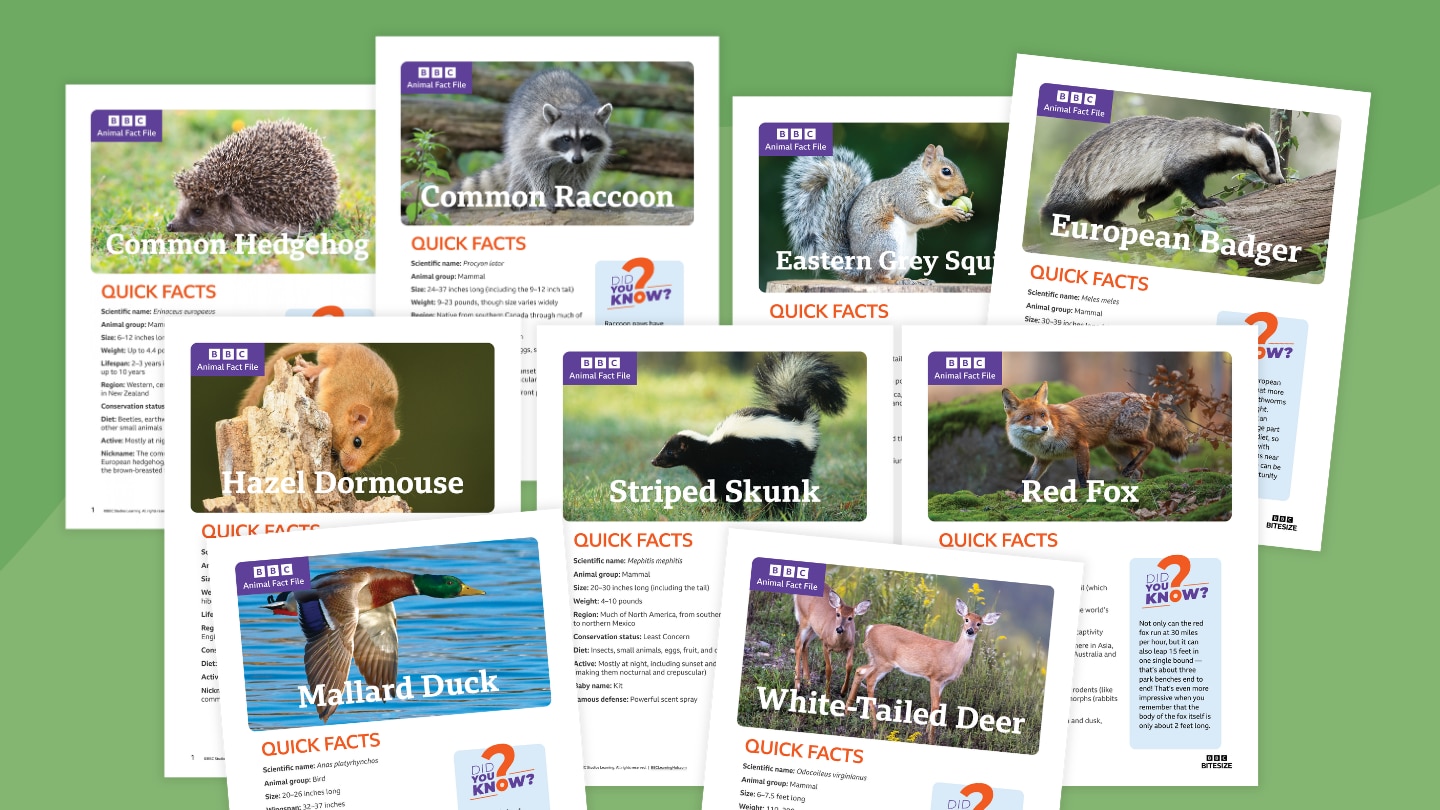
Which woodland animals scamper through the trees, forage for food, or quietly explore the undergrowth? From quick-footed foxes to busy squirrels, woodlands are home to an amazing variety of wildlife, each with its own way of life.
Meet the animals that share our woodlands and neighborhoods, from hedgehogs and badgers to deer, ducks, and raccoons. Explore their habitats, discover what they eat and how they raise their young, and uncover the remarkable adaptations that help them survive. You’ll also learn how these animals interact with their surroundings and why protecting their habitats matters.
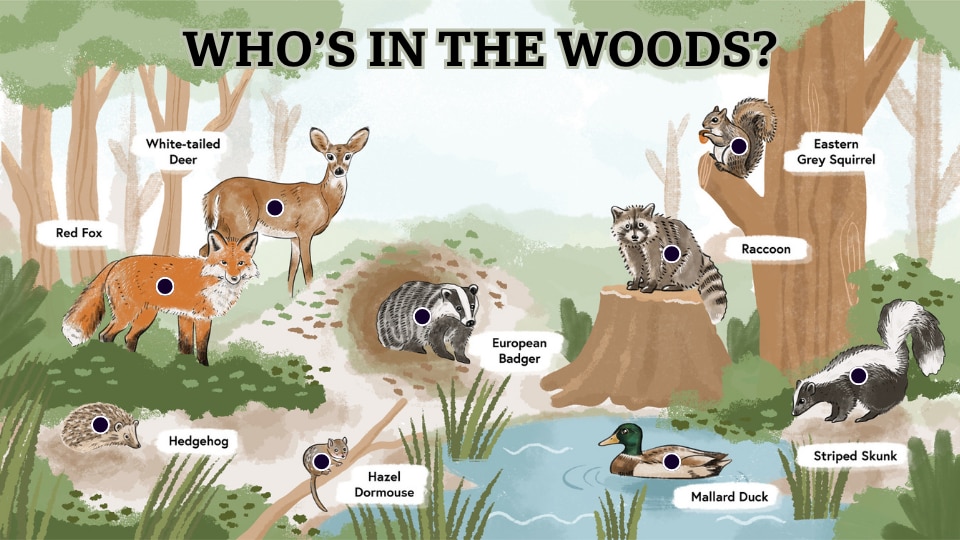
Meet the wildlife living closer than you think. Click the hotspots, watch the clips, and read the fact files for nine amazing animals. For students ages 8–14