Interactive: Enter the Owlery
Click around to learn about five different types of owls!Meet five fascinating owl species from around the world: the great grey owl, western barn owl, tawny owl, snowy owl, and Eurasian eagle owl.
Click on each owl’s picture to watch a short video, then click on its name to discover a fun fact about what makes it unique, from specialized feathers and hunting techniques to surprising behaviors and remarkable adaptations.
Some owls thrive in snowy forests, others hunt over open fields, and some make their homes among rocky cliffs and woodlands. Along the way, you’ll discover how these remarkable birds find prey, navigate their habitats, and survive in different environments.
For Teachers and Parents:
The Owlery works well as an introduction to animal adaptations, habitats, and predator-prey relationships or as a self-guided activity for students working on their own or in pairs. Here are a few ways to use it:
- Before exploring: Ask students what they already know about owls and where they think different species live. Have them predict how owls might be adapted to their environments.
- While exploring: Have students record one interesting fact and one adaptation for each owl, explaining how it helps the bird survive.
- After exploring: Ask students to compare the five species. Which hunt in similar habitats? How do their diets, behaviors, and physical features differ?
- Extension: Have students choose one owl and investigate how changes to its habitat, food supply, or nesting sites could affect its survival.
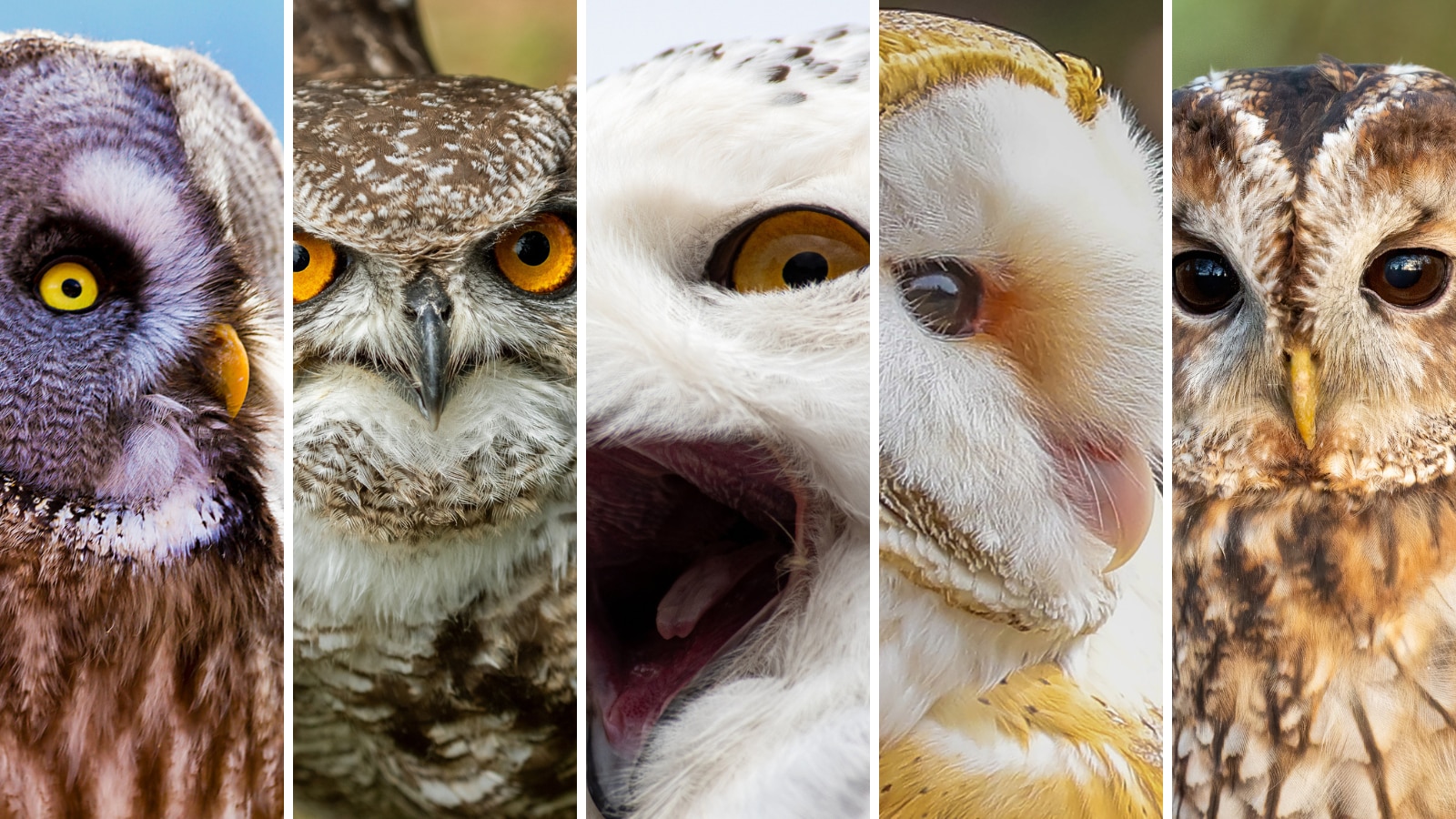
Step inside The Owlery and meet five owl species up close, in an interactive exploration for students ages 8–14
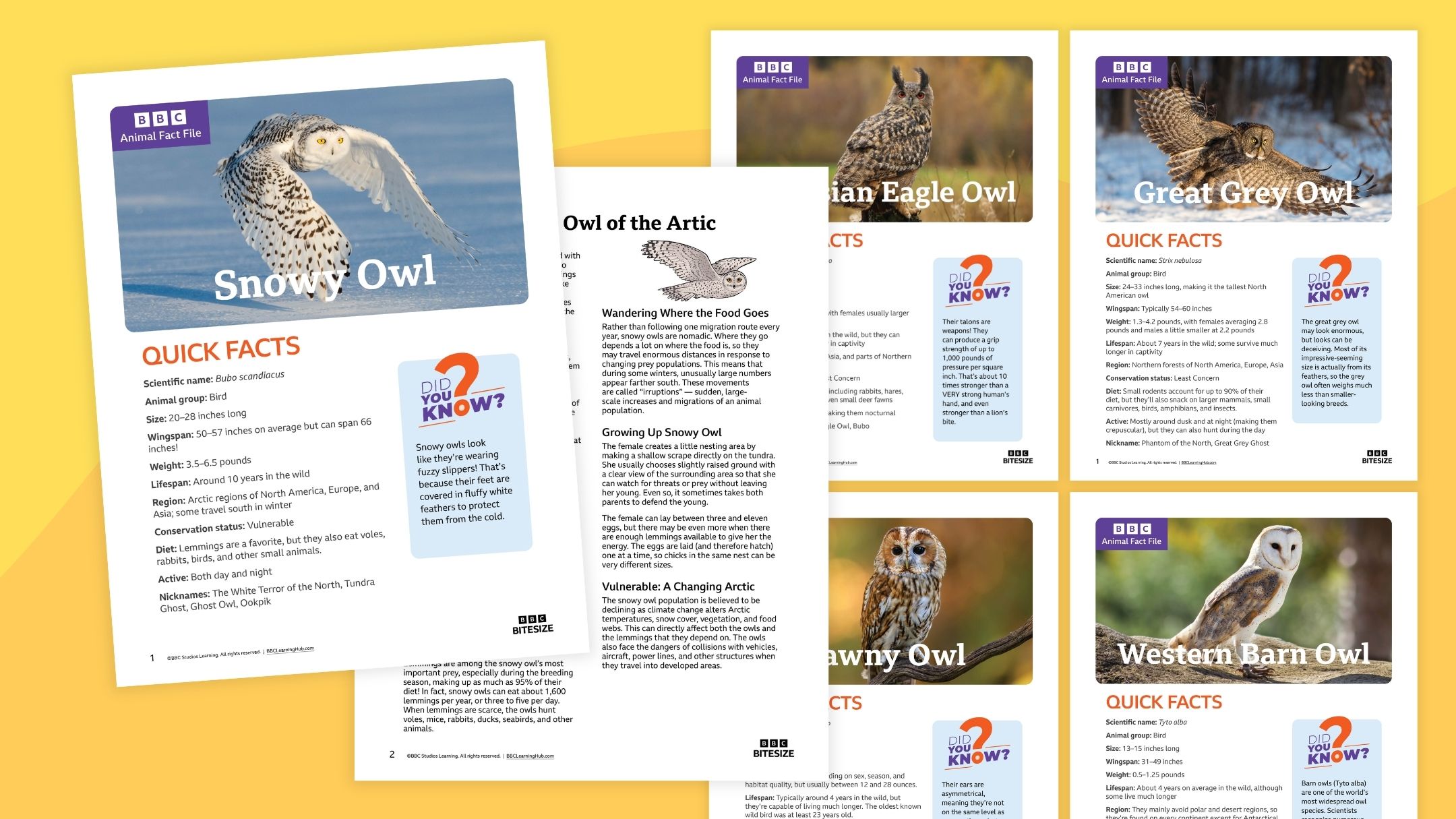
Which owl can hunt silently through the night, spot prey across snowy landscapes, or grow large enough to rival some eagles in size? Owls come in all shapes and sizes, and each has its own remarkable way of life.
From the ghostly barn owl to the powerful eagle owl, these birds of prey have evolved extraordinary features to help them hunt, navigate their habitats, and survive. Explore five fascinating owl species — the great grey owl, barn owl, Eurasian eagle owl, snowy owl, and tawny owl — to discover what they eat, where they live, how they raise their young, and what makes each one unique. You'll also learn about the challenges some owls face in the wild and why protecting their habitats matters.
You Might Also Like
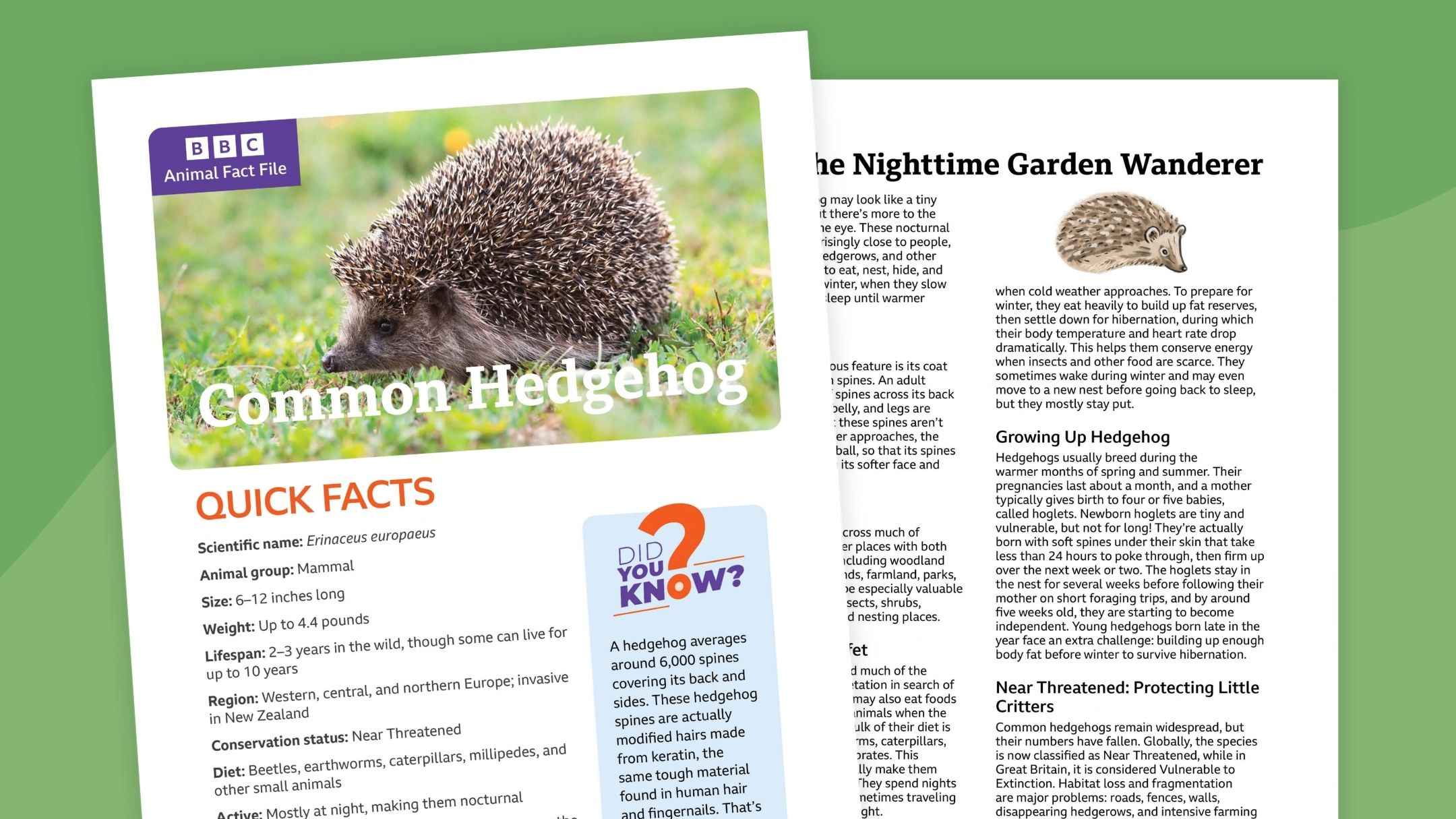
What animal looks like a tiny walking pincushion, sleeps through much of the day, and can roam more than a mile in a single night? Meet the common hedgehog!
From its prickly defenses to its nighttime adventures, the common hedgehog has plenty of tricks for making its way through the wild. Find out what life is like for a hedgehog after dark, what it eats, where it makes its home, and how it prepares for the cold months ahead. You'll also get a closer look at hoglets, hibernation, and the challenges these small mammals face as their habitats change.
Teachers and parents, you can use this fact file to:
- Introduce an animal, wildlife, or life science unit
- Support nonfiction reading and vocabulary practice
- Explore animal adaptations, behaviors, and habitats
- Compare animals and the ecosystems they live in
- Practice finding and organizing information from nonfiction texts
- Prepare students for animal research projects or presentations (use our animal report templates!)
- Connect science learning to conservation and environmental issues
- Pair with videos, articles, or other informational texts (see Related Resources below)
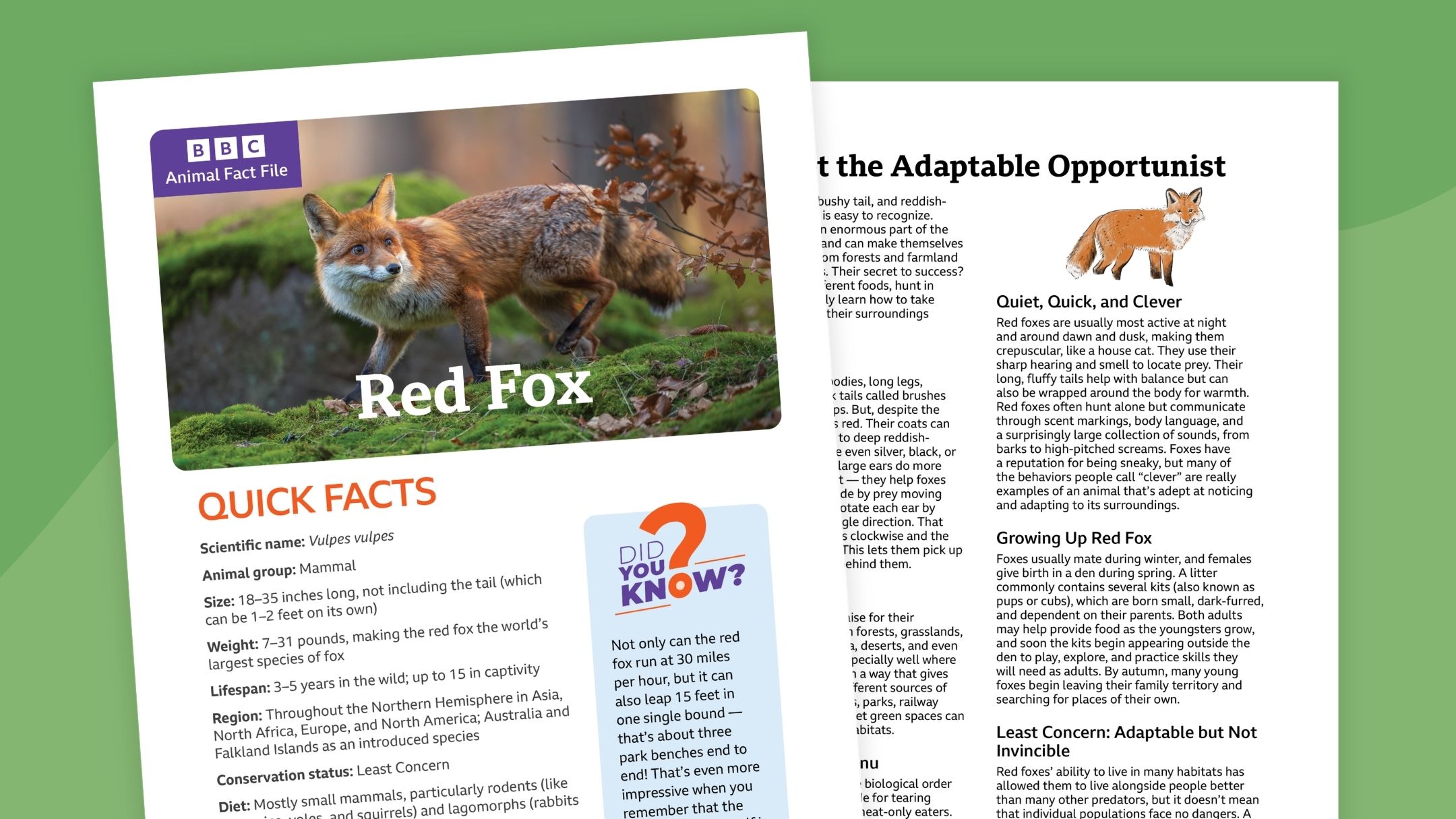
What animal can run 30 miles per hour, leap 15 feet in a single bound, and make itself at home in forests, deserts, farmland, and even cities?
Red foxes are masters of adapting to their surroundings. Explore how their sharp senses, flexible diet, and varied hunting strategies help them find food and survive in habitats all over the world. You'll also discover how foxes communicate, raise their young, and navigate life alongside people — and why being adaptable doesn't make them invincible.
Teachers and parents, you can use this fact file to:
- Introduce an animal, wildlife, or life science unit
- Support nonfiction reading and vocabulary practice
- Explore animal adaptations, behaviors, and habitats
- Compare animals and the ecosystems they live in
- Practice finding and organizing information from nonfiction texts
- Prepare students for animal research projects or presentations (use our animal report templates!)
- Connect science learning to conservation and environmental issues
- Pair with videos, articles, or other informational texts (see Related Resources below)
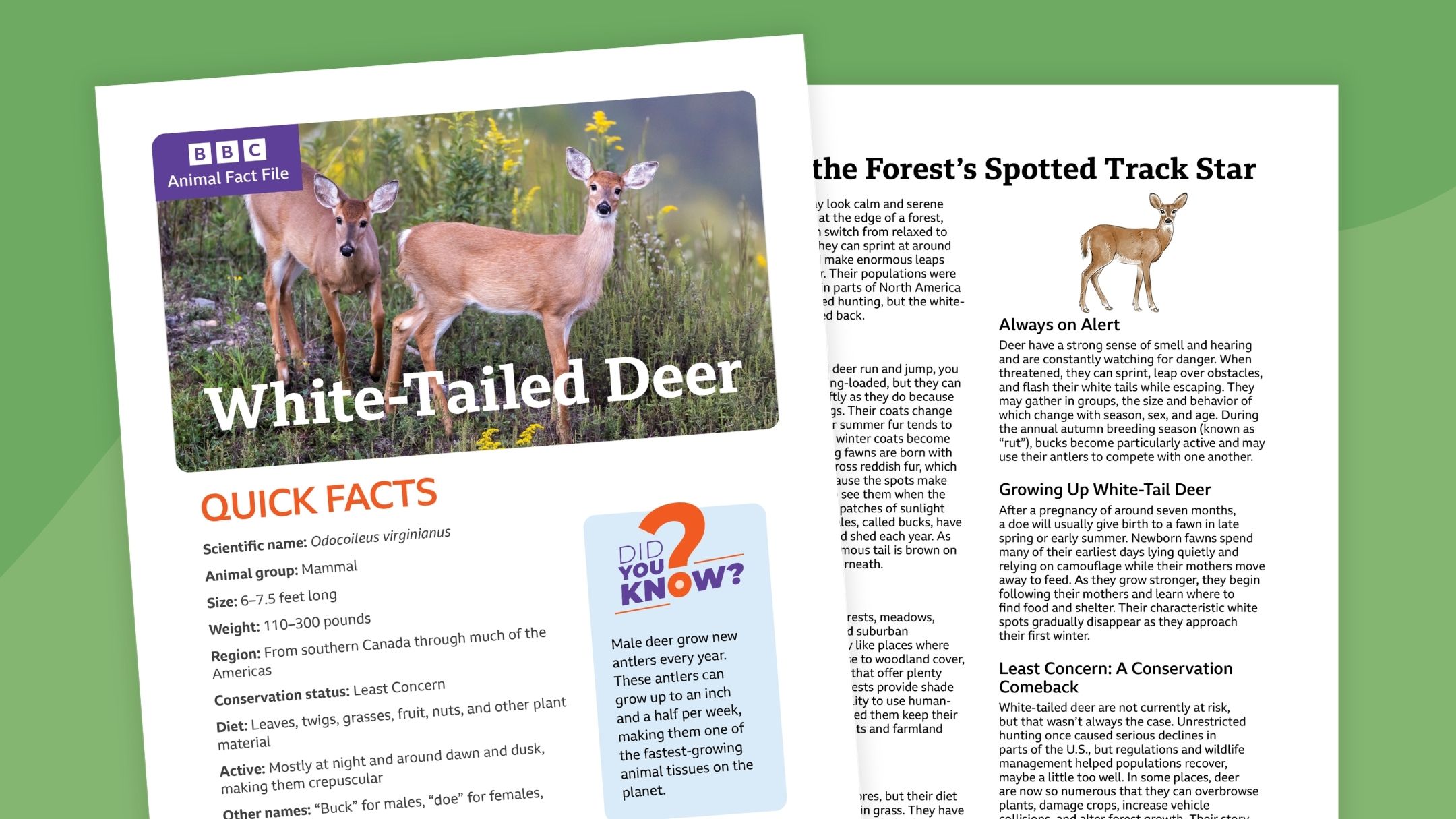
What animal can grow a brand-new set of antlers every year — and grow them faster than you might think?
White-tailed deer are built for life on the move. Explore how their powerful legs help them sprint and leap, how their senses keep them alert to danger, and how their bodies change with the seasons. You'll also discover what fawns do to stay safe, why bucks grow and shed their antlers, and how deer populations have changed over time.
Teachers and parents, you can use this fact file to:
- Introduce an animal, wildlife, or life science unit
- Support nonfiction reading and vocabulary practice
- Explore animal adaptations, behaviors, and habitats
- Compare animals and the ecosystems they live in
- Practice finding and organizing information from nonfiction texts
- Prepare students for animal research projects or presentations (use our animal report templates!)
- Connect science learning to conservation and environmental issues
- Pair with videos, articles, or other informational texts (see Related Resources below)
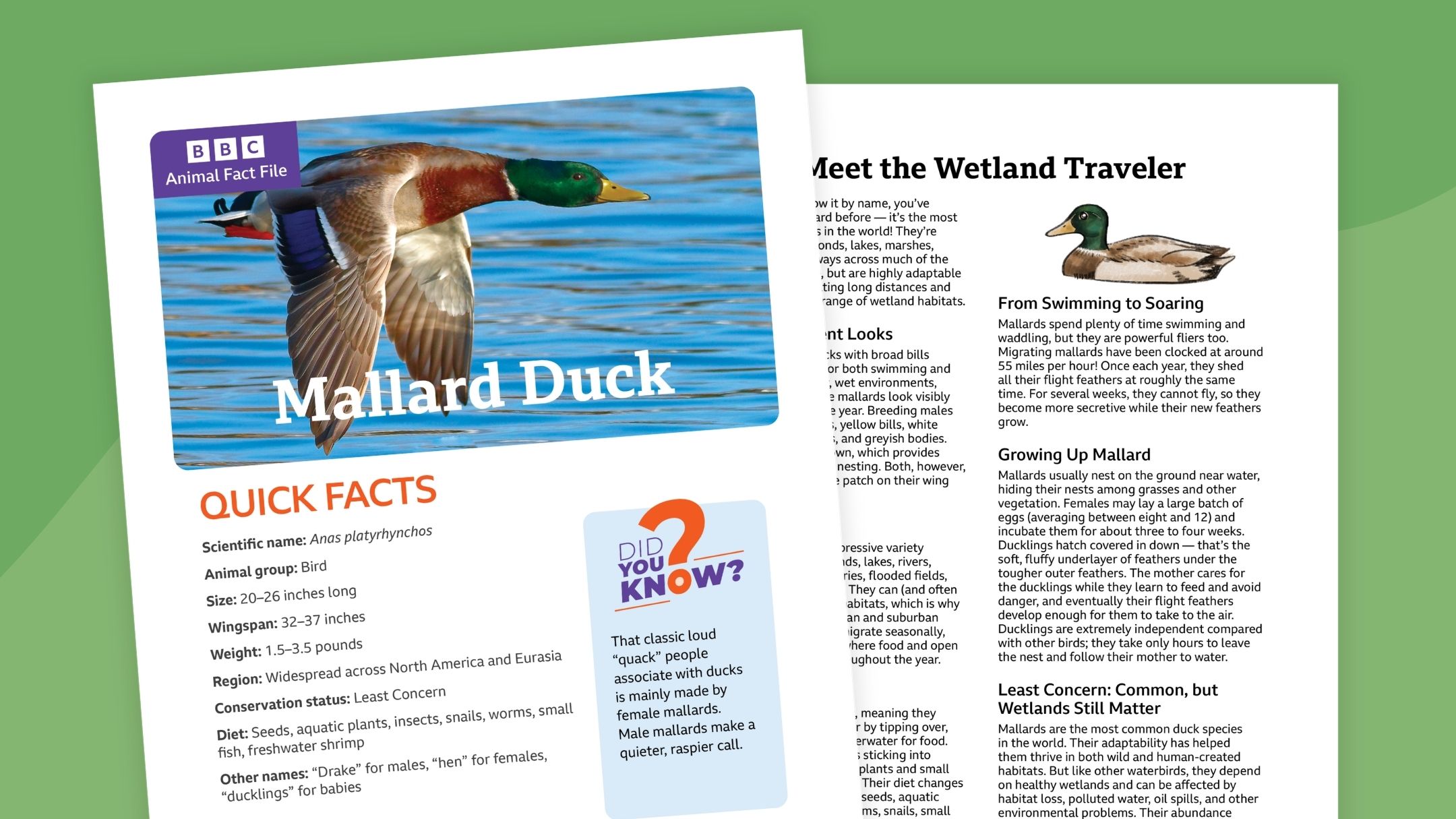
Which duck makes the classic “quack” you hear at ponds and parks? Surprisingly, it’s usually the female mallard!
Meet one of the world’s most widespread and adaptable ducks. Explore how mallards move between water, land, and sky, from tipping upside down to feed underwater to flying at speeds of around 55 miles per hour. You'll also discover why males and females look so different, how ducklings become independent within hours of hatching, and why healthy wetlands matter even to a species that seems to be everywhere.
Teachers and parents, you can use this fact file to:
- Introduce an animal, wildlife, or life science unit
- Support nonfiction reading and vocabulary practice
- Explore animal adaptations, behaviors, and habitats
- Compare animals and the ecosystems they live in
- Practice finding and organizing information from nonfiction texts
- Prepare students for animal research projects or presentations (use our animal report templates!)
- Connect science learning to conservation and environmental issues
- Pair with videos, articles, or other informational texts (see Related Resources below)
What animal looks like a tiny walking pincushion, sleeps through much of the day, and can roam more than a mile in a single night? Meet the common hedgehog!
From its prickly defenses to its nighttime adventures, the common hedgehog has plenty of tricks for making its way through the wild. Find out what life is like for a hedgehog after dark, what it eats, where it makes its home, and how it prepares for the cold months ahead. You'll also get a closer look at hoglets, hibernation, and the challenges these small mammals face as their habitats change.
Teachers and parents, you can use this fact file to:
- Introduce an animal, wildlife, or life science unit
- Support nonfiction reading and vocabulary practice
- Explore animal adaptations, behaviors, and habitats
- Compare animals and the ecosystems they live in
- Practice finding and organizing information from nonfiction texts
- Prepare students for animal research projects or presentations (use our animal report templates!)
- Connect science learning to conservation and environmental issues
- Pair with videos, articles, or other informational texts (see Related Resources below)
What animal can run 30 miles per hour, leap 15 feet in a single bound, and make itself at home in forests, deserts, farmland, and even cities?
Red foxes are masters of adapting to their surroundings. Explore how their sharp senses, flexible diet, and varied hunting strategies help them find food and survive in habitats all over the world. You'll also discover how foxes communicate, raise their young, and navigate life alongside people — and why being adaptable doesn't make them invincible.
Teachers and parents, you can use this fact file to:
- Introduce an animal, wildlife, or life science unit
- Support nonfiction reading and vocabulary practice
- Explore animal adaptations, behaviors, and habitats
- Compare animals and the ecosystems they live in
- Practice finding and organizing information from nonfiction texts
- Prepare students for animal research projects or presentations (use our animal report templates!)
- Connect science learning to conservation and environmental issues
- Pair with videos, articles, or other informational texts (see Related Resources below)
What animal can grow a brand-new set of antlers every year — and grow them faster than you might think?
White-tailed deer are built for life on the move. Explore how their powerful legs help them sprint and leap, how their senses keep them alert to danger, and how their bodies change with the seasons. You'll also discover what fawns do to stay safe, why bucks grow and shed their antlers, and how deer populations have changed over time.
Teachers and parents, you can use this fact file to:
- Introduce an animal, wildlife, or life science unit
- Support nonfiction reading and vocabulary practice
- Explore animal adaptations, behaviors, and habitats
- Compare animals and the ecosystems they live in
- Practice finding and organizing information from nonfiction texts
- Prepare students for animal research projects or presentations (use our animal report templates!)
- Connect science learning to conservation and environmental issues
- Pair with videos, articles, or other informational texts (see Related Resources below)
Which duck makes the classic “quack” you hear at ponds and parks? Surprisingly, it’s usually the female mallard!
Meet one of the world’s most widespread and adaptable ducks. Explore how mallards move between water, land, and sky, from tipping upside down to feed underwater to flying at speeds of around 55 miles per hour. You'll also discover why males and females look so different, how ducklings become independent within hours of hatching, and why healthy wetlands matter even to a species that seems to be everywhere.
Teachers and parents, you can use this fact file to:
- Introduce an animal, wildlife, or life science unit
- Support nonfiction reading and vocabulary practice
- Explore animal adaptations, behaviors, and habitats
- Compare animals and the ecosystems they live in
- Practice finding and organizing information from nonfiction texts
- Prepare students for animal research projects or presentations (use our animal report templates!)
- Connect science learning to conservation and environmental issues
- Pair with videos, articles, or other informational texts (see Related Resources below)