Animal Fact Files: Owls
Five species, five fact files: diet, habitat, life cycle and conservation, ready to printWhich owl can hunt silently through the night, spot prey across snowy landscapes, or grow large enough to rival some eagles in size? Owls come in all shapes and sizes, and each has its own remarkable way of life.
From the ghostly barn owl to the powerful eagle owl, these birds of prey have evolved extraordinary features to help them hunt, navigate their habitats, and survive. Explore five fascinating owl species — the great grey owl, barn owl, Eurasian eagle owl, snowy owl, and tawny owl — to discover what they eat, where they live, how they raise their young, and what makes each one unique. You'll also learn about the challenges some owls face in the wild and why protecting their habitats matters.
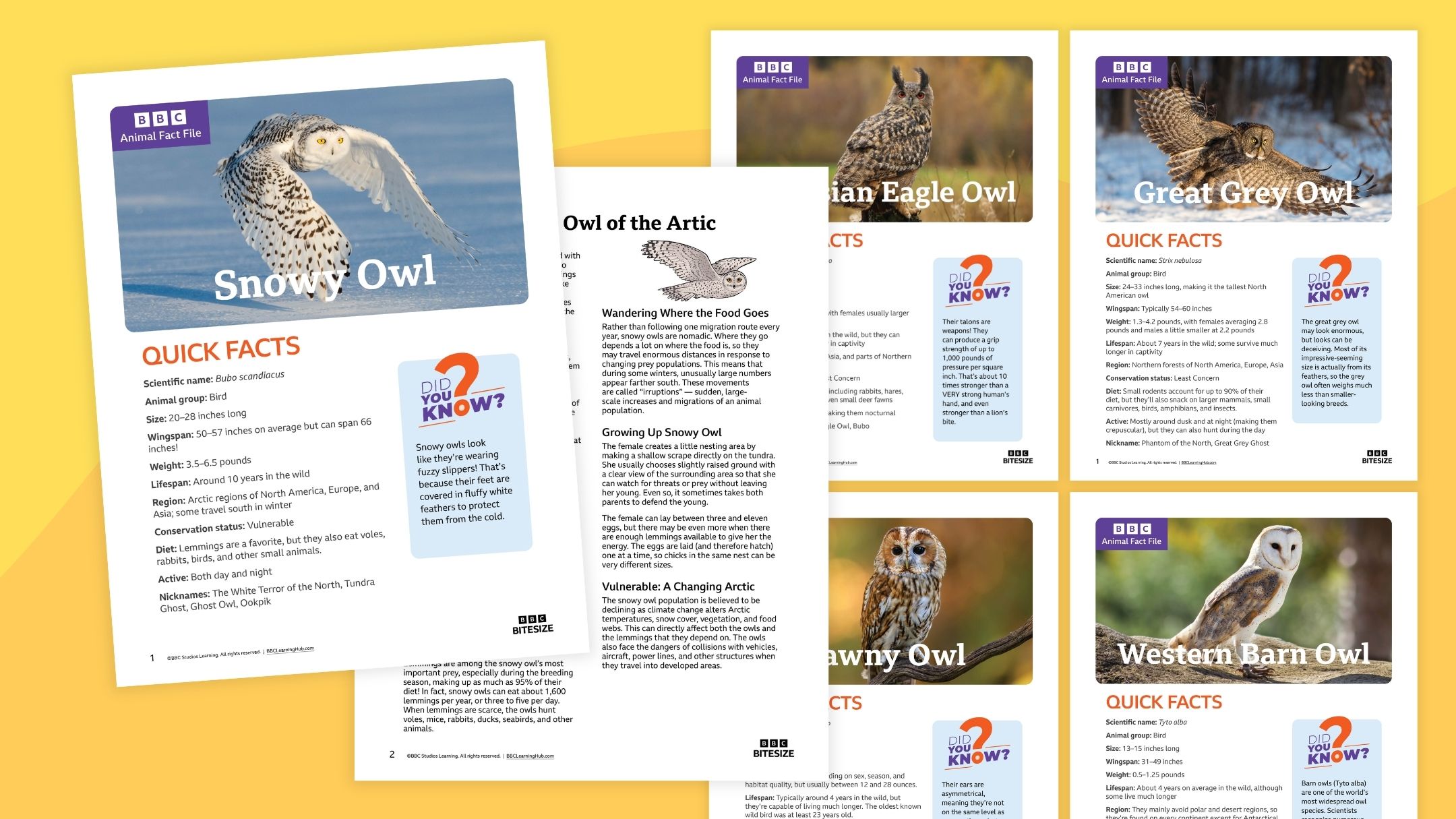
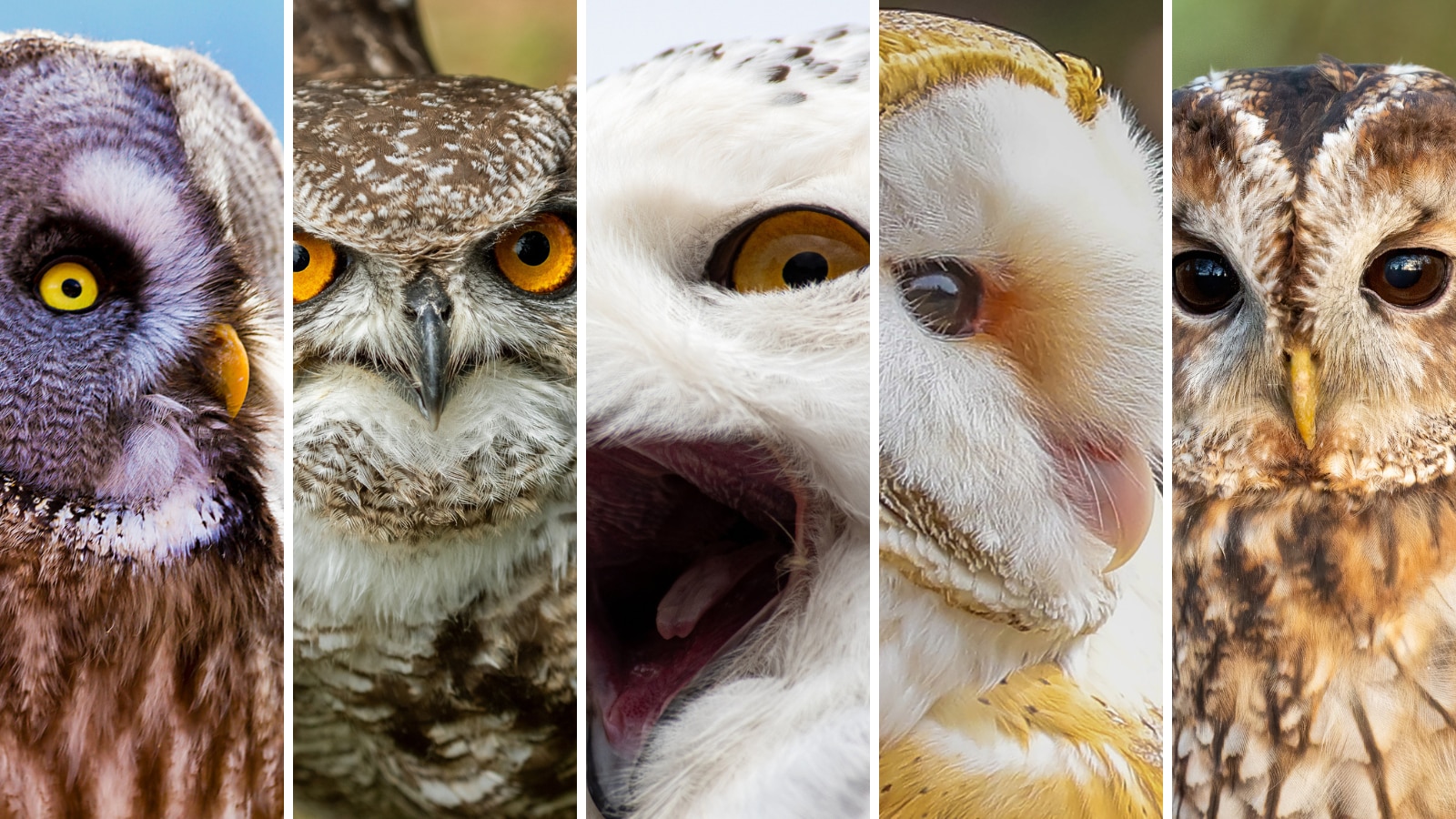
Step inside The Owlery and meet five owl species up close, in an interactive exploration for students ages 8–14
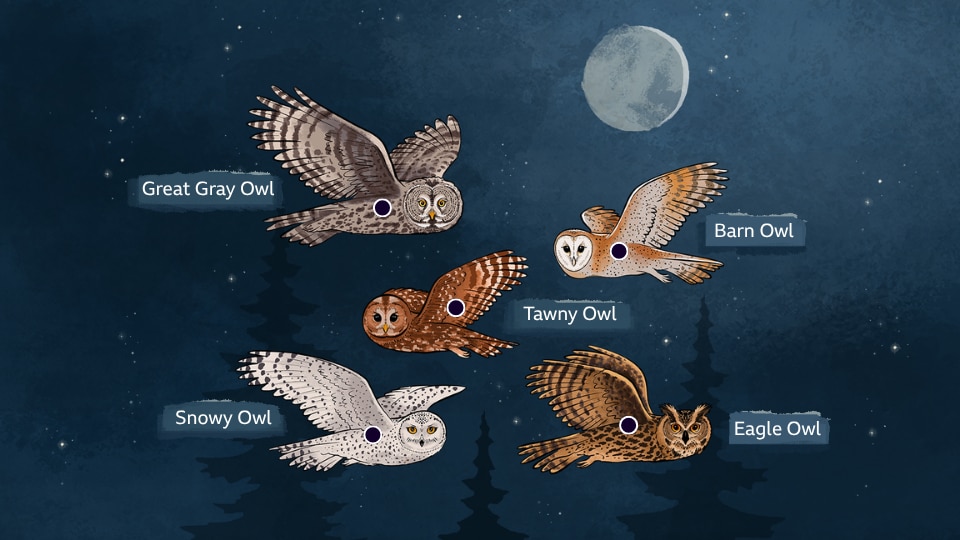
Meet five fascinating owl species from around the world: the great grey owl, western barn owl, tawny owl, snowy owl, and Eurasian eagle owl.
Click on each owl’s picture to watch a short video, then click on its name to discover a fun fact about what makes it unique, from specialized feathers and hunting techniques to surprising behaviors and remarkable adaptations.
Some owls thrive in snowy forests, others hunt over open fields, and some make their homes among rocky cliffs and woodlands. Along the way, you’ll discover how these remarkable birds find prey, navigate their habitats, and survive in different environments.
For Teachers and Parents:
The Owlery works well as an introduction to animal adaptations, habitats, and predator-prey relationships or as a self-guided activity for students working on their own or in pairs. Here are a few ways to use it:
- Before exploring: Ask students what they already know about owls and where they think different species live. Have them predict how owls might be adapted to their environments.
- While exploring: Have students record one interesting fact and one adaptation for each owl, explaining how it helps the bird survive.
- After exploring: Ask students to compare the five species. Which hunt in similar habitats? How do their diets, behaviors, and physical features differ?
- Extension: Have students choose one owl and investigate how changes to its habitat, food supply, or nesting sites could affect its survival.