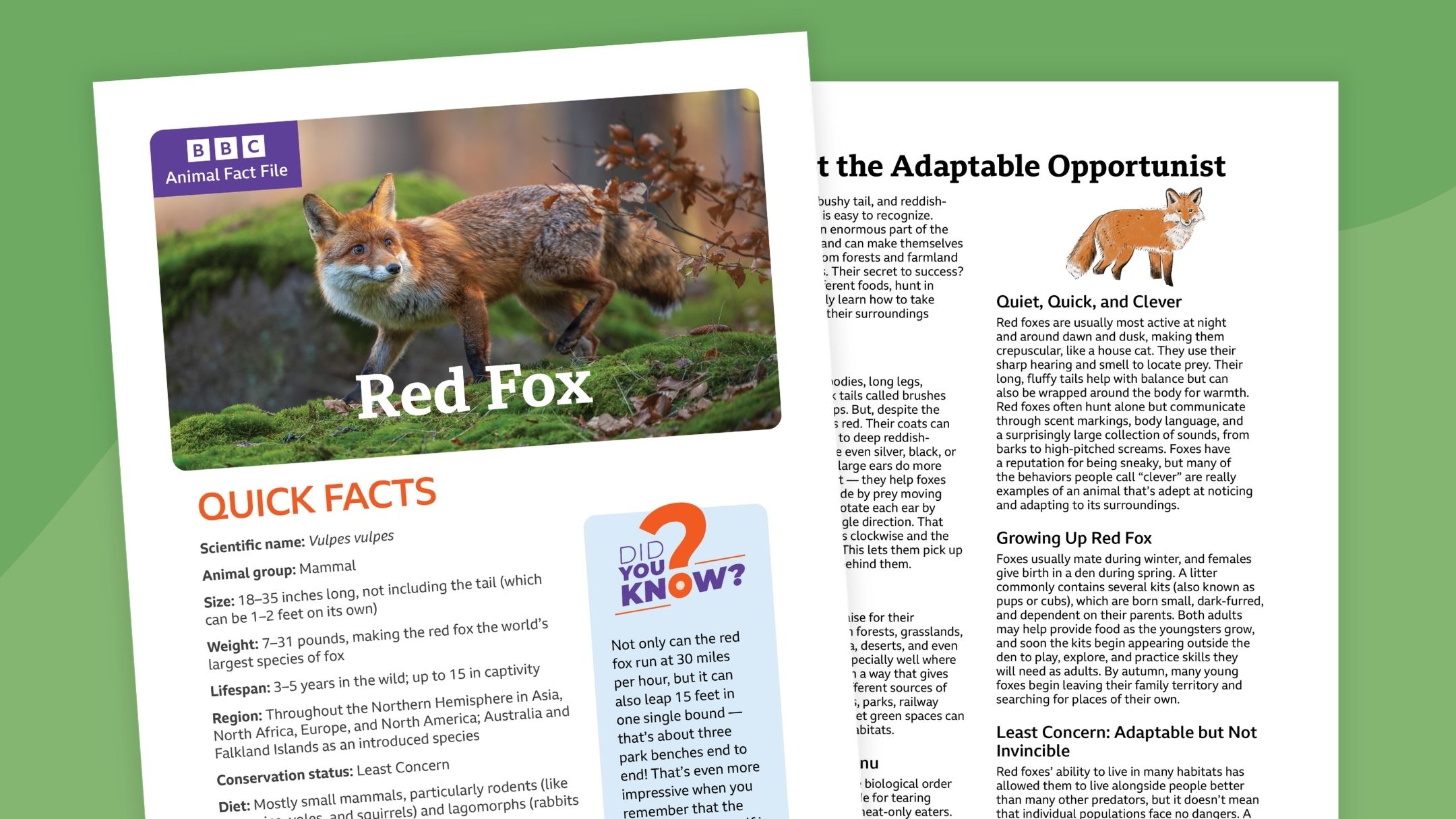
Animal Fact File: Red Fox
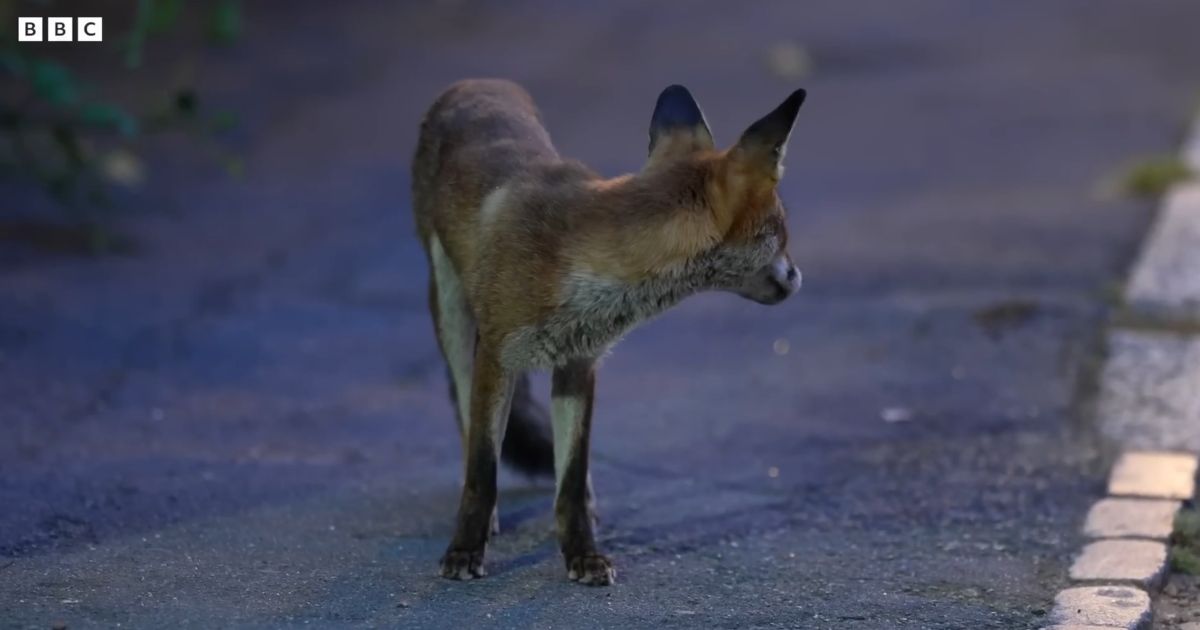
What animal can run 30 miles per hour, leap 15 feet in a single bound, and make itself at home in forests, deserts, farmland, and even cities?
Red foxes are masters of adapting to their surroundings. Explore how their sharp senses, flexible diet, and varied hunting strategies help them find food and survive in habitats all over the world. You'll also discover how foxes communicate, raise their young, and navigate life alongside people — and why being adaptable doesn't make them invincible.
Teachers and parents, you can use this fact file to:
- Introduce an animal, wildlife, or life science unit
- Support nonfiction reading and vocabulary practice
- Explore animal adaptations, behaviors, and habitats
- Compare animals and the ecosystems they live in
- Practice finding and organizing information from nonfiction texts
- Prepare students for animal research projects or presentations (use our animal report templates!)
- Connect science learning to conservation and environmental issues
- Pair with videos, articles, or other informational texts (see Related Resources below)
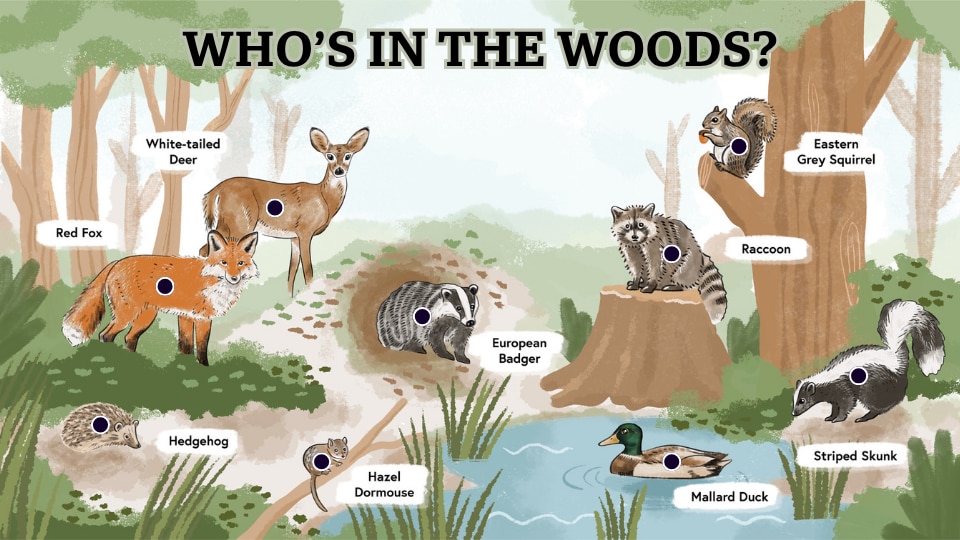
Meet nine wild animals that live in forests, parks, gardens, and neighborhoods: the red fox, white-tailed deer, mallard duck, striped skunk, eastern grey squirrel, raccoon, European badger, hedgehog, and hazel dormouse.
Click on each animal's picture to watch a short video, then click on its name for a fact about what makes it unusual, from its senses and behavior to the ways it has adapted to survive.
Some of these animals may live near you, while others are much harder to spot. Along the way, you'll learn how each one finds food, raises its young, avoids predators, and makes use of the habitat around it.
For Teachers and Parents:
Woodland Animals works well as an introduction to habitats and adaptations or as a self-guided activity for students working on their own or in pairs. Here are a few ways to use it:
- Before exploring: Ask students which of the nine animals they've seen in real life and where. It's a quick way to connect the lesson to their own surroundings.
- While exploring: Have students record one adaptation for each animal, such as a special sense, body feature, or behavior, and how it helps the animal survive.
- After exploring: Ask students to sort the animals by what they eat, when they're active, or how they avoid predators. They can then compare animals that share a habitat but survive in different ways.
- Extension: Some of these animals live in North America, some in Europe, and some in both. Students can research which ones live in their region and why others don't.
More Like This
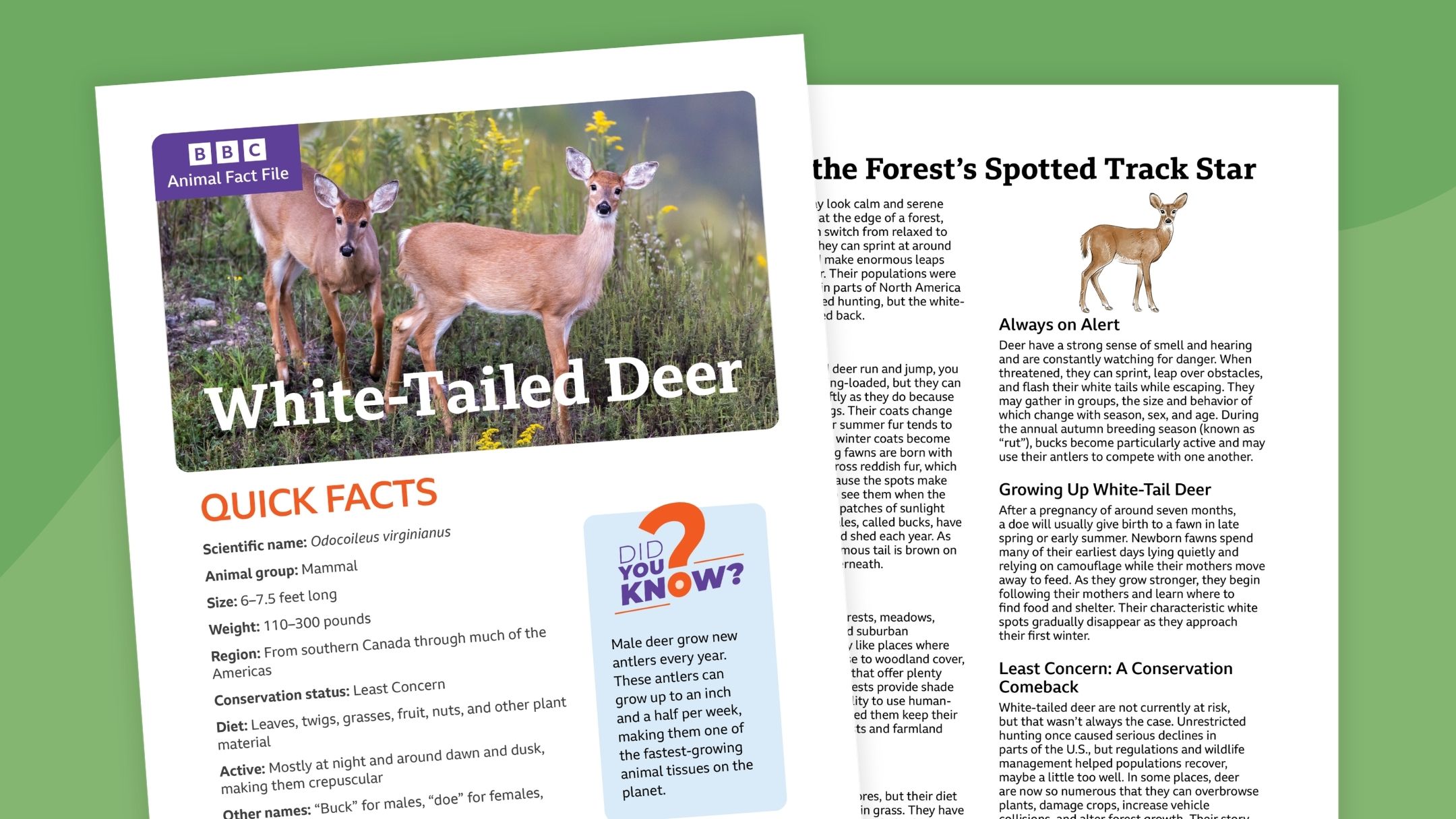
What animal can grow a brand-new set of antlers every year — and grow them faster than you might think?
White-tailed deer are built for life on the move. Explore how their powerful legs help them sprint and leap, how their senses keep them alert to danger, and how their bodies change with the seasons. You'll also discover what fawns do to stay safe, why bucks grow and shed their antlers, and how deer populations have changed over time.
Teachers and parents, you can use this fact file to:
- Introduce an animal, wildlife, or life science unit
- Support nonfiction reading and vocabulary practice
- Explore animal adaptations, behaviors, and habitats
- Compare animals and the ecosystems they live in
- Practice finding and organizing information from nonfiction texts
- Prepare students for animal research projects or presentations (use our animal report templates!)
- Connect science learning to conservation and environmental issues
- Pair with videos, articles, or other informational texts (see Related Resources below)
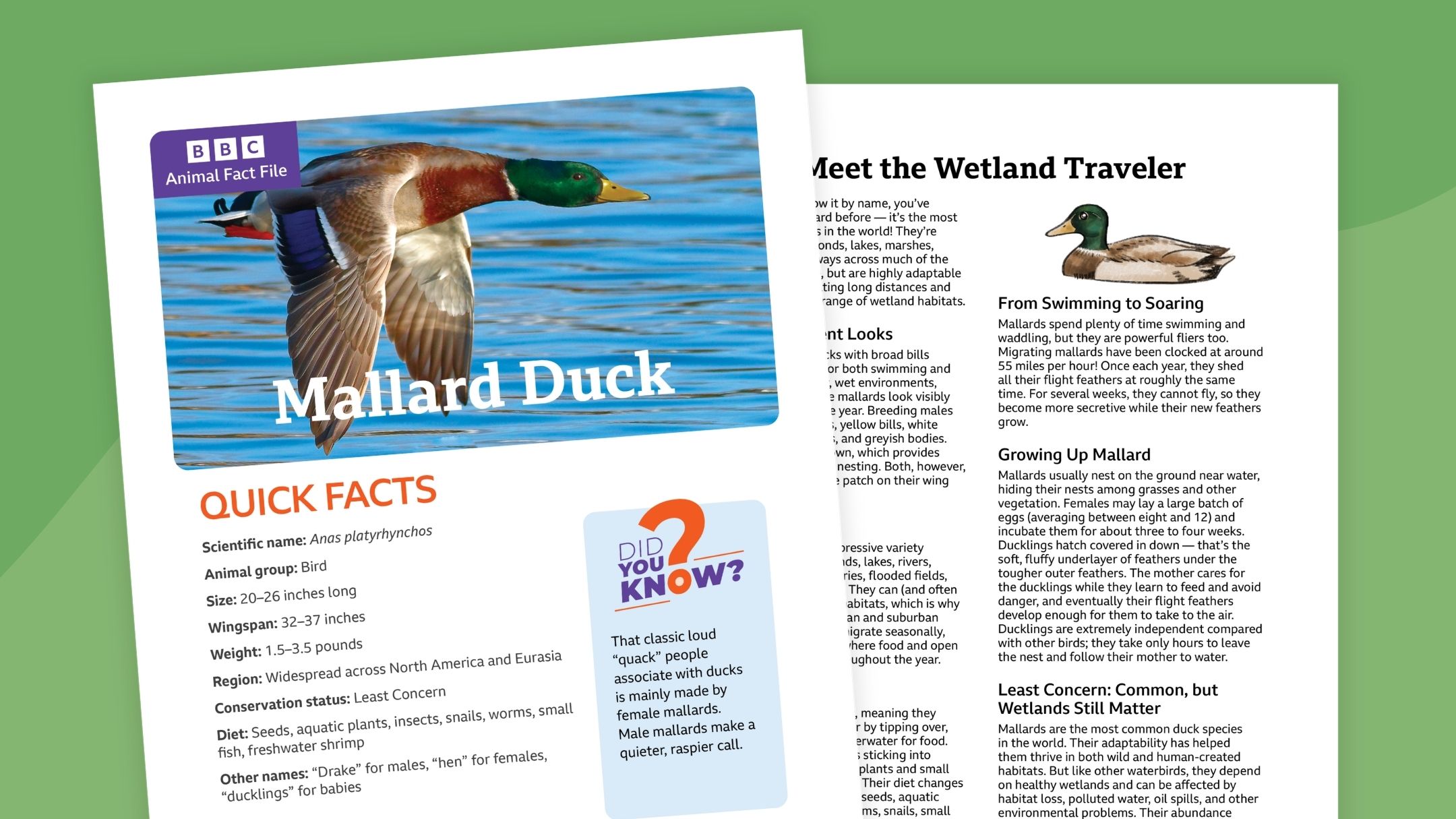
Which duck makes the classic “quack” you hear at ponds and parks? Surprisingly, it’s usually the female mallard!
Meet one of the world’s most widespread and adaptable ducks. Explore how mallards move between water, land, and sky, from tipping upside down to feed underwater to flying at speeds of around 55 miles per hour. You'll also discover why males and females look so different, how ducklings become independent within hours of hatching, and why healthy wetlands matter even to a species that seems to be everywhere.
Teachers and parents, you can use this fact file to:
- Introduce an animal, wildlife, or life science unit
- Support nonfiction reading and vocabulary practice
- Explore animal adaptations, behaviors, and habitats
- Compare animals and the ecosystems they live in
- Practice finding and organizing information from nonfiction texts
- Prepare students for animal research projects or presentations (use our animal report templates!)
- Connect science learning to conservation and environmental issues
- Pair with videos, articles, or other informational texts (see Related Resources below)
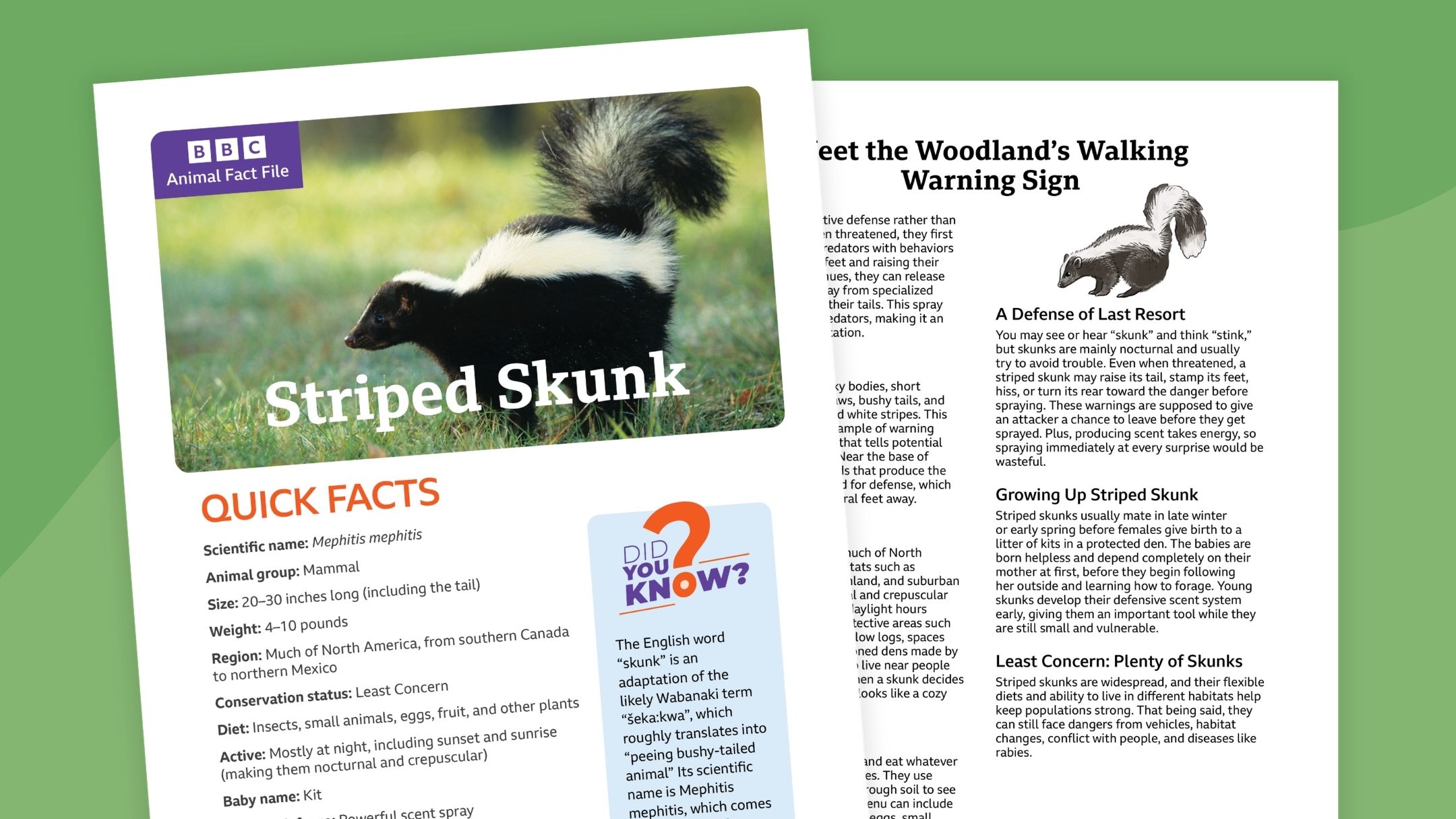
What animal can warn an attacker with stomps, raised fur, and a lifted tail before turning its rear end into a surprisingly powerful defense?
Meet the striped skunk, a small mammal with a big reputation. Find out how its bold black-and-white markings serve as a warning, why spraying is actually a last resort, and how its sharp claws help it dig up dinner. You'll also discover where skunks make their homes, what they eat, and how these mostly nighttime animals manage to live surprisingly close to people.
Teachers and parents, you can use this fact file to:
- Introduce an animal, wildlife, or life science unit
- Support nonfiction reading and vocabulary practice
- Explore animal adaptations, behaviors, and habitats
- Compare animals and the ecosystems they live in
- Practice finding and organizing information from nonfiction texts
- Prepare students for animal research projects or presentations (use our animal report templates!)
- Connect science learning to conservation and environmental issues
- Pair with videos, articles, or other informational texts (see Related Resources below)
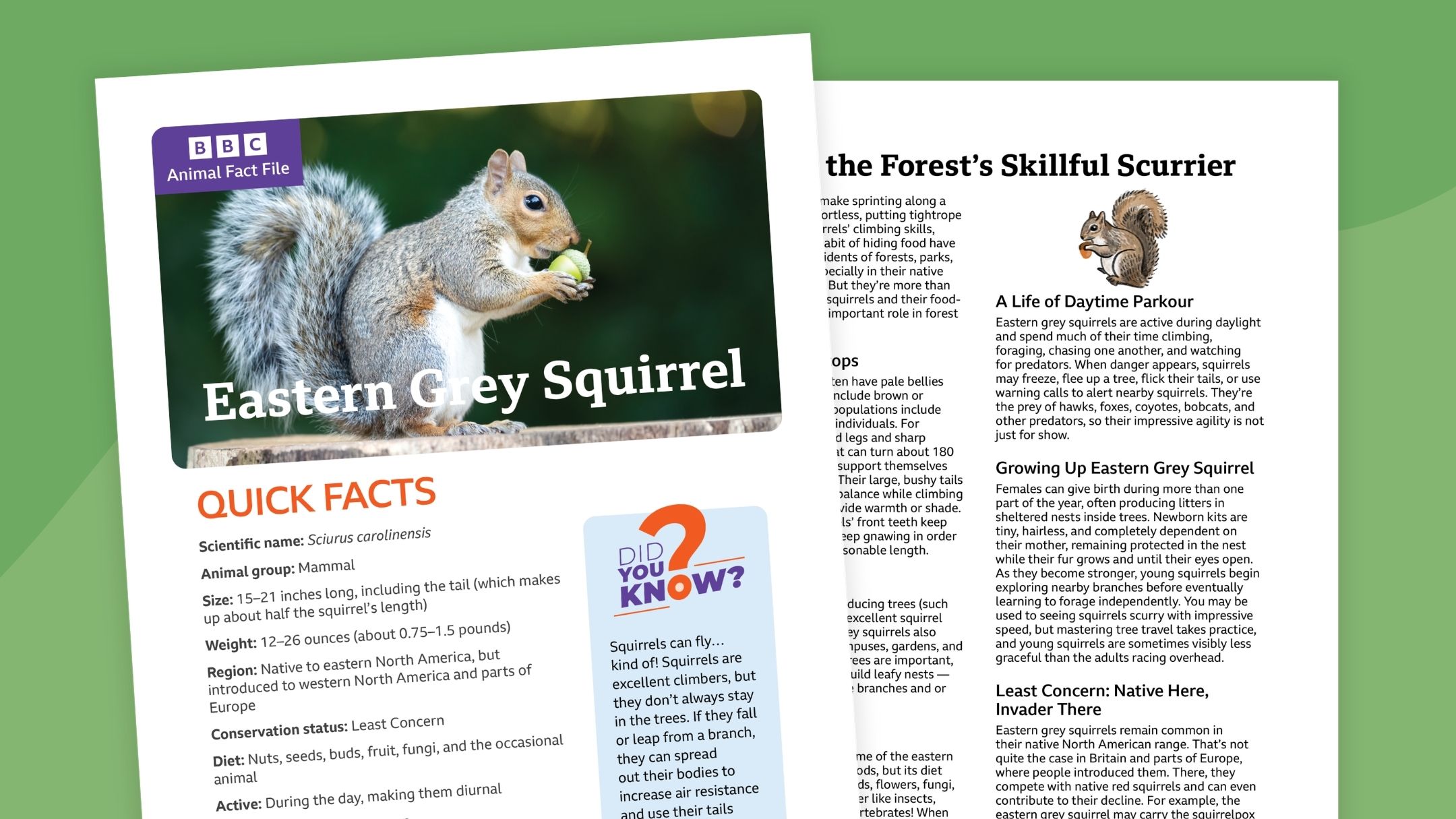
Can a squirrel really fly? Not exactly — but it can leap, fall, and glide through the air with surprising control.
Eastern grey squirrels may be familiar sights in parks and backyards, but there’s a lot going on behind those quick paws and bushy tails. Explore the climbing skills that help them navigate the treetops, the clever way they stash food for later, and the surprising role those forgotten nuts can play in growing new trees. You'll also discover how squirrels communicate, raise their young, and adapt to life in both forests and human neighborhoods.
Teachers and parents, you can use this fact file to:
- Introduce an animal, wildlife, or life science unit
- Support nonfiction reading and vocabulary practice
- Explore animal adaptations, behaviors, and habitats
- Compare animals and the ecosystems they live in
- Practice finding and organizing information from nonfiction texts
- Prepare students for animal research projects or presentations (use our animal report templates!)
- Connect science learning to conservation and environmental issues
- Pair with videos, articles, or other informational texts (see Related Resources below)
What animal can grow a brand-new set of antlers every year — and grow them faster than you might think?
White-tailed deer are built for life on the move. Explore how their powerful legs help them sprint and leap, how their senses keep them alert to danger, and how their bodies change with the seasons. You'll also discover what fawns do to stay safe, why bucks grow and shed their antlers, and how deer populations have changed over time.
Teachers and parents, you can use this fact file to:
- Introduce an animal, wildlife, or life science unit
- Support nonfiction reading and vocabulary practice
- Explore animal adaptations, behaviors, and habitats
- Compare animals and the ecosystems they live in
- Practice finding and organizing information from nonfiction texts
- Prepare students for animal research projects or presentations (use our animal report templates!)
- Connect science learning to conservation and environmental issues
- Pair with videos, articles, or other informational texts (see Related Resources below)
Which duck makes the classic “quack” you hear at ponds and parks? Surprisingly, it’s usually the female mallard!
Meet one of the world’s most widespread and adaptable ducks. Explore how mallards move between water, land, and sky, from tipping upside down to feed underwater to flying at speeds of around 55 miles per hour. You'll also discover why males and females look so different, how ducklings become independent within hours of hatching, and why healthy wetlands matter even to a species that seems to be everywhere.
Teachers and parents, you can use this fact file to:
- Introduce an animal, wildlife, or life science unit
- Support nonfiction reading and vocabulary practice
- Explore animal adaptations, behaviors, and habitats
- Compare animals and the ecosystems they live in
- Practice finding and organizing information from nonfiction texts
- Prepare students for animal research projects or presentations (use our animal report templates!)
- Connect science learning to conservation and environmental issues
- Pair with videos, articles, or other informational texts (see Related Resources below)
What animal can warn an attacker with stomps, raised fur, and a lifted tail before turning its rear end into a surprisingly powerful defense?
Meet the striped skunk, a small mammal with a big reputation. Find out how its bold black-and-white markings serve as a warning, why spraying is actually a last resort, and how its sharp claws help it dig up dinner. You'll also discover where skunks make their homes, what they eat, and how these mostly nighttime animals manage to live surprisingly close to people.
Teachers and parents, you can use this fact file to:
- Introduce an animal, wildlife, or life science unit
- Support nonfiction reading and vocabulary practice
- Explore animal adaptations, behaviors, and habitats
- Compare animals and the ecosystems they live in
- Practice finding and organizing information from nonfiction texts
- Prepare students for animal research projects or presentations (use our animal report templates!)
- Connect science learning to conservation and environmental issues
- Pair with videos, articles, or other informational texts (see Related Resources below)
Can a squirrel really fly? Not exactly — but it can leap, fall, and glide through the air with surprising control.
Eastern grey squirrels may be familiar sights in parks and backyards, but there’s a lot going on behind those quick paws and bushy tails. Explore the climbing skills that help them navigate the treetops, the clever way they stash food for later, and the surprising role those forgotten nuts can play in growing new trees. You'll also discover how squirrels communicate, raise their young, and adapt to life in both forests and human neighborhoods.
Teachers and parents, you can use this fact file to:
- Introduce an animal, wildlife, or life science unit
- Support nonfiction reading and vocabulary practice
- Explore animal adaptations, behaviors, and habitats
- Compare animals and the ecosystems they live in
- Practice finding and organizing information from nonfiction texts
- Prepare students for animal research projects or presentations (use our animal report templates!)
- Connect science learning to conservation and environmental issues
- Pair with videos, articles, or other informational texts (see Related Resources below)