All About Owls
Step inside The Owlery and meet five owl species up close, in an interactive exploration for students ages 8–14
Owls can fly almost silently, see in near-darkness, and some can hear a mouse moving under a foot of snow. They live on every continent except Antarctica, in forests, deserts, tundra, and farmland, and each species has adapted to survive where it lives.
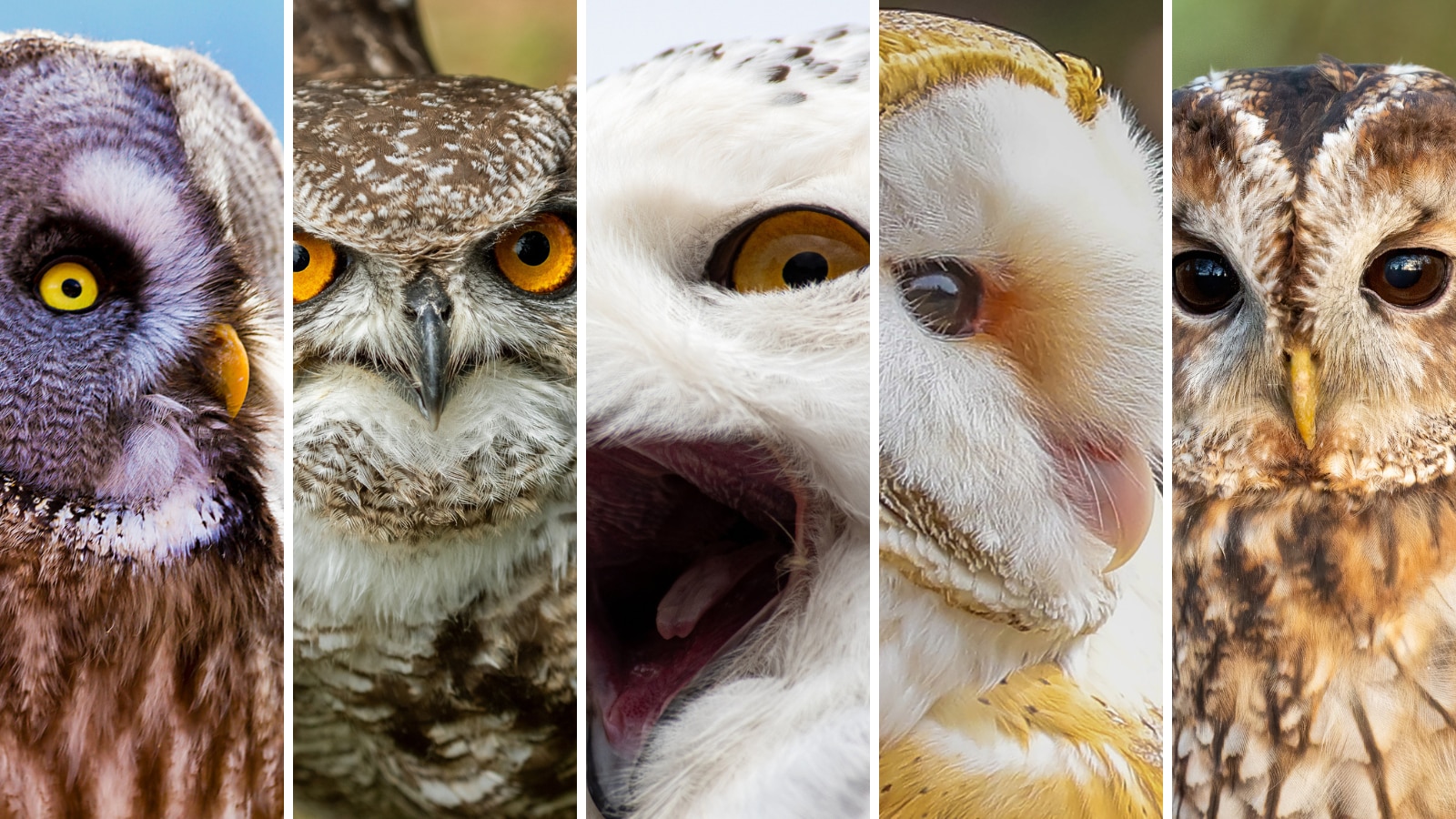
Meet the great grey owl, snowy owl, barn owl, tawny owl and Eurasian eagle owl. BBC videos show them hunting and flying, and short fact files explain the science behind what you’re seeing: why their feathers are so quiet, how their faces work like satellite dishes, and what makes each species different.
Start in The Owlery, then pick an owl and dig deeper.
Teachers and Parents: Students explore each owl at their own pace, pairing BBC videos with short reading passages on adaptations, habitats, predator-prey relationships, and biodiversity. It’s a good lead-in to classroom discussions about food webs and why predators matter to healthy ecosystems.
Explore the Owls Interactive
Reading Passages + Report Templates
Which owl can hunt silently through the night, spot prey across snowy landscapes, or grow large enough to rival some eagles in size? Owls come in all shapes and sizes, and each has its own remarkable way of life.
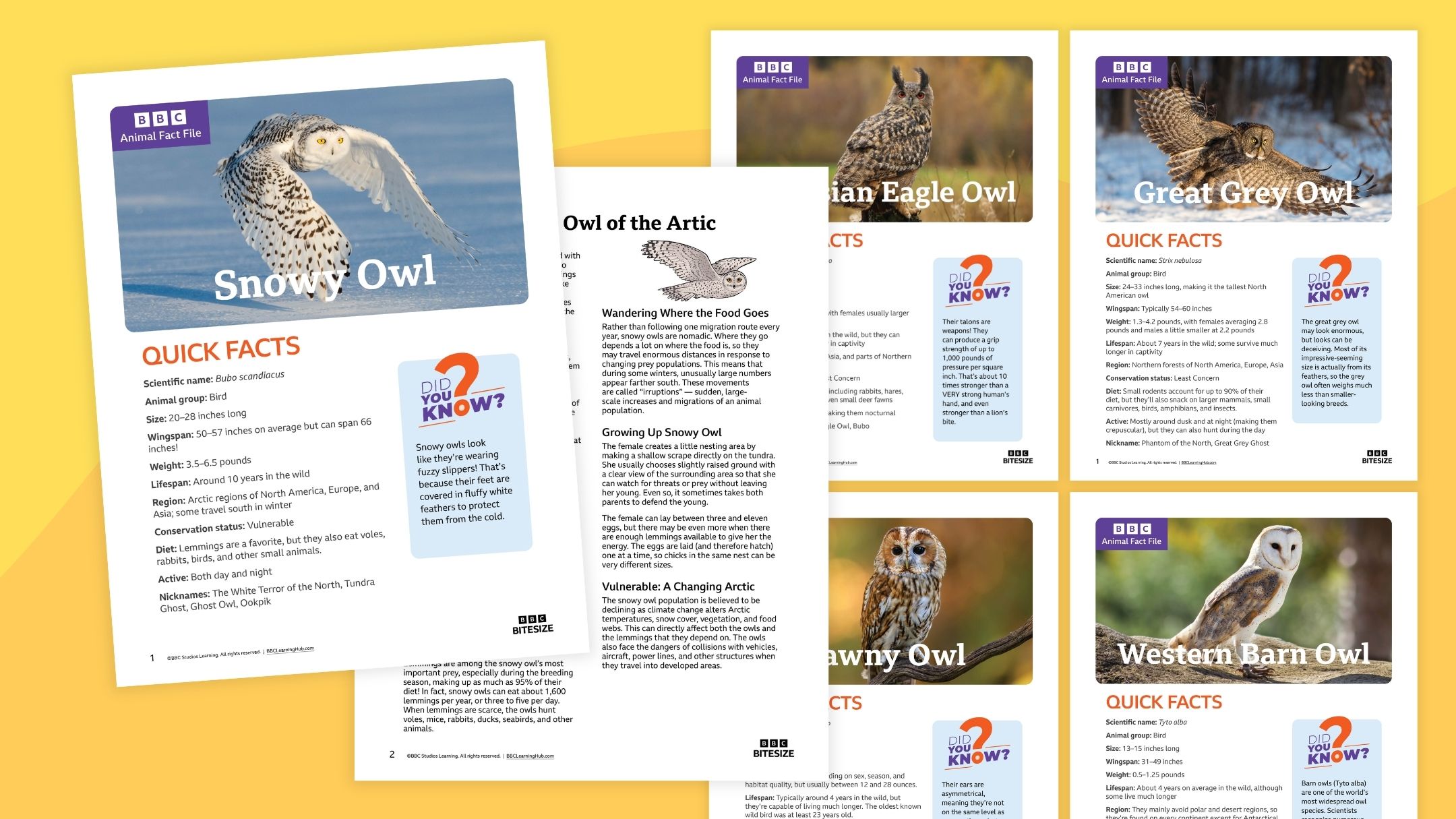
From the ghostly barn owl to the powerful eagle owl, these birds of prey have evolved extraordinary features to help them hunt, navigate their habitats, and survive. Explore five fascinating owl species — the great grey owl, barn owl, Eurasian eagle owl, snowy owl, and tawny owl — to discover what they eat, where they live, how they raise their young, and what makes each one unique. You'll also learn about the challenges some owls face in the wild and why protecting their habitats matters.

We designed these worksheets for use in grades 3–8. Show one of our many short animal videos, and use the worksheets to get students to synthesize and extend their learning. Students can choose which worksheet to complete based on their interests, or you can assign one that best fits their learning needs.
Which owl can hunt silently through the night, spot prey across snowy landscapes, or grow large enough to rival some eagles in size? Owls come in all shapes and sizes, and each has its own remarkable way of life.
From the ghostly barn owl to the powerful eagle owl, these birds of prey have evolved extraordinary features to help them hunt, navigate their habitats, and survive. Explore five fascinating owl species — the great grey owl, barn owl, Eurasian eagle owl, snowy owl, and tawny owl — to discover what they eat, where they live, how they raise their young, and what makes each one unique. You'll also learn about the challenges some owls face in the wild and why protecting their habitats matters.
We designed these worksheets for use in grades 3–8. Show one of our many short animal videos, and use the worksheets to get students to synthesize and extend their learning. Students can choose which worksheet to complete based on their interests, or you can assign one that best fits their learning needs.
Great Grey Owls
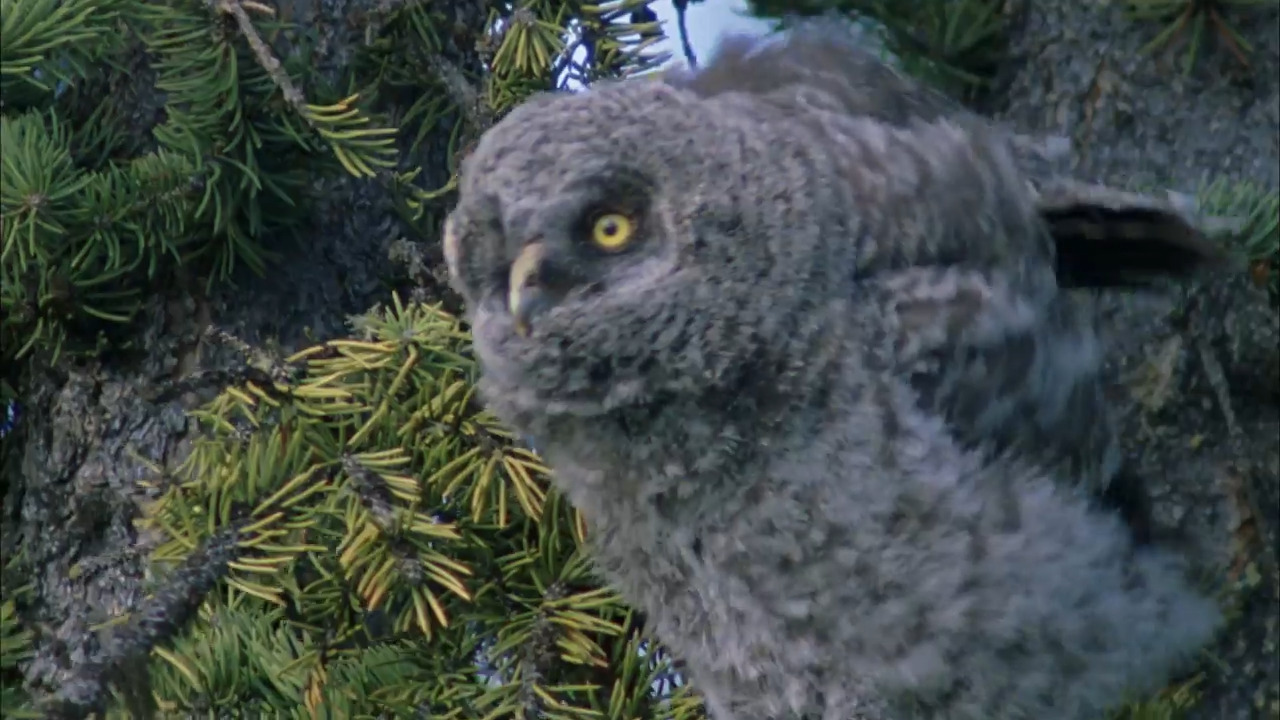
In Great Grey Owls Learn To Fly, young grey owls learn to fly in early summer, leaping from tall trees. The tallest of these is a giant sequoia known as General Sherman. Nearby, the oldest trees have been growing for 5,000 years! This video is excerpted from BBC's Planet Earth, a breathtaking documentary series that highlights the natural wonders of our planet.
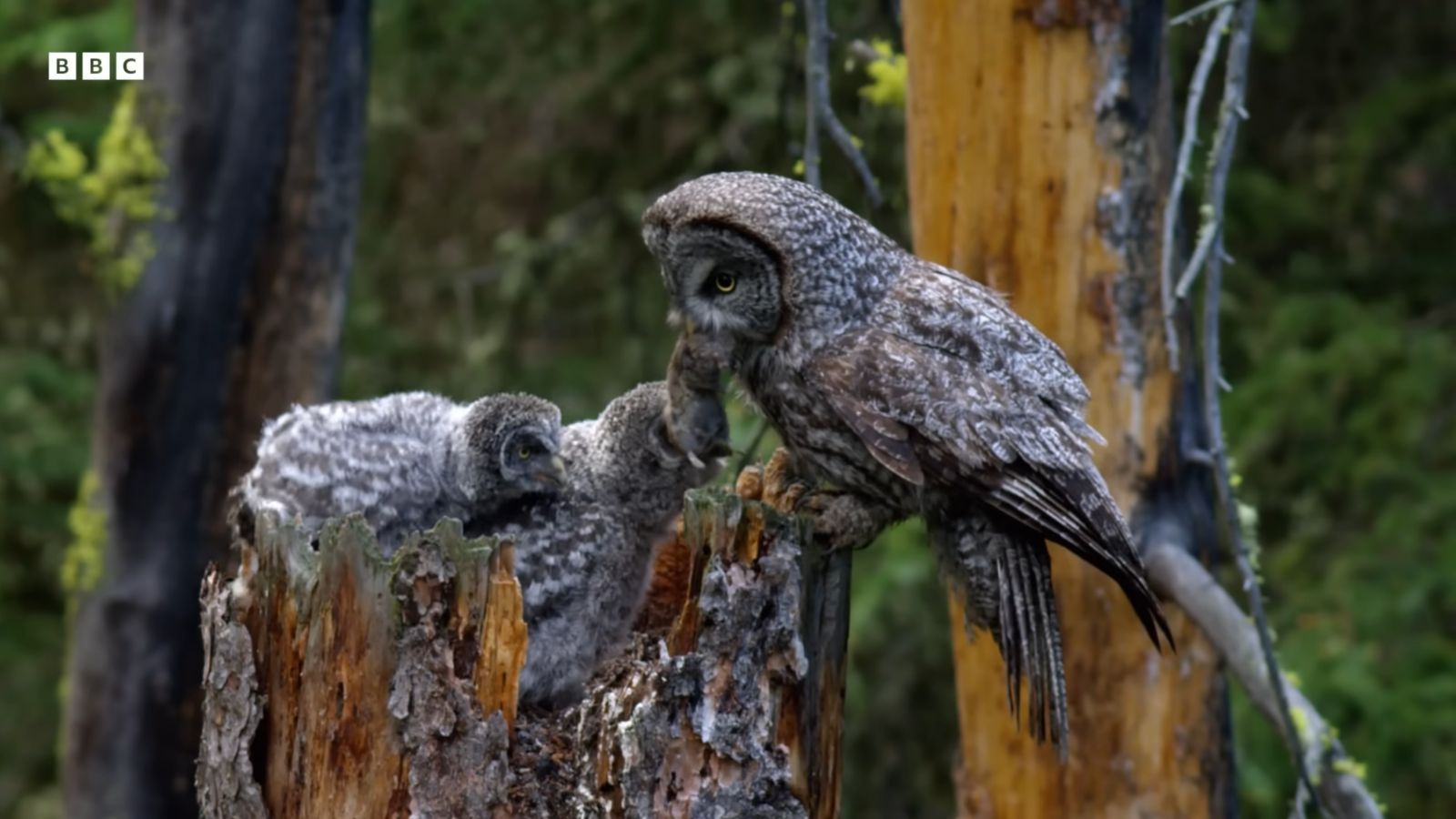
In Great Grey Owls Learn To Fly, young grey owls learn to fly in early summer, leaping from tall trees. The tallest of these is a giant sequoia known as General Sherman. Nearby, the oldest trees have been growing for 5,000 years! This video is excerpted from BBC's Planet Earth, a breathtaking documentary series that highlights the natural wonders of our planet.
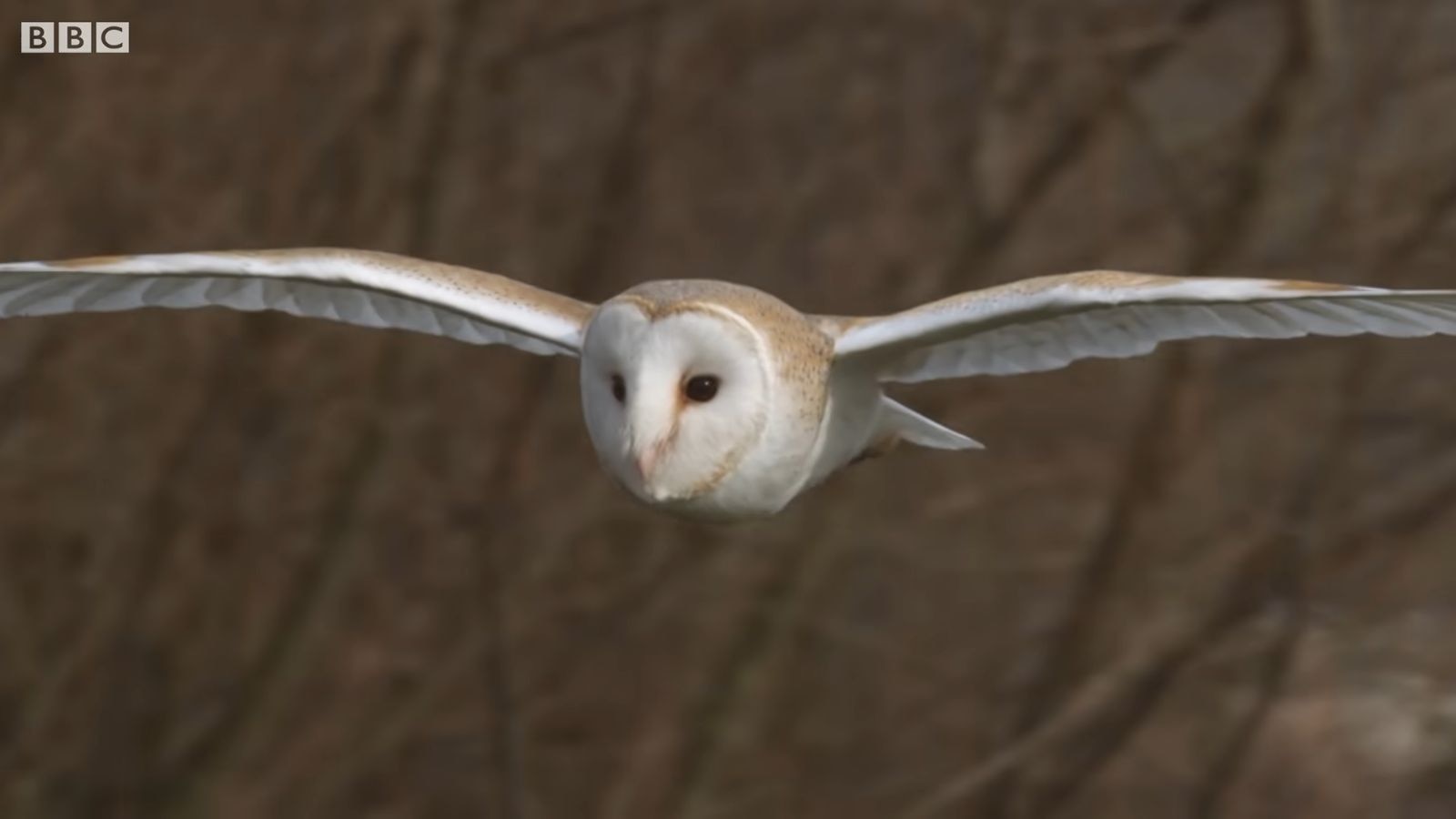
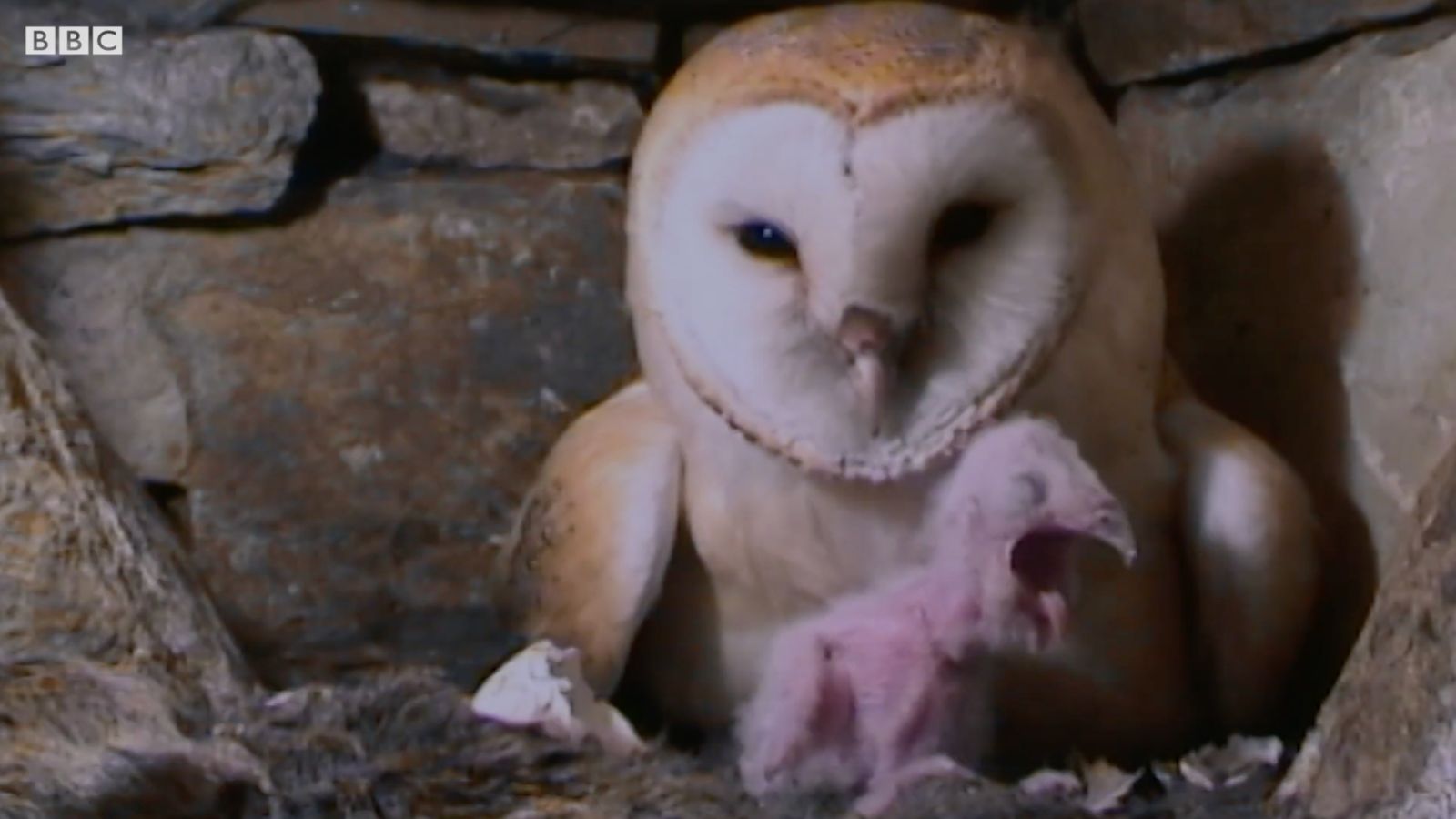
Barn Owls
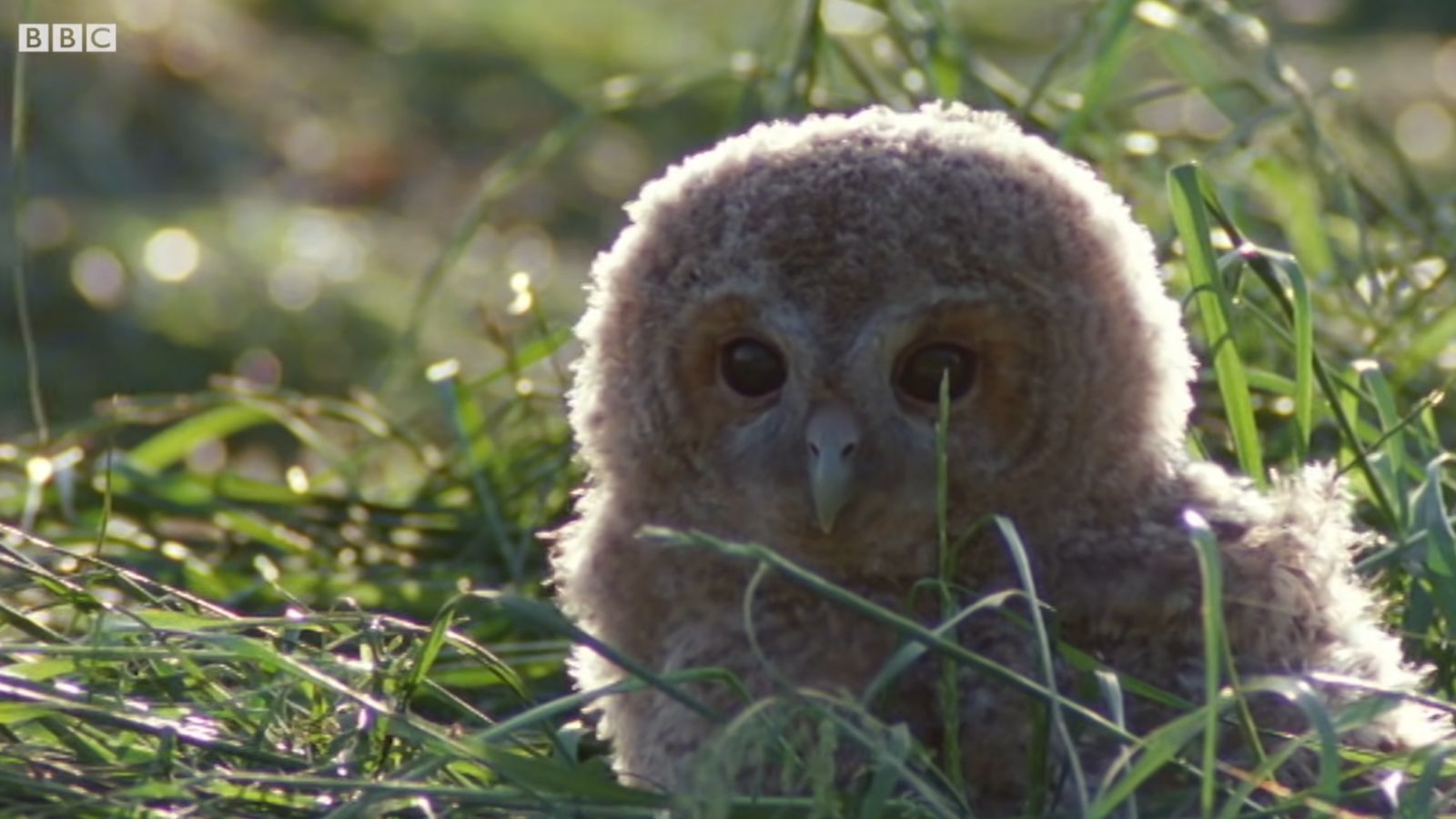
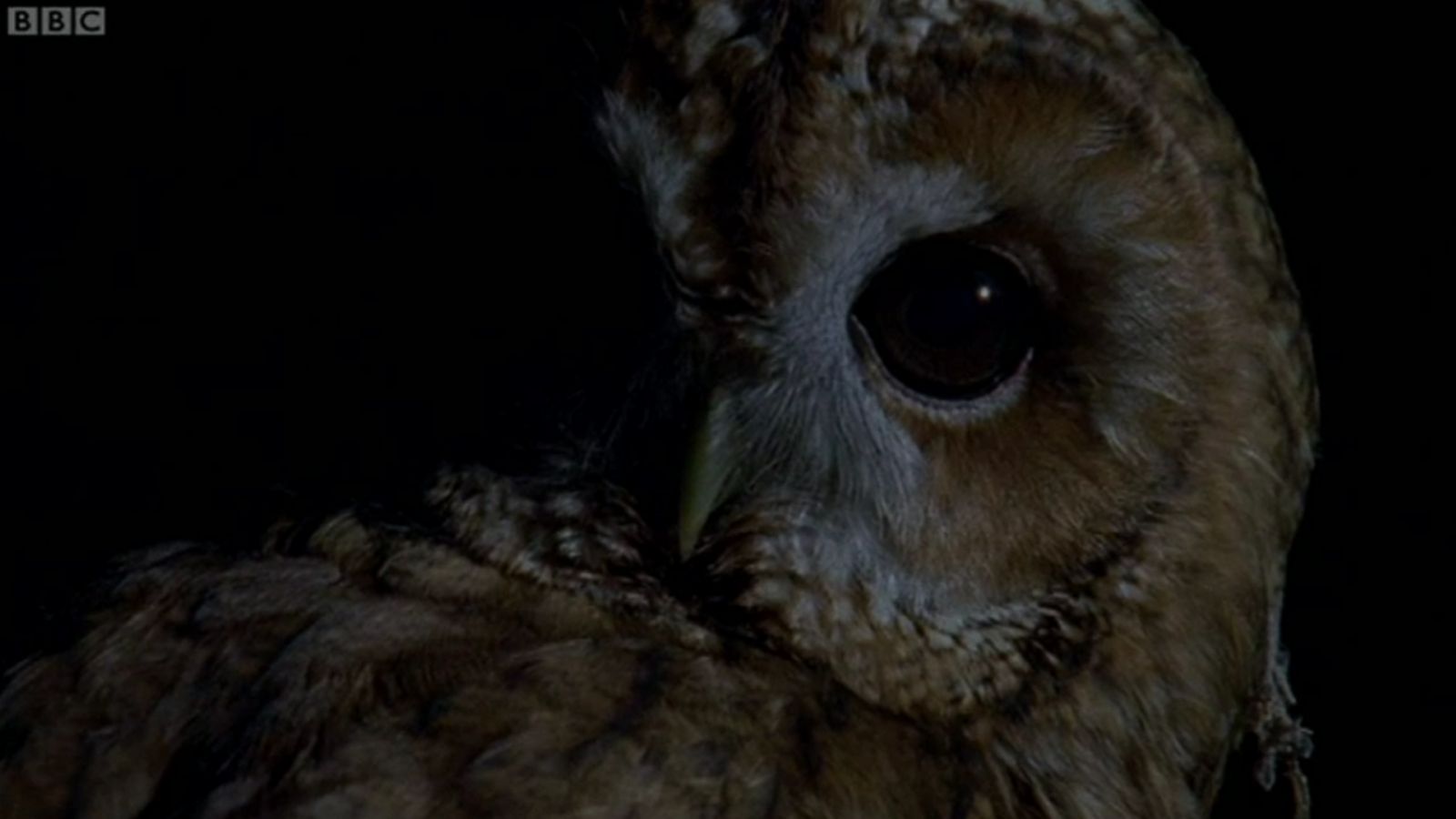
Tawny Owls
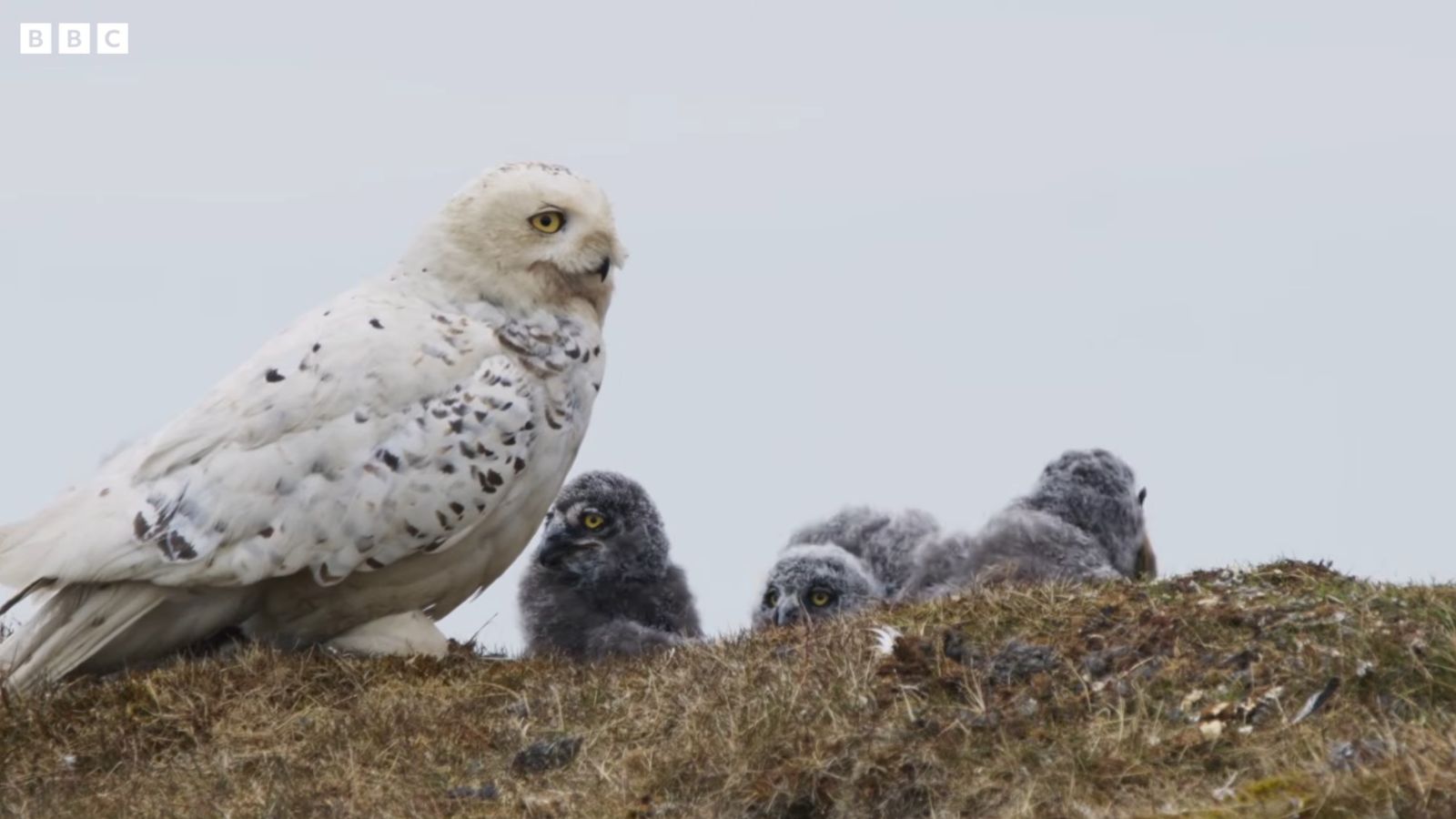
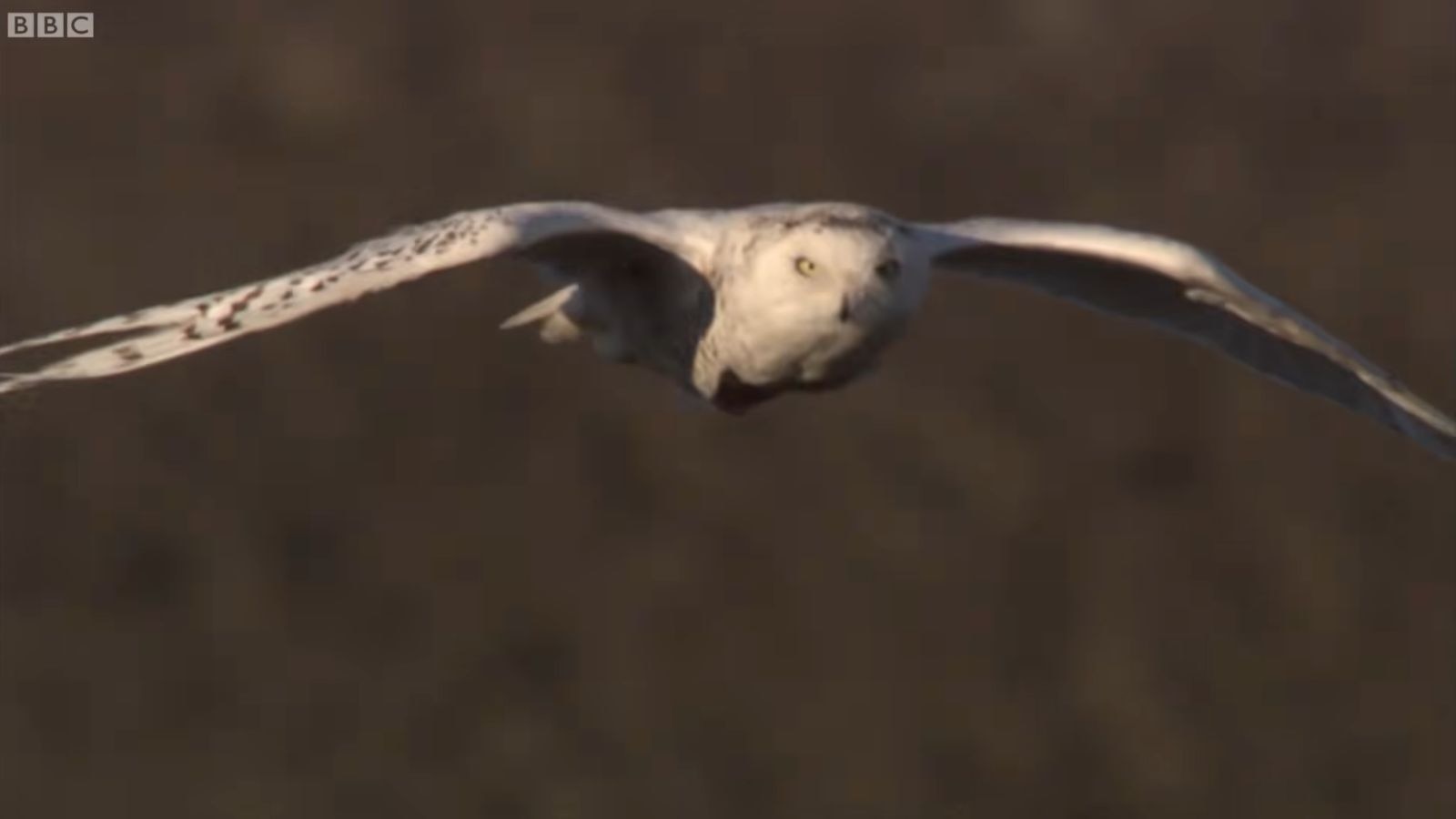
Snowy Owls
Eagle Owls