Turns Out "Tell Me About Your Pet" Is a Whole Curriculum
6 ways to use pets to teach speaking, reading, and writing
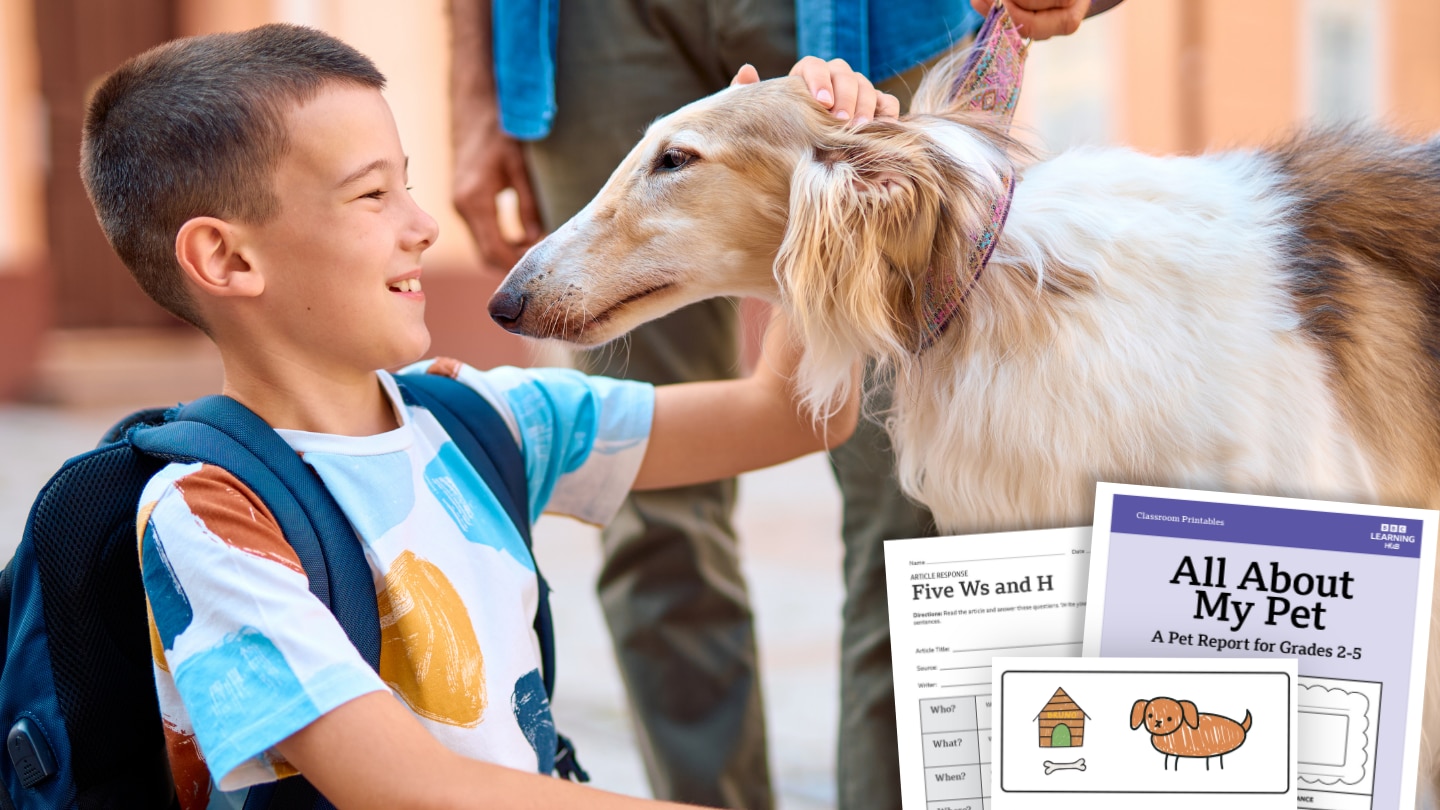
“Do you have any pets?” is a classic classroom icebreaker and for good reason — pets are highly personal and often funny or sweet. Plus, even students who don’t own a pet themselves usually have something to say about them — like the pet they’d choose if they weren't allergic or a story about Grandma’s quirky cat. Using pets as the context for assignments and discussions is a reliable, high-interest way to tackle a wide variety of classroom learning goals, whether you’re honing your middle schoolers’ debate skills or just trying to get your kindergarten students to stay on topic.
To make your lesson planning a walk in the park, we’ve gathered up a full list of amazing BBC resources about pets. They’re sure to get students of all ages thinking, talking, and writing about their favorite furry — or slimy, scaly, or feathered — friends.
1. Start with show-and-tell. (No pet required!)
Younger students need practice focusing on one topic when speaking in a group, and choosing a topic they love is the best way to practice! First, show students a few videos from our curated collection of clips from the show My Pet and Me. Talk about how the videos stay close to one topic — the pet! — and help students notice the related subtopics they include. Use the clips as inspiration for students to plan, practice, and share their own presentations. They can talk about their own pet, a pet they know, a pet they wish they had, or even a stuffed animal. PreK–1 students can draw a picture and present orally. For students in Grades 2–5, use this easy “All About My Pet” flip book template to help them prepare what they’ll say.

2. Woof, woof! Read all about it.
Students can use the pet-related background knowledge they already have to help them tackle new informational reading — a critical skill for all ages. Choose from articles like "Top 10 Biggest Dog Breeds in the World" or "Why Your Brain Thinks This Puppy Is Cuter Than a Baby"! We have versions of our student articles leveled for Grades 3–5, 6–8, and 9–12. After reading, our bundle of nonfiction article response worksheets can help you support students to write about what they learned.
 Getty
Getty
3. Use pet care to teach procedural writing.
Writing about procedures clearly, step-by-step, begins with internalizing strong models, especially in Grades K–2. Try viewing and discussing videos in our Caring for Furry Friends collection. Then, create a shared writing text based on the pet care tips in one of the videos to model grade-appropriate “how-to” writing for your students. All this supported set-up will prepare students to do their own procedural writing.
4. Start a great pet debate.
Debates pull together so many key skills for students, from research and preparing points to effective public speaking and responding to others’ arguments. An engaging, familiar subject like pets is perfect for introducing debating basics. For Grades 6–12, choose a debate question everyone can relate to, whether they own a pet or not, by introducing it with a news story like Is Your Pet Family — or Just Property? In Grades K–5, have students choose an animal to research, like the flamingo, the peacock, the stick insect, or the prairie dog, and debate whether it would work to keep one as a pet.
5. Dog, Cat… Octopus? Bridge familiar and new learning.
What pets need is the perfect context for using known information to make sense of novel content. We can almost guarantee that none of your Grades 6–12 students own a pet octopus! But, they can practice using their understanding of pet care and pet owners’ relationships to their pets to make sense of the content in Living With An Octopus, a video about ecologist David Scheel, who actually does have an eight-legged member of his household! View and discuss it using the provided questions and prompts. Then, ask students to reflect on how this new information changed their thinking about the familiar topic of pets.
6. Share pet stories to build empathy.
Talking about how people make sure their pets feel safe and secure and have what they need to thrive can be a relatable hook for conversations about caring for each other in your classroom community. Or, turn it around: Stories about how animals help people are heartwarming, captivating, and excellent for helping students’ develop an appreciation for others’ experiences and perspectives. Choose from compelling examples like this 46-year-old horse who helped its owner cope with a difficult medical diagnosis or this introduction to a police dog who helps human officers do their jobs. You can even inspire future animal do-gooders with this video on raising future guide dogs.
For even more pet-themed teaching resources, visit our search page and type in "pets"!
Create your free account to save resources, create video playlists, and get free printables!

Cats. Dogs. Potbellied pigs?! Kids LOVE pets — and we do too!
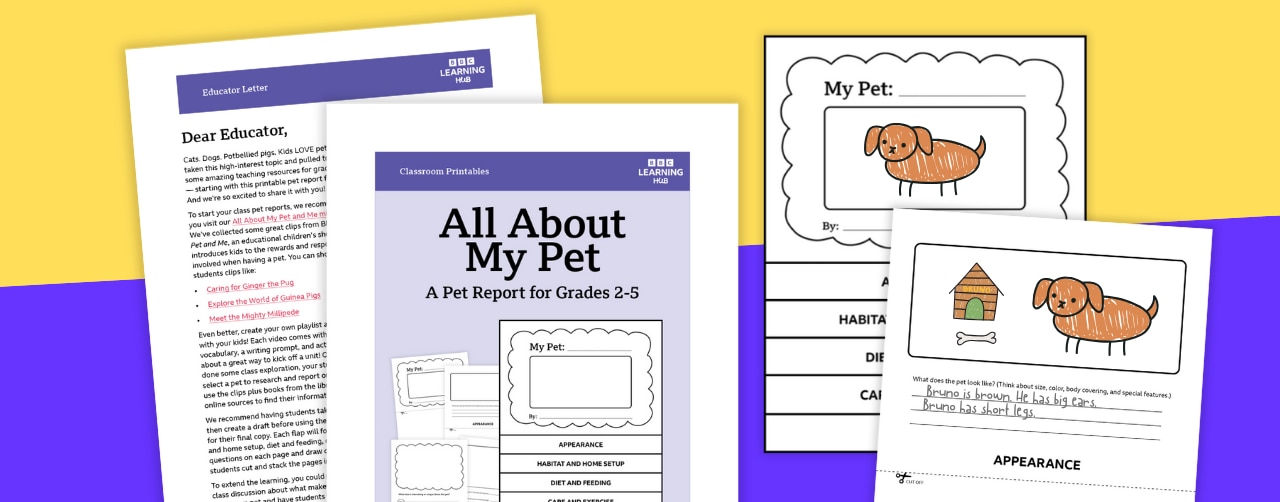
Cats. Dogs. Potbellied pigs. Kids LOVE pets. We've taken this high-interest topic and pulled together some amazing teaching resources for grades 2–5 — starting with this printable pet report flip book! We recommend having students take notes and then create a draft before using the template for their final copy. Each flap will focus on a different aspect of pets: appearance, habitat and home setup, diet and feeding, care and exercise, and fun facts. Students will answer questions on each page and draw or paste a visual that connects to the text. To assemble, students cut and stack the pages in order, then attach them at the top with staples.
Hint: Watch one of our amazing My Pet and Me video clips to get students inspired and to get information for their reports!
More Like This