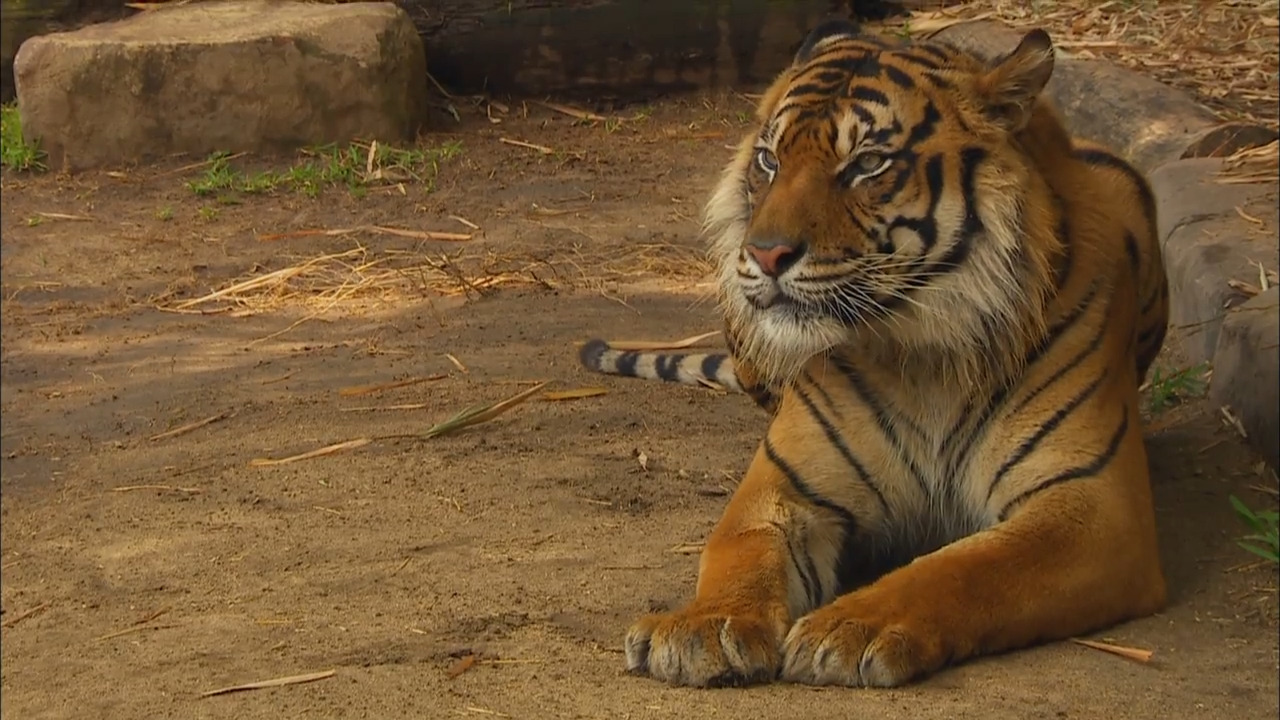
In Designing a Digital Campaign to Save Sumatran Tigers, tiger conservation is on display at a zoo’s tiger show and is the focus of a digital campaign designed to educate the public about why it’s important to save this magnificent species. This video is excerpted from BBC’s North America with Simon Reeve, in which the adventurer and environmentalist explores North America to learn all about the animals that make this continent amazing.
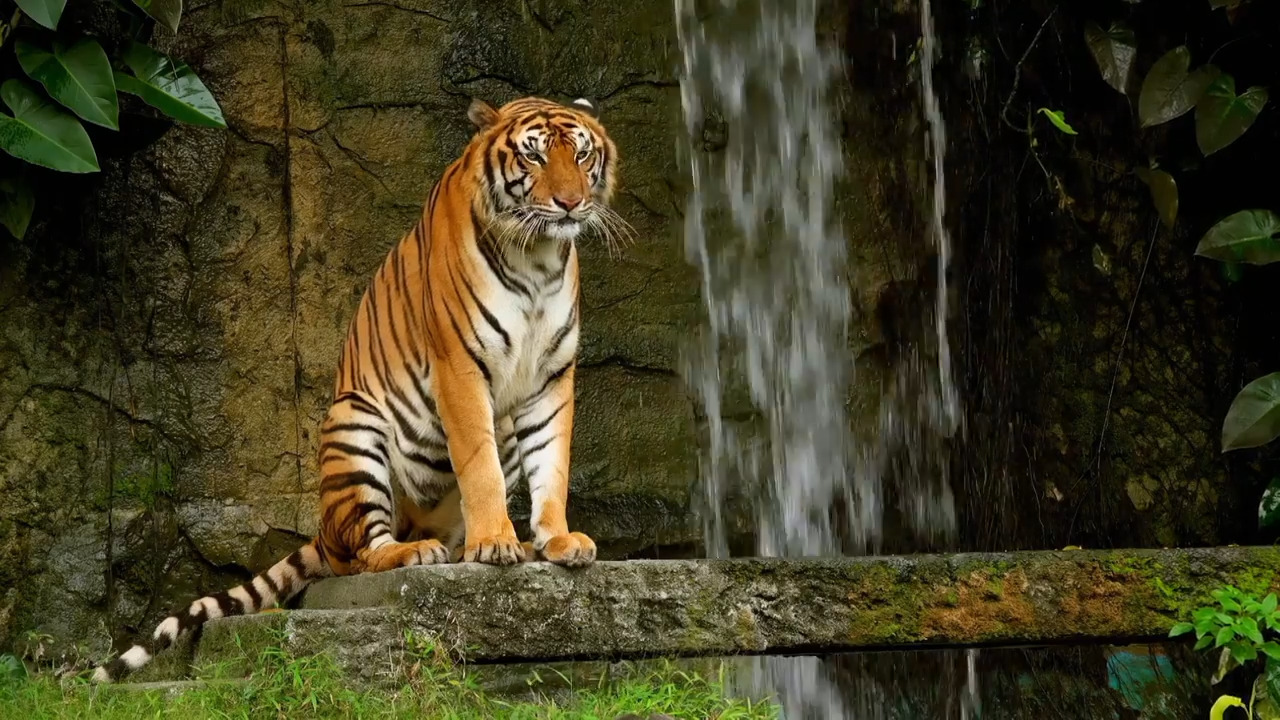
In The Truth About Tiger Stripes, evolutionary biologist Ben Garrod explains why these big cats' stripes are orange and black. Learn how melanin, the pigment responsible for skin and fur color, creates the distinctive camouflage patterns of a tiger’s coat. Discover the ways tigers use their stripes for survival in the wild, blending into their surroundings to avoid predators and enhance their hunting capabilities. This video is excerpted from Secrets of Skin, a documentary series exploring the natural history of the body’s largest organ.
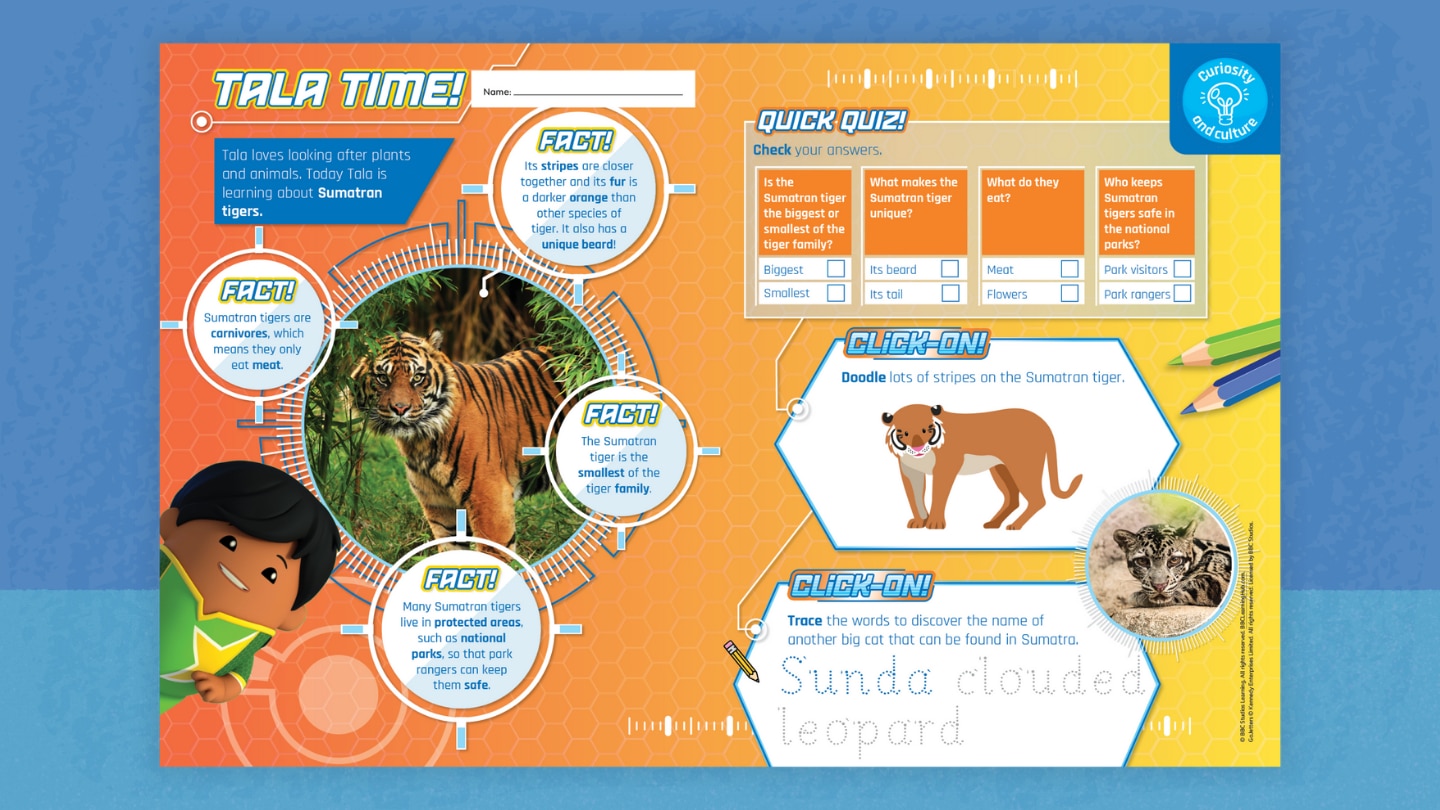
Join Tala and the Go Jetters to discover amazing facts about Sumatran tigers! In this interactive worksheet, you'll:
- Explore what makes these tigers unique, what they eat, and how they survive in protected areas.
- Complete a quick quiz.
- Doodle stripes on a tiger.
- Trace the name of another big cat found in Sumatra.
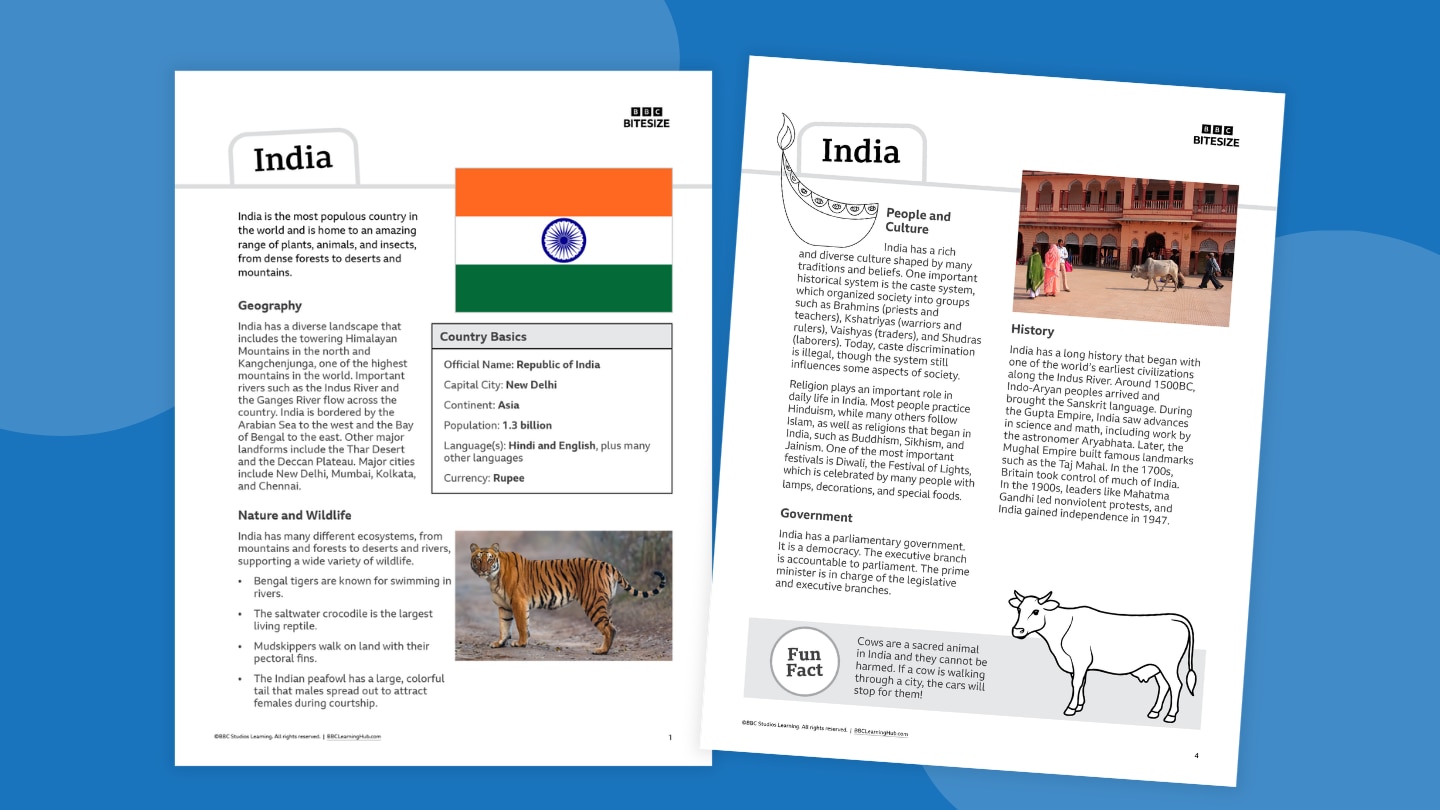
What country is home to more than a billion people, hundreds of languages, the Himalayan Mountains, and some of the world’s most iconic animals? Meet India, a country with an extraordinary mix of landscapes, cultures, religions, and traditions.
From Bengal tigers and colorful peafowl to the Taj Mahal and the mighty Himalayas, India is full of fascinating stories and discoveries. Explore the civilizations and empires that shaped its history, learn about Hinduism and other religions that began there, and discover the foods, festivals, languages, and traditions that make India unique. You’ll also explore the country’s incredible wildlife.
Teachers and parents, you can use this fact file to:
- Introduce a geography or social studies unit
- Support nonfiction reading practice
- Compare countries and cultures
- Complete map and research activities
- Prepare students for projects or presentations (use our country report template!)
- Pair with videos, articles, or other informational texts (see Related Resources below)
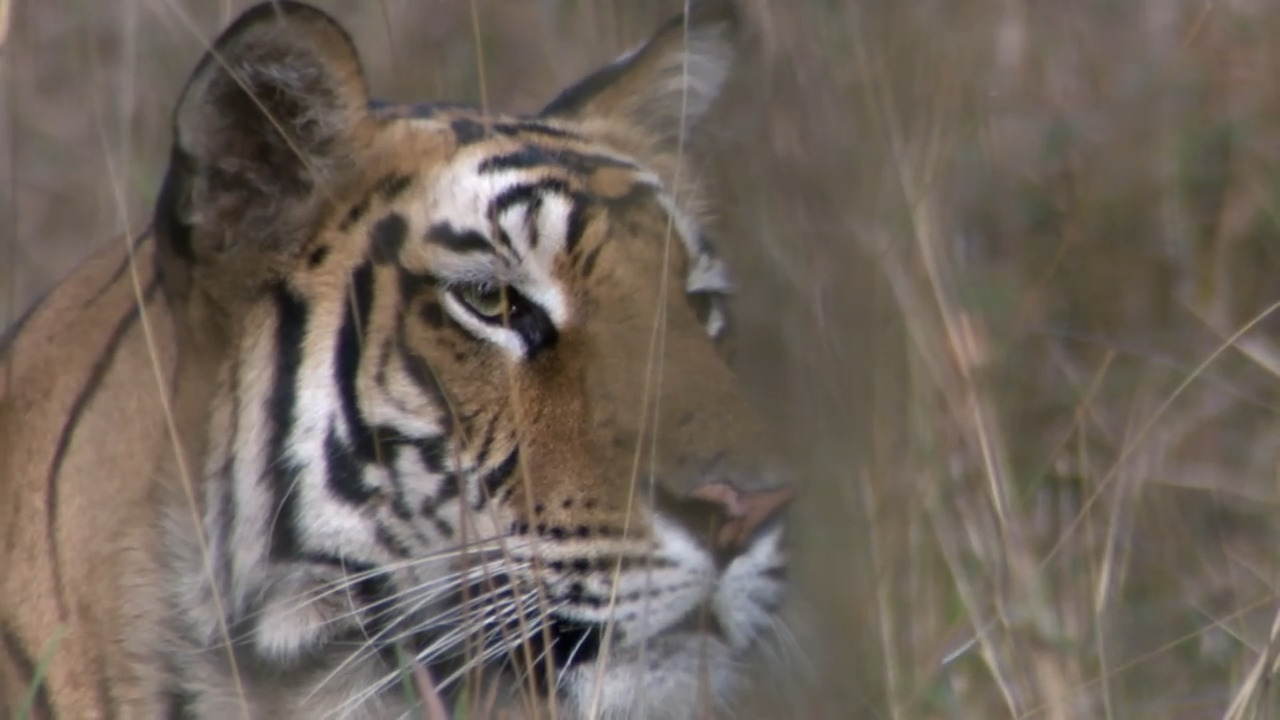
In How Langur Monkeys Help Chital Deer Escape, narrator Sir David Attenborough follows a group of chital deer in India during the dry season as they search for food, all while staying alert for danger. Luckily, they have help from the langur monkeys, who spot a tiger from high in the trees and warn the deer, allowing them to escape safely — showing how animals can work together to stay alive in the wild! This video is excerpted from BBC’s Life, a show that explores the remarkable strategies animals and plants use to ensure their survival.

This Earth Day (or anytime this month), share this inspiring video playlist designed to spark curiosity and action in students ages 8–14. From incredible wildlife conservation stories to real-world environmental solutions, each clip invites students to explore the beauty of our planet — and the challenges it faces.
Get a closer look at how forests support life on Earth, discover innovative ideas like renewable energy, and meet the people working to protect endangered species and restore habitats. Along the way, students will see how small choices can make a big difference for our world.
Packed with powerful moments and meaningful learning, this playlist encourages students not just to learn about the Earth — but to think about how they can help protect it.
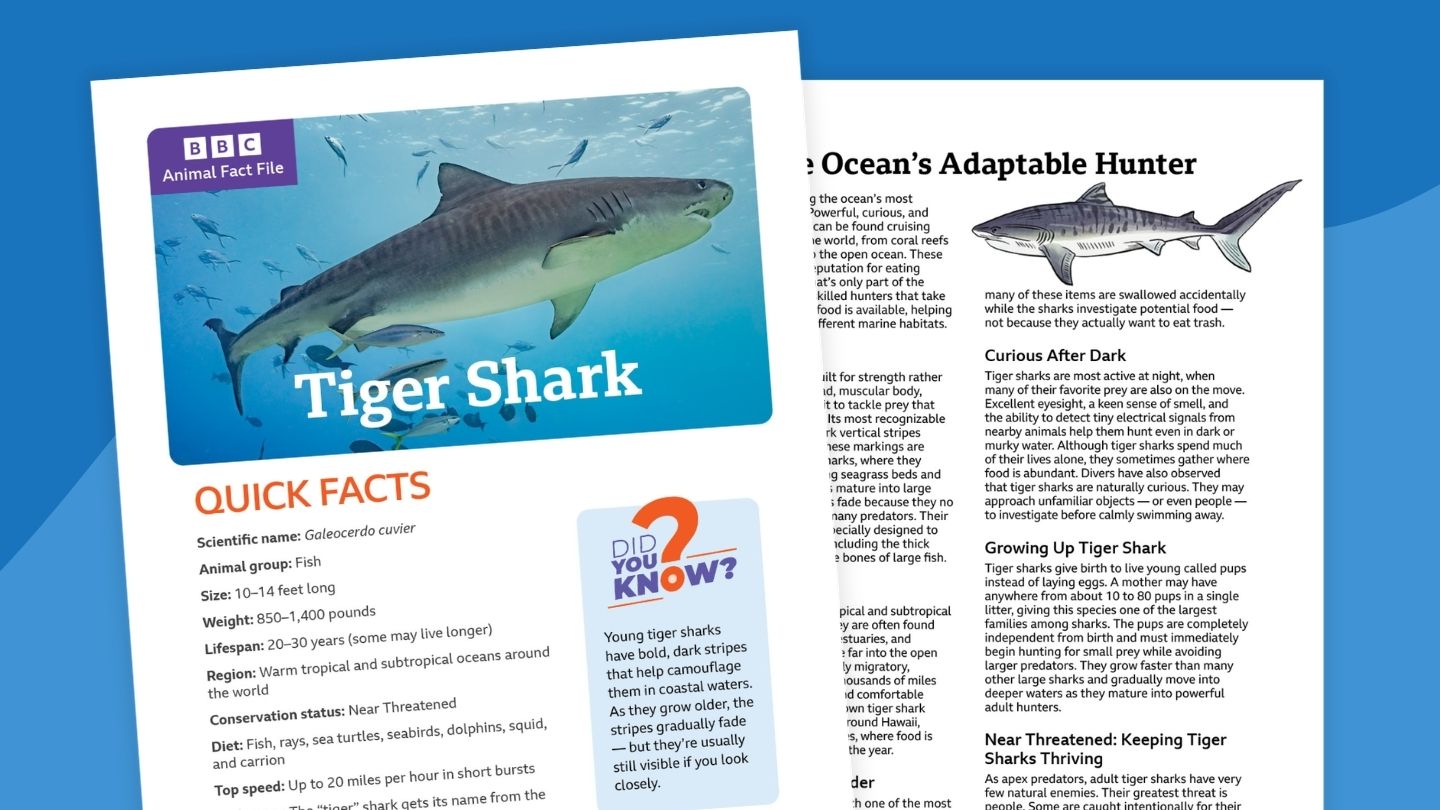
What shark gets its name from the dark stripes along its body and has one of the most varied diets in the ocean? Meet one of the sea's most adaptable predators.
Powerful, curious, and built to thrive in a wide range of habitats, tiger sharks are among the ocean's most successful hunters. Discover how they use their keen senses and powerful jaws to find food, why they migrate across thousands of miles of ocean, and what role they play in keeping marine ecosystems in balance. You'll also learn about the challenges tiger sharks face and the efforts underway to protect them.
Teachers and parents, you can use this fact file to:
- Introduce an animal, wildlife, or life science unit
- Support nonfiction reading and vocabulary practice
- Explore animal adaptations, behaviors, and habitats
- Compare animals and the ecosystems they live in
- Practice finding and organizing information from nonfiction texts
- Prepare students for animal research projects or presentations (use our animal report templates!)
- Connect science learning to conservation and environmental issues
- Pair with videos, articles, or other informational texts (see Related Resources below)

In The Tiger Shark's Deadly Stripes, naturalist Steve Backshall goes diving at Tiger Beach in the Bahamas. He runs into a tiger shark whose camouflage and teeth make it a great predator. This video is excerpted from BBC's Deadly 60, an award-winning nature and adventure show for kids in which narrator Steve Backshall has one mission: to travel the globe in search of 60 of the world's deadliest animals.
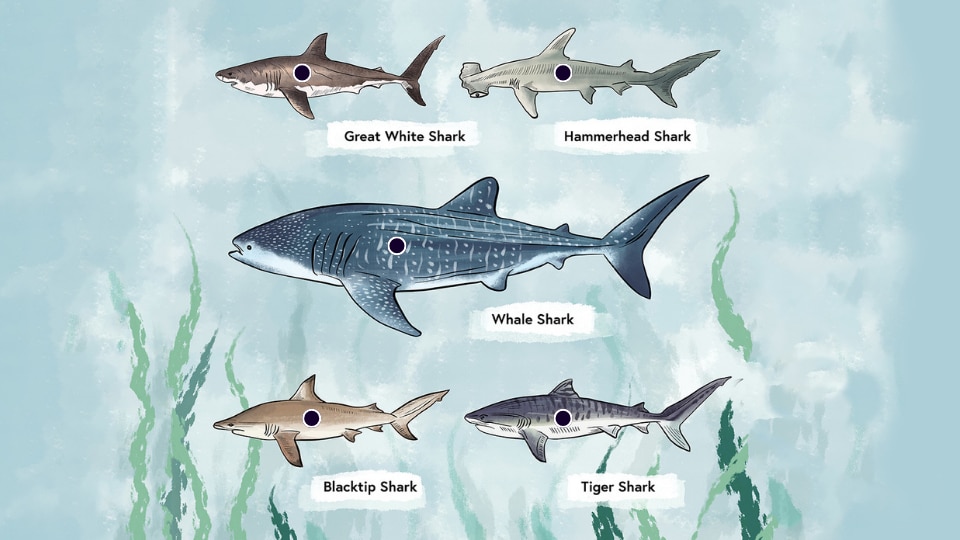
Meet the Sharks is an interactive adventure that lets you explore some of the ocean's most incredible shark species: the great white, hammerhead, whale, blacktip, and tiger shark.
Click on each illustrated shark to watch an exciting educational video from state-of-the-art BBC productions like Blue Planet and Deadly 60. Then click on each shark's name to uncover a fun fact about what makes that species unique — from extraordinary senses to surprising behaviors to mind-blowing adaptations.
Whether you're meeting these amazing fish (that's right — sharks are fish!) for the first time or already know a thing or two about sharks, this interactive experience is a fun way to discover how each species has adapted to life in the ocean. Dive in, explore, and see which shark becomes your favorite!
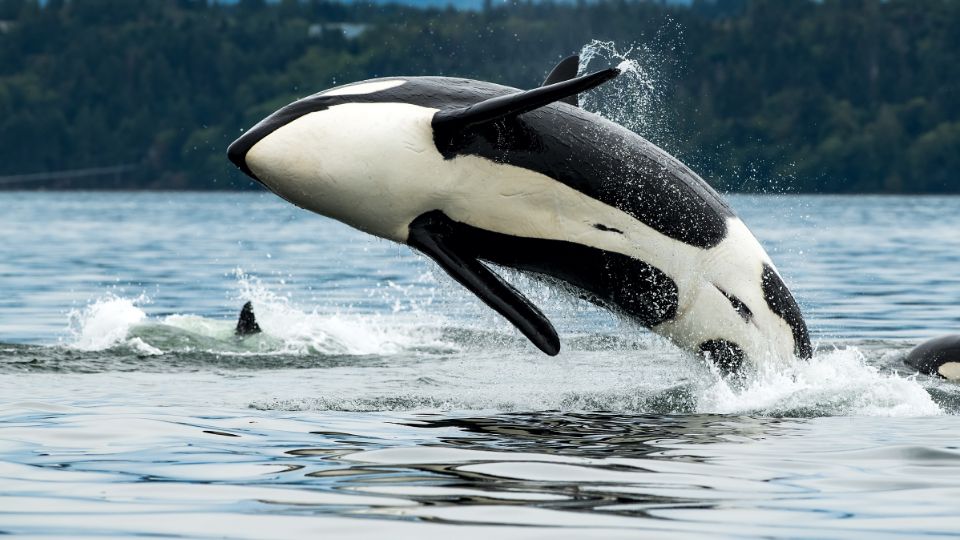
Meet the ocean's fiercest hunters. Orcas, tiger sharks, lionfish, piranhas — these predators have evolved sharp hunting tactics and sensory tricks that let them outmatch their prey in the wild. We've put together a collection of BBC video clips all about ocean predators (see Related Resources below). Watch them, then take the Kahoot to see what stuck.
The tactics are specific and surprising: orcas and tiger sharks use specialized hunting methods, lionfish disorient prey before striking, and piranhas' reputation turns out to be more myth than fact. Explore how these predators have come to dominate their corner of the ocean, and pick up some solid grounding in marine ecosystems along the way.

In The Sea Nomads of Southeast Asia, host Simon Reeve visits the Bajau community, known as the sea nomads of Southeast Asia, who live their entire lives on the water. He spends a night with Bari and his family, learning how they rely on Bari’s daily fishing trips to survive and earn money for essentials. Despite the dangers of diving alone in tiger shark territory, Bari provides for his family while they also raise chickens for extra food. This video is excerpted from BBC’s Wilderness With Simon Reeve, an epic adventure into the heart of Earth’s last great wild areas, where nature is at its most beautiful and fragile.
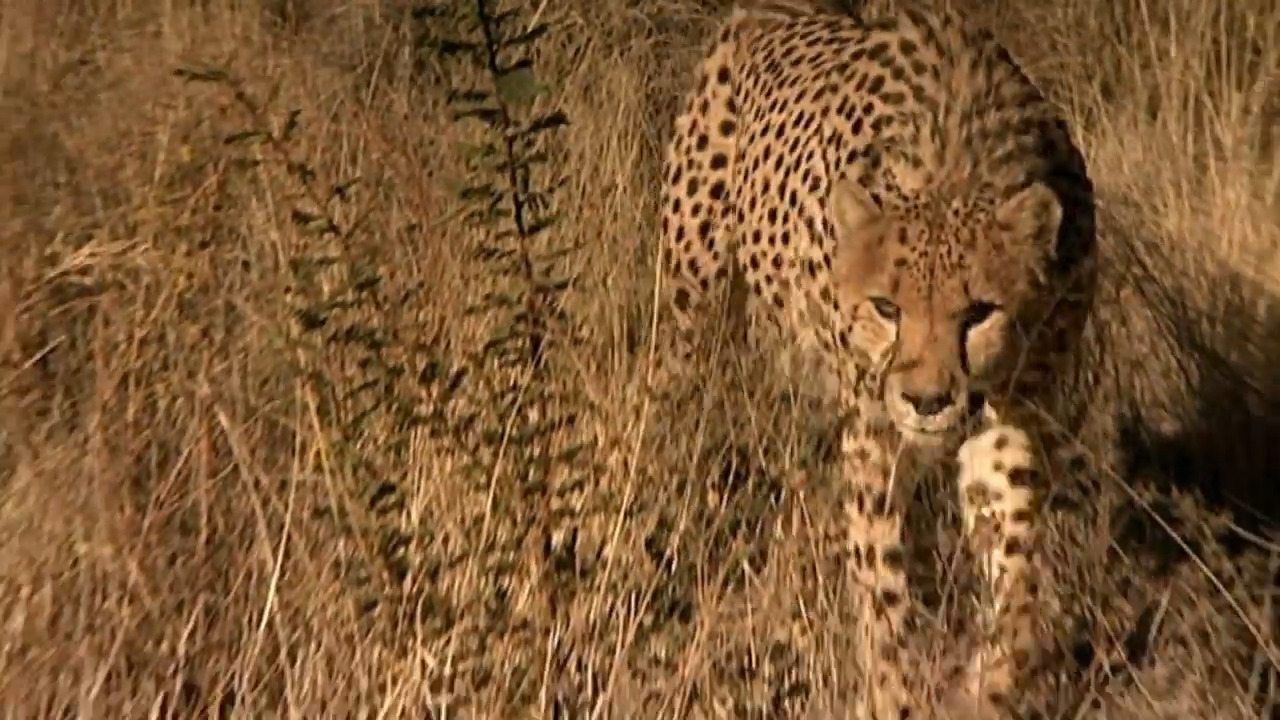
In Endangered Big Cat Conservation Around the World, host Simon Reeve visits two conservationists in Russia and Namibia who are tirelessly working to protect Amur tigers and cheetahs. This video is excerpted from BBC's Incredible Journeys With Simon Reeve, a series that highlights one journalist’s travels across the globe and the diverse cultures and peoples he meets along the way.
In Designing a Digital Campaign to Save Sumatran Tigers, tiger conservation is on display at a zoo’s tiger show and is the focus of a digital campaign designed to educate the public about why it’s important to save this magnificent species. This video is excerpted from BBC’s North America with Simon Reeve, in which the adventurer and environmentalist explores North America to learn all about the animals that make this continent amazing.
In The Truth About Tiger Stripes, evolutionary biologist Ben Garrod explains why these big cats' stripes are orange and black. Learn how melanin, the pigment responsible for skin and fur color, creates the distinctive camouflage patterns of a tiger’s coat. Discover the ways tigers use their stripes for survival in the wild, blending into their surroundings to avoid predators and enhance their hunting capabilities. This video is excerpted from Secrets of Skin, a documentary series exploring the natural history of the body’s largest organ.
Join Tala and the Go Jetters to discover amazing facts about Sumatran tigers! In this interactive worksheet, you'll:
- Explore what makes these tigers unique, what they eat, and how they survive in protected areas.
- Complete a quick quiz.
- Doodle stripes on a tiger.
- Trace the name of another big cat found in Sumatra.
What country is home to more than a billion people, hundreds of languages, the Himalayan Mountains, and some of the world’s most iconic animals? Meet India, a country with an extraordinary mix of landscapes, cultures, religions, and traditions.
From Bengal tigers and colorful peafowl to the Taj Mahal and the mighty Himalayas, India is full of fascinating stories and discoveries. Explore the civilizations and empires that shaped its history, learn about Hinduism and other religions that began there, and discover the foods, festivals, languages, and traditions that make India unique. You’ll also explore the country’s incredible wildlife.
Teachers and parents, you can use this fact file to:
- Introduce a geography or social studies unit
- Support nonfiction reading practice
- Compare countries and cultures
- Complete map and research activities
- Prepare students for projects or presentations (use our country report template!)
- Pair with videos, articles, or other informational texts (see Related Resources below)
In How Langur Monkeys Help Chital Deer Escape, narrator Sir David Attenborough follows a group of chital deer in India during the dry season as they search for food, all while staying alert for danger. Luckily, they have help from the langur monkeys, who spot a tiger from high in the trees and warn the deer, allowing them to escape safely — showing how animals can work together to stay alive in the wild! This video is excerpted from BBC’s Life, a show that explores the remarkable strategies animals and plants use to ensure their survival.
This Earth Day (or anytime this month), share this inspiring video playlist designed to spark curiosity and action in students ages 8–14. From incredible wildlife conservation stories to real-world environmental solutions, each clip invites students to explore the beauty of our planet — and the challenges it faces.
Get a closer look at how forests support life on Earth, discover innovative ideas like renewable energy, and meet the people working to protect endangered species and restore habitats. Along the way, students will see how small choices can make a big difference for our world.
Packed with powerful moments and meaningful learning, this playlist encourages students not just to learn about the Earth — but to think about how they can help protect it.
What shark gets its name from the dark stripes along its body and has one of the most varied diets in the ocean? Meet one of the sea's most adaptable predators.
Powerful, curious, and built to thrive in a wide range of habitats, tiger sharks are among the ocean's most successful hunters. Discover how they use their keen senses and powerful jaws to find food, why they migrate across thousands of miles of ocean, and what role they play in keeping marine ecosystems in balance. You'll also learn about the challenges tiger sharks face and the efforts underway to protect them.
Teachers and parents, you can use this fact file to:
- Introduce an animal, wildlife, or life science unit
- Support nonfiction reading and vocabulary practice
- Explore animal adaptations, behaviors, and habitats
- Compare animals and the ecosystems they live in
- Practice finding and organizing information from nonfiction texts
- Prepare students for animal research projects or presentations (use our animal report templates!)
- Connect science learning to conservation and environmental issues
- Pair with videos, articles, or other informational texts (see Related Resources below)
In The Tiger Shark's Deadly Stripes, naturalist Steve Backshall goes diving at Tiger Beach in the Bahamas. He runs into a tiger shark whose camouflage and teeth make it a great predator. This video is excerpted from BBC's Deadly 60, an award-winning nature and adventure show for kids in which narrator Steve Backshall has one mission: to travel the globe in search of 60 of the world's deadliest animals.
Meet the Sharks is an interactive adventure that lets you explore some of the ocean's most incredible shark species: the great white, hammerhead, whale, blacktip, and tiger shark.
Click on each illustrated shark to watch an exciting educational video from state-of-the-art BBC productions like Blue Planet and Deadly 60. Then click on each shark's name to uncover a fun fact about what makes that species unique — from extraordinary senses to surprising behaviors to mind-blowing adaptations.
Whether you're meeting these amazing fish (that's right — sharks are fish!) for the first time or already know a thing or two about sharks, this interactive experience is a fun way to discover how each species has adapted to life in the ocean. Dive in, explore, and see which shark becomes your favorite!
Meet the ocean's fiercest hunters. Orcas, tiger sharks, lionfish, piranhas — these predators have evolved sharp hunting tactics and sensory tricks that let them outmatch their prey in the wild. We've put together a collection of BBC video clips all about ocean predators (see Related Resources below). Watch them, then take the Kahoot to see what stuck.
The tactics are specific and surprising: orcas and tiger sharks use specialized hunting methods, lionfish disorient prey before striking, and piranhas' reputation turns out to be more myth than fact. Explore how these predators have come to dominate their corner of the ocean, and pick up some solid grounding in marine ecosystems along the way.
In The Sea Nomads of Southeast Asia, host Simon Reeve visits the Bajau community, known as the sea nomads of Southeast Asia, who live their entire lives on the water. He spends a night with Bari and his family, learning how they rely on Bari’s daily fishing trips to survive and earn money for essentials. Despite the dangers of diving alone in tiger shark territory, Bari provides for his family while they also raise chickens for extra food. This video is excerpted from BBC’s Wilderness With Simon Reeve, an epic adventure into the heart of Earth’s last great wild areas, where nature is at its most beautiful and fragile.
In Endangered Big Cat Conservation Around the World, host Simon Reeve visits two conservationists in Russia and Namibia who are tirelessly working to protect Amur tigers and cheetahs. This video is excerpted from BBC's Incredible Journeys With Simon Reeve, a series that highlights one journalist’s travels across the globe and the diverse cultures and peoples he meets along the way.