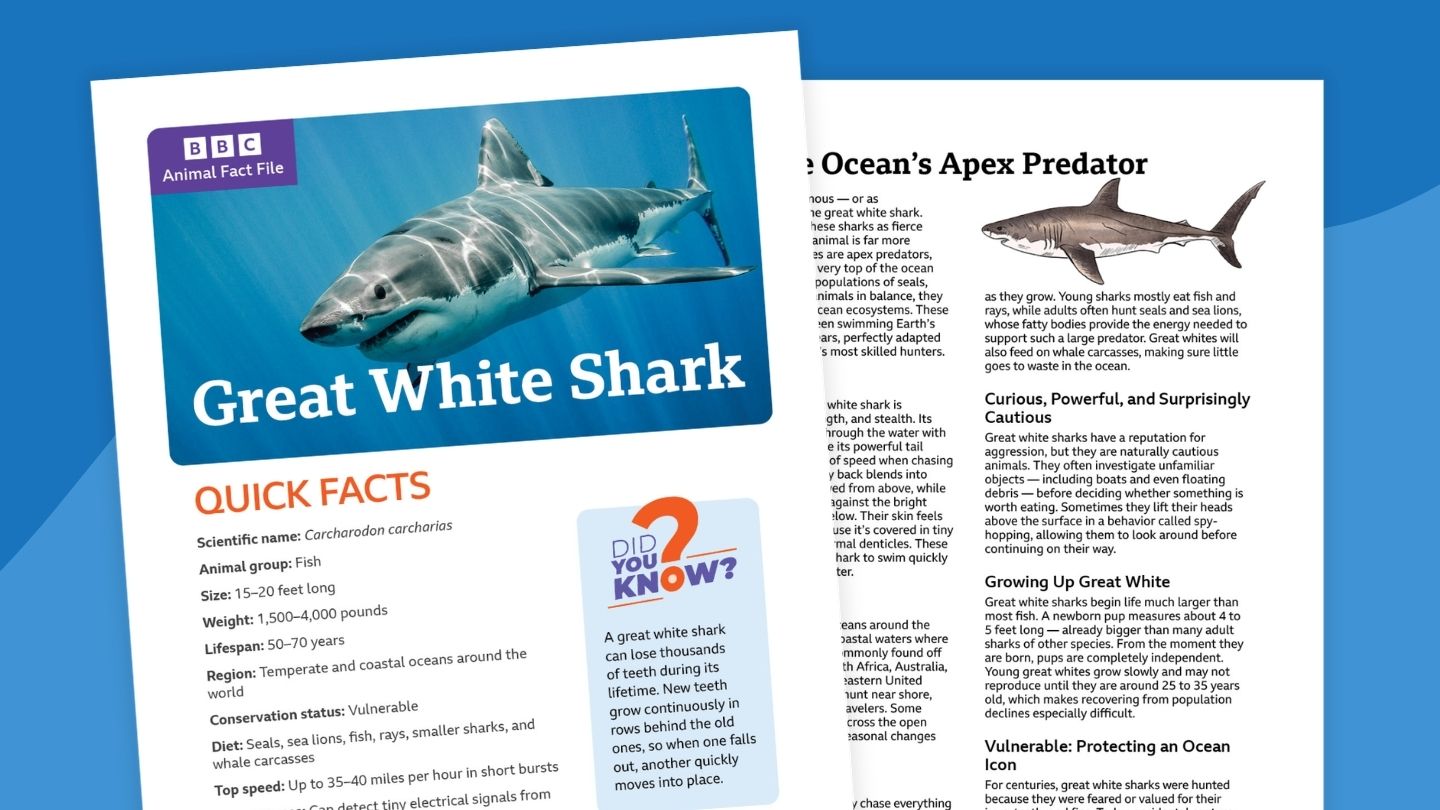
What predator can burst through the ocean at nearly 40 miles per hour, replace thousands of teeth during its lifetime, and help keep marine ecosystems healthy? The answer may surprise you.
Separate fact from fiction as you dive into the world of the great white shark. Discover the incredible adaptations that make it one of the ocean's most successful hunters, from powerful jaws and razor-sharp senses to stealthy hunting strategies. You'll also learn why great white sharks are essential to healthy oceans and how conservation efforts are helping protect this iconic predator.
Teachers and parents, you can use this fact file to:
- Introduce an animal, wildlife, or life science unit
- Support nonfiction reading and vocabulary practice
- Explore animal adaptations, behaviors, and habitats
- Compare animals and the ecosystems they live in
- Practice finding and organizing information from nonfiction texts
- Prepare students for animal research projects or presentations (use our animal report templates!)
- Connect science learning to conservation and environmental issues
- Pair with videos, articles, or other informational texts (see Related Resources below)
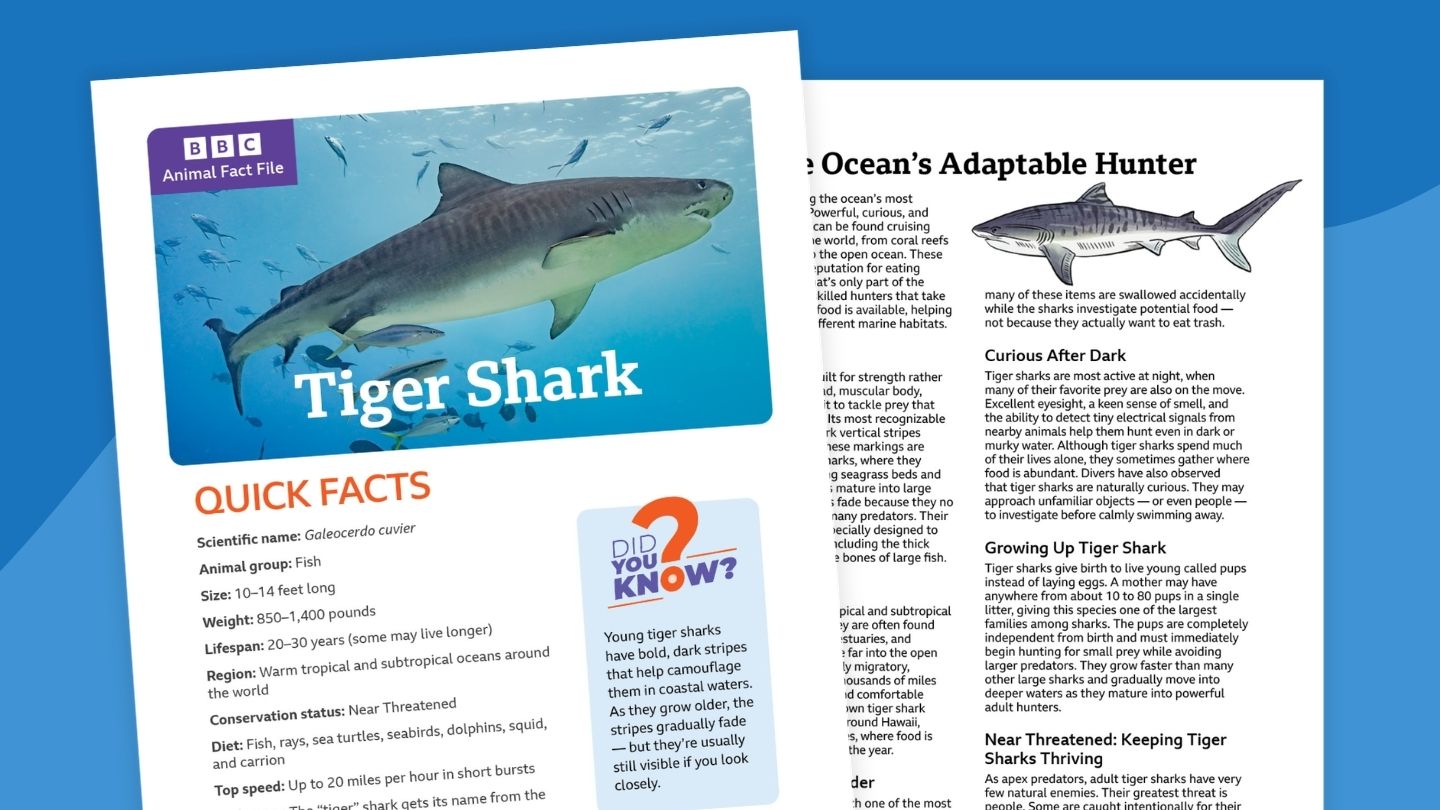
What shark gets its name from the dark stripes along its body and has one of the most varied diets in the ocean? Meet one of the sea's most adaptable predators.
Powerful, curious, and built to thrive in a wide range of habitats, tiger sharks are among the ocean's most successful hunters. Discover how they use their keen senses and powerful jaws to find food, why they migrate across thousands of miles of ocean, and what role they play in keeping marine ecosystems in balance. You'll also learn about the challenges tiger sharks face and the efforts underway to protect them.
Teachers and parents, you can use this fact file to:
- Introduce an animal, wildlife, or life science unit
- Support nonfiction reading and vocabulary practice
- Explore animal adaptations, behaviors, and habitats
- Compare animals and the ecosystems they live in
- Practice finding and organizing information from nonfiction texts
- Prepare students for animal research projects or presentations (use our animal report templates!)
- Connect science learning to conservation and environmental issues
- Pair with videos, articles, or other informational texts (see Related Resources below)
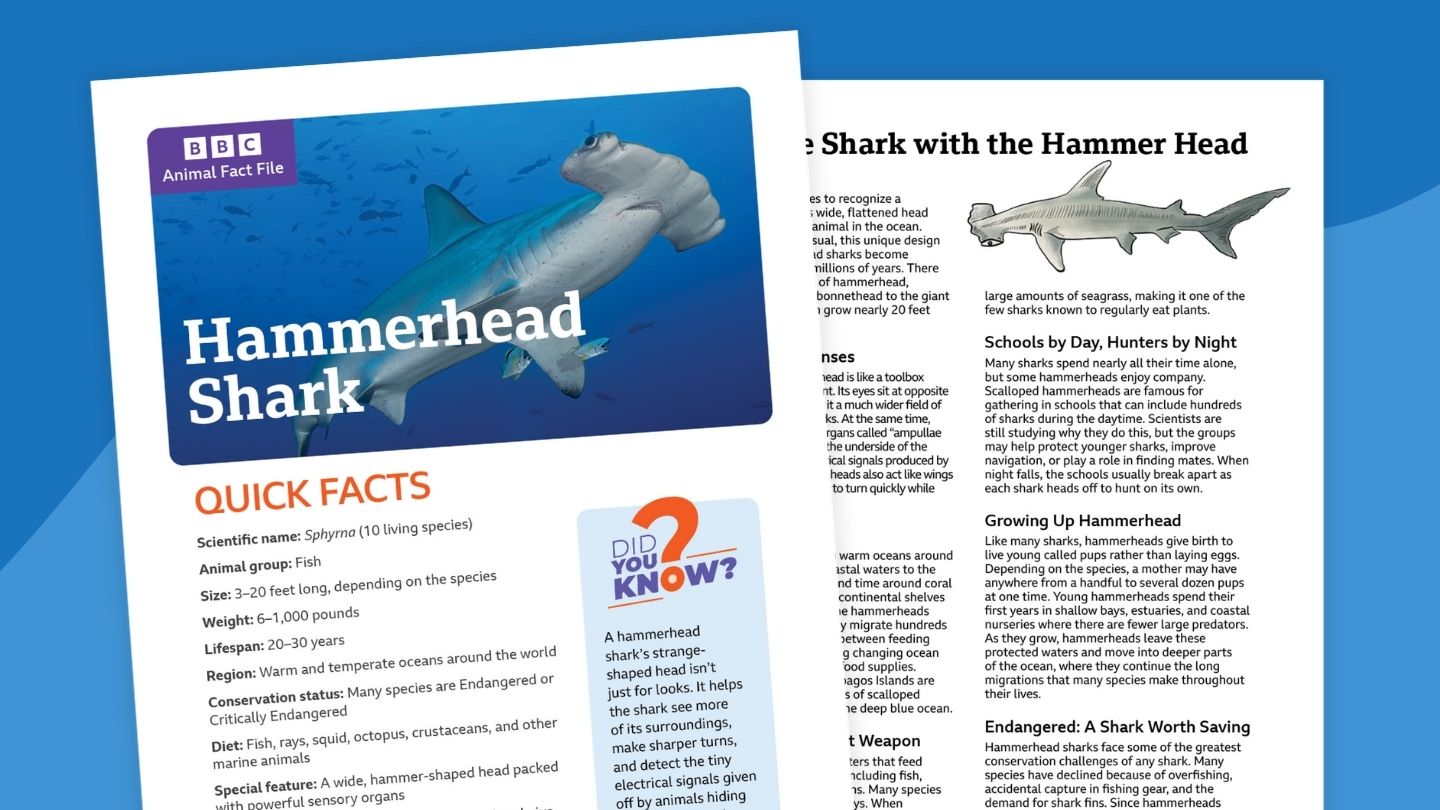
What shark has a head shaped like a hammer — and uses it like a high-tech hunting tool? Hammerhead sharks may look unusual, but every part of their unique design helps them survive.
Explore the fascinating world of these extraordinary sharks and discover how their wide heads help them see more, sense hidden prey, and make sharp turns while hunting. Learn why some hammerheads gather in schools of hundreds, travel thousands of miles across the ocean, and face growing conservation challenges that make protecting them more important than ever.
Teachers and parents, you can use this fact file to:
- Introduce an animal, wildlife, or life science unit
- Support nonfiction reading and vocabulary practice
- Explore animal adaptations, behaviors, and habitats
- Compare animals and the ecosystems they live in
- Practice finding and organizing information from nonfiction texts
- Prepare students for animal research projects or presentations (use our animal report templates!)
- Connect science learning to conservation and environmental issues
- Pair with videos, articles, or other informational texts (see Related Resources below)
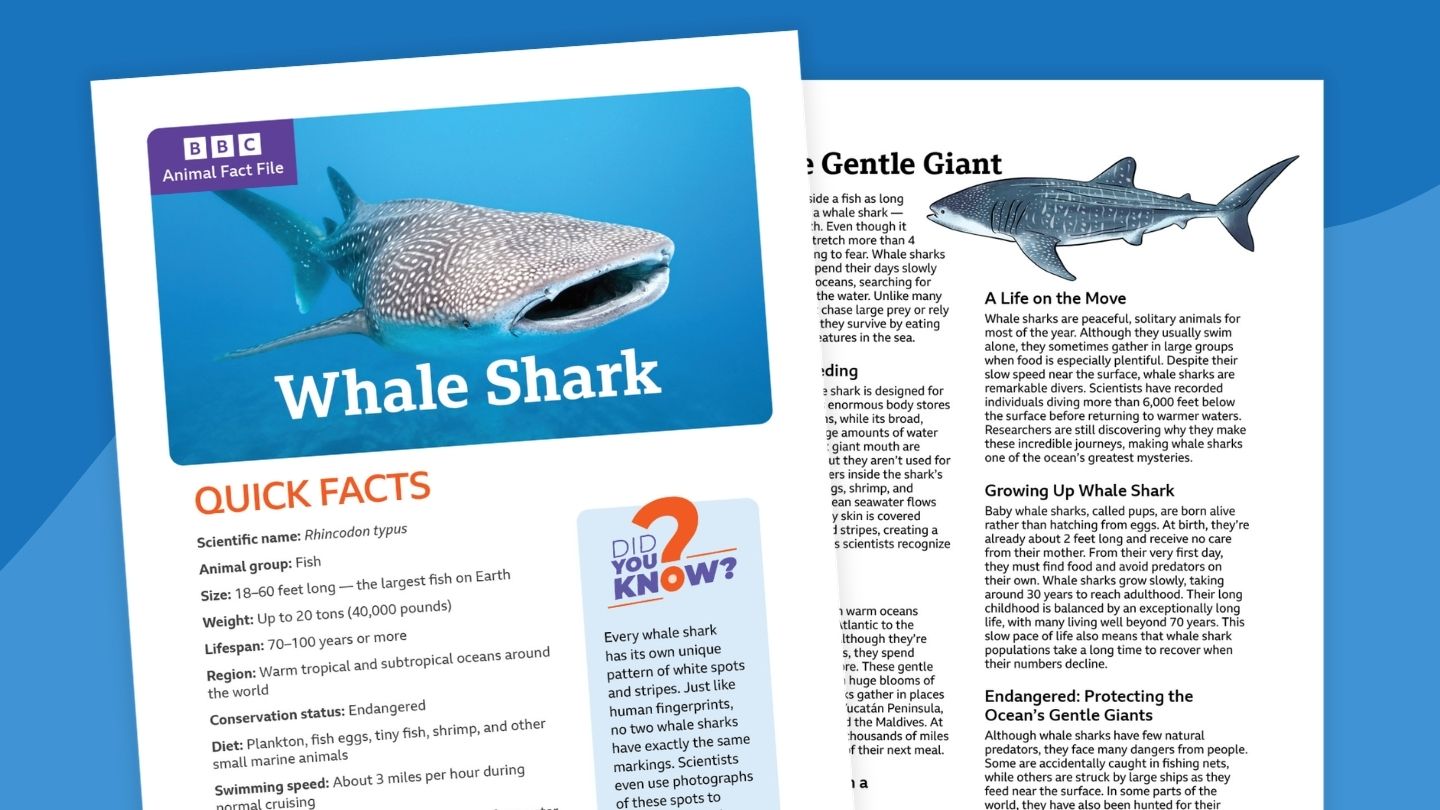
What fish can grow longer than a school bus but feeds on tiny plankton? The whale shark is the largest fish on Earth — and one of its gentlest.
From tropical coastlines to the open ocean, these enormous fish spend their lives searching for tiny creatures drifting through the water. Discover how whale sharks use filter feeding instead of hunting, dive thousands of feet beneath the surface, and migrate incredible distances across the globe. You'll also learn why these gentle giants are endangered and how scientists are working to protect them for generations to come.
Teachers and parents, you can use this fact file to:
- Introduce an animal, wildlife, or life science unit
- Support nonfiction reading and vocabulary practice
- Explore animal adaptations, behaviors, and habitats
- Compare animals and the ecosystems they live in
- Practice finding and organizing information from nonfiction texts
- Prepare students for animal research projects or presentations (use our animal report templates!)
- Connect science learning to conservation and environmental issues
- Pair with videos, articles, or other informational texts (see Related Resources below)
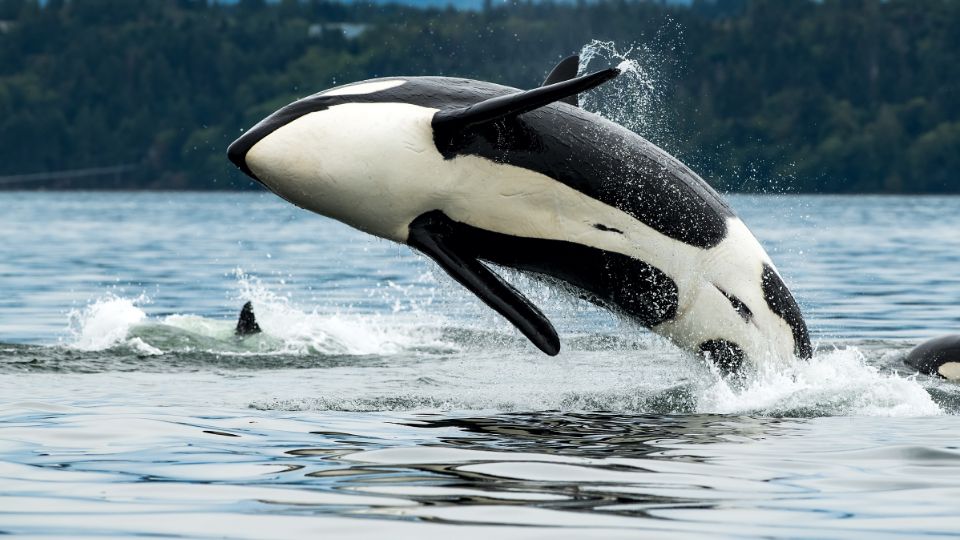
Meet the ocean's fiercest hunters. Orcas, tiger sharks, lionfish, piranhas — these predators have evolved sharp hunting tactics and sensory tricks that let them outmatch their prey in the wild. We've put together a collection of BBC video clips all about ocean predators (see Related Resources below). Watch them, then take the Kahoot to see what stuck.
The tactics are specific and surprising: orcas and tiger sharks use specialized hunting methods, lionfish disorient prey before striking, and piranhas' reputation turns out to be more myth than fact. Explore how these predators have come to dominate their corner of the ocean, and pick up some solid grounding in marine ecosystems along the way.
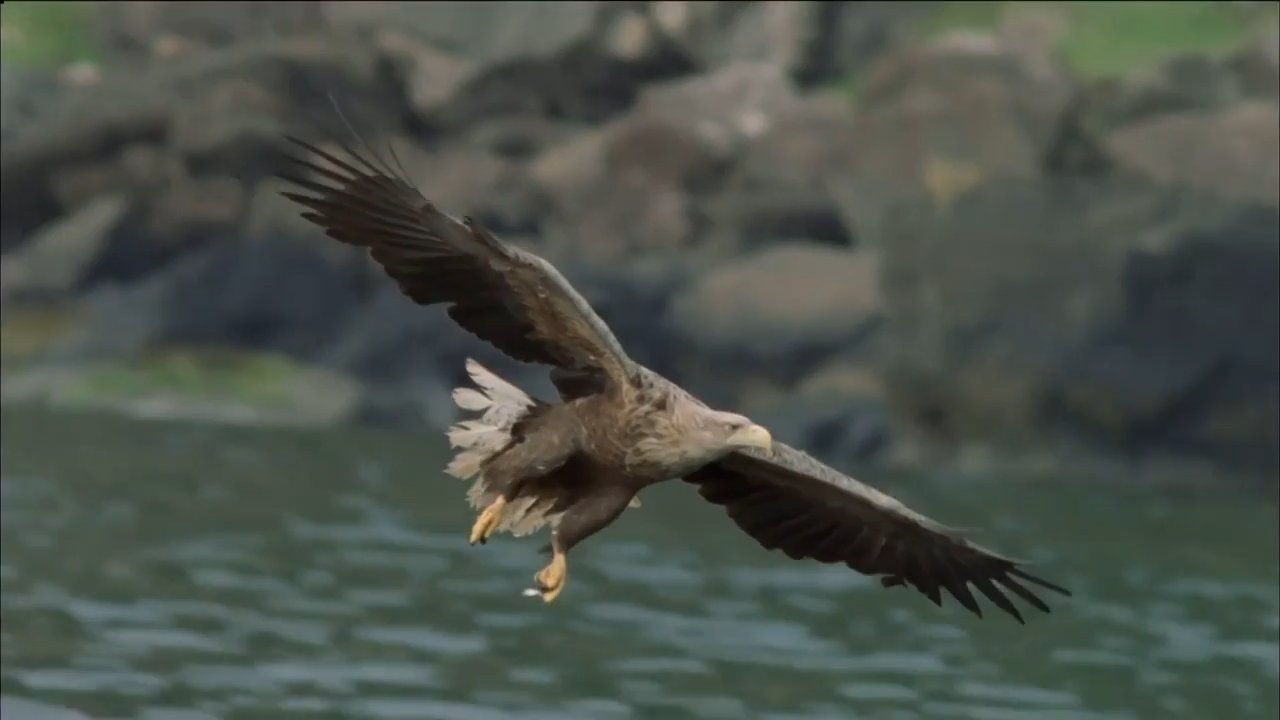
The RSPB (Royal Society for the Protection of Birds) is investigating attacks on birds of prey, also called raptors. Raptors hunt and feed on other animals, but even though they're near the top of the food chain, one of their biggest threats is humans.
There have been reports of raptors found dead in suspicious circumstances or caught in illegal traps. Investigators are reviewing footage from cameras near some traps to help identify who's responsible. The traps themselves are legal when used correctly, and any animal that isn't the intended target must be released unharmed. But footage has shown some people mistreating or killing these protected birds instead.
Investigators believe money is behind some of the attacks. Raptors sometimes hunt game birds, which people also hunt for sport or profit. By illegally removing birds of prey, some people may be trying to leave more game birds available for shooting. Officials are struggling to find ways to reduce these attacks — fines and prosecution haven't been very effective so far. Some campaigners want stronger licensing rules for trap use, while others argue that would be hard to enforce and might not stop illegal attacks either.
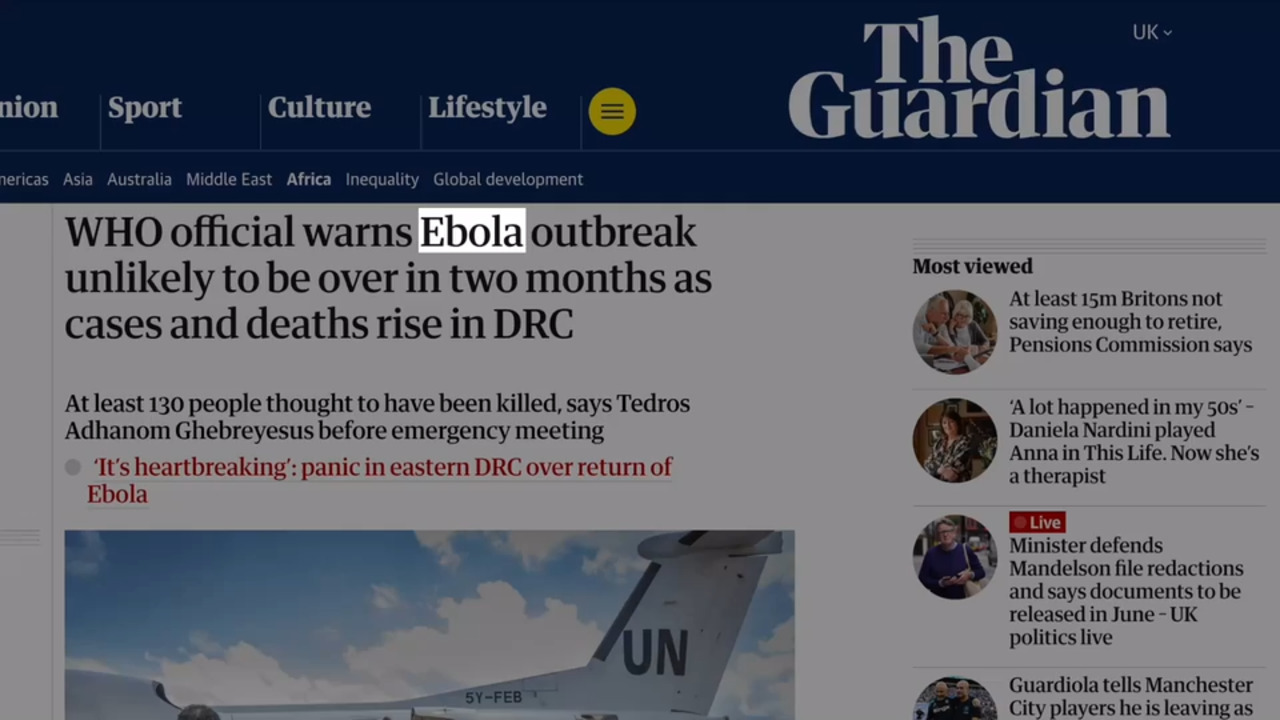
The DRC (Democratic Republic of the Congo) is a large central African country now facing an Ebola outbreak along with neighboring Uganda. Ebola is a serious virus spread through contact with infected blood or body fluids, causing fever, vomiting, and bleeding. This outbreak's strain has no approved vaccine or treatment.
This isn't the DRC's first health crisis — and it's not bad luck. Three main factors are at play: the DRC borders nine countries with heavy cross-border movement and conflict-driven displacement, making disease spread easy; its health system is stretched thin, so early symptoms (which mimic other illnesses) often go unnoticed; and close contact with wildlife in its vast forests — including hunting and eating bushmeat — raises the risk of animal-to-human disease jumps.
Together, these factors explain why outbreaks keep happening — and why this one deserves close attention.
Deserts look empty. They are anything but.
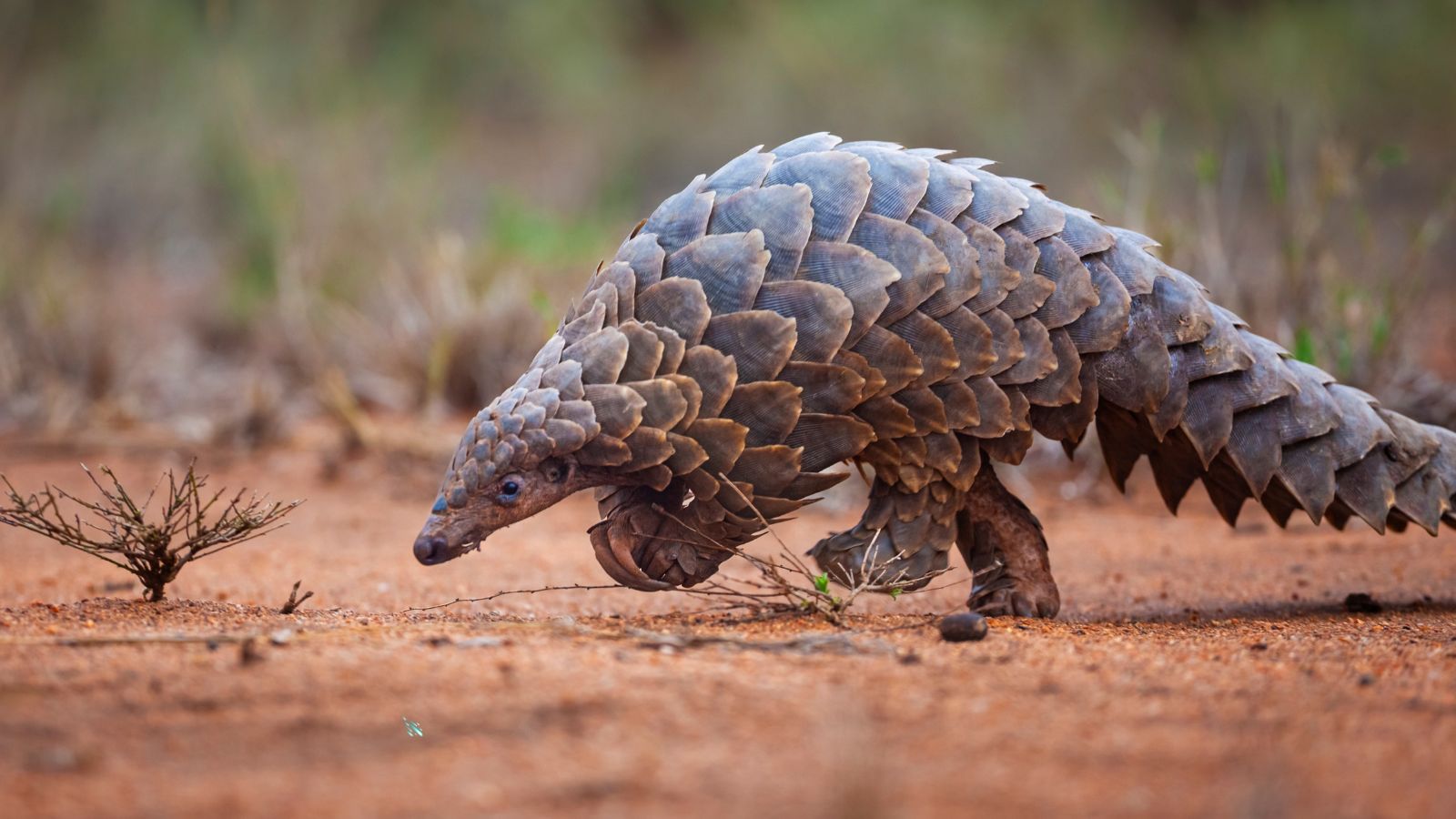
From the sun-scorched dunes of the Sahara to the scrubby plains of Australia, desert animals have cracked one of nature's toughest puzzles: how to survive where water is scarce, temperatures are brutal, and food is hard to find. In this playlist, you'll meet the remarkable species that call these landscapes home — from the iconic camel and the lightning-fast hawk to the bounding kangaroo and the armored pangolin.
Each clip, drawn from landmark BBC series including Seven Worlds, One Planet and Planet Earth II, puts you face-to-face with real desert survival in action. Some animals store water and energy for enormous journeys across open terrain. Others hunt by night, move in short bursts, or use camouflage so good they practically disappear. Every strategy is different. Every one is extraordinary.
As you watch, think bigger: How do animals adapt to temperatures that would stop most creatures in their tracks? What physical traits make desert life not just possible, but thriving? And how do these species — predator and prey, reptile and mammal — depend on each other to keep desert ecosystems in balance?
This playlist won't just teach you about deserts. It will make you see them differently.
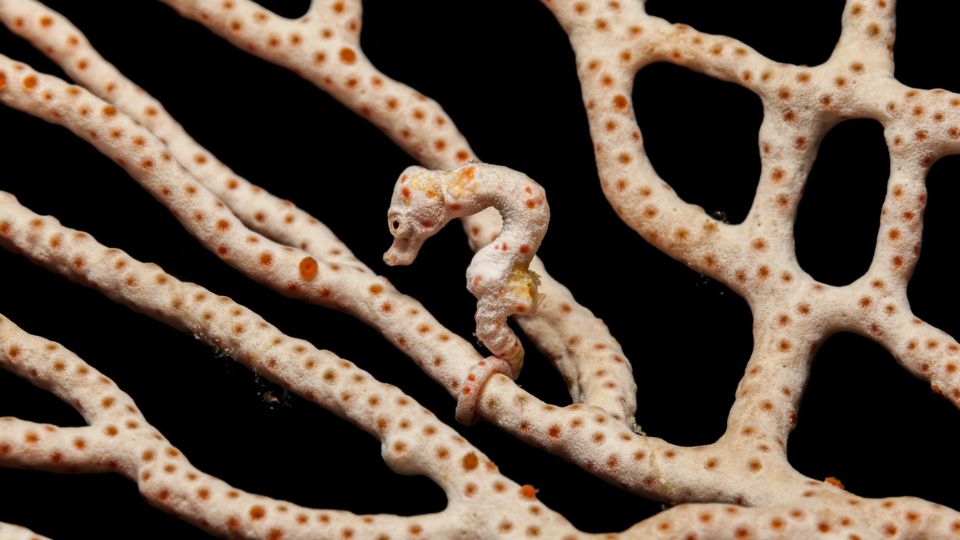
Meet nature's master hiders. Gliding tree frogs, octopuses, arctic foxes — these animals have evolved brilliant ways to blend in, hunt, and survive unseen. We've pulled together a collection of BBC video clips (see Related Resources below) showing off these disappearing acts. Watch them, then take the Kahoot to see what stuck.
Some of the tricks are wild: glass frogs clear their own blood to turn see-through, while arctic foxes shift their fur with the seasons to stay hidden year-round. Explore how these masters of camouflage pull it off, and pick up some solid grounding in evolution and adaptation along the way.
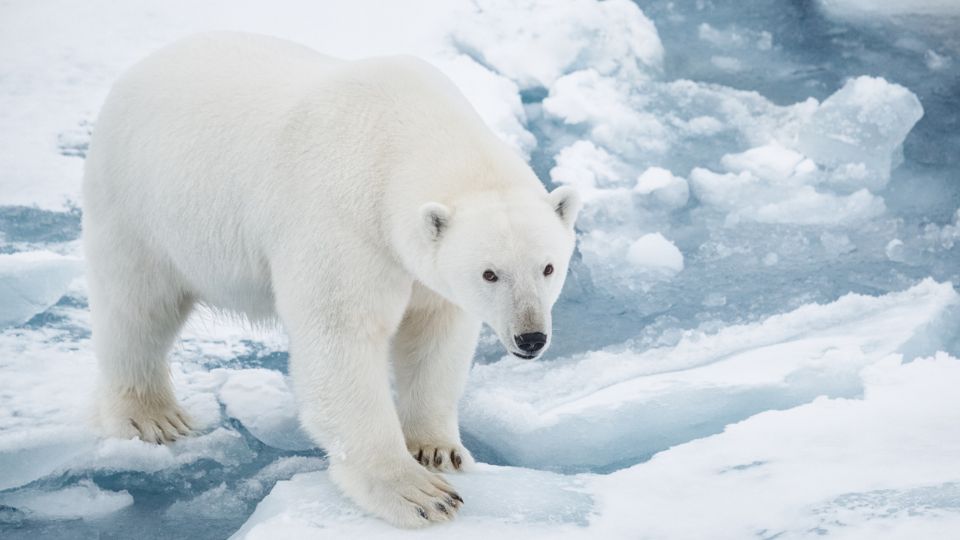
Discover the amazing animals that live in the coldest environments on Earth in this Kahoot about the polar regions. From powerful polar bears and playful seals to emperor penguins and Arctic foxes, students will explore how animals survive freezing temperatures, icy waters, and long, dark winters.
This Kahoot highlights the special adaptations that help polar animals hunt, stay warm, raise their young, and move across snow and ice. Students will also learn how different species depend on one another within polar food chains and how life continues to thrive in these extreme habitats.
Watch the related BBC videos (below), then invite your Grade 3–8 students to test their knowledge and uncover the fascinating world of polar animals.
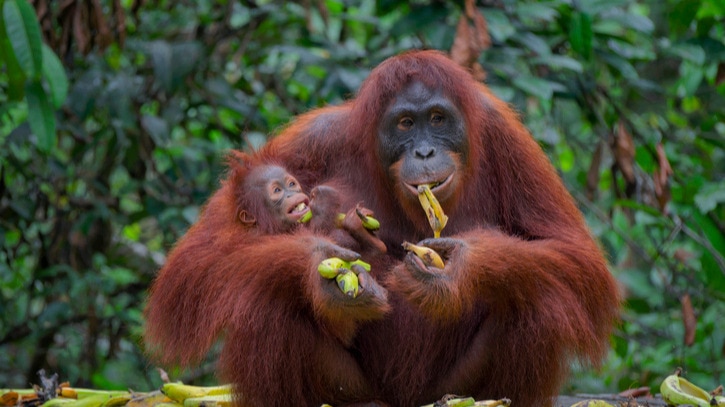
With Mother’s Day coming up in the U.S., what better way to celebrate than by spotlighting some of nature’s most devoted moms?
This fun, feel‑good 8‑video BBC playlist dives into the incredible bond between animal moms and their babies — and the wild ways they raise them. Watch puma cubs practice their hunting skills, a baby orangutan learn the ropes high in the treetops, humpback whale calves set off on their first epic journeys, and prairie dog pups turn playtime into survival training.
From feeding and protection to movement and life lessons, these clips show just how much it takes to grow up in the wild — and how moms make it all possible.
Featuring favorites like prairie dogs, orangutans, polar bears, and humpback whales, this playlist pulls from iconic BBC series like Animal Babies and Planet Earth.
Because mom love? It’s everywhere in the animal kingdom!

Celebrate the incredible work of Sir David Attenborough — a storyteller who has helped millions of students and viewers explore the natural world. On the occasion of his 100th birthday on May 8, 2026, we honor his enormous accomplishments in the field of environmental advocacy and his role in revolutionizing nature documentaries.
This playlist brings together 10 unforgettable clips from landmark BBC series like Planet Earth, Blue Planet, and Frozen Planet. Each video showcases amazing wildlife, powerful storytelling, and moments that spark curiosity and wonder.
Perfect for the classroom or at home, these videos help students connect with nature, understand our planet, and feel inspired to protect it.
What predator can burst through the ocean at nearly 40 miles per hour, replace thousands of teeth during its lifetime, and help keep marine ecosystems healthy? The answer may surprise you.
Separate fact from fiction as you dive into the world of the great white shark. Discover the incredible adaptations that make it one of the ocean's most successful hunters, from powerful jaws and razor-sharp senses to stealthy hunting strategies. You'll also learn why great white sharks are essential to healthy oceans and how conservation efforts are helping protect this iconic predator.
Teachers and parents, you can use this fact file to:
- Introduce an animal, wildlife, or life science unit
- Support nonfiction reading and vocabulary practice
- Explore animal adaptations, behaviors, and habitats
- Compare animals and the ecosystems they live in
- Practice finding and organizing information from nonfiction texts
- Prepare students for animal research projects or presentations (use our animal report templates!)
- Connect science learning to conservation and environmental issues
- Pair with videos, articles, or other informational texts (see Related Resources below)
What shark gets its name from the dark stripes along its body and has one of the most varied diets in the ocean? Meet one of the sea's most adaptable predators.
Powerful, curious, and built to thrive in a wide range of habitats, tiger sharks are among the ocean's most successful hunters. Discover how they use their keen senses and powerful jaws to find food, why they migrate across thousands of miles of ocean, and what role they play in keeping marine ecosystems in balance. You'll also learn about the challenges tiger sharks face and the efforts underway to protect them.
Teachers and parents, you can use this fact file to:
- Introduce an animal, wildlife, or life science unit
- Support nonfiction reading and vocabulary practice
- Explore animal adaptations, behaviors, and habitats
- Compare animals and the ecosystems they live in
- Practice finding and organizing information from nonfiction texts
- Prepare students for animal research projects or presentations (use our animal report templates!)
- Connect science learning to conservation and environmental issues
- Pair with videos, articles, or other informational texts (see Related Resources below)
What shark has a head shaped like a hammer — and uses it like a high-tech hunting tool? Hammerhead sharks may look unusual, but every part of their unique design helps them survive.
Explore the fascinating world of these extraordinary sharks and discover how their wide heads help them see more, sense hidden prey, and make sharp turns while hunting. Learn why some hammerheads gather in schools of hundreds, travel thousands of miles across the ocean, and face growing conservation challenges that make protecting them more important than ever.
Teachers and parents, you can use this fact file to:
- Introduce an animal, wildlife, or life science unit
- Support nonfiction reading and vocabulary practice
- Explore animal adaptations, behaviors, and habitats
- Compare animals and the ecosystems they live in
- Practice finding and organizing information from nonfiction texts
- Prepare students for animal research projects or presentations (use our animal report templates!)
- Connect science learning to conservation and environmental issues
- Pair with videos, articles, or other informational texts (see Related Resources below)
What fish can grow longer than a school bus but feeds on tiny plankton? The whale shark is the largest fish on Earth — and one of its gentlest.
From tropical coastlines to the open ocean, these enormous fish spend their lives searching for tiny creatures drifting through the water. Discover how whale sharks use filter feeding instead of hunting, dive thousands of feet beneath the surface, and migrate incredible distances across the globe. You'll also learn why these gentle giants are endangered and how scientists are working to protect them for generations to come.
Teachers and parents, you can use this fact file to:
- Introduce an animal, wildlife, or life science unit
- Support nonfiction reading and vocabulary practice
- Explore animal adaptations, behaviors, and habitats
- Compare animals and the ecosystems they live in
- Practice finding and organizing information from nonfiction texts
- Prepare students for animal research projects or presentations (use our animal report templates!)
- Connect science learning to conservation and environmental issues
- Pair with videos, articles, or other informational texts (see Related Resources below)
Meet the ocean's fiercest hunters. Orcas, tiger sharks, lionfish, piranhas — these predators have evolved sharp hunting tactics and sensory tricks that let them outmatch their prey in the wild. We've put together a collection of BBC video clips all about ocean predators (see Related Resources below). Watch them, then take the Kahoot to see what stuck.
The tactics are specific and surprising: orcas and tiger sharks use specialized hunting methods, lionfish disorient prey before striking, and piranhas' reputation turns out to be more myth than fact. Explore how these predators have come to dominate their corner of the ocean, and pick up some solid grounding in marine ecosystems along the way.
The RSPB (Royal Society for the Protection of Birds) is investigating attacks on birds of prey, also called raptors. Raptors hunt and feed on other animals, but even though they're near the top of the food chain, one of their biggest threats is humans.
There have been reports of raptors found dead in suspicious circumstances or caught in illegal traps. Investigators are reviewing footage from cameras near some traps to help identify who's responsible. The traps themselves are legal when used correctly, and any animal that isn't the intended target must be released unharmed. But footage has shown some people mistreating or killing these protected birds instead.
Investigators believe money is behind some of the attacks. Raptors sometimes hunt game birds, which people also hunt for sport or profit. By illegally removing birds of prey, some people may be trying to leave more game birds available for shooting. Officials are struggling to find ways to reduce these attacks — fines and prosecution haven't been very effective so far. Some campaigners want stronger licensing rules for trap use, while others argue that would be hard to enforce and might not stop illegal attacks either.
The DRC (Democratic Republic of the Congo) is a large central African country now facing an Ebola outbreak along with neighboring Uganda. Ebola is a serious virus spread through contact with infected blood or body fluids, causing fever, vomiting, and bleeding. This outbreak's strain has no approved vaccine or treatment.
This isn't the DRC's first health crisis — and it's not bad luck. Three main factors are at play: the DRC borders nine countries with heavy cross-border movement and conflict-driven displacement, making disease spread easy; its health system is stretched thin, so early symptoms (which mimic other illnesses) often go unnoticed; and close contact with wildlife in its vast forests — including hunting and eating bushmeat — raises the risk of animal-to-human disease jumps.
Together, these factors explain why outbreaks keep happening — and why this one deserves close attention.
Deserts look empty. They are anything but.
From the sun-scorched dunes of the Sahara to the scrubby plains of Australia, desert animals have cracked one of nature's toughest puzzles: how to survive where water is scarce, temperatures are brutal, and food is hard to find. In this playlist, you'll meet the remarkable species that call these landscapes home — from the iconic camel and the lightning-fast hawk to the bounding kangaroo and the armored pangolin.
Each clip, drawn from landmark BBC series including Seven Worlds, One Planet and Planet Earth II, puts you face-to-face with real desert survival in action. Some animals store water and energy for enormous journeys across open terrain. Others hunt by night, move in short bursts, or use camouflage so good they practically disappear. Every strategy is different. Every one is extraordinary.
As you watch, think bigger: How do animals adapt to temperatures that would stop most creatures in their tracks? What physical traits make desert life not just possible, but thriving? And how do these species — predator and prey, reptile and mammal — depend on each other to keep desert ecosystems in balance?
This playlist won't just teach you about deserts. It will make you see them differently.
Meet nature's master hiders. Gliding tree frogs, octopuses, arctic foxes — these animals have evolved brilliant ways to blend in, hunt, and survive unseen. We've pulled together a collection of BBC video clips (see Related Resources below) showing off these disappearing acts. Watch them, then take the Kahoot to see what stuck.
Some of the tricks are wild: glass frogs clear their own blood to turn see-through, while arctic foxes shift their fur with the seasons to stay hidden year-round. Explore how these masters of camouflage pull it off, and pick up some solid grounding in evolution and adaptation along the way.
Discover the amazing animals that live in the coldest environments on Earth in this Kahoot about the polar regions. From powerful polar bears and playful seals to emperor penguins and Arctic foxes, students will explore how animals survive freezing temperatures, icy waters, and long, dark winters.
This Kahoot highlights the special adaptations that help polar animals hunt, stay warm, raise their young, and move across snow and ice. Students will also learn how different species depend on one another within polar food chains and how life continues to thrive in these extreme habitats.
Watch the related BBC videos (below), then invite your Grade 3–8 students to test their knowledge and uncover the fascinating world of polar animals.
With Mother’s Day coming up in the U.S., what better way to celebrate than by spotlighting some of nature’s most devoted moms?
This fun, feel‑good 8‑video BBC playlist dives into the incredible bond between animal moms and their babies — and the wild ways they raise them. Watch puma cubs practice their hunting skills, a baby orangutan learn the ropes high in the treetops, humpback whale calves set off on their first epic journeys, and prairie dog pups turn playtime into survival training.
From feeding and protection to movement and life lessons, these clips show just how much it takes to grow up in the wild — and how moms make it all possible.
Featuring favorites like prairie dogs, orangutans, polar bears, and humpback whales, this playlist pulls from iconic BBC series like Animal Babies and Planet Earth.
Because mom love? It’s everywhere in the animal kingdom!
Celebrate the incredible work of Sir David Attenborough — a storyteller who has helped millions of students and viewers explore the natural world. On the occasion of his 100th birthday on May 8, 2026, we honor his enormous accomplishments in the field of environmental advocacy and his role in revolutionizing nature documentaries.
This playlist brings together 10 unforgettable clips from landmark BBC series like Planet Earth, Blue Planet, and Frozen Planet. Each video showcases amazing wildlife, powerful storytelling, and moments that spark curiosity and wonder.
Perfect for the classroom or at home, these videos help students connect with nature, understand our planet, and feel inspired to protect it.