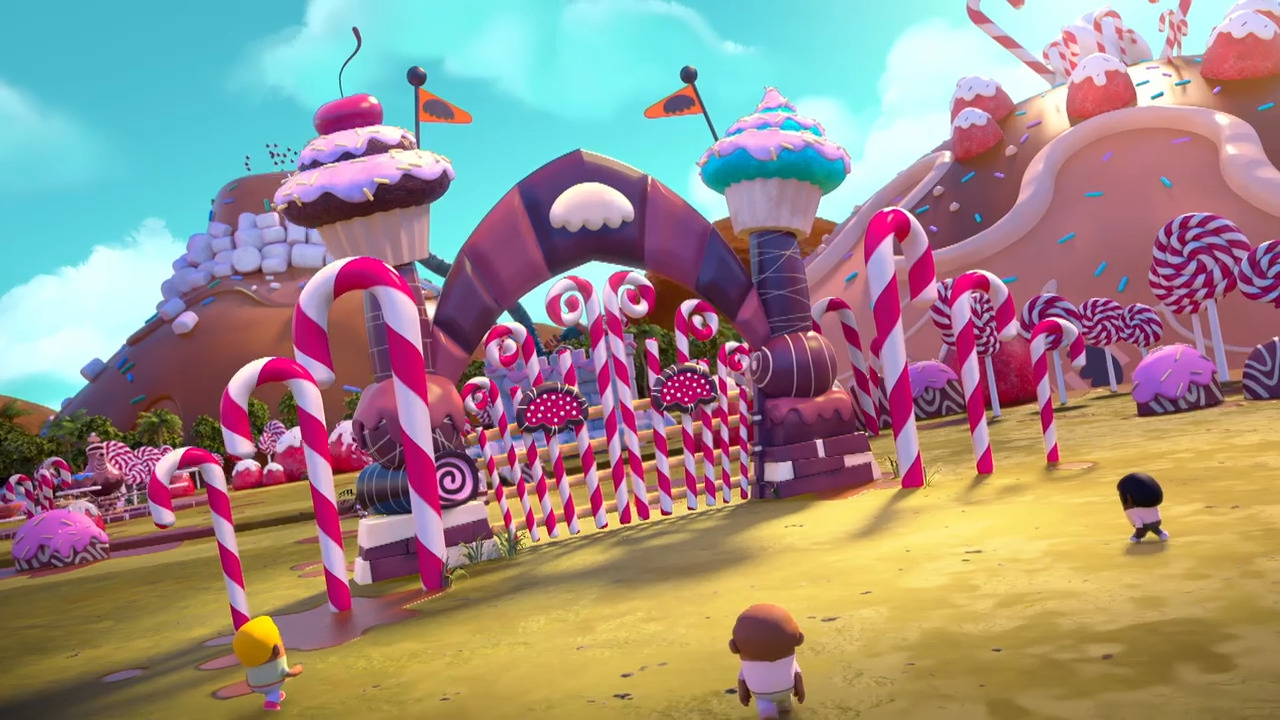
In The Go Jetters at the Chocolate Hills, the Go Jetters crew learns that Grandmaster Glitch has turned the hills into real chocolate! Ubercorn shares some cool facts about these unique brown hills. This video is excerpted from BBC’s Go Jetters, a series that follows the adventures of four international heroes as they travel the globe visiting landmarks and solving environmental problems with Ubercorn, a disco-dancing unicorn.
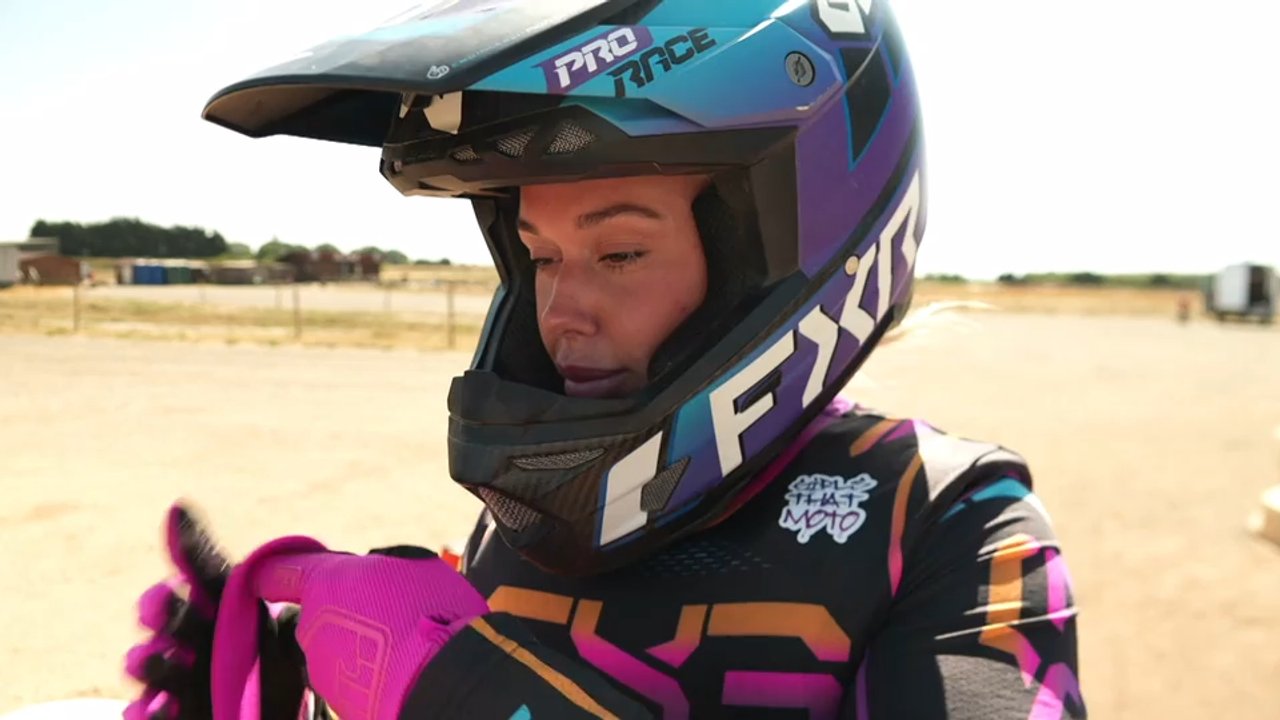
Motocross is a sport where riders race motorcycles around dirt tracks packed with jumps, sharp turns, and bumpy ground. For a long time, most of the racers have been men. Lauren Collingwood wants to change that.
Lauren has been racing motocross for more than 20 years and has won the British women's championship five times. Now she's helping the next generation of girls get into the sport through Girls That Moto, which she describes as the first all-girls motocross training academy in the United Kingdom.
At the academy, girls and women learn the skills Lauren picked up during her career. They practice things like keeping their speed through corners, and they learn to handle the physical demands of racing. They also learn to deal with the extra pressure girls can face in a sport where they're often outnumbered. That's one reason having a female coach matters. As one student put it, Lauren has helped show that motocross isn't "just men."
There's still a big gap at the top of the sport. Only three or four British women race at the professional level, and none of them are paid to ride. Lauren and her students hope to change that, and one of them could become the first.
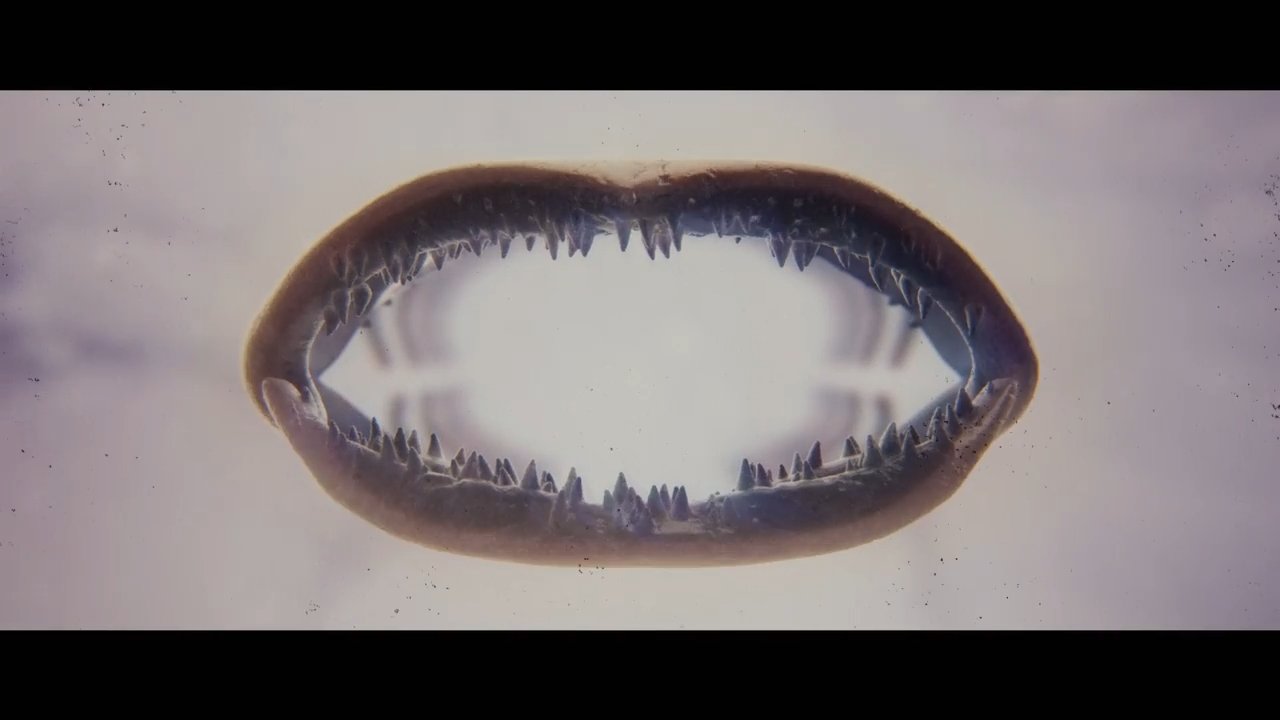
The evolution of jaws transformed how the ancestors of bats and other vertebrates could feed and survive. This clip from BBC’s Evolution episode The Bat follows the ancient fish Metaspriggina, whose unusual front gill arches may have been an early step toward the development of jaws, allowing its descendants to move beyond filter-feeding and actively bite and capture prey.
Because the cartilage involved in early jaw evolution rarely survives in fossils, scientists also look to developing embryos for clues. The video shows how the same genes that control the formation of gill arches also help shape jaws, providing evidence of their shared evolutionary origin and showing how a structure once involved in breathing and feeding was transformed into one of the most important innovations in vertebrate evolution.
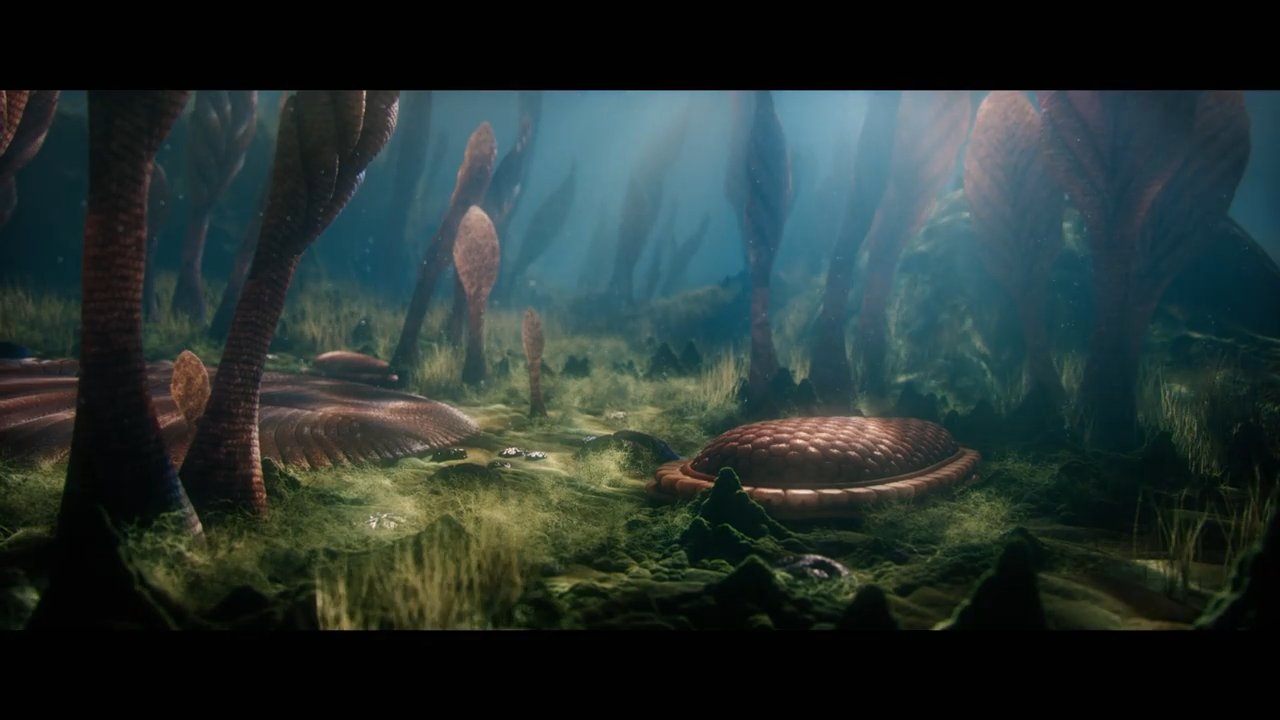
The elephant’s distant ancestors emerged during a major turning point in animal evolution, when cells began specializing and working together to create more complex bodies. This clip from BBC’s Evolution episode "The Elephant" explores how specialization allowed cells to take on different roles, paving the way for tissues, organs, and an explosion of new body shapes — including the tiny ancient ancestor that would eventually give rise to elephants.
The video then examines another evolutionary breakthrough: the development of gills. As early animals adapted structures originally used for feeding to absorb more oxygen, they gained more energy from food and could grow larger and more complex. This innovation helped fuel the evolution of the diverse body forms found in animals today.

In Octopus on the Move, ecologist David Scheel takes us inside the amazing world of octopuses, revealing how these clever creatures leave the water to hunt for food in new places! While they do have gills, octopuses use their skin to breathe while they explore land, but they can’t stay out too long. David also shares wild tales of octopuses escaping tanks and disappearing down drains! This video is excerpted from BBC’s Natural World: The Octopus in My House, a remarkable series about a professor and the extraordinary relationship he develops with an octopus when he invites it to live in his home.
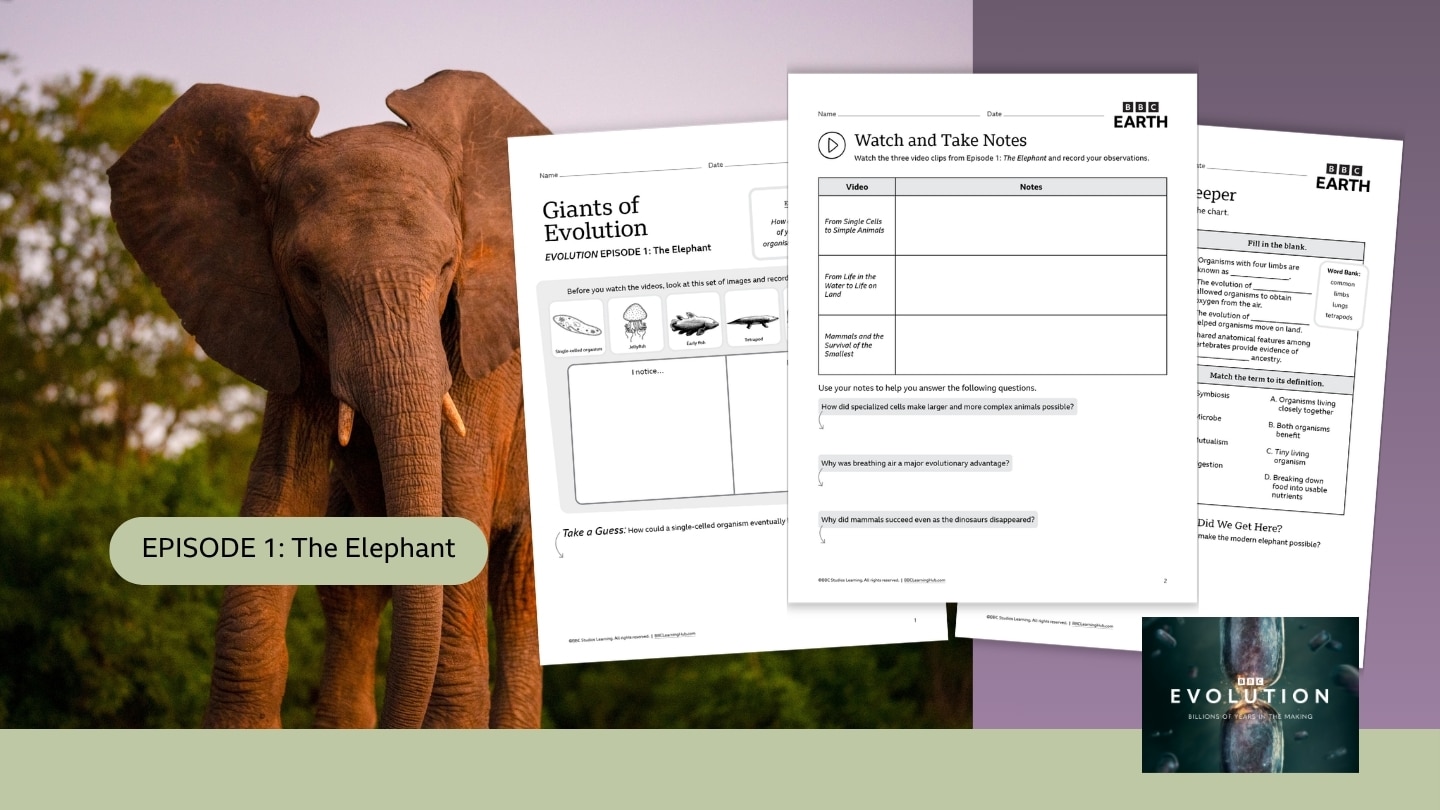
How did a single-celled organism eventually become an elephant? This lesson for ages 11–18 traces the deep evolutionary history of elephants, starting with the earliest forms of life and following the major innovations that made increasingly complex animals possible.
Using BBC video clips from Evolution Episode1: "The Elephant," investigate how specialized cells, organs, gills, lungs, and limbs helped life become more complex and eventually move from water to land. Explore how mammals survived major environmental changes, including the extinction of the dinosaurs, and gained opportunities to spread into new habitats.
Use observations and evidence from the videos to piece together this evolutionary story, practice connecting cause and effect, and revisit predictions. Once you've worked through all the worksheet pages, you'll synthesize what you've learned to explain how billions of years of evolutionary change ultimately led to the modern elephant.
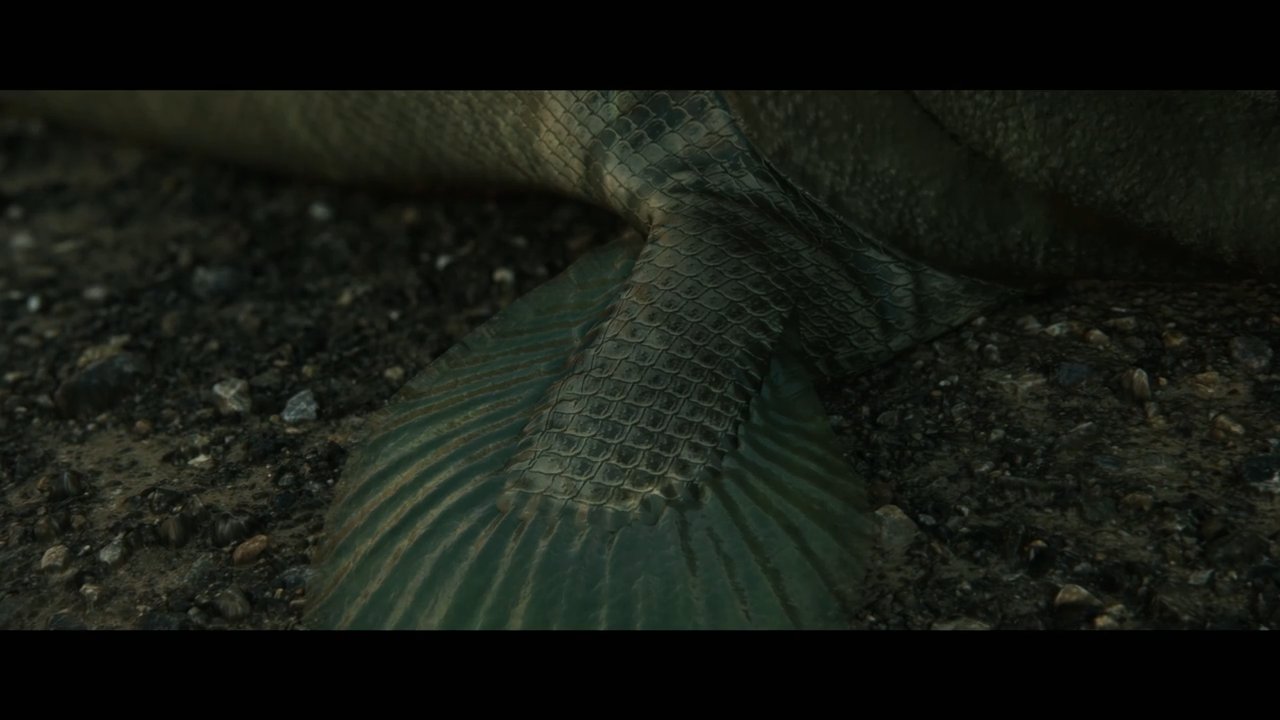
Kenya’s freshwater fish face extreme changes as seasonal waters recede, but the African lungfish has adaptations that allow it to survive in shallow, oxygen-poor pools. This clip from BBC’s Evolution episode "The Elephant" follows the lungfish’s ability to breathe air and use its fleshy fins to move, offering a glimpse into the evolutionary transition from life in water to life on land.
The video traces this transition through ancient fish such as Eusthenopteron, whose features foreshadowed the limbs and lungs of early land vertebrates. These adaptations established the tetrapod body plan — the four-limbed blueprint shared by elephants, humans, birds, whales, and countless other animals, despite the remarkable ways evolution has modified it for different environments.

Across 10 clips from BBC’s Blue Planet and Natural World: The Octopus in My House, watch octopuses explore their surroundings, solve problems, communicate, hunt, hide, and interact with the world in surprisingly complex ways.
Discover the remarkable adaptations behind their success. Octopuses can squeeze their soft bodies through tiny spaces, use their arms to investigate and manipulate objects, and rapidly change their appearance to camouflage themselves or communicate. Explore how these eight-armed animals evolved and see how their intelligence helps them respond to challenges both in the wild and while living alongside humans.
From ingenious escapes to astonishing underwater encounters, these BBC octopus videos reveal an animal that continually challenges what we think we know about life beneath the waves.
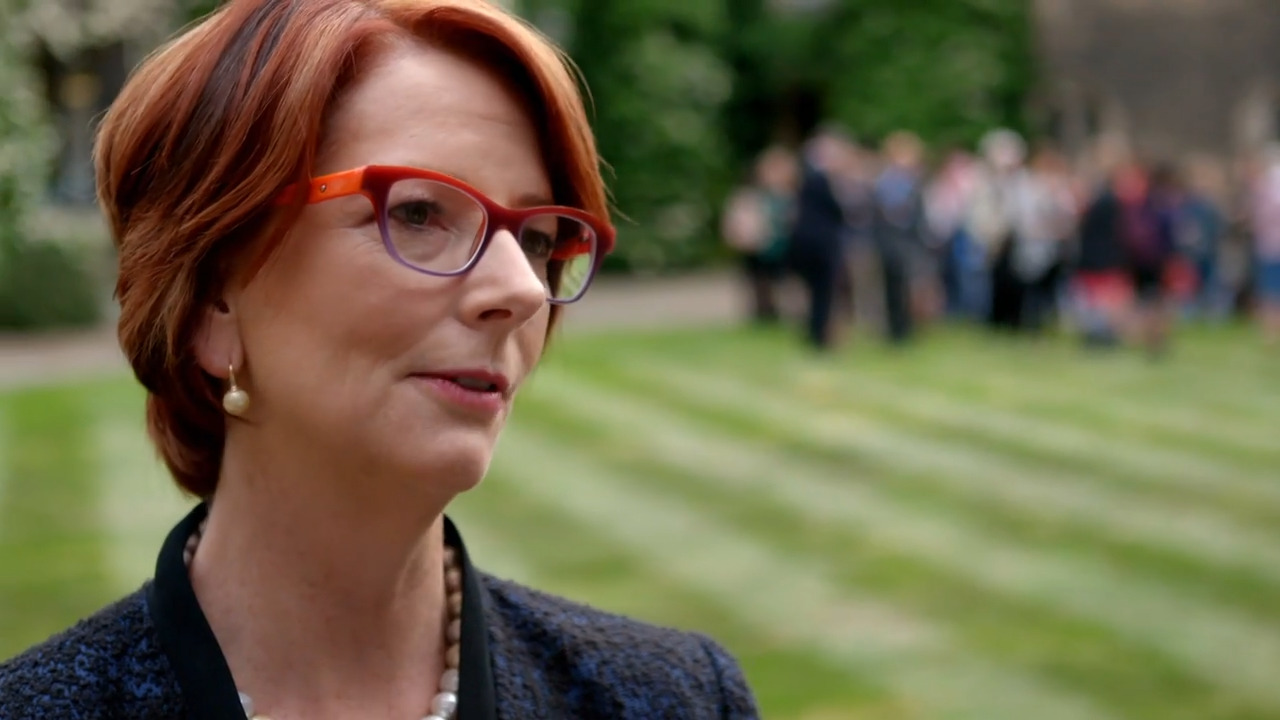
In Julia Gillard, Education Advocate, listen as the former Australian Prime Minister reflects on her leadership and her work to expand education opportunities for girls worldwide. Drawing from her family’s experience with poverty and limited schooling, she advocates for equal access to education while facing criticism and gender bias during her political career. This video is excerpted from BBC's Her Story: The Female Revolution, which explores the history and impact of women’s rights movements and achievements of women.
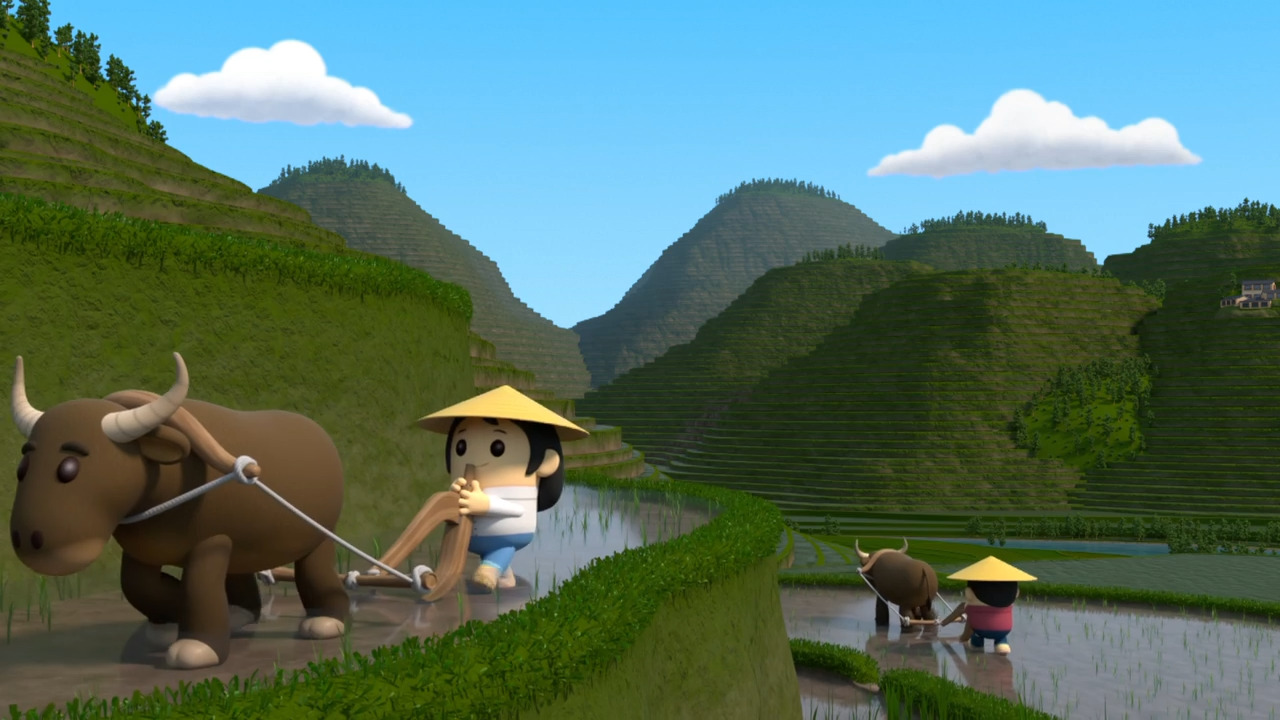
In How Rice Grows in China’s Paddy Fields, the Go Jetters crew explores the beautiful hills of Yuan Yang, China, where rice is grown in special paddy fields. Farmers have been planting rice in these fields for thousands of years, carving steps into the hillsides so the water can flow down. The rice needs plenty of water to grow. One quarter of the world’s rice comes from these fields, where hard-working farmers make sure the crops have everything they need! This video is excerpted from BBC’s Go Jetters, a series that follows the adventures of four plucky international heroes as they travel the globe visiting the world’s most famous landmarks with their friend and mentor, Ubercorn, a disco-dancing unicorn.
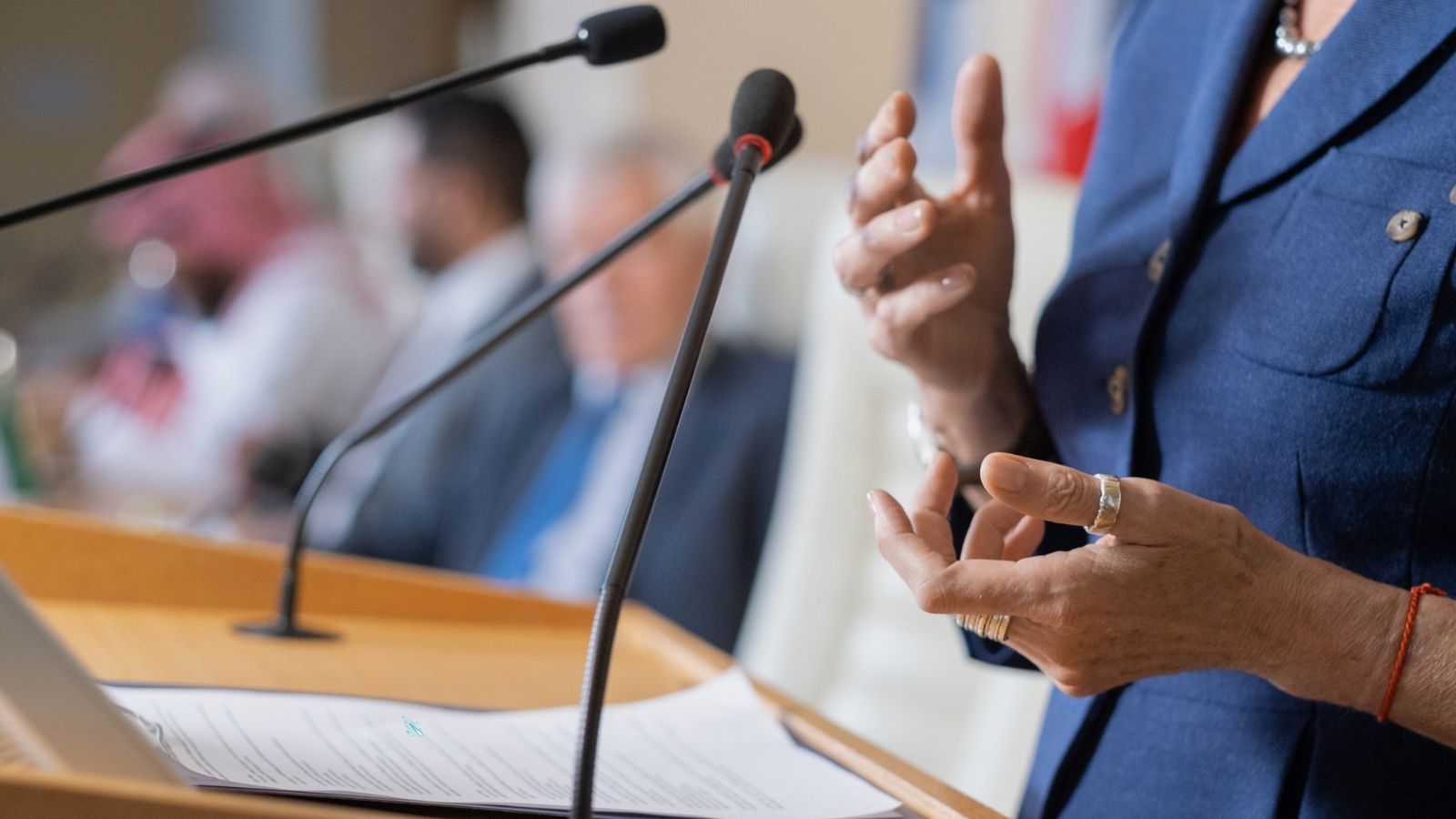
In honor of Women’s History Month, this BBC video playlist examines the careers and legacies of leaders including Hillary Clinton, Margaret Thatcher, Michelle Bachelet, and others. Across different countries, eras, and political systems, these women navigated elections, economic upheaval, international conflict, social change, and intense public scrutiny.
Explore the ideas and policies that defined their time in public life, the historical circumstances that shaped their leadership, and the debates surrounding their decisions. Their approaches differed significantly: some pursued major social reforms, while others championed free-market policies or challenged established political structures.
Their stories also raise larger questions about power and representation. How have expectations of women in leadership changed over time? How can gender shape the way political leaders are perceived and judged? And how should the achievements of influential figures be considered alongside the controversies and consequences of their decisions?
These BBC videos offer an opportunity to examine leadership with nuance — and explore the complex roles women have played in shaping modern politics and public life.

Explore the inspiring life and global impact of Malala Yousafzai, from her childhood in the Swat Valley to becoming one of the world’s leading advocates for girls’ education. Students will discover how Malala used her voice to speak out for the right to learn and how her courage and persistence inspired people around the world.
This Kahoot examines key moments in Malala’s journey, including her early activism, her advocacy for education in the face of danger, and her rise as an international symbol of hope and determination. Students will explore how education can become a powerful force for change and how one person’s beliefs and actions can influence history on a global scale.
Ideal for lessons on world history, human rights, leadership, and global citizenship, this Kahoot encourages students to think about the importance of education, resilience, and using one’s voice to make a difference.
In The Go Jetters at the Chocolate Hills, the Go Jetters crew learns that Grandmaster Glitch has turned the hills into real chocolate! Ubercorn shares some cool facts about these unique brown hills. This video is excerpted from BBC’s Go Jetters, a series that follows the adventures of four international heroes as they travel the globe visiting landmarks and solving environmental problems with Ubercorn, a disco-dancing unicorn.
Motocross is a sport where riders race motorcycles around dirt tracks packed with jumps, sharp turns, and bumpy ground. For a long time, most of the racers have been men. Lauren Collingwood wants to change that.
Lauren has been racing motocross for more than 20 years and has won the British women's championship five times. Now she's helping the next generation of girls get into the sport through Girls That Moto, which she describes as the first all-girls motocross training academy in the United Kingdom.
At the academy, girls and women learn the skills Lauren picked up during her career. They practice things like keeping their speed through corners, and they learn to handle the physical demands of racing. They also learn to deal with the extra pressure girls can face in a sport where they're often outnumbered. That's one reason having a female coach matters. As one student put it, Lauren has helped show that motocross isn't "just men."
There's still a big gap at the top of the sport. Only three or four British women race at the professional level, and none of them are paid to ride. Lauren and her students hope to change that, and one of them could become the first.
The evolution of jaws transformed how the ancestors of bats and other vertebrates could feed and survive. This clip from BBC’s Evolution episode The Bat follows the ancient fish Metaspriggina, whose unusual front gill arches may have been an early step toward the development of jaws, allowing its descendants to move beyond filter-feeding and actively bite and capture prey.
Because the cartilage involved in early jaw evolution rarely survives in fossils, scientists also look to developing embryos for clues. The video shows how the same genes that control the formation of gill arches also help shape jaws, providing evidence of their shared evolutionary origin and showing how a structure once involved in breathing and feeding was transformed into one of the most important innovations in vertebrate evolution.
The elephant’s distant ancestors emerged during a major turning point in animal evolution, when cells began specializing and working together to create more complex bodies. This clip from BBC’s Evolution episode "The Elephant" explores how specialization allowed cells to take on different roles, paving the way for tissues, organs, and an explosion of new body shapes — including the tiny ancient ancestor that would eventually give rise to elephants.
The video then examines another evolutionary breakthrough: the development of gills. As early animals adapted structures originally used for feeding to absorb more oxygen, they gained more energy from food and could grow larger and more complex. This innovation helped fuel the evolution of the diverse body forms found in animals today.
In Octopus on the Move, ecologist David Scheel takes us inside the amazing world of octopuses, revealing how these clever creatures leave the water to hunt for food in new places! While they do have gills, octopuses use their skin to breathe while they explore land, but they can’t stay out too long. David also shares wild tales of octopuses escaping tanks and disappearing down drains! This video is excerpted from BBC’s Natural World: The Octopus in My House, a remarkable series about a professor and the extraordinary relationship he develops with an octopus when he invites it to live in his home.
How did a single-celled organism eventually become an elephant? This lesson for ages 11–18 traces the deep evolutionary history of elephants, starting with the earliest forms of life and following the major innovations that made increasingly complex animals possible.
Using BBC video clips from Evolution Episode1: "The Elephant," investigate how specialized cells, organs, gills, lungs, and limbs helped life become more complex and eventually move from water to land. Explore how mammals survived major environmental changes, including the extinction of the dinosaurs, and gained opportunities to spread into new habitats.
Use observations and evidence from the videos to piece together this evolutionary story, practice connecting cause and effect, and revisit predictions. Once you've worked through all the worksheet pages, you'll synthesize what you've learned to explain how billions of years of evolutionary change ultimately led to the modern elephant.
Kenya’s freshwater fish face extreme changes as seasonal waters recede, but the African lungfish has adaptations that allow it to survive in shallow, oxygen-poor pools. This clip from BBC’s Evolution episode "The Elephant" follows the lungfish’s ability to breathe air and use its fleshy fins to move, offering a glimpse into the evolutionary transition from life in water to life on land.
The video traces this transition through ancient fish such as Eusthenopteron, whose features foreshadowed the limbs and lungs of early land vertebrates. These adaptations established the tetrapod body plan — the four-limbed blueprint shared by elephants, humans, birds, whales, and countless other animals, despite the remarkable ways evolution has modified it for different environments.
Across 10 clips from BBC’s Blue Planet and Natural World: The Octopus in My House, watch octopuses explore their surroundings, solve problems, communicate, hunt, hide, and interact with the world in surprisingly complex ways.
Discover the remarkable adaptations behind their success. Octopuses can squeeze their soft bodies through tiny spaces, use their arms to investigate and manipulate objects, and rapidly change their appearance to camouflage themselves or communicate. Explore how these eight-armed animals evolved and see how their intelligence helps them respond to challenges both in the wild and while living alongside humans.
From ingenious escapes to astonishing underwater encounters, these BBC octopus videos reveal an animal that continually challenges what we think we know about life beneath the waves.
In Julia Gillard, Education Advocate, listen as the former Australian Prime Minister reflects on her leadership and her work to expand education opportunities for girls worldwide. Drawing from her family’s experience with poverty and limited schooling, she advocates for equal access to education while facing criticism and gender bias during her political career. This video is excerpted from BBC's Her Story: The Female Revolution, which explores the history and impact of women’s rights movements and achievements of women.
In How Rice Grows in China’s Paddy Fields, the Go Jetters crew explores the beautiful hills of Yuan Yang, China, where rice is grown in special paddy fields. Farmers have been planting rice in these fields for thousands of years, carving steps into the hillsides so the water can flow down. The rice needs plenty of water to grow. One quarter of the world’s rice comes from these fields, where hard-working farmers make sure the crops have everything they need! This video is excerpted from BBC’s Go Jetters, a series that follows the adventures of four plucky international heroes as they travel the globe visiting the world’s most famous landmarks with their friend and mentor, Ubercorn, a disco-dancing unicorn.
In honor of Women’s History Month, this BBC video playlist examines the careers and legacies of leaders including Hillary Clinton, Margaret Thatcher, Michelle Bachelet, and others. Across different countries, eras, and political systems, these women navigated elections, economic upheaval, international conflict, social change, and intense public scrutiny.
Explore the ideas and policies that defined their time in public life, the historical circumstances that shaped their leadership, and the debates surrounding their decisions. Their approaches differed significantly: some pursued major social reforms, while others championed free-market policies or challenged established political structures.
Their stories also raise larger questions about power and representation. How have expectations of women in leadership changed over time? How can gender shape the way political leaders are perceived and judged? And how should the achievements of influential figures be considered alongside the controversies and consequences of their decisions?
These BBC videos offer an opportunity to examine leadership with nuance — and explore the complex roles women have played in shaping modern politics and public life.
Explore the inspiring life and global impact of Malala Yousafzai, from her childhood in the Swat Valley to becoming one of the world’s leading advocates for girls’ education. Students will discover how Malala used her voice to speak out for the right to learn and how her courage and persistence inspired people around the world.
This Kahoot examines key moments in Malala’s journey, including her early activism, her advocacy for education in the face of danger, and her rise as an international symbol of hope and determination. Students will explore how education can become a powerful force for change and how one person’s beliefs and actions can influence history on a global scale.
Ideal for lessons on world history, human rights, leadership, and global citizenship, this Kahoot encourages students to think about the importance of education, resilience, and using one’s voice to make a difference.