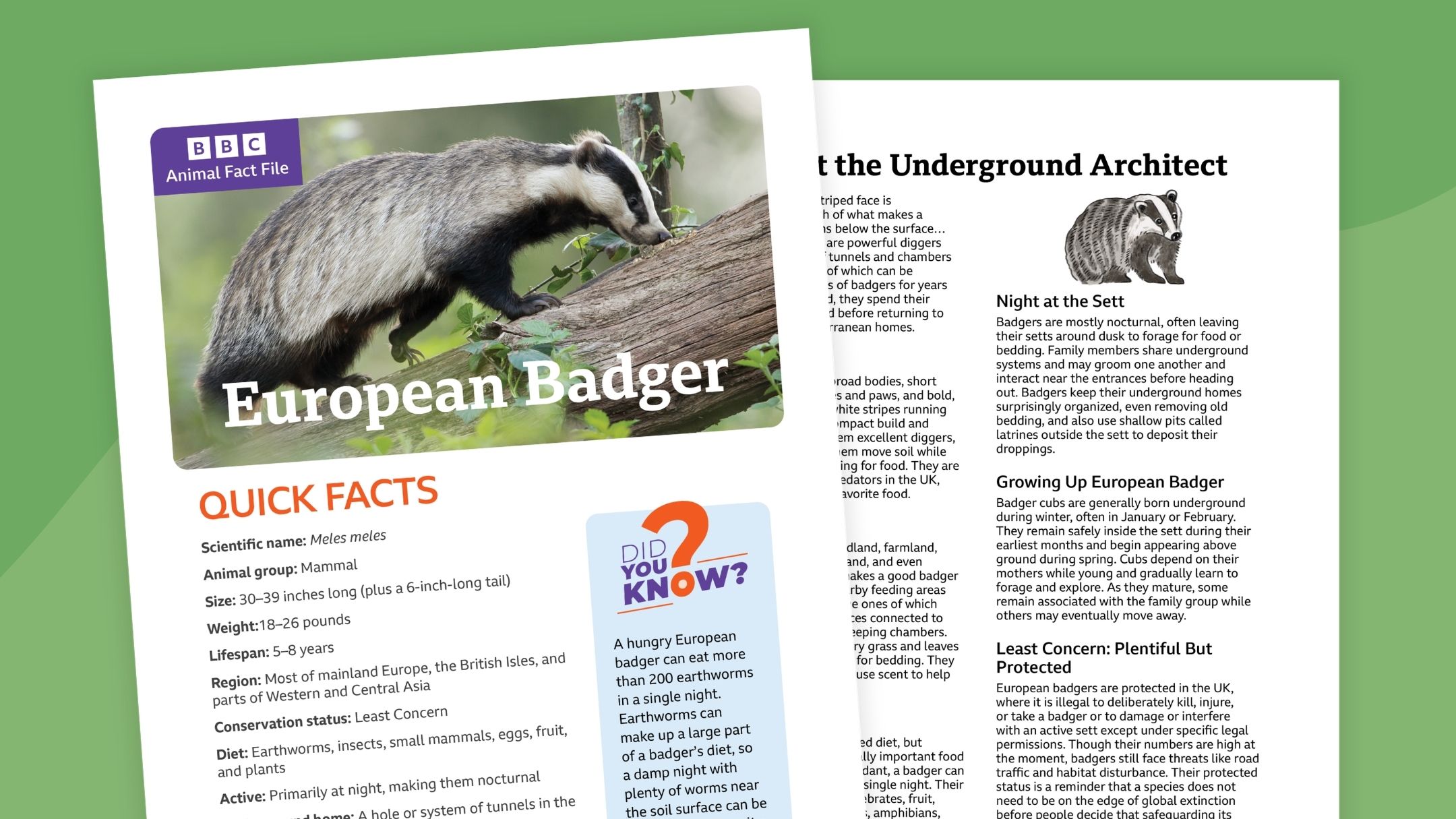
How many earthworms could a hungry badger eat in one night? More than 200 — and that’s just one of the surprising things about this underground-dwelling mammal.
Meet the European badger, a powerful digger that spends its days below ground and its nights exploring above it. Take a look inside a badger’s sett, discover how its strong claws and keen sense of smell help it find food, and find out why earthworms are such an important part of its diet. You'll also learn how badger families live together, raise their cubs, and keep their underground homes in order.
Teachers and parents, you can use this fact file to:
- Introduce an animal, wildlife, or life science unit
- Support nonfiction reading and vocabulary practice
- Explore animal adaptations, behaviors, and habitats
- Compare animals and the ecosystems they live in
- Practice finding and organizing information from nonfiction texts
- Prepare students for animal research projects or presentations (use our animal report templates!)
- Connect science learning to conservation and environmental issues
- Pair with videos, articles, or other informational texts (see Related Resources below)
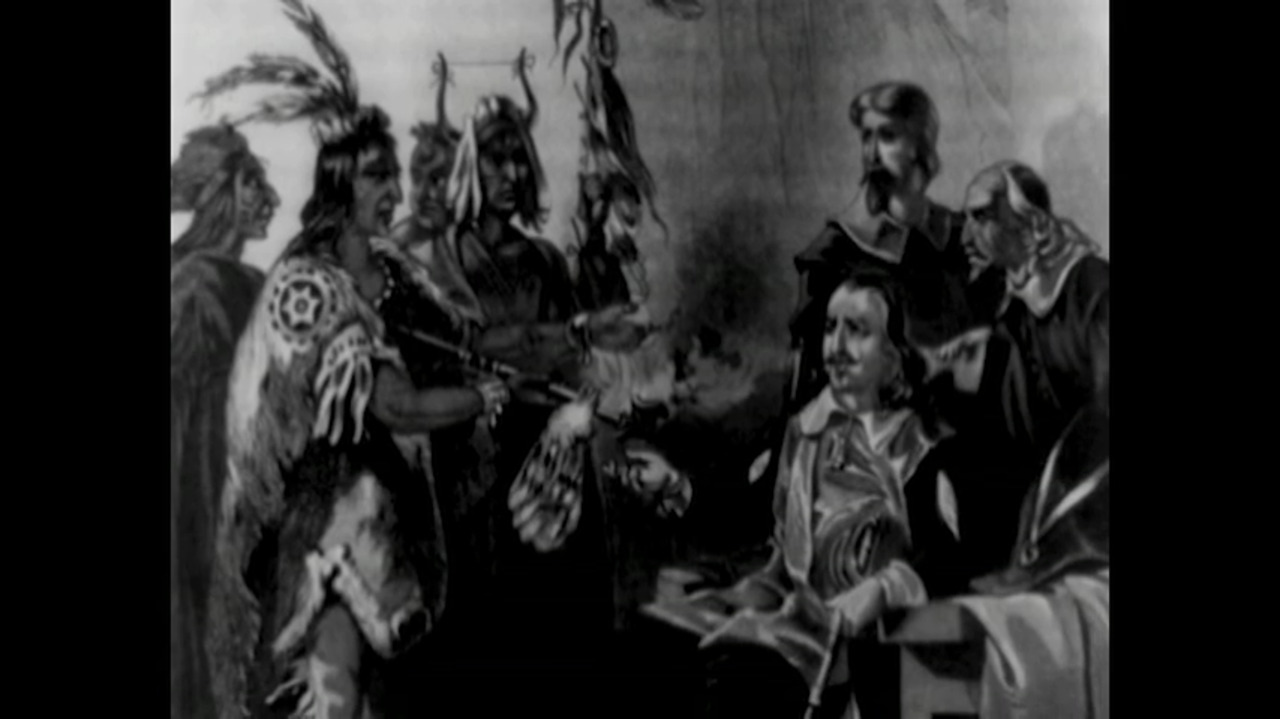
In The Iroquois Legacy, explore the complex relationship between Native Americans and European settlers. Long before the U.S. Constitution, the Iroquois created their own constitution and political system, influencing Founding Fathers like Benjamin Franklin and John Adams. Despite this influence, the Iroquois faced difficult relationships with European settlers, including conflicts over land and the eventual destruction of their alliance during the American Revolution. Many Iroquois were forced to flee to Canada, where their descendants still live today.
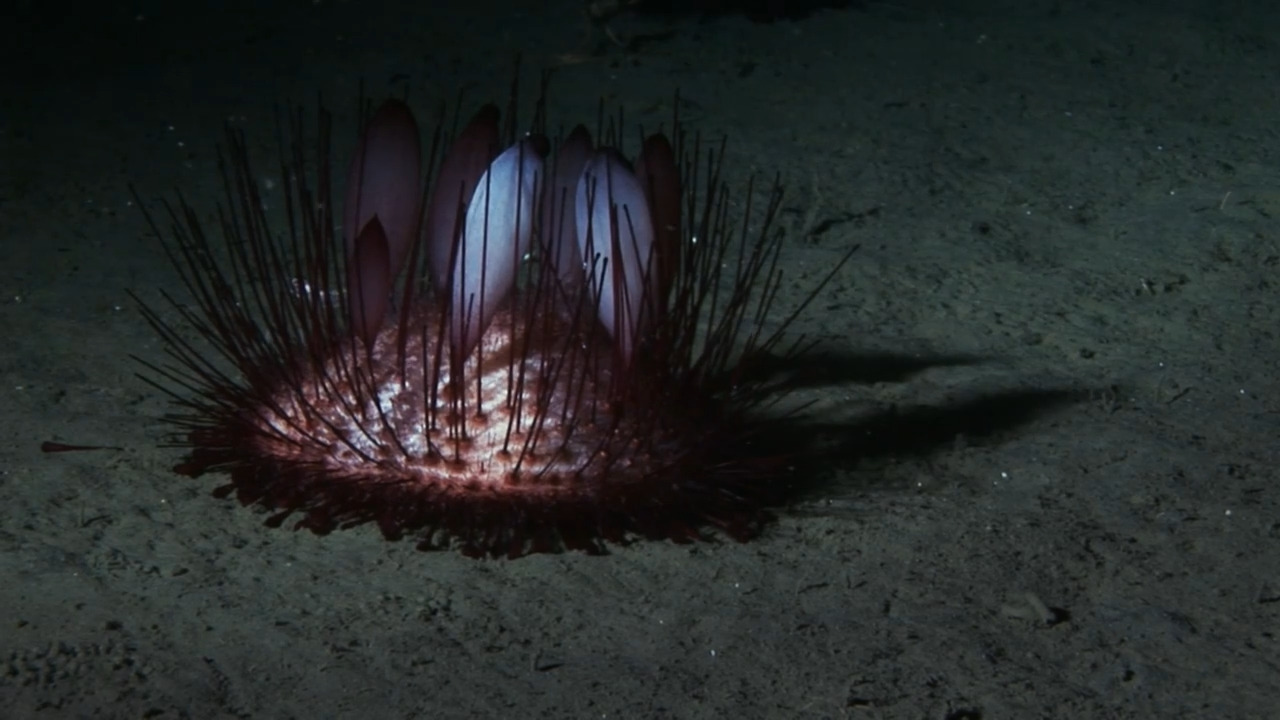
In Subtle Signs of Life on the Seafloor, narrator David Attenborough journeys over two miles beneath the ocean's surface, where the pressure is immense — 300 times greater than at sea level. Here, marine snow, tiny organic particles drifting from above, slowly settles on the seafloor over months. This vast, flat expanse stretches for thousands of miles, with subtle signs of life visible in the soft sediment. Sea urchins sift through the accumulating snow, while shrimp carefully pick out edible particles. The monkfish, nearly indistinguishable from the sand, patiently waits for prey to be lured toward its deceptive trap, sometimes going days between meals. This video is excerpted from BBC’s Planet Earth, a breathtaking documentary series that highlights the natural wonders of our planet.
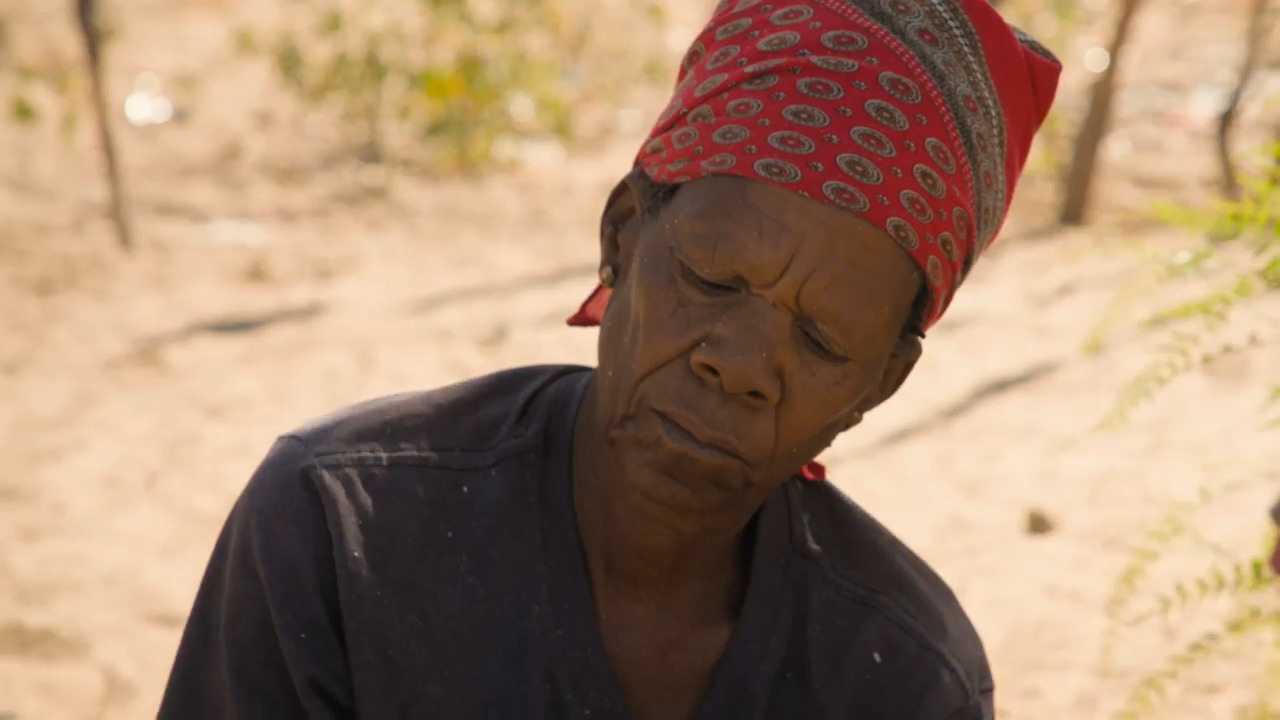
In The San People’s New World, host Simon Reeve explores the Central Kalahari Game Reserve (CKGR) in Botswana, a land filled with wildlife and history. He learns about the San people, who lived there for thousands of years but were forced to relocate to settlements with promises of a better life. Many San feel betrayed, believing they were pushed out for diamonds and wildlife conservation, leaving their ancestral home behind. This video is excerpted from BBC’s Wilderness With Simon Reeve, an epic adventure into the heart of Earth’s last great wild areas, where nature is at its most beautiful and fragile.
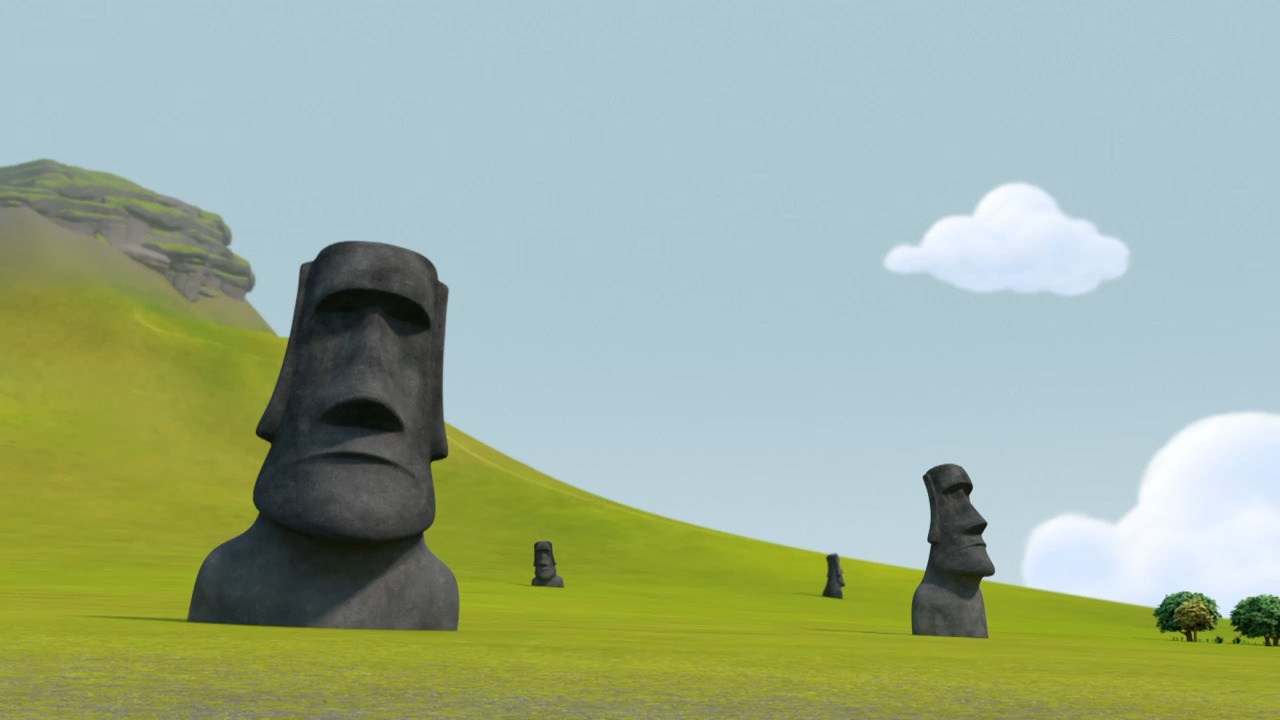
In The Go Jetters Meet the Giant Moai Statues in the Pacific Ocean, the Go Jetters crew visits Easter Island, a tiny island in the middle of the big South Pacific Ocean, far away from anything else! The people who first settled there were amazing navigators and built giant stone statues called moai to honor their families and protect the island. These statues still stand tall today and are a favorite spot for visitors from all over the world. This video is excerpted from BBC’s Go Jetters, a series that follows the adventures of four plucky international heroes as they travel the globe visiting the world’s most famous landmarks with their friend and mentor, Ubercorn, a disco-dancing unicorn.

In Can Oil and Conservation Coexist?, host Simon Reeve explores the Arctic National Wildlife Refuge (ANWR) in Alaska, where he visits the small coastal Iñupiat community of Kaktovik — the only settlement in this 19-million-acre wilderness. He investigates the heated debate over protecting the refuge vs. oil drilling, as the people explain how oil companies have brought life-changing benefits like running water, modern homes, and longer life expectancy. This video is excerpted from BBC’s The Americas With Simon Reeve, in which Simon Reeve explores the landscapes, cultures, and wildlife of North and South America.
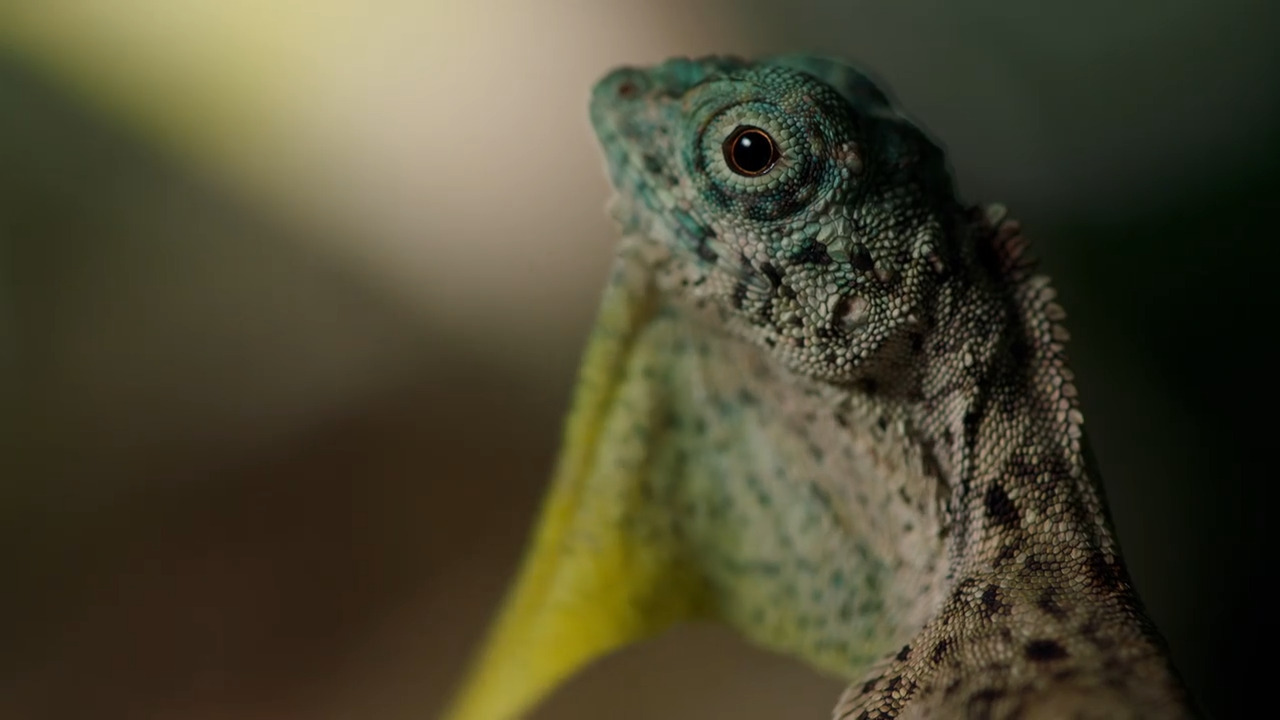
In Meet the Draco Lizard, narrator Sir David Attenborough watches a Draco lizard search for an ideal tree in which to eat ants and settle. However, the tree the lizard finds is already occupied by another Draco lizard, which extends the flap under its neck to instigate a fight. The trespassing lizard runs to the end of a branch and then takes a flying leap, gliding to the safety of another tree. This video is excerpted from BBC’s Planet Earth II, a breathtaking documentary series that highlights the natural wonders of our planet.
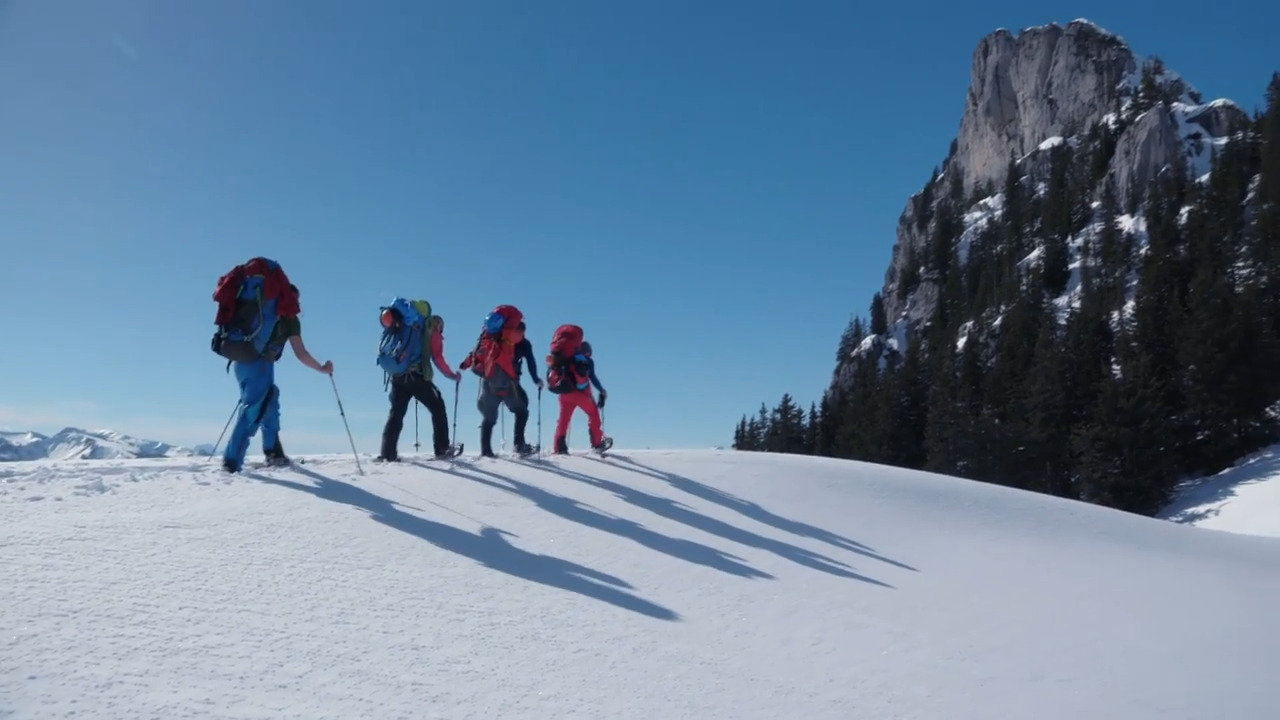
In Climbing the Stockhorn!, adventurer Steve Backshall and his team prepare for a tough climb up the Stockhorn, a mountain over 2,000 meters (roughly 6,560 feet) tall. The journey includes crossing a frozen lake that contains Arctic char and using energy-saving techniques in the snow. After hours of trekking, they set up camp by flattening snow and settle in to make dinner, ready for the challenges ahead. This video is excerpted from BBC’s Steve Backshall vs. the Vertical Mile, a show in which Steve and his team take on one of the deadliest mountain climbs in the world — the north face of the Eiger.
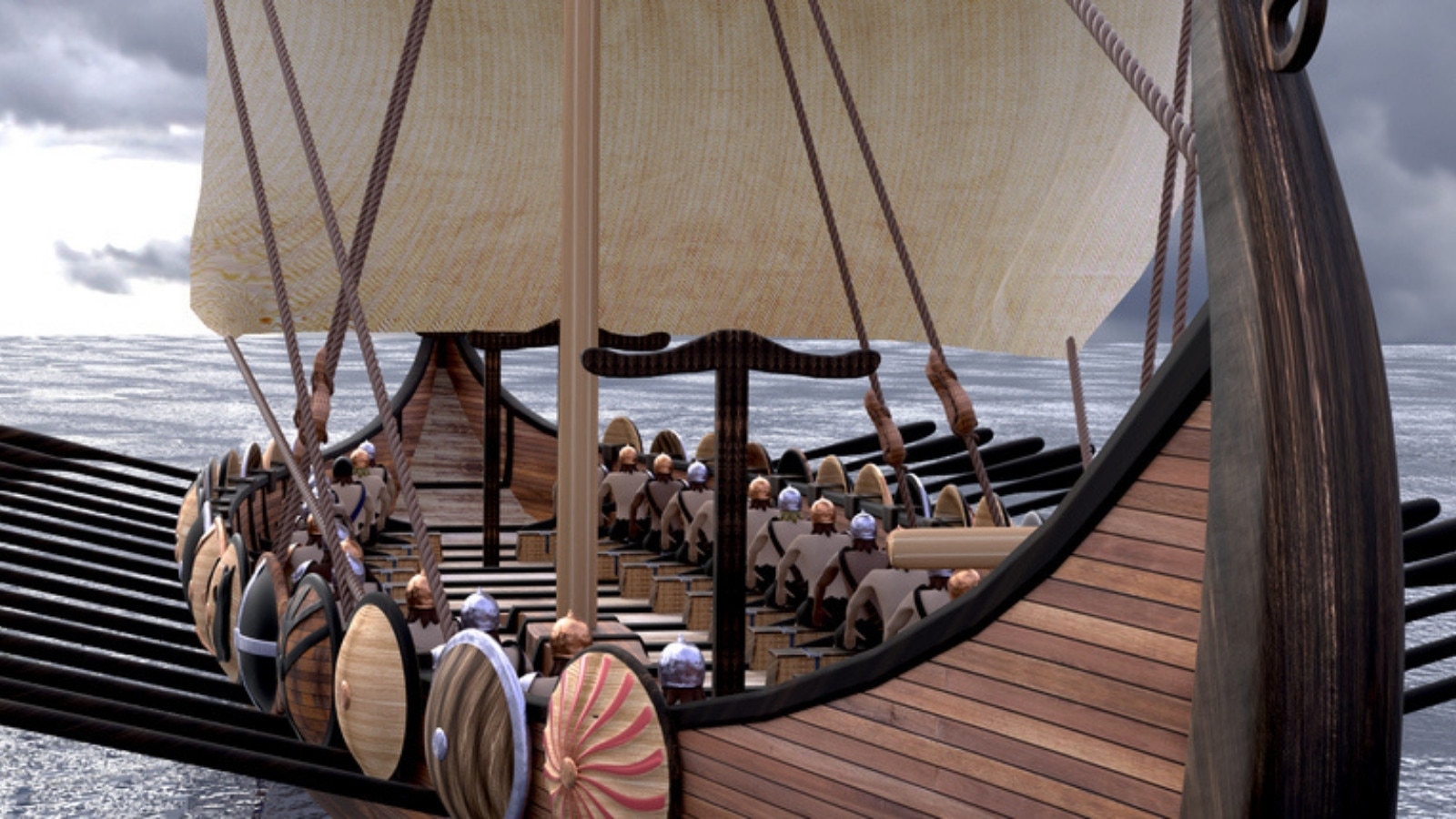
The article "Leif Erikson: The Viking Who Sailed to America" from BBC's HistoryExtra explores the Norse explorer’s journey across the Atlantic nearly 500 years before Columbus.
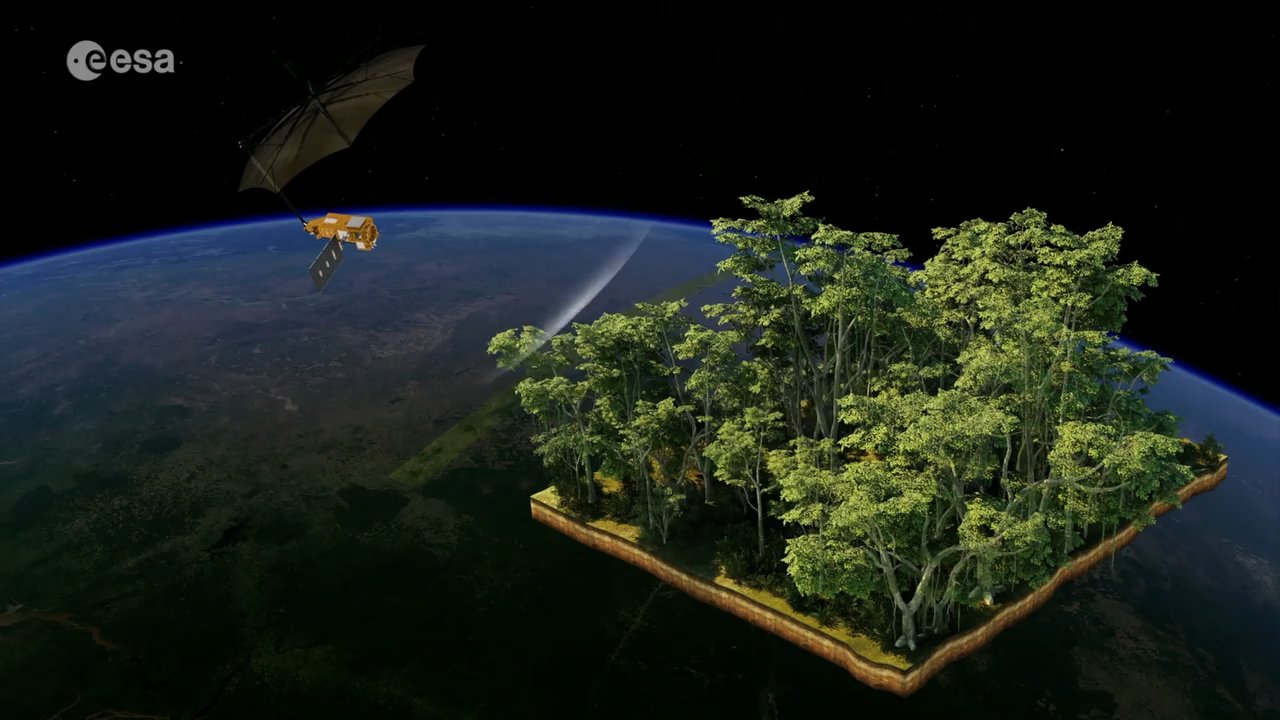
Forests store huge amounts of carbon, likely hundreds of billions of tons. One metric ton is about 2,200 pounds, so hundreds of billions of tons is... let's just say it's a lot. Because trees pull carbon dioxide out of the air and lock it away, forests play a major role in controlling Earth's climate.
To figure out how much carbon a forest holds, scientists can measure individual trees, like how wide the trunk is and how tall the tree grows. But nobody can take a tape measure to millions of square miles of forest, and "a whole bunch" isn't a scientific measurement.
That's where new technology comes in. In 2025, the European Space Agency, which runs space missions for a group of European countries, launched a satellite called Biomass. It uses radar with extra-long wavelengths. The longer the wavelength, the more easily radar can pass through leaves and small branches and pick up bigger things, like trunks and large branches, which hold most of a tree's carbon.
Most earlier satellites, like many launched by NASA, the U.S. space agency, are optical. They work like cameras, capturing sunlight reflected off the treetops. That's useful for seeing where forests are, but it mostly shows the top layer. Radar can reveal what's underneath. It can help scientists estimate how much wood a forest holds, spot deforestation, and study flooded forests that are hard to reach. Scientists then check the satellite data against measurements taken from planes and on the ground.
Another tool is LiDAR, short for Light Detection and Ranging. It sends out pulses of laser light and measures how long they take to bounce back, building detailed 3D maps of forests. Some are precise enough to show individual twigs and leaves. LiDAR isn't new, but it produces enormous amounts of data. Artificial intelligence is now making that data much faster to process, turning LiDAR into a more practical tool for studying forests.
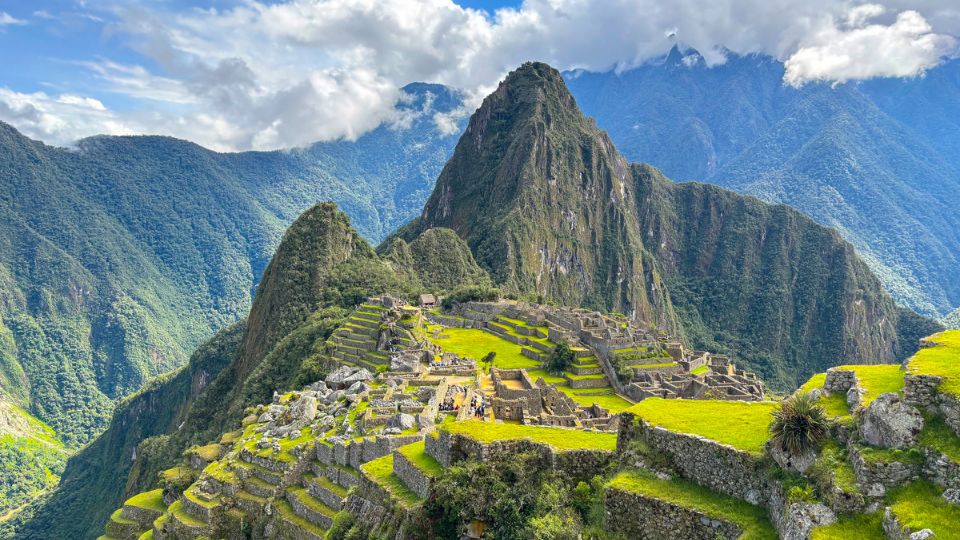
Discover the mysteries of Machu Picchu, the ancient Inca city hidden high in the Andes Mountains. Students will explore who built this remarkable mountain settlement, why it may have been abandoned, and how it became one of the New Seven Wonders of the World.
This Kahoot examines the engineering, architecture, and beliefs of the Inca Empire, including the stone structures, terraces, and pathways that allowed people to live in harmony with the steep mountain environment. Students will also discover what Machu Picchu reveals about Inca culture, religion, and scientific understanding.
Ideal for lessons on history, geography, engineering, and world cultures, this Kahoot encourages students to explore the lasting achievements and ingenuity of one of the world’s most fascinating ancient civilizations.
How many earthworms could a hungry badger eat in one night? More than 200 — and that’s just one of the surprising things about this underground-dwelling mammal.
Meet the European badger, a powerful digger that spends its days below ground and its nights exploring above it. Take a look inside a badger’s sett, discover how its strong claws and keen sense of smell help it find food, and find out why earthworms are such an important part of its diet. You'll also learn how badger families live together, raise their cubs, and keep their underground homes in order.
Teachers and parents, you can use this fact file to:
- Introduce an animal, wildlife, or life science unit
- Support nonfiction reading and vocabulary practice
- Explore animal adaptations, behaviors, and habitats
- Compare animals and the ecosystems they live in
- Practice finding and organizing information from nonfiction texts
- Prepare students for animal research projects or presentations (use our animal report templates!)
- Connect science learning to conservation and environmental issues
- Pair with videos, articles, or other informational texts (see Related Resources below)
In The Iroquois Legacy, explore the complex relationship between Native Americans and European settlers. Long before the U.S. Constitution, the Iroquois created their own constitution and political system, influencing Founding Fathers like Benjamin Franklin and John Adams. Despite this influence, the Iroquois faced difficult relationships with European settlers, including conflicts over land and the eventual destruction of their alliance during the American Revolution. Many Iroquois were forced to flee to Canada, where their descendants still live today.
In Subtle Signs of Life on the Seafloor, narrator David Attenborough journeys over two miles beneath the ocean's surface, where the pressure is immense — 300 times greater than at sea level. Here, marine snow, tiny organic particles drifting from above, slowly settles on the seafloor over months. This vast, flat expanse stretches for thousands of miles, with subtle signs of life visible in the soft sediment. Sea urchins sift through the accumulating snow, while shrimp carefully pick out edible particles. The monkfish, nearly indistinguishable from the sand, patiently waits for prey to be lured toward its deceptive trap, sometimes going days between meals. This video is excerpted from BBC’s Planet Earth, a breathtaking documentary series that highlights the natural wonders of our planet.
In The San People’s New World, host Simon Reeve explores the Central Kalahari Game Reserve (CKGR) in Botswana, a land filled with wildlife and history. He learns about the San people, who lived there for thousands of years but were forced to relocate to settlements with promises of a better life. Many San feel betrayed, believing they were pushed out for diamonds and wildlife conservation, leaving their ancestral home behind. This video is excerpted from BBC’s Wilderness With Simon Reeve, an epic adventure into the heart of Earth’s last great wild areas, where nature is at its most beautiful and fragile.
In The Go Jetters Meet the Giant Moai Statues in the Pacific Ocean, the Go Jetters crew visits Easter Island, a tiny island in the middle of the big South Pacific Ocean, far away from anything else! The people who first settled there were amazing navigators and built giant stone statues called moai to honor their families and protect the island. These statues still stand tall today and are a favorite spot for visitors from all over the world. This video is excerpted from BBC’s Go Jetters, a series that follows the adventures of four plucky international heroes as they travel the globe visiting the world’s most famous landmarks with their friend and mentor, Ubercorn, a disco-dancing unicorn.
In Can Oil and Conservation Coexist?, host Simon Reeve explores the Arctic National Wildlife Refuge (ANWR) in Alaska, where he visits the small coastal Iñupiat community of Kaktovik — the only settlement in this 19-million-acre wilderness. He investigates the heated debate over protecting the refuge vs. oil drilling, as the people explain how oil companies have brought life-changing benefits like running water, modern homes, and longer life expectancy. This video is excerpted from BBC’s The Americas With Simon Reeve, in which Simon Reeve explores the landscapes, cultures, and wildlife of North and South America.
In Meet the Draco Lizard, narrator Sir David Attenborough watches a Draco lizard search for an ideal tree in which to eat ants and settle. However, the tree the lizard finds is already occupied by another Draco lizard, which extends the flap under its neck to instigate a fight. The trespassing lizard runs to the end of a branch and then takes a flying leap, gliding to the safety of another tree. This video is excerpted from BBC’s Planet Earth II, a breathtaking documentary series that highlights the natural wonders of our planet.
In Climbing the Stockhorn!, adventurer Steve Backshall and his team prepare for a tough climb up the Stockhorn, a mountain over 2,000 meters (roughly 6,560 feet) tall. The journey includes crossing a frozen lake that contains Arctic char and using energy-saving techniques in the snow. After hours of trekking, they set up camp by flattening snow and settle in to make dinner, ready for the challenges ahead. This video is excerpted from BBC’s Steve Backshall vs. the Vertical Mile, a show in which Steve and his team take on one of the deadliest mountain climbs in the world — the north face of the Eiger.
The article "Leif Erikson: The Viking Who Sailed to America" from BBC's HistoryExtra explores the Norse explorer’s journey across the Atlantic nearly 500 years before Columbus.
Forests store huge amounts of carbon, likely hundreds of billions of tons. One metric ton is about 2,200 pounds, so hundreds of billions of tons is... let's just say it's a lot. Because trees pull carbon dioxide out of the air and lock it away, forests play a major role in controlling Earth's climate.
To figure out how much carbon a forest holds, scientists can measure individual trees, like how wide the trunk is and how tall the tree grows. But nobody can take a tape measure to millions of square miles of forest, and "a whole bunch" isn't a scientific measurement.
That's where new technology comes in. In 2025, the European Space Agency, which runs space missions for a group of European countries, launched a satellite called Biomass. It uses radar with extra-long wavelengths. The longer the wavelength, the more easily radar can pass through leaves and small branches and pick up bigger things, like trunks and large branches, which hold most of a tree's carbon.
Most earlier satellites, like many launched by NASA, the U.S. space agency, are optical. They work like cameras, capturing sunlight reflected off the treetops. That's useful for seeing where forests are, but it mostly shows the top layer. Radar can reveal what's underneath. It can help scientists estimate how much wood a forest holds, spot deforestation, and study flooded forests that are hard to reach. Scientists then check the satellite data against measurements taken from planes and on the ground.
Another tool is LiDAR, short for Light Detection and Ranging. It sends out pulses of laser light and measures how long they take to bounce back, building detailed 3D maps of forests. Some are precise enough to show individual twigs and leaves. LiDAR isn't new, but it produces enormous amounts of data. Artificial intelligence is now making that data much faster to process, turning LiDAR into a more practical tool for studying forests.
Discover the mysteries of Machu Picchu, the ancient Inca city hidden high in the Andes Mountains. Students will explore who built this remarkable mountain settlement, why it may have been abandoned, and how it became one of the New Seven Wonders of the World.
This Kahoot examines the engineering, architecture, and beliefs of the Inca Empire, including the stone structures, terraces, and pathways that allowed people to live in harmony with the steep mountain environment. Students will also discover what Machu Picchu reveals about Inca culture, religion, and scientific understanding.
Ideal for lessons on history, geography, engineering, and world cultures, this Kahoot encourages students to explore the lasting achievements and ingenuity of one of the world’s most fascinating ancient civilizations.