Evolution: Teacher Guide
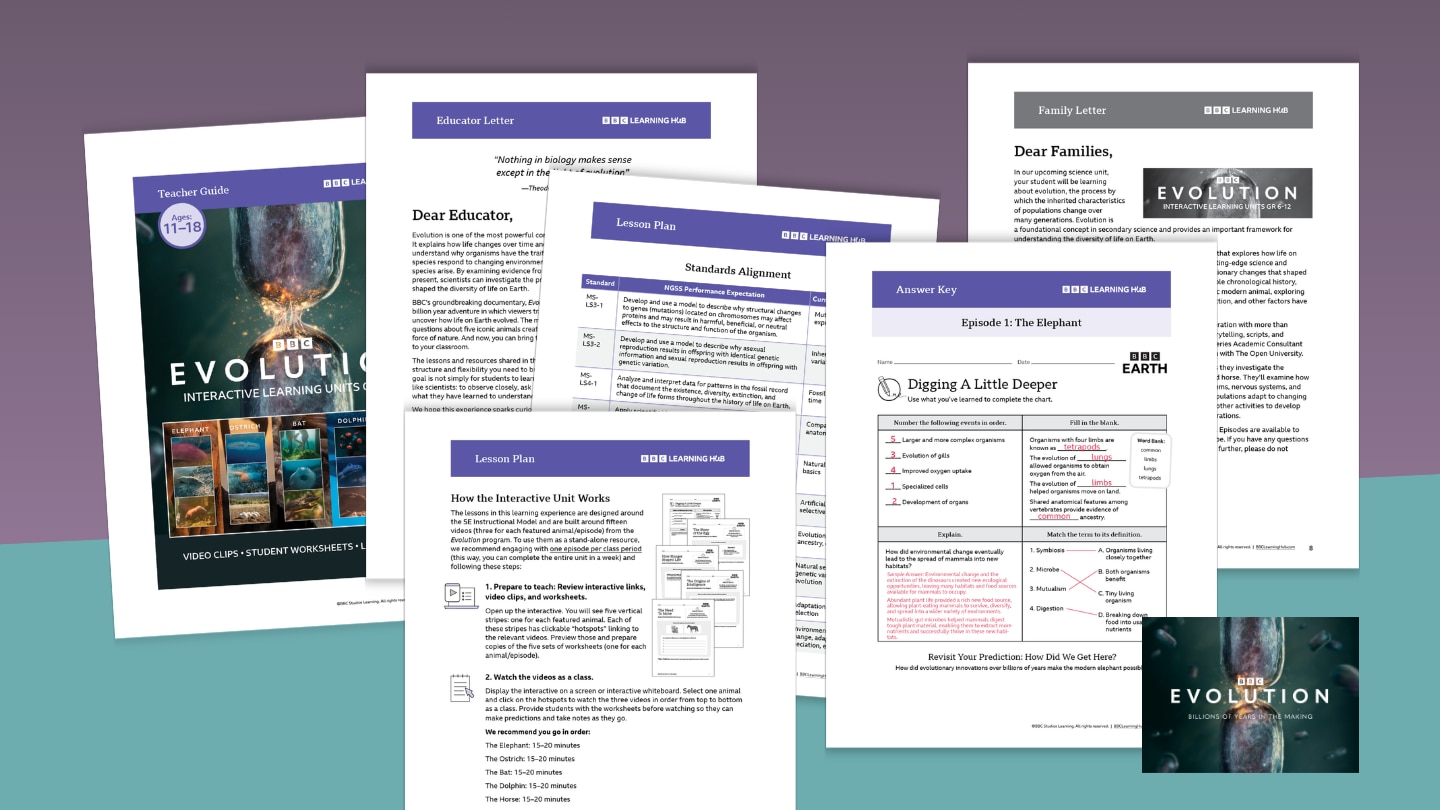
Everything you need to get started with our interactive Evolution unitBring BBC’s Evolution into your classroom with a flexible teaching guide designed to help students investigate how life changes over time. Built around five episodes featuring the elephant, ostrich, bat, dolphin, and horse, the interactive unit combines engaging BBC footage with student worksheets, evidence-based activities, teaching strategies, and extension ideas.
The lessons are structured around the 5E Instructional Model and can be used as a complete five-day learning experience or adapted to support an existing evolution unit. Students make predictions, analyze evidence from video clips, identify patterns, and develop explanations about natural selection, adaptation, genetic variation, and other mechanisms of evolutionary change.
The guide includes:
- Background information and vocabulary for the topic
- How to access and navigate the interactive unit (including videos and worksheets)
- Teacher tips and implementation guidance for using the materials in whole-class, small-group, pair, or individual settings
- Extension activities including an evolution timeline, animal comparisons, and adaptation research.
- NGSS alignment covering middle and high school standards related to genetic variation, natural selection, adaptation, common ancestry, environmental change, and selective breeding
- Family letter to introduce parents and caregivers to the unit and explain what students will be learning and why (as well as how to watch the full episodes at home)
- Answer keys for each set of worksheets
Whether you're introducing evolution for the first time, reinforcing a concept you're already teaching, or looking for a multimedia station or jigsaw activity, this guide gives you the tools to make Evolution part of your science classroom.
Go on an epic four billion year adventure travelling through time to uncover how life on earth evolved. Learn more.
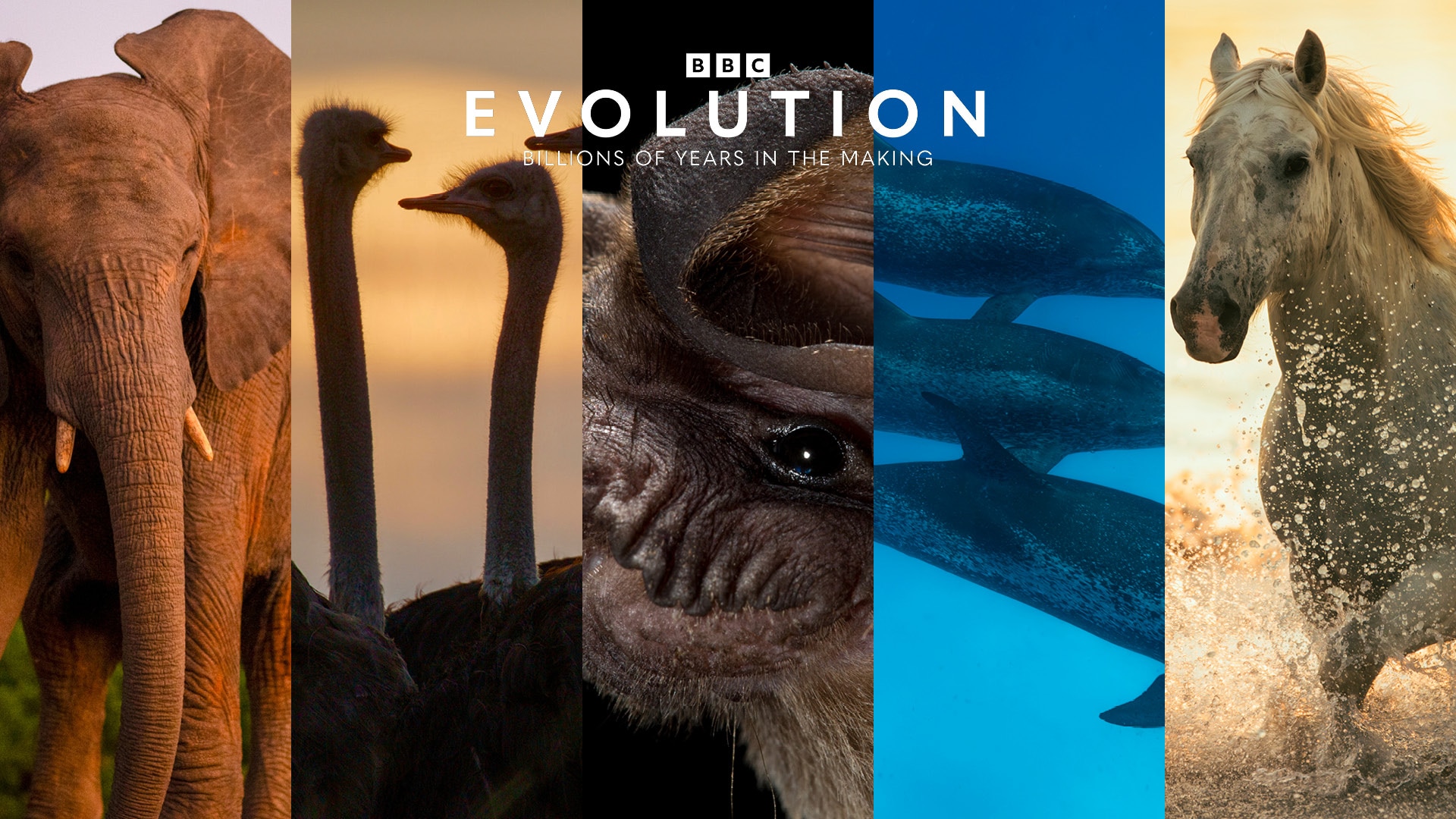
The groundbreaking documentary, now for the secondary classroom: five animals, five big ideas in evolution, with curated video clips and worksheets for ages 11–18
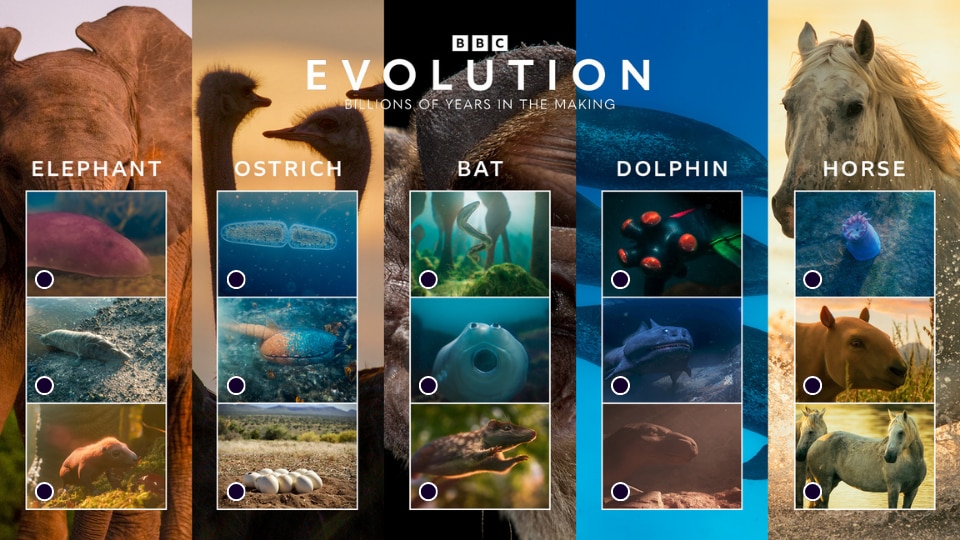
With this interactive unit, you will explore the evolutionary journey of five animals — the elephant, ostrich, bat, dolphin, and horse — through incredible videos from BBC's new documentary series, Evolution.
BBC's Evolution explores the pivotal evolutionary breakthroughs that shaped every living thing. Rather than telling a simple chronological history, each episode traces the deep evolutionary journey of one iconic modern animal, revealing how survival, chance, innovation and partnership have driven life’s astonishing diversity. The scientific research underpinning Evolution involved collaborating more than 600 scientists worldwide. At the heart of the series are the immersive VFX sequences that let viewers meet the characters that shaped the evolution of life on Earth today.
How to get started:
Start with any of the five animals. Click on each of three hotspots in its section (in order from top to bottom). As you explore how changes in body structure, reproduction, feeding, sensory systems, nervous systems, and movement opened new possibilities for survival and helped organisms adapt to changing environments, use the printable student worksheets (see Related Resources) for each animal to guide you.
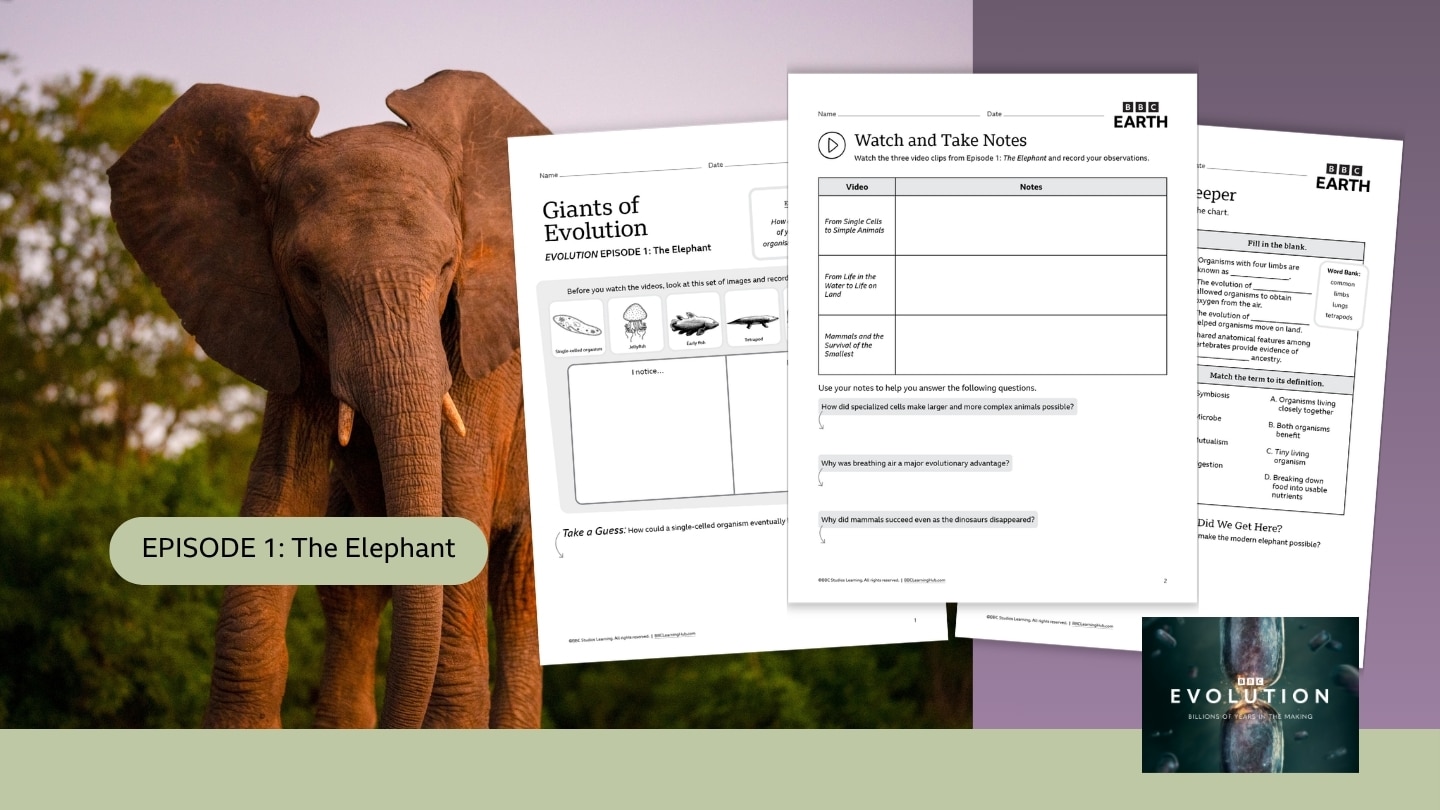
How did a single-celled organism eventually become an elephant? This lesson for ages 11–18 traces the deep evolutionary history of elephants, starting with the earliest forms of life and following the major innovations that made increasingly complex animals possible.
Using BBC video clips from Evolution Episode1: "The Elephant," investigate how specialized cells, organs, gills, lungs, and limbs helped life become more complex and eventually move from water to land. Explore how mammals survived major environmental changes, including the extinction of the dinosaurs, and gained opportunities to spread into new habitats.
Use observations and evidence from the videos to piece together this evolutionary story, practice connecting cause and effect, and revisit predictions. Once you've worked through all the worksheet pages, you'll synthesize what you've learned to explain how billions of years of evolutionary change ultimately led to the modern elephant.
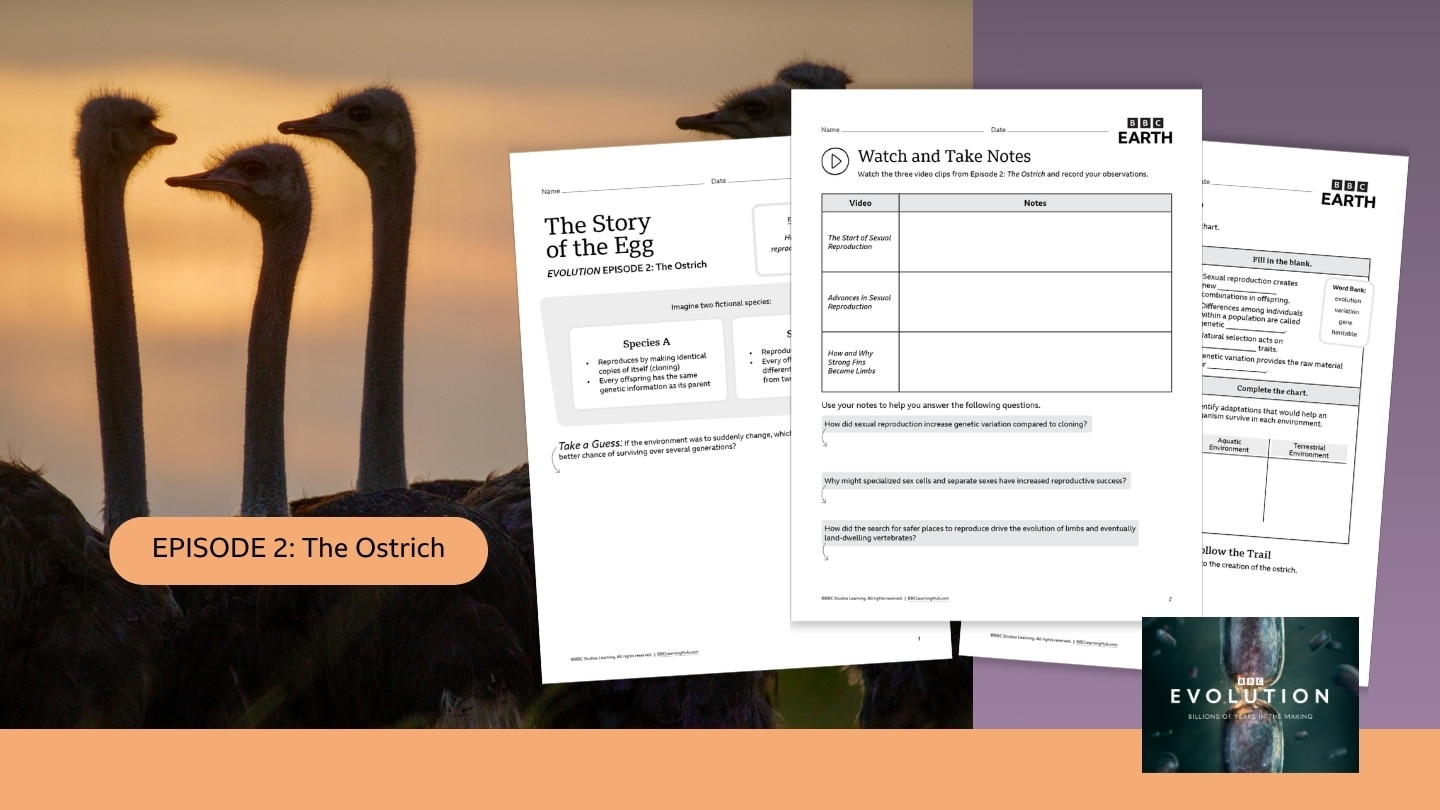
How did the evolution of reproduction eventually lead to the ostrich? This lesson for ages 11–18 follows the evolution of reproduction and explores how the shift from cloning to sexual reproduction introduced greater genetic variation — and new possibilities for life.
Using BBC video clips from Evolution Episode 2: "The Ostrich," investigate how sexual reproduction developed, why specialized sex cells and separate sexes can increase reproductive success, and how reproductive strategies such as hermaphroditism can benefit organisms in certain environments. Follow the connection between reproduction and the move onto land, exploring how the search for safer places to reproduce contributed to the evolution of limbs and land-dwelling vertebrates.
As you work through the lesson, compare reproductive strategies, connect genetic variation to natural selection and evolution, and consider how organisms adapt to aquatic and terrestrial environments. Once you've completed the activities, you'll use evidence from the videos and your own reasoning to explain how changes in reproduction helped shape the evolutionary path to the ostrich.
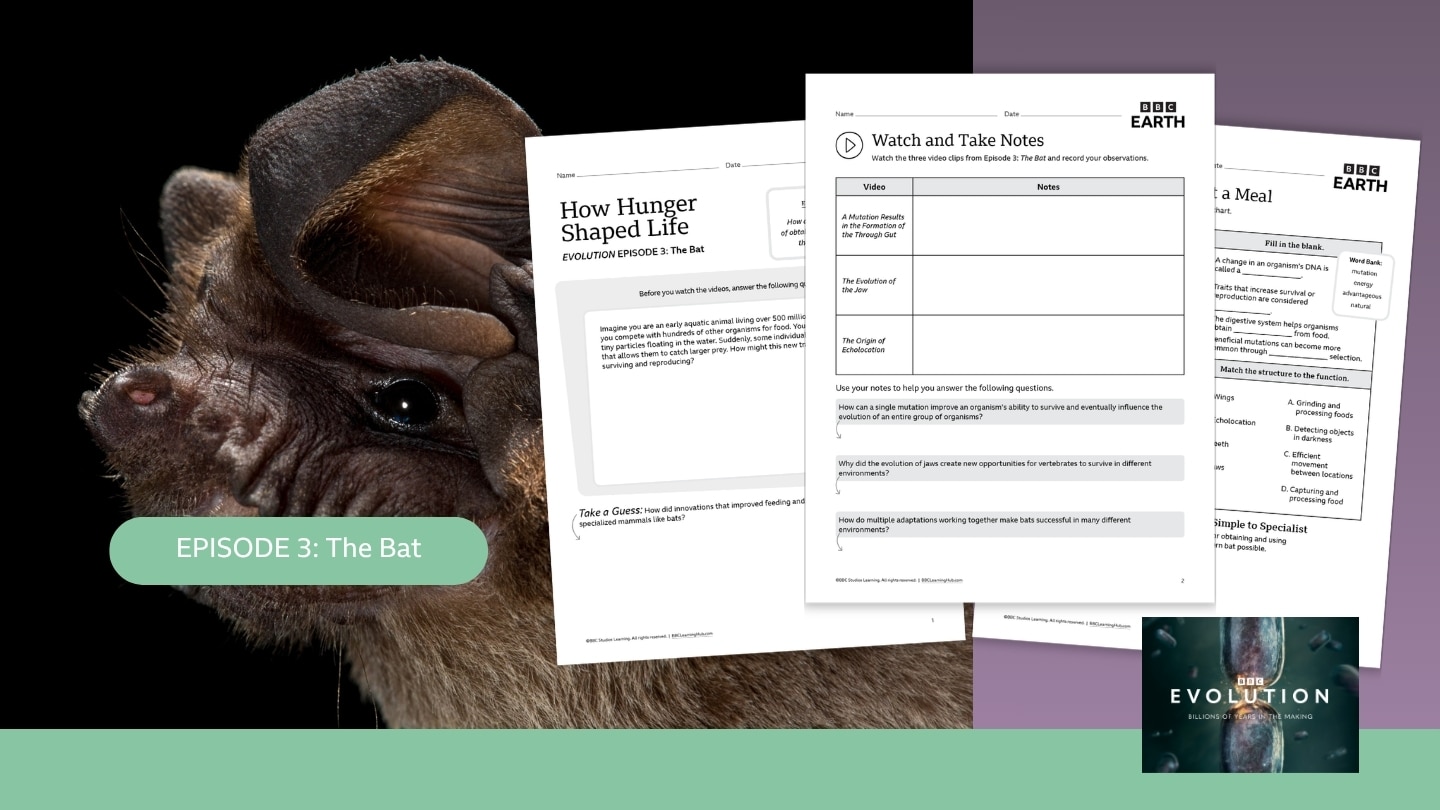
What does a tiny change in digestion have to do with a bat hunting in the darkness? This lesson for ages 11–18 explores how evolution repeatedly gave organisms new ways to find, capture, and use food — and how those changes opened the door to entirely new ways of life.
The BBC video clips from Evolution Episode 3: "The Bat" take you from the evolution of a more efficient digestive system to the development of jaws, revealing how each innovation expanded the possibilities for obtaining energy. It also examines how bats combine specialized adaptations, including wings, teeth, and echolocation, to find and capture food in challenging environments.
Through predictions, comparisons, vocabulary practice, and evidence-based questions, connect individual mutations and adaptations to the larger process of natural selection. The lesson culminates with an ask to trace a chain of evolutionary innovations and explain how changes in feeding and energy use ultimately contributed to the emergence of the modern bat.
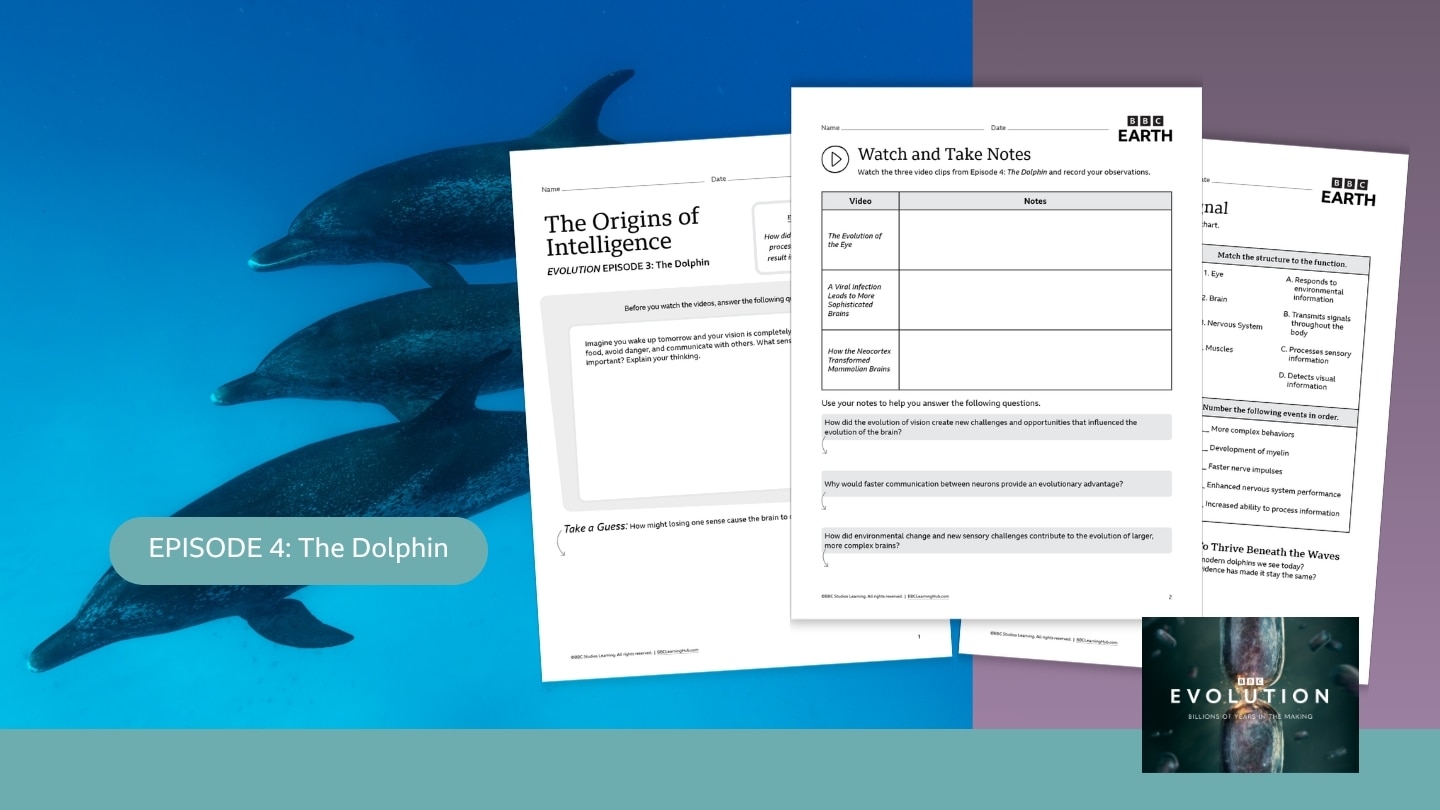
How does an animal make sense of its surroundings — and what happens when that world changes? This lesson for ages 11–18 examines the evolution of sensory systems and the increasingly sophisticated brains that allow animals to gather, process, and respond to information.
In the BBC video clips from Evolution Episode 4: "The Dolphin," explore the evolution of the eye, changes that made communication between neurons faster, and the development of the mammalian neocortex. Along the way, consider how better ways of detecting and processing information created new opportunities for behavior and survival.
The worksheet activities ask you to connect environmental information to nervous system responses, compare the advantages of vision for predators and prey, and trace the relationship between myelin, faster nerve impulses, information processing, and complex behavior. At the end, you'll return to your initial prediction and use evidence from the lesson to reflect on how sensory challenges and environmental change shaped the evolution of increasingly complex brains.
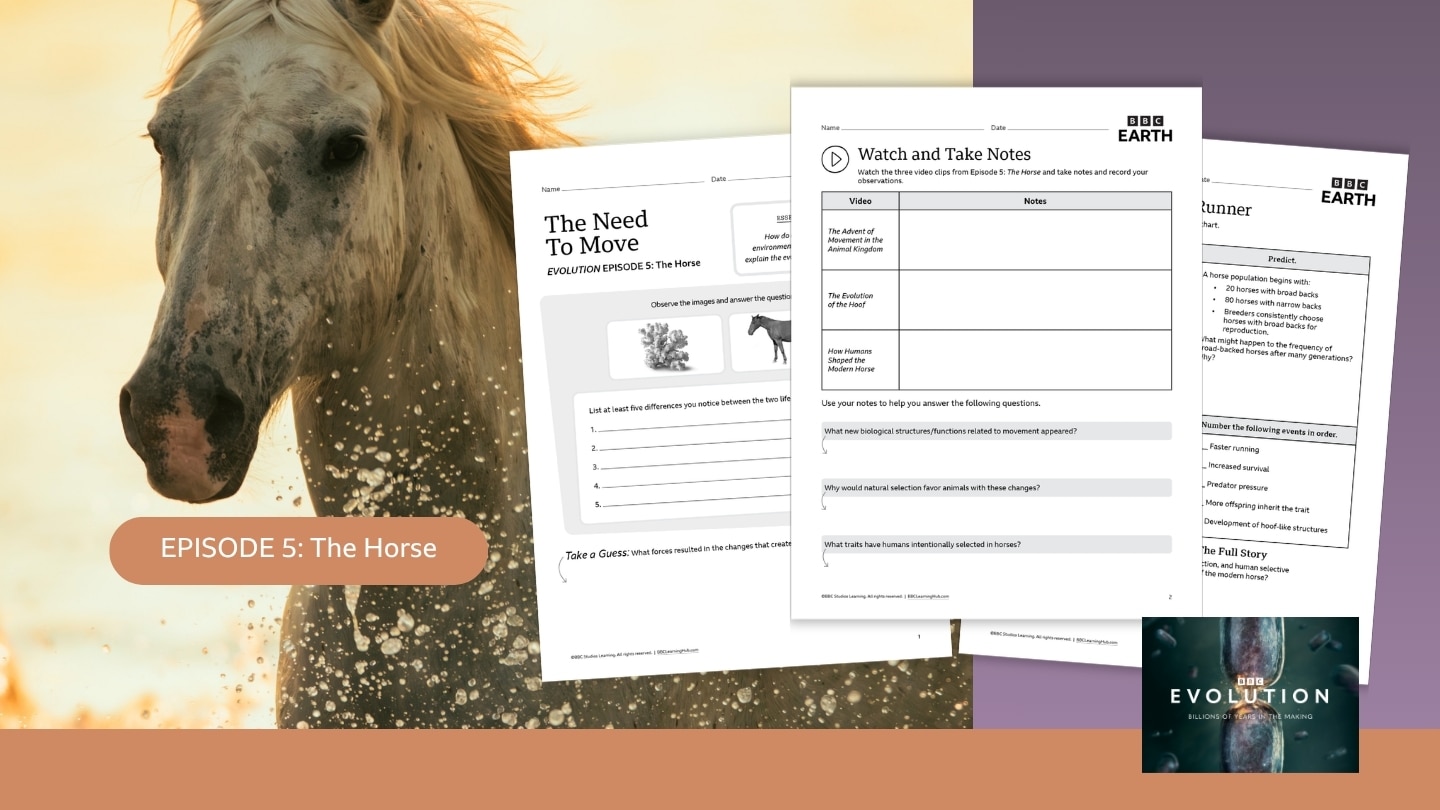
What evolutionary changes allowed the horse to become one of the animal kingdom’s great runners? This lesson for ages 11–18 explores the evolutionary changes that transformed movement, helping organisms become faster, more efficient, and better suited to their environments.
The BBC video clips from Evolution Episode 5: "The Horse" trace the development of movement in the animal kingdom, the evolution of the hoof, and the ways humans have shaped horses through selective breeding. Consider how structures such as muscles, tendons, leg bones, and hooves work together — and why certain traits can become more common when they provide an advantage.
Through observation, prediction, sequencing, and evidence-based activities, you'll examine the roles of environmental change, natural selection, and human intervention in shaping evolutionary outcomes. Then bring these forces together to explain how millions of years of change, followed by thousands of years of selective breeding, produced the modern horse.
You Might Also Like
What evolutionary changes allowed the horse to become one of the animal kingdom’s great runners? This lesson for ages 11–18 explores the evolutionary changes that transformed movement, helping organisms become faster, more efficient, and better suited to their environments.
The BBC video clips from Evolution Episode 5: "The Horse" trace the development of movement in the animal kingdom, the evolution of the hoof, and the ways humans have shaped horses through selective breeding. Consider how structures such as muscles, tendons, leg bones, and hooves work together — and why certain traits can become more common when they provide an advantage.
Through observation, prediction, sequencing, and evidence-based activities, you'll examine the roles of environmental change, natural selection, and human intervention in shaping evolutionary outcomes. Then bring these forces together to explain how millions of years of change, followed by thousands of years of selective breeding, produced the modern horse.
What does a tiny change in digestion have to do with a bat hunting in the darkness? This lesson for ages 11–18 explores how evolution repeatedly gave organisms new ways to find, capture, and use food — and how those changes opened the door to entirely new ways of life.
The BBC video clips from Evolution Episode 3: "The Bat" take you from the evolution of a more efficient digestive system to the development of jaws, revealing how each innovation expanded the possibilities for obtaining energy. It also examines how bats combine specialized adaptations, including wings, teeth, and echolocation, to find and capture food in challenging environments.
Through predictions, comparisons, vocabulary practice, and evidence-based questions, connect individual mutations and adaptations to the larger process of natural selection. The lesson culminates with an ask to trace a chain of evolutionary innovations and explain how changes in feeding and energy use ultimately contributed to the emergence of the modern bat.
How does an animal make sense of its surroundings — and what happens when that world changes? This lesson for ages 11–18 examines the evolution of sensory systems and the increasingly sophisticated brains that allow animals to gather, process, and respond to information.
In the BBC video clips from Evolution Episode 4: "The Dolphin," explore the evolution of the eye, changes that made communication between neurons faster, and the development of the mammalian neocortex. Along the way, consider how better ways of detecting and processing information created new opportunities for behavior and survival.
The worksheet activities ask you to connect environmental information to nervous system responses, compare the advantages of vision for predators and prey, and trace the relationship between myelin, faster nerve impulses, information processing, and complex behavior. At the end, you'll return to your initial prediction and use evidence from the lesson to reflect on how sensory challenges and environmental change shaped the evolution of increasingly complex brains.
How did the evolution of reproduction eventually lead to the ostrich? This lesson for ages 11–18 follows the evolution of reproduction and explores how the shift from cloning to sexual reproduction introduced greater genetic variation — and new possibilities for life.
Using BBC video clips from Evolution Episode 2: "The Ostrich," investigate how sexual reproduction developed, why specialized sex cells and separate sexes can increase reproductive success, and how reproductive strategies such as hermaphroditism can benefit organisms in certain environments. Follow the connection between reproduction and the move onto land, exploring how the search for safer places to reproduce contributed to the evolution of limbs and land-dwelling vertebrates.
As you work through the lesson, compare reproductive strategies, connect genetic variation to natural selection and evolution, and consider how organisms adapt to aquatic and terrestrial environments. Once you've completed the activities, you'll use evidence from the videos and your own reasoning to explain how changes in reproduction helped shape the evolutionary path to the ostrich.