Volcanic Activity Around the Globe: Earthquakes, Eruptions, and the Threats They Pose
From Iceland's rising magma to Sicily's explosive eruptions, volcanic activity is stirring worldwide, but what does it mean for people living nearby?
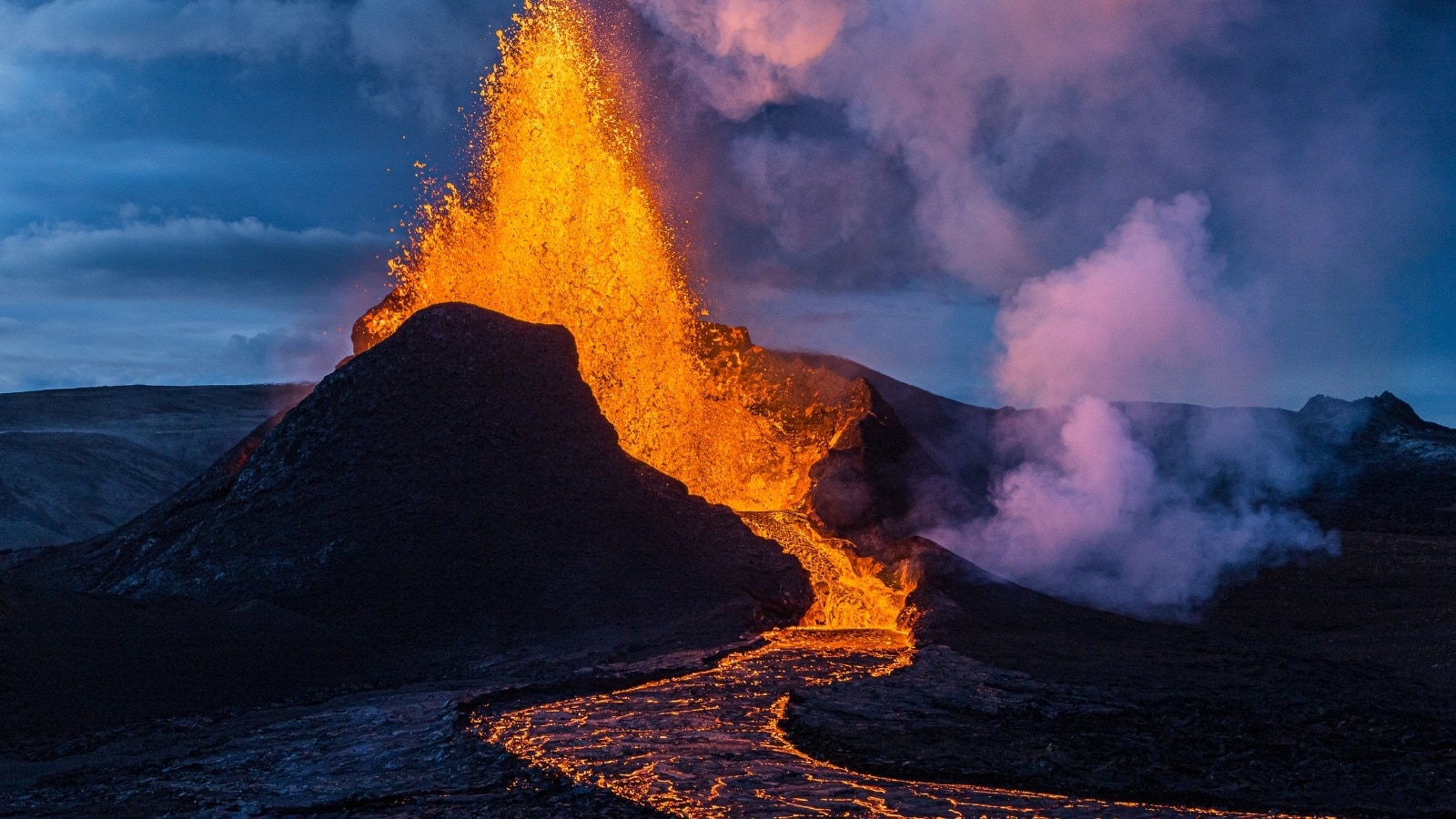
The article "Volcanic Activity Around the Globe: Earthquakes, Eruptions, and the Threats They Pose" from BBC's Science Focus explores the recent volcanic activity across the globe. It covers the earthquakes in Iceland's Svartsengi geothermal plant, the eruption of Mount Etna in Sicily, and the ongoing rumbling of 45 other volcanoes, including Mayon and Krakatau.

BBC's Science Focus is packed with news, discoveries, ideas and innovations to keep you up-to-speed with the complexities of the fast-moving world around us. Learn more about subscriptions here.
BBC's Science Focus is packed with news, discoveries, ideas and innovations to keep you up-to-speed with the complexities of the fast-moving world around us. Learn more about subscriptions here.
Most passages are available in three different versions: Level 1 (Grade 3-5), Level 2 (Grade 6-8), and Level 3 (Grade 9-12). Some more complex texts are available only in Level 2 and Level 3. Use the versions that are most appropriate for the students in your class.
Note: The BBC Learning Hub Editorial Team made use of AI tools to create multiple versions of this article, each tailored to different student reading levels. Every version undergoes a thorough review by our BBC Learning editors to ensure accuracy, quality, and appropriateness.

You Might Also Like

The article "Can We Stop Hurricanes? Exploring Innovative Solutions" from BBC's Science Focus explores futuristic ideas to mitigate hurricane damage. Scientists are developing methods such as offshore wind farms and cooling ocean surfaces to weaken storms before they reach land.
The article "Something Very Weird Is Happening to the Planet's Earthquakes; Here's Why" from BBC's Science Focus discusses earthquakes that occur away from fault lines, known as intraplate earthquakes. Scientists are studying factors like ice sheet melting and deep-earth stress to understand these mysterious seismic events.

The article "New Computer Model Helps Predict Volcano Eruptions More Accurately" from BBC's Science Focus details how scientists have created a model that improves eruption forecasts. By analyzing historical data from Italy’s Campi Flegrei, the model enhances predictions and helps in disaster preparedness.

The article "Out of the Cold: The Slow Beginnings of Climate Change Science" from BBC's HistoryExtra delves into the early scientific explorations of climate change, tracing its beginnings to the 19th Century. Early pioneers, including Eunice Newton Foote, John Tyndall, and Svante Arrhenius, each contributed to the understanding of how human activities, particularly the burning of fossil fuels, could alter Earth's temperature. However, these early insights were often overlooked or misunderstood, and it wasn’t until the mid-20th Century that the idea of human-induced climate change began to gain traction.
The article "Can We Stop Hurricanes? Exploring Innovative Solutions" from BBC's Science Focus explores futuristic ideas to mitigate hurricane damage. Scientists are developing methods such as offshore wind farms and cooling ocean surfaces to weaken storms before they reach land.
The article "Something Very Weird Is Happening to the Planet's Earthquakes; Here's Why" from BBC's Science Focus discusses earthquakes that occur away from fault lines, known as intraplate earthquakes. Scientists are studying factors like ice sheet melting and deep-earth stress to understand these mysterious seismic events.
The article "New Computer Model Helps Predict Volcano Eruptions More Accurately" from BBC's Science Focus details how scientists have created a model that improves eruption forecasts. By analyzing historical data from Italy’s Campi Flegrei, the model enhances predictions and helps in disaster preparedness.
The article "Out of the Cold: The Slow Beginnings of Climate Change Science" from BBC's HistoryExtra delves into the early scientific explorations of climate change, tracing its beginnings to the 19th Century. Early pioneers, including Eunice Newton Foote, John Tyndall, and Svante Arrhenius, each contributed to the understanding of how human activities, particularly the burning of fossil fuels, could alter Earth's temperature. However, these early insights were often overlooked or misunderstood, and it wasn’t until the mid-20th Century that the idea of human-induced climate change began to gain traction.