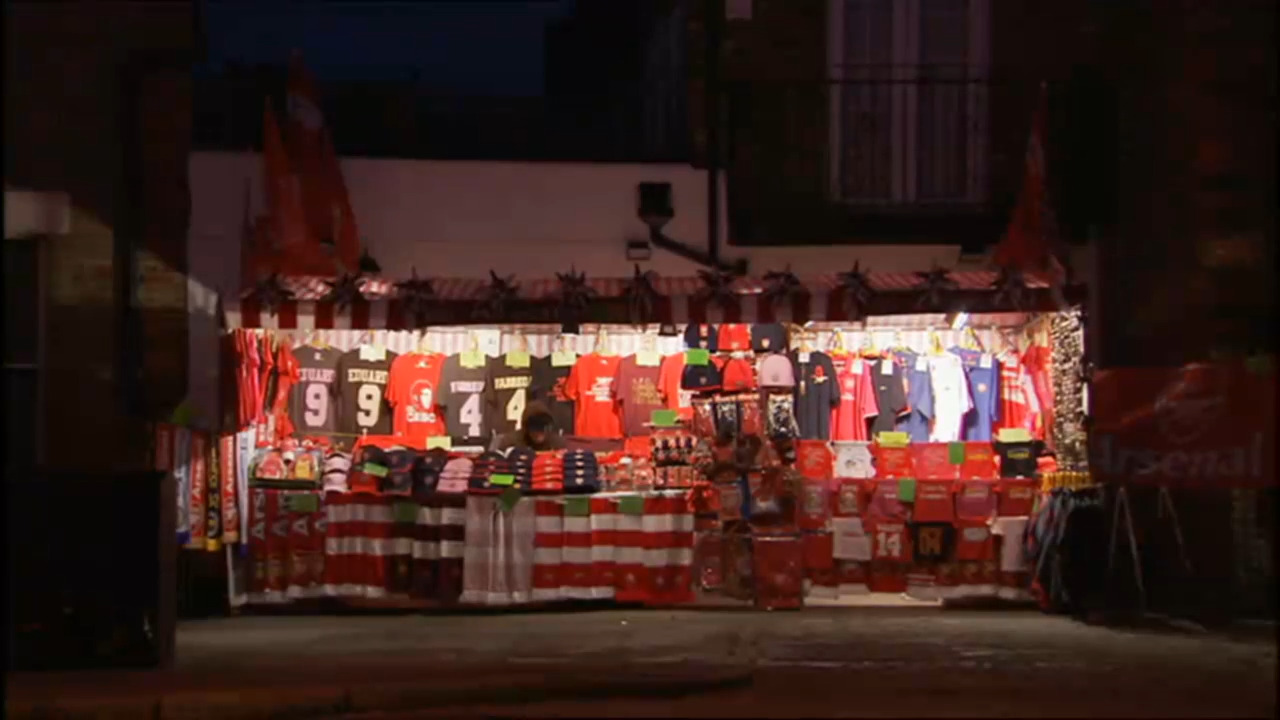
In The Magic of Math on the Soccer Field, host Marcus du Sautoy tries to convince one math reject that math is present everywhere in the soccer game he loves — from quadratic equations on the pitch to the probability of a team winning. Du Sautoy makes the case that the soccer players are intuitive mathematical geniuses. This video is excerpted from BBC’s Horizon: Why Maths Doesn’t Add Up, where Marcus du Sautoy introduces the elegance and wonder of math to a “math reject,” traveling from the classroom to a four-dimensional world.
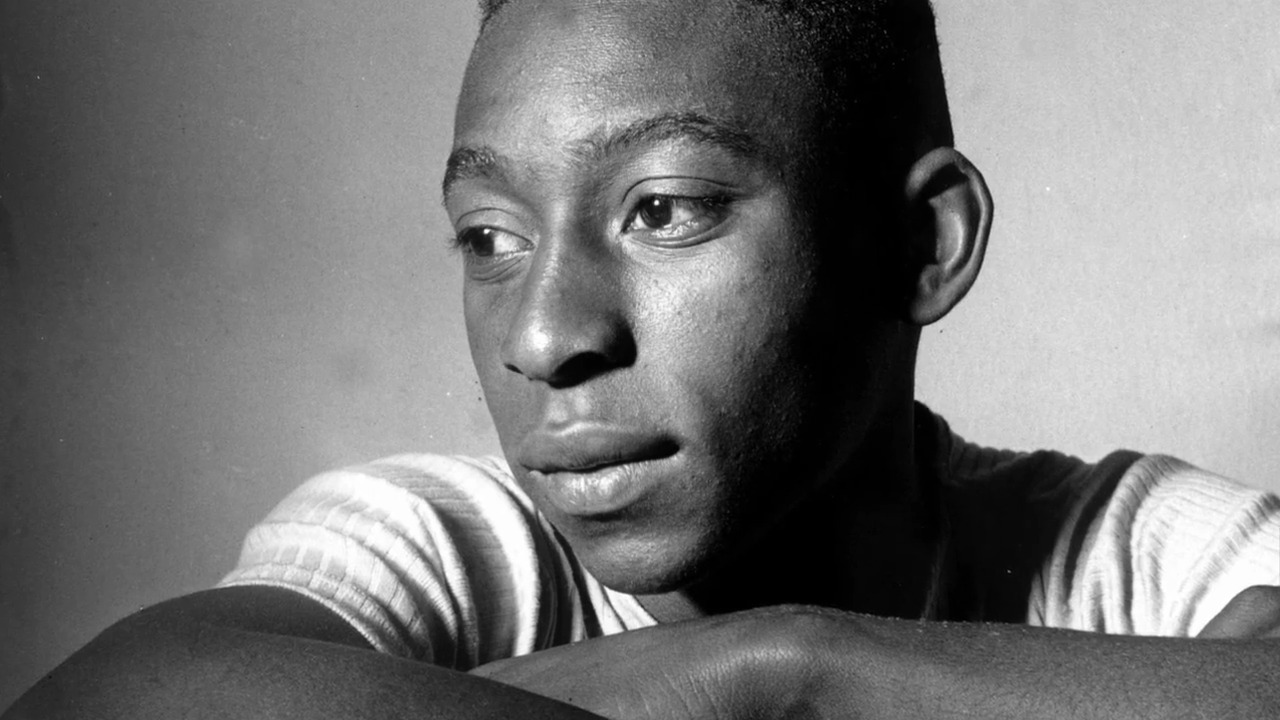
In How Pelé Brought Soccer to the U.S., sports journalist Clare Balding discusses Pelé's contributions to the popularity of soccer. Pelé’s last World Cup match in 1970 helped him emerge as a hero, and in 1971 he brought the game to the United States. This video is excerpted from BBC’s Icons: The Greatest Person of the 20th Century, a documentary series celebrating the achievements of the most influential figures of the era.
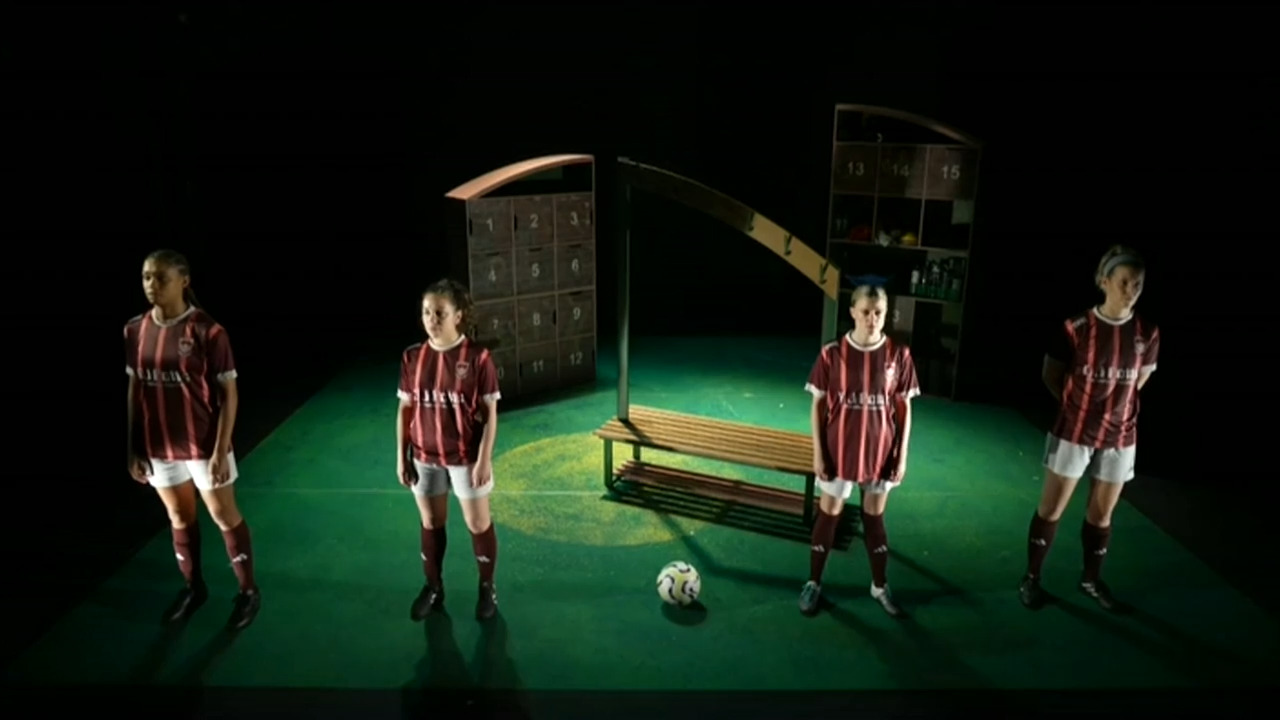
What happens when you mix theatre with soccer, or football as they call in the UK? You get a play that turns women’s soccer into a live story of grit, pressure, and ambition — no stadium required. This new production brings the energy of the game to the stage, spotlighting the real experiences of female athletes in sport.
The story doesn’t shy away from reality. Women footballers around the world have faced uneven playing conditions, from ill-fitting men’s kits to poorly maintained pitches and training setups that simply weren’t built with them in mind. Even small things — like long walks between facilities or limited access to resources — add up and shape the experience of being a professional athlete.
What makes the play feel especially authentic is the lead actor, who actually played semi-pro football before moving into acting. That real-life experience gives the performance extra edge, blending sport and storytelling in a way that feels lived-in, not just acted.
At its core, the production is about more than football. It’s about visibility, opportunity, and challenging the idea of who gets to have a future in sport — and who gets to be seen on stage telling that story.
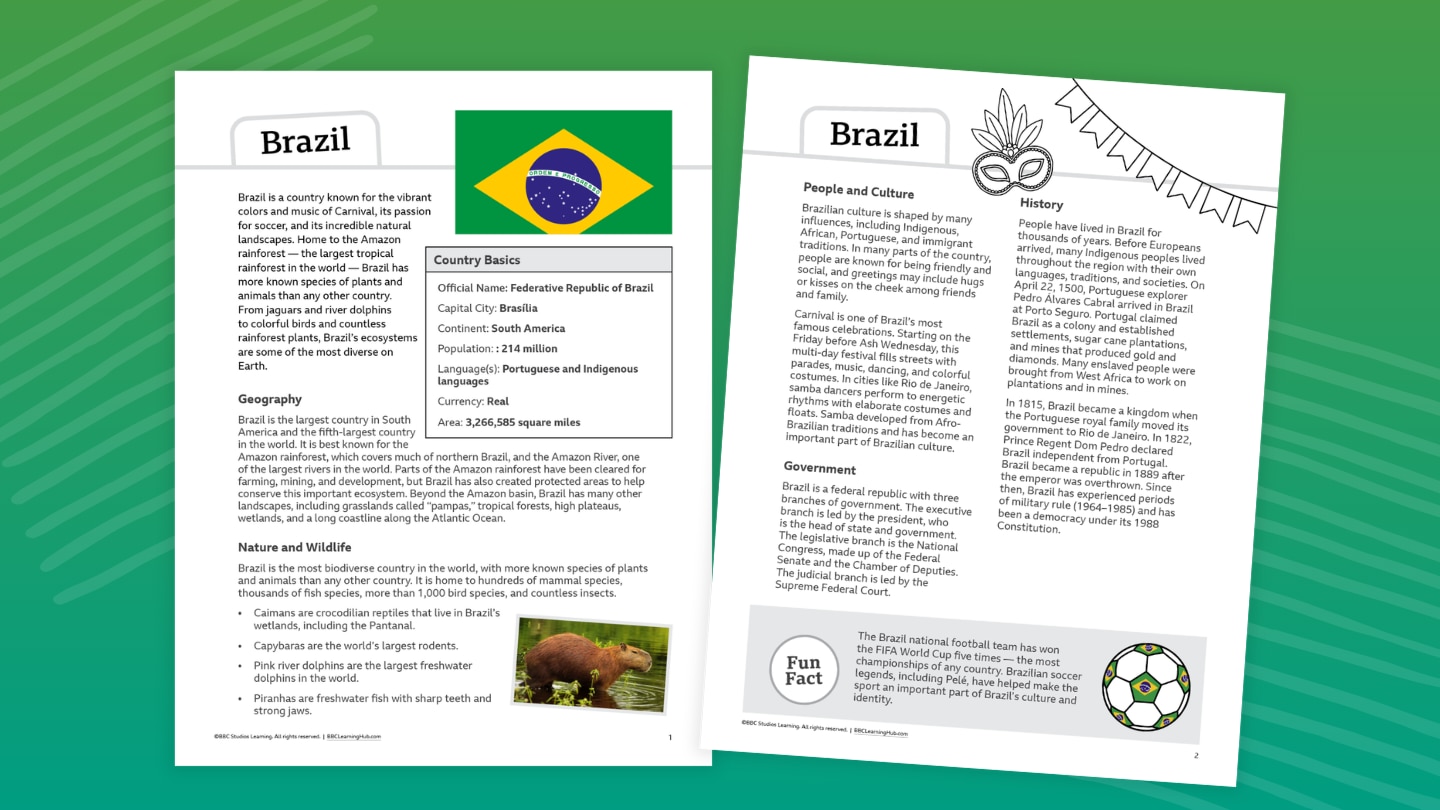
What country is home to the world’s largest tropical rainforest, the greatest biodiversity on Earth, and a culture famous for Carnival and soccer? Meet Brazil, the largest country in South America and a place where natural and cultural wonders stretch across an enormous landscape.
From capybaras and pink river dolphins to the mighty Amazon River and the wetlands of the Pantanal, Brazil is bursting with life. Explore the Indigenous, African, Portuguese, and immigrant influences that shaped Brazilian culture, learn about the country’s history and government, and discover the foods, music, and celebrations that bring people together. You’ll also explore Brazil’s incredible ecosystem.
Teachers and parents, you can use this fact file to:
- Introduce a geography or social studies unit
- Support nonfiction reading practice
- Compare countries and cultures
- Complete map and research activities
- Prepare students for projects or presentations (use our country report template!)
- Pair with videos, articles, or other informational texts (see Related Resources below)
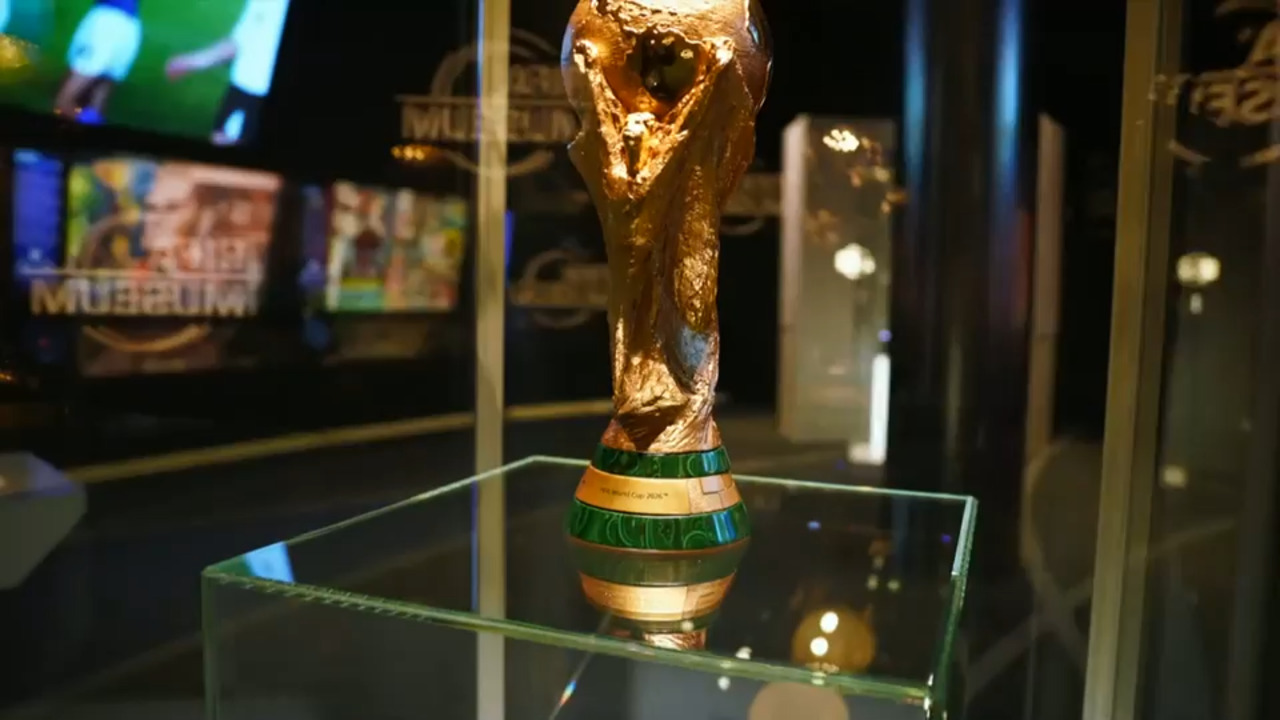
Football is thousands of years old, but who says there's no room for a little new technology? And there's no better place to explore the advancements in football tech than FIFA’s global headquarters in Zurich, where the research team has been paying special attention to the MVP of every match: the football itself.
Meet the Trionda ball. It may look like a standard football, until you open it up to reveal a sensor inside the ball. It’s synced to a computer, and tracks the ball’s behavior on a graph that shows when contact is made with the ball — light touches are small peaks, hard hits are big spikes. This will make it easier to see if a player has actually touched the ball, which is sometimes hard to determine with the naked eye.
For those who are always squinting to watch those teeny tiny players on that giant field, FIFA is also introducing a ref cam. The head-mounted technology lets broadcasters record first-person footage, so spectators can see the game from the referee’s point of view. This means they can get an on-field perspective of the action, even if means an up-close look of players getting mad at the refs! Nothing more authentic than that!
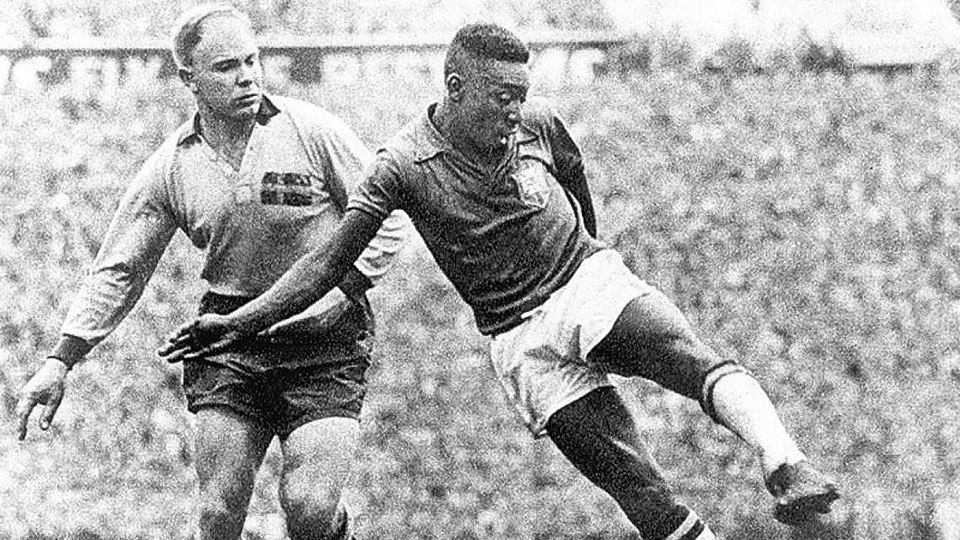
Explore the incredible life and global influence of Pelé, from his rise as a young football star in Brazil to his unforgettable World Cup victories and worldwide fame. Students will discover how Pelé’s extraordinary skill, creativity, and sportsmanship helped transform football into the world’s most popular sport.
This Kahoot examines key moments in Pelé’s career, including his record-breaking achievements, his role in Brazil’s World Cup success, and his impact on the international growth of the game. Students will build listening skills, vocabulary, and historical awareness while exploring how Pelé influenced culture, identity, and the global popularity of football across generations.
Watch the related BBC videos, Pelé's Pledge to His Father and How Pelé Brought Soccer to the U.S., then invite your Grade 6–12 students to test their knowledge and explore the legacy of one of the greatest athletes in sports history.
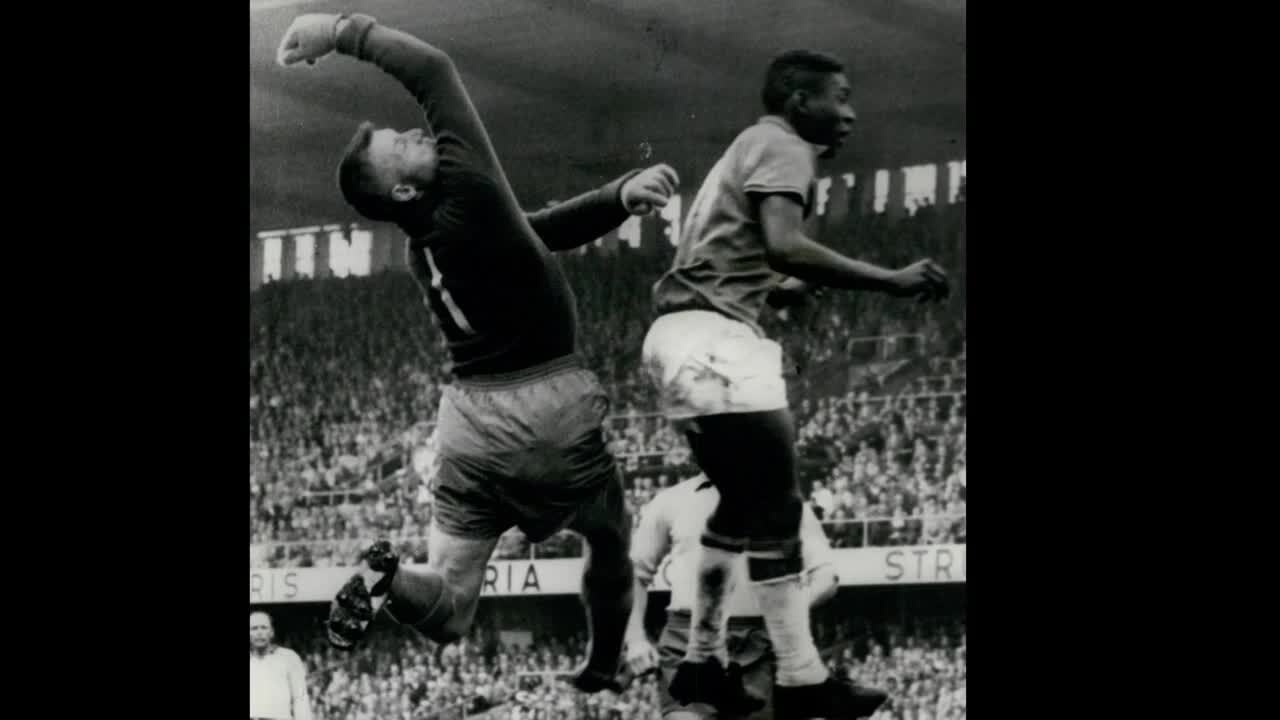
In Pele's Pledge to His Father, sports journalist Clare Balding describes how Pelé pledged to his father that he would help Brazil win the World Cup. She describes his childhood and rise to fame. This video is excerpted from BBC’s Icons: The Greatest Person of the 20th Century, a documentary series celebrating the achievements of the most influential figures of the era.
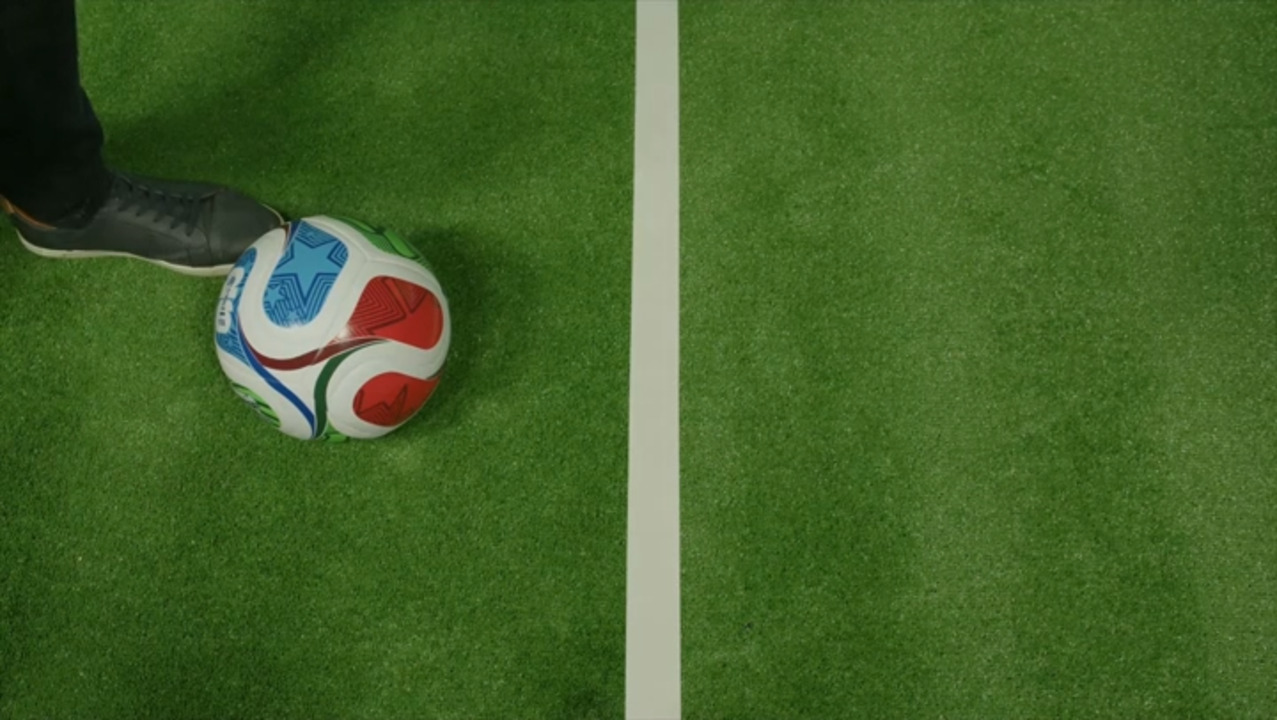
Are you watching the 2026 World Cup?! We hope so, because it’s a big one. The biggest one, actually. It’s the first with three countries co-hosting (Canada, the U.S., and Mexico), and it’s been expanded to 48 teams (from 32).
But the size of the tournament isn’t where the differences end, not by a long shot! This year, the World Cup is also introducing new rules, like a possible red card for players covering their mouths! If you gasped and covered your own mouth, don’t worry. First because you’re probably not playing in the World Cup (yet), but also because this penalty is only given to players who are being confrontational.
Other additions include the VAR (Video Assistant Referee) getting the power to check second yellow cards and corners, a 5-second countdown on goal kicks and throw-ins, and a rule that players being subbed will have just 10 seconds to leave the pitch. No time for dilly dallying, we’ve got 16 more teams to watch this year!
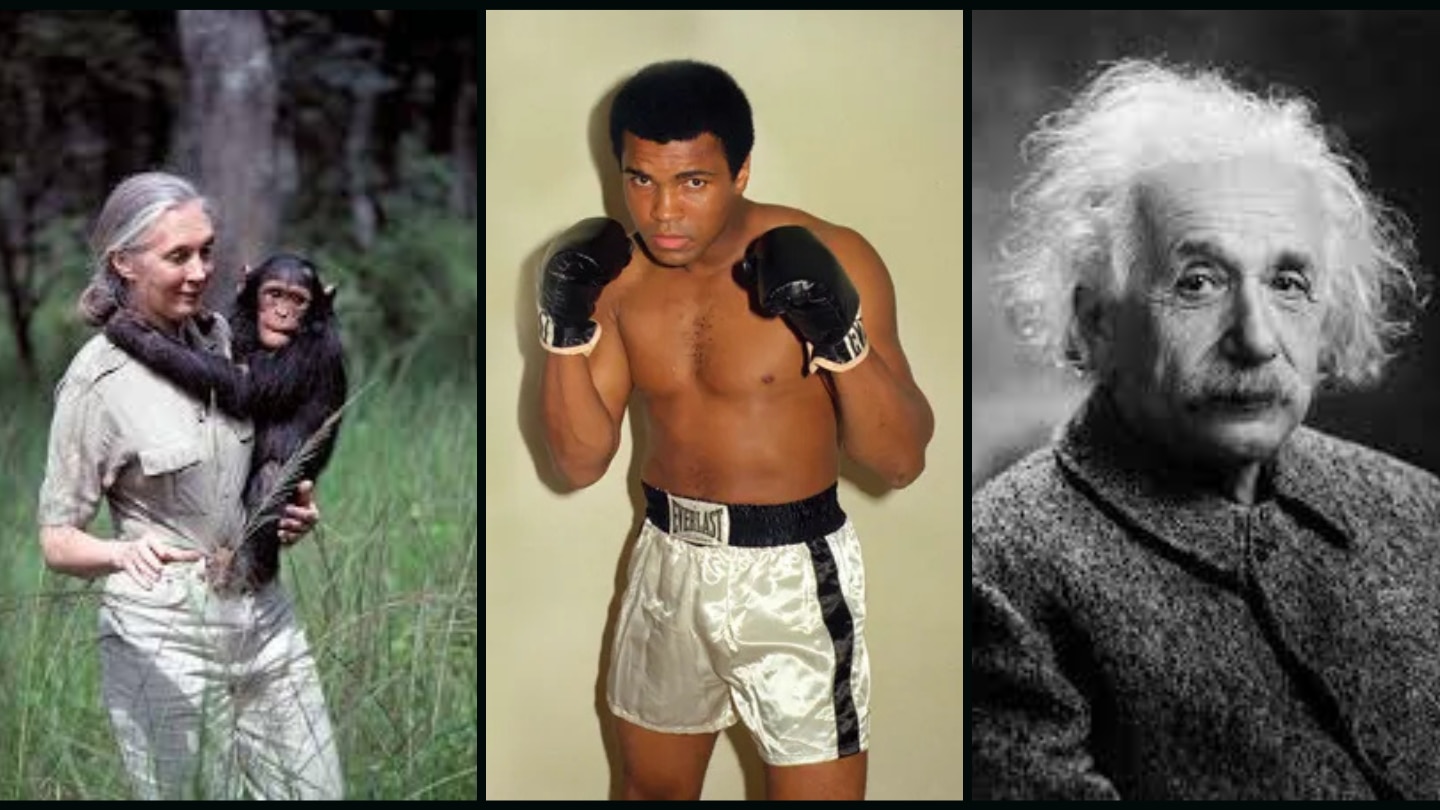
Meet the Icons of the 20th Century. From brilliant scientists and inspiring activists to legendary athletes and artists, these remarkable individuals changed the world in powerful ways. In this video playlist of clips from BBC's Icons: The Greatest Person of the 20th Century, meet Muhammad Ali, Helen Keller, Albert Einstein, Martin Luther King Jr., Pablo Picasso, Jane Goodall, Pelé, Billie Holiday and others — each a trailblazer who shaped history through courage, creativity, and conviction. A perfect playlist to inspire young minds to think big and act boldly!
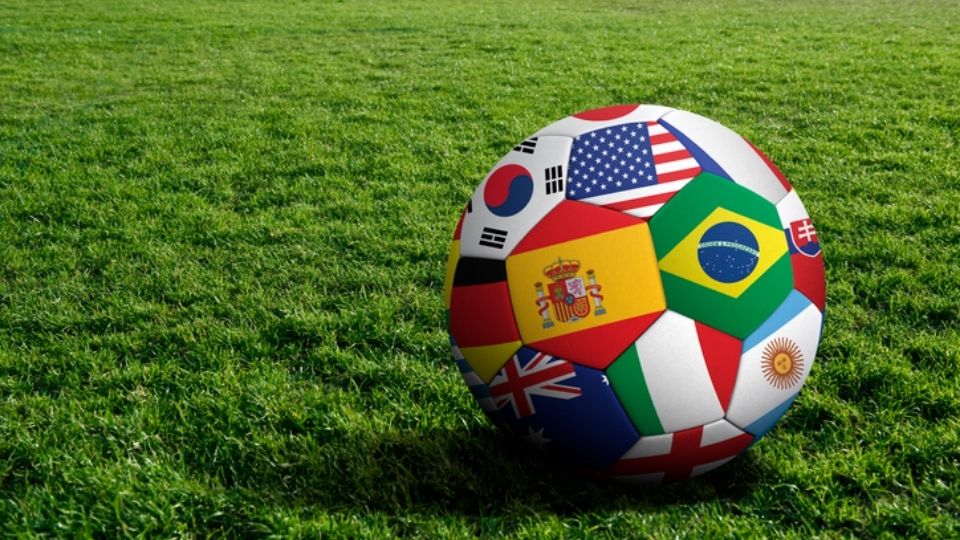
The greatest show on Earth is happening right now — and it's bigger than ever. The 2026 FIFA World Cup spans three countries (the U.S., Canada, and Mexico), features a record-breaking 48 teams, and runs from June 11 through July 19. The final? It's being played right here — at MetLife Stadium in New Jersey, just outside New York City. No pressure.
Since 1930, the World Cup has produced legendary goals, shocking upsets, and moments that stopped entire nations in their tracks. It's the one tournament where a tiny island nation can send a footballing giant home crying — and usually does.
Think you know your Pelés from your Mbappés? Your golden boots from your offside traps? Whether you're a die-hard who tracks every group stage table or someone who only tunes in for the final — this quiz will put what you know to the test. Let's see if you can go all the way.
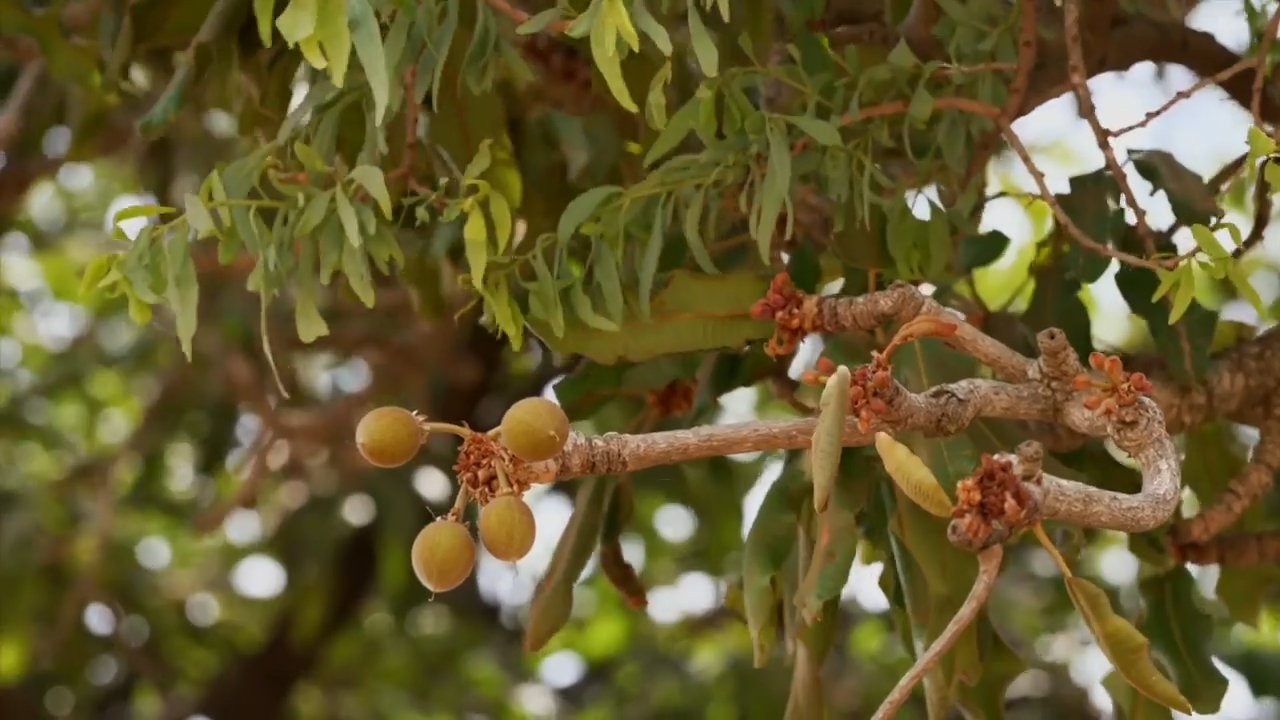
A strip of land stretching from West to East Africa was once so rich with shea nut trees that it earned the name “shea belt.” It seems like a different world from now, when conservationists say the tree is at risk of extinction because of drought, deforestation, and demand for charcoal that puts the trees (and the people who depend on them) under pressure.
Because shea trees produce nuts that can be made into shea butter used in pharmaceuticals, cosmetics, and food, they provide over 60% of household income for rural women who harvest and process the nuts. The decline of the shea tree would disrupt not only the millions across Africa supported by the industry, but supply chains and global markets, as well.
So, save the shea trees, right? It’s not so simple. Poverty pushes people to cut down shea trees and sell them as charcoal. It provides short-term income, but it means those trees are no longer usable for future shea harvests. To make matters worse, burning charcoal emits harmful greenhouse gasses. So cutting down shea trees for charcoal = less shea butter + more deforestation + more greenhouse gasses. Make it stop! Uganda tried. They banned cutting trees for charcoal in 2023, but enforcement is difficult because of high demand, especially in cities.
Between everything, Uganda has lost around 100,000 hectares of forest cover since 1990. That’s the equivalent of 140,000 soccer fields. Activists are calling for action; replanting trees and protecting the existing ones. Without coordinated action, the shea tree and the livelihoods built around it could disappear.
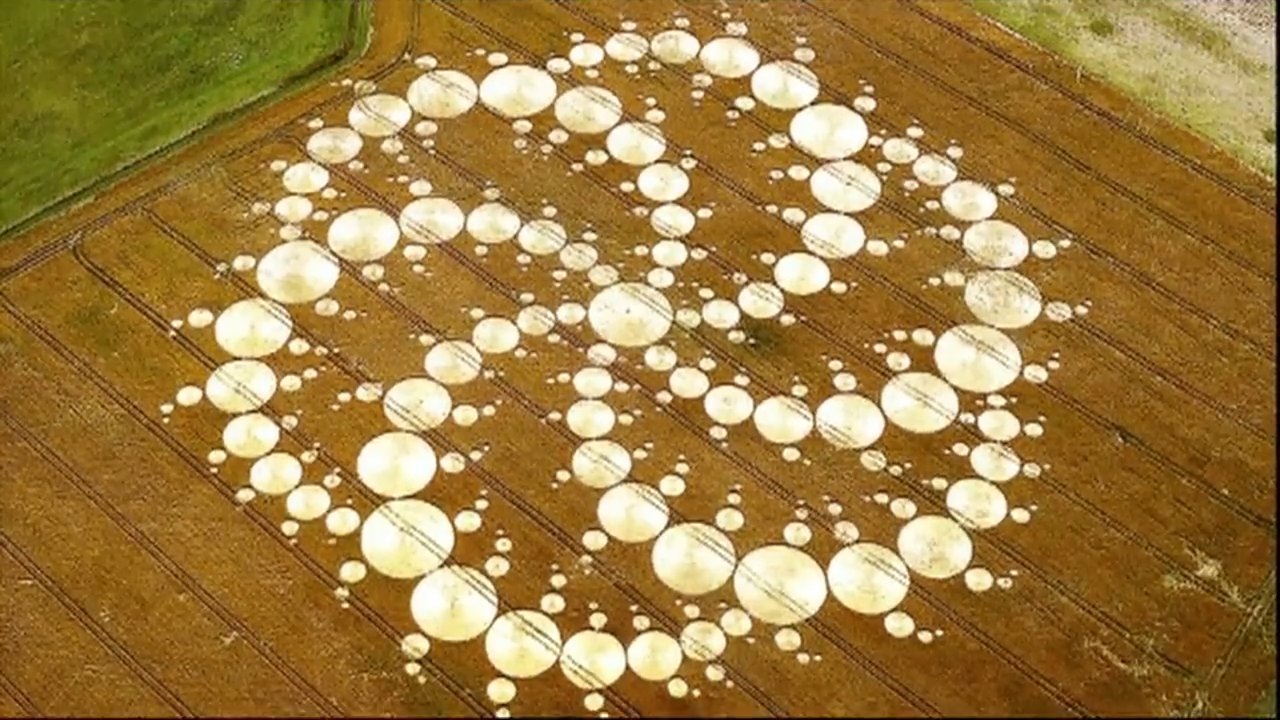
Crop circles have puzzled people for decades, and the Wiltshire countryside — a rural county in southwest England known for its rolling farmland — has had plenty to puzzle over this summer as new formations kept appearing in the fields.
These designs are often symmetrical, intricate, and hard to explain. One of the most famous examples, known as the Galaxy, contained more than 400 interlocking circles and stretched roughly 780 feet — about two and a half soccer fields laid end to end.
Some crop circles are confirmed to be human-made. Others are harder to pin down: witnesses have reported some appearing within a matter of seconds, though these claims haven't been independently verified.
Wiltshire's landscape makes it a particular hotspot — open countryside and high viewpoints make circles easy to spot and photograph. Drones and social media have also made it possible to document circles almost anywhere, not just in traditional hotspots.
As striking as they are to look at, crop circles can be costly for the farmers whose fields they appear in, since the process damages crops. That's also why making one without the landowner's permission counts as criminal damage in the UK — the British legal term for intentionally damaging someone else's property, similar to vandalism or property destruction charges in the US.
In The Magic of Math on the Soccer Field, host Marcus du Sautoy tries to convince one math reject that math is present everywhere in the soccer game he loves — from quadratic equations on the pitch to the probability of a team winning. Du Sautoy makes the case that the soccer players are intuitive mathematical geniuses. This video is excerpted from BBC’s Horizon: Why Maths Doesn’t Add Up, where Marcus du Sautoy introduces the elegance and wonder of math to a “math reject,” traveling from the classroom to a four-dimensional world.
In How Pelé Brought Soccer to the U.S., sports journalist Clare Balding discusses Pelé's contributions to the popularity of soccer. Pelé’s last World Cup match in 1970 helped him emerge as a hero, and in 1971 he brought the game to the United States. This video is excerpted from BBC’s Icons: The Greatest Person of the 20th Century, a documentary series celebrating the achievements of the most influential figures of the era.
What happens when you mix theatre with soccer, or football as they call in the UK? You get a play that turns women’s soccer into a live story of grit, pressure, and ambition — no stadium required. This new production brings the energy of the game to the stage, spotlighting the real experiences of female athletes in sport.
The story doesn’t shy away from reality. Women footballers around the world have faced uneven playing conditions, from ill-fitting men’s kits to poorly maintained pitches and training setups that simply weren’t built with them in mind. Even small things — like long walks between facilities or limited access to resources — add up and shape the experience of being a professional athlete.
What makes the play feel especially authentic is the lead actor, who actually played semi-pro football before moving into acting. That real-life experience gives the performance extra edge, blending sport and storytelling in a way that feels lived-in, not just acted.
At its core, the production is about more than football. It’s about visibility, opportunity, and challenging the idea of who gets to have a future in sport — and who gets to be seen on stage telling that story.
What country is home to the world’s largest tropical rainforest, the greatest biodiversity on Earth, and a culture famous for Carnival and soccer? Meet Brazil, the largest country in South America and a place where natural and cultural wonders stretch across an enormous landscape.
From capybaras and pink river dolphins to the mighty Amazon River and the wetlands of the Pantanal, Brazil is bursting with life. Explore the Indigenous, African, Portuguese, and immigrant influences that shaped Brazilian culture, learn about the country’s history and government, and discover the foods, music, and celebrations that bring people together. You’ll also explore Brazil’s incredible ecosystem.
Teachers and parents, you can use this fact file to:
- Introduce a geography or social studies unit
- Support nonfiction reading practice
- Compare countries and cultures
- Complete map and research activities
- Prepare students for projects or presentations (use our country report template!)
- Pair with videos, articles, or other informational texts (see Related Resources below)
Football is thousands of years old, but who says there's no room for a little new technology? And there's no better place to explore the advancements in football tech than FIFA’s global headquarters in Zurich, where the research team has been paying special attention to the MVP of every match: the football itself.
Meet the Trionda ball. It may look like a standard football, until you open it up to reveal a sensor inside the ball. It’s synced to a computer, and tracks the ball’s behavior on a graph that shows when contact is made with the ball — light touches are small peaks, hard hits are big spikes. This will make it easier to see if a player has actually touched the ball, which is sometimes hard to determine with the naked eye.
For those who are always squinting to watch those teeny tiny players on that giant field, FIFA is also introducing a ref cam. The head-mounted technology lets broadcasters record first-person footage, so spectators can see the game from the referee’s point of view. This means they can get an on-field perspective of the action, even if means an up-close look of players getting mad at the refs! Nothing more authentic than that!
Explore the incredible life and global influence of Pelé, from his rise as a young football star in Brazil to his unforgettable World Cup victories and worldwide fame. Students will discover how Pelé’s extraordinary skill, creativity, and sportsmanship helped transform football into the world’s most popular sport.
This Kahoot examines key moments in Pelé’s career, including his record-breaking achievements, his role in Brazil’s World Cup success, and his impact on the international growth of the game. Students will build listening skills, vocabulary, and historical awareness while exploring how Pelé influenced culture, identity, and the global popularity of football across generations.
Watch the related BBC videos, Pelé's Pledge to His Father and How Pelé Brought Soccer to the U.S., then invite your Grade 6–12 students to test their knowledge and explore the legacy of one of the greatest athletes in sports history.
In Pele's Pledge to His Father, sports journalist Clare Balding describes how Pelé pledged to his father that he would help Brazil win the World Cup. She describes his childhood and rise to fame. This video is excerpted from BBC’s Icons: The Greatest Person of the 20th Century, a documentary series celebrating the achievements of the most influential figures of the era.
Are you watching the 2026 World Cup?! We hope so, because it’s a big one. The biggest one, actually. It’s the first with three countries co-hosting (Canada, the U.S., and Mexico), and it’s been expanded to 48 teams (from 32).
But the size of the tournament isn’t where the differences end, not by a long shot! This year, the World Cup is also introducing new rules, like a possible red card for players covering their mouths! If you gasped and covered your own mouth, don’t worry. First because you’re probably not playing in the World Cup (yet), but also because this penalty is only given to players who are being confrontational.
Other additions include the VAR (Video Assistant Referee) getting the power to check second yellow cards and corners, a 5-second countdown on goal kicks and throw-ins, and a rule that players being subbed will have just 10 seconds to leave the pitch. No time for dilly dallying, we’ve got 16 more teams to watch this year!
Meet the Icons of the 20th Century. From brilliant scientists and inspiring activists to legendary athletes and artists, these remarkable individuals changed the world in powerful ways. In this video playlist of clips from BBC's Icons: The Greatest Person of the 20th Century, meet Muhammad Ali, Helen Keller, Albert Einstein, Martin Luther King Jr., Pablo Picasso, Jane Goodall, Pelé, Billie Holiday and others — each a trailblazer who shaped history through courage, creativity, and conviction. A perfect playlist to inspire young minds to think big and act boldly!
The greatest show on Earth is happening right now — and it's bigger than ever. The 2026 FIFA World Cup spans three countries (the U.S., Canada, and Mexico), features a record-breaking 48 teams, and runs from June 11 through July 19. The final? It's being played right here — at MetLife Stadium in New Jersey, just outside New York City. No pressure.
Since 1930, the World Cup has produced legendary goals, shocking upsets, and moments that stopped entire nations in their tracks. It's the one tournament where a tiny island nation can send a footballing giant home crying — and usually does.
Think you know your Pelés from your Mbappés? Your golden boots from your offside traps? Whether you're a die-hard who tracks every group stage table or someone who only tunes in for the final — this quiz will put what you know to the test. Let's see if you can go all the way.
A strip of land stretching from West to East Africa was once so rich with shea nut trees that it earned the name “shea belt.” It seems like a different world from now, when conservationists say the tree is at risk of extinction because of drought, deforestation, and demand for charcoal that puts the trees (and the people who depend on them) under pressure.
Because shea trees produce nuts that can be made into shea butter used in pharmaceuticals, cosmetics, and food, they provide over 60% of household income for rural women who harvest and process the nuts. The decline of the shea tree would disrupt not only the millions across Africa supported by the industry, but supply chains and global markets, as well.
So, save the shea trees, right? It’s not so simple. Poverty pushes people to cut down shea trees and sell them as charcoal. It provides short-term income, but it means those trees are no longer usable for future shea harvests. To make matters worse, burning charcoal emits harmful greenhouse gasses. So cutting down shea trees for charcoal = less shea butter + more deforestation + more greenhouse gasses. Make it stop! Uganda tried. They banned cutting trees for charcoal in 2023, but enforcement is difficult because of high demand, especially in cities.
Between everything, Uganda has lost around 100,000 hectares of forest cover since 1990. That’s the equivalent of 140,000 soccer fields. Activists are calling for action; replanting trees and protecting the existing ones. Without coordinated action, the shea tree and the livelihoods built around it could disappear.
Crop circles have puzzled people for decades, and the Wiltshire countryside — a rural county in southwest England known for its rolling farmland — has had plenty to puzzle over this summer as new formations kept appearing in the fields.
These designs are often symmetrical, intricate, and hard to explain. One of the most famous examples, known as the Galaxy, contained more than 400 interlocking circles and stretched roughly 780 feet — about two and a half soccer fields laid end to end.
Some crop circles are confirmed to be human-made. Others are harder to pin down: witnesses have reported some appearing within a matter of seconds, though these claims haven't been independently verified.
Wiltshire's landscape makes it a particular hotspot — open countryside and high viewpoints make circles easy to spot and photograph. Drones and social media have also made it possible to document circles almost anywhere, not just in traditional hotspots.
As striking as they are to look at, crop circles can be costly for the farmers whose fields they appear in, since the process damages crops. That's also why making one without the landowner's permission counts as criminal damage in the UK — the British legal term for intentionally damaging someone else's property, similar to vandalism or property destruction charges in the US.