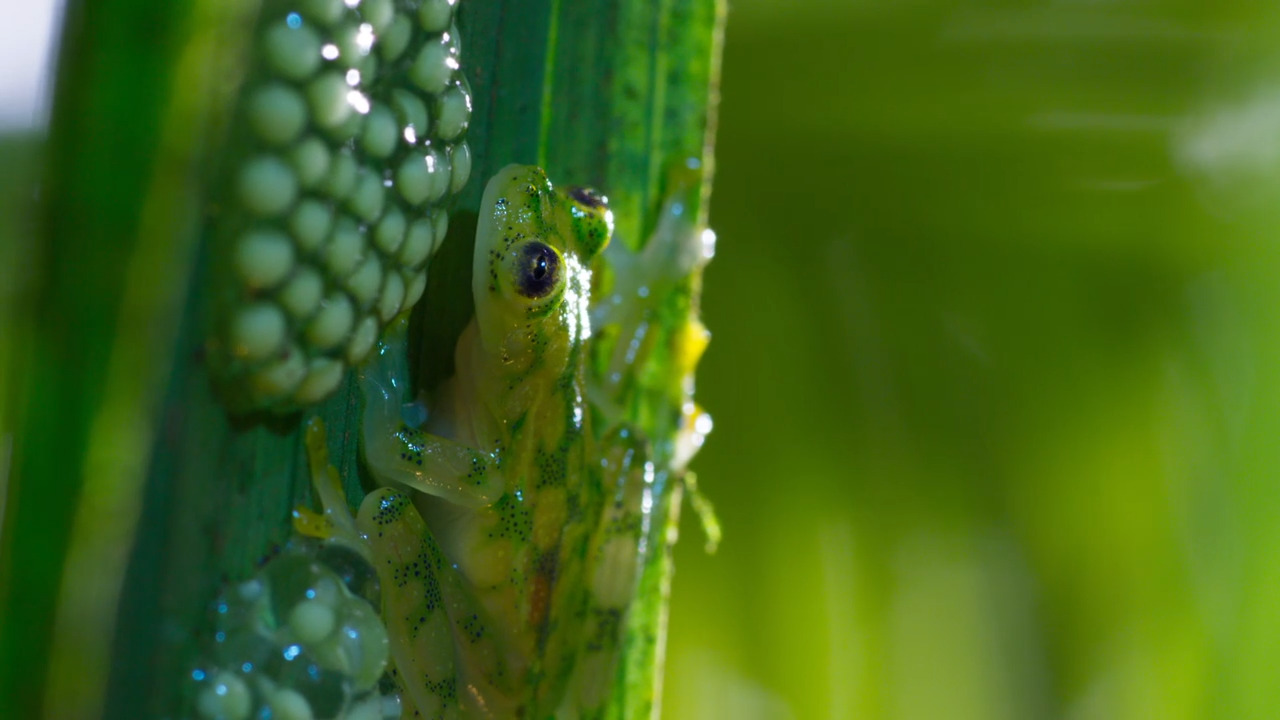
In Camouflage in the Jungle, narrator Sir David Attenborough explores the understory in Costa Rica where animals use camouflage and mimicry to avoid becoming prey. The glass frog avoids detection with its transparent body. The pattern on its back mimics the young egg sacs it is protecting, allowing it to confuse and fight off attacking wasps. This video is excerpted from BBC’s Planet Earth II, a breathtaking documentary series that highlights the natural wonders of our planet.
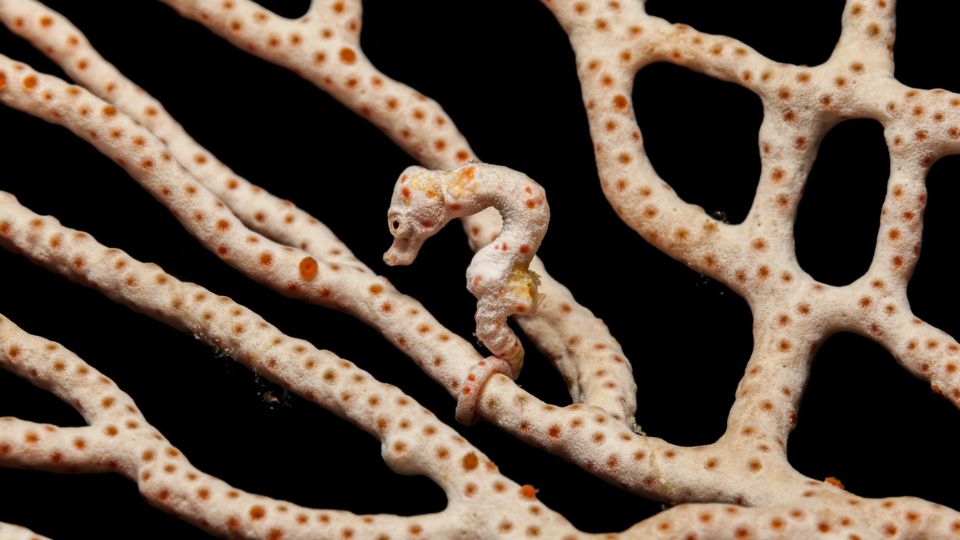
Meet nature's master hiders. Gliding tree frogs, octopuses, arctic foxes — these animals have evolved brilliant ways to blend in, hunt, and survive unseen. We've pulled together a collection of BBC video clips (see Related Resources below) showing off these disappearing acts. Watch them, then take the Kahoot to see what stuck.
Some of the tricks are wild: glass frogs clear their own blood to turn see-through, while arctic foxes shift their fur with the seasons to stay hidden year-round. Explore how these masters of camouflage pull it off, and pick up some solid grounding in evolution and adaptation along the way.
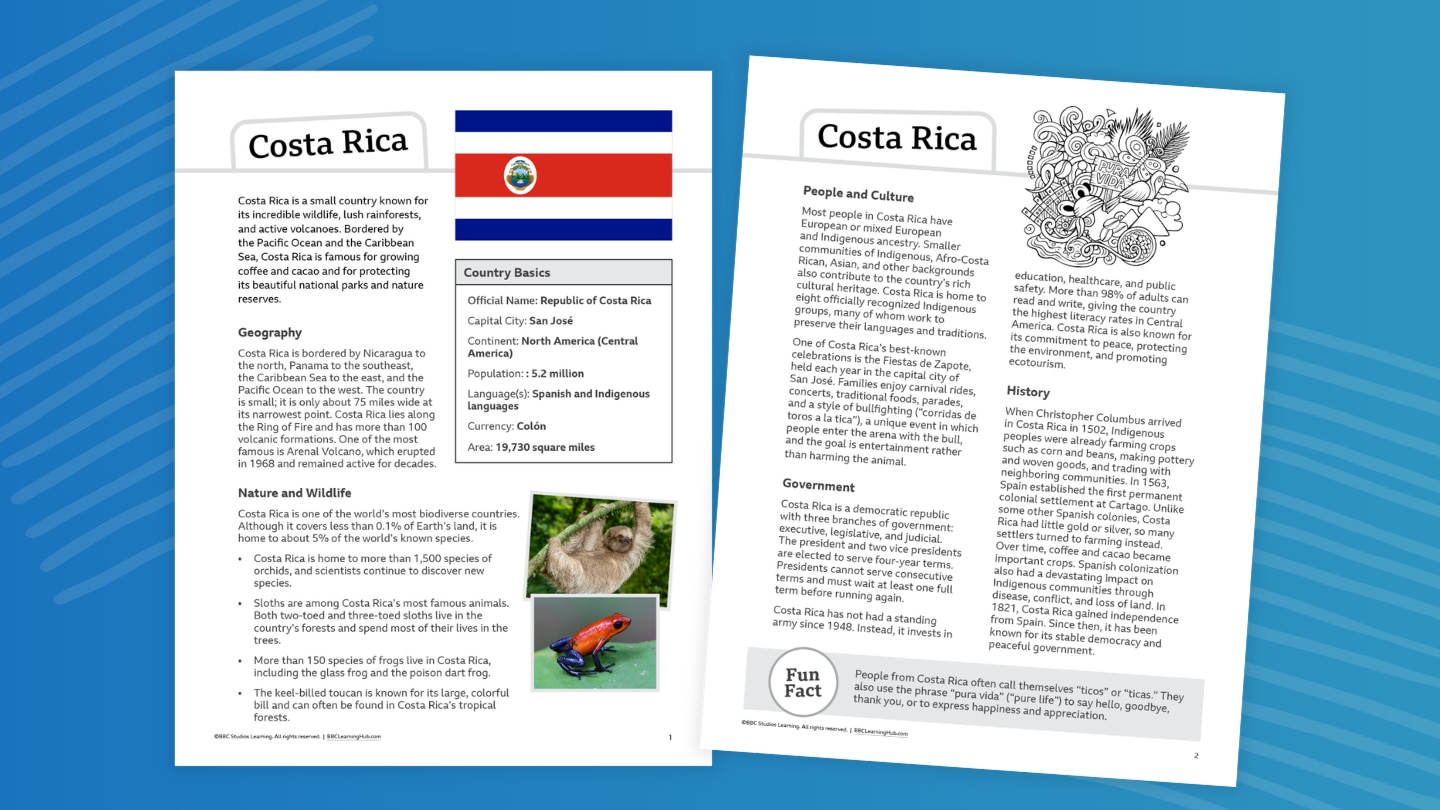
What small country is home to an astonishing variety of plants and animals, hundreds of volcanoes, and tropical forests stretching from coast to coast? Meet Costa Rica, a Central American country known for its incredible biodiversity and commitment to protecting nature.
From sloths and glass frogs to colorful toucans and thousands of orchids, Costa Rica is packed with wildlife. Discover how Indigenous peoples and Spanish colonization shaped the country, learn about its government and culture, and explore traditions such as the Fiestas de Zapote and "pura vida." You’ll also find out why Costa Rica has become a leader in protecting forests, wildlife, and other natural resources.
Teachers and parents, you can use this fact file to:
- Introduce a geography or social studies unit
- Support nonfiction reading practice
- Compare countries and cultures
- Complete map and research activities
- Prepare students for projects or presentations (use our country report template!)
- Pair with videos, articles, or other informational texts (see Related Resources below)
In Camouflage in the Jungle, narrator Sir David Attenborough explores the understory in Costa Rica where animals use camouflage and mimicry to avoid becoming prey. The glass frog avoids detection with its transparent body. The pattern on its back mimics the young egg sacs it is protecting, allowing it to confuse and fight off attacking wasps. This video is excerpted from BBC’s Planet Earth II, a breathtaking documentary series that highlights the natural wonders of our planet.
Meet nature's master hiders. Gliding tree frogs, octopuses, arctic foxes — these animals have evolved brilliant ways to blend in, hunt, and survive unseen. We've pulled together a collection of BBC video clips (see Related Resources below) showing off these disappearing acts. Watch them, then take the Kahoot to see what stuck.
Some of the tricks are wild: glass frogs clear their own blood to turn see-through, while arctic foxes shift their fur with the seasons to stay hidden year-round. Explore how these masters of camouflage pull it off, and pick up some solid grounding in evolution and adaptation along the way.
What small country is home to an astonishing variety of plants and animals, hundreds of volcanoes, and tropical forests stretching from coast to coast? Meet Costa Rica, a Central American country known for its incredible biodiversity and commitment to protecting nature.
From sloths and glass frogs to colorful toucans and thousands of orchids, Costa Rica is packed with wildlife. Discover how Indigenous peoples and Spanish colonization shaped the country, learn about its government and culture, and explore traditions such as the Fiestas de Zapote and "pura vida." You’ll also find out why Costa Rica has become a leader in protecting forests, wildlife, and other natural resources.
Teachers and parents, you can use this fact file to:
- Introduce a geography or social studies unit
- Support nonfiction reading practice
- Compare countries and cultures
- Complete map and research activities
- Prepare students for projects or presentations (use our country report template!)
- Pair with videos, articles, or other informational texts (see Related Resources below)