Country Fact File: Costa Rica
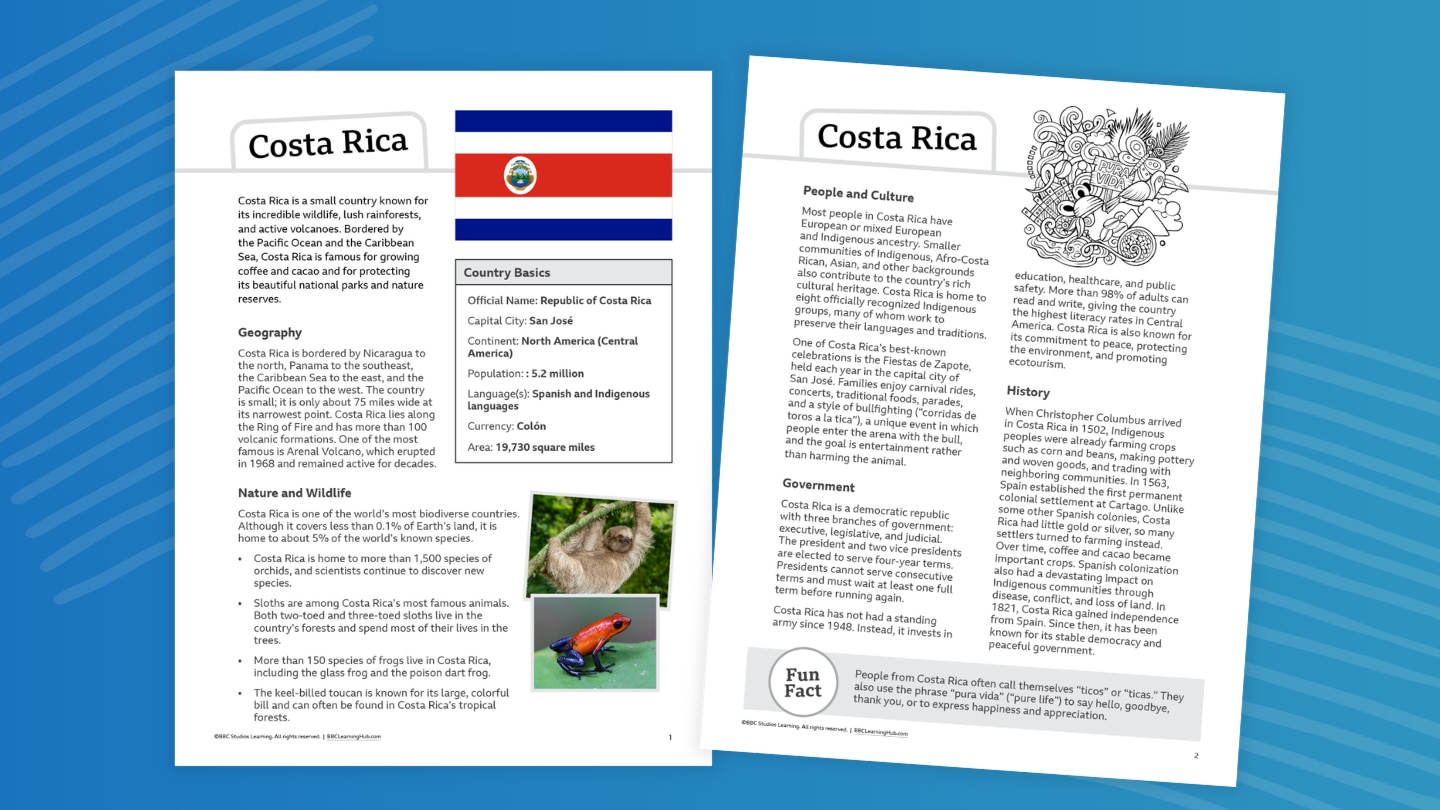
What small country is home to an astonishing variety of plants and animals, hundreds of volcanoes, and tropical forests stretching from coast to coast? Meet Costa Rica, a Central American country known for its incredible biodiversity and commitment to protecting nature.
From sloths and glass frogs to colorful toucans and thousands of orchids, Costa Rica is packed with wildlife. Discover how Indigenous peoples and Spanish colonization shaped the country, learn about its government and culture, and explore traditions such as the Fiestas de Zapote and "pura vida." You’ll also find out why Costa Rica has become a leader in protecting forests, wildlife, and other natural resources.
Teachers and parents, you can use this fact file to:
- Introduce a geography or social studies unit
- Support nonfiction reading practice
- Compare countries and cultures
- Complete map and research activities
- Prepare students for projects or presentations (use our country report template!)
- Pair with videos, articles, or other informational texts (see Related Resources below)
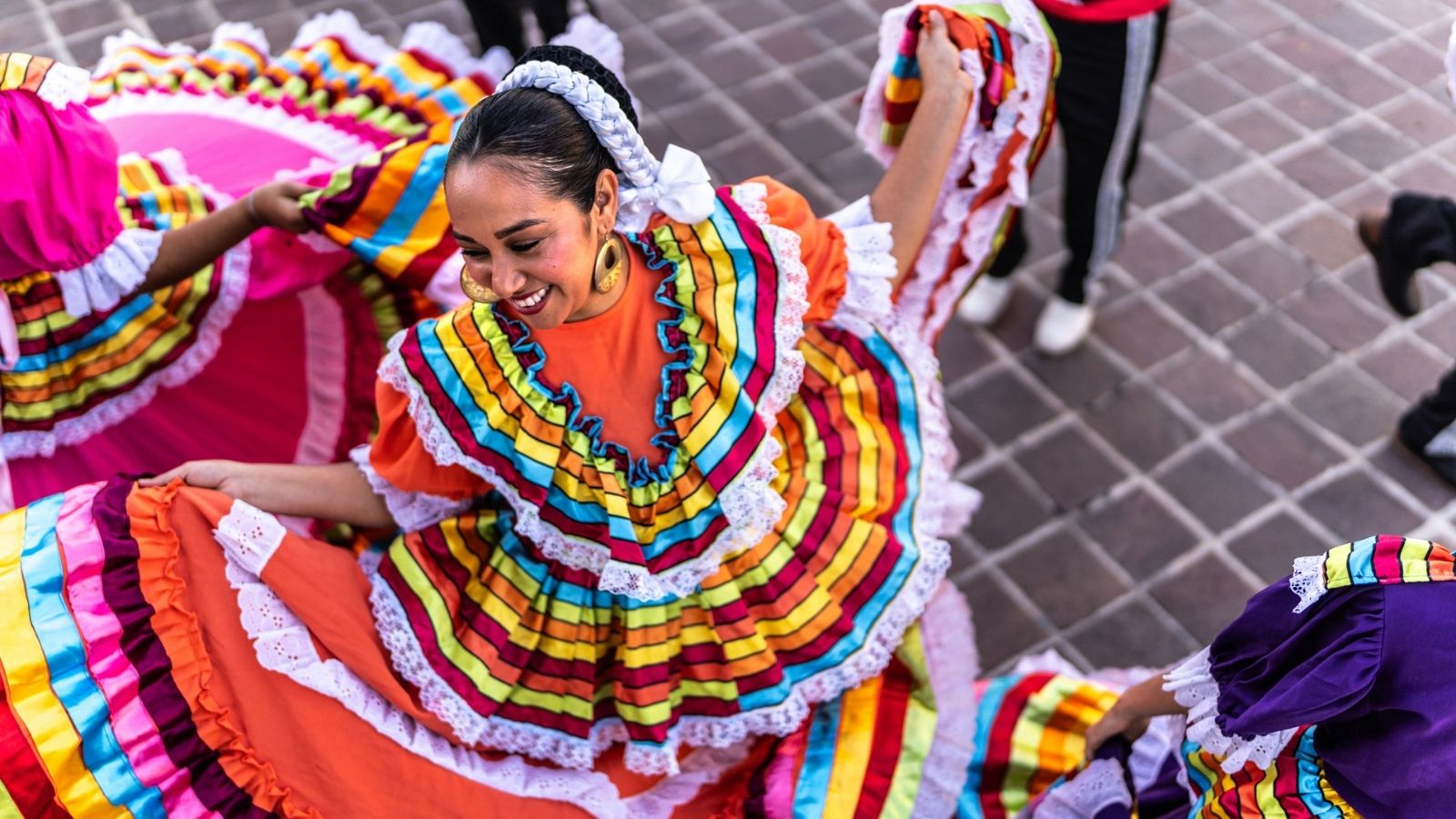
This Hispanic Heritage Month, explore five Latin American countries through BBC videos and country fact files. Then complete your own country report!
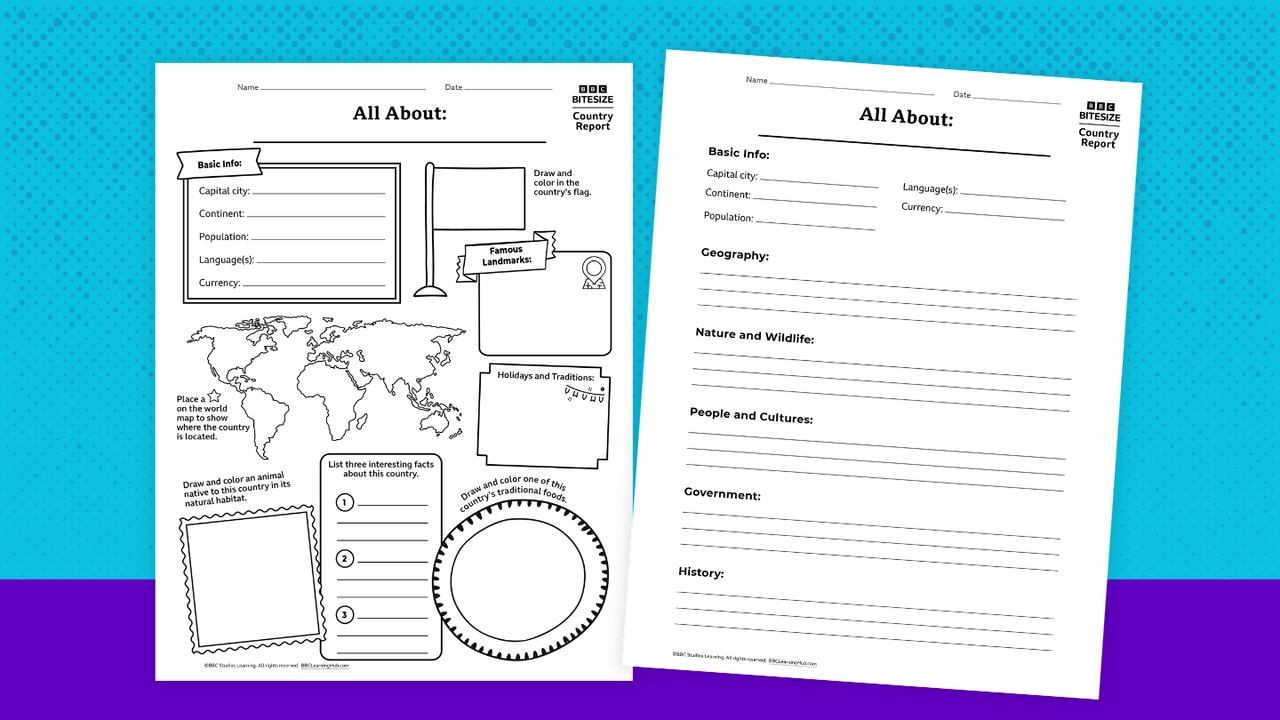
Turn your classroom into a global exploration hub! This country report template invites students in Grades 3–8 to become curious investigators — uncovering what makes each country unique and sharing their discoveries in creative ways.
Designed with flexibility in mind, the resource includes two approachable formats:
- Snapshot Style: A lively, visual option that’s perfect for quick learning or younger students. Learners can sketch, label, and highlight key features — like flags, landmarks, foods, and traditions — while building confidence with short responses.
- Explorer Style: A more in-depth format for students ready to dig deeper. It guides learners through topics such as geography, wildlife, culture, and history, helping them organize ideas and develop clear, informative writing.
Best of all, this template pairs seamlessly with BBC videos — bringing countries to life through real-world sights, sounds, and stories. Students can watch, wonder, and then weave what they’ve learned into their own reports.
Quick Teacher Tips: Use country studies as a springboard into wider learning across subjects:
- Geography: Map skills, climate zones, landforms, and ecosystems
- Language Arts: Informational writing, summarizing, note-taking, and presenting
- History: Key events, timelines, and how the past shapes the present
- Math: Population comparisons, distances, currency conversions
- Arts & Culture: Traditional patterns, music, celebrations, and food
- Current Events: Tie in informational reading and media literacy by exploring what’s happening in that country today in an age-appropriate way.
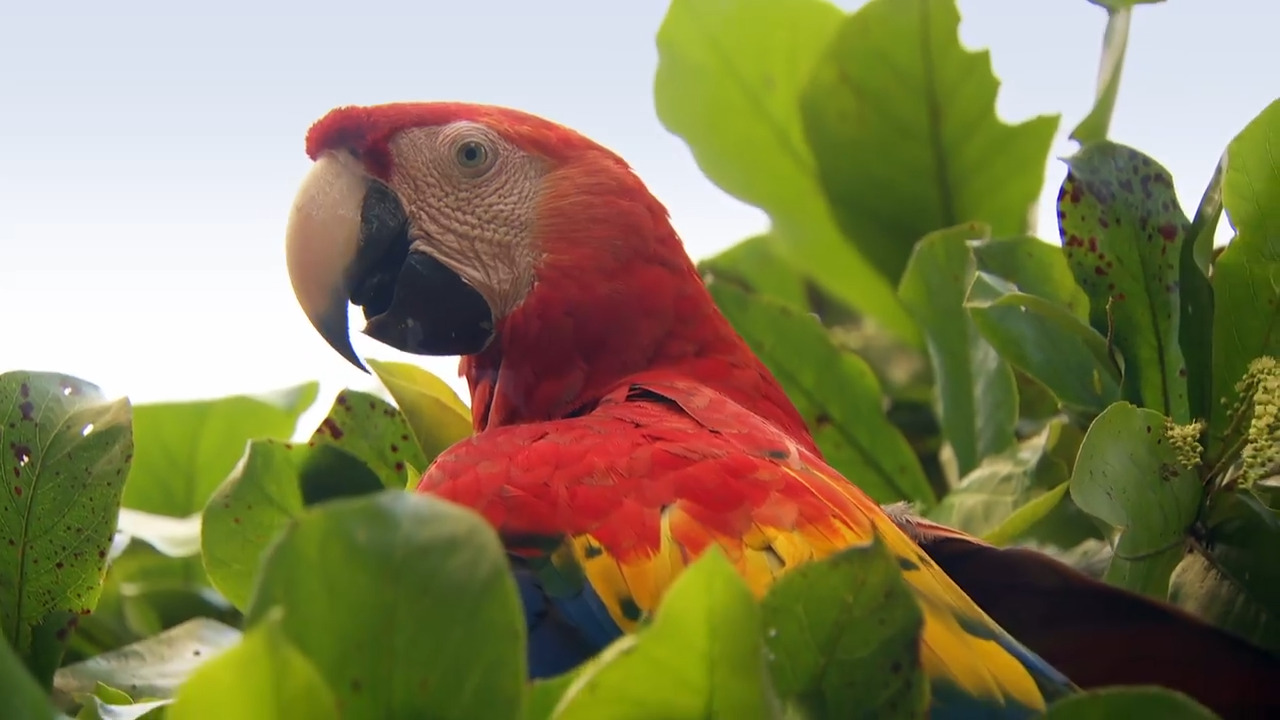
In Visit the Natural Playground of Costa Rica, host Simon Reeve and his guide explore lush forests filled with iguanas, butterflies, toucans, macaws, and even capybaras! Discover how this small country, packed with over 500,000 species of wildlife, is a world leader in protecting nature as children plant thousands of trees in a reforestation project that’s growing forests for the future. This video is excerpted from BBC’s The Americas With Simon Reeve, in which Simon Reeve explores the landscapes, cultures, and wildlife of North and South America
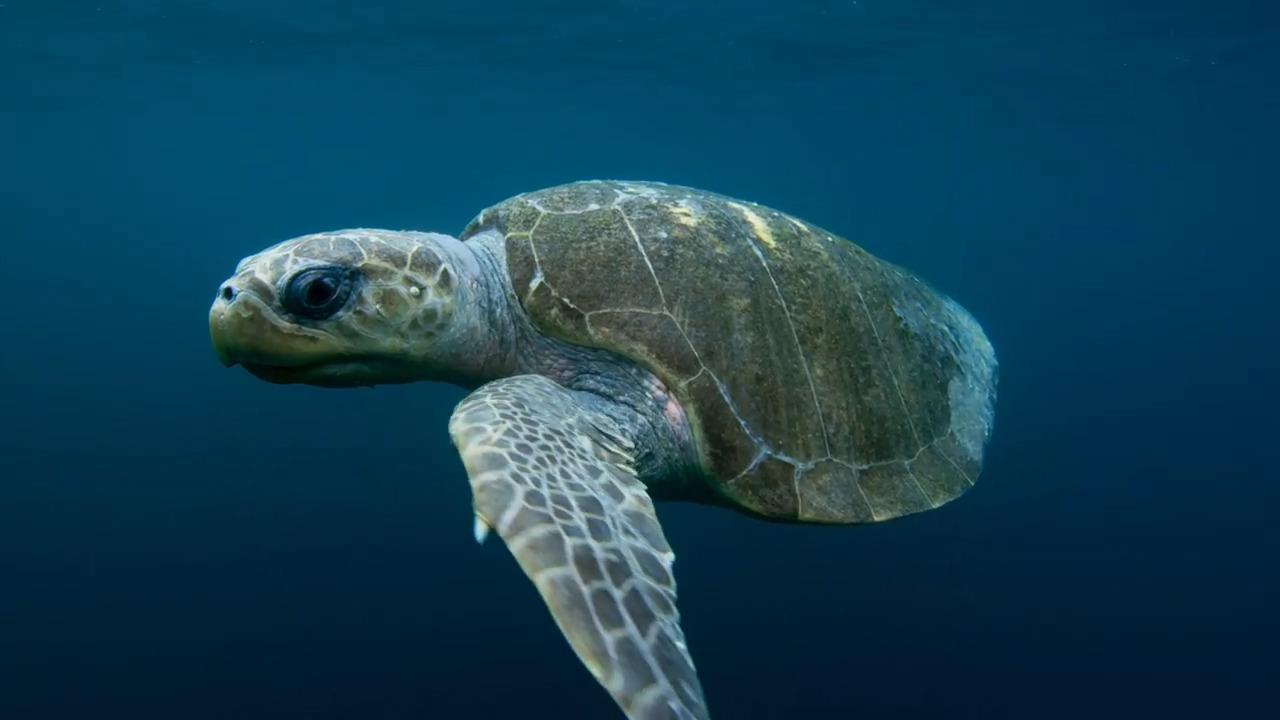
In The Olive Ridley Turtle on Land and Sea, narrator Sir David Attenborough follows a sea turtle off the coast of Costa Rica, resting after a 1,500-mile journey to lay her eggs. She comes to rest on the same beach where she herself hatched many years before. This video is excerpted from BBC’s Blue Planet II, a natural history series that explores the world's oceans, the animals that live in them, and the threats they face, using modern filming techniques and equipment to capture previously unseen areas of the ocean.
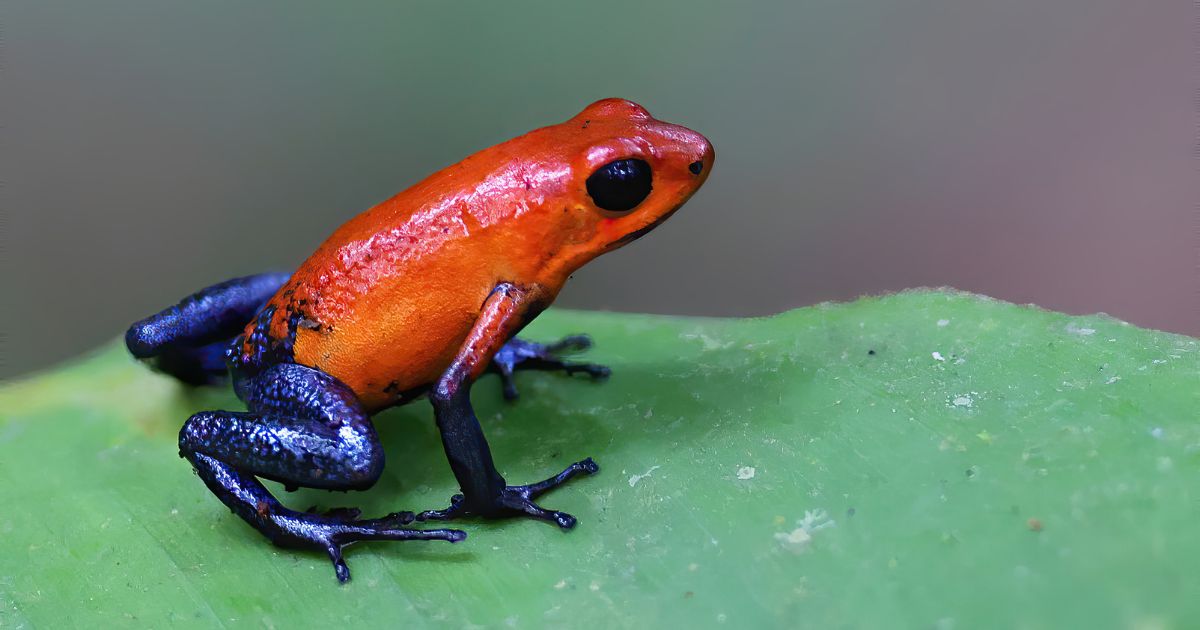

The article "Exploring Costa Rica’s Rich Wildlife: Which Animals Can You See?" from BBC's Discover Wildlife explores the incredible range of animals that live in Costa Rica. From howler monkeys whose calls can be heard over long distances, to the rare jaguar, the country is home to some of the most unique species in the world. It also highlights vibrant creatures like the resplendent quetzal and endangered sea turtles.
You Might Also Like
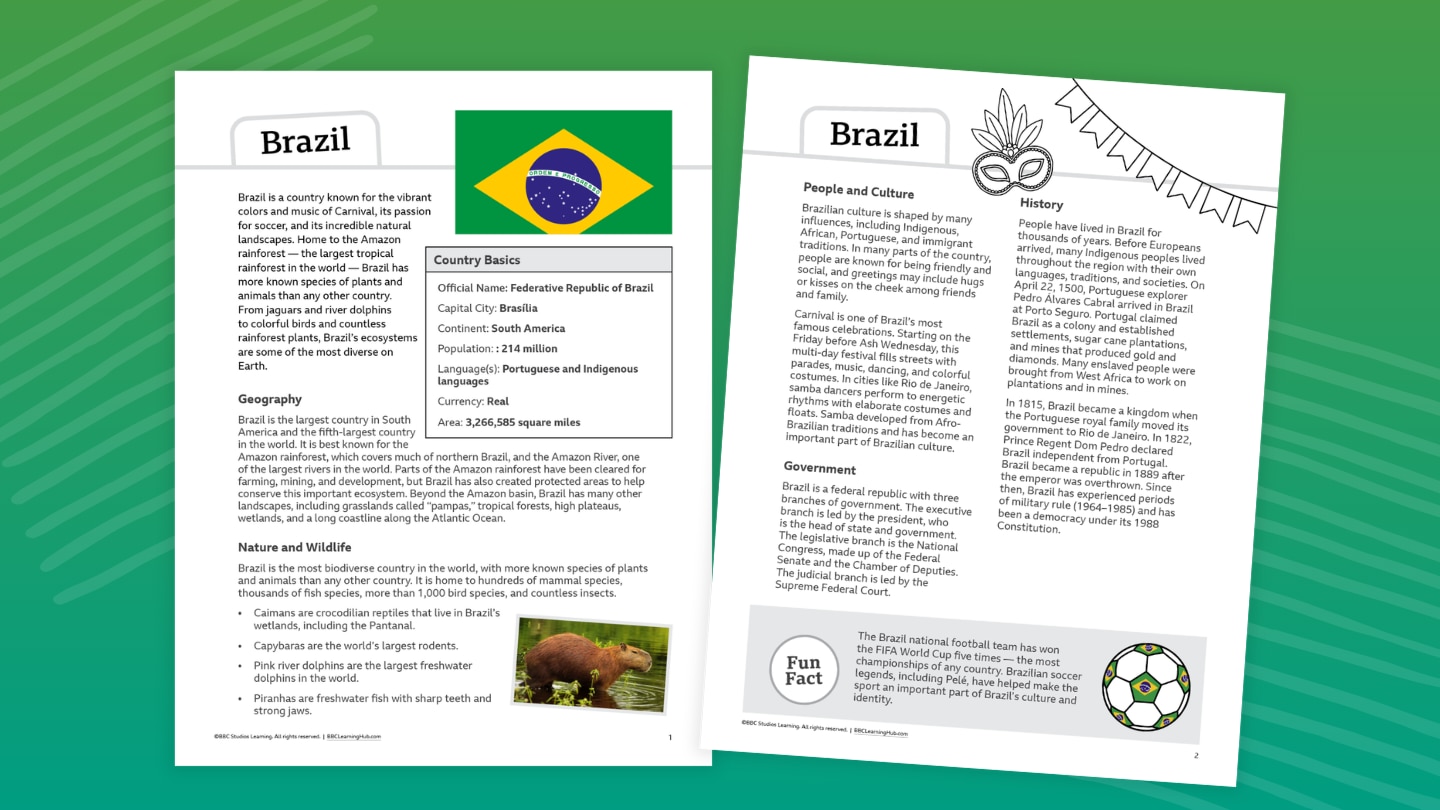
What country is home to the world’s largest tropical rainforest, the greatest biodiversity on Earth, and a culture famous for Carnival and soccer? Meet Brazil, the largest country in South America and a place where natural and cultural wonders stretch across an enormous landscape.
From capybaras and pink river dolphins to the mighty Amazon River and the wetlands of the Pantanal, Brazil is bursting with life. Explore the Indigenous, African, Portuguese, and immigrant influences that shaped Brazilian culture, learn about the country’s history and government, and discover the foods, music, and celebrations that bring people together. You’ll also explore Brazil’s incredible ecosystem.
Teachers and parents, you can use this fact file to:
- Introduce a geography or social studies unit
- Support nonfiction reading practice
- Compare countries and cultures
- Complete map and research activities
- Prepare students for projects or presentations (use our country report template!)
- Pair with videos, articles, or other informational texts (see Related Resources below)
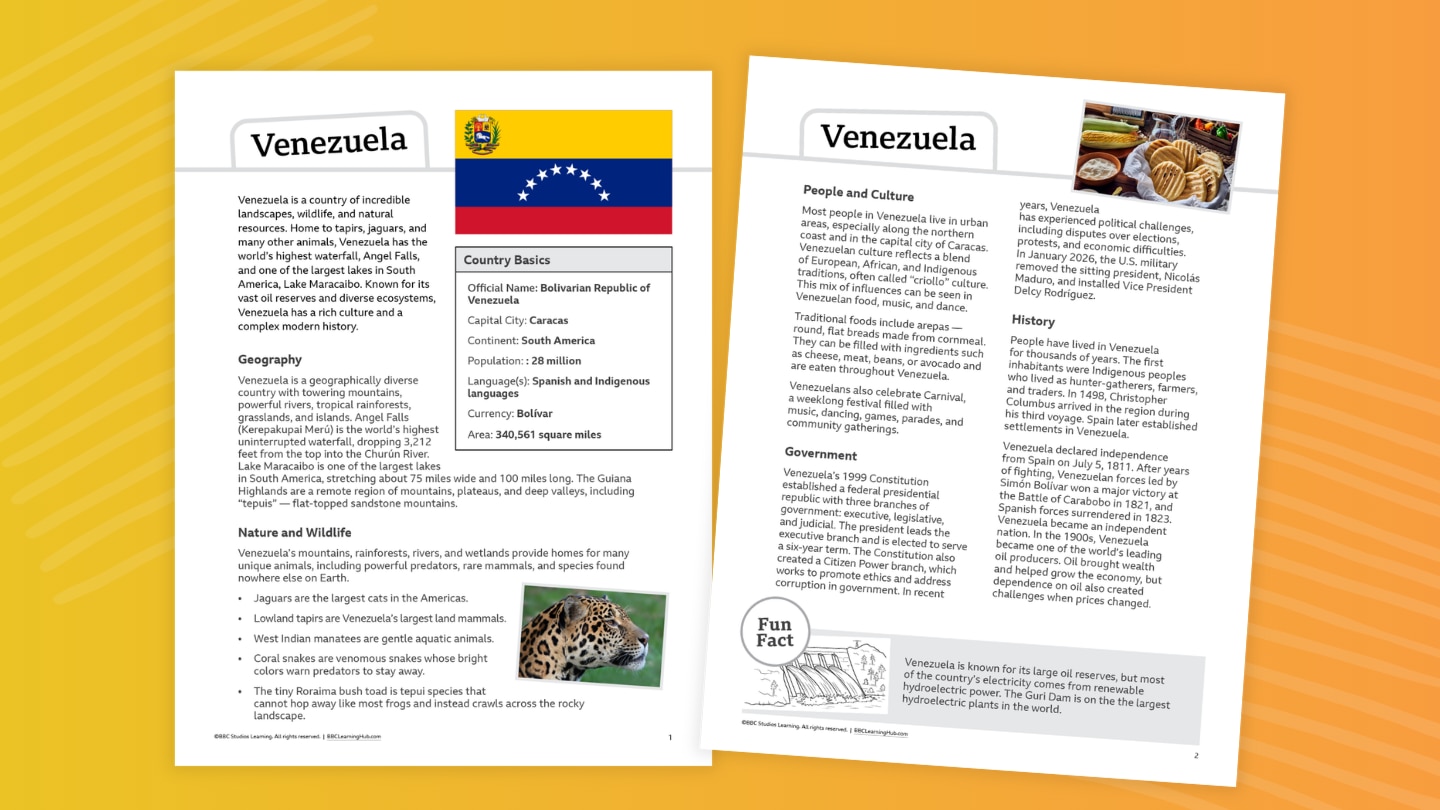
What country is home to the world’s highest waterfall, mysterious flat-topped mountains, and animals found nowhere else? Meet Venezuela, a country of spectacular landscapes and extraordinary biodiversity.
From Angel Falls and the tepuis to jaguars, tapirs, manatees, and the tiny Roraima bush toad, Venezuela is filled with natural wonders. Explore the Indigenous peoples and events that shaped the country’s history, learn about its government and oil-rich economy, and discover the foods, music, festivals, and traditions that make Venezuelan culture unique. You’ll also learn why Venezuela’s isolated tepuis are home to species that have adapted to life high above the surrounding landscape.
Teachers and parents, you can use this fact file to:
- Introduce a geography or social studies unit
- Support nonfiction reading practice
- Compare countries and cultures
- Complete map and research activities
- Prepare students for projects or presentations (use our country report template!)
- Pair with videos, articles, or other informational texts (see Related Resources below)
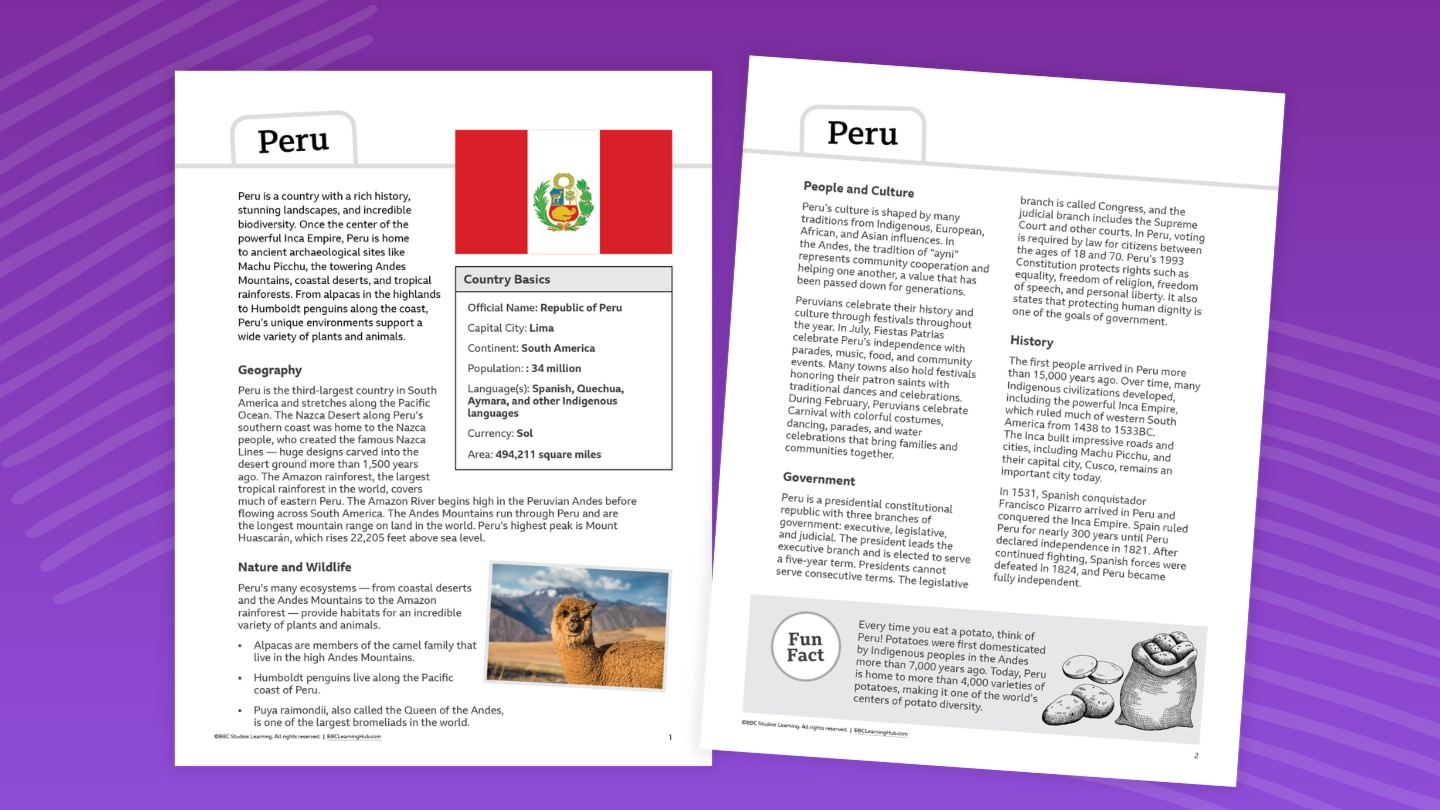
What country is home to the Inca Empire, the Andes Mountains, and more than 3,000 varieties of potatoes? Meet Peru, a country where ancient civilizations and incredible natural landscapes come together.
From Machu Picchu and the ancient city of Cusco to alpacas and the towering Puya Raimondi plant, Peru is full of remarkable discoveries. Explore the civilizations that flourished here, learn how Spanish colonization changed the country, and discover Peru’s languages, traditions, foods, and government. You’ll also travel from the Pacific coast to the high Andes and deep into the Amazon to see how geography shapes life in Peru.
Teachers and parents, you can use this fact file to:
- Introduce a geography or social studies unit
- Support nonfiction reading practice
- Compare countries and cultures
- Complete map and research activities
- Prepare students for projects or presentations (use our country report template!)
- Pair with videos, articles, or other informational texts (see Related Resources below)
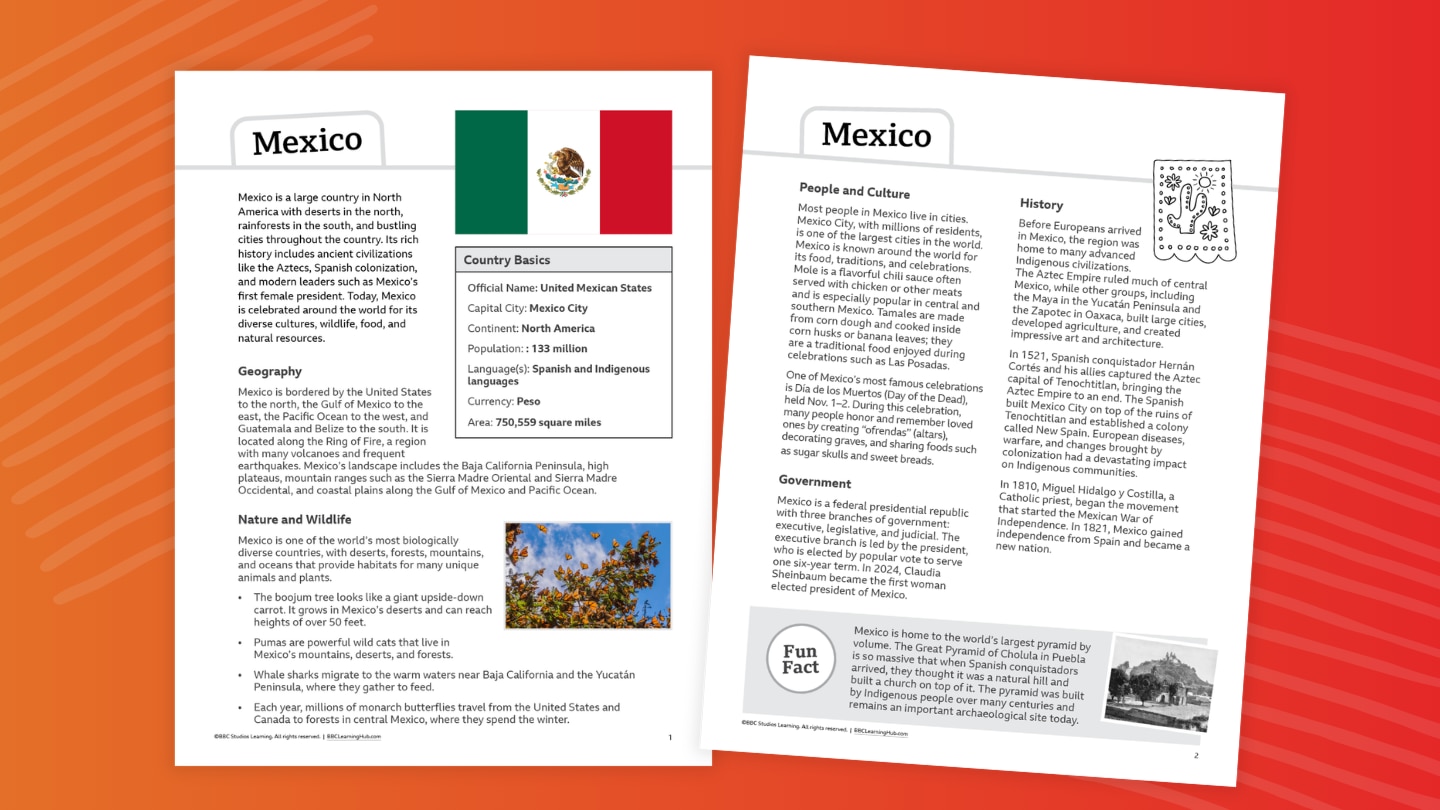
What country is home to ancient pyramids, colorful monarch butterflies, towering volcanoes, and one of the world’s most famous celebrations? Meet Mexico, a country where ancient civilizations, diverse landscapes, and vibrant traditions come together.
From the Aztec and Maya to pumas and whale sharks, Mexico has a remarkable story to tell. Explore the civilizations that shaped the country, discover how Mexico gained independence from Spain, and learn about its food, festivals, languages, government, and cities. You’ll also discover how deserts, mountains, jungles, and coastlines provide habitats for an amazing variety of plants and animals.
Teachers and parents, you can use this fact file to:
- Introduce a geography or social studies unit
- Support nonfiction reading practice
- Compare countries and cultures
- Complete map and research activities
- Prepare students for projects or presentations (use our country report template!)
- Pair with videos, articles, or other informational texts (see Related Resources below)
What country is home to the world’s largest tropical rainforest, the greatest biodiversity on Earth, and a culture famous for Carnival and soccer? Meet Brazil, the largest country in South America and a place where natural and cultural wonders stretch across an enormous landscape.
From capybaras and pink river dolphins to the mighty Amazon River and the wetlands of the Pantanal, Brazil is bursting with life. Explore the Indigenous, African, Portuguese, and immigrant influences that shaped Brazilian culture, learn about the country’s history and government, and discover the foods, music, and celebrations that bring people together. You’ll also explore Brazil’s incredible ecosystem.
Teachers and parents, you can use this fact file to:
- Introduce a geography or social studies unit
- Support nonfiction reading practice
- Compare countries and cultures
- Complete map and research activities
- Prepare students for projects or presentations (use our country report template!)
- Pair with videos, articles, or other informational texts (see Related Resources below)
What country is home to the world’s highest waterfall, mysterious flat-topped mountains, and animals found nowhere else? Meet Venezuela, a country of spectacular landscapes and extraordinary biodiversity.
From Angel Falls and the tepuis to jaguars, tapirs, manatees, and the tiny Roraima bush toad, Venezuela is filled with natural wonders. Explore the Indigenous peoples and events that shaped the country’s history, learn about its government and oil-rich economy, and discover the foods, music, festivals, and traditions that make Venezuelan culture unique. You’ll also learn why Venezuela’s isolated tepuis are home to species that have adapted to life high above the surrounding landscape.
Teachers and parents, you can use this fact file to:
- Introduce a geography or social studies unit
- Support nonfiction reading practice
- Compare countries and cultures
- Complete map and research activities
- Prepare students for projects or presentations (use our country report template!)
- Pair with videos, articles, or other informational texts (see Related Resources below)
What country is home to the Inca Empire, the Andes Mountains, and more than 3,000 varieties of potatoes? Meet Peru, a country where ancient civilizations and incredible natural landscapes come together.
From Machu Picchu and the ancient city of Cusco to alpacas and the towering Puya Raimondi plant, Peru is full of remarkable discoveries. Explore the civilizations that flourished here, learn how Spanish colonization changed the country, and discover Peru’s languages, traditions, foods, and government. You’ll also travel from the Pacific coast to the high Andes and deep into the Amazon to see how geography shapes life in Peru.
Teachers and parents, you can use this fact file to:
- Introduce a geography or social studies unit
- Support nonfiction reading practice
- Compare countries and cultures
- Complete map and research activities
- Prepare students for projects or presentations (use our country report template!)
- Pair with videos, articles, or other informational texts (see Related Resources below)
What country is home to ancient pyramids, colorful monarch butterflies, towering volcanoes, and one of the world’s most famous celebrations? Meet Mexico, a country where ancient civilizations, diverse landscapes, and vibrant traditions come together.
From the Aztec and Maya to pumas and whale sharks, Mexico has a remarkable story to tell. Explore the civilizations that shaped the country, discover how Mexico gained independence from Spain, and learn about its food, festivals, languages, government, and cities. You’ll also discover how deserts, mountains, jungles, and coastlines provide habitats for an amazing variety of plants and animals.
Teachers and parents, you can use this fact file to:
- Introduce a geography or social studies unit
- Support nonfiction reading practice
- Compare countries and cultures
- Complete map and research activities
- Prepare students for projects or presentations (use our country report template!)
- Pair with videos, articles, or other informational texts (see Related Resources below)