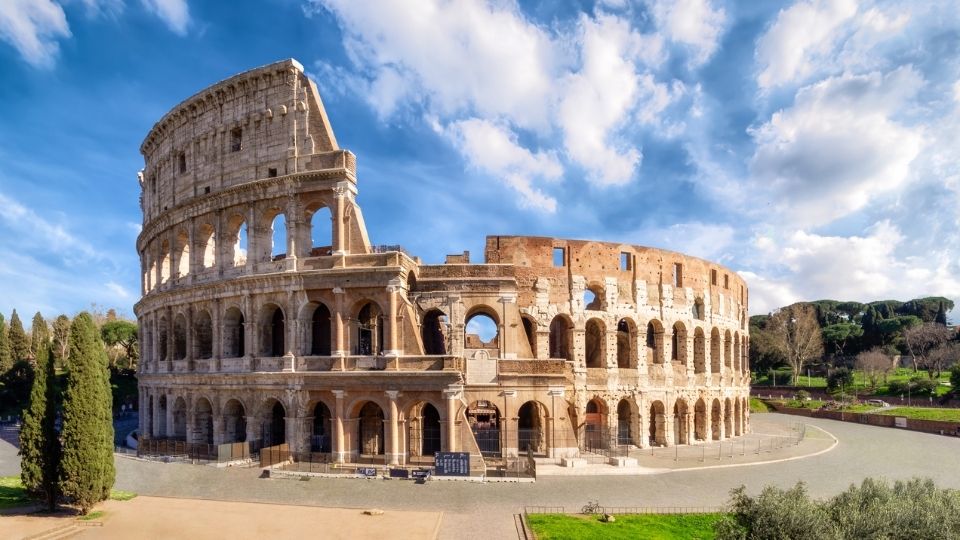
Discover the story behind the Colosseum, one of the most famous landmarks of the ancient world. Students will explore where the Colosseum is located, why it was built, and how it became a powerful symbol of life in the Roman Empire.
This Kahoot examines the history and design of the Colosseum, including the events held inside the massive arena, the engineering techniques used to construct it, and the role it played in entertainment and Roman society. Students will also discover fascinating facts about gladiators, architecture, and daily life in ancient Rome.
Ideal for lessons on history, world cultures, architecture, and geography, this Kahoot encourages students to explore the lasting legacy of one of the world’s most iconic ancient monuments.
In Alexander the Great of Macedon, archaeologist and historian Richard Miles describes a charismatic demigod who “conquered to live.” Alexander of Macedon, or Alexander the Great, quickly expanded his territory and built an empire that spanned Egypt and Asia, and moved into Europe. But his “greatness” was only apparent after he died and his successors struggled to build a civilization after his death. This video is excerpted from BBC’s Ancient Worlds, an epic series with archaeologist and historian Richard Miles as he explores the roots of civilization from Mesopotamia to the fall of the Roman Empire.
In Rome Under Octavian, archaeologist and historian Richard Miles describes how Octavian, later known as Augustus, traded political freedoms for peace to lay the foundation for Rome to become the greatest empire in history. This video is excerpted from BBC’s Ancient Worlds, an epic series with archaeologist and historian Richard Miles as he explores the roots of civilization from Mesopotamia to the fall of the Roman Empire.
In Roman Conquest and Expansion, archaeologist and historian Richard Miles explain how Rome’s legionary army became the backbone and driver of its expansion. As Rome conquered more and more groups and land, they grew their army and their empire. Eventually, they transformed Rome from a small city-state to a dominant power. This video is excerpted from BBC’s Ancient Worlds, an epic series with archaeologist and historian Richard Miles as he explores the roots of civilization from Mesopotamia to the fall of the Roman Empire.
In The Fall of Alexander the Great, archaeologist and historian Richard Miles explores the downfall of Alexander the Great. As his ambitious conquest of the known world marched on, Alexander’s prior physical and psychological traumas caught up to him and he died in June 323BC. He left behind no clear heir, and no cohesive administration. This video is excerpted from BBC’s Ancient Worlds, an epic series with archaeologist and historian Richard Miles as he explores the roots of civilization from Mesopotamia to the fall of the Roman Empire.
In The Legend of Romulus and Remus, archaeologist and historian Richard Miles explores Rome’s humble beginnings, and how the legend of two brothers, Romulus and Remus, shaped the city. This video is excerpted from BBC’s Ancient Worlds, an epic series with archaeologist and historian Richard Miles as he explores the roots of civilization from Mesopotamia to the fall of the Roman Empire.
In How Rome Conquered People and Maintained Control, archaeologist and historian Richard Miles explains how Rome managed to rule such a large amount of territory without an equally large bureaucracy. Romans used local elites to convince plebeians to buy into the Roman Empire’s way of life. By offering infrastructure and the reward of citizenship, Rome integrated conquered people and maintained control over millions of subjects. This video is excerpted from BBC’s Ancient Worlds, an epic series with archaeologist and historian Richard Miles as he explores the roots of civilization from Mesopotamia to the fall of the Roman Empire.
In Persepolis, Crown of the Persian Empire, host Joanna Lumley explores the ancient Iranian city of Persepolis, founded by Darius the Great in 518 B.C. She uncovers how the city was used for ceremonial purposes and showcases the grandeur of the Persian Empire, which at one point ruled over 44% of the world’s population. Using AI, Joanna visualizes what the city may have looked like in its prime and explains why it was destroyed just 200 years after its creation. This video is excerpted from BBC’s Joanna Lumley’s Silk Road Adventure, a documentary series uncovering the rich history and cultural treasures of the Silk Road.
In The Life of Ashoka, From Bloodshed to Buddhism, host Andrew Marr describes how Ashoka started his reign of the Mauryan Empire in India with a brutal conquest that killed 100,000 people. But after that bloodshed, Ashoka embraced Buddhism and worked to spread the peaceful philosophy across the ancient world. This included writing and sharing his Edicts, which have been called the first declaration of human rights. This video is excerpted from BBC’s A History of the World, a story of human history that uses reenactments, modern footage, and storytelling to explain history’s greatest achievements.
In Agriculture in Ancient Uruk, archaeologist and historian Richard Miles explains how agricultural surplus in ancient Uruk led to diversification, specialization, and the rise of class systems. From craftsmen to rulers, the transformation laid the groundwork for the first class conflicts. This video is excerpted from BBC’s Ancient Worlds, an epic series with archaeologist and historian Richard Miles as he explores the roots of civilization from Mesopotamia to the fall of the Roman Empire.
In Democracy and Conflict in Ancient Greece, archaeologist and historian Richard Miles explains the duality of ancient Greece. Advances in philosophy, democracy, and the arts coexisted with political discord, social unrest, and violent power struggles. This video is excerpted from BBC’s Ancient Worlds, an epic series with archaeologist and historian Richard Miles as he explores the roots of civilization from Mesopotamia to the fall of the Roman Empire.
In Political Life in Ancient Greek City-States, archaeologist and historian Richard Miles explains how city-states emerged in Ancient Greece, from the 8th to the 5th Century BC. Small, independent towns formed powerful political entities, each with its own culture and government. This video is excerpted from BBC’s Ancient Worlds, an epic series with archaeologist and historian Richard Miles as he explores the roots of civilization from Mesopotamia to the fall of the Roman Empire.
Discover the story behind the Colosseum, one of the most famous landmarks of the ancient world. Students will explore where the Colosseum is located, why it was built, and how it became a powerful symbol of life in the Roman Empire.
This Kahoot examines the history and design of the Colosseum, including the events held inside the massive arena, the engineering techniques used to construct it, and the role it played in entertainment and Roman society. Students will also discover fascinating facts about gladiators, architecture, and daily life in ancient Rome.
Ideal for lessons on history, world cultures, architecture, and geography, this Kahoot encourages students to explore the lasting legacy of one of the world’s most iconic ancient monuments.
In Alexander the Great of Macedon, archaeologist and historian Richard Miles describes a charismatic demigod who “conquered to live.” Alexander of Macedon, or Alexander the Great, quickly expanded his territory and built an empire that spanned Egypt and Asia, and moved into Europe. But his “greatness” was only apparent after he died and his successors struggled to build a civilization after his death. This video is excerpted from BBC’s Ancient Worlds, an epic series with archaeologist and historian Richard Miles as he explores the roots of civilization from Mesopotamia to the fall of the Roman Empire.
In Rome Under Octavian, archaeologist and historian Richard Miles describes how Octavian, later known as Augustus, traded political freedoms for peace to lay the foundation for Rome to become the greatest empire in history. This video is excerpted from BBC’s Ancient Worlds, an epic series with archaeologist and historian Richard Miles as he explores the roots of civilization from Mesopotamia to the fall of the Roman Empire.
In Roman Conquest and Expansion, archaeologist and historian Richard Miles explain how Rome’s legionary army became the backbone and driver of its expansion. As Rome conquered more and more groups and land, they grew their army and their empire. Eventually, they transformed Rome from a small city-state to a dominant power. This video is excerpted from BBC’s Ancient Worlds, an epic series with archaeologist and historian Richard Miles as he explores the roots of civilization from Mesopotamia to the fall of the Roman Empire.
In The Fall of Alexander the Great, archaeologist and historian Richard Miles explores the downfall of Alexander the Great. As his ambitious conquest of the known world marched on, Alexander’s prior physical and psychological traumas caught up to him and he died in June 323BC. He left behind no clear heir, and no cohesive administration. This video is excerpted from BBC’s Ancient Worlds, an epic series with archaeologist and historian Richard Miles as he explores the roots of civilization from Mesopotamia to the fall of the Roman Empire.
In The Legend of Romulus and Remus, archaeologist and historian Richard Miles explores Rome’s humble beginnings, and how the legend of two brothers, Romulus and Remus, shaped the city. This video is excerpted from BBC’s Ancient Worlds, an epic series with archaeologist and historian Richard Miles as he explores the roots of civilization from Mesopotamia to the fall of the Roman Empire.
In How Rome Conquered People and Maintained Control, archaeologist and historian Richard Miles explains how Rome managed to rule such a large amount of territory without an equally large bureaucracy. Romans used local elites to convince plebeians to buy into the Roman Empire’s way of life. By offering infrastructure and the reward of citizenship, Rome integrated conquered people and maintained control over millions of subjects. This video is excerpted from BBC’s Ancient Worlds, an epic series with archaeologist and historian Richard Miles as he explores the roots of civilization from Mesopotamia to the fall of the Roman Empire.
In Persepolis, Crown of the Persian Empire, host Joanna Lumley explores the ancient Iranian city of Persepolis, founded by Darius the Great in 518 B.C. She uncovers how the city was used for ceremonial purposes and showcases the grandeur of the Persian Empire, which at one point ruled over 44% of the world’s population. Using AI, Joanna visualizes what the city may have looked like in its prime and explains why it was destroyed just 200 years after its creation. This video is excerpted from BBC’s Joanna Lumley’s Silk Road Adventure, a documentary series uncovering the rich history and cultural treasures of the Silk Road.
In The Life of Ashoka, From Bloodshed to Buddhism, host Andrew Marr describes how Ashoka started his reign of the Mauryan Empire in India with a brutal conquest that killed 100,000 people. But after that bloodshed, Ashoka embraced Buddhism and worked to spread the peaceful philosophy across the ancient world. This included writing and sharing his Edicts, which have been called the first declaration of human rights. This video is excerpted from BBC’s A History of the World, a story of human history that uses reenactments, modern footage, and storytelling to explain history’s greatest achievements.
In Agriculture in Ancient Uruk, archaeologist and historian Richard Miles explains how agricultural surplus in ancient Uruk led to diversification, specialization, and the rise of class systems. From craftsmen to rulers, the transformation laid the groundwork for the first class conflicts. This video is excerpted from BBC’s Ancient Worlds, an epic series with archaeologist and historian Richard Miles as he explores the roots of civilization from Mesopotamia to the fall of the Roman Empire.
In Democracy and Conflict in Ancient Greece, archaeologist and historian Richard Miles explains the duality of ancient Greece. Advances in philosophy, democracy, and the arts coexisted with political discord, social unrest, and violent power struggles. This video is excerpted from BBC’s Ancient Worlds, an epic series with archaeologist and historian Richard Miles as he explores the roots of civilization from Mesopotamia to the fall of the Roman Empire.
In Political Life in Ancient Greek City-States, archaeologist and historian Richard Miles explains how city-states emerged in Ancient Greece, from the 8th to the 5th Century BC. Small, independent towns formed powerful political entities, each with its own culture and government. This video is excerpted from BBC’s Ancient Worlds, an epic series with archaeologist and historian Richard Miles as he explores the roots of civilization from Mesopotamia to the fall of the Roman Empire.