Introducing the Heart of Africa: A Chester Zoo Geography Lesson
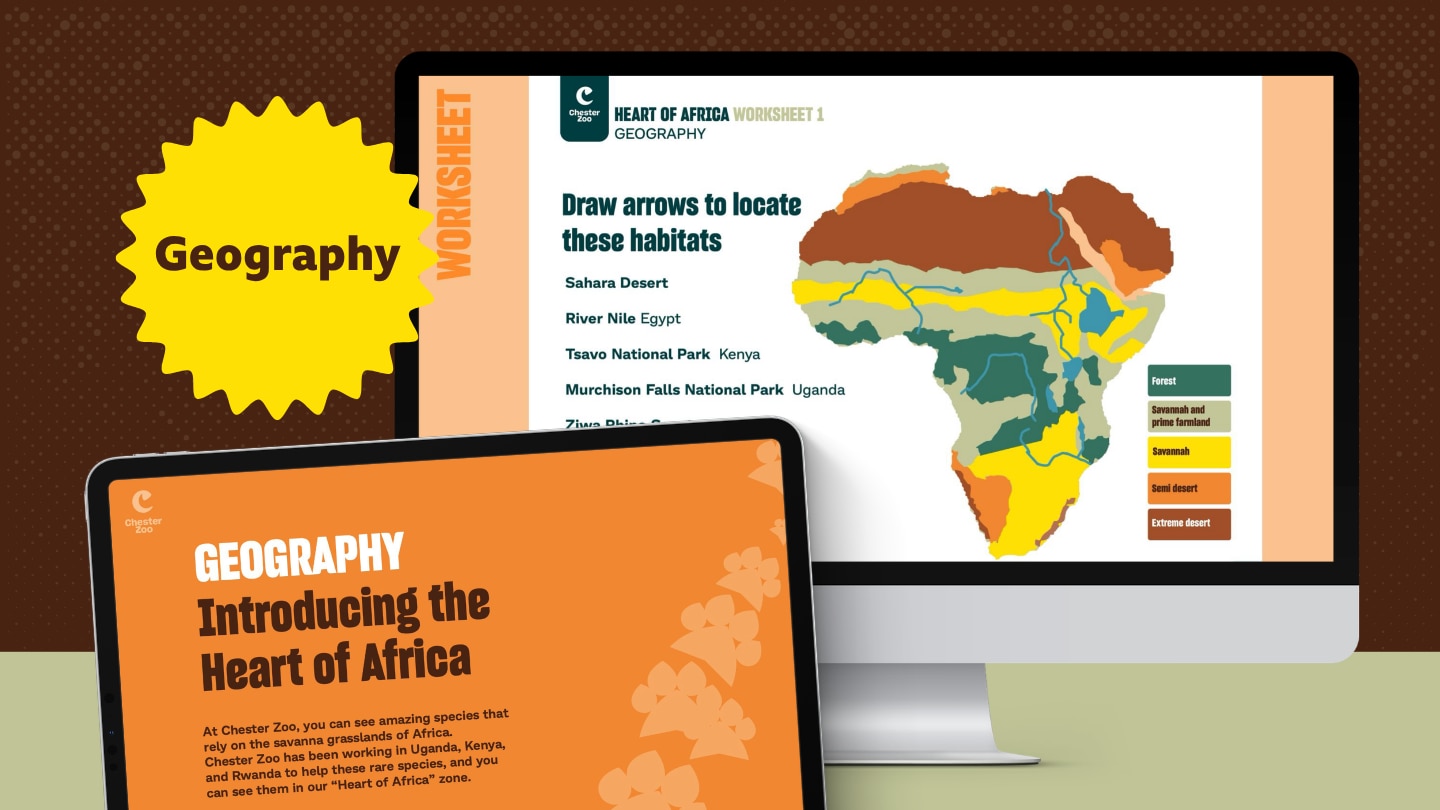
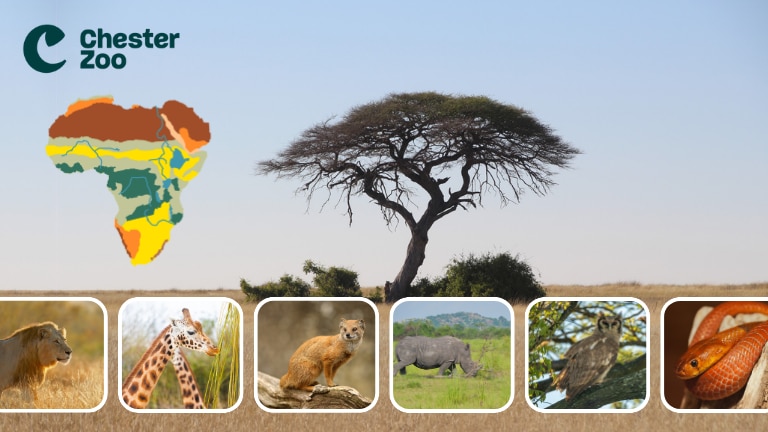
Part of the Heart of Africa collection!Discover the Heart of Africa! From sweeping savannas and deserts to forests, mountains, and mighty rivers, Africa is home to an incredible variety of landscapes — and an equally incredible variety of wildlife. Travel across the continent with Chester Zoo to explore some of its most fascinating habitats and discover how geography shapes the animals and people who live there.
Explore the countries and landscapes that make up Africa, identify different habitats, and see what makes each one unique. Then zoom in on the savanna to investigate its climate and discover what life is like in one of the world's most iconic ecosystems.
But the savanna is changing. Learn how shifts in climate are affecting this landscape and the wildlife that depends on it, and discover ways people can help protect these important habitats. Along the way, you'll build your geography skills while seeing Africa — and its wildlife — in a whole new way
Don't miss the geography worksheets that go with this lesson!

Chester Zoo is a leading conservation charity working to prevent extinction and create a future where people and nature can thrive. Learn more.
A cross-curricular journey through Africa for students ages 8–14
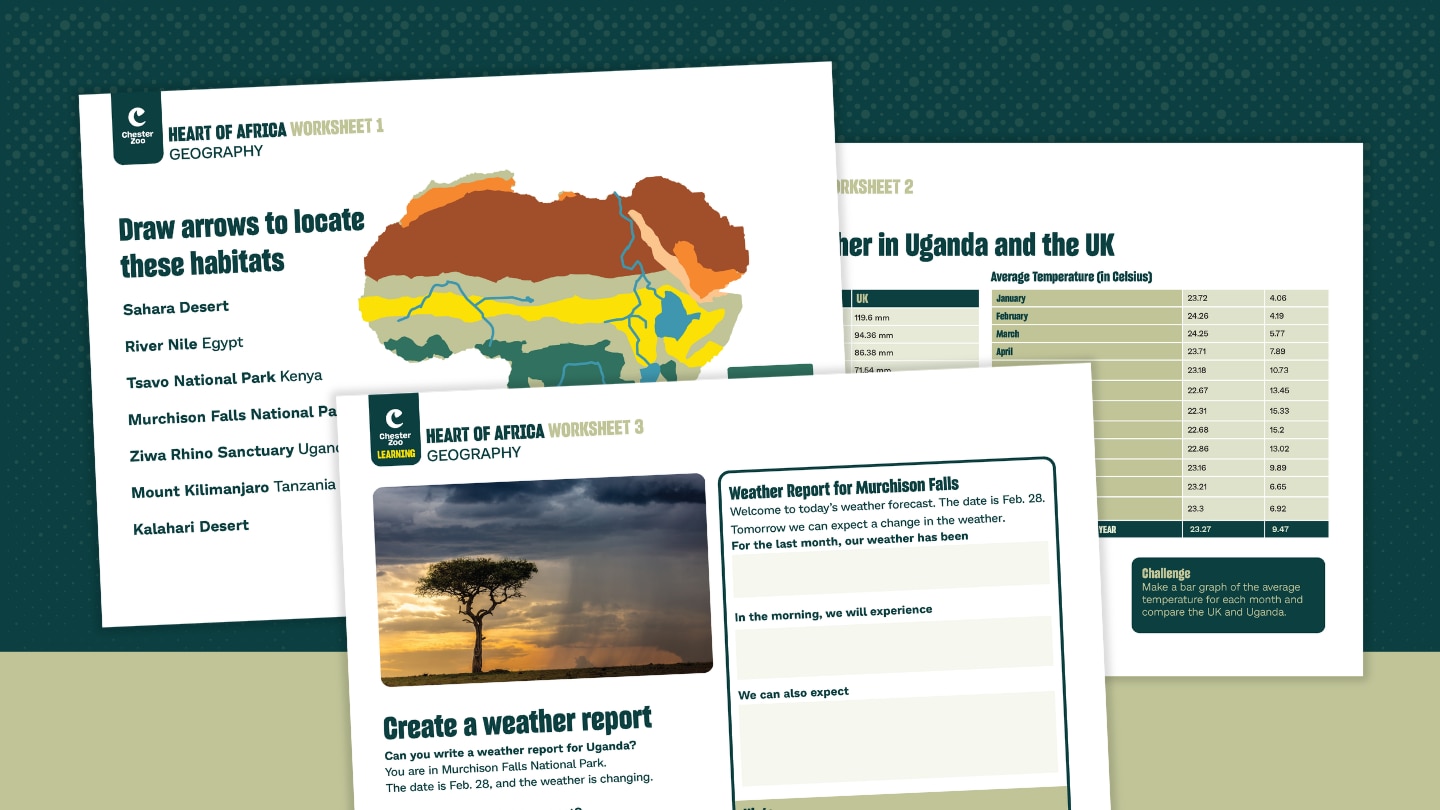
Did you know that Africa is the second largest continent in the world? Or that the equator runs right through the middle? Get an introduction to Africa through its amazing geography. With these worksheets, you'll:
- Identify different types of Afrrican habitats using map of the continent
- Compare the average rainfall and temperature in Uganda and the UK
- Write your own weather report for Murchison Falls in Uganda
These worksheets accompany a Chester Zoo interactive lesson on habitats and weather.
You Might Also Like
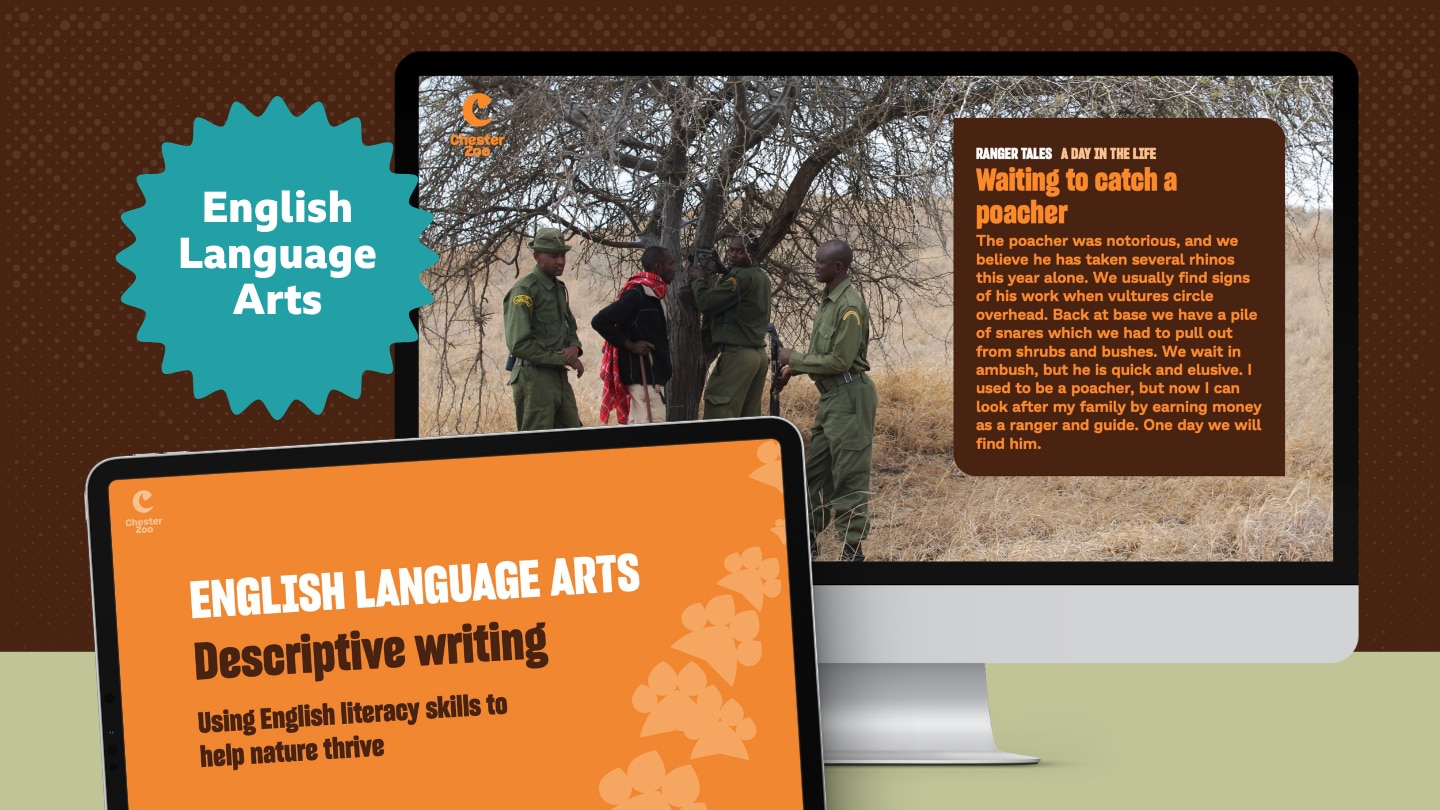
What can English language skills teach us about protecting wildlife? Head to the African savanna with Chester Zoo and discover the lives of the people working on the front lines of conservation. Start with a close-up look at a rhino, then explore real-life stories from rangers who protect animals and their habitats.
Read about the challenges rangers face and the incredible encounters they have, from tracking poachers and finding snares to caring for newborn animals and following the clues left behind by elephants. Along the way, you'll discover how vivid, descriptive language can help readers picture a place, understand an experience, and connect with the people and animals at the heart of a story.
Then it's your turn! Use the African savanna as inspiration to experiment with descriptive language, imagine what happens next, and create your own account of an encounter in the wild.
Don't miss the descriptive writing worksheets that go with this lesson!
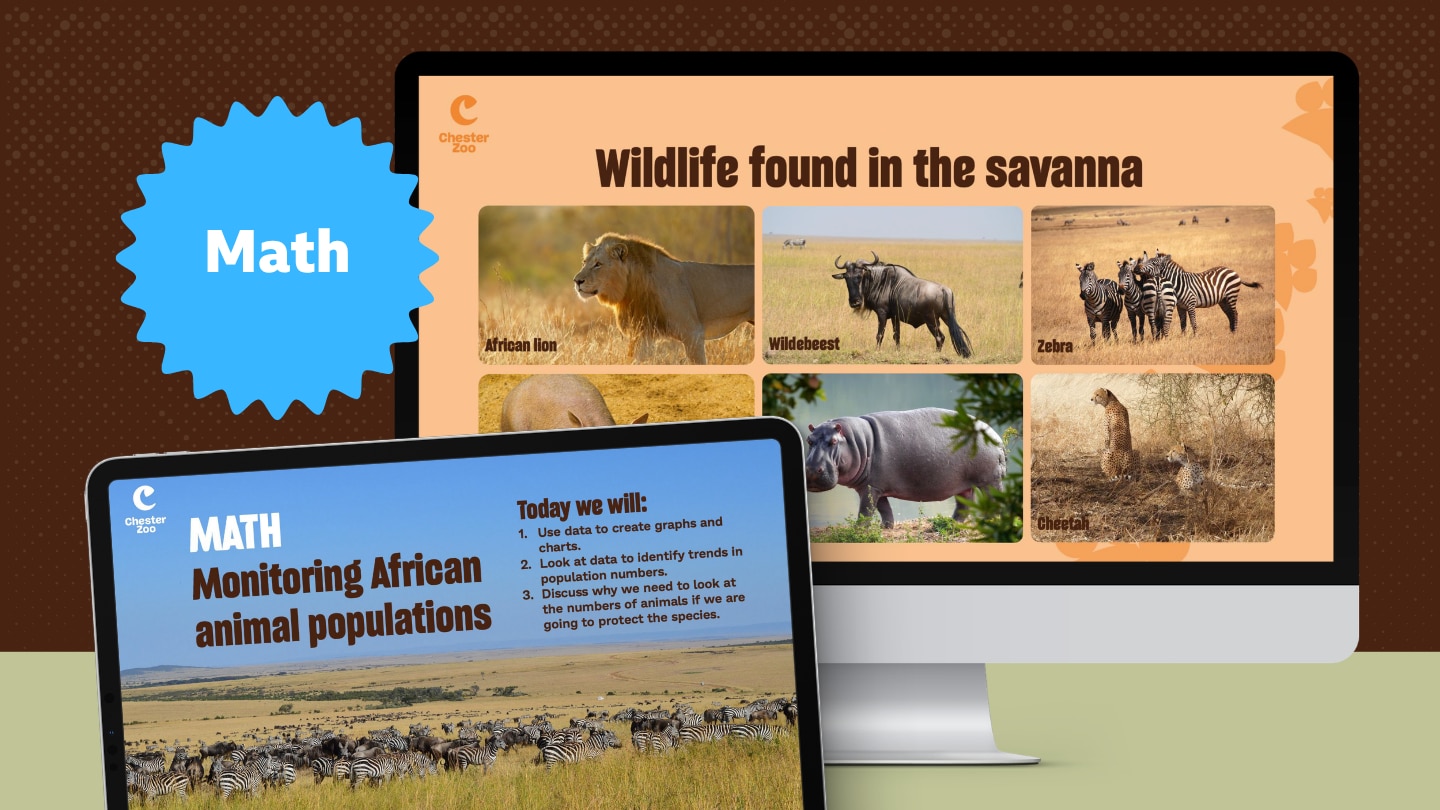
Math meets wildlife conservation! How do you know if a population of animals is growing or shrinking? And how can numbers help protect species in the wild? Join Chester Zoo to explore the African savanna and discover how conservationists use data to understand what is happening to wildlife populations.
Meet some of the animals that call the savanna home, then find out how Chester Zoo and its conservation partners monitor animals such as northern giraffes. You'll see how cameras, trackers, and other methods can help scientists gather information about animals in the wild — and why collecting accurate data matters.
Then become a conservation data detective! Work with real wildlife population data to spot trends and turn numbers into bar charts, line graphs, and pie charts. You'll investigate what different kinds of graphs can tell us and consider why scientists and conservation organizations need to communicate their findings clearly.
Finally, take what you've learned beyond the numbers. Use data to think about how people can make choices that help wildlife, collect information from your own class, and turn your findings into a message that could inspire others to take action.
Don't miss the graph worksheets that go with this lesson!
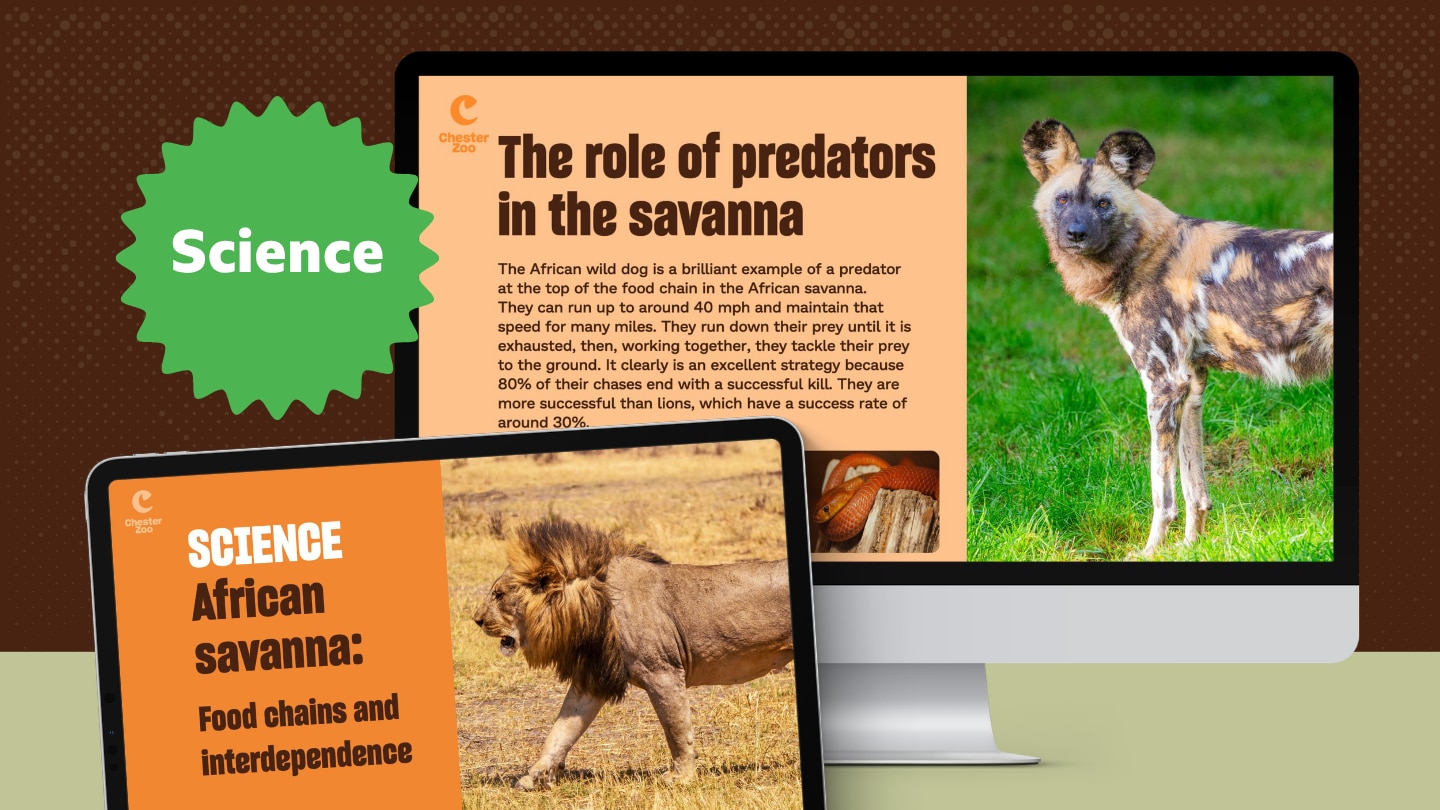
Life in the savanna is all connected! Step into the African savanna with Chester Zoo and discover what happens when plants, herbivores, and predators all depend on one another to survive. Meet some of the animals that make this ecosystem their home and uncover the important role each plays in keeping the food web in balance.
Start by following energy as it moves through a food chain — from plants to the animals that eat them and on to predators. Then investigate what happens when one part of the chain changes. What might happen to the rest of the ecosystem if an animal disappears? And why are predators so important to a healthy savanna?
Use real African wildlife to explore these connections, build your own food chains, and think like a zoologist as you investigate the interdependence of life on the savanna. By the end, you'll see that in a healthy ecosystem, every living thing has a role to play.
Don't miss the food chain cards that go with this lesson!
What can English language skills teach us about protecting wildlife? Head to the African savanna with Chester Zoo and discover the lives of the people working on the front lines of conservation. Start with a close-up look at a rhino, then explore real-life stories from rangers who protect animals and their habitats.
Read about the challenges rangers face and the incredible encounters they have, from tracking poachers and finding snares to caring for newborn animals and following the clues left behind by elephants. Along the way, you'll discover how vivid, descriptive language can help readers picture a place, understand an experience, and connect with the people and animals at the heart of a story.
Then it's your turn! Use the African savanna as inspiration to experiment with descriptive language, imagine what happens next, and create your own account of an encounter in the wild.
Don't miss the descriptive writing worksheets that go with this lesson!
Math meets wildlife conservation! How do you know if a population of animals is growing or shrinking? And how can numbers help protect species in the wild? Join Chester Zoo to explore the African savanna and discover how conservationists use data to understand what is happening to wildlife populations.
Meet some of the animals that call the savanna home, then find out how Chester Zoo and its conservation partners monitor animals such as northern giraffes. You'll see how cameras, trackers, and other methods can help scientists gather information about animals in the wild — and why collecting accurate data matters.
Then become a conservation data detective! Work with real wildlife population data to spot trends and turn numbers into bar charts, line graphs, and pie charts. You'll investigate what different kinds of graphs can tell us and consider why scientists and conservation organizations need to communicate their findings clearly.
Finally, take what you've learned beyond the numbers. Use data to think about how people can make choices that help wildlife, collect information from your own class, and turn your findings into a message that could inspire others to take action.
Don't miss the graph worksheets that go with this lesson!
Life in the savanna is all connected! Step into the African savanna with Chester Zoo and discover what happens when plants, herbivores, and predators all depend on one another to survive. Meet some of the animals that make this ecosystem their home and uncover the important role each plays in keeping the food web in balance.
Start by following energy as it moves through a food chain — from plants to the animals that eat them and on to predators. Then investigate what happens when one part of the chain changes. What might happen to the rest of the ecosystem if an animal disappears? And why are predators so important to a healthy savanna?
Use real African wildlife to explore these connections, build your own food chains, and think like a zoologist as you investigate the interdependence of life on the savanna. By the end, you'll see that in a healthy ecosystem, every living thing has a role to play.
Don't miss the food chain cards that go with this lesson!