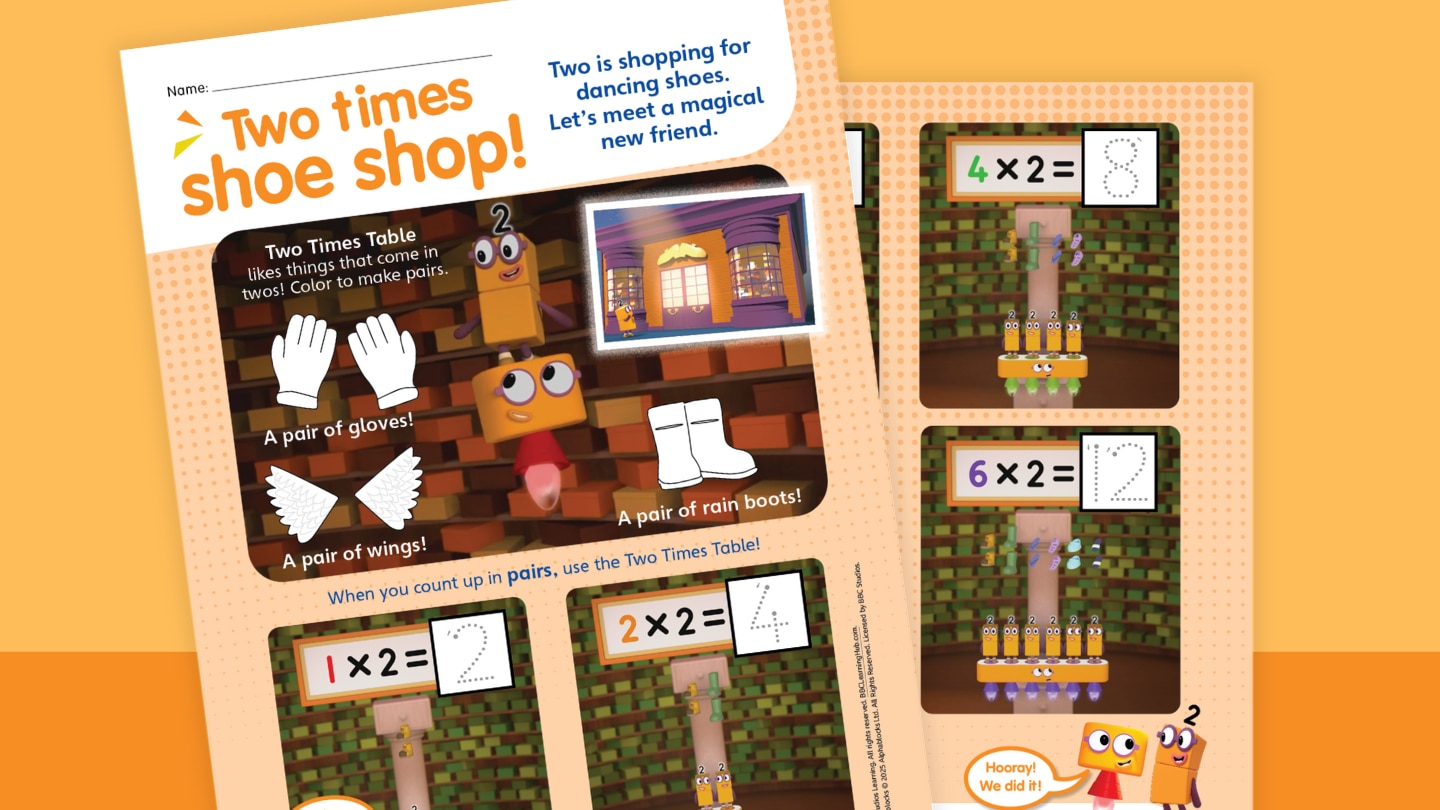
Two is shopping for dancing shoes. Let's meet a magical new friend. Two Times Table likes things that come in twos! Color to make pairs. When you count up in pairs, use the Two Times Table!
1 x 2 = 2
2 x 2 = 4
2 x 3 = 6
2 x 4 = 8
2 x 6 = 10
2 x 6 = 12
Watch full episodes of Numberblocks on their official YouTube channel!
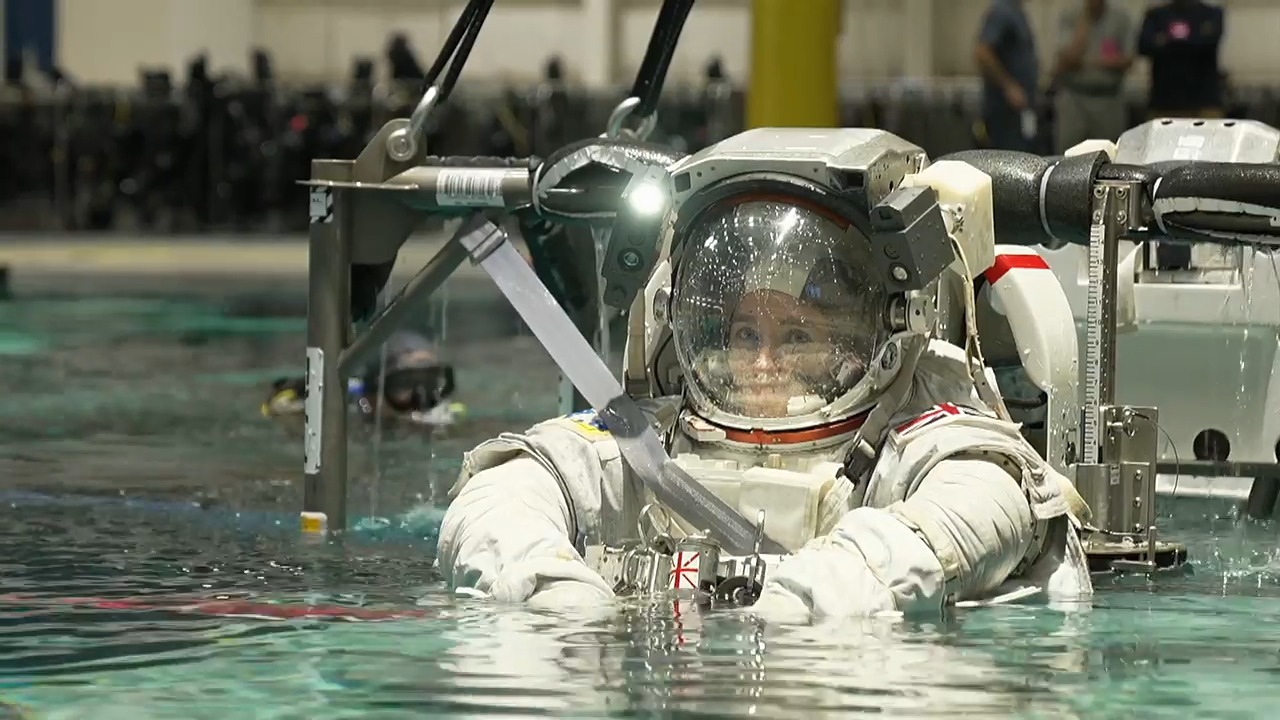
Being an astronaut is no joke — for your brain and your body to be prepared, you need to train, not unlike sports or school. Want to train for a soccer match? You may need to go for runs or lift weights. Need to prepare for a math test? You may need to repeat your times tables. Going into space soon? You may need to put on a space suit and get strapped into a full-sized replica of the International Space Station, then submerged in a 12-meter (40-foot!) deep pool for six hours. At least, that’s what astronaut Rosemary Coogan did to make sure she was ready for her spacewalk.
Coogan was chosen from 22,000 applicants to become a European Space Agency astronaut and may be the first Englishwoman to set foot on the moon.
Space preparation is daunting, but she had teams of supporters like divers and control room workers to make sure she was safe. The spacewalk test is meant to make sure that Rosemary could survive the conditions off of earth, even when things don’t go according to plan.
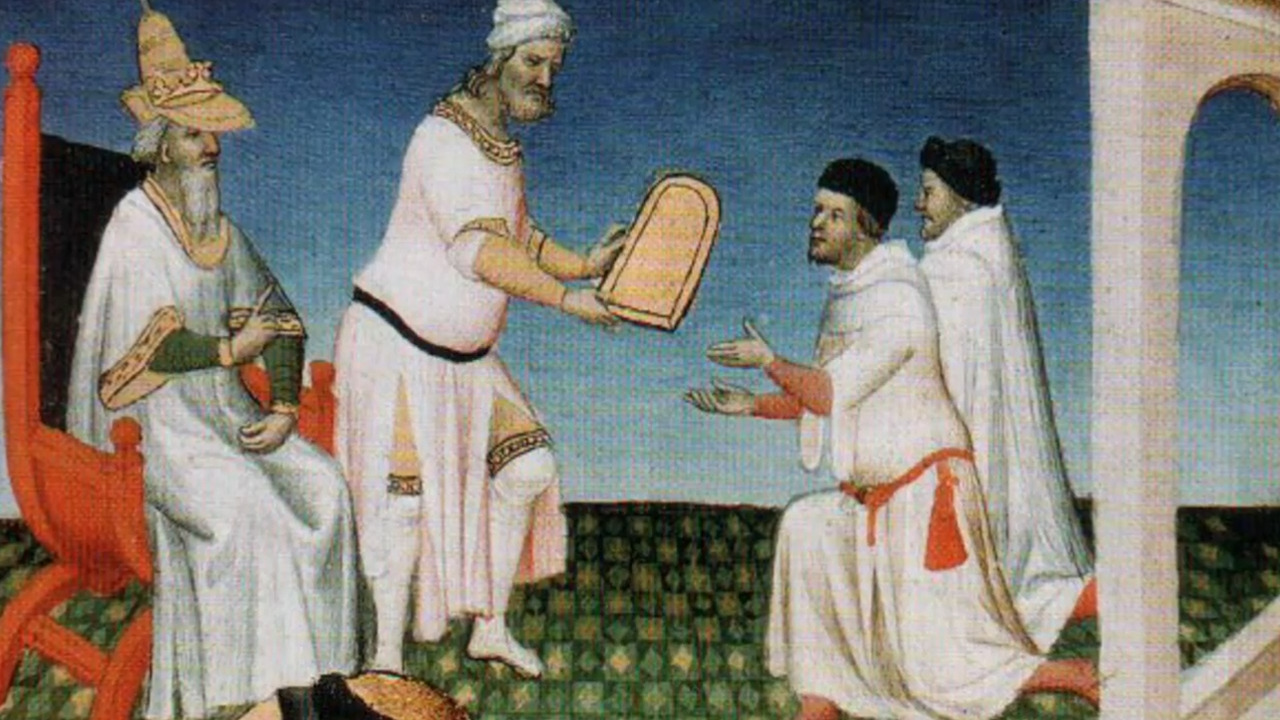
In Marco Polo, host Joanna Lumley introduces the remarkable journey of Marco Polo, who traveled for 17 years across Asia. Marco, along with his father and uncle, were trusted envoys of the 13th-Century Mongolian emperor Kublai Khan. They were given a tablet guaranteeing their safe passage through Khan's empire. During this time, spices were highly prized, making the Silk Road an essential trade route for connecting Asia to Europe. This video is excerpted from BBC’s Joanna Lumley’s Silk Road Adventure, a documentary series uncovering the rich history and cultural treasures of the Silk Road.
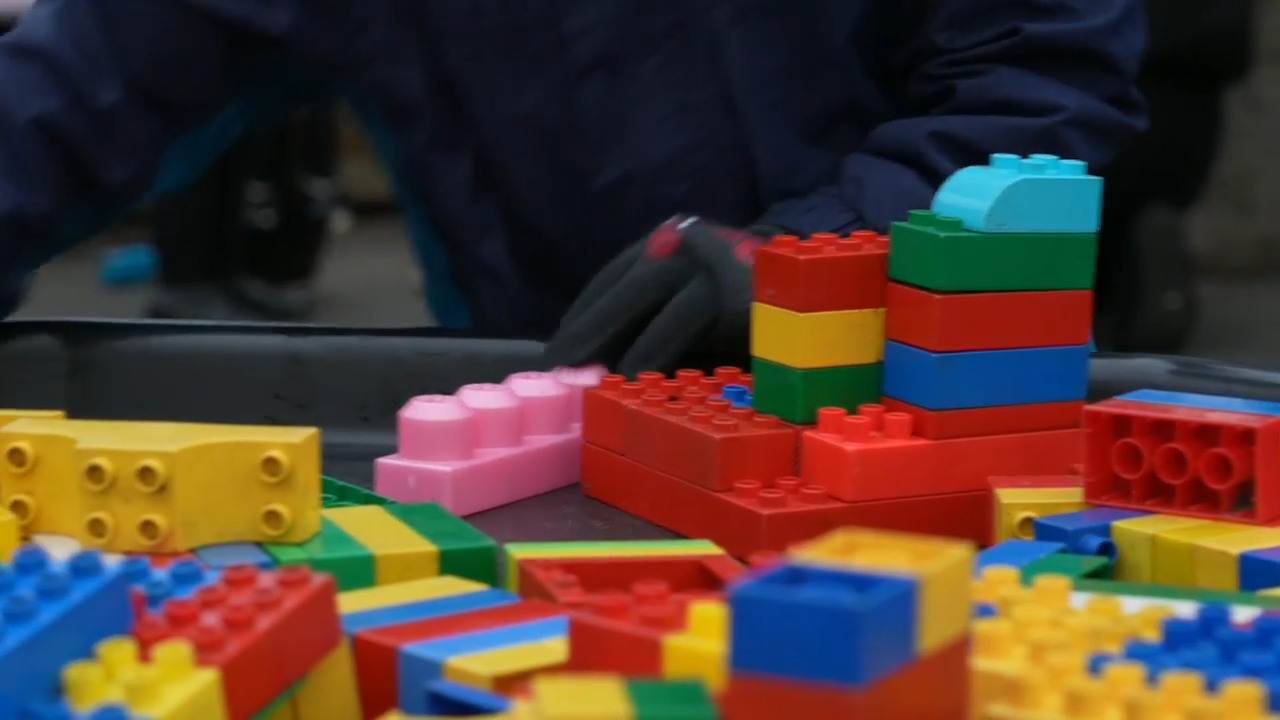
Kids today can swipe before they can tie their shoes — but some teachers say all that screen time may be changing the way young children learn, talk, and handle emotions. One preschool is pushing back by focusing on hands-on play, conversation, creativity, and movement instead of tablets and videos. Teachers say they’re seeing more kids struggle to explain what they want, calm themselves down, or interact socially after spending hours watching screens instead of experiencing the real world firsthand. Experts recommend no screens at all for children under 2, and no more than 30 minutes a day for ages 2–5.
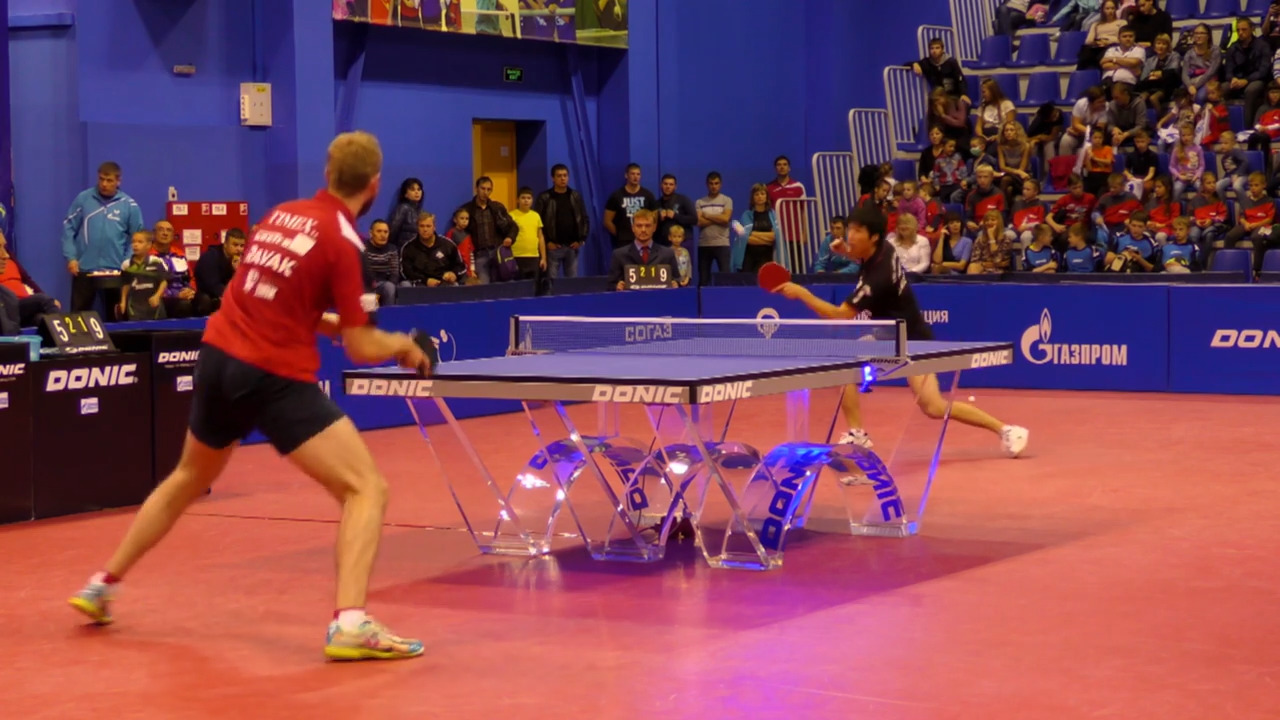
In How Playing Ping Pong Boosts Your Brain Power, host Harith Iskander shows how this fast-paced game gives your brain a major workout. From making quick decisions to coordinating hand movements, table tennis engages different parts of the brain, including the motor cortex, cerebellum, and prefrontal cortex. As players react to the ball, plan their moves, and remember their opponent’s patterns, the hippocampus — the memory center of the brain — gets stronger. This video is excerpted from BBC’s Got Science?, a science magazine series that explores and explains science in everyday life.
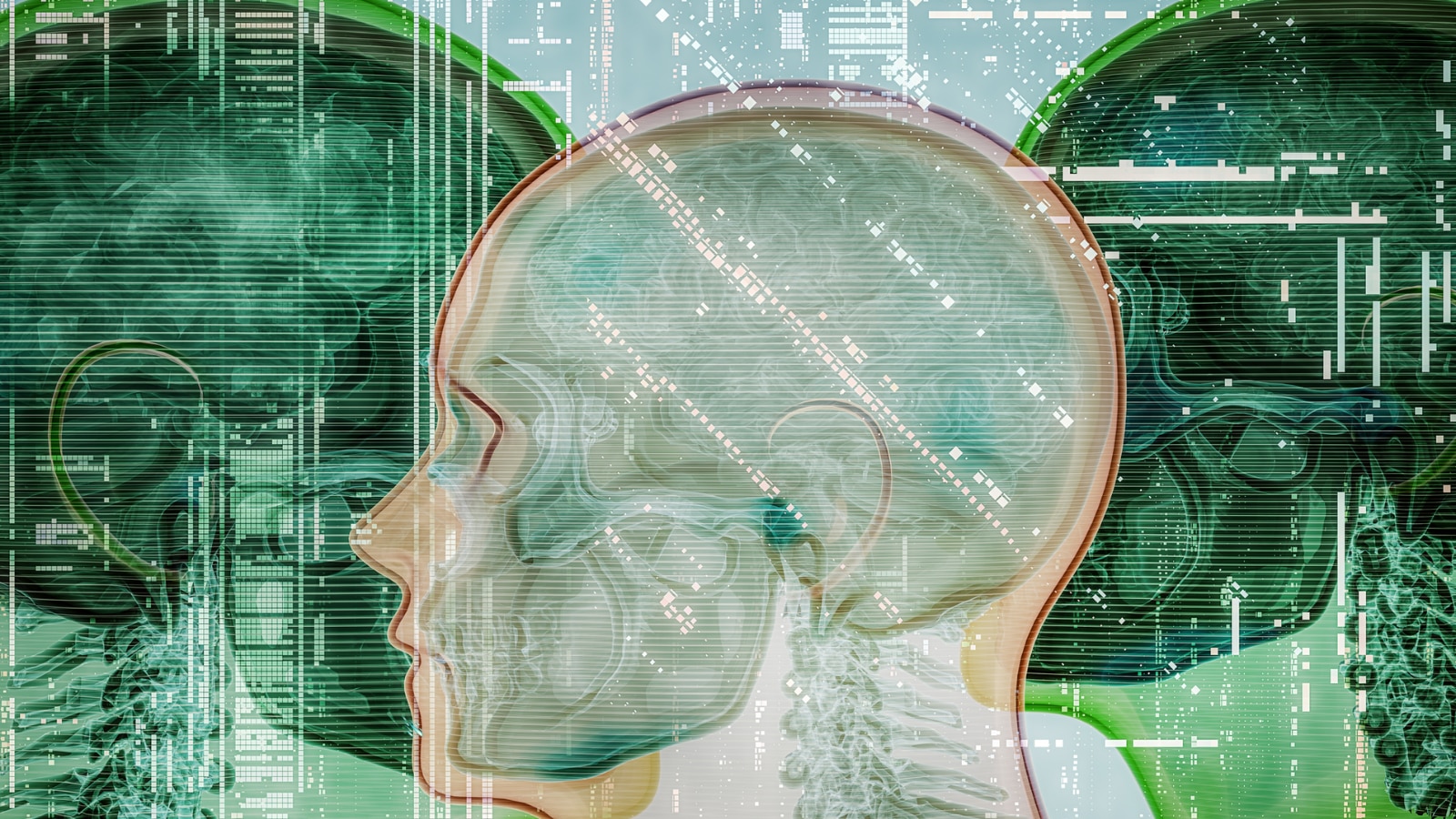
This video playlist brings together 10 fascinating clips from the BBC’s Got Science? series, where everyday questions lead to surprising scientific discoveries. Students explore what’s really happening in the body and brain — from what your brain is doing during sleep paralysis to what it truly means to be “left-brained” or “right-brained.” They’ll investigate what happens when the body becomes dehydrated, how cold temperatures and high altitudes affect how we function, and the unexpected ways our bodies trick us every single day. Packed with “What! Really?” moments, this weird-but-wonderful playlist helps learners connect real science to daily life in unforgettable ways. Get ready to see the familiar become fascinating.
Two is shopping for dancing shoes. Let's meet a magical new friend. Two Times Table likes things that come in twos! Color to make pairs. When you count up in pairs, use the Two Times Table!
1 x 2 = 2
2 x 2 = 4
2 x 3 = 6
2 x 4 = 8
2 x 6 = 10
2 x 6 = 12
Watch full episodes of Numberblocks on their official YouTube channel!
Being an astronaut is no joke — for your brain and your body to be prepared, you need to train, not unlike sports or school. Want to train for a soccer match? You may need to go for runs or lift weights. Need to prepare for a math test? You may need to repeat your times tables. Going into space soon? You may need to put on a space suit and get strapped into a full-sized replica of the International Space Station, then submerged in a 12-meter (40-foot!) deep pool for six hours. At least, that’s what astronaut Rosemary Coogan did to make sure she was ready for her spacewalk.
Coogan was chosen from 22,000 applicants to become a European Space Agency astronaut and may be the first Englishwoman to set foot on the moon.
Space preparation is daunting, but she had teams of supporters like divers and control room workers to make sure she was safe. The spacewalk test is meant to make sure that Rosemary could survive the conditions off of earth, even when things don’t go according to plan.
In Marco Polo, host Joanna Lumley introduces the remarkable journey of Marco Polo, who traveled for 17 years across Asia. Marco, along with his father and uncle, were trusted envoys of the 13th-Century Mongolian emperor Kublai Khan. They were given a tablet guaranteeing their safe passage through Khan's empire. During this time, spices were highly prized, making the Silk Road an essential trade route for connecting Asia to Europe. This video is excerpted from BBC’s Joanna Lumley’s Silk Road Adventure, a documentary series uncovering the rich history and cultural treasures of the Silk Road.
Kids today can swipe before they can tie their shoes — but some teachers say all that screen time may be changing the way young children learn, talk, and handle emotions. One preschool is pushing back by focusing on hands-on play, conversation, creativity, and movement instead of tablets and videos. Teachers say they’re seeing more kids struggle to explain what they want, calm themselves down, or interact socially after spending hours watching screens instead of experiencing the real world firsthand. Experts recommend no screens at all for children under 2, and no more than 30 minutes a day for ages 2–5.
In How Playing Ping Pong Boosts Your Brain Power, host Harith Iskander shows how this fast-paced game gives your brain a major workout. From making quick decisions to coordinating hand movements, table tennis engages different parts of the brain, including the motor cortex, cerebellum, and prefrontal cortex. As players react to the ball, plan their moves, and remember their opponent’s patterns, the hippocampus — the memory center of the brain — gets stronger. This video is excerpted from BBC’s Got Science?, a science magazine series that explores and explains science in everyday life.
This video playlist brings together 10 fascinating clips from the BBC’s Got Science? series, where everyday questions lead to surprising scientific discoveries. Students explore what’s really happening in the body and brain — from what your brain is doing during sleep paralysis to what it truly means to be “left-brained” or “right-brained.” They’ll investigate what happens when the body becomes dehydrated, how cold temperatures and high altitudes affect how we function, and the unexpected ways our bodies trick us every single day. Packed with “What! Really?” moments, this weird-but-wonderful playlist helps learners connect real science to daily life in unforgettable ways. Get ready to see the familiar become fascinating.