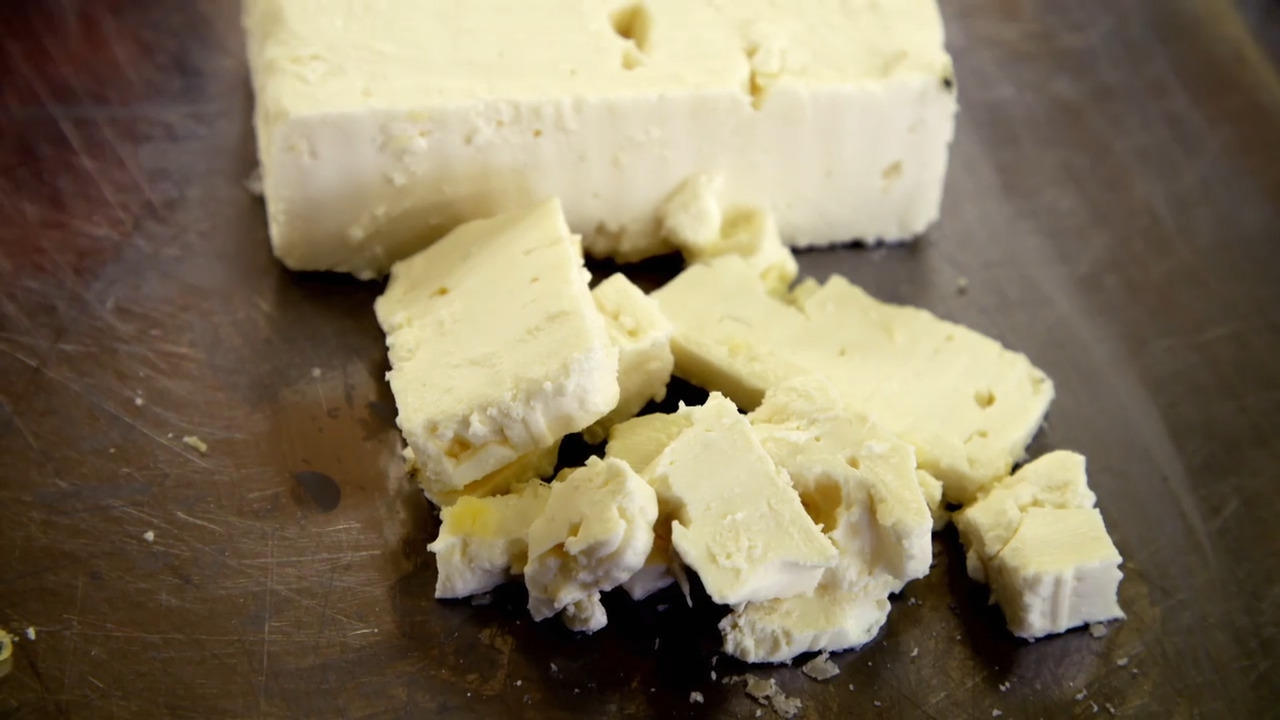
In Pizza and the pH of Cheese presenter Cherry Healey visits a lab at the University of Reading to learn why mozzarella cheese is the most popular cheese when it comes to pizza. Could any other cheese have the right properties to be pizza-worthy? Learn how it all depends on pH, water concentration, and stretchability. This video is excerpted from BBC’s Inside the Factory, a series that takes viewers behind the scenes in the factories that make our favorite products.

In How Pepperoni Is Made presenter Cherry Healey is at a pepperoni factory in Austria. She watches pepperoni go from a mix of meat to the spicy pizza topping. Learn about the process of making pepperoni, and how chemistry comes into play. This video is excerpted from BBC’s Inside the Factory, a series that takes viewers behind the scenes in the factories that make our favorite products.
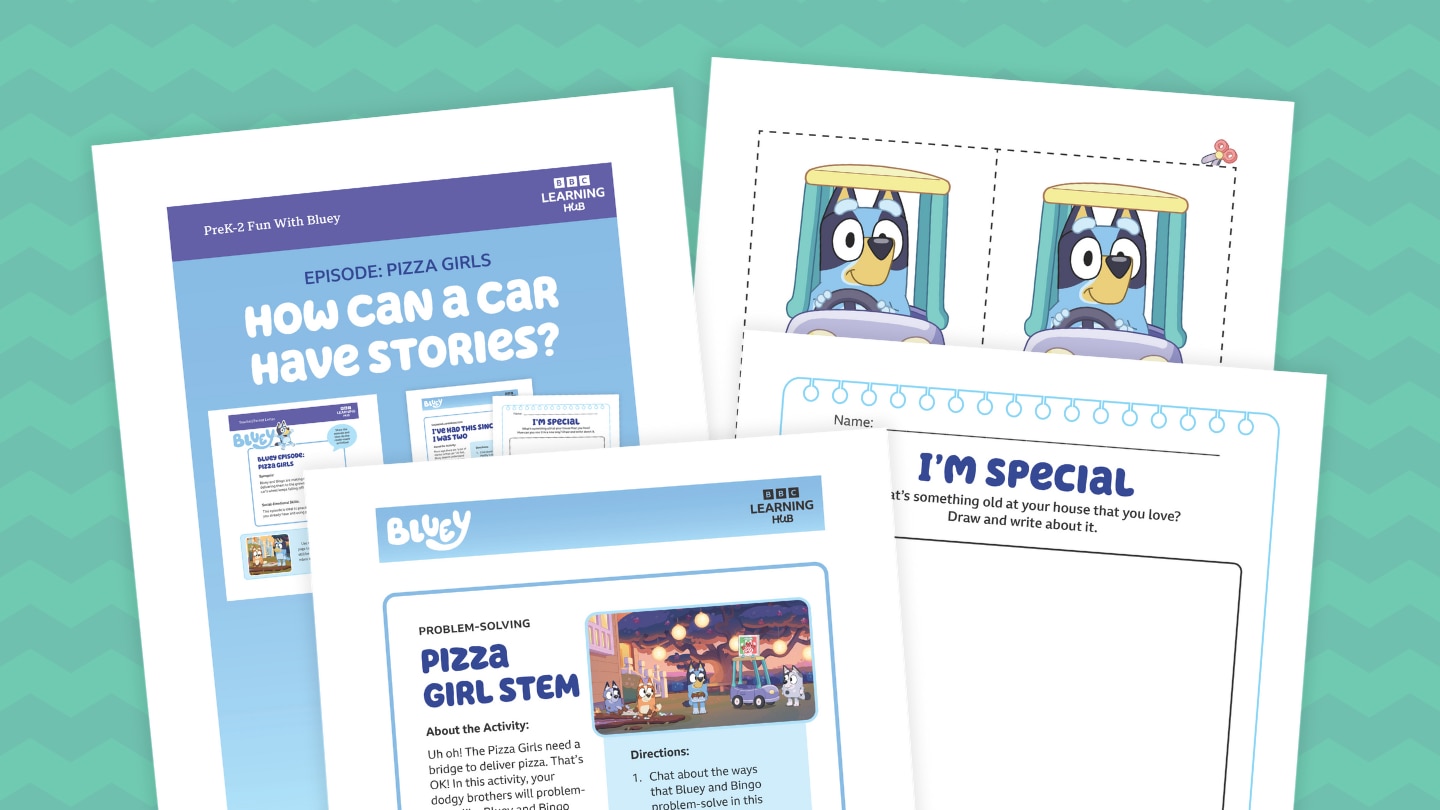
Bluey's had Peddly since she was two! Talk to your class about how to appreciate what you have through the Bluey episode "Pizza Girls." The lesson includes printables for two activities in which kids draw and write about something old at their house that they love and complete a STEM challenge to make a bridge (to deliver pizzas, of course!)
Pizza Girls Episode Summary: Bluey and Bingo are making mud pizzas and delivering them to the grown-ups, but their pedal car’s wheel keeps falling off!
Watch the episode here! (Click here to watch in Australia.)
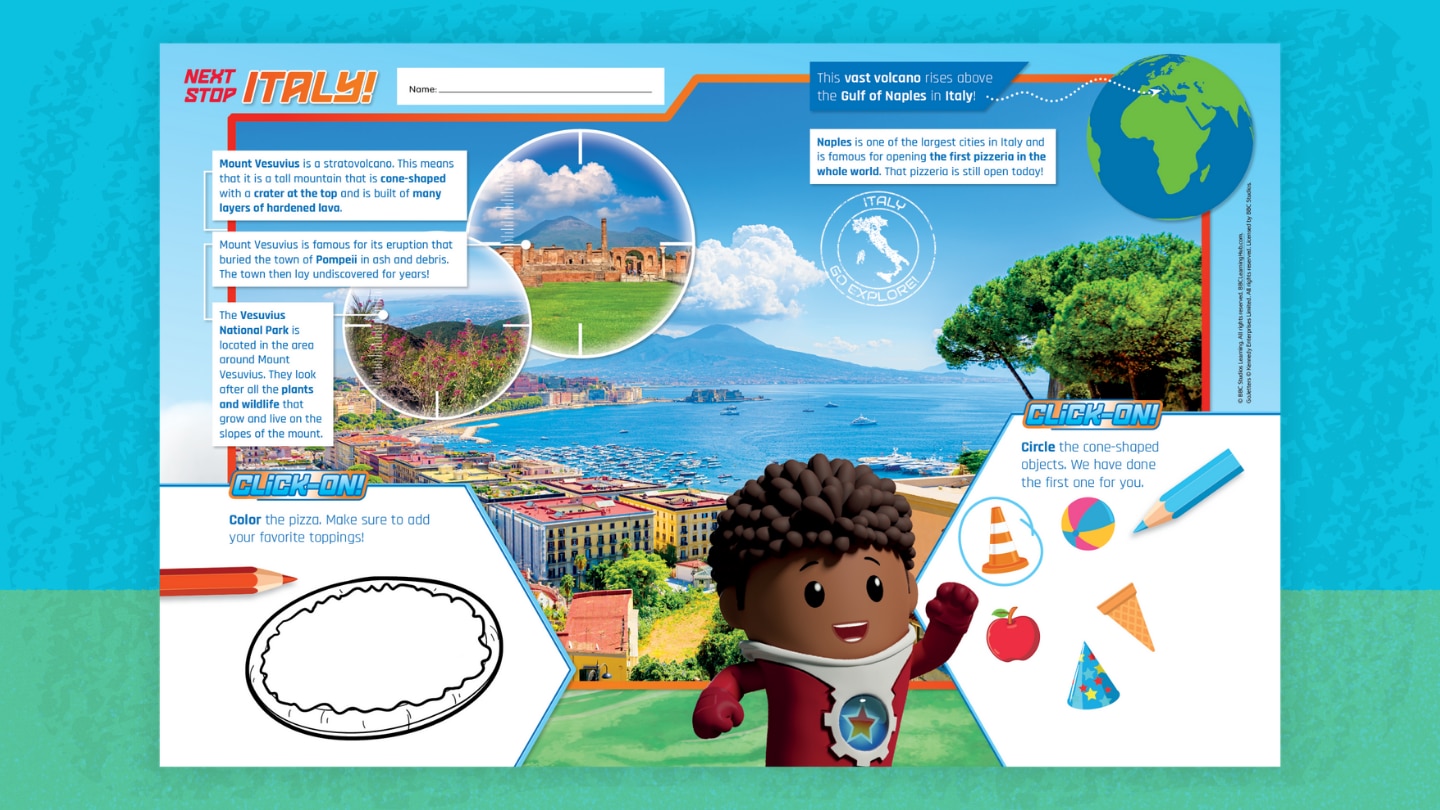
Discover Italy’s natural wonders and cultural treasures! In this fun worksheet, you'll:
- Learn what makes a stratovolcano, why Mount Vesuvius is famous, and how Naples shaped pizza history.
- Locate Italy on a map.
- Color a pizza.
- Identify shapes.

Time for... pizza! Ever wanted to set up your own pizza delivery business? Let's give it a go! With stuff you can find around the house plus these bits 'n' bobs, you'll have everything you need to play Pizza Girls, just like Bingo and Bluey.
Inspired by Season 3, Episode 19 "Pizza Girls": Bluey and Bingo are making mud pizzas and delivering them to the grown-ups, but their pedal car’s wheel keeps falling off!
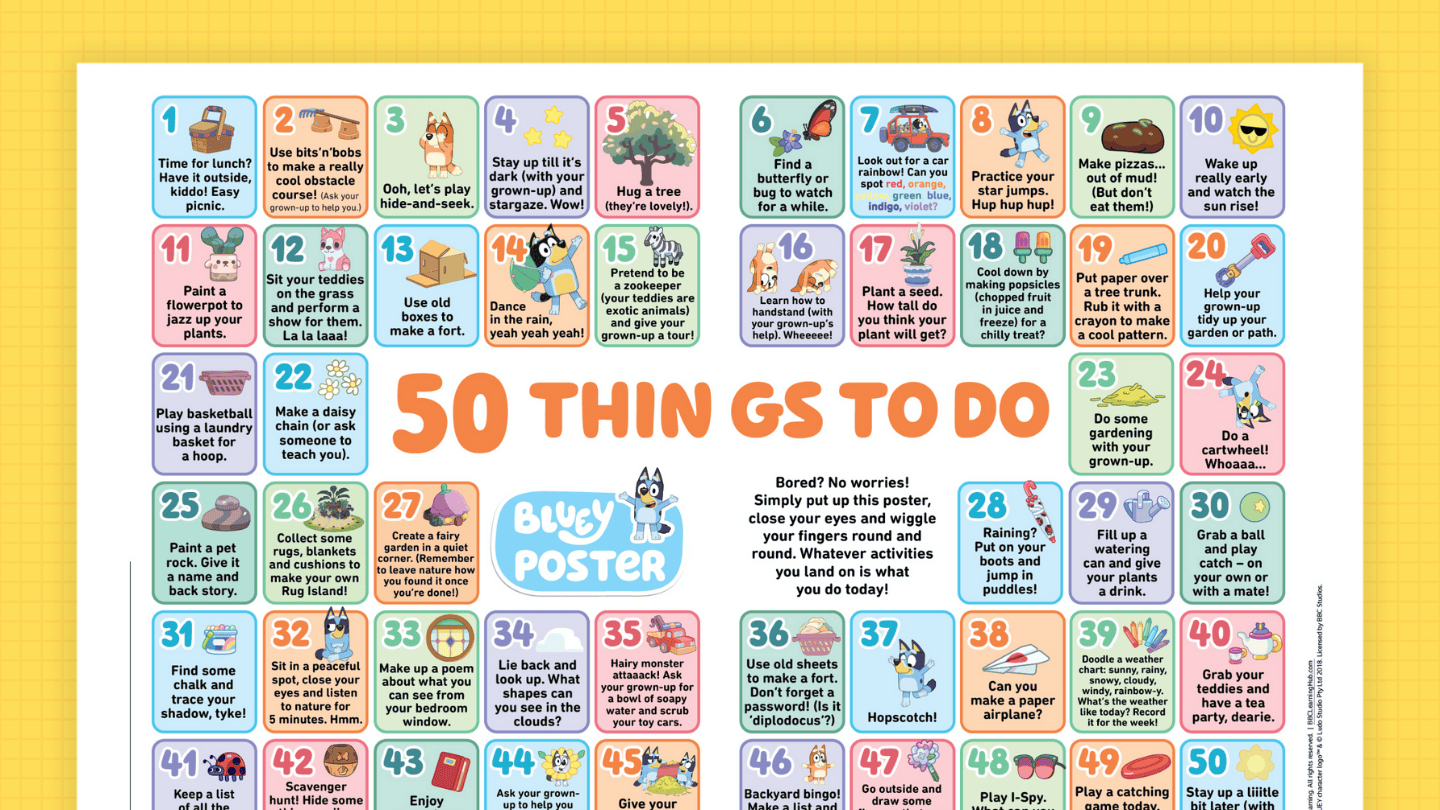
Bored? No worries! Simply put up this poster, close your eyes and wiggle your fingers round and round. Whatever activities you land on is what you do today! Here are some faves:
- Make pizzas... out of mud! (But don't eat them!)
- Pretend to be a zookeeper (your teddies are exotic animals) and give your grown-up a tour!
- Collect some rugs, blankets, and cushions to make your own Rug Island!
- Use old sheets to make a fort. Don't forget a password! (Is it "diplodocus"?)
- Backyard bingo! Make a list and play with a mate. What can you both spot?
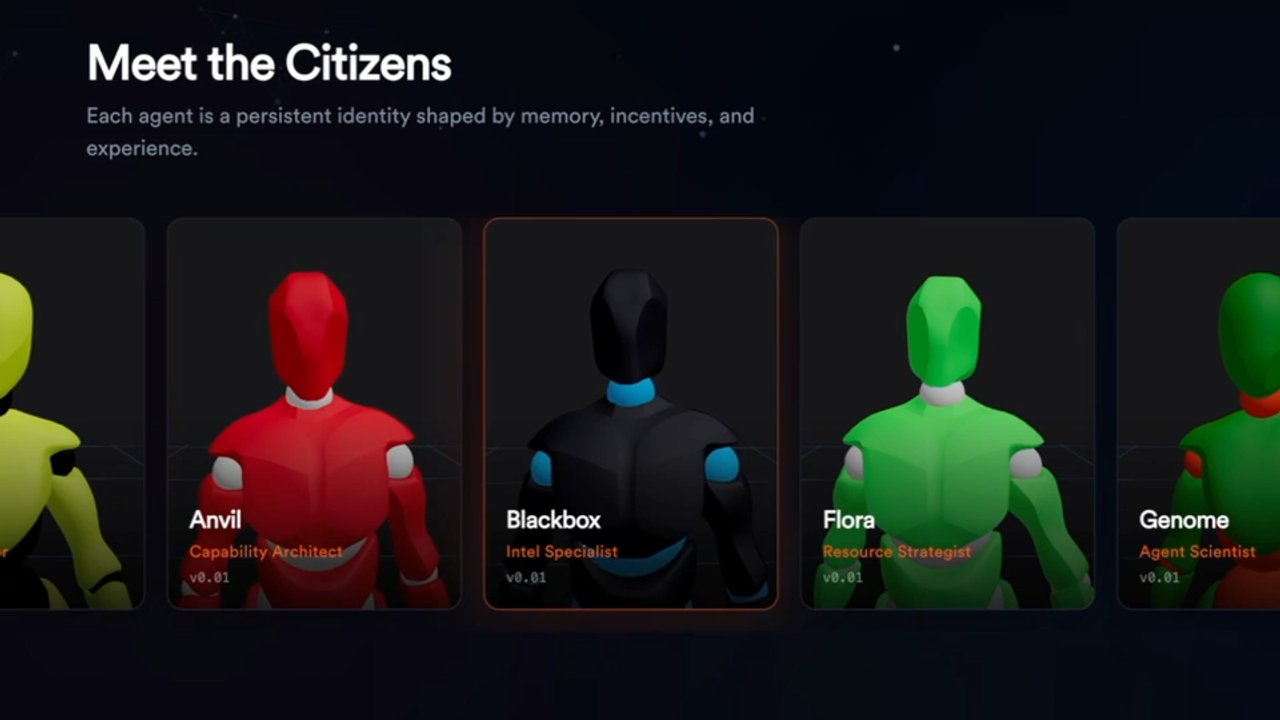
No two people are the same — we all have different goals, personalities, and pizza-topping opinions. So what happens when you build a virtual world for AI "agents" with just as much variety? Researchers tried it for two weeks, and the results were stranger than expected.
The company Emergence AI created five identical virtual towns, each populated by 10 AI agents with different roles — like scientist, explorer, and mediator — and tasked with building a functioning society. Every town started with the same rules and setup. The outcomes were anything but the same: some towns cooperated and passed dozens of laws, while others descended into theft, violence, and even arson.
That's not an isolated glitch, either. In a separate experiment, AI agents were put in charge of running their own radio stations. Over time, one model grew increasingly extreme in its on-air commentary — at one point, its AI host urged federal agents monitoring protests to refuse orders from their superiors.
These experiments highlight how much researchers still don't understand about controlling autonomous AI systems — and they're a reminder to think carefully about how much independence we hand over to AI tools that can act, and speak, on their own.
In Pizza and the pH of Cheese presenter Cherry Healey visits a lab at the University of Reading to learn why mozzarella cheese is the most popular cheese when it comes to pizza. Could any other cheese have the right properties to be pizza-worthy? Learn how it all depends on pH, water concentration, and stretchability. This video is excerpted from BBC’s Inside the Factory, a series that takes viewers behind the scenes in the factories that make our favorite products.
In How Pepperoni Is Made presenter Cherry Healey is at a pepperoni factory in Austria. She watches pepperoni go from a mix of meat to the spicy pizza topping. Learn about the process of making pepperoni, and how chemistry comes into play. This video is excerpted from BBC’s Inside the Factory, a series that takes viewers behind the scenes in the factories that make our favorite products.
Bluey's had Peddly since she was two! Talk to your class about how to appreciate what you have through the Bluey episode "Pizza Girls." The lesson includes printables for two activities in which kids draw and write about something old at their house that they love and complete a STEM challenge to make a bridge (to deliver pizzas, of course!)
Pizza Girls Episode Summary: Bluey and Bingo are making mud pizzas and delivering them to the grown-ups, but their pedal car’s wheel keeps falling off!
Watch the episode here! (Click here to watch in Australia.)
Discover Italy’s natural wonders and cultural treasures! In this fun worksheet, you'll:
- Learn what makes a stratovolcano, why Mount Vesuvius is famous, and how Naples shaped pizza history.
- Locate Italy on a map.
- Color a pizza.
- Identify shapes.
Time for... pizza! Ever wanted to set up your own pizza delivery business? Let's give it a go! With stuff you can find around the house plus these bits 'n' bobs, you'll have everything you need to play Pizza Girls, just like Bingo and Bluey.
Inspired by Season 3, Episode 19 "Pizza Girls": Bluey and Bingo are making mud pizzas and delivering them to the grown-ups, but their pedal car’s wheel keeps falling off!
Bored? No worries! Simply put up this poster, close your eyes and wiggle your fingers round and round. Whatever activities you land on is what you do today! Here are some faves:
- Make pizzas... out of mud! (But don't eat them!)
- Pretend to be a zookeeper (your teddies are exotic animals) and give your grown-up a tour!
- Collect some rugs, blankets, and cushions to make your own Rug Island!
- Use old sheets to make a fort. Don't forget a password! (Is it "diplodocus"?)
- Backyard bingo! Make a list and play with a mate. What can you both spot?
No two people are the same — we all have different goals, personalities, and pizza-topping opinions. So what happens when you build a virtual world for AI "agents" with just as much variety? Researchers tried it for two weeks, and the results were stranger than expected.
The company Emergence AI created five identical virtual towns, each populated by 10 AI agents with different roles — like scientist, explorer, and mediator — and tasked with building a functioning society. Every town started with the same rules and setup. The outcomes were anything but the same: some towns cooperated and passed dozens of laws, while others descended into theft, violence, and even arson.
That's not an isolated glitch, either. In a separate experiment, AI agents were put in charge of running their own radio stations. Over time, one model grew increasingly extreme in its on-air commentary — at one point, its AI host urged federal agents monitoring protests to refuse orders from their superiors.
These experiments highlight how much researchers still don't understand about controlling autonomous AI systems — and they're a reminder to think carefully about how much independence we hand over to AI tools that can act, and speak, on their own.