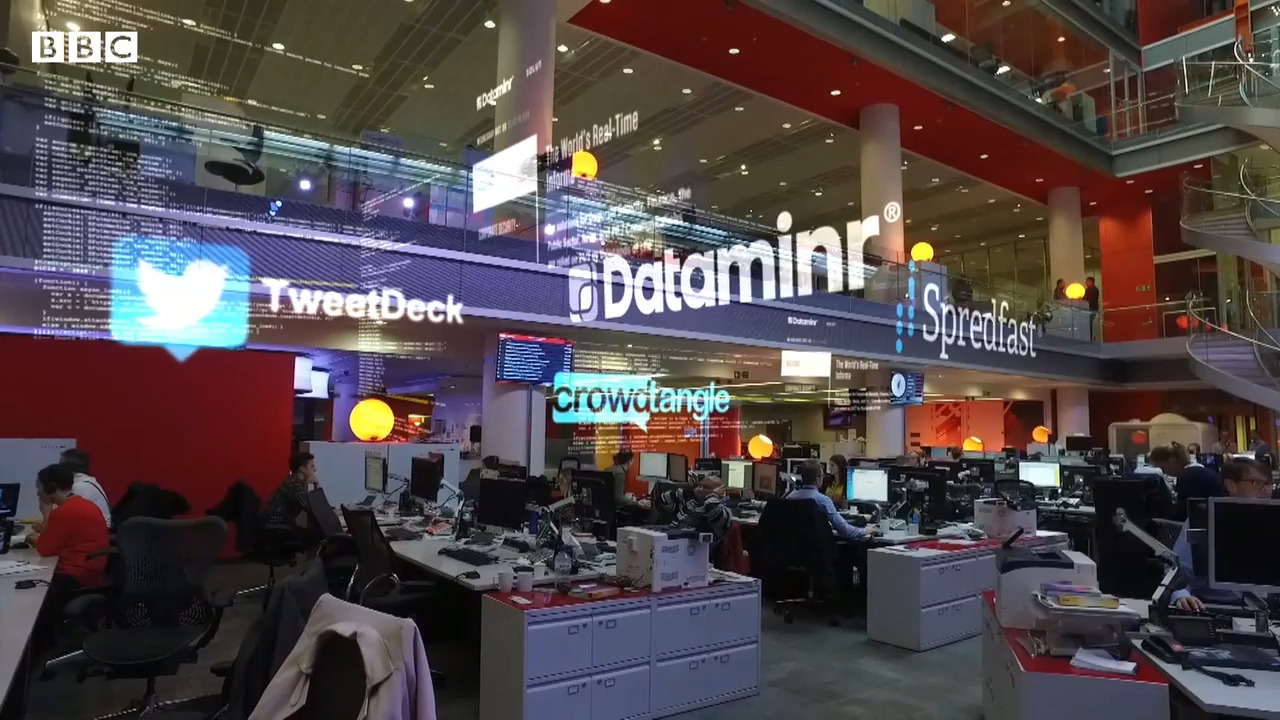
In How Do Journalists Find the News?, host Radzi Chinyanganya explores how journalists find and gather their news, ask the right questions, and let their curiosity drive them. Today, journalists still look to trusted sources, correspondents, and news agencies, but they also use online tools like social media to discover what the public is talking about. Then they send teams to the scene to talk to eyewitnesses, emergency services, and to gather statements. This video is excerpted from BBC’s My World, a program created for teenagers eager to learn more about the important stories shaping our world.

News is happening all the time, everywhere. So how do journalists choose what to share? Introduce your students to the processes involved in gathering the news they consume every day. In this lesson, they’ll learn the importance of curiosity in shaping news.
Forests store huge amounts of carbon, likely hundreds of billions of tons. One metric ton is about 2,200 pounds, so hundreds of billions of tons is... let's just say it's a lot. Because trees pull carbon dioxide out of the air and lock it away, forests play a major role in controlling Earth's climate.
To figure out how much carbon a forest holds, scientists can measure individual trees, like how wide the trunk is and how tall the tree grows. But nobody can take a tape measure to millions of square miles of forest, and "a whole bunch" isn't a scientific measurement.
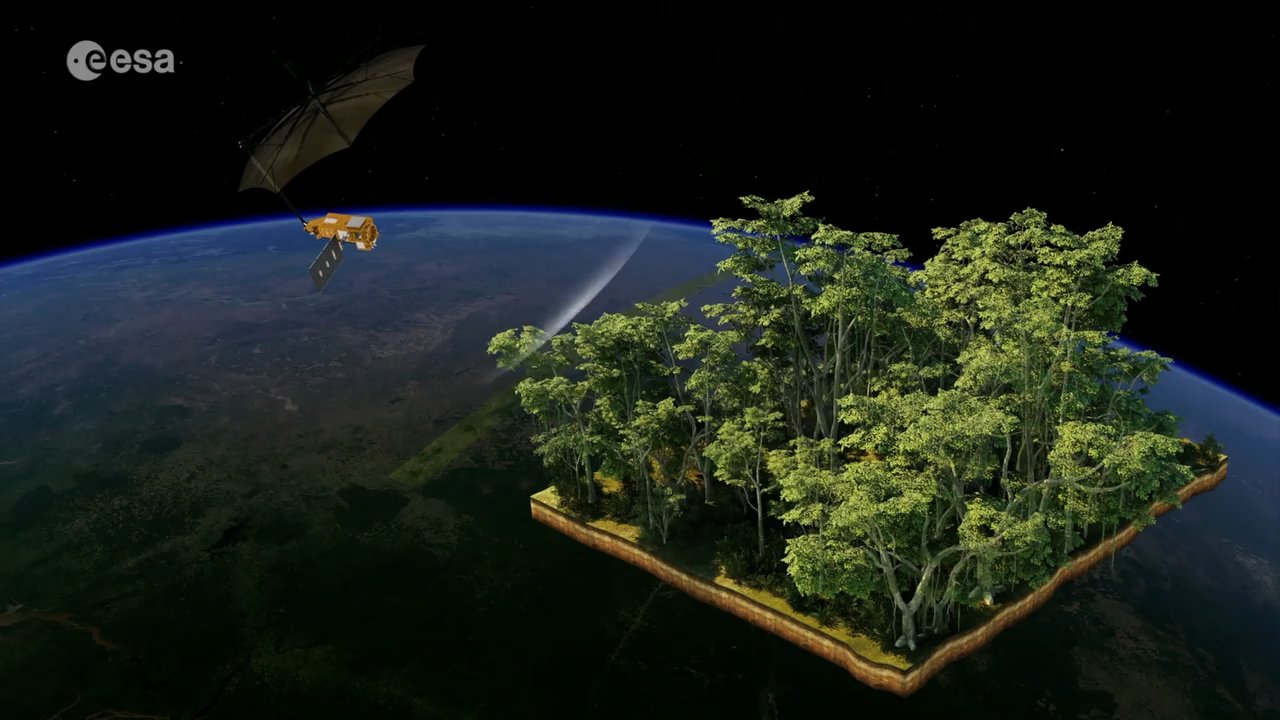
That's where new technology comes in. In 2025, the European Space Agency, which runs space missions for a group of European countries, launched a satellite called Biomass. It uses radar with extra-long wavelengths. The longer the wavelength, the more easily radar can pass through leaves and small branches and pick up bigger things, like trunks and large branches, which hold most of a tree's carbon.
Most earlier satellites, like many launched by NASA, the U.S. space agency, are optical. They work like cameras, capturing sunlight reflected off the treetops. That's useful for seeing where forests are, but it mostly shows the top layer. Radar can reveal what's underneath. It can help scientists estimate how much wood a forest holds, spot deforestation, and study flooded forests that are hard to reach. Scientists then check the satellite data against measurements taken from planes and on the ground.
Another tool is LiDAR, short for Light Detection and Ranging. It sends out pulses of laser light and measures how long they take to bounce back, building detailed 3D maps of forests. Some are precise enough to show individual twigs and leaves. LiDAR isn't new, but it produces enormous amounts of data. Artificial intelligence is now making that data much faster to process, turning LiDAR into a more practical tool for studying forests.
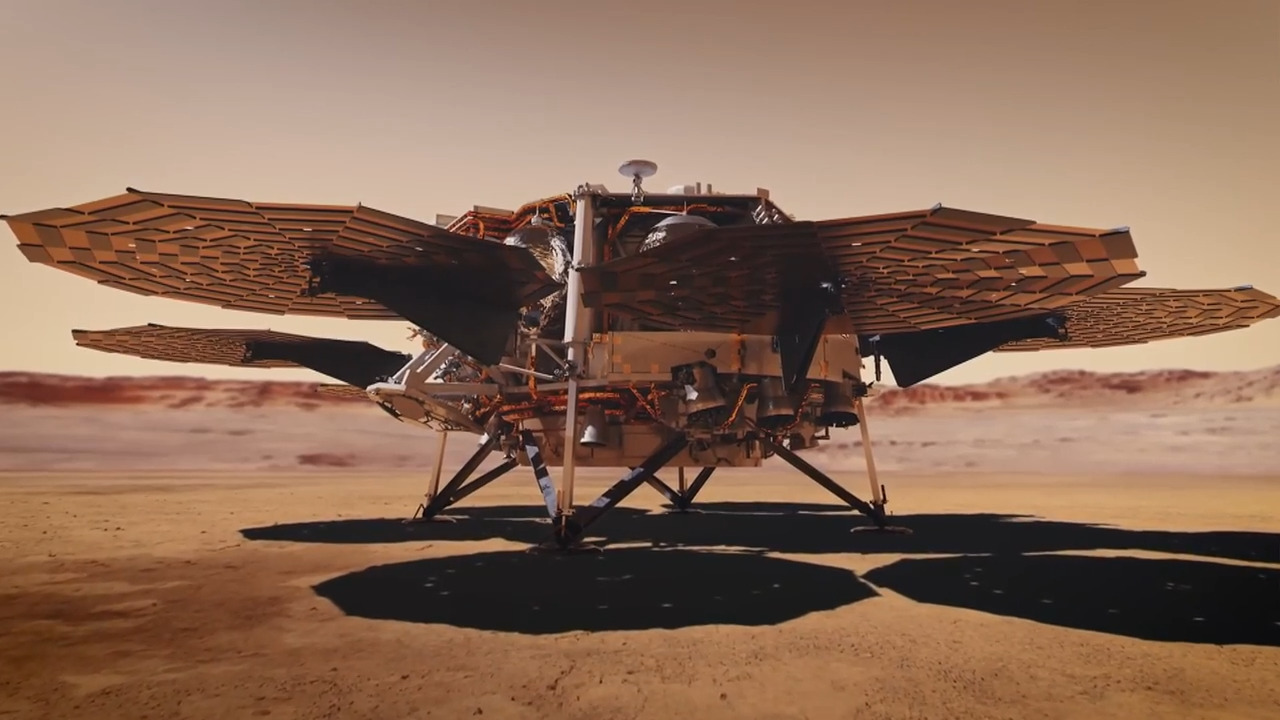
Mars may be cold and barren, but it might have supported life! At least, that’s what scientists think, after finding rocks with some very interesting spots. These markings, nicknamed “leopard spots” and “poppyseeds,” are minerals that could have been made by Martian microbes, early in the planet’s history. They were discovered by the Perseverance Rover, which has been exploring Mars since its 2021 landing.
The rover has been focused on Mars’s Jezero Crater, which used to be a huge lake with a river running into it before drying up billions of years ago. Now, Perseverance collects samples to analyze in its onboard lab! Car Bluetooth is cool but c’mon, it’s no analysis lab…
These rocks aren’t exactly the video diary of an alien’s day in the life on Mars, but they could be the clearest sign of life ever found on Mars, which is thought to be one of the most promising places in our Solar System to look for life outside of Earth. The only way to confirm if the minerals were made by microbes is to get them back to Earth, so NASA and the European Space Agency have proposed a mission to collect them. It’ll be expensive, but this could be the answer to if there was life on other planets!
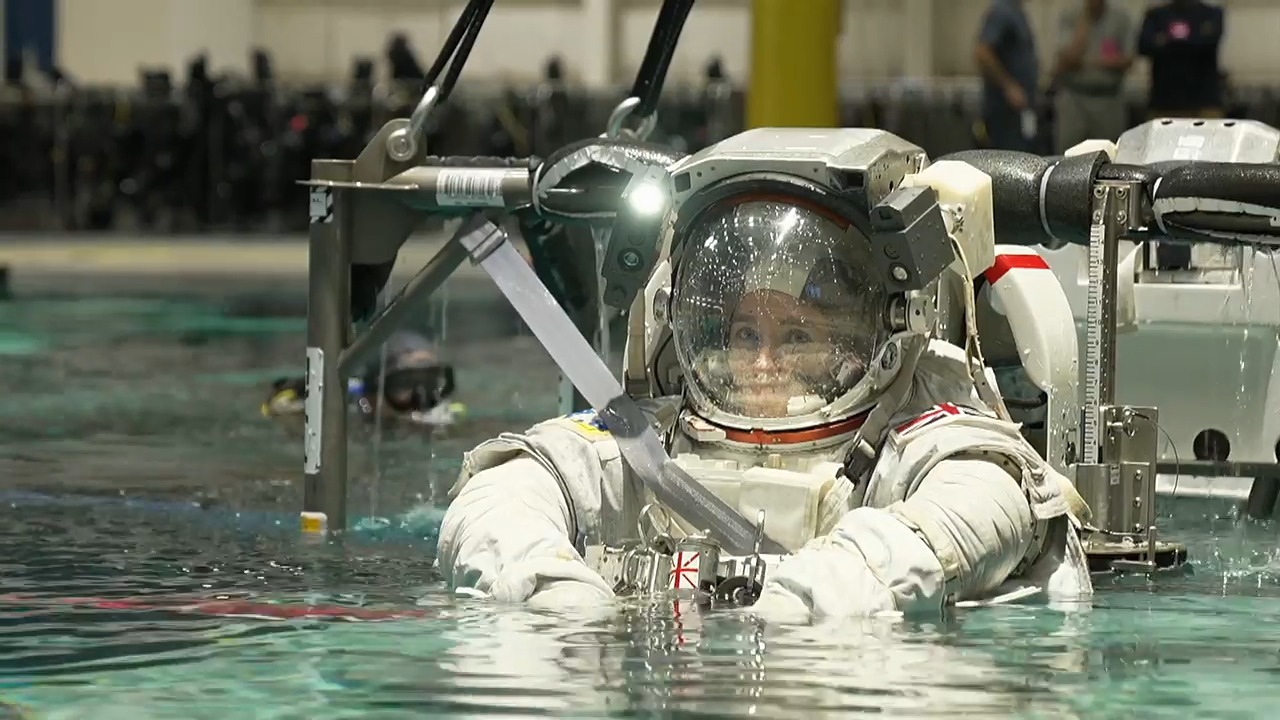
Being an astronaut is no joke — for your brain and your body to be prepared, you need to train, not unlike sports or school. Want to train for a soccer match? You may need to go for runs or lift weights. Need to prepare for a math test? You may need to repeat your times tables. Going into space soon? You may need to put on a space suit and get strapped into a full-sized replica of the International Space Station, then submerged in a 12-meter (40-foot!) deep pool for six hours. At least, that’s what astronaut Rosemary Coogan did to make sure she was ready for her spacewalk.
Coogan was chosen from 22,000 applicants to become a European Space Agency astronaut and may be the first Englishwoman to set foot on the moon.
Space preparation is daunting, but she had teams of supporters like divers and control room workers to make sure she was safe. The spacewalk test is meant to make sure that Rosemary could survive the conditions off of earth, even when things don’t go according to plan.
In How Do Journalists Find the News?, host Radzi Chinyanganya explores how journalists find and gather their news, ask the right questions, and let their curiosity drive them. Today, journalists still look to trusted sources, correspondents, and news agencies, but they also use online tools like social media to discover what the public is talking about. Then they send teams to the scene to talk to eyewitnesses, emergency services, and to gather statements. This video is excerpted from BBC’s My World, a program created for teenagers eager to learn more about the important stories shaping our world.
News is happening all the time, everywhere. So how do journalists choose what to share? Introduce your students to the processes involved in gathering the news they consume every day. In this lesson, they’ll learn the importance of curiosity in shaping news.
Forests store huge amounts of carbon, likely hundreds of billions of tons. One metric ton is about 2,200 pounds, so hundreds of billions of tons is... let's just say it's a lot. Because trees pull carbon dioxide out of the air and lock it away, forests play a major role in controlling Earth's climate.
To figure out how much carbon a forest holds, scientists can measure individual trees, like how wide the trunk is and how tall the tree grows. But nobody can take a tape measure to millions of square miles of forest, and "a whole bunch" isn't a scientific measurement.
That's where new technology comes in. In 2025, the European Space Agency, which runs space missions for a group of European countries, launched a satellite called Biomass. It uses radar with extra-long wavelengths. The longer the wavelength, the more easily radar can pass through leaves and small branches and pick up bigger things, like trunks and large branches, which hold most of a tree's carbon.
Most earlier satellites, like many launched by NASA, the U.S. space agency, are optical. They work like cameras, capturing sunlight reflected off the treetops. That's useful for seeing where forests are, but it mostly shows the top layer. Radar can reveal what's underneath. It can help scientists estimate how much wood a forest holds, spot deforestation, and study flooded forests that are hard to reach. Scientists then check the satellite data against measurements taken from planes and on the ground.
Another tool is LiDAR, short for Light Detection and Ranging. It sends out pulses of laser light and measures how long they take to bounce back, building detailed 3D maps of forests. Some are precise enough to show individual twigs and leaves. LiDAR isn't new, but it produces enormous amounts of data. Artificial intelligence is now making that data much faster to process, turning LiDAR into a more practical tool for studying forests.
Mars may be cold and barren, but it might have supported life! At least, that’s what scientists think, after finding rocks with some very interesting spots. These markings, nicknamed “leopard spots” and “poppyseeds,” are minerals that could have been made by Martian microbes, early in the planet’s history. They were discovered by the Perseverance Rover, which has been exploring Mars since its 2021 landing.
The rover has been focused on Mars’s Jezero Crater, which used to be a huge lake with a river running into it before drying up billions of years ago. Now, Perseverance collects samples to analyze in its onboard lab! Car Bluetooth is cool but c’mon, it’s no analysis lab…
These rocks aren’t exactly the video diary of an alien’s day in the life on Mars, but they could be the clearest sign of life ever found on Mars, which is thought to be one of the most promising places in our Solar System to look for life outside of Earth. The only way to confirm if the minerals were made by microbes is to get them back to Earth, so NASA and the European Space Agency have proposed a mission to collect them. It’ll be expensive, but this could be the answer to if there was life on other planets!
Being an astronaut is no joke — for your brain and your body to be prepared, you need to train, not unlike sports or school. Want to train for a soccer match? You may need to go for runs or lift weights. Need to prepare for a math test? You may need to repeat your times tables. Going into space soon? You may need to put on a space suit and get strapped into a full-sized replica of the International Space Station, then submerged in a 12-meter (40-foot!) deep pool for six hours. At least, that’s what astronaut Rosemary Coogan did to make sure she was ready for her spacewalk.
Coogan was chosen from 22,000 applicants to become a European Space Agency astronaut and may be the first Englishwoman to set foot on the moon.
Space preparation is daunting, but she had teams of supporters like divers and control room workers to make sure she was safe. The spacewalk test is meant to make sure that Rosemary could survive the conditions off of earth, even when things don’t go according to plan.