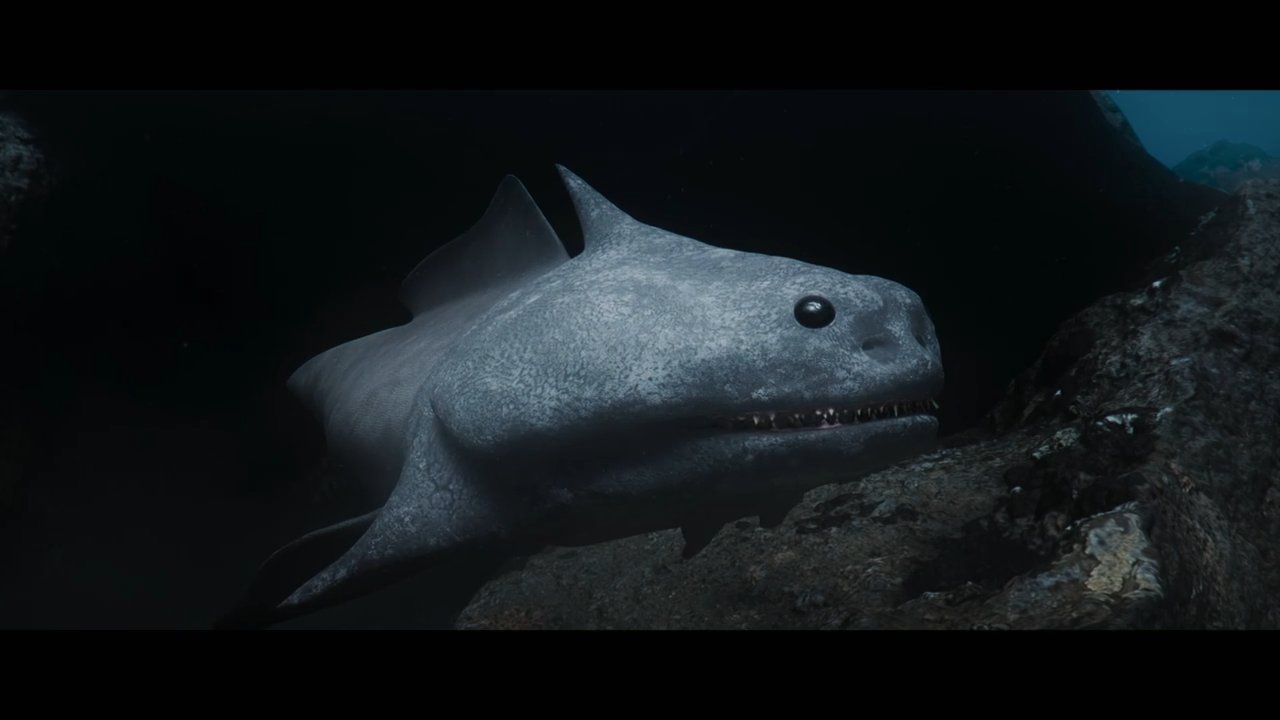
As the predator-prey arms race intensified in the ancient oceans, fish evolved stronger defenses — and increasingly sophisticated brains. This clip from BBC’s Evolution episode "The Dolphin" examines the armored placoderms, whose fossilized skulls reveal surprisingly complex brains for animals that lived around 400 million years ago. CT scans allow scientists to reconstruct these ancient brains and explore structures involved in movement, balance, and processing information.
The video also explores a remarkable theory about the evolution of myelin, the insulating material that allows nerve signals to travel much faster along neurons. Retroviral DNA may have played a role in triggering the development of myelin in early vertebrates, helping their brains process information more rapidly while freeing them from the need for enormous nerve fibers. This evolutionary innovation helped pave the way for increasingly sophisticated vertebrate brains.
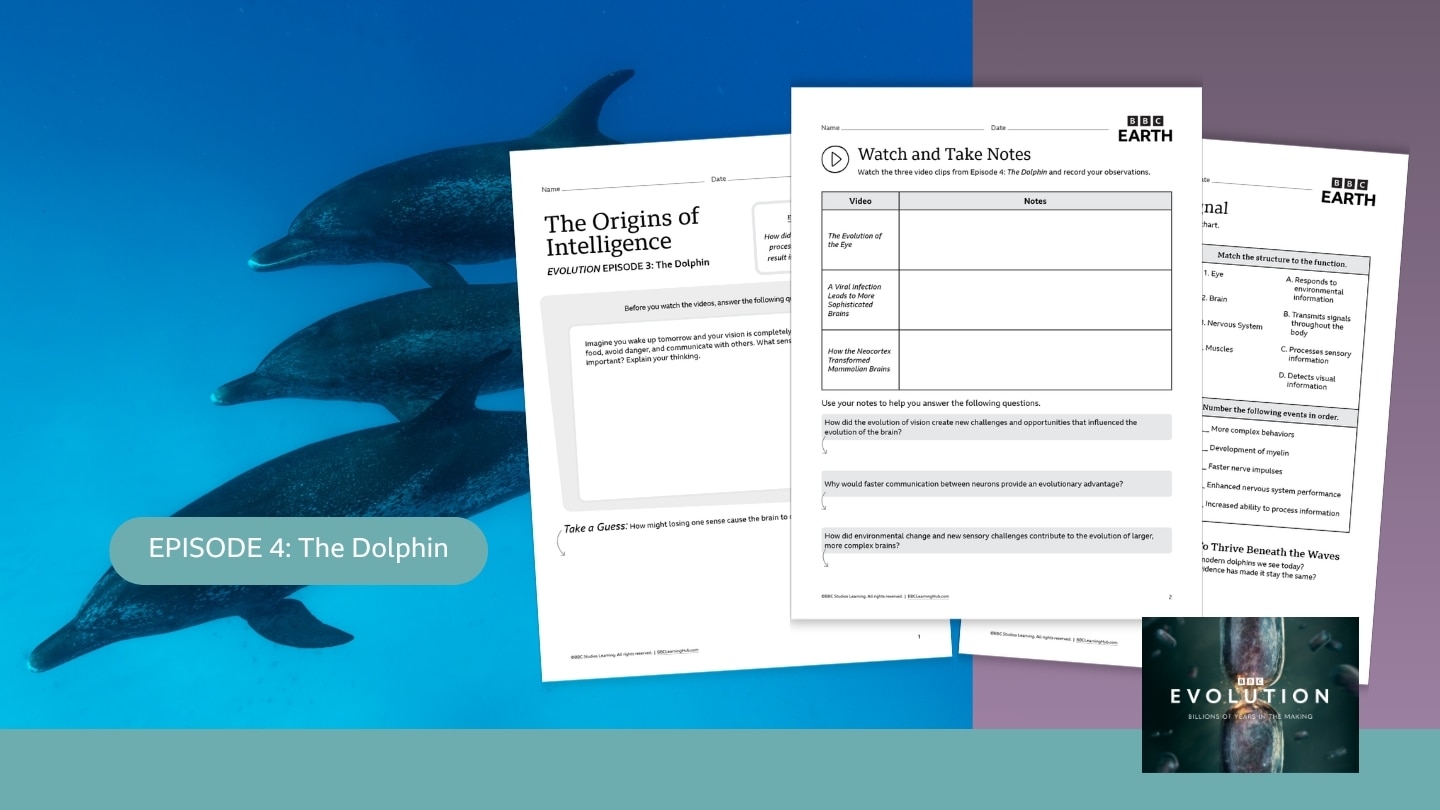
How does an animal make sense of its surroundings — and what happens when that world changes? This lesson for ages 11–18 examines the evolution of sensory systems and the increasingly sophisticated brains that allow animals to gather, process, and respond to information.
In the BBC video clips from Evolution Episode 4: "The Dolphin," explore the evolution of the eye, changes that made communication between neurons faster, and the development of the mammalian neocortex. Along the way, consider how better ways of detecting and processing information created new opportunities for behavior and survival.
The worksheet activities ask you to connect environmental information to nervous system responses, compare the advantages of vision for predators and prey, and trace the relationship between myelin, faster nerve impulses, information processing, and complex behavior. At the end, you'll return to your initial prediction and use evidence from the lesson to reflect on how sensory challenges and environmental change shaped the evolution of increasingly complex brains.
As the predator-prey arms race intensified in the ancient oceans, fish evolved stronger defenses — and increasingly sophisticated brains. This clip from BBC’s Evolution episode "The Dolphin" examines the armored placoderms, whose fossilized skulls reveal surprisingly complex brains for animals that lived around 400 million years ago. CT scans allow scientists to reconstruct these ancient brains and explore structures involved in movement, balance, and processing information.
The video also explores a remarkable theory about the evolution of myelin, the insulating material that allows nerve signals to travel much faster along neurons. Retroviral DNA may have played a role in triggering the development of myelin in early vertebrates, helping their brains process information more rapidly while freeing them from the need for enormous nerve fibers. This evolutionary innovation helped pave the way for increasingly sophisticated vertebrate brains.
How does an animal make sense of its surroundings — and what happens when that world changes? This lesson for ages 11–18 examines the evolution of sensory systems and the increasingly sophisticated brains that allow animals to gather, process, and respond to information.
In the BBC video clips from Evolution Episode 4: "The Dolphin," explore the evolution of the eye, changes that made communication between neurons faster, and the development of the mammalian neocortex. Along the way, consider how better ways of detecting and processing information created new opportunities for behavior and survival.
The worksheet activities ask you to connect environmental information to nervous system responses, compare the advantages of vision for predators and prey, and trace the relationship between myelin, faster nerve impulses, information processing, and complex behavior. At the end, you'll return to your initial prediction and use evidence from the lesson to reflect on how sensory challenges and environmental change shaped the evolution of increasingly complex brains.