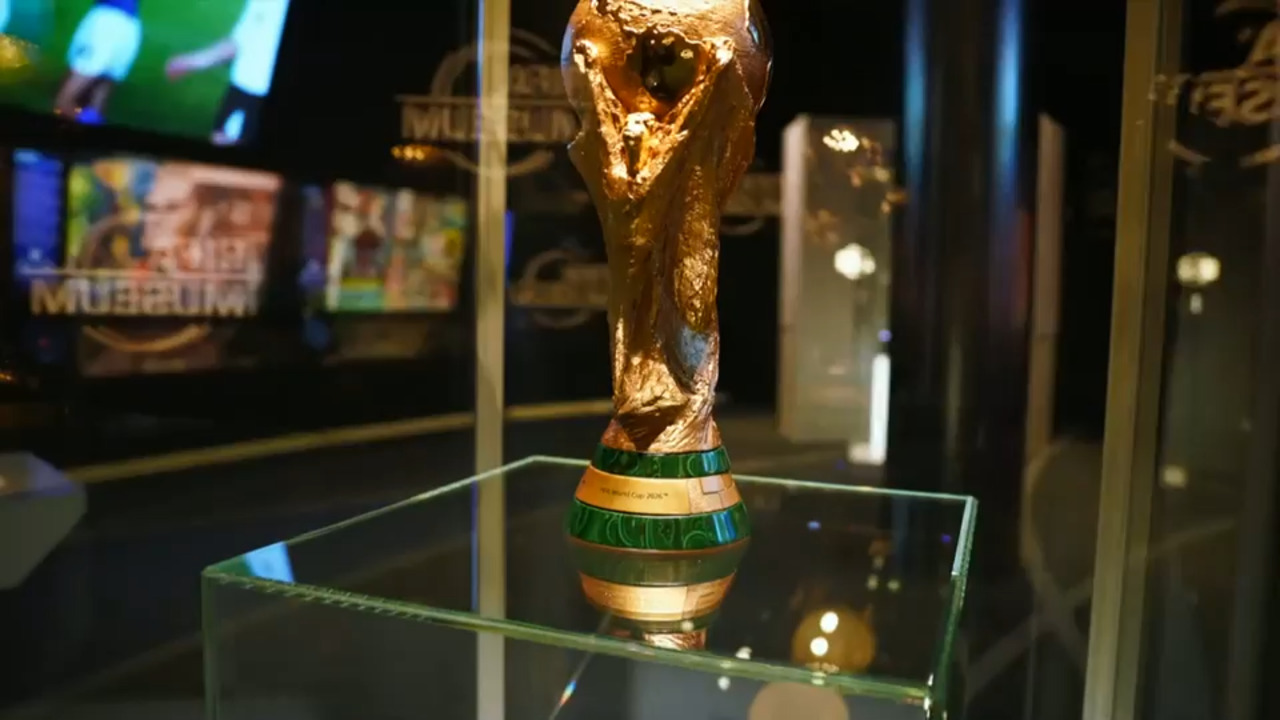
Football is thousands of years old, but who says there's no room for a little new technology? And there's no better place to explore the advancements in football tech than FIFA’s global headquarters in Zurich, where the research team has been paying special attention to the MVP of every match: the football itself.
Meet the Trionda ball. It may look like a standard football, until you open it up to reveal a sensor inside the ball. It’s synced to a computer, and tracks the ball’s behavior on a graph that shows when contact is made with the ball — light touches are small peaks, hard hits are big spikes. This will make it easier to see if a player has actually touched the ball, which is sometimes hard to determine with the naked eye.
For those who are always squinting to watch those teeny tiny players on that giant field, FIFA is also introducing a ref cam. The head-mounted technology lets broadcasters record first-person footage, so spectators can see the game from the referee’s point of view. This means they can get an on-field perspective of the action, even if means an up-close look of players getting mad at the refs! Nothing more authentic than that!
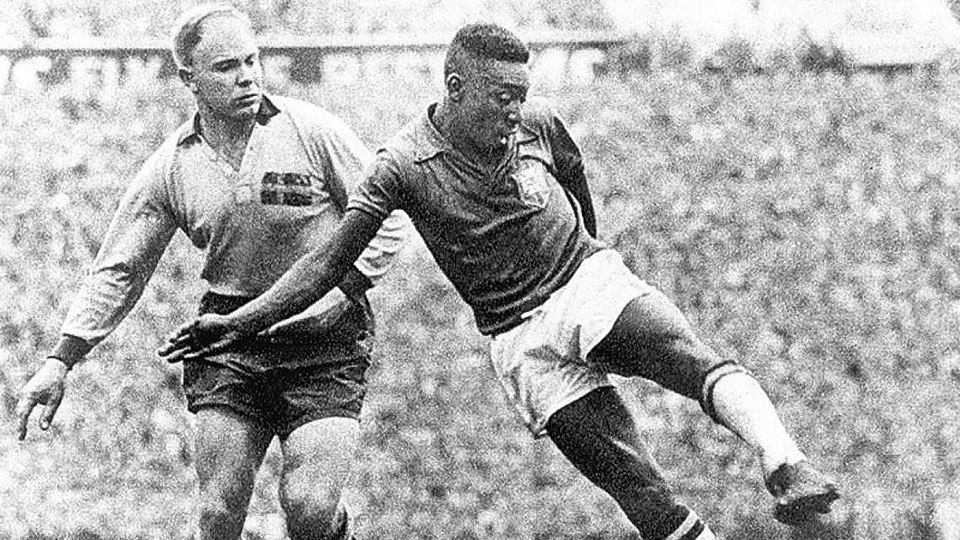
Explore the incredible life and global influence of Pelé, from his rise as a young football star in Brazil to his unforgettable World Cup victories and worldwide fame. Students will discover how Pelé’s extraordinary skill, creativity, and sportsmanship helped transform football into the world’s most popular sport.
This Kahoot examines key moments in Pelé’s career, including his record-breaking achievements, his role in Brazil’s World Cup success, and his impact on the international growth of the game. Students will build listening skills, vocabulary, and historical awareness while exploring how Pelé influenced culture, identity, and the global popularity of football across generations.
Watch the related BBC videos, Pelé's Pledge to His Father and How Pelé Brought Soccer to the U.S., then invite your Grade 6–12 students to test their knowledge and explore the legacy of one of the greatest athletes in sports history.
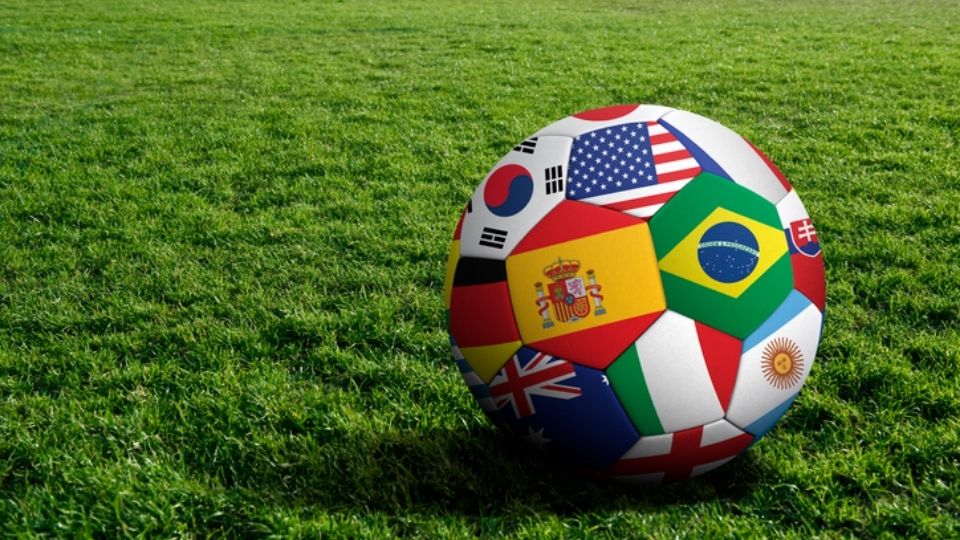
The greatest show on Earth is happening right now — and it's bigger than ever. The 2026 FIFA World Cup spans three countries (the U.S., Canada, and Mexico), features a record-breaking 48 teams, and runs from June 11 through July 19. The final? It's being played right here — at MetLife Stadium in New Jersey, just outside New York City. No pressure.
Since 1930, the World Cup has produced legendary goals, shocking upsets, and moments that stopped entire nations in their tracks. It's the one tournament where a tiny island nation can send a footballing giant home crying — and usually does.
Think you know your Pelés from your Mbappés? Your golden boots from your offside traps? Whether you're a die-hard who tracks every group stage table or someone who only tunes in for the final — this quiz will put what you know to the test. Let's see if you can go all the way.
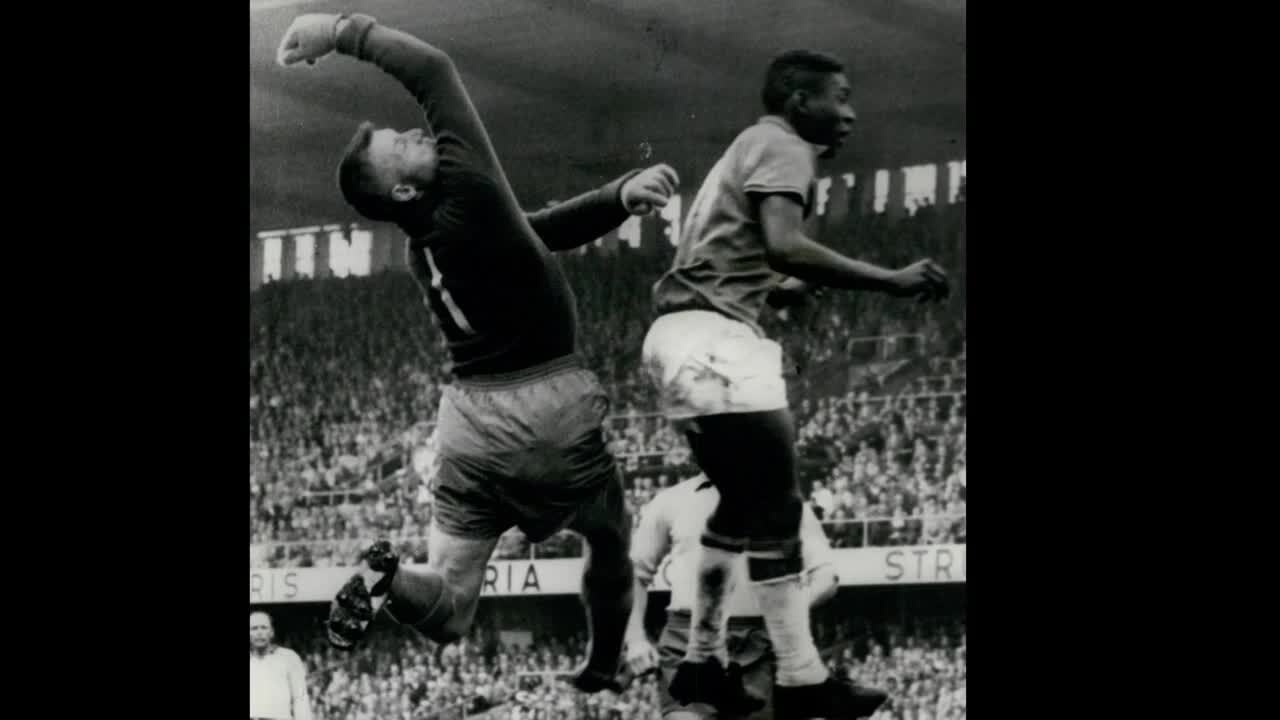
In Pele's Pledge to His Father, sports journalist Clare Balding describes how Pelé pledged to his father that he would help Brazil win the World Cup. She describes his childhood and rise to fame. This video is excerpted from BBC’s Icons: The Greatest Person of the 20th Century, a documentary series celebrating the achievements of the most influential figures of the era.
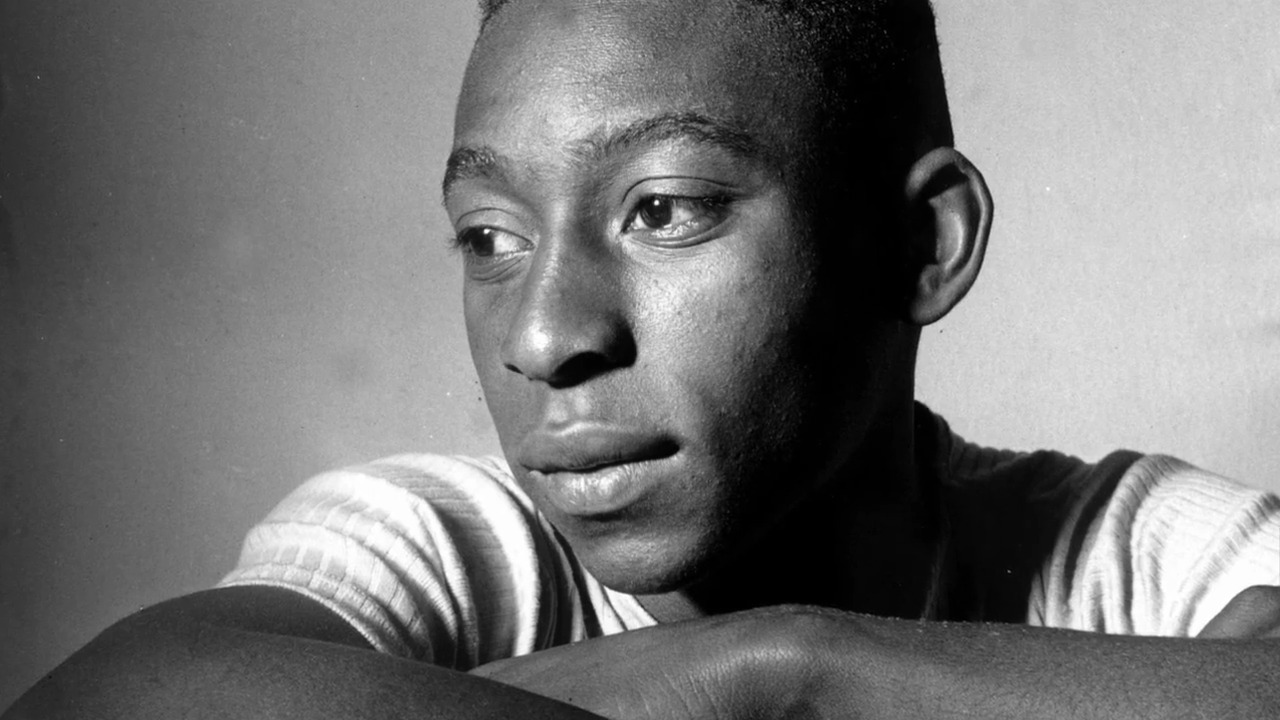
In How Pelé Brought Soccer to the U.S., sports journalist Clare Balding discusses Pelé's contributions to the popularity of soccer. Pelé’s last World Cup match in 1970 helped him emerge as a hero, and in 1971 he brought the game to the United States. This video is excerpted from BBC’s Icons: The Greatest Person of the 20th Century, a documentary series celebrating the achievements of the most influential figures of the era.
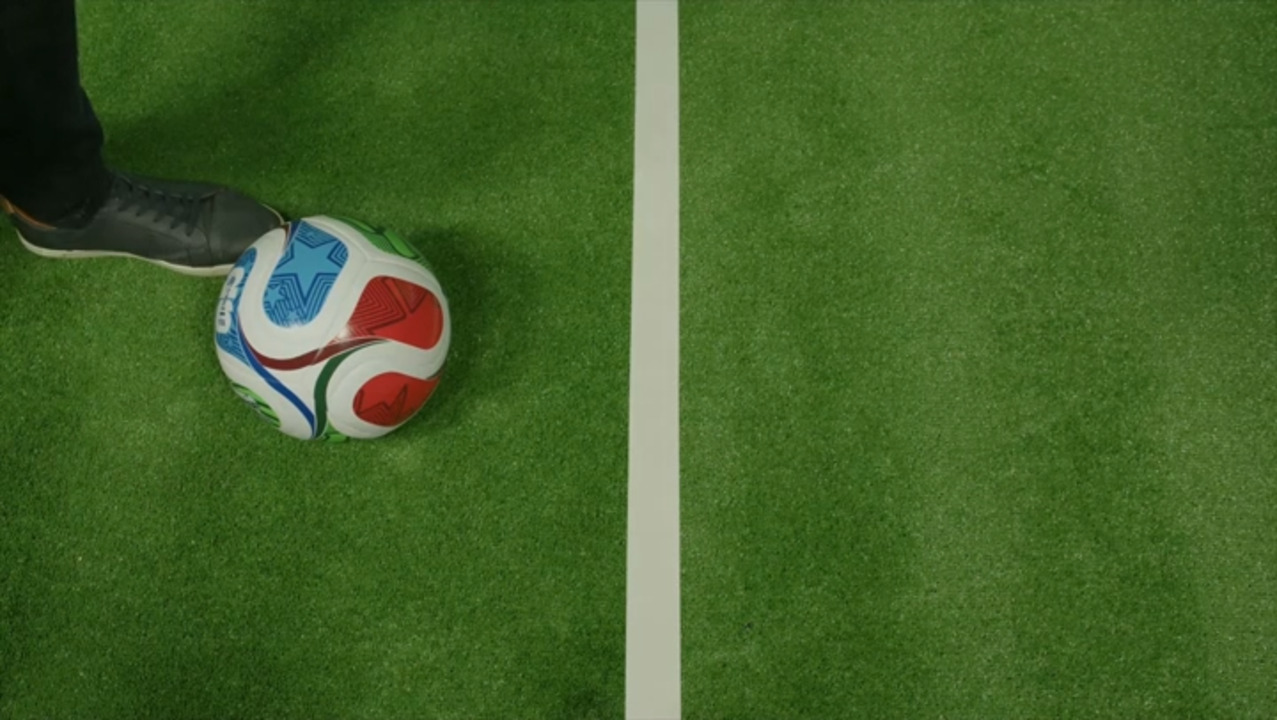
Are you watching the 2026 World Cup?! We hope so, because it’s a big one. The biggest one, actually. It’s the first with three countries co-hosting (Canada, the U.S., and Mexico), and it’s been expanded to 48 teams (from 32).
But the size of the tournament isn’t where the differences end, not by a long shot! This year, the World Cup is also introducing new rules, like a possible red card for players covering their mouths! If you gasped and covered your own mouth, don’t worry. First because you’re probably not playing in the World Cup (yet), but also because this penalty is only given to players who are being confrontational.
Other additions include the VAR (Video Assistant Referee) getting the power to check second yellow cards and corners, a 5-second countdown on goal kicks and throw-ins, and a rule that players being subbed will have just 10 seconds to leave the pitch. No time for dilly dallying, we’ve got 16 more teams to watch this year!
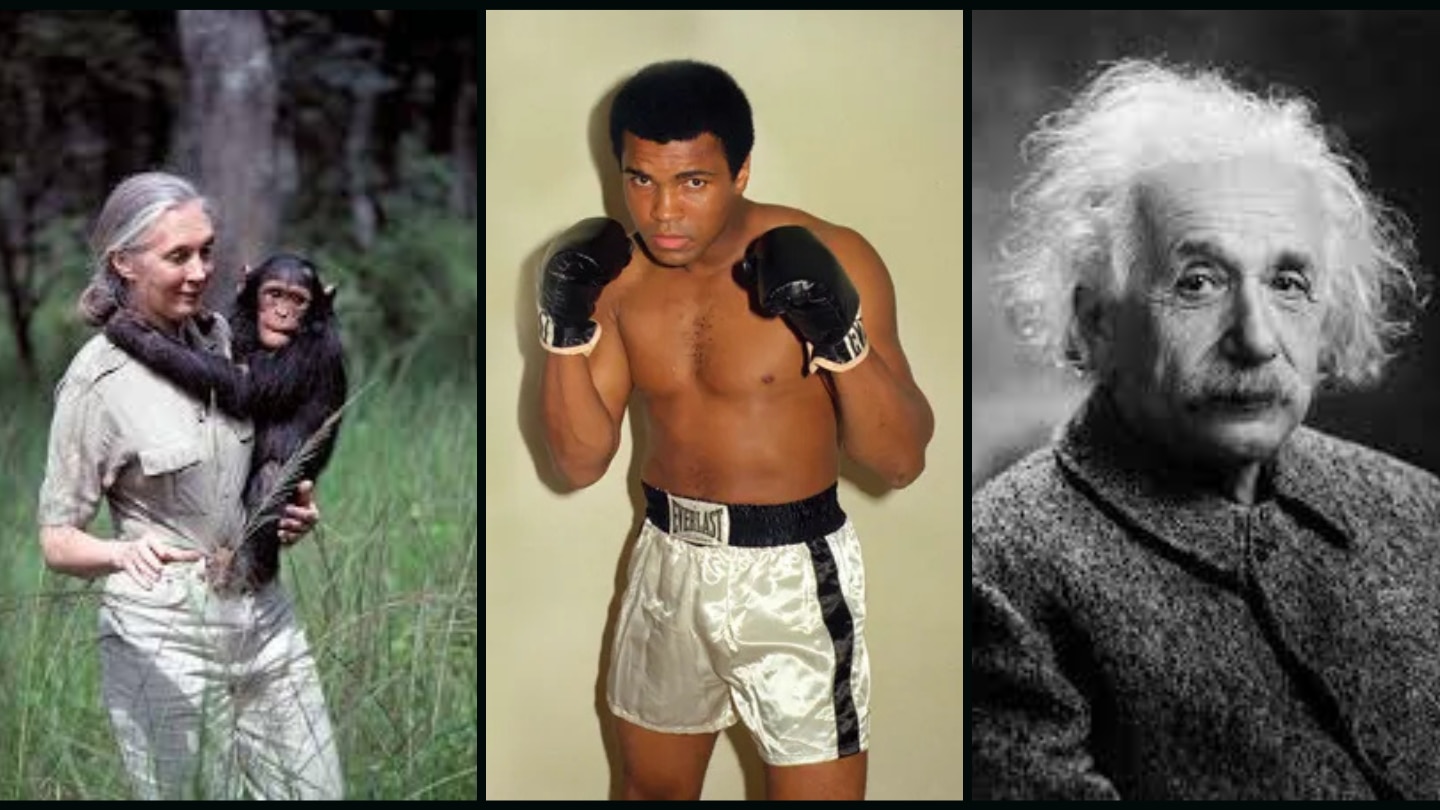
Meet the Icons of the 20th Century. From brilliant scientists and inspiring activists to legendary athletes and artists, these remarkable individuals changed the world in powerful ways. In this video playlist of clips from BBC's Icons: The Greatest Person of the 20th Century, meet Muhammad Ali, Helen Keller, Albert Einstein, Martin Luther King Jr., Pablo Picasso, Jane Goodall, Pelé, Billie Holiday and others — each a trailblazer who shaped history through courage, creativity, and conviction. A perfect playlist to inspire young minds to think big and act boldly!
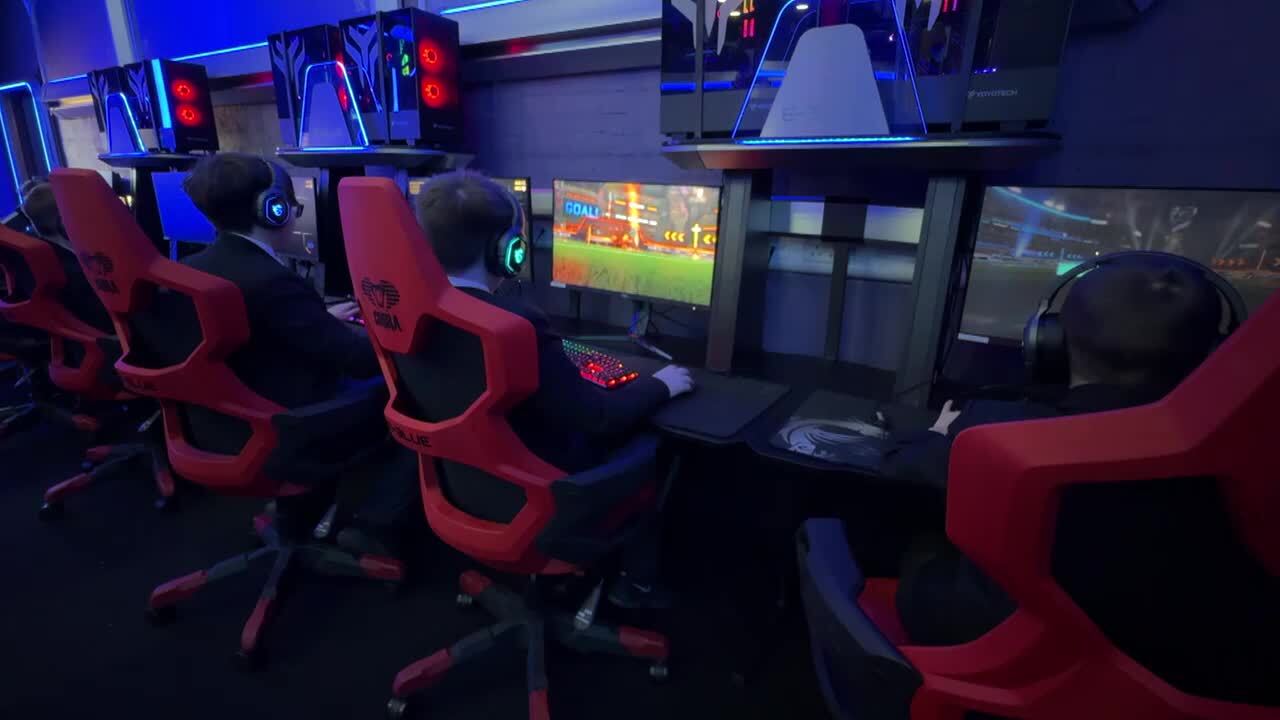
Football, rugby… esports? At Countesthorpe Academy, a secondary school in the UK, students can step into a full esports arena packed with high-end gaming computers — but it’s about a lot more than just playing games.
The school is one of the first to offer an esports qualification, helping students explore how the gaming industry really works and what kinds of careers exist behind the screens.
Esports might feel like entertainment, but it’s also a fast-growing global industry. In fact, the video game industry is now worth several times more than both the music and movie industries combined.
Students studying esports look at everything from how games make money and the strategies players use, to teamwork, mental health, and building skills like focus and resilience — skills that matter in gaming and way beyond it.
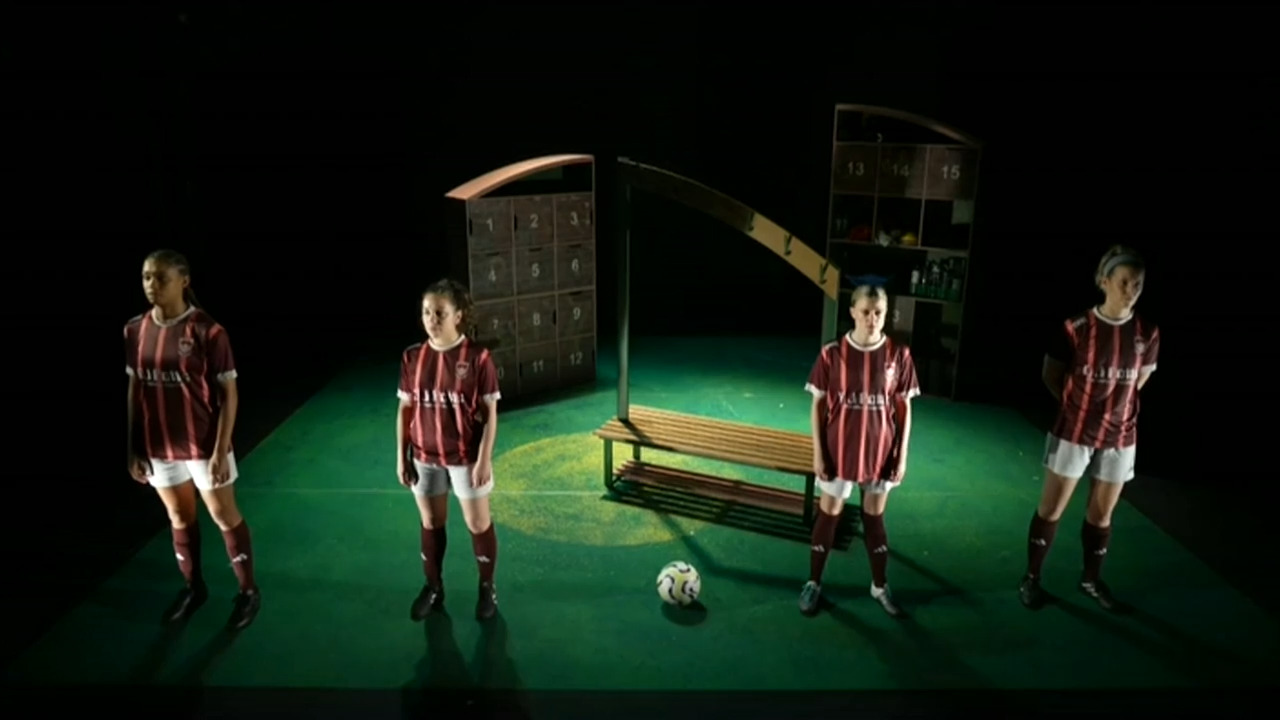
What happens when you mix theatre with soccer, or football as they call in the UK? You get a play that turns women’s soccer into a live story of grit, pressure, and ambition — no stadium required. This new production brings the energy of the game to the stage, spotlighting the real experiences of female athletes in sport.
The story doesn’t shy away from reality. Women footballers around the world have faced uneven playing conditions, from ill-fitting men’s kits to poorly maintained pitches and training setups that simply weren’t built with them in mind. Even small things — like long walks between facilities or limited access to resources — add up and shape the experience of being a professional athlete.
What makes the play feel especially authentic is the lead actor, who actually played semi-pro football before moving into acting. That real-life experience gives the performance extra edge, blending sport and storytelling in a way that feels lived-in, not just acted.
At its core, the production is about more than football. It’s about visibility, opportunity, and challenging the idea of who gets to have a future in sport — and who gets to be seen on stage telling that story.
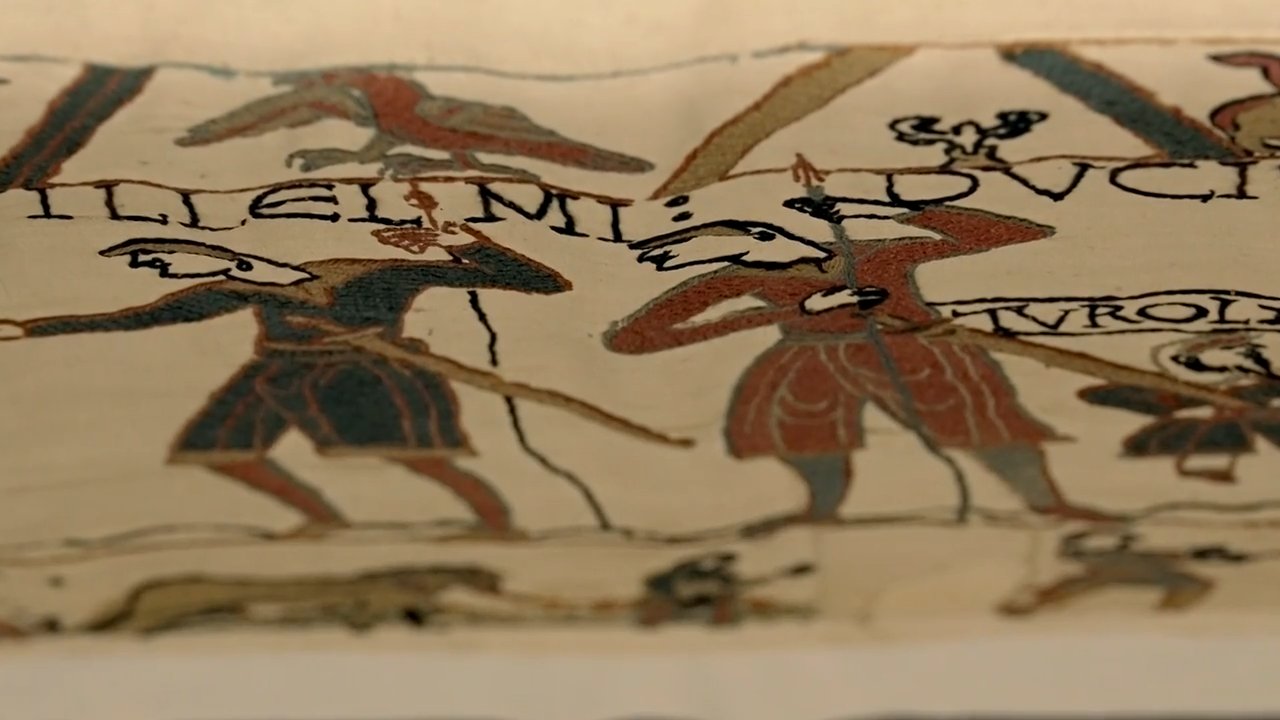
After almost 1,000 years, the historic Bayeux Tapestry is back where it began.
The 11th Century artwork is thought to have been made in Britain, and it's now on display at the British Museum — one of the UK's largest national museums, located in London — while on loan from France until summer 2027. Think of it as the original comic strip: instead of panels, it uses a continuous, nearly 70-meter-long strip of embroidered fabric (about the length of a football field) to tell the story frame by frame, image after image, all the way across.
The story it tells is the Norman Conquest of 1066: the year William the Conqueror, a duke from Normandy in modern-day France, invaded England and took the throne. Like a comic laid end to end, the tapestry shows the buildup, the battle, and the aftermath — soldiers, ships, horses, and even Halley's Comet all stitched into the sequence. That invasion permanently changed England's ruling family, language, and culture, and is often seen as the starting point of the modern British monarchy.
Moving the tapestry took hours of extremely careful work, since it's so old and delicate. Even people standing near it had to wear protective clothing so stray fibers wouldn't end up on the fabric. It's now displayed flat, inside a protective glass case. Safe to say, it may look like a large piece of fabric, but it's definitely not something you'd want to wipe your hands on if you're missing a napkin.
The loan is also part of a bigger cultural exchange between France and Britain — two neighboring countries separated by the narrow English Channel, with a long and sometimes tense shared history. In exchange for the tapestry, Britain is lending important historical objects of its own back to France.
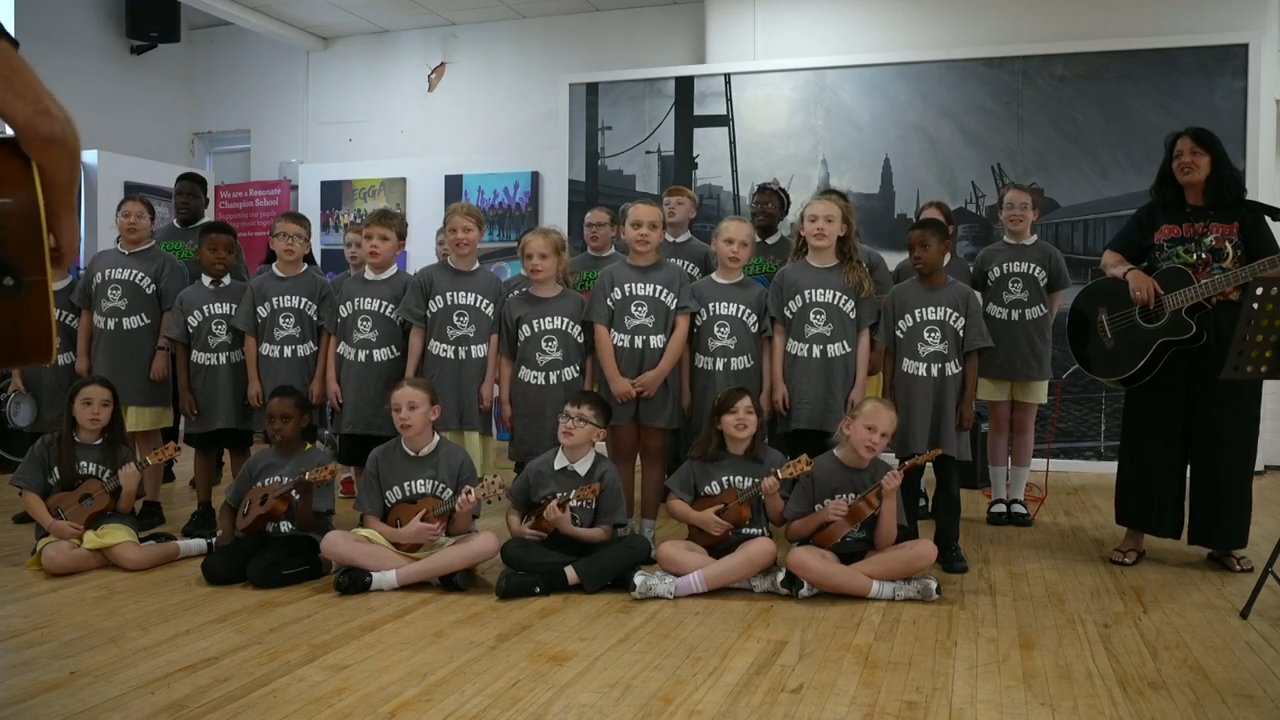
When you join your school band, you probably expect to perform in your school auditorium for friends and family. No shade to Gramps, but imagine the excitement when a group of kids learned that they were going to be performing at the massive Anfield Stadium, home of Liverpool Football Club. Multiply that by 10,000,000, and that’s a fraction of what they may have felt when they learned they would be performing a Foo Fighters song there FOR the Foo Fighters!
The Bell Tower Beats is a band from Anfield Road Primary School, who had the pleasure (and pressure) of playing "Times Like These" by the Foo Fighters for the actual members of the Foo Fighters. The performance was organized by a year three teacher, and has gone viral on news and media sources. Not only was the performance fun, but it helped bring attention to the opportunity to join the school band.

It’s officially the “Beijing International Automotive Exhibition,” but its friends call it “Auto China,” and it’s now the largest car show in the world. Nearly 1000 companies flock to the exhibits taking up more than 380,000 square meters, or over 50 football fields! Or 1,246,719 feet and 50 soccer fields, if you’re from America! Or 9,329,989 beep-boop-zoinks and 50 astro-space-ball fields if you’re a Martian from outer space! Any way you spin it, this car show is a big deal, and there were two standout trends.
The first was electric vehicles. There’s always been an issue with charging, as makers have tried to maximize how far cars can travel on single charge while minimizing how long that charge takes. Now, a company called BYD claims to have an ultra-fast charging system that can provide 400 km of range with only 5 minutes of charging. What’s more, it’s designed to operate under extreme weather conditions. Since batteries are usually sensitive to high or low temperatures, addressing this is a major step in making electric vehicles as reliable as gas cars.
The other big topic was also fully autonomous, or self-driving cars. The company Geely developed a self-driving car built specifically for ride-hailing, so there’s no steering wheel or driver’s seat. That means you can pick your nose without fear of the driver judging you! Xpeng’s driverless car uses a combination of lasers, radar, and cameras to build a real time picture of the road, but we hope it works just as well in the clouds, because they may be extending this technology into flying cars as early as next year. It’s a bird! It’s a plane! No, it’s just my Uber! That’s one way to beat traffic.
Football is thousands of years old, but who says there's no room for a little new technology? And there's no better place to explore the advancements in football tech than FIFA’s global headquarters in Zurich, where the research team has been paying special attention to the MVP of every match: the football itself.
Meet the Trionda ball. It may look like a standard football, until you open it up to reveal a sensor inside the ball. It’s synced to a computer, and tracks the ball’s behavior on a graph that shows when contact is made with the ball — light touches are small peaks, hard hits are big spikes. This will make it easier to see if a player has actually touched the ball, which is sometimes hard to determine with the naked eye.
For those who are always squinting to watch those teeny tiny players on that giant field, FIFA is also introducing a ref cam. The head-mounted technology lets broadcasters record first-person footage, so spectators can see the game from the referee’s point of view. This means they can get an on-field perspective of the action, even if means an up-close look of players getting mad at the refs! Nothing more authentic than that!
Explore the incredible life and global influence of Pelé, from his rise as a young football star in Brazil to his unforgettable World Cup victories and worldwide fame. Students will discover how Pelé’s extraordinary skill, creativity, and sportsmanship helped transform football into the world’s most popular sport.
This Kahoot examines key moments in Pelé’s career, including his record-breaking achievements, his role in Brazil’s World Cup success, and his impact on the international growth of the game. Students will build listening skills, vocabulary, and historical awareness while exploring how Pelé influenced culture, identity, and the global popularity of football across generations.
Watch the related BBC videos, Pelé's Pledge to His Father and How Pelé Brought Soccer to the U.S., then invite your Grade 6–12 students to test their knowledge and explore the legacy of one of the greatest athletes in sports history.
The greatest show on Earth is happening right now — and it's bigger than ever. The 2026 FIFA World Cup spans three countries (the U.S., Canada, and Mexico), features a record-breaking 48 teams, and runs from June 11 through July 19. The final? It's being played right here — at MetLife Stadium in New Jersey, just outside New York City. No pressure.
Since 1930, the World Cup has produced legendary goals, shocking upsets, and moments that stopped entire nations in their tracks. It's the one tournament where a tiny island nation can send a footballing giant home crying — and usually does.
Think you know your Pelés from your Mbappés? Your golden boots from your offside traps? Whether you're a die-hard who tracks every group stage table or someone who only tunes in for the final — this quiz will put what you know to the test. Let's see if you can go all the way.
In Pele's Pledge to His Father, sports journalist Clare Balding describes how Pelé pledged to his father that he would help Brazil win the World Cup. She describes his childhood and rise to fame. This video is excerpted from BBC’s Icons: The Greatest Person of the 20th Century, a documentary series celebrating the achievements of the most influential figures of the era.
In How Pelé Brought Soccer to the U.S., sports journalist Clare Balding discusses Pelé's contributions to the popularity of soccer. Pelé’s last World Cup match in 1970 helped him emerge as a hero, and in 1971 he brought the game to the United States. This video is excerpted from BBC’s Icons: The Greatest Person of the 20th Century, a documentary series celebrating the achievements of the most influential figures of the era.
Are you watching the 2026 World Cup?! We hope so, because it’s a big one. The biggest one, actually. It’s the first with three countries co-hosting (Canada, the U.S., and Mexico), and it’s been expanded to 48 teams (from 32).
But the size of the tournament isn’t where the differences end, not by a long shot! This year, the World Cup is also introducing new rules, like a possible red card for players covering their mouths! If you gasped and covered your own mouth, don’t worry. First because you’re probably not playing in the World Cup (yet), but also because this penalty is only given to players who are being confrontational.
Other additions include the VAR (Video Assistant Referee) getting the power to check second yellow cards and corners, a 5-second countdown on goal kicks and throw-ins, and a rule that players being subbed will have just 10 seconds to leave the pitch. No time for dilly dallying, we’ve got 16 more teams to watch this year!
Meet the Icons of the 20th Century. From brilliant scientists and inspiring activists to legendary athletes and artists, these remarkable individuals changed the world in powerful ways. In this video playlist of clips from BBC's Icons: The Greatest Person of the 20th Century, meet Muhammad Ali, Helen Keller, Albert Einstein, Martin Luther King Jr., Pablo Picasso, Jane Goodall, Pelé, Billie Holiday and others — each a trailblazer who shaped history through courage, creativity, and conviction. A perfect playlist to inspire young minds to think big and act boldly!
Football, rugby… esports? At Countesthorpe Academy, a secondary school in the UK, students can step into a full esports arena packed with high-end gaming computers — but it’s about a lot more than just playing games.
The school is one of the first to offer an esports qualification, helping students explore how the gaming industry really works and what kinds of careers exist behind the screens.
Esports might feel like entertainment, but it’s also a fast-growing global industry. In fact, the video game industry is now worth several times more than both the music and movie industries combined.
Students studying esports look at everything from how games make money and the strategies players use, to teamwork, mental health, and building skills like focus and resilience — skills that matter in gaming and way beyond it.
What happens when you mix theatre with soccer, or football as they call in the UK? You get a play that turns women’s soccer into a live story of grit, pressure, and ambition — no stadium required. This new production brings the energy of the game to the stage, spotlighting the real experiences of female athletes in sport.
The story doesn’t shy away from reality. Women footballers around the world have faced uneven playing conditions, from ill-fitting men’s kits to poorly maintained pitches and training setups that simply weren’t built with them in mind. Even small things — like long walks between facilities or limited access to resources — add up and shape the experience of being a professional athlete.
What makes the play feel especially authentic is the lead actor, who actually played semi-pro football before moving into acting. That real-life experience gives the performance extra edge, blending sport and storytelling in a way that feels lived-in, not just acted.
At its core, the production is about more than football. It’s about visibility, opportunity, and challenging the idea of who gets to have a future in sport — and who gets to be seen on stage telling that story.
After almost 1,000 years, the historic Bayeux Tapestry is back where it began.
The 11th Century artwork is thought to have been made in Britain, and it's now on display at the British Museum — one of the UK's largest national museums, located in London — while on loan from France until summer 2027. Think of it as the original comic strip: instead of panels, it uses a continuous, nearly 70-meter-long strip of embroidered fabric (about the length of a football field) to tell the story frame by frame, image after image, all the way across.
The story it tells is the Norman Conquest of 1066: the year William the Conqueror, a duke from Normandy in modern-day France, invaded England and took the throne. Like a comic laid end to end, the tapestry shows the buildup, the battle, and the aftermath — soldiers, ships, horses, and even Halley's Comet all stitched into the sequence. That invasion permanently changed England's ruling family, language, and culture, and is often seen as the starting point of the modern British monarchy.
Moving the tapestry took hours of extremely careful work, since it's so old and delicate. Even people standing near it had to wear protective clothing so stray fibers wouldn't end up on the fabric. It's now displayed flat, inside a protective glass case. Safe to say, it may look like a large piece of fabric, but it's definitely not something you'd want to wipe your hands on if you're missing a napkin.
The loan is also part of a bigger cultural exchange between France and Britain — two neighboring countries separated by the narrow English Channel, with a long and sometimes tense shared history. In exchange for the tapestry, Britain is lending important historical objects of its own back to France.
When you join your school band, you probably expect to perform in your school auditorium for friends and family. No shade to Gramps, but imagine the excitement when a group of kids learned that they were going to be performing at the massive Anfield Stadium, home of Liverpool Football Club. Multiply that by 10,000,000, and that’s a fraction of what they may have felt when they learned they would be performing a Foo Fighters song there FOR the Foo Fighters!
The Bell Tower Beats is a band from Anfield Road Primary School, who had the pleasure (and pressure) of playing "Times Like These" by the Foo Fighters for the actual members of the Foo Fighters. The performance was organized by a year three teacher, and has gone viral on news and media sources. Not only was the performance fun, but it helped bring attention to the opportunity to join the school band.
It’s officially the “Beijing International Automotive Exhibition,” but its friends call it “Auto China,” and it’s now the largest car show in the world. Nearly 1000 companies flock to the exhibits taking up more than 380,000 square meters, or over 50 football fields! Or 1,246,719 feet and 50 soccer fields, if you’re from America! Or 9,329,989 beep-boop-zoinks and 50 astro-space-ball fields if you’re a Martian from outer space! Any way you spin it, this car show is a big deal, and there were two standout trends.
The first was electric vehicles. There’s always been an issue with charging, as makers have tried to maximize how far cars can travel on single charge while minimizing how long that charge takes. Now, a company called BYD claims to have an ultra-fast charging system that can provide 400 km of range with only 5 minutes of charging. What’s more, it’s designed to operate under extreme weather conditions. Since batteries are usually sensitive to high or low temperatures, addressing this is a major step in making electric vehicles as reliable as gas cars.
The other big topic was also fully autonomous, or self-driving cars. The company Geely developed a self-driving car built specifically for ride-hailing, so there’s no steering wheel or driver’s seat. That means you can pick your nose without fear of the driver judging you! Xpeng’s driverless car uses a combination of lasers, radar, and cameras to build a real time picture of the road, but we hope it works just as well in the clouds, because they may be extending this technology into flying cars as early as next year. It’s a bird! It’s a plane! No, it’s just my Uber! That’s one way to beat traffic.