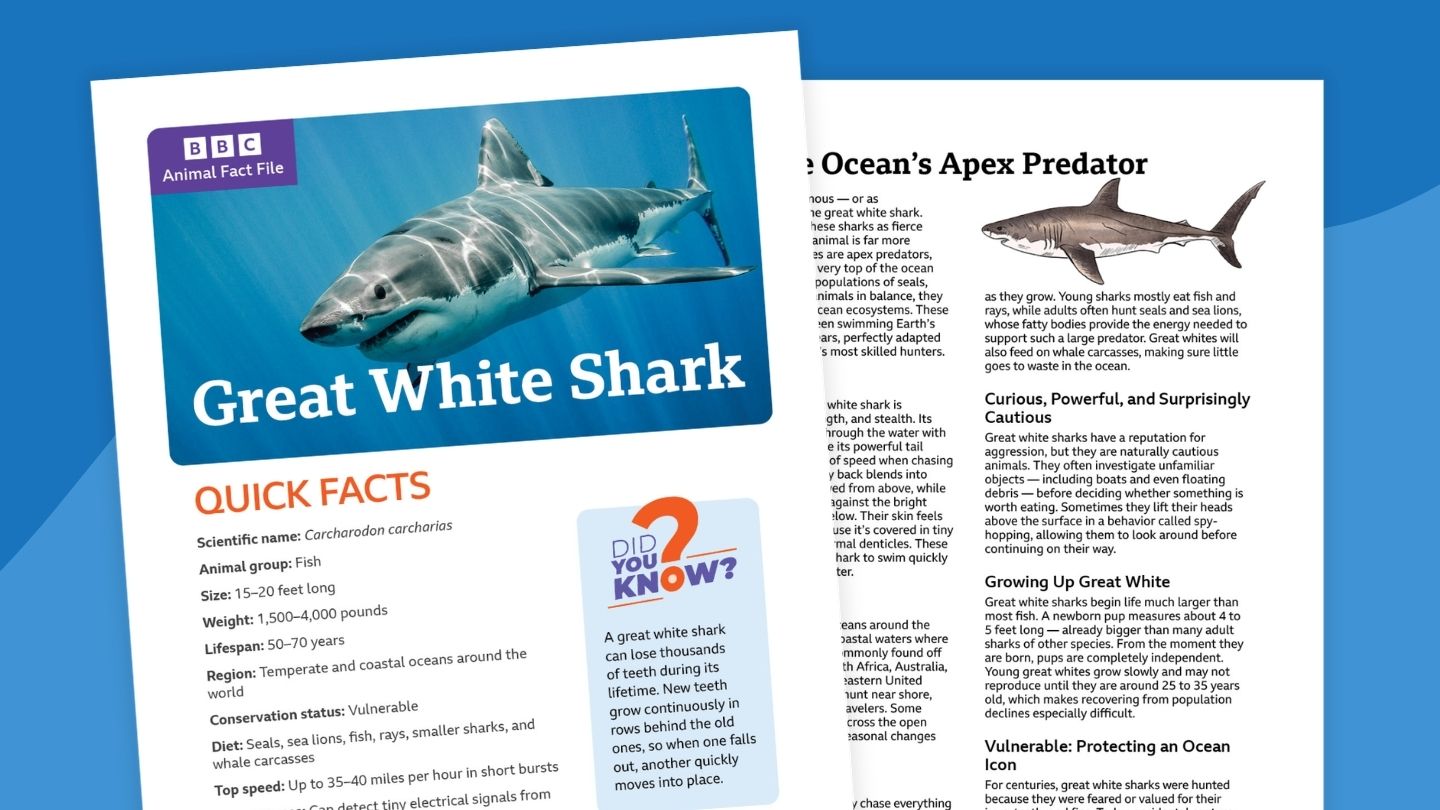
What predator can burst through the ocean at nearly 40 miles per hour, replace thousands of teeth during its lifetime, and help keep marine ecosystems healthy? The answer may surprise you.
Separate fact from fiction as you dive into the world of the great white shark. Discover the incredible adaptations that make it one of the ocean's most successful hunters, from powerful jaws and razor-sharp senses to stealthy hunting strategies. You'll also learn why great white sharks are essential to healthy oceans and how conservation efforts are helping protect this iconic predator.
Teachers and parents, you can use this fact file to:
- Introduce an animal, wildlife, or life science unit
- Support nonfiction reading and vocabulary practice
- Explore animal adaptations, behaviors, and habitats
- Compare animals and the ecosystems they live in
- Practice finding and organizing information from nonfiction texts
- Prepare students for animal research projects or presentations (use our animal report templates!)
- Connect science learning to conservation and environmental issues
- Pair with videos, articles, or other informational texts (see Related Resources below)
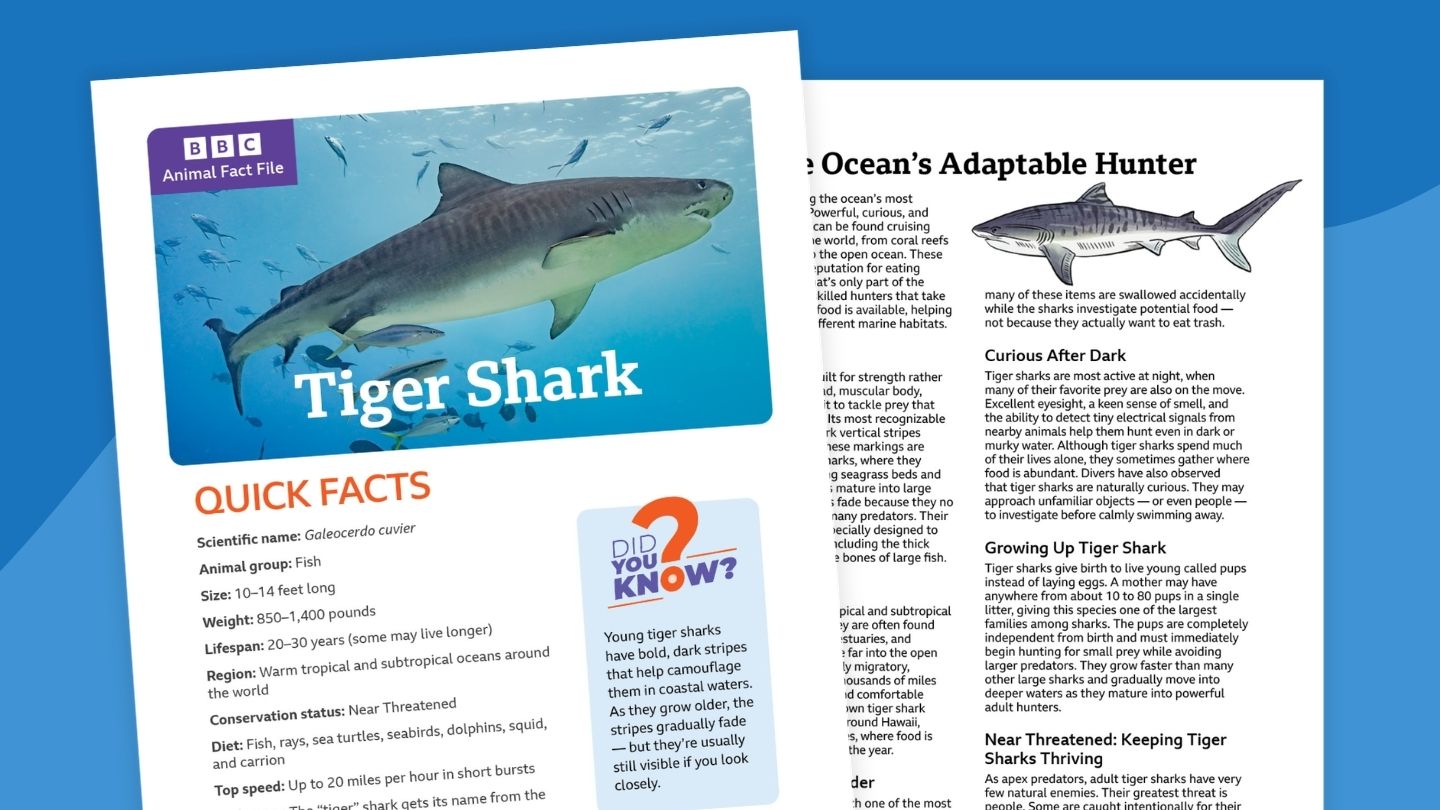
What shark gets its name from the dark stripes along its body and has one of the most varied diets in the ocean? Meet one of the sea's most adaptable predators.
Powerful, curious, and built to thrive in a wide range of habitats, tiger sharks are among the ocean's most successful hunters. Discover how they use their keen senses and powerful jaws to find food, why they migrate across thousands of miles of ocean, and what role they play in keeping marine ecosystems in balance. You'll also learn about the challenges tiger sharks face and the efforts underway to protect them.
Teachers and parents, you can use this fact file to:
- Introduce an animal, wildlife, or life science unit
- Support nonfiction reading and vocabulary practice
- Explore animal adaptations, behaviors, and habitats
- Compare animals and the ecosystems they live in
- Practice finding and organizing information from nonfiction texts
- Prepare students for animal research projects or presentations (use our animal report templates!)
- Connect science learning to conservation and environmental issues
- Pair with videos, articles, or other informational texts (see Related Resources below)
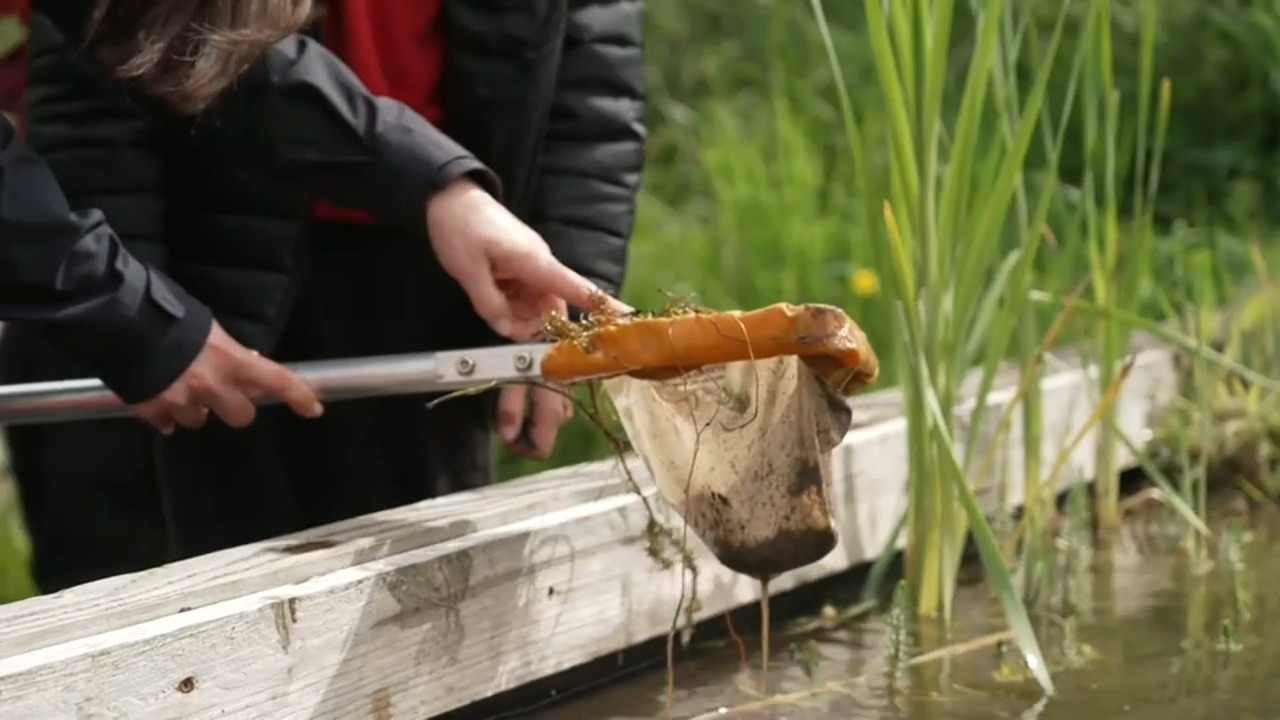
Your parents or grandparents probably talk about growing up outside — riding bikes, climbing trees, scraping up knees. Turns out, they were onto something.
The Wildlife Trusts, a UK conservation group, just wrapped up "30 Days Wild," the UK's biggest nature challenge. Millions of people, including tens of thousands of schools, took part by doing one "wild" activity a day — noticing, appreciating, or exploring nature. The Lancashire Wildlife Trust runs a similar effort called The Greenhouse Project, where people learn to grow food and care for nature together.
The idea: the more connected people feel to nature, the more likely they are to protect it. But a recent poll found that while almost all adults have fond memories of playing outside as kids, nearly half now spend just three hours outside per week — less than 30 minutes a day.

The article "Manatees: Gentle Sea Cows of Rivers and Oceans" from BBC's Discover Wildlife is a guide to these slow-moving aquatic mammals. It explains the different types of manatees, their habitats, diet, size, and how they reproduce. It also highlights the threats they face and the conservation efforts underway to protect them from extinction.

The article "Mauritius: How Sustainable Tourism Is Reviving Its Endangered Wildlife" from BBC's Discover Wildlife explores how luxury tourism is helping the island of Mauritius restore its devastated biodiversity. Through sustainable practices and conservation efforts, the tourism industry is playing a crucial role in supporting rewilding projects, combating invasive species, and contributing to reforestation, with positive results for local wildlife like the Mauritian kestrel and endemic plants.

The article "The Dangers of Shark Finning: Why It’s Harmful to Sharks and the Oceans" from BBC's Discover Wildlife discusses the severe impact of shark finning, a practice where sharks are killed for their fins and used in shark fin soup. The demand for this luxury dish, mostly in China, is rapidly growing, pushing many shark species to the brink of extinction.

The article "Habitats and Ecosystems: Understanding Their Differences and Impact on Biodiversity" from BBC's Discover Wildlife explains the differences between habitats, ecosystems, environments, and niches, as well as how these concepts affect biodiversity and the importance of understanding them for conservation efforts.

The article "Eleven of the Rarest Animals in the World at Risk of Extinction" from BBC's Discover Wildlife highlights critically endangered species, including the vaquita porpoise and the black and chestnut eagle. It explores conservation efforts and the urgent need to protect these species from habitat loss, pollution, and poaching.
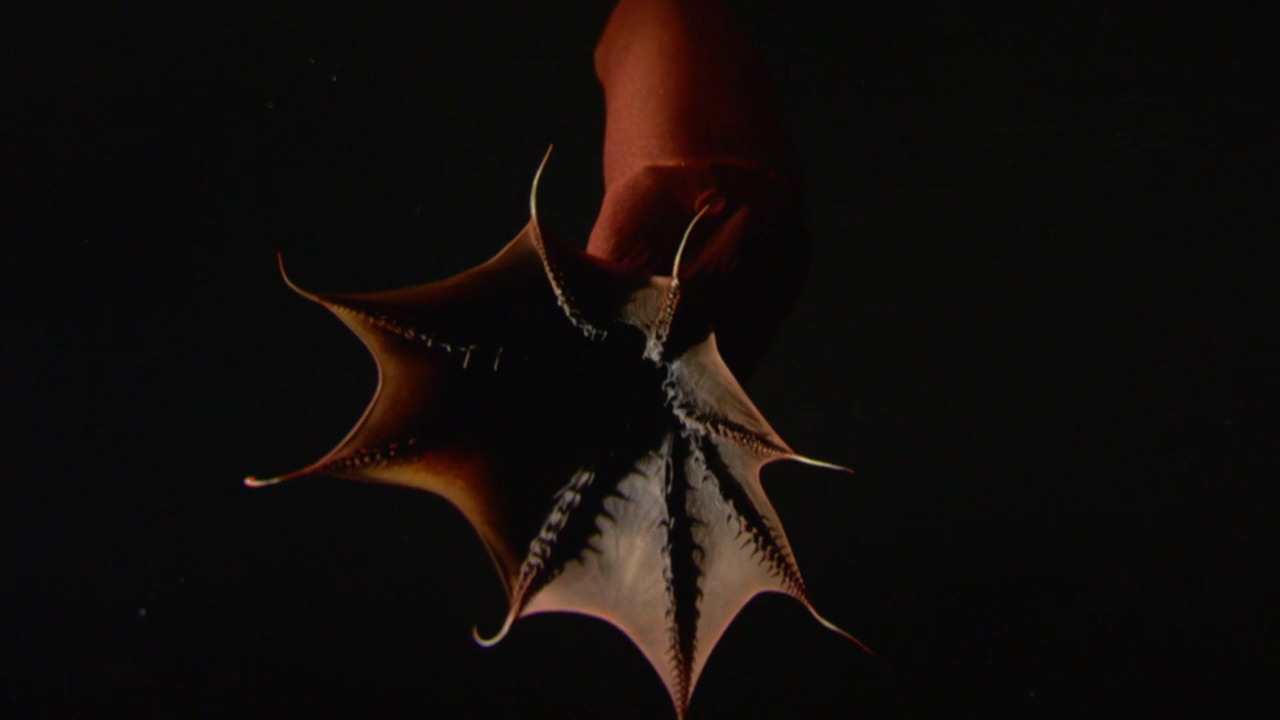
In Navigating the Dark Depths of the Ocean, narrator David Attenborough highlights the deep ocean, where no sunlight reaches, and animals have adapted to survive in total darkness with minimal food. The Dumbo octopus glides effortlessly through the water, conserving energy. The vampire squid uses bioluminescent bacteria to create light patterns that confuse predators. In this extreme environment, creatures must rely on special adaptations to detect food, avoid danger, and navigate the dark depths. This video is excerpted from BBC’s Planet Earth, a breathtaking documentary series that highlights the natural wonders of our planet.
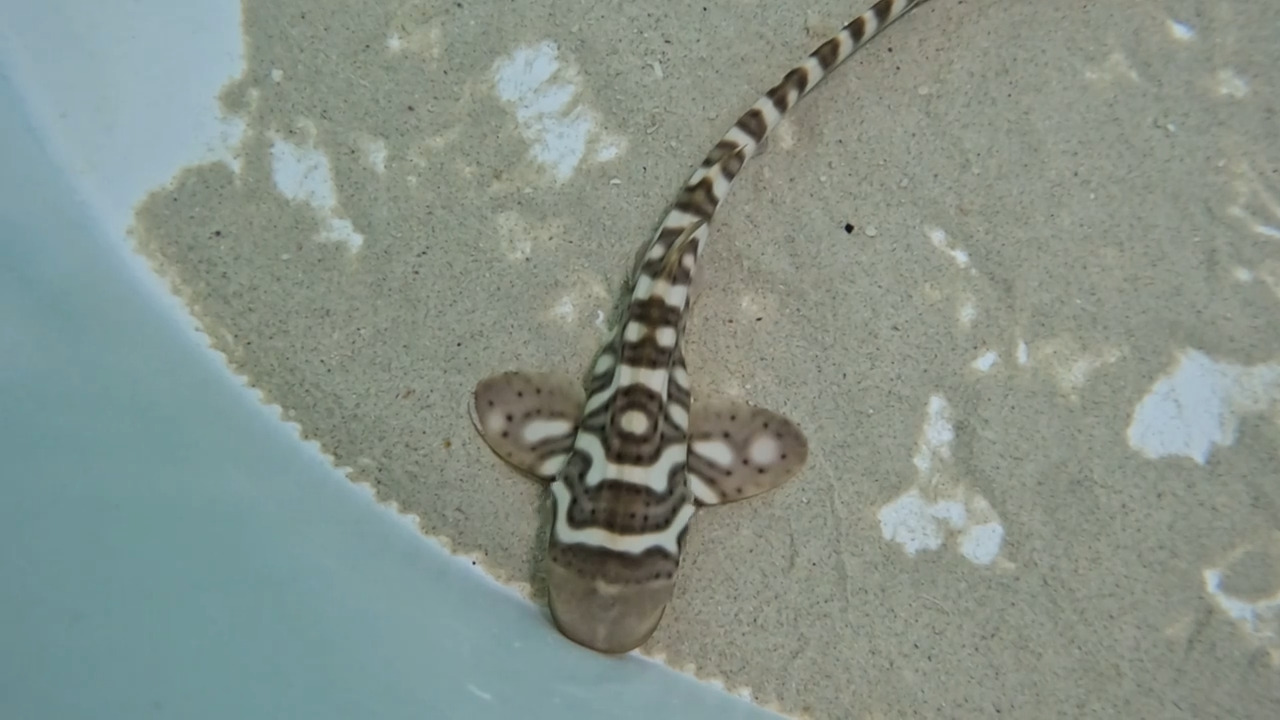
In Resharking the Oceans, host Simon Reeve learns about the struggles sharks face due to overfishing, with millions killed each year. Sharks in Raja Ampat were on the brink of extinction, but thanks to the area’s now protected status, their numbers have increased 25 times. Simon also discovers "resharking," a conservation effort to repopulate the oceans with sharks. This initiative not only helps save sharks but also creates jobs for the local community. This video is excerpted from BBC’s Wilderness With Simon Reeve, an epic adventure into the heart of Earth’s last great wild areas, where nature is at its most beautiful and fragile.
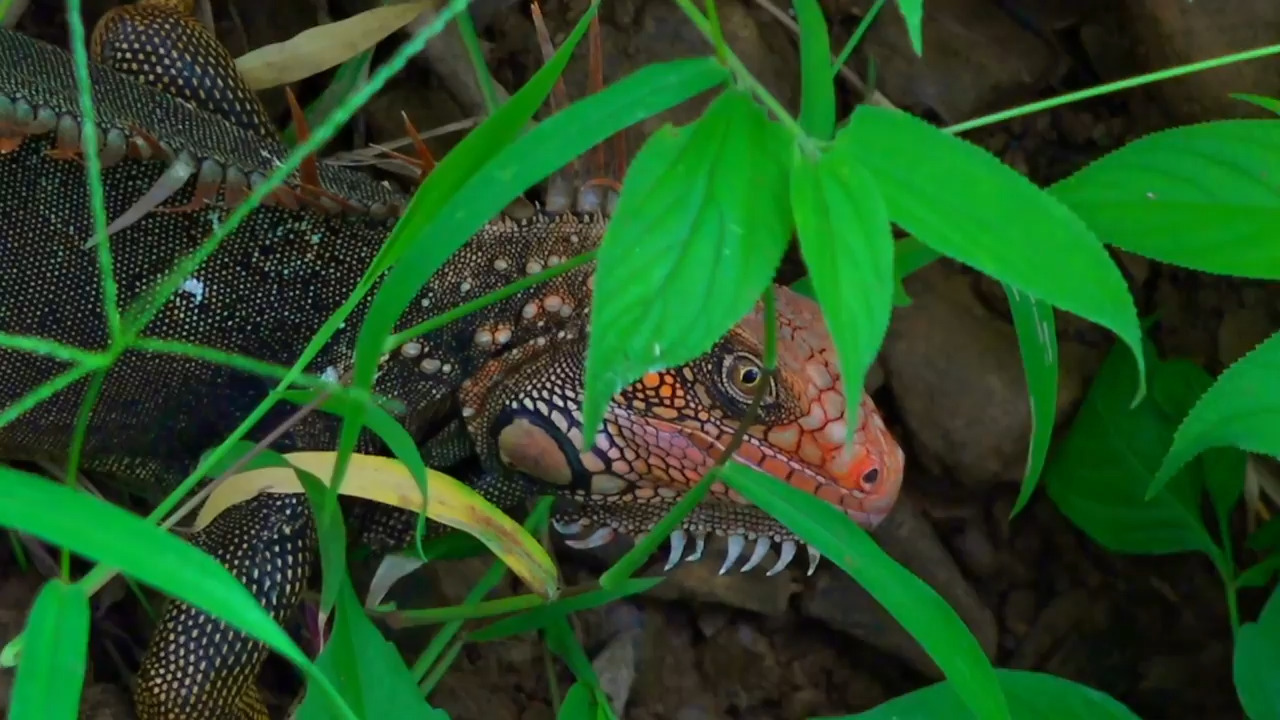
In Incentives for Sustainable Tourism: Economic and Conservation Incentives, host Simon Reeve travels to two developing nations where sustainable tourism has the potential to expand conservation efforts and protect natural lands and wildlife. This video is excerpted from BBC's Incredible Journeys With Simon Reeve, a series that highlights one journalist’s travels across the globe and the diverse cultures and peoples he meets along the way.
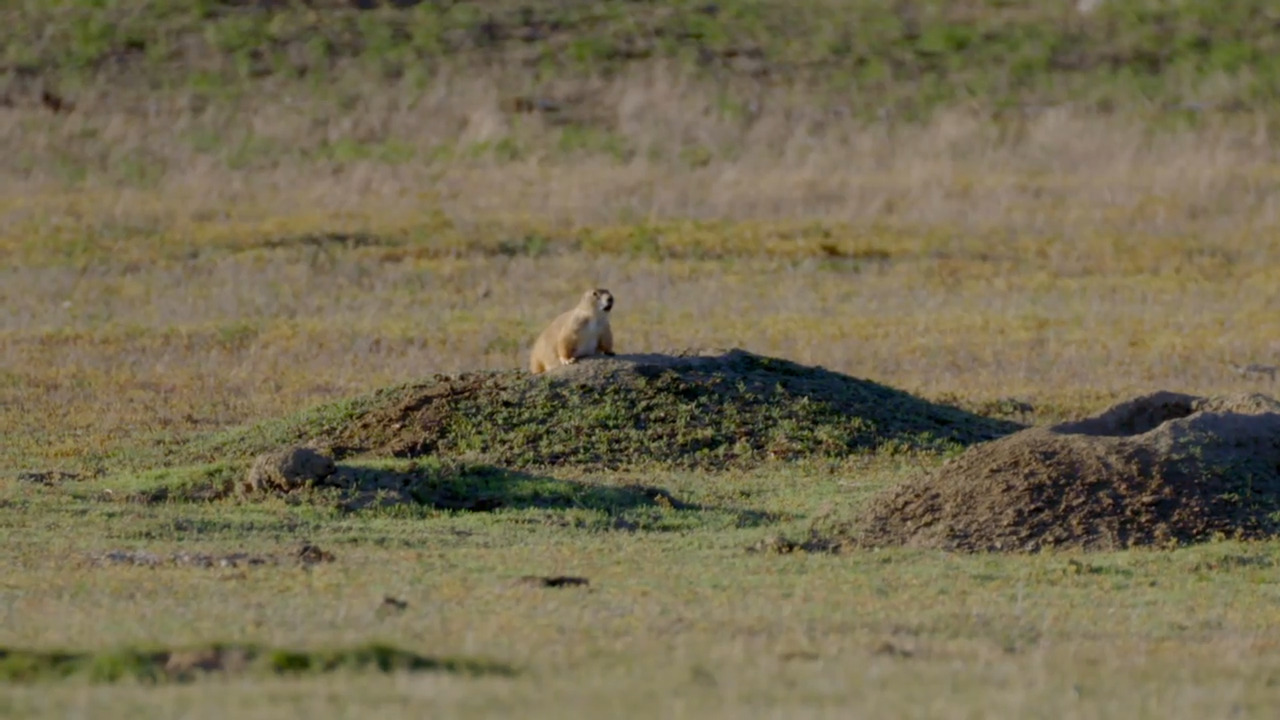
In Wildlife, Climate, and the Power of Rewilding the American Prairie, host Simon Reeve teams up with Shawn at the American Prairie Reserve to explore how rewilding efforts are bringing back wildlife like buffaloes, prairie dogs, and hawks while helping the planet tackle climate change. Shawn’s mission is clear: protect the land, restore nature’s balance, and show the world that preserving prairies is just as important as turning a profit. This video is excerpted from BBC’s The Americas With Simon Reeve, in which Simon Reeve explores the landscapes, cultures, and wildlife of North and South America.
What predator can burst through the ocean at nearly 40 miles per hour, replace thousands of teeth during its lifetime, and help keep marine ecosystems healthy? The answer may surprise you.
Separate fact from fiction as you dive into the world of the great white shark. Discover the incredible adaptations that make it one of the ocean's most successful hunters, from powerful jaws and razor-sharp senses to stealthy hunting strategies. You'll also learn why great white sharks are essential to healthy oceans and how conservation efforts are helping protect this iconic predator.
Teachers and parents, you can use this fact file to:
- Introduce an animal, wildlife, or life science unit
- Support nonfiction reading and vocabulary practice
- Explore animal adaptations, behaviors, and habitats
- Compare animals and the ecosystems they live in
- Practice finding and organizing information from nonfiction texts
- Prepare students for animal research projects or presentations (use our animal report templates!)
- Connect science learning to conservation and environmental issues
- Pair with videos, articles, or other informational texts (see Related Resources below)
What shark gets its name from the dark stripes along its body and has one of the most varied diets in the ocean? Meet one of the sea's most adaptable predators.
Powerful, curious, and built to thrive in a wide range of habitats, tiger sharks are among the ocean's most successful hunters. Discover how they use their keen senses and powerful jaws to find food, why they migrate across thousands of miles of ocean, and what role they play in keeping marine ecosystems in balance. You'll also learn about the challenges tiger sharks face and the efforts underway to protect them.
Teachers and parents, you can use this fact file to:
- Introduce an animal, wildlife, or life science unit
- Support nonfiction reading and vocabulary practice
- Explore animal adaptations, behaviors, and habitats
- Compare animals and the ecosystems they live in
- Practice finding and organizing information from nonfiction texts
- Prepare students for animal research projects or presentations (use our animal report templates!)
- Connect science learning to conservation and environmental issues
- Pair with videos, articles, or other informational texts (see Related Resources below)
Your parents or grandparents probably talk about growing up outside — riding bikes, climbing trees, scraping up knees. Turns out, they were onto something.
The Wildlife Trusts, a UK conservation group, just wrapped up "30 Days Wild," the UK's biggest nature challenge. Millions of people, including tens of thousands of schools, took part by doing one "wild" activity a day — noticing, appreciating, or exploring nature. The Lancashire Wildlife Trust runs a similar effort called The Greenhouse Project, where people learn to grow food and care for nature together.
The idea: the more connected people feel to nature, the more likely they are to protect it. But a recent poll found that while almost all adults have fond memories of playing outside as kids, nearly half now spend just three hours outside per week — less than 30 minutes a day.
The article "Manatees: Gentle Sea Cows of Rivers and Oceans" from BBC's Discover Wildlife is a guide to these slow-moving aquatic mammals. It explains the different types of manatees, their habitats, diet, size, and how they reproduce. It also highlights the threats they face and the conservation efforts underway to protect them from extinction.
The article "Mauritius: How Sustainable Tourism Is Reviving Its Endangered Wildlife" from BBC's Discover Wildlife explores how luxury tourism is helping the island of Mauritius restore its devastated biodiversity. Through sustainable practices and conservation efforts, the tourism industry is playing a crucial role in supporting rewilding projects, combating invasive species, and contributing to reforestation, with positive results for local wildlife like the Mauritian kestrel and endemic plants.
The article "The Dangers of Shark Finning: Why It’s Harmful to Sharks and the Oceans" from BBC's Discover Wildlife discusses the severe impact of shark finning, a practice where sharks are killed for their fins and used in shark fin soup. The demand for this luxury dish, mostly in China, is rapidly growing, pushing many shark species to the brink of extinction.
The article "Habitats and Ecosystems: Understanding Their Differences and Impact on Biodiversity" from BBC's Discover Wildlife explains the differences between habitats, ecosystems, environments, and niches, as well as how these concepts affect biodiversity and the importance of understanding them for conservation efforts.
The article "Eleven of the Rarest Animals in the World at Risk of Extinction" from BBC's Discover Wildlife highlights critically endangered species, including the vaquita porpoise and the black and chestnut eagle. It explores conservation efforts and the urgent need to protect these species from habitat loss, pollution, and poaching.
In Navigating the Dark Depths of the Ocean, narrator David Attenborough highlights the deep ocean, where no sunlight reaches, and animals have adapted to survive in total darkness with minimal food. The Dumbo octopus glides effortlessly through the water, conserving energy. The vampire squid uses bioluminescent bacteria to create light patterns that confuse predators. In this extreme environment, creatures must rely on special adaptations to detect food, avoid danger, and navigate the dark depths. This video is excerpted from BBC’s Planet Earth, a breathtaking documentary series that highlights the natural wonders of our planet.
In Resharking the Oceans, host Simon Reeve learns about the struggles sharks face due to overfishing, with millions killed each year. Sharks in Raja Ampat were on the brink of extinction, but thanks to the area’s now protected status, their numbers have increased 25 times. Simon also discovers "resharking," a conservation effort to repopulate the oceans with sharks. This initiative not only helps save sharks but also creates jobs for the local community. This video is excerpted from BBC’s Wilderness With Simon Reeve, an epic adventure into the heart of Earth’s last great wild areas, where nature is at its most beautiful and fragile.
In Incentives for Sustainable Tourism: Economic and Conservation Incentives, host Simon Reeve travels to two developing nations where sustainable tourism has the potential to expand conservation efforts and protect natural lands and wildlife. This video is excerpted from BBC's Incredible Journeys With Simon Reeve, a series that highlights one journalist’s travels across the globe and the diverse cultures and peoples he meets along the way.
In Wildlife, Climate, and the Power of Rewilding the American Prairie, host Simon Reeve teams up with Shawn at the American Prairie Reserve to explore how rewilding efforts are bringing back wildlife like buffaloes, prairie dogs, and hawks while helping the planet tackle climate change. Shawn’s mission is clear: protect the land, restore nature’s balance, and show the world that preserving prairies is just as important as turning a profit. This video is excerpted from BBC’s The Americas With Simon Reeve, in which Simon Reeve explores the landscapes, cultures, and wildlife of North and South America.