
In How Data Transformed Trading, discover how data became a powerful tool for understanding human behavior — and making big money! Meet David Harding, a science graduate who shook up the chaotic world of trading by using math and data to predict price patterns. While others trusted their gut, Harding believed data and the right computer algorithms could crack the code of the stock market. Today, his company invests billions, proving that smart data (and a little science) can change the game! This video is excerpted from BBC’s Horizon: The Age of Big Data, which explores how data has shaped industries, economies, and human behavior.
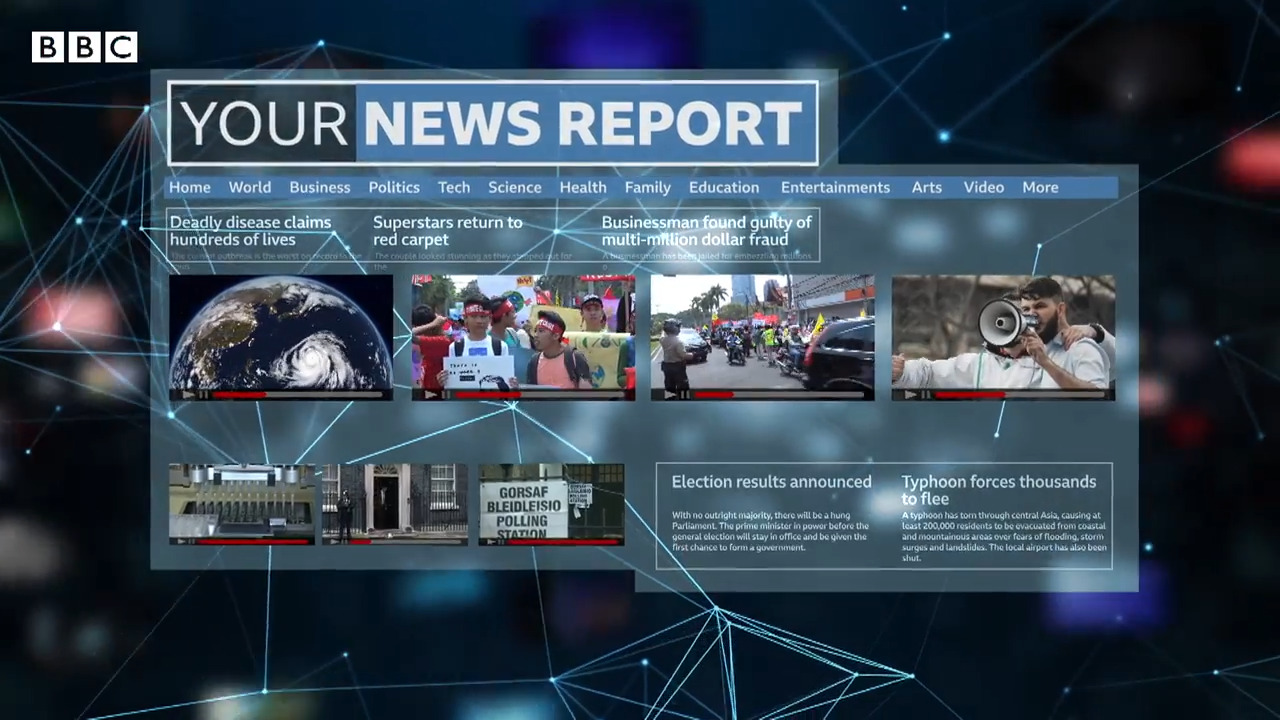
In Who Decides?, host Radzi Chinyanganya discovers who decides what people see, read, and hear in the news. Because there are so many events and limited space to report the news, all news is filtered. In journalism, editors decide which stories are worth telling. The companies that run apps, social media, and websites, use computer programs called algorithms to decide which content individuals see. They might try to influence consumers’ views or emotions. Getting news from varied sources is the only way to ensure you’re seeing the complete picture. This video is excerpted from BBC’s My World, a program created for teenagers eager to learn more about the important stories shaping our world.

In Islamic Advances in Math and Science Helped Update the Math of the World, host Andrew Marr takes us back to the 9th Century. The Islamic scholar Muhammad al-Khwarizmi and other scholars are using measurements and calculations to calculate the Earth’s circumference and create an updated map the Earth. Learn how the work of the Islamic scholars impacts today’s technology and mathematics. This video is excerpted from BBC’s Andrew Marr's History of the World, a story of human history that uses reenactments, modern footage, and storytelling to explain history’s greatest achievements.

We’re live from the newsroom! Introduce your students to jobs, workflows, and decision-making processes of newsrooms. In this lesson, they’ll take on various roles and learn what makes up a functioning newsroom.

Over the next few months, scrolling on your phone may look a little different. That’s because Meta, the company behind Facebook and Instagram, has been facing more pressure over claims that its platforms harm young people, and both citizens and the legal system have been demanding a change that has landed Meta in a lawsuit.
A judge in New Mexico did not hold back on criticizing harmful content, declaring Meta’s platforms a "public nuisance" and comparing the company to a factory creating toxic pollution. Yikes. The court also called out Meta for design features like infinite scroll, notifications, and recommendation algorithms that encourage people to stay online longer.
Meta was ordered to put a whopping $567 million into a five-year fund addressing harms. That’s on top of $375 million awarded earlier in the same case! But believe it or not, that’s not a ton of money for the company. The important part is not the money itself, but the indication that people are demanding change and getting companies to listen. Meta isn’t just being asked to pay a fine but to actually make changes, like restricting contact with adults, limiting notifications, and placing limits on how long people under 18 can spend on Facebook and Instagram.
Meta strongly disputes the ruling and plans to appeal, but the case has already set a larger question into motion about if tech companies should be held responsible not only for what users post but also how their platforms are designed.
In How Data Transformed Trading, discover how data became a powerful tool for understanding human behavior — and making big money! Meet David Harding, a science graduate who shook up the chaotic world of trading by using math and data to predict price patterns. While others trusted their gut, Harding believed data and the right computer algorithms could crack the code of the stock market. Today, his company invests billions, proving that smart data (and a little science) can change the game! This video is excerpted from BBC’s Horizon: The Age of Big Data, which explores how data has shaped industries, economies, and human behavior.
In Who Decides?, host Radzi Chinyanganya discovers who decides what people see, read, and hear in the news. Because there are so many events and limited space to report the news, all news is filtered. In journalism, editors decide which stories are worth telling. The companies that run apps, social media, and websites, use computer programs called algorithms to decide which content individuals see. They might try to influence consumers’ views or emotions. Getting news from varied sources is the only way to ensure you’re seeing the complete picture. This video is excerpted from BBC’s My World, a program created for teenagers eager to learn more about the important stories shaping our world.
In Islamic Advances in Math and Science Helped Update the Math of the World, host Andrew Marr takes us back to the 9th Century. The Islamic scholar Muhammad al-Khwarizmi and other scholars are using measurements and calculations to calculate the Earth’s circumference and create an updated map the Earth. Learn how the work of the Islamic scholars impacts today’s technology and mathematics. This video is excerpted from BBC’s Andrew Marr's History of the World, a story of human history that uses reenactments, modern footage, and storytelling to explain history’s greatest achievements.
We’re live from the newsroom! Introduce your students to jobs, workflows, and decision-making processes of newsrooms. In this lesson, they’ll take on various roles and learn what makes up a functioning newsroom.
Over the next few months, scrolling on your phone may look a little different. That’s because Meta, the company behind Facebook and Instagram, has been facing more pressure over claims that its platforms harm young people, and both citizens and the legal system have been demanding a change that has landed Meta in a lawsuit.
A judge in New Mexico did not hold back on criticizing harmful content, declaring Meta’s platforms a "public nuisance" and comparing the company to a factory creating toxic pollution. Yikes. The court also called out Meta for design features like infinite scroll, notifications, and recommendation algorithms that encourage people to stay online longer.
Meta was ordered to put a whopping $567 million into a five-year fund addressing harms. That’s on top of $375 million awarded earlier in the same case! But believe it or not, that’s not a ton of money for the company. The important part is not the money itself, but the indication that people are demanding change and getting companies to listen. Meta isn’t just being asked to pay a fine but to actually make changes, like restricting contact with adults, limiting notifications, and placing limits on how long people under 18 can spend on Facebook and Instagram.
Meta strongly disputes the ruling and plans to appeal, but the case has already set a larger question into motion about if tech companies should be held responsible not only for what users post but also how their platforms are designed.