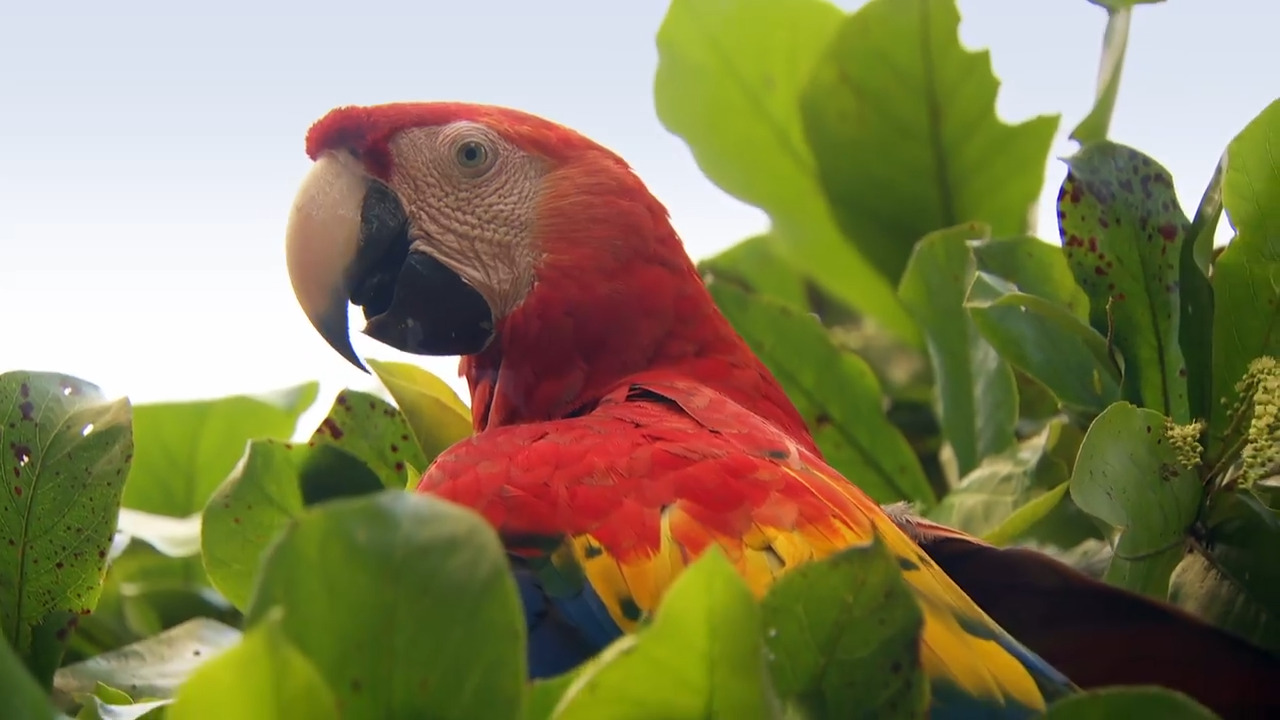
In Visit the Natural Playground of Costa Rica, host Simon Reeve and his guide explore lush forests filled with iguanas, butterflies, toucans, macaws, and even capybaras! Discover how this small country, packed with over 500,000 species of wildlife, is a world leader in protecting nature as children plant thousands of trees in a reforestation project that’s growing forests for the future. This video is excerpted from BBC’s The Americas With Simon Reeve, in which Simon Reeve explores the landscapes, cultures, and wildlife of North and South America
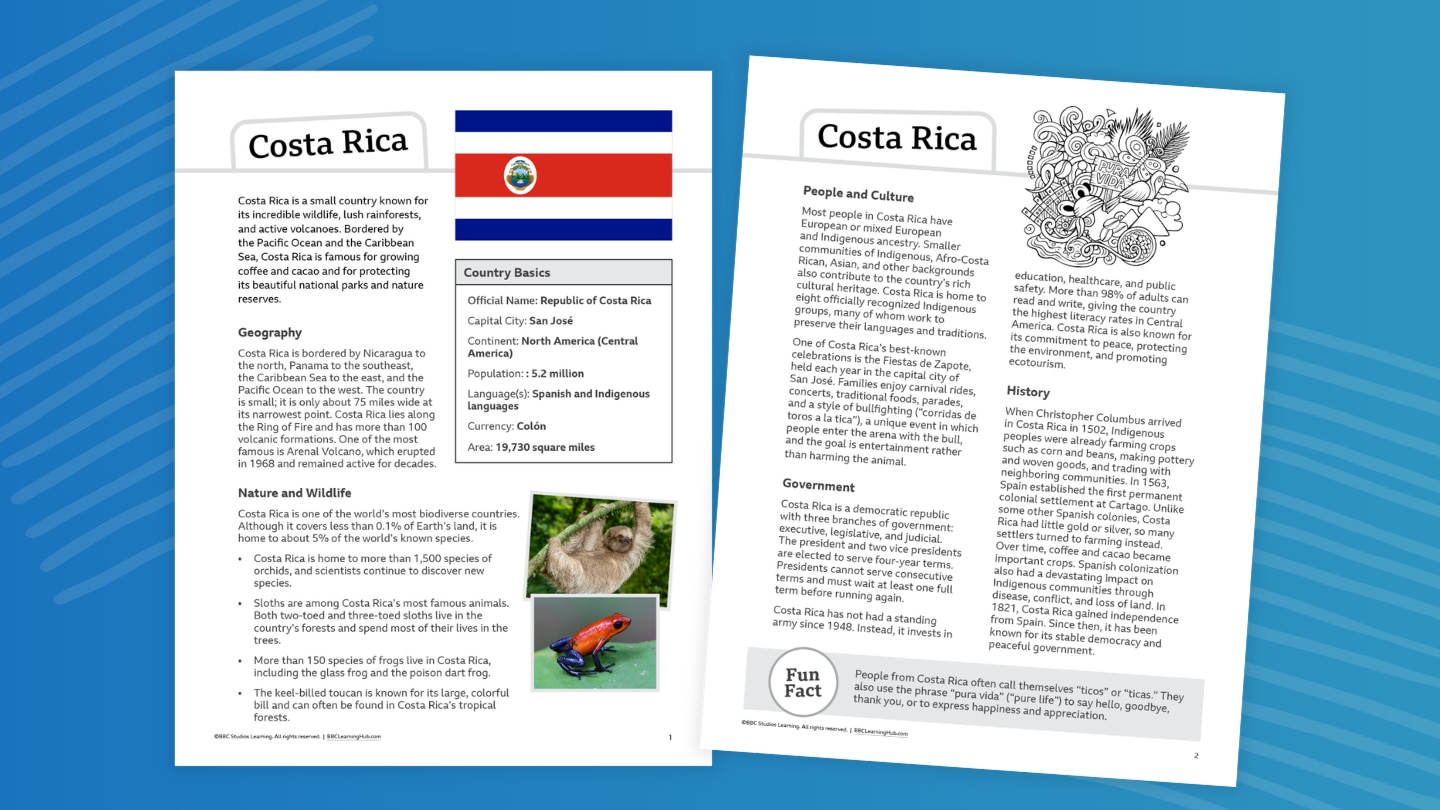
What small country is home to an astonishing variety of plants and animals, hundreds of volcanoes, and tropical forests stretching from coast to coast? Meet Costa Rica, a Central American country known for its incredible biodiversity and commitment to protecting nature.
From sloths and glass frogs to colorful toucans and thousands of orchids, Costa Rica is packed with wildlife. Discover how Indigenous peoples and Spanish colonization shaped the country, learn about its government and culture, and explore traditions such as the Fiestas de Zapote and "pura vida." You’ll also find out why Costa Rica has become a leader in protecting forests, wildlife, and other natural resources.
Teachers and parents, you can use this fact file to:
- Introduce a geography or social studies unit
- Support nonfiction reading practice
- Compare countries and cultures
- Complete map and research activities
- Prepare students for projects or presentations (use our country report template!)
- Pair with videos, articles, or other informational texts (see Related Resources below)

The article "Exploring Costa Rica’s Rich Wildlife: Which Animals Can You See?" from BBC's Discover Wildlife explores the incredible range of animals that live in Costa Rica. From howler monkeys whose calls can be heard over long distances, to the rare jaguar, the country is home to some of the most unique species in the world. It also highlights vibrant creatures like the resplendent quetzal and endangered sea turtles.
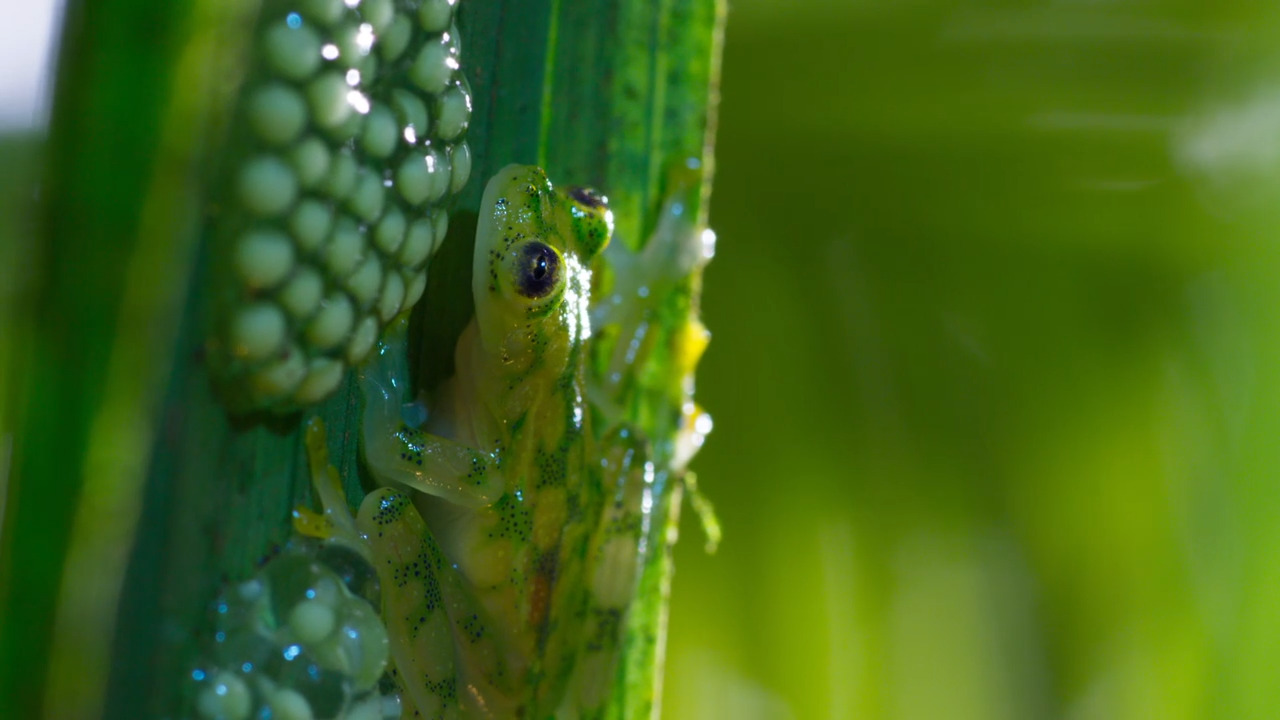
In Camouflage in the Jungle, narrator Sir David Attenborough explores the understory in Costa Rica where animals use camouflage and mimicry to avoid becoming prey. The glass frog avoids detection with its transparent body. The pattern on its back mimics the young egg sacs it is protecting, allowing it to confuse and fight off attacking wasps. This video is excerpted from BBC’s Planet Earth II, a breathtaking documentary series that highlights the natural wonders of our planet.
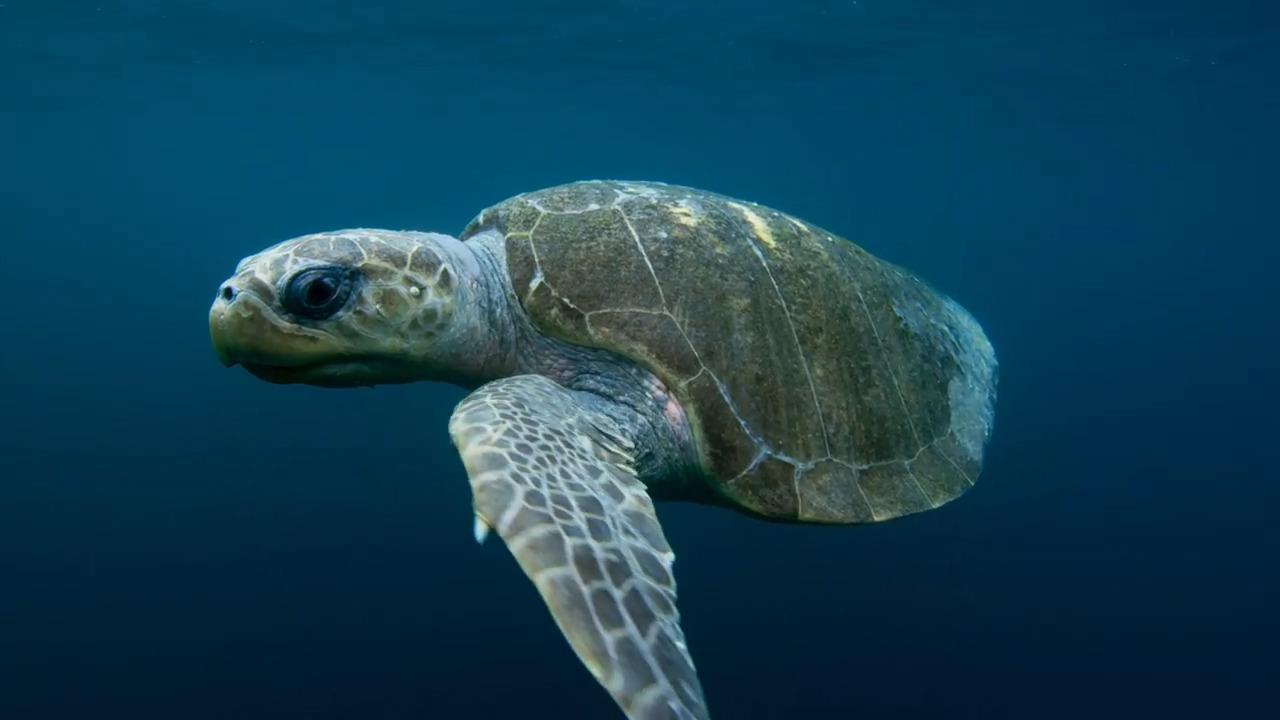
In The Olive Ridley Turtle on Land and Sea, narrator Sir David Attenborough follows a sea turtle off the coast of Costa Rica, resting after a 1,500-mile journey to lay her eggs. She comes to rest on the same beach where she herself hatched many years before. This video is excerpted from BBC’s Blue Planet II, a natural history series that explores the world's oceans, the animals that live in them, and the threats they face, using modern filming techniques and equipment to capture previously unseen areas of the ocean.
In Incentives for Sustainable Tourism: Economic and Conservation Incentives, host Simon Reeve travels to two developing nations where sustainable tourism has the potential to expand conservation efforts and protect natural lands and wildlife. This video is excerpted from BBC's Incredible Journeys With Simon Reeve, a series that highlights one journalist’s travels across the globe and the diverse cultures and peoples he meets along the way.
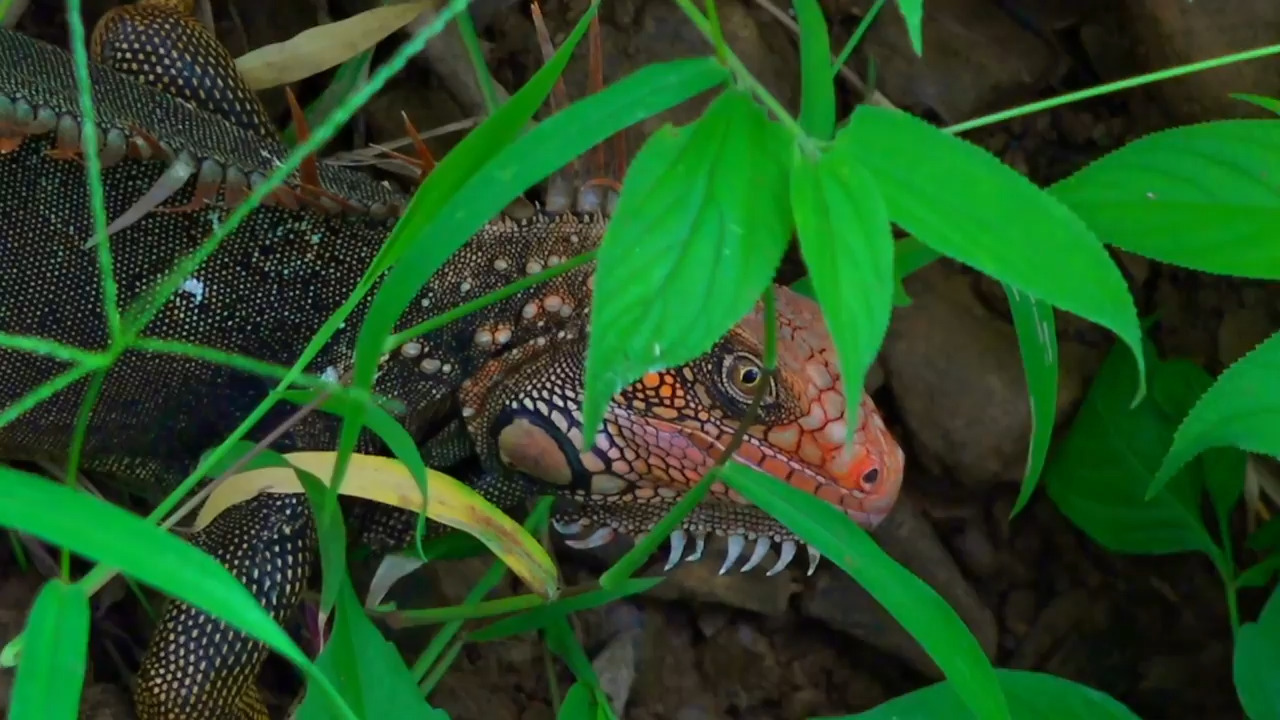
In Visit the Natural Playground of Costa Rica, host Simon Reeve and his guide explore lush forests filled with iguanas, butterflies, toucans, macaws, and even capybaras! Discover how this small country, packed with over 500,000 species of wildlife, is a world leader in protecting nature as children plant thousands of trees in a reforestation project that’s growing forests for the future. This video is excerpted from BBC’s The Americas With Simon Reeve, in which Simon Reeve explores the landscapes, cultures, and wildlife of North and South America
What small country is home to an astonishing variety of plants and animals, hundreds of volcanoes, and tropical forests stretching from coast to coast? Meet Costa Rica, a Central American country known for its incredible biodiversity and commitment to protecting nature.
From sloths and glass frogs to colorful toucans and thousands of orchids, Costa Rica is packed with wildlife. Discover how Indigenous peoples and Spanish colonization shaped the country, learn about its government and culture, and explore traditions such as the Fiestas de Zapote and "pura vida." You’ll also find out why Costa Rica has become a leader in protecting forests, wildlife, and other natural resources.
Teachers and parents, you can use this fact file to:
- Introduce a geography or social studies unit
- Support nonfiction reading practice
- Compare countries and cultures
- Complete map and research activities
- Prepare students for projects or presentations (use our country report template!)
- Pair with videos, articles, or other informational texts (see Related Resources below)
The article "Exploring Costa Rica’s Rich Wildlife: Which Animals Can You See?" from BBC's Discover Wildlife explores the incredible range of animals that live in Costa Rica. From howler monkeys whose calls can be heard over long distances, to the rare jaguar, the country is home to some of the most unique species in the world. It also highlights vibrant creatures like the resplendent quetzal and endangered sea turtles.
In Camouflage in the Jungle, narrator Sir David Attenborough explores the understory in Costa Rica where animals use camouflage and mimicry to avoid becoming prey. The glass frog avoids detection with its transparent body. The pattern on its back mimics the young egg sacs it is protecting, allowing it to confuse and fight off attacking wasps. This video is excerpted from BBC’s Planet Earth II, a breathtaking documentary series that highlights the natural wonders of our planet.
In The Olive Ridley Turtle on Land and Sea, narrator Sir David Attenborough follows a sea turtle off the coast of Costa Rica, resting after a 1,500-mile journey to lay her eggs. She comes to rest on the same beach where she herself hatched many years before. This video is excerpted from BBC’s Blue Planet II, a natural history series that explores the world's oceans, the animals that live in them, and the threats they face, using modern filming techniques and equipment to capture previously unseen areas of the ocean.
In Incentives for Sustainable Tourism: Economic and Conservation Incentives, host Simon Reeve travels to two developing nations where sustainable tourism has the potential to expand conservation efforts and protect natural lands and wildlife. This video is excerpted from BBC's Incredible Journeys With Simon Reeve, a series that highlights one journalist’s travels across the globe and the diverse cultures and peoples he meets along the way.