Take a Deep Dive on Penguins With This Penguin Research Journal
Have each student select a penguin species to research and synthesize their notes by creating a research journal page.


In this activity, students will step into the boots of Antarctic research scientists as they uncover the secrets of penguin life! They’ll start by sharing what they already know about Antarctica before "traveling" there through a BBC Frozen Planet video, which will let them experience the continent up close. Then, each student will select a penguin species to research and they will use a BBC video from Seven Worlds, One Planet or Frozen Planet to gather their observations. Students will synthesize their notes as they create a research journal page, and they will then wrap up by discussing what new questions they’re curious to investigate next!
More Like This
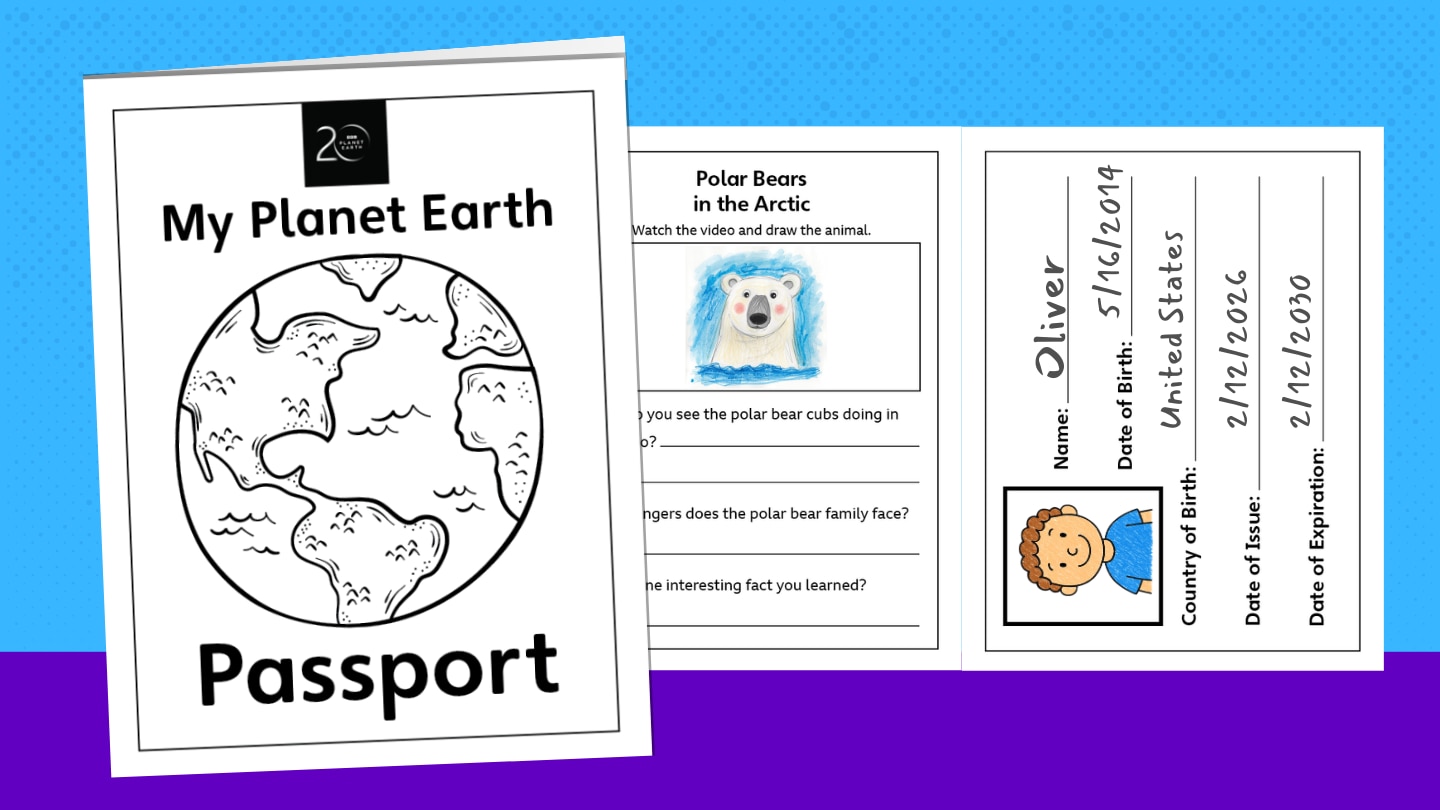
This Planet Earth Passport is your students' perfect guide (just right for ages 8–11) to exploring some of the most-watched videos clips from the iconic BBC series Planet Earth. And it's right in time for Earth Day on April 22!
You can take part by showing your class our playlist of eight amazing animal videos and using our passport as a companion. Students will follow the map to each location and answer questions at each stop. They'll explore:
- Polar Bears in Antarctica
- Bobcats in the Rocky Mountains
- Catfish in France
- Marine Iguanas in the Galápagos
- Cave Swiftlets in Borneo
- Mouse Lemurs in Madagascar
- Dolphins in Western Australia
- Emperor Penguins in Antarctica
To make copies of the passport, print on both sides flipped on the long edge. Make sure you collate and then cut them in half (there are two passports per set).
The polar regions are the harshest places on Earth, and somehow life thrives there anyway — polar bears in the Arctic, penguins across Antarctica's ice. It's a good ecosystem for showing students that "extreme" doesn't mean "empty."
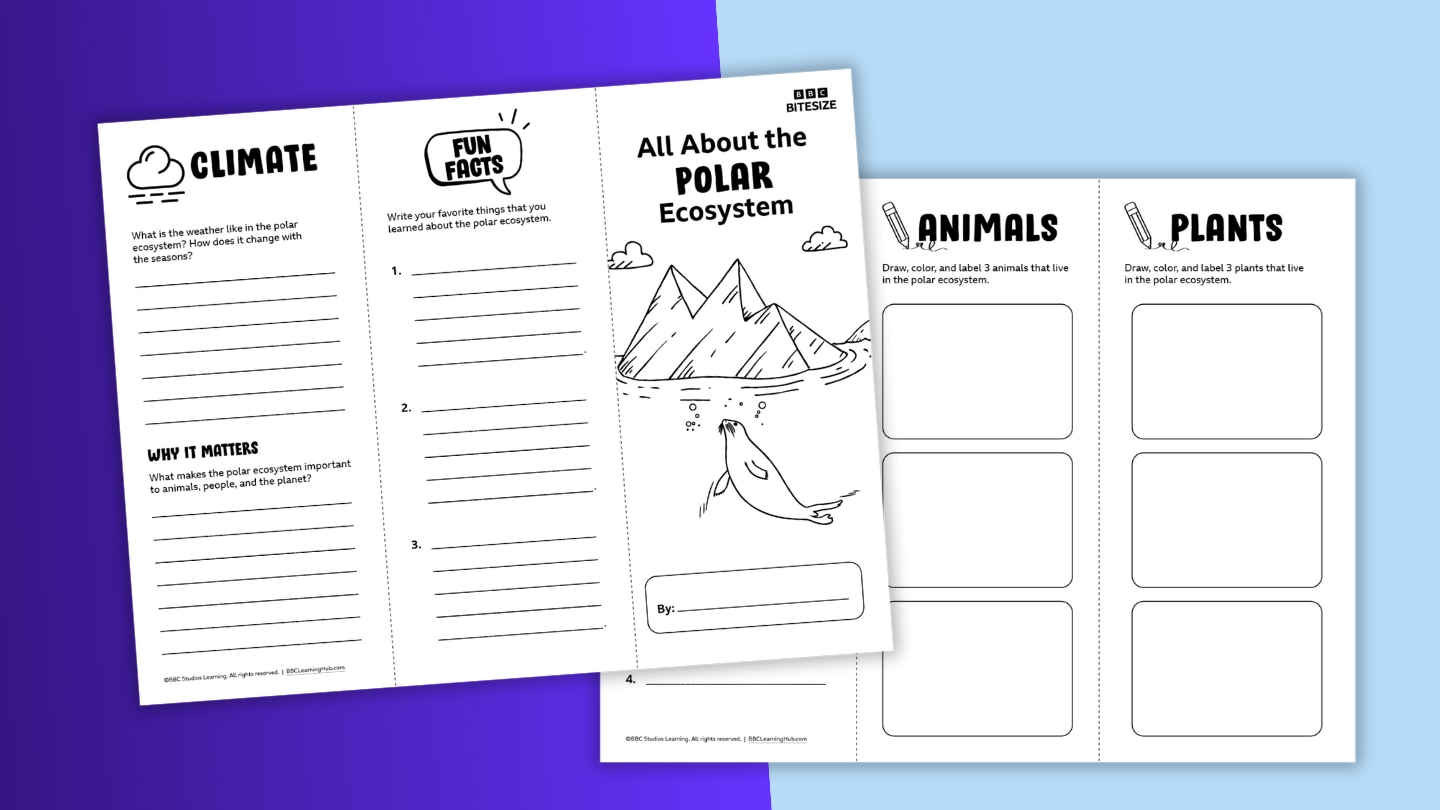
After watching polar videos, have students dig deeper with their own research and build a brochure covering:
- Location of the ecosystem on a world map
- Adjectives that describe the ecosystem
- Three animals that live there
- Three plants that grow there
- The climate
- Why the ecosystem matters
- Their favorite fun facts
Students summarize in their own words, which means they're practicing a real skill: pulling information from multiple sources and deciding what's worth keeping.
This Planet Earth Passport is your students' perfect guide (just right for ages 8–11) to exploring some of the most-watched videos clips from the iconic BBC series Planet Earth. And it's right in time for Earth Day on April 22!
You can take part by showing your class our playlist of eight amazing animal videos and using our passport as a companion. Students will follow the map to each location and answer questions at each stop. They'll explore:
- Polar Bears in Antarctica
- Bobcats in the Rocky Mountains
- Catfish in France
- Marine Iguanas in the Galápagos
- Cave Swiftlets in Borneo
- Mouse Lemurs in Madagascar
- Dolphins in Western Australia
- Emperor Penguins in Antarctica
To make copies of the passport, print on both sides flipped on the long edge. Make sure you collate and then cut them in half (there are two passports per set).
The polar regions are the harshest places on Earth, and somehow life thrives there anyway — polar bears in the Arctic, penguins across Antarctica's ice. It's a good ecosystem for showing students that "extreme" doesn't mean "empty."
After watching polar videos, have students dig deeper with their own research and build a brochure covering:
- Location of the ecosystem on a world map
- Adjectives that describe the ecosystem
- Three animals that live there
- Three plants that grow there
- The climate
- Why the ecosystem matters
- Their favorite fun facts
Students summarize in their own words, which means they're practicing a real skill: pulling information from multiple sources and deciding what's worth keeping.