
Bye-Bye, Red Bull: A School’s Energy Drink Ban Has Eye-Opening Results
You may have heard your parents blame their pre-coffee crankiness on a lack of caffeine, but a high school in England says banning caffeinated energy drinks has had positive effects, like calmer classes and better interpersonal relationships.
The changes the school saw in student behavior suggest that energy drinks contributed to hyperactivity, littering, and disruption, but there’s another culprit in the drinks besides caffeine that gives drinkers a boost: sugar. Students often didn’t realize how much sugar was in the drinks until the school taught them more about the ingredients. Spoiler alert: it’s a lot.
Some energy drinks contain the equivalent of 13 teaspoons (that’s 52 grams) of sugar. That’s about two whole Hershey’s bars! Or a dozen marshmallows! Or 14 graham cracker sheets! We don’t want s'mores, you want s'mores!
After the ban, the school reported that detentions dropped by about one-third, and teachers and students reported better concentration, participation, and relationships in class. Students even say the place feels friendlier since the drinks were banned! But tread lightly: dropping an “Are you sure you really need all that caffeine?” on your groggy parents at 6 a.m. might be a one-way ticket to getting grounded…
Take the Challenge
More News Stories
It's tempting to think that seeing is believing, but that's not always the case. When scrolling the internet, it's important to put on your skepticism hat. There's a lot of fake stuff out there, and some of it is convincing.
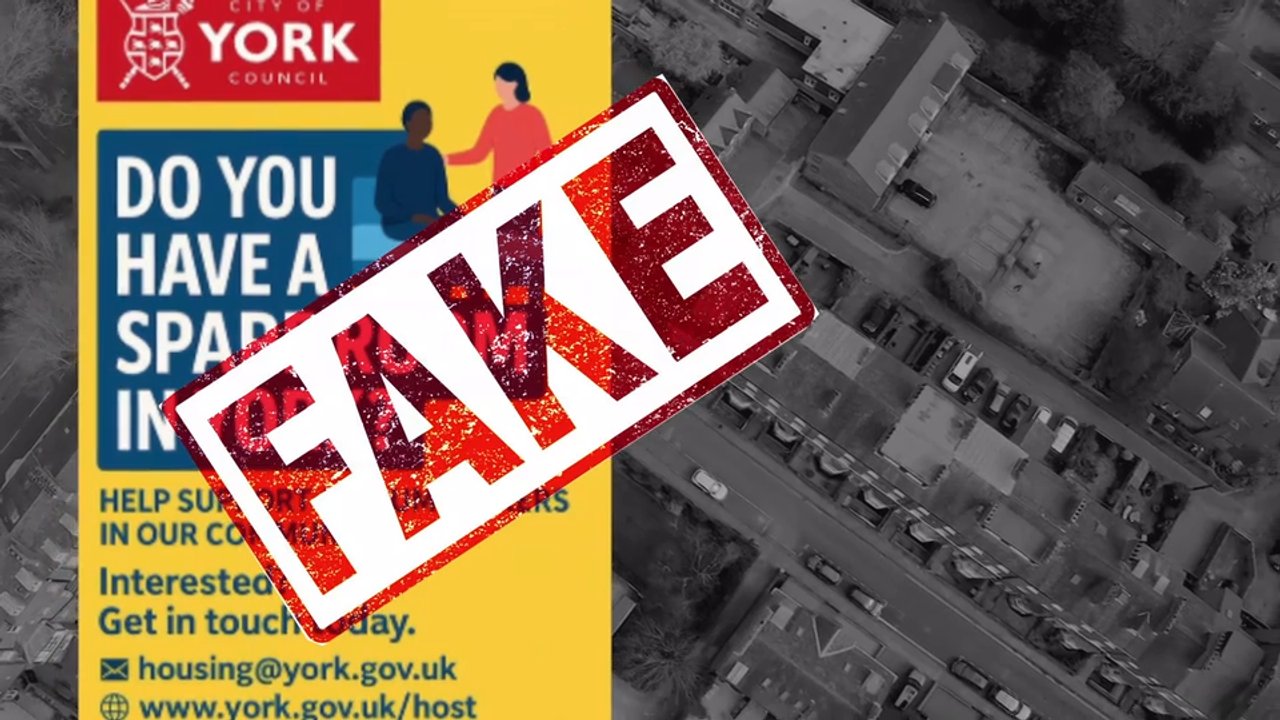
For example, a Facebook post appeared to come from York Council — the local government office for the city of York, England. It asked people with spare rooms to house asylum seekers (people who have fled their home country and are asking a government for protection). The post wasn't real, but it spread quickly across Facebook, Instagram, TikTok, X, and YouTube. BBC Verify, the BBC's fact-checking team, estimated it could have reached more than a million people.
Misinformation like this can cause real problems, especially when it spreads about sensitive subjects like asylum seekers. Repeated exposure to false information can also make people question what's true at all — damaging trust between people and communities.
So how can you tell what's fake? Even careful readers are finding it harder to spot, while fake content is getting easier to make — a dangerous combination. The fake council post looked convincing: it had an official logo, professional-sounding text, and even a real email address. But a few small details gave it away: the logo was slightly distorted, some words were misspelled, parts of the image looked unnatural, and the AI-generated hands had too many fingers.
Those details are easy to miss when scrolling quickly — but learning to spot them is exactly what makes the difference between falling for a fake and catching one.
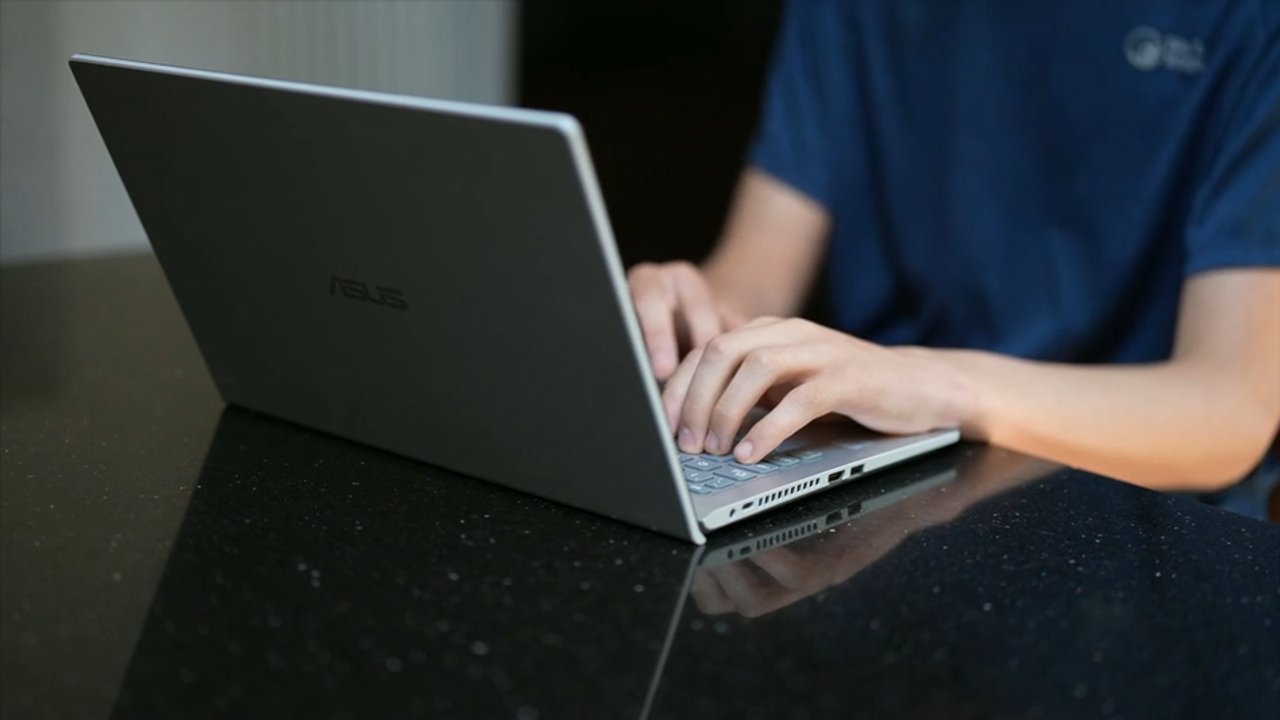
These days, youth tech knowledge goes way beyond helping parents get out of their front-facing camera. Around the world, teenagers are being arrested in connection to serious cyberattacks that have disrupted everywhere from supermarkets to transport systems to healthcare companies, and even individuals.
But it’s not like these teens want to rob everyone of their crypto, or change all the supermarket barcodes to get free cookies. A young man named Lucas, for example, was caught twice hacking into his school computers so he could play games and access blocked websites. But he wasn’t expelled or arrested. Instead, he was enrolled in Cyber Choices, a nationwide program designed to steer young people away from illegal hacking.
The program teaches participants what is legal and illegal while encouraging them to use their technical skills for good instead of evil through training, qualifications, and future careers. So far, around 1,000 young people have gone through the program.
Cyber Choices is a voluntary program that’s hopefully appealing enough to tempt participants to join willingly, but that’s not always the case. Owen Flowers, for example, was offered the program as a teenager but refused to participate. He was later sentenced to five and a half years in prison for hacking.
Cyber Choices may be a helpful intervention, but schools are still taking preemptive action by having police do regular visits to teach students about cybercrime.
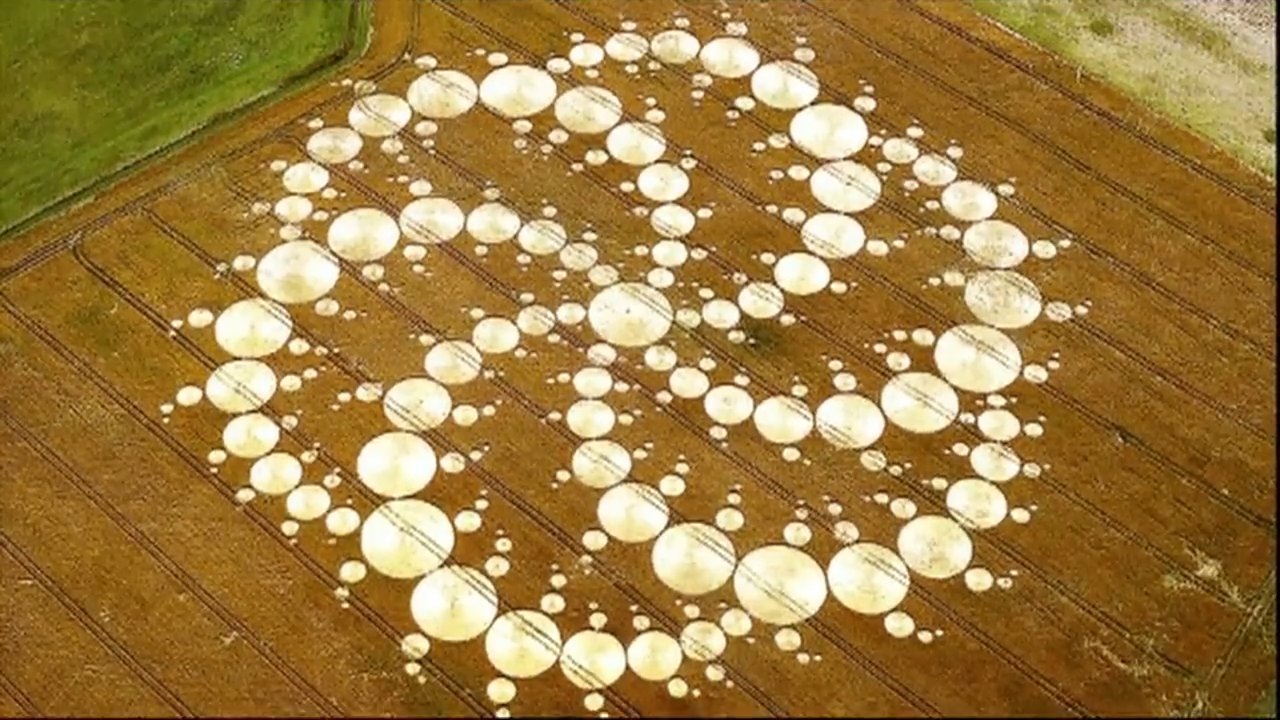
Crop circles have puzzled people for decades, and the Wiltshire countryside — a rural county in southwest England known for its rolling farmland — has had plenty to puzzle over this summer as new formations kept appearing in the fields.
These designs are often symmetrical, intricate, and hard to explain. One of the most famous examples, known as the Galaxy, contained more than 400 interlocking circles and stretched roughly 780 feet — about two and a half soccer fields laid end to end.
Some crop circles are confirmed to be human-made. Others are harder to pin down: witnesses have reported some appearing within a matter of seconds, though these claims haven't been independently verified.
Wiltshire's landscape makes it a particular hotspot — open countryside and high viewpoints make circles easy to spot and photograph. Drones and social media have also made it possible to document circles almost anywhere, not just in traditional hotspots.
As striking as they are to look at, crop circles can be costly for the farmers whose fields they appear in, since the process damages crops. That's also why making one without the landowner's permission counts as criminal damage in the UK — the British legal term for intentionally damaging someone else's property, similar to vandalism or property destruction charges in the US.
After almost 1,000 years, the historic Bayeux Tapestry is back where it began.
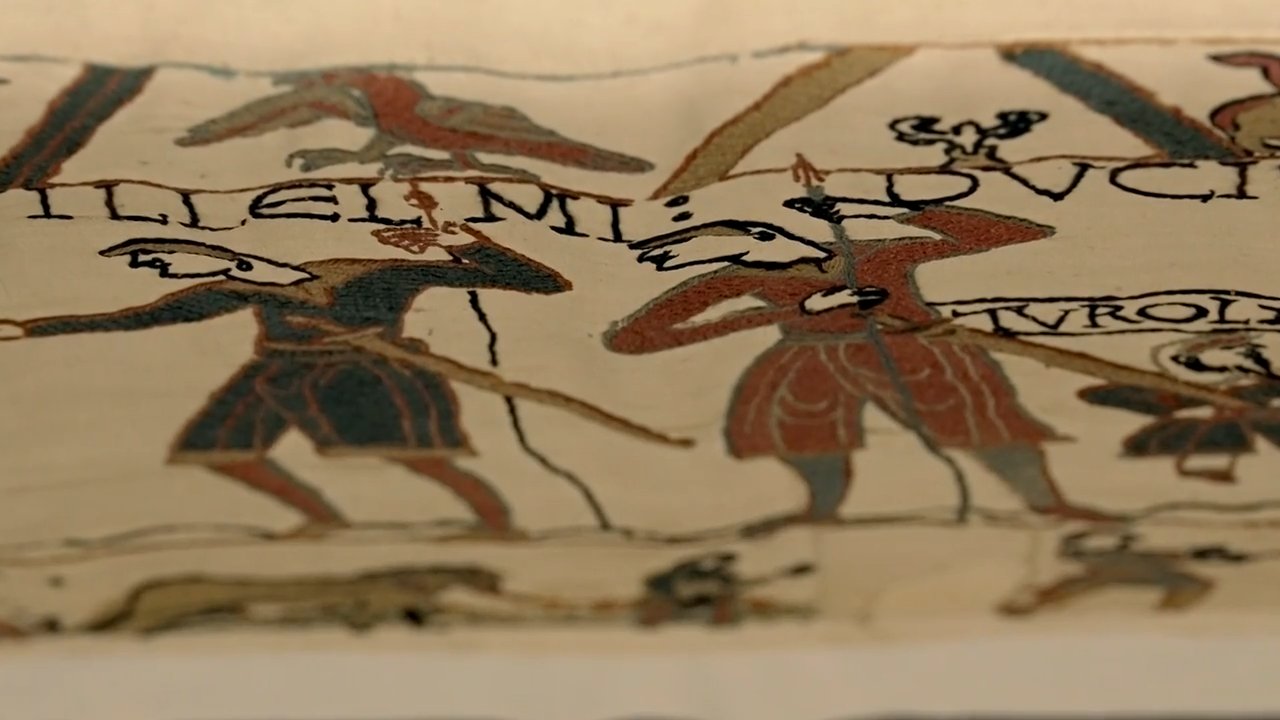
The 11th Century artwork is thought to have been made in Britain, and it's now on display at the British Museum — one of the UK's largest national museums, located in London — while on loan from France until summer 2027. Think of it as the original comic strip: instead of panels, it uses a continuous, nearly 70-meter-long strip of embroidered fabric (about the length of a football field) to tell the story frame by frame, image after image, all the way across.
The story it tells is the Norman Conquest of 1066: the year William the Conqueror, a duke from Normandy in modern-day France, invaded England and took the throne. Like a comic laid end to end, the tapestry shows the buildup, the battle, and the aftermath — soldiers, ships, horses, and even Halley's Comet all stitched into the sequence. That invasion permanently changed England's ruling family, language, and culture, and is often seen as the starting point of the modern British monarchy.
Moving the tapestry took hours of extremely careful work, since it's so old and delicate. Even people standing near it had to wear protective clothing so stray fibers wouldn't end up on the fabric. It's now displayed flat, inside a protective glass case. Safe to say, it may look like a large piece of fabric, but it's definitely not something you'd want to wipe your hands on if you're missing a napkin.
The loan is also part of a bigger cultural exchange between France and Britain — two neighboring countries separated by the narrow English Channel, with a long and sometimes tense shared history. In exchange for the tapestry, Britain is lending important historical objects of its own back to France.
It's tempting to think that seeing is believing, but that's not always the case. When scrolling the internet, it's important to put on your skepticism hat. There's a lot of fake stuff out there, and some of it is convincing.
For example, a Facebook post appeared to come from York Council — the local government office for the city of York, England. It asked people with spare rooms to house asylum seekers (people who have fled their home country and are asking a government for protection). The post wasn't real, but it spread quickly across Facebook, Instagram, TikTok, X, and YouTube. BBC Verify, the BBC's fact-checking team, estimated it could have reached more than a million people.
Misinformation like this can cause real problems, especially when it spreads about sensitive subjects like asylum seekers. Repeated exposure to false information can also make people question what's true at all — damaging trust between people and communities.
So how can you tell what's fake? Even careful readers are finding it harder to spot, while fake content is getting easier to make — a dangerous combination. The fake council post looked convincing: it had an official logo, professional-sounding text, and even a real email address. But a few small details gave it away: the logo was slightly distorted, some words were misspelled, parts of the image looked unnatural, and the AI-generated hands had too many fingers.
Those details are easy to miss when scrolling quickly — but learning to spot them is exactly what makes the difference between falling for a fake and catching one.
These days, youth tech knowledge goes way beyond helping parents get out of their front-facing camera. Around the world, teenagers are being arrested in connection to serious cyberattacks that have disrupted everywhere from supermarkets to transport systems to healthcare companies, and even individuals.
But it’s not like these teens want to rob everyone of their crypto, or change all the supermarket barcodes to get free cookies. A young man named Lucas, for example, was caught twice hacking into his school computers so he could play games and access blocked websites. But he wasn’t expelled or arrested. Instead, he was enrolled in Cyber Choices, a nationwide program designed to steer young people away from illegal hacking.
The program teaches participants what is legal and illegal while encouraging them to use their technical skills for good instead of evil through training, qualifications, and future careers. So far, around 1,000 young people have gone through the program.
Cyber Choices is a voluntary program that’s hopefully appealing enough to tempt participants to join willingly, but that’s not always the case. Owen Flowers, for example, was offered the program as a teenager but refused to participate. He was later sentenced to five and a half years in prison for hacking.
Cyber Choices may be a helpful intervention, but schools are still taking preemptive action by having police do regular visits to teach students about cybercrime.
Crop circles have puzzled people for decades, and the Wiltshire countryside — a rural county in southwest England known for its rolling farmland — has had plenty to puzzle over this summer as new formations kept appearing in the fields.
These designs are often symmetrical, intricate, and hard to explain. One of the most famous examples, known as the Galaxy, contained more than 400 interlocking circles and stretched roughly 780 feet — about two and a half soccer fields laid end to end.
Some crop circles are confirmed to be human-made. Others are harder to pin down: witnesses have reported some appearing within a matter of seconds, though these claims haven't been independently verified.
Wiltshire's landscape makes it a particular hotspot — open countryside and high viewpoints make circles easy to spot and photograph. Drones and social media have also made it possible to document circles almost anywhere, not just in traditional hotspots.
As striking as they are to look at, crop circles can be costly for the farmers whose fields they appear in, since the process damages crops. That's also why making one without the landowner's permission counts as criminal damage in the UK — the British legal term for intentionally damaging someone else's property, similar to vandalism or property destruction charges in the US.
After almost 1,000 years, the historic Bayeux Tapestry is back where it began.
The 11th Century artwork is thought to have been made in Britain, and it's now on display at the British Museum — one of the UK's largest national museums, located in London — while on loan from France until summer 2027. Think of it as the original comic strip: instead of panels, it uses a continuous, nearly 70-meter-long strip of embroidered fabric (about the length of a football field) to tell the story frame by frame, image after image, all the way across.
The story it tells is the Norman Conquest of 1066: the year William the Conqueror, a duke from Normandy in modern-day France, invaded England and took the throne. Like a comic laid end to end, the tapestry shows the buildup, the battle, and the aftermath — soldiers, ships, horses, and even Halley's Comet all stitched into the sequence. That invasion permanently changed England's ruling family, language, and culture, and is often seen as the starting point of the modern British monarchy.
Moving the tapestry took hours of extremely careful work, since it's so old and delicate. Even people standing near it had to wear protective clothing so stray fibers wouldn't end up on the fabric. It's now displayed flat, inside a protective glass case. Safe to say, it may look like a large piece of fabric, but it's definitely not something you'd want to wipe your hands on if you're missing a napkin.
The loan is also part of a bigger cultural exchange between France and Britain — two neighboring countries separated by the narrow English Channel, with a long and sometimes tense shared history. In exchange for the tapestry, Britain is lending important historical objects of its own back to France.