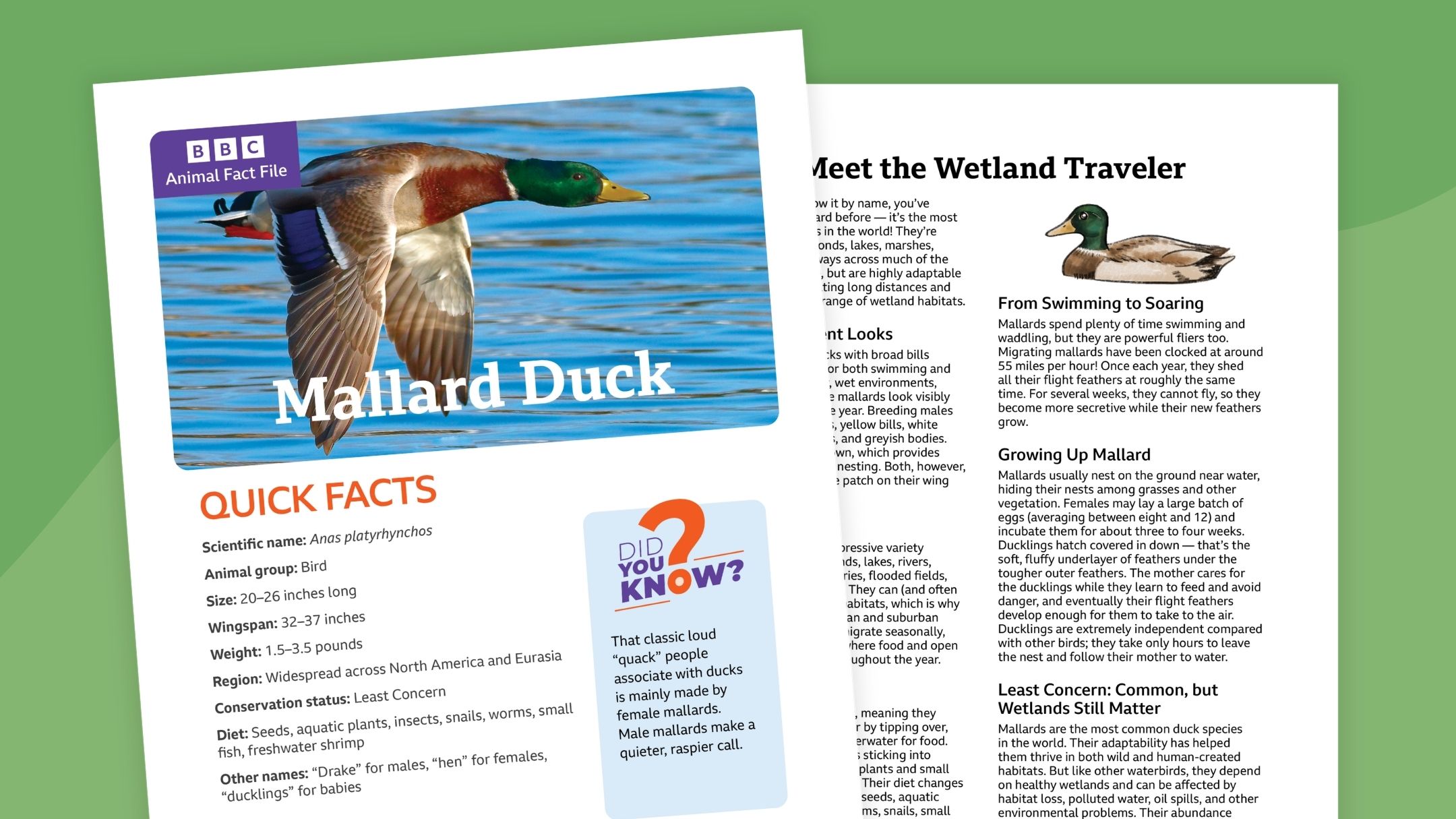
Which duck makes the classic “quack” you hear at ponds and parks? Surprisingly, it’s usually the female mallard!
Meet one of the world’s most widespread and adaptable ducks. Explore how mallards move between water, land, and sky, from tipping upside down to feed underwater to flying at speeds of around 55 miles per hour. You'll also discover why males and females look so different, how ducklings become independent within hours of hatching, and why healthy wetlands matter even to a species that seems to be everywhere.
Teachers and parents, you can use this fact file to:
- Introduce an animal, wildlife, or life science unit
- Support nonfiction reading and vocabulary practice
- Explore animal adaptations, behaviors, and habitats
- Compare animals and the ecosystems they live in
- Practice finding and organizing information from nonfiction texts
- Prepare students for animal research projects or presentations (use our animal report templates!)
- Connect science learning to conservation and environmental issues
- Pair with videos, articles, or other informational texts (see Related Resources below)
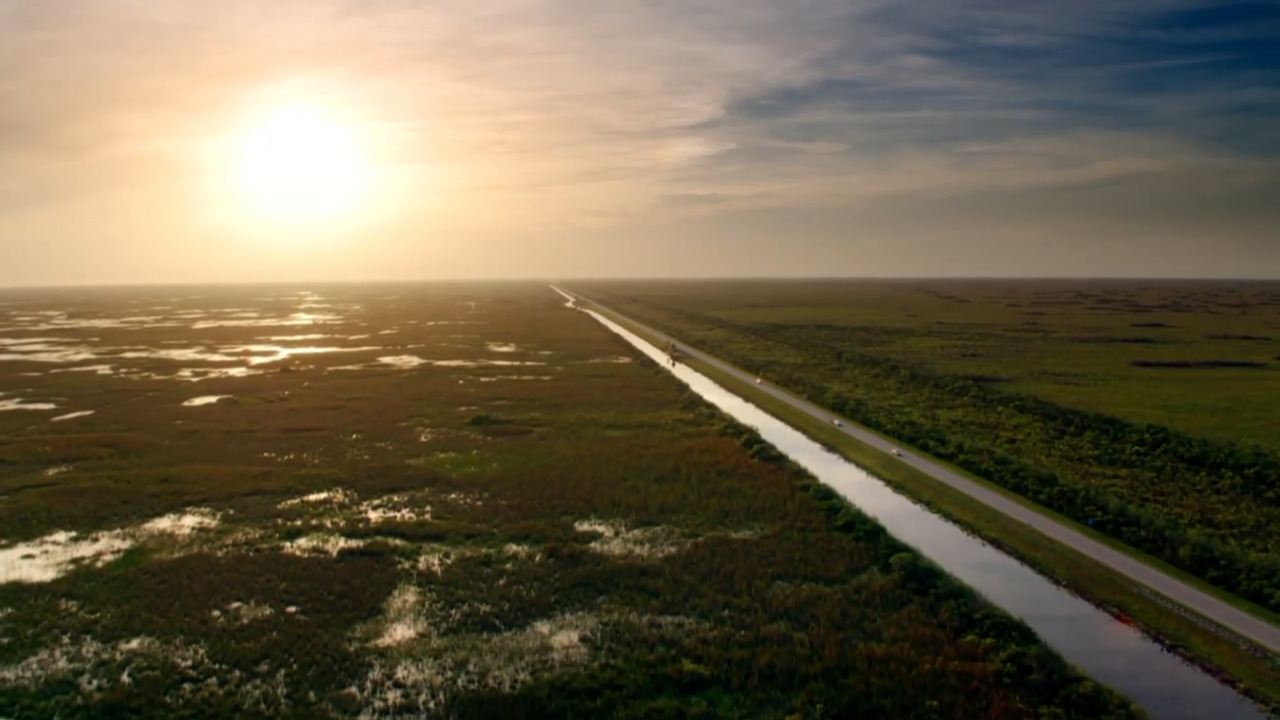
In Freeing Up the Flow of Water on Highway 41, engineers did not realize how a permanent structure would affect the constant movement of the Everglades waters. Fortunately, there are solutions to keep the wetlands freely flowing. This video is excerpted from BBC's Natural World: Florida - America's Animal Paradise, a series displaying Florida’s diverse wildlife and its resilience against increasing environmental threats.
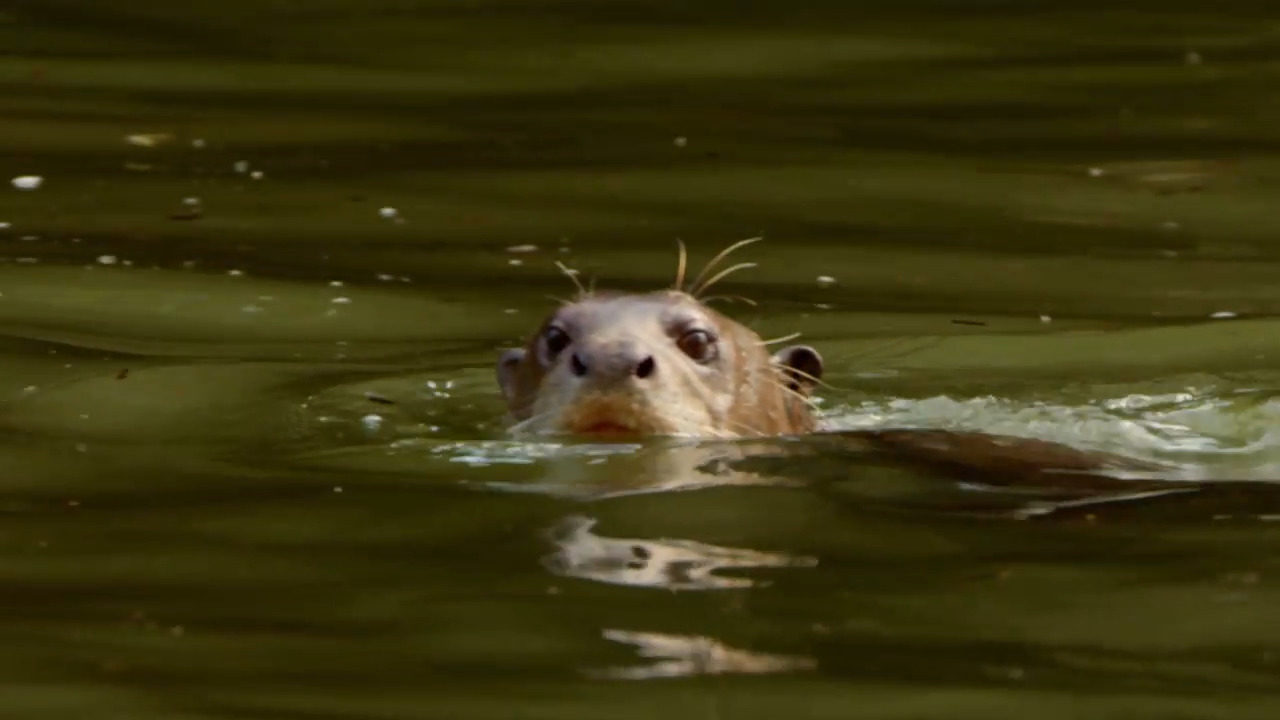
In Otter Pups Learn to Swim, narrator Gordon Buchanan describes how a baby otter learns to swim in the Pantanal, Brazil’s tropical wetland. While the mother transports the pup gently in her mouth, the large otter family helps support the pup when it gets tired and sounds an alarm when a jaguar is spotted. The mother returns the pup to the safety of the den. This video is excerpted from BBC's Animal Babies, a heartwarming show that follows the first breaths, first steps, and first feeds of some adorable baby animals, revealing the challenges they face to survive in some of the toughest but most beautiful places on the planet.
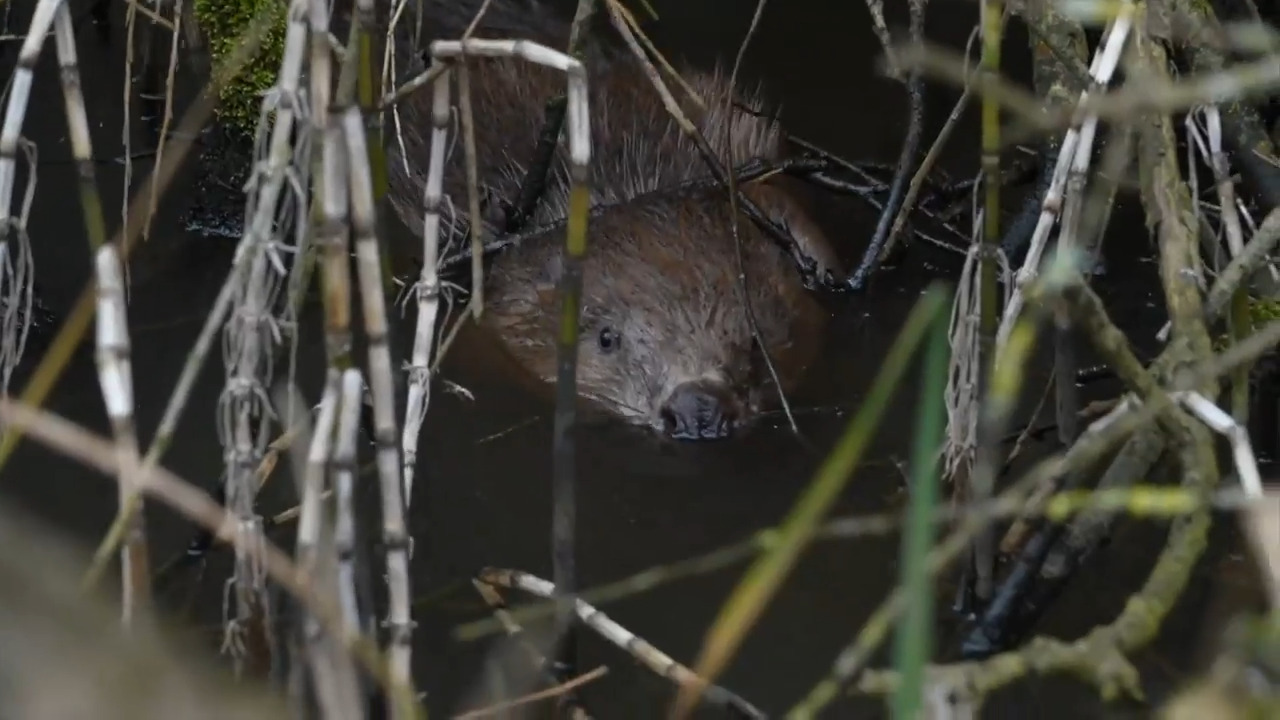
Ever think you would celebrate the return of a dog-sized rodent?! You might, if those rodents were the beavers making their way to the wetlands in Shropshire. Until recently, the area had spent its last 400 years beaver-less, after hunters depleted the beaver population for fur, meat, and scent glands.
Now, the county is excited to welcome a pair of beavers that was transported all the way from Scotland — that’s 300 miles! But why go through all of this trouble just to bring beavers back? Beavers’ list of strengths include helping to control water, creating new habitats for other creatures, managing willow tree scrub that’s drying out the surroundings, and being pretty darn cute.
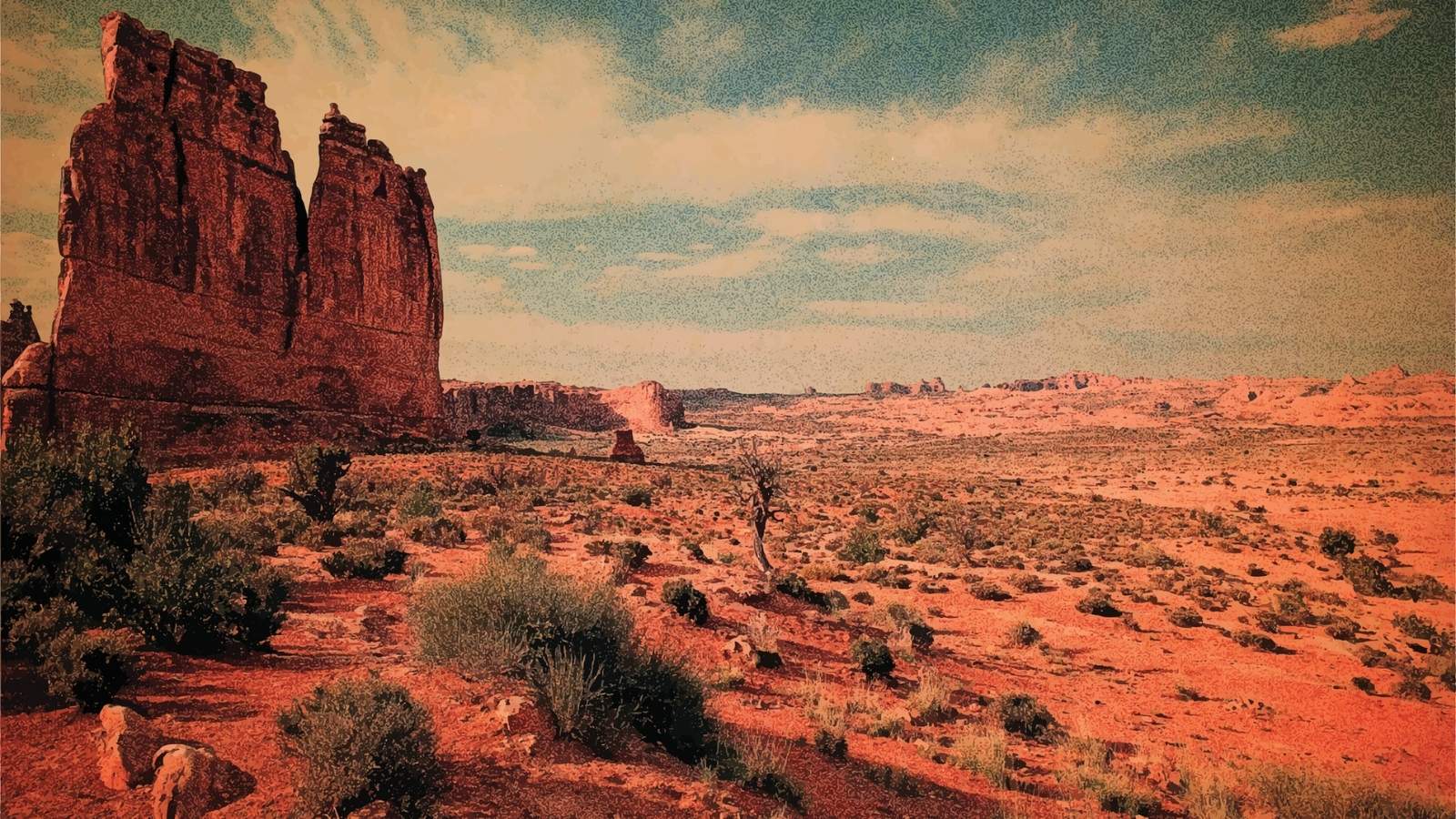
From the iconic Red Rock formations of Arches National Park in Utah and the majestic peaks of the Rocky Mountains, to the unique wetlands of the Everglades, journey through incredible landscapes. Encounter amazing animals like grizzly bears and bobcats, learn about the vital work of protecting ancient redwood forests, and discover how climate change is reshaping these precious wild spaces.
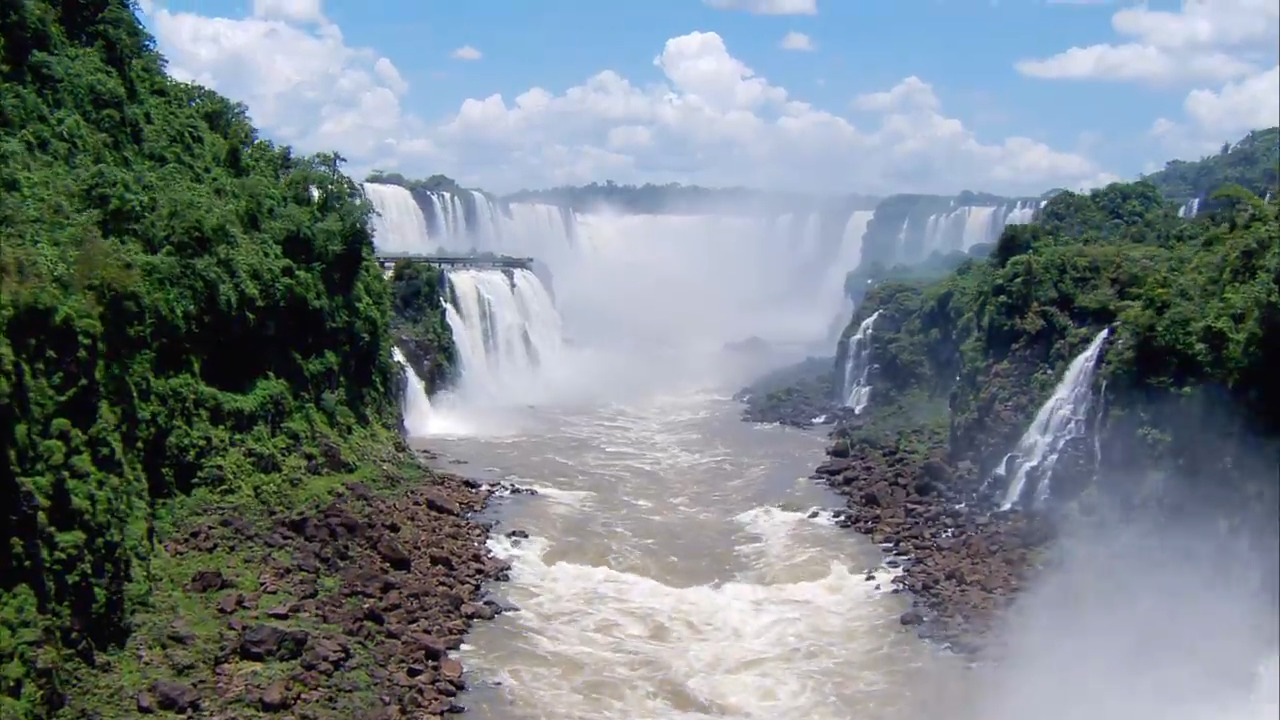
In The Course of a River: Dangerous Waters, narrator Sir David Attenborough explains that 13 million liters of water plunge over one of the widest waterfalls in the world every second. The river below teems with hungry piranhas, large-mouthed caimans, and dorados on the hunt. This video is excerpted from BBC's Planet Earth, a breathtaking documentary series that highlights the natural wonders of our planet.
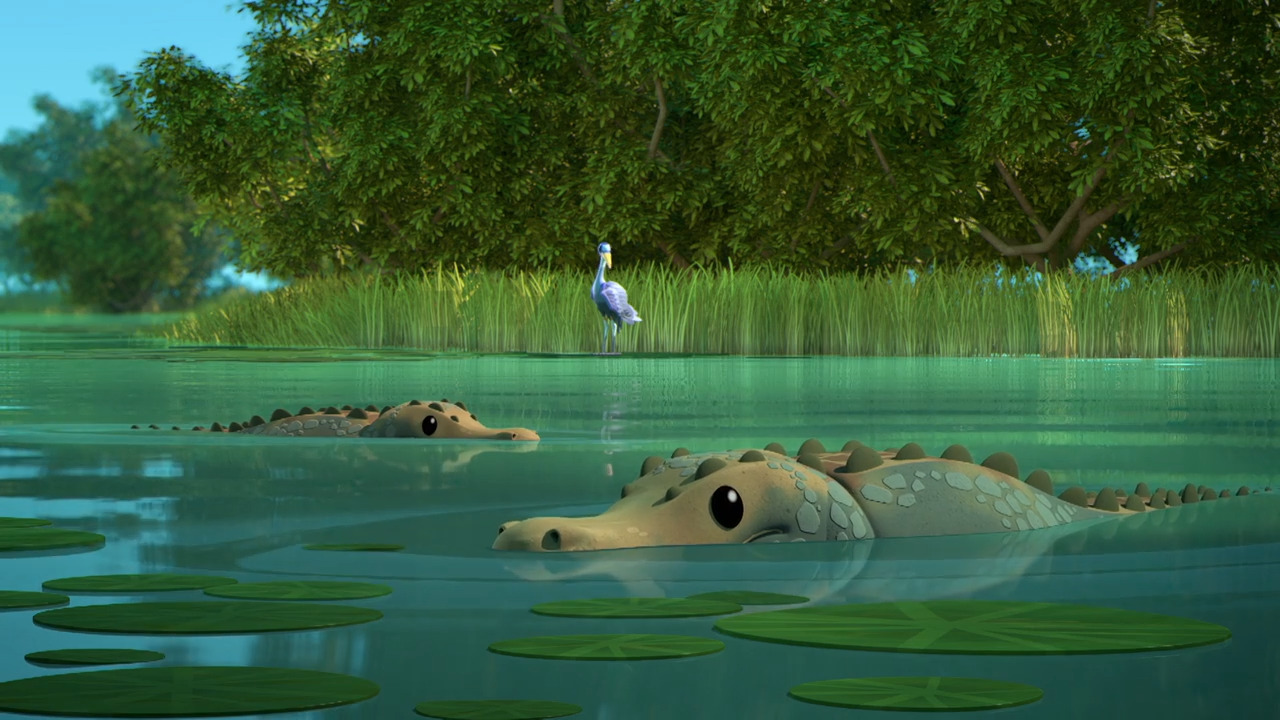
In The Go Jetters Explore the Everglades, the Go Jetters crew visits the Florida Everglades. They encounter a spoonbill and see alligators. Ubercorn shares funky facts about the Everglades, including information about the size of the Everglades National Park and just how diverse the wildlife is in this area. This video is excerpted from BBC’s Go Jetters, a series that follows the adventures of four international heroes as they travel the globe visiting landmarks and solving environmental problems with Ubercorn, a disco-dancing unicorn.
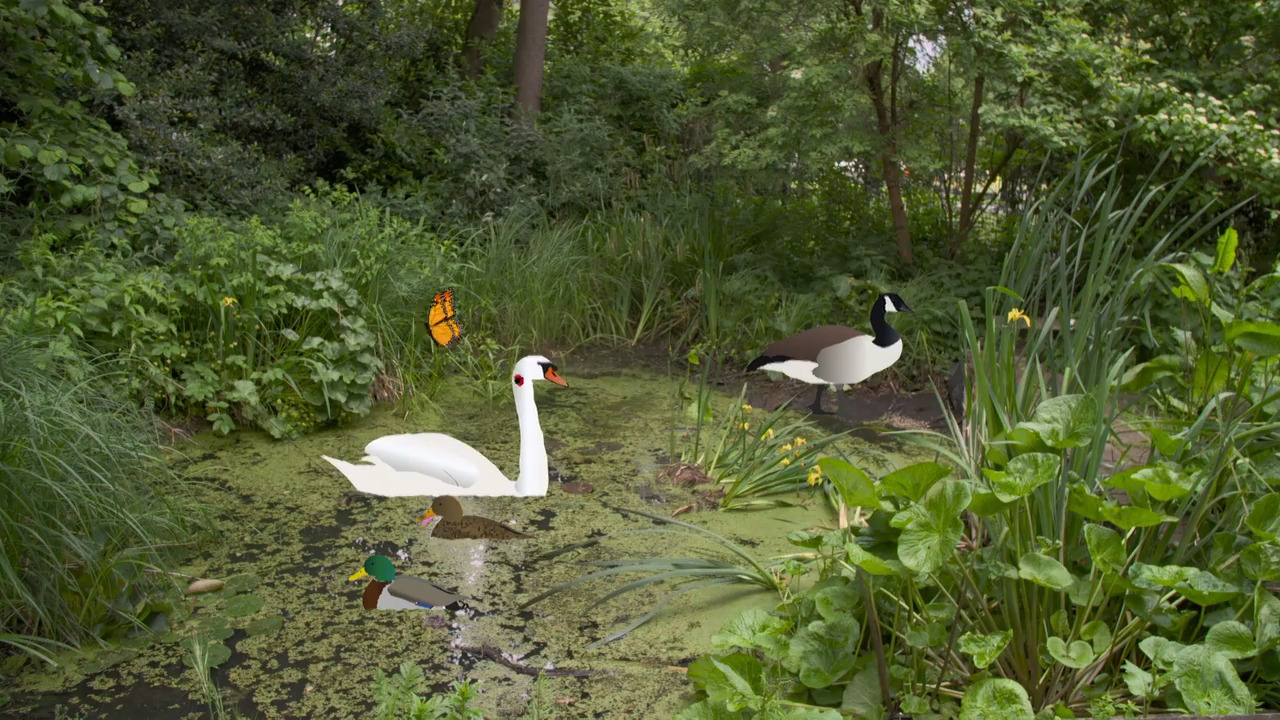
In Where Do Ducks Live?, Ranger Hamza and the Ramblers are on a quest to find ducks! Join them as they find a pond and learn about how ducks’ features make them unique, and how ducks disperse seeds. This video is excerpted from BBC's Ranger Hamza’s Eco Quest, a nature exploration show in which Ranger Hamza and the Ramblers go on quests to discover nature’s wonders and the important role they play in our environment.

Get ready for cuteness overload with this heartwarming playlist of baby animal videos! Watch ducklings wobble, elephants splash, wildebeests race, seals snooze, and otters play with endless charm. Perfect for captivating your class while sneaking in a little science, these clips will have your students saying “aww” while you say, “This totally counts as learning!”
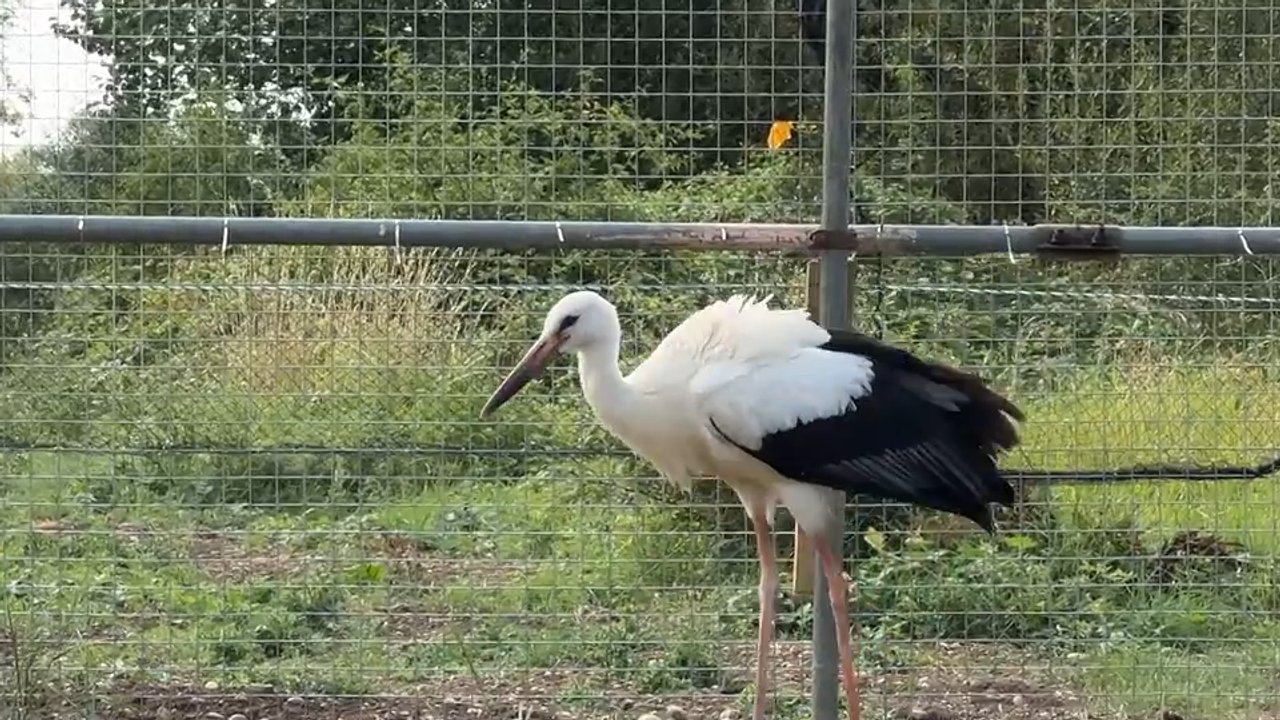
Big news for bird lovers: white storks have returned to Willington Wetlands near Derby, England, for the first time in 600 years.
Just how long is 600 years? Long enough that if the storks had stuck around, they could have watched every Harry Potter movie back-to-back more than 2.5 million times — with plenty of bathroom breaks left over. In American terms, storks disappeared from this area around the time Christopher Columbus was still a kid, decades before he ever sailed to the Americas.
Storks used to be a common sight across the UK, kind of like how you might spot herons, egrets, or bald eagles near lakes and rivers in North America. But they disappeared centuries ago — and now conservationists are trying to bring them back.
Three New Arrivals
Earlier this year, three young storks — one male and two females — hatched and grew to full adult size in just about 12 weeks (for comparison, humans take about 18 years). They've now been moved into a specially built enclosure at the wetlands, complete with its own pond, and have already started exploring their new digs.
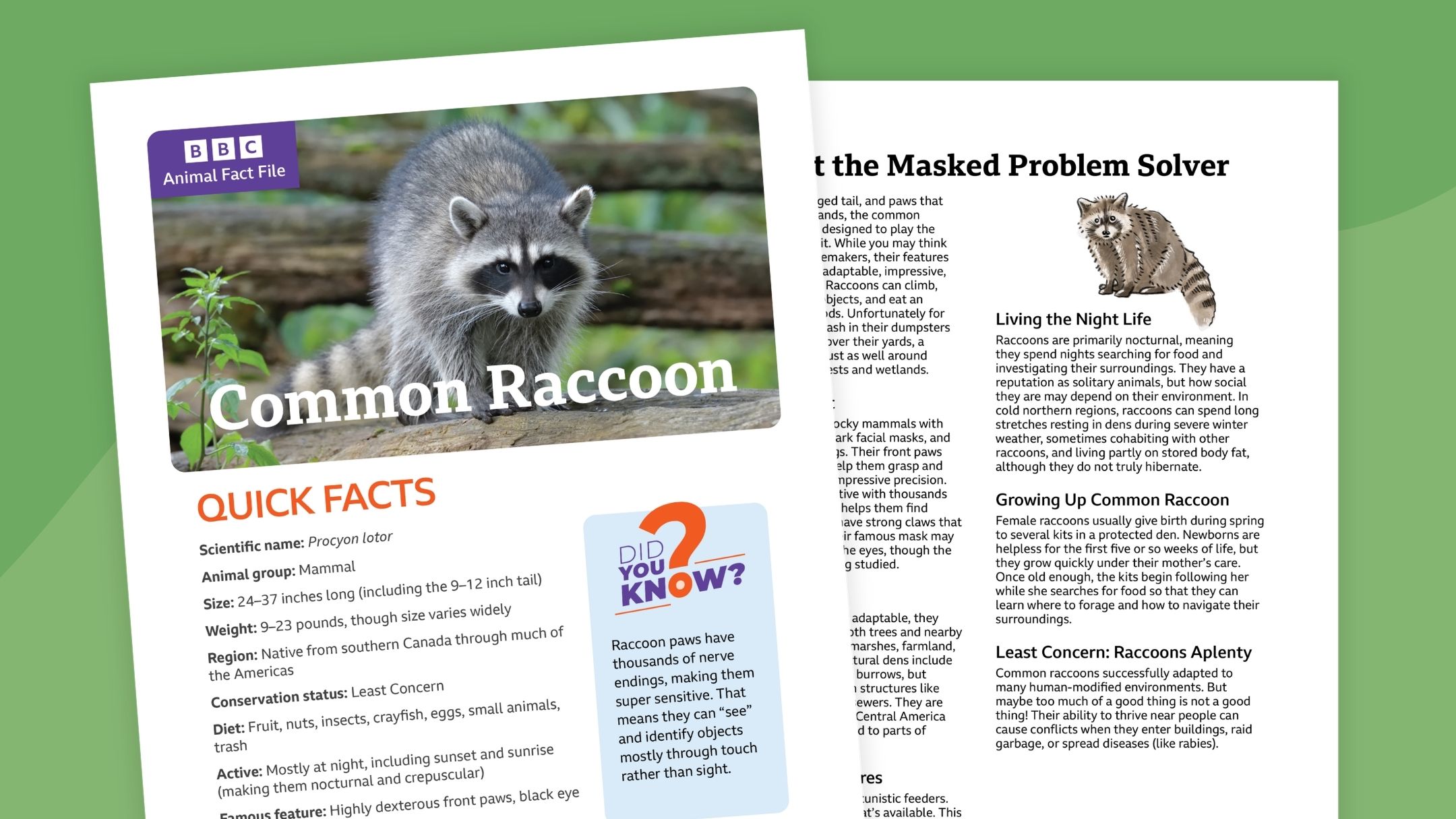
How can an animal identify what it’s holding without even looking at it? For the common raccoon, the answer is all in its paws.
Raccoons are equipped with remarkably sensitive front paws that help them explore, handle food, and investigate their surroundings. Find out how these dexterous mammals use touch, climbing skills, and an anything-goes diet to thrive in forests, wetlands, and neighborhoods. You'll also discover why raccoons sometimes seem to “wash” their food, where they sleep during the day, and how their adaptability can create both opportunities and challenges when they live near people.
Teachers and parents, you can use this fact file to:
- Introduce an animal, wildlife, or life science unit
- Support nonfiction reading and vocabulary practice
- Explore animal adaptations, behaviors, and habitats
- Compare animals and the ecosystems they live in
- Practice finding and organizing information from nonfiction texts
- Prepare students for animal research projects or presentations (use our animal report templates!)
- Connect science learning to conservation and environmental issues
- Pair with videos, articles, or other informational texts (see Related Resources below)
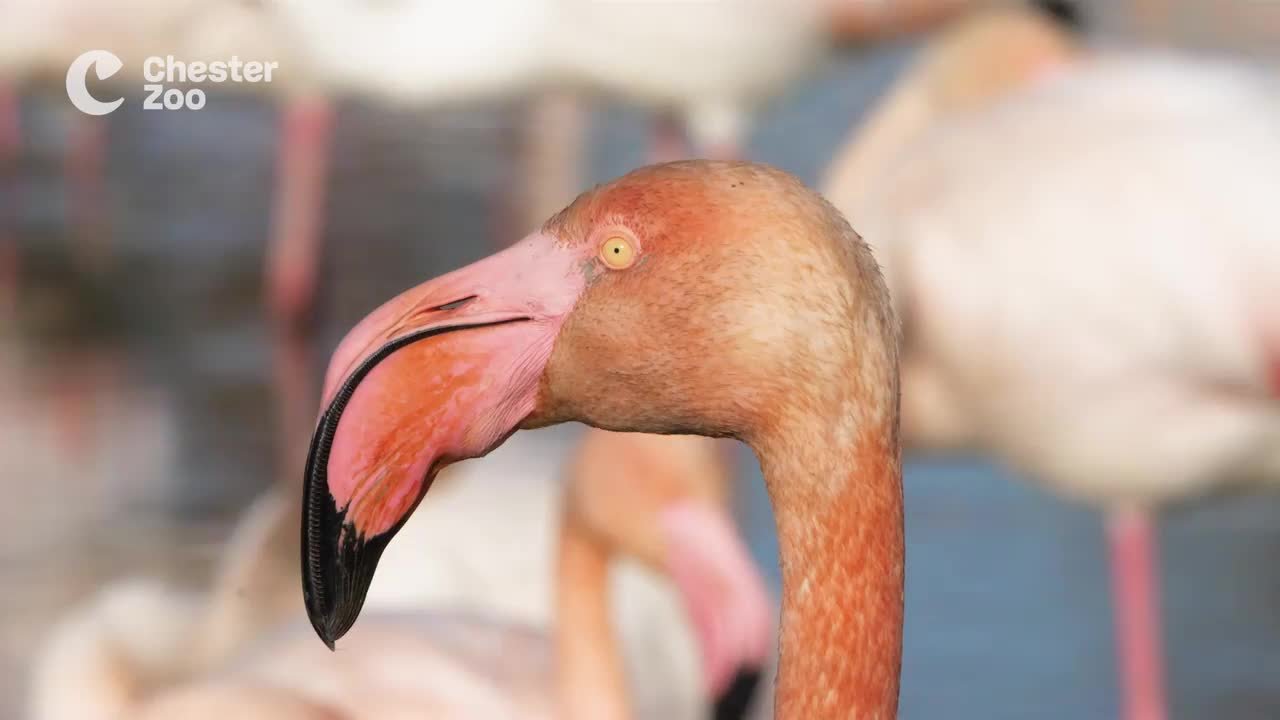
Meet some of the most recognizable birds in the world — flamingos! With their long legs, graceful curved necks, and vibrant pink feathers, these iconic birds are perfectly adapted for life in wetlands across Africa, Asia, and Europe.
In this fact file video from Chester Zoo, discover how greater flamingos use their remarkable sieve-like beaks to find food, learn why their feathers are pink, explore how they work together to raise their young, and uncover the challenges they face in the wild. You'll also see why protecting wetlands is so important for the future of these fascinating birds and the many other species that share their habitat.
Which duck makes the classic “quack” you hear at ponds and parks? Surprisingly, it’s usually the female mallard!
Meet one of the world’s most widespread and adaptable ducks. Explore how mallards move between water, land, and sky, from tipping upside down to feed underwater to flying at speeds of around 55 miles per hour. You'll also discover why males and females look so different, how ducklings become independent within hours of hatching, and why healthy wetlands matter even to a species that seems to be everywhere.
Teachers and parents, you can use this fact file to:
- Introduce an animal, wildlife, or life science unit
- Support nonfiction reading and vocabulary practice
- Explore animal adaptations, behaviors, and habitats
- Compare animals and the ecosystems they live in
- Practice finding and organizing information from nonfiction texts
- Prepare students for animal research projects or presentations (use our animal report templates!)
- Connect science learning to conservation and environmental issues
- Pair with videos, articles, or other informational texts (see Related Resources below)
In Freeing Up the Flow of Water on Highway 41, engineers did not realize how a permanent structure would affect the constant movement of the Everglades waters. Fortunately, there are solutions to keep the wetlands freely flowing. This video is excerpted from BBC's Natural World: Florida - America's Animal Paradise, a series displaying Florida’s diverse wildlife and its resilience against increasing environmental threats.
In Otter Pups Learn to Swim, narrator Gordon Buchanan describes how a baby otter learns to swim in the Pantanal, Brazil’s tropical wetland. While the mother transports the pup gently in her mouth, the large otter family helps support the pup when it gets tired and sounds an alarm when a jaguar is spotted. The mother returns the pup to the safety of the den. This video is excerpted from BBC's Animal Babies, a heartwarming show that follows the first breaths, first steps, and first feeds of some adorable baby animals, revealing the challenges they face to survive in some of the toughest but most beautiful places on the planet.
Ever think you would celebrate the return of a dog-sized rodent?! You might, if those rodents were the beavers making their way to the wetlands in Shropshire. Until recently, the area had spent its last 400 years beaver-less, after hunters depleted the beaver population for fur, meat, and scent glands.
Now, the county is excited to welcome a pair of beavers that was transported all the way from Scotland — that’s 300 miles! But why go through all of this trouble just to bring beavers back? Beavers’ list of strengths include helping to control water, creating new habitats for other creatures, managing willow tree scrub that’s drying out the surroundings, and being pretty darn cute.
From the iconic Red Rock formations of Arches National Park in Utah and the majestic peaks of the Rocky Mountains, to the unique wetlands of the Everglades, journey through incredible landscapes. Encounter amazing animals like grizzly bears and bobcats, learn about the vital work of protecting ancient redwood forests, and discover how climate change is reshaping these precious wild spaces.
In The Course of a River: Dangerous Waters, narrator Sir David Attenborough explains that 13 million liters of water plunge over one of the widest waterfalls in the world every second. The river below teems with hungry piranhas, large-mouthed caimans, and dorados on the hunt. This video is excerpted from BBC's Planet Earth, a breathtaking documentary series that highlights the natural wonders of our planet.
In The Go Jetters Explore the Everglades, the Go Jetters crew visits the Florida Everglades. They encounter a spoonbill and see alligators. Ubercorn shares funky facts about the Everglades, including information about the size of the Everglades National Park and just how diverse the wildlife is in this area. This video is excerpted from BBC’s Go Jetters, a series that follows the adventures of four international heroes as they travel the globe visiting landmarks and solving environmental problems with Ubercorn, a disco-dancing unicorn.
In Where Do Ducks Live?, Ranger Hamza and the Ramblers are on a quest to find ducks! Join them as they find a pond and learn about how ducks’ features make them unique, and how ducks disperse seeds. This video is excerpted from BBC's Ranger Hamza’s Eco Quest, a nature exploration show in which Ranger Hamza and the Ramblers go on quests to discover nature’s wonders and the important role they play in our environment.
Get ready for cuteness overload with this heartwarming playlist of baby animal videos! Watch ducklings wobble, elephants splash, wildebeests race, seals snooze, and otters play with endless charm. Perfect for captivating your class while sneaking in a little science, these clips will have your students saying “aww” while you say, “This totally counts as learning!”
Big news for bird lovers: white storks have returned to Willington Wetlands near Derby, England, for the first time in 600 years.
Just how long is 600 years? Long enough that if the storks had stuck around, they could have watched every Harry Potter movie back-to-back more than 2.5 million times — with plenty of bathroom breaks left over. In American terms, storks disappeared from this area around the time Christopher Columbus was still a kid, decades before he ever sailed to the Americas.
Storks used to be a common sight across the UK, kind of like how you might spot herons, egrets, or bald eagles near lakes and rivers in North America. But they disappeared centuries ago — and now conservationists are trying to bring them back.
Three New Arrivals
Earlier this year, three young storks — one male and two females — hatched and grew to full adult size in just about 12 weeks (for comparison, humans take about 18 years). They've now been moved into a specially built enclosure at the wetlands, complete with its own pond, and have already started exploring their new digs.
How can an animal identify what it’s holding without even looking at it? For the common raccoon, the answer is all in its paws.
Raccoons are equipped with remarkably sensitive front paws that help them explore, handle food, and investigate their surroundings. Find out how these dexterous mammals use touch, climbing skills, and an anything-goes diet to thrive in forests, wetlands, and neighborhoods. You'll also discover why raccoons sometimes seem to “wash” their food, where they sleep during the day, and how their adaptability can create both opportunities and challenges when they live near people.
Teachers and parents, you can use this fact file to:
- Introduce an animal, wildlife, or life science unit
- Support nonfiction reading and vocabulary practice
- Explore animal adaptations, behaviors, and habitats
- Compare animals and the ecosystems they live in
- Practice finding and organizing information from nonfiction texts
- Prepare students for animal research projects or presentations (use our animal report templates!)
- Connect science learning to conservation and environmental issues
- Pair with videos, articles, or other informational texts (see Related Resources below)
Meet some of the most recognizable birds in the world — flamingos! With their long legs, graceful curved necks, and vibrant pink feathers, these iconic birds are perfectly adapted for life in wetlands across Africa, Asia, and Europe.
In this fact file video from Chester Zoo, discover how greater flamingos use their remarkable sieve-like beaks to find food, learn why their feathers are pink, explore how they work together to raise their young, and uncover the challenges they face in the wild. You'll also see why protecting wetlands is so important for the future of these fascinating birds and the many other species that share their habitat.