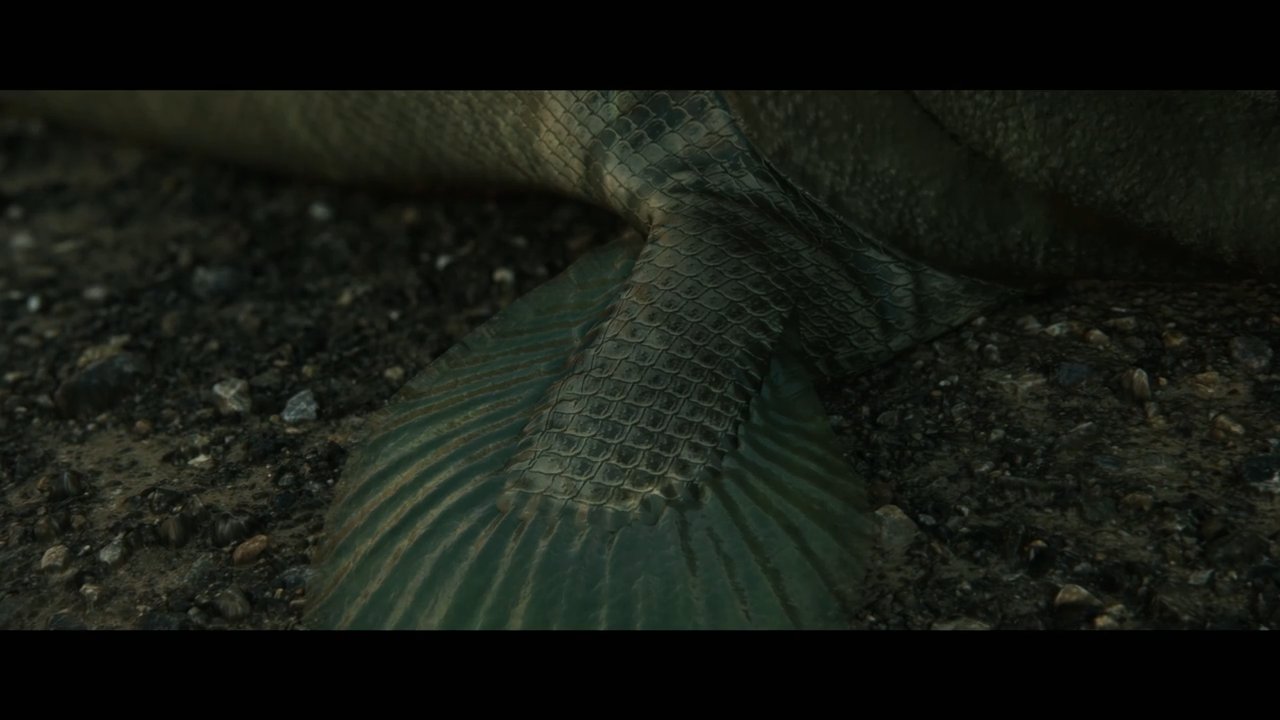
Kenya’s freshwater fish face extreme changes as seasonal waters recede, but the African lungfish has adaptations that allow it to survive in shallow, oxygen-poor pools. This clip from BBC’s Evolution episode "The Elephant" follows the lungfish’s ability to breathe air and use its fleshy fins to move, offering a glimpse into the evolutionary transition from life in water to life on land.
The video traces this transition through ancient fish such as Eusthenopteron, whose features foreshadowed the limbs and lungs of early land vertebrates. These adaptations established the tetrapod body plan — the four-limbed blueprint shared by elephants, humans, birds, whales, and countless other animals, despite the remarkable ways evolution has modified it for different environments.
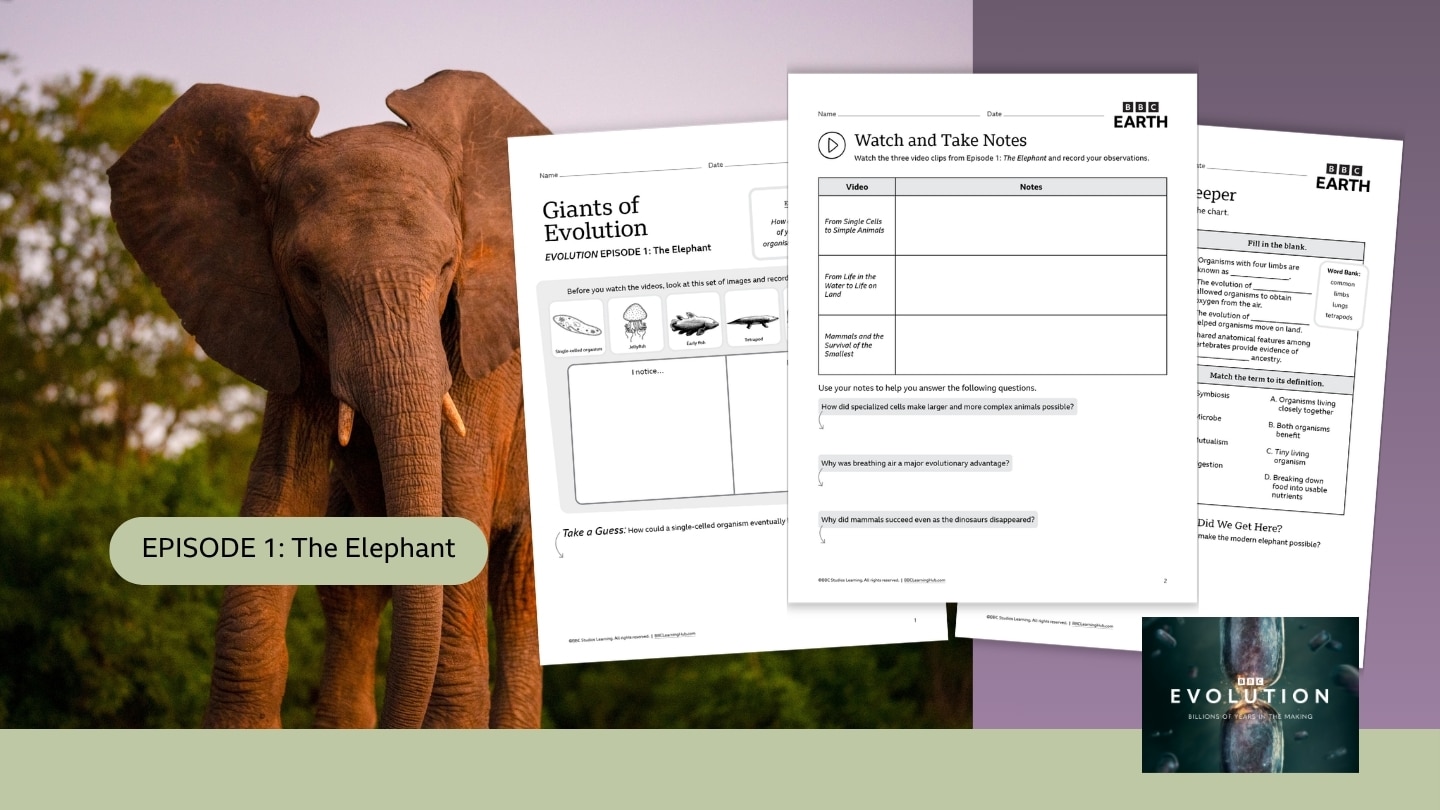
How did a single-celled organism eventually become an elephant? This lesson for ages 11–18 traces the deep evolutionary history of elephants, starting with the earliest forms of life and following the major innovations that made increasingly complex animals possible.
Using BBC video clips from Evolution Episode1: "The Elephant," investigate how specialized cells, organs, gills, lungs, and limbs helped life become more complex and eventually move from water to land. Explore how mammals survived major environmental changes, including the extinction of the dinosaurs, and gained opportunities to spread into new habitats.
Use observations and evidence from the videos to piece together this evolutionary story, practice connecting cause and effect, and revisit predictions. Once you've worked through all the worksheet pages, you'll synthesize what you've learned to explain how billions of years of evolutionary change ultimately led to the modern elephant.
Kenya’s freshwater fish face extreme changes as seasonal waters recede, but the African lungfish has adaptations that allow it to survive in shallow, oxygen-poor pools. This clip from BBC’s Evolution episode "The Elephant" follows the lungfish’s ability to breathe air and use its fleshy fins to move, offering a glimpse into the evolutionary transition from life in water to life on land.
The video traces this transition through ancient fish such as Eusthenopteron, whose features foreshadowed the limbs and lungs of early land vertebrates. These adaptations established the tetrapod body plan — the four-limbed blueprint shared by elephants, humans, birds, whales, and countless other animals, despite the remarkable ways evolution has modified it for different environments.
How did a single-celled organism eventually become an elephant? This lesson for ages 11–18 traces the deep evolutionary history of elephants, starting with the earliest forms of life and following the major innovations that made increasingly complex animals possible.
Using BBC video clips from Evolution Episode1: "The Elephant," investigate how specialized cells, organs, gills, lungs, and limbs helped life become more complex and eventually move from water to land. Explore how mammals survived major environmental changes, including the extinction of the dinosaurs, and gained opportunities to spread into new habitats.
Use observations and evidence from the videos to piece together this evolutionary story, practice connecting cause and effect, and revisit predictions. Once you've worked through all the worksheet pages, you'll synthesize what you've learned to explain how billions of years of evolutionary change ultimately led to the modern elephant.