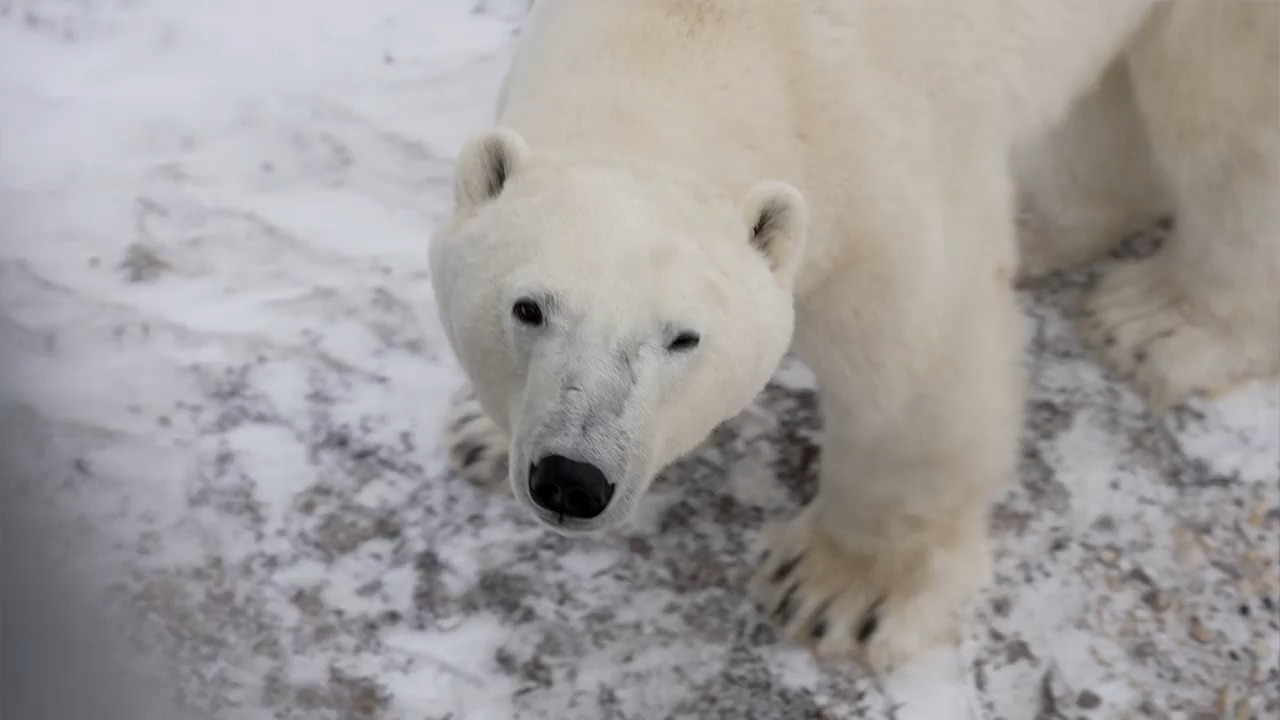
In Churchill, Manitoba — often called the “polar bear capital of the world” — polar bears are facing a changing home. As the Arctic warms, sea ice is forming later and melting earlier. That’s a big problem, because polar bears rely on the ice like a hunting platform to catch seals.
Now, they’re stuck on land for longer periods, waiting for the ice to return. And while they wait, hunger builds. Some bears are wandering closer to towns in search of food, digging through garbage and sometimes coming into conflict with people.
Scientists say the situation is serious: polar bear populations in some areas have dropped sharply in the last generation. As the ice keeps shrinking, the challenge of sharing space between humans and polar bears is only getting harder.