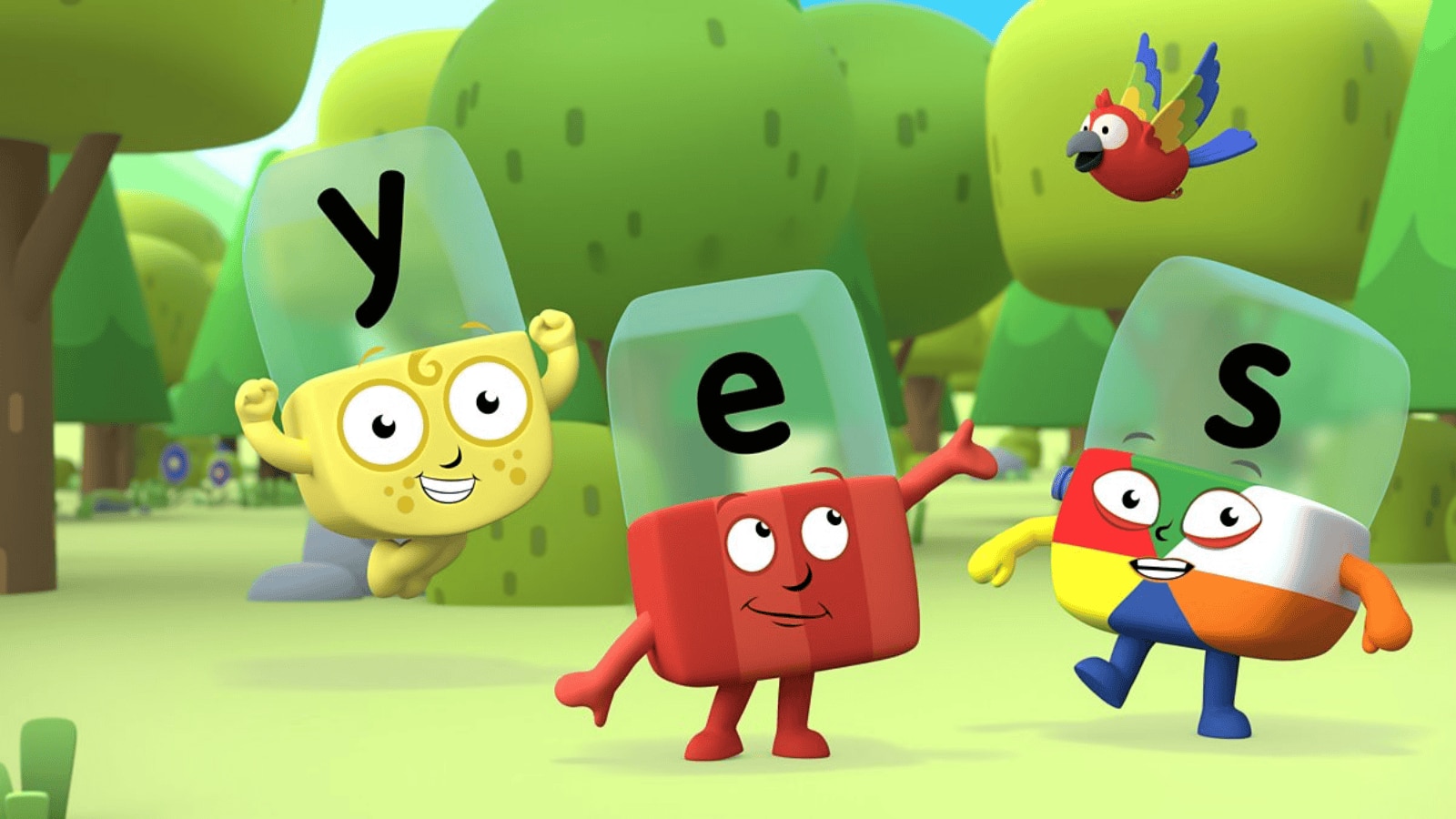
Meet the Alphablocks — 26 living letters who discover that when they hold hands to make a word, something magical happens. Celebrated for its innovative approach to teaching reading, Alphablocks makes learning joyful, active, and engaging for early learners. This free collection of Alphablocks worksheets brings that magic to life at home or in the classroom, with Alphablocks letter cards kids can use to build words, alphabet finger puppets, and playful worksheets that teach letter sounds.
Watch full episodes of the award-winning show for kids ages 3–6 on the official Alphablocks YouTube channel!
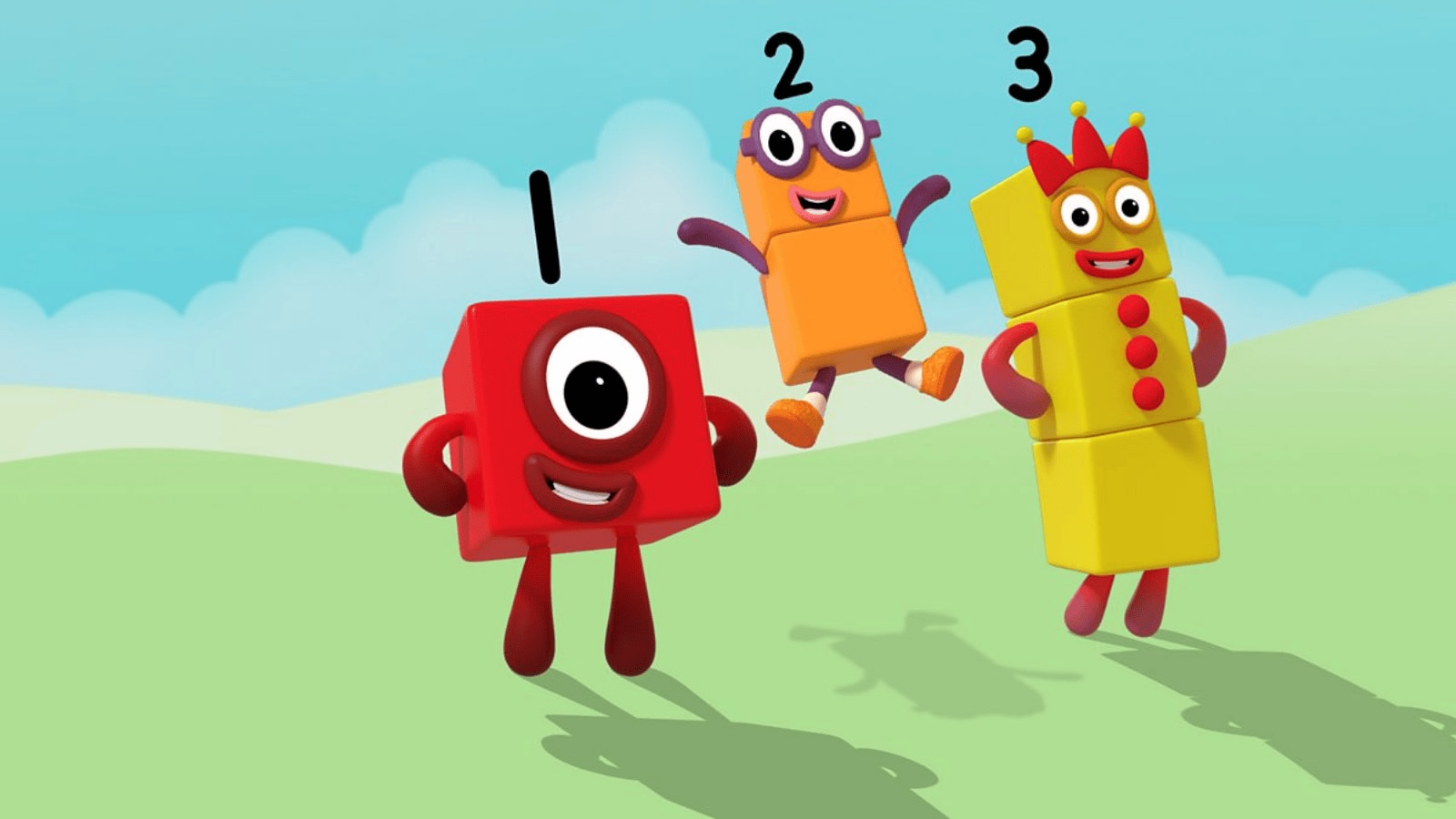
Meet the Numberblocks — little blocks with big ideas who make learning numbers fun and exciting for young children ages 3–7. Numberblocks helps kids build number sense as the characters come together, break apart, and explore how numbers really work. This free collection of printable games and colorful worksheets games give little learners hands-on practice with counting, odd and even numbers, and simple addition and subtraction. Perfect for use at home or in the classroom, these ready-to-use activities turn math practice into joyful play.
Plus, watch full episodes on the official Numberblocks YouTube channel!
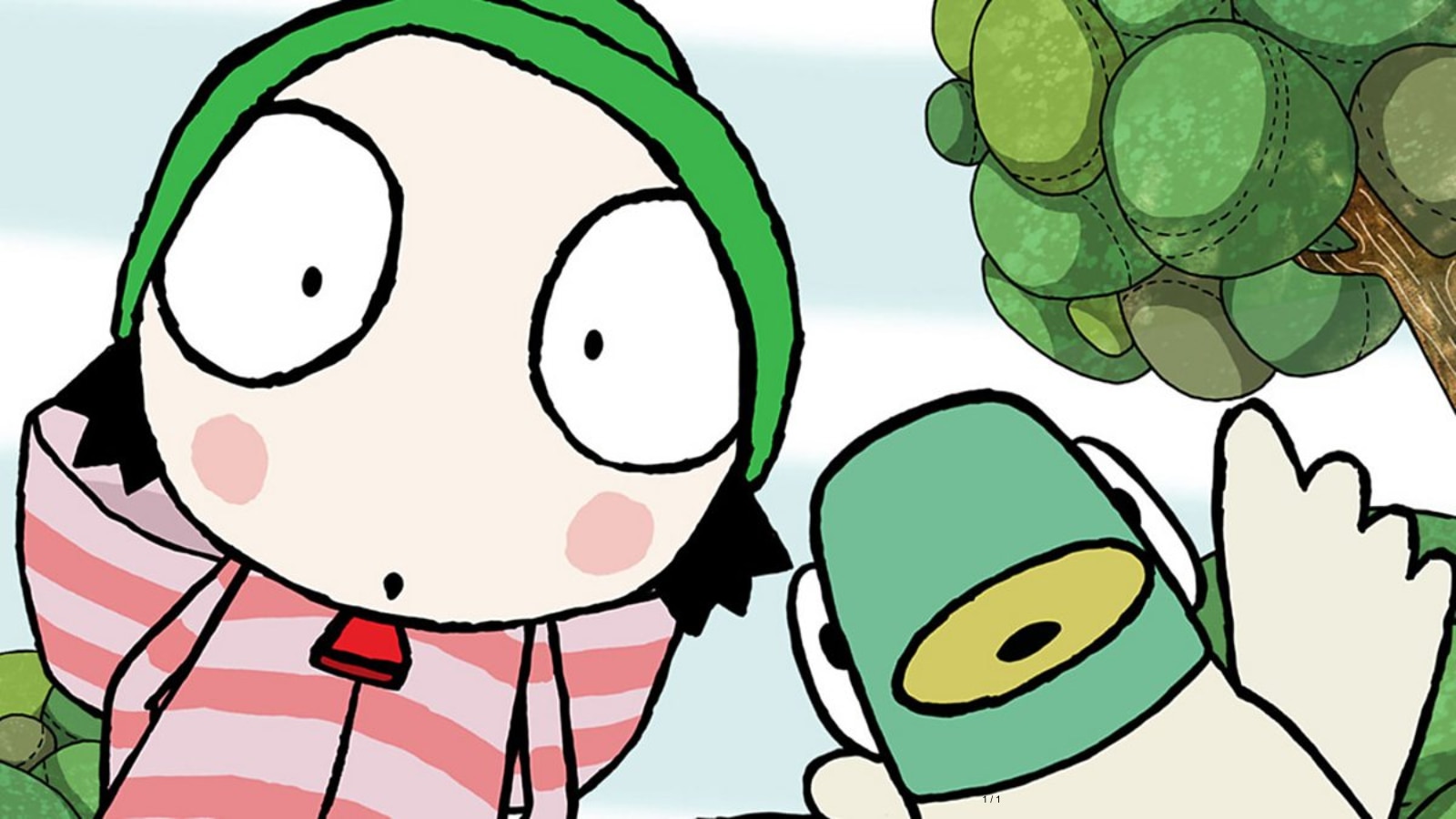
Consider this your introduction to one of BBC's most beloved children's programs. Sarah & Duck is a kids' show about the adventures of 7-year-old Sarah and her quacky, flappy best friend, Duck. These short episodes are perfect for teaching your PreK–Grade 2 students seasonal content and social-emotional skills. Each of these 10 videos comes complete with a Lesson Express. Show a video and then pick and choose from: Questions, Vocabulary, Writing Prompt, and Student Activities. This makes a great activity for morning meeting or a Friday reward!
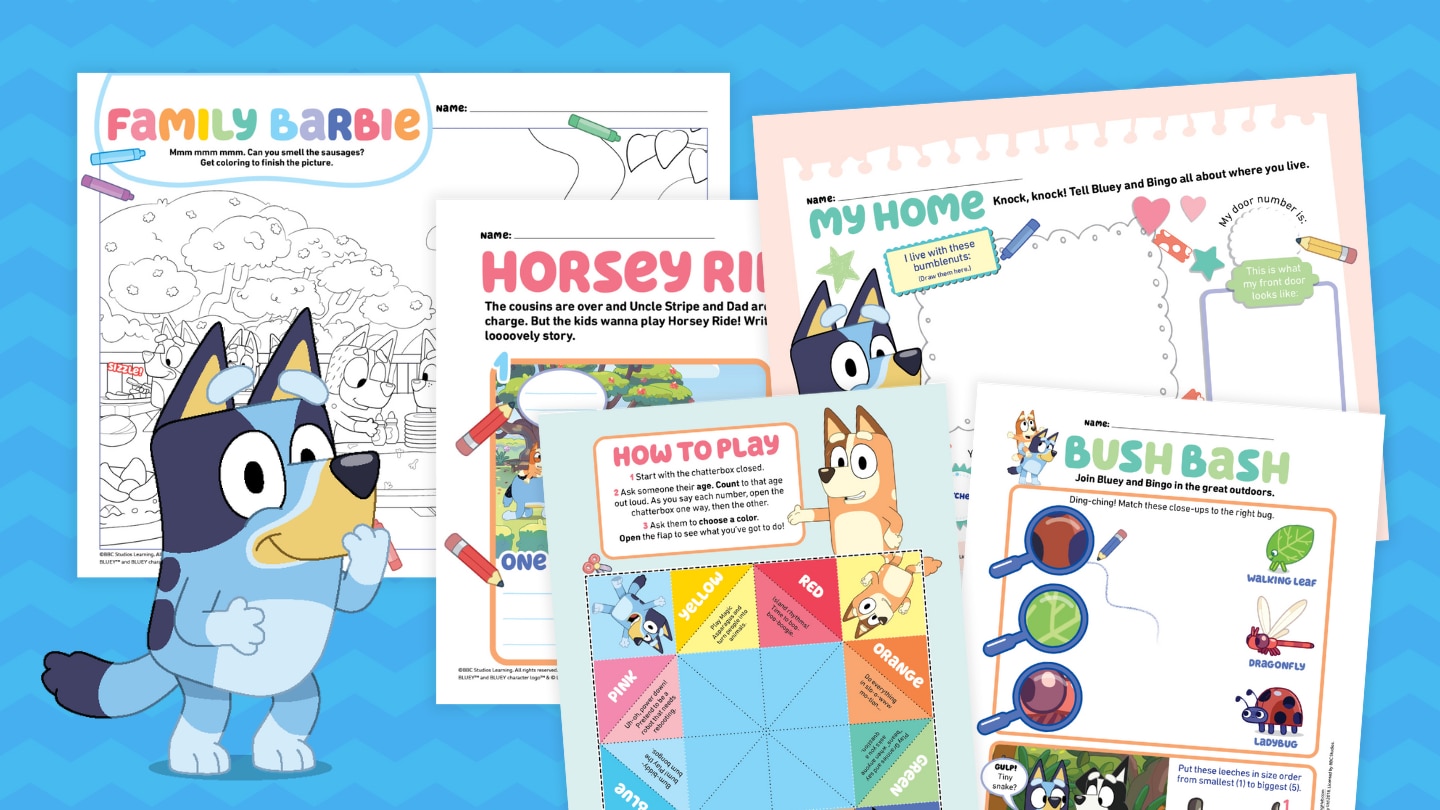
Get ready for hours of fun with Bluey and her friends! This collection of activity pages is packed with puzzles, coloring sheets, games, and creative challenges that bring the world of Bluey to life. Perfect for playtime or rainy days — let’s play!
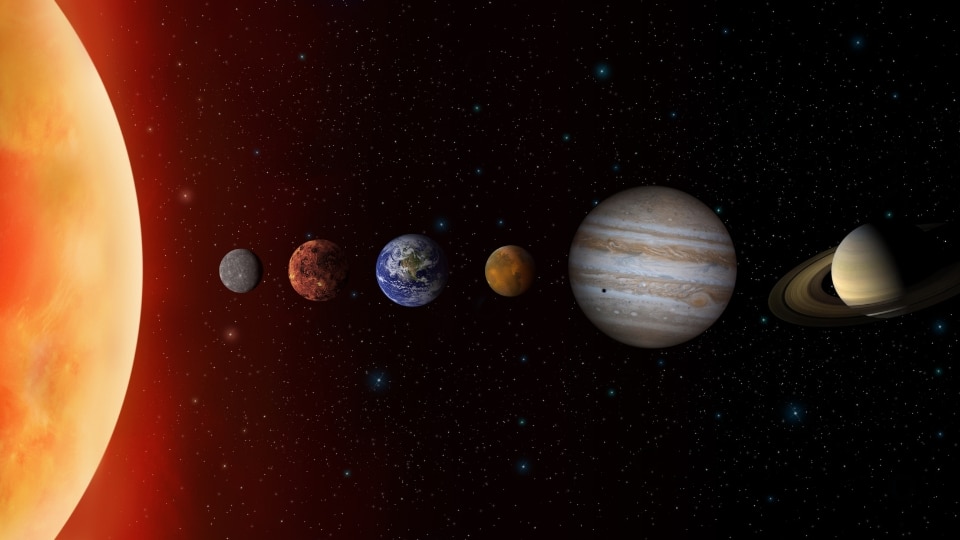
Take a journey through our cosmic neighborhood in this Kahoot about the planets, moons, and fascinating features that make up the Solar System. From the rocky worlds closest to the Sun to the icy giants at its outer reaches, discover what makes each planet unique.
This Kahoot explores planetary traits, orbits, and the vast scale of the Solar System while uncovering the forces that keep an incredible collection of worlds moving through space.
Watch the Planets of Our Solar System playlist and the related videos linked below, then take the Kahoot and see how much you know about the planets, moons, and other wonders of our Solar System.
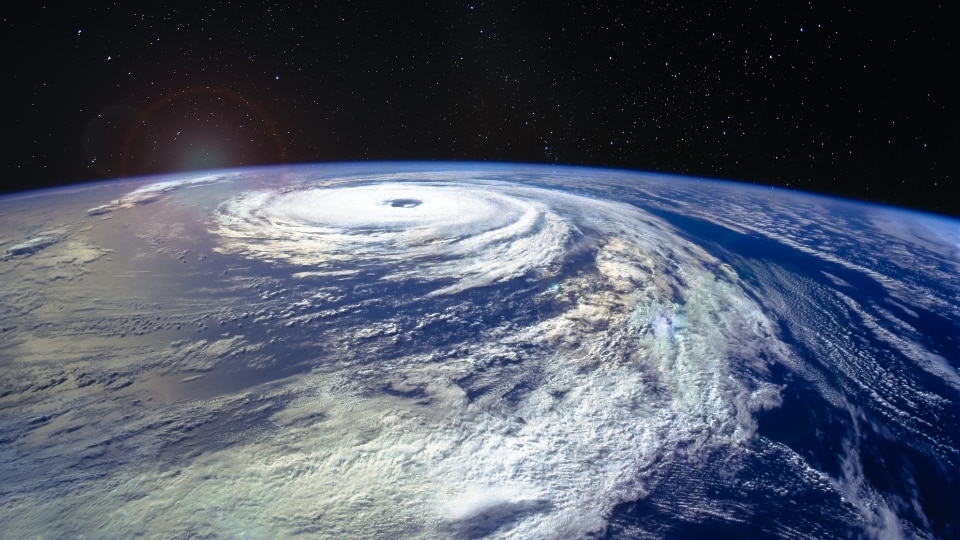
Explore the most powerful weather in the solar system in this Kahoot about planetary storms, extreme environments, and the forces that shape other worlds. From Jupiter's Great Red Spot to planet-wide dust storms on Mars, discover how weather behaves in places far different from Earth.
This Kahoot explores winds, clouds, atmospheres, and storms across the solar system while revealing some of the largest and longest-lasting weather events ever observed.
Watch the Planets of Our Solar System playlist and related videos linked below, then take the Kahoot and see how much you know about the extreme weather in our cosmic neighborhood.
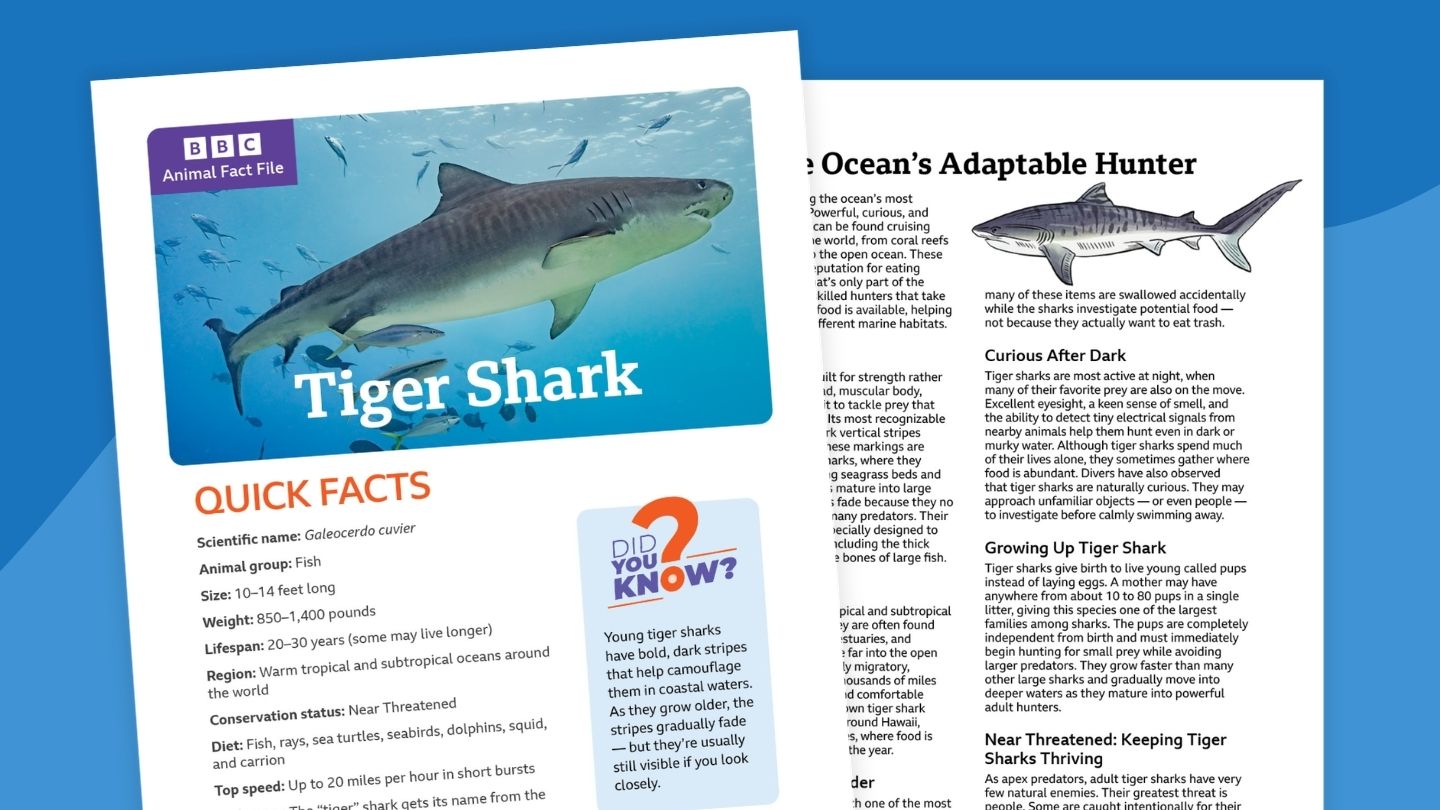
What shark gets its name from the dark stripes along its body and has one of the most varied diets in the ocean? Meet one of the sea's most adaptable predators.
Powerful, curious, and built to thrive in a wide range of habitats, tiger sharks are among the ocean's most successful hunters. Discover how they use their keen senses and powerful jaws to find food, why they migrate across thousands of miles of ocean, and what role they play in keeping marine ecosystems in balance. You'll also learn about the challenges tiger sharks face and the efforts underway to protect them.
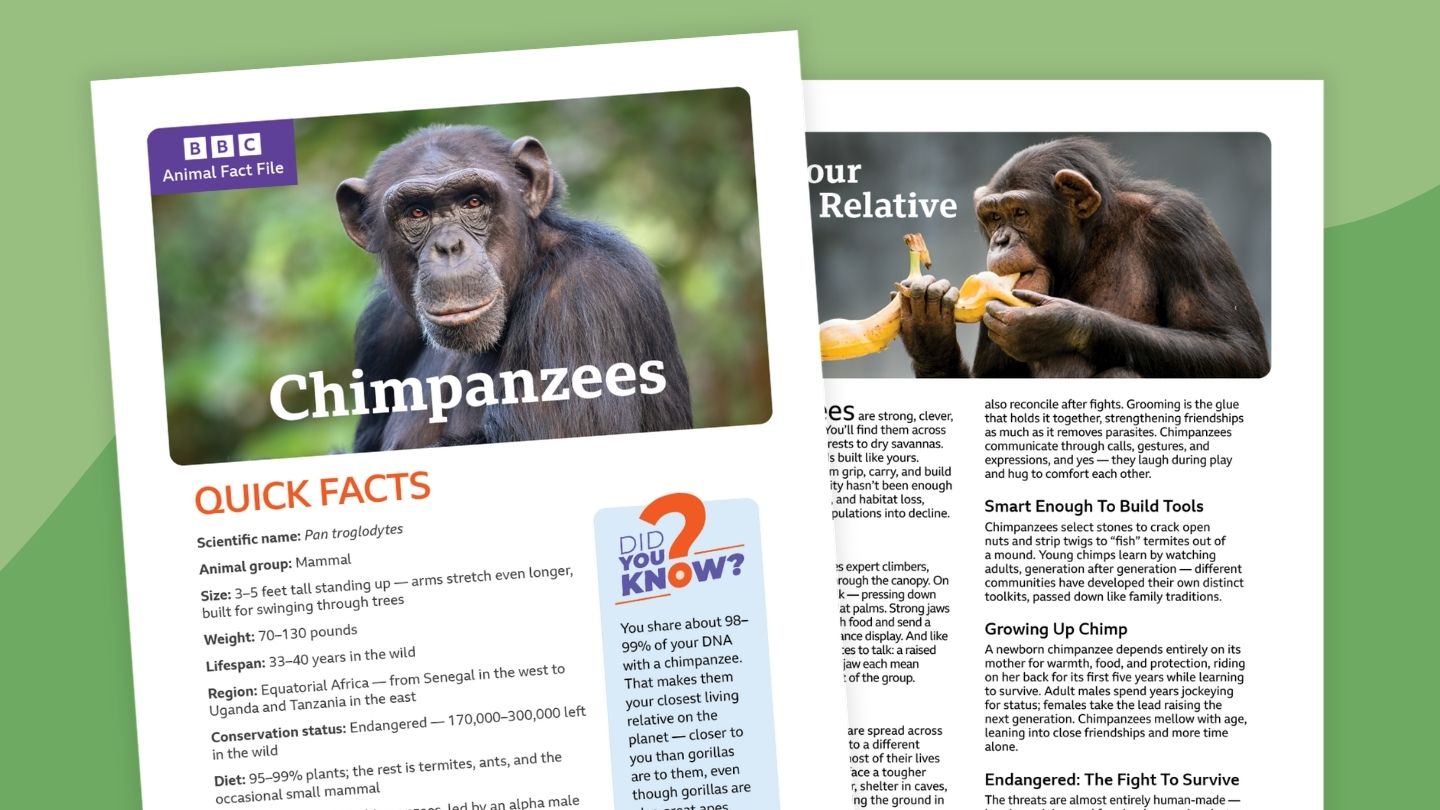
What animal laughs during play, uses tools to solve problems, and shares nearly 99% of its DNA with you? Meet the chimpanzee — one of the smartest and most fascinating animals on Earth.
This fact file takes learners on a journey into the world of chimpanzees, from the rainforests and savannas they call home to the remarkable ways they communicate, work together, and care for their families. Along the way, learners will discover how chimpanzees use tools, build friendships, raise their young, and face challenges in the wild.
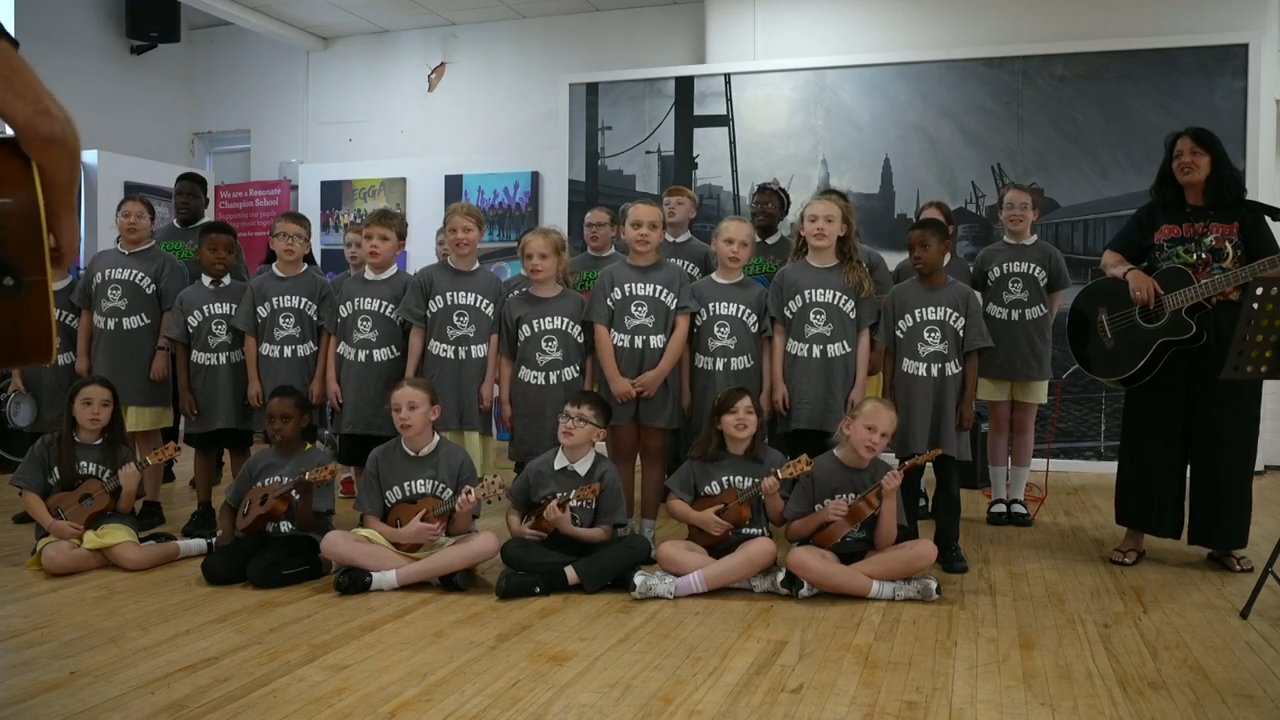
When you join your school band, you probably expect to perform in your school auditorium for friends and family. No shade to Gramps, but imagine the excitement when a group of kids learned that they were going to be performing at the massive Anfield Stadium, home of Liverpool Football Club. Multiply that by 10,000,000, and that’s a fraction of what they may have felt when they learned they would be performing a Foo Fighters song there FOR the Foo Fighters!
The Bell Tower Beats is a band from Anfield Road Primary School, who had the pleasure (and pressure) of playing "Times Like These" by the Foo Fighters for the actual members of the Foo Fighters. The performance was organized by a year three teacher, and has gone viral on news and media sources. Not only was the performance fun, but it helped bring attention to the opportunity to join the school band.
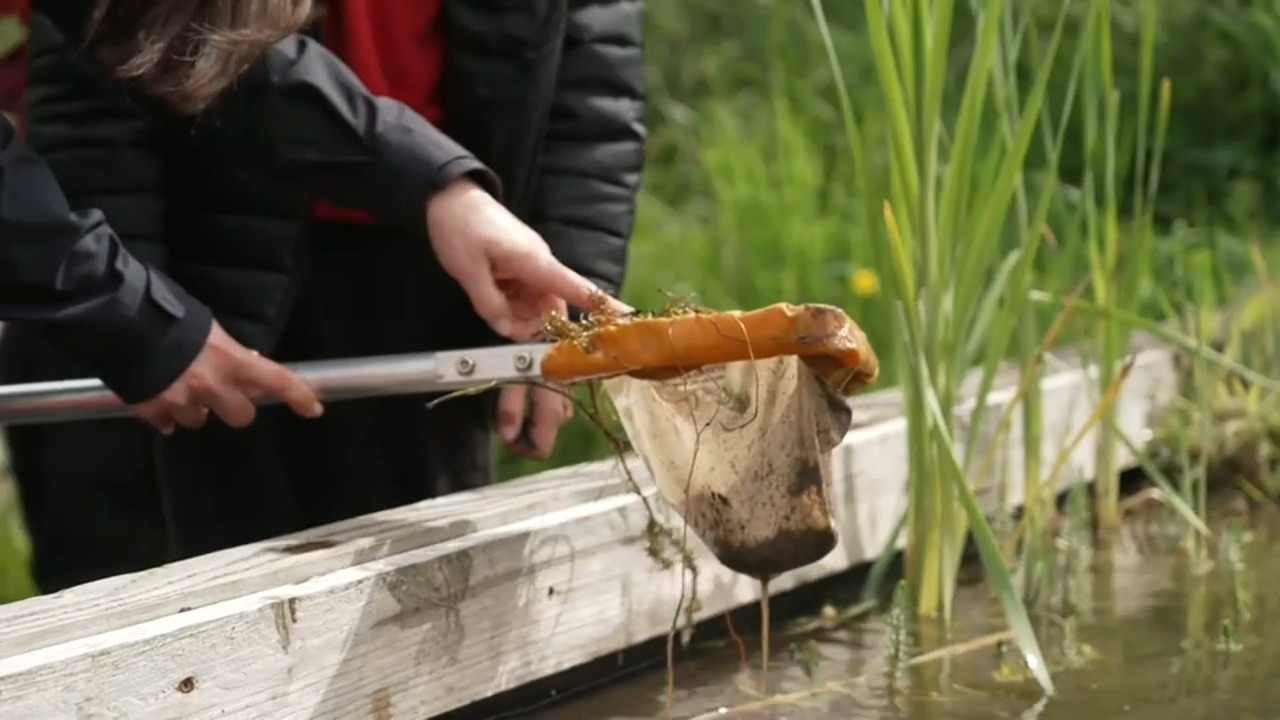
Your parents or grandparents probably talk about growing up outside — riding bikes, climbing trees, scraping up knees. Turns out, they were onto something.
The Wildlife Trusts, a UK conservation group, just wrapped up "30 Days Wild," the UK's biggest nature challenge. Millions of people, including tens of thousands of schools, took part by doing one "wild" activity a day — noticing, appreciating, or exploring nature. The Lancashire Wildlife Trust runs a similar effort called The Greenhouse Project, where people learn to grow food and care for nature together.
The idea: the more connected people feel to nature, the more likely they are to protect it. But a recent poll found that while almost all adults have fond memories of playing outside as kids, nearly half now spend just three hours outside per week — less than 30 minutes a day.
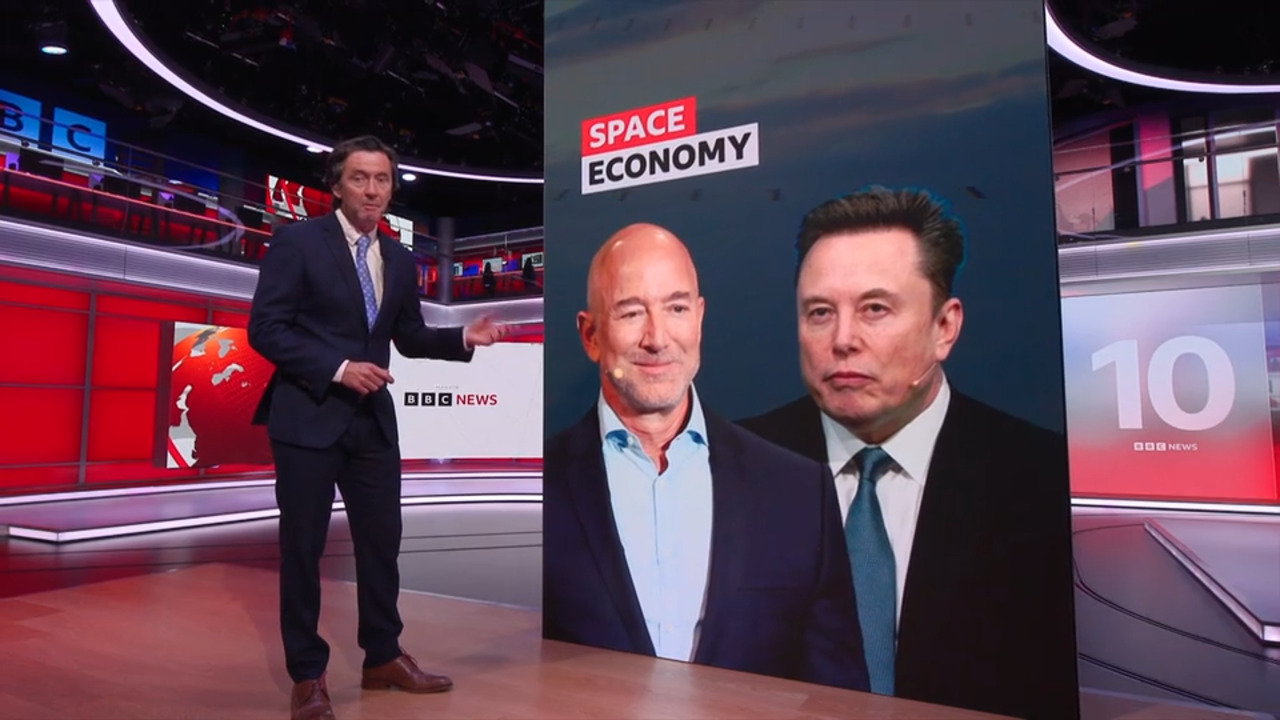
The “global space economy” refers to pretty much everything having to do with human progress through space, including exploration, research, management, and use. It also generates hundreds of billions of dollars every year.
You may not have heard the term “global space economy,” but you’ve probably heard of at least two of the big players: Jeff Bezos and Elon Musk. As founders of Blue Origin and SpaceX, their companies are estimated to be worth $100 billion and $1.8 trillion, respectively. If you took 1.8 trillion standard dollar bills end-to-end, it would stretch 100 million miles — more than the distance from the Earth to the Sun! Imagine walking to the Sun on a bridge made of money! You couldn’t, because of all of the “zero gravity.” Your feet would also get very tired. There’s also no oxygen. But we know all of this because of how much we’ve studied space!
So why spend so much time and money on the space industry, which has expanded massively in the last few decades? Don’t only a few select astronauts go to space? Shouldn’t we be focusing on Earth? Well, what we learn in space has a big impact on what we do on the ground. Our findings from space show up as the GPS on our phones, in ships navigating the oceans, even as farmers using satellite photography to plan their crops.
There’s no sign of slowing down on the space front — the UK is focusing on small satellites, America is hoping to put astronauts back on the moon by 2028, and China is planning its own lunar landing by 2030. These explorations could provide valuable minerals, insight to getting past the Moon (like to Mars), and open up space tourism opportunities.
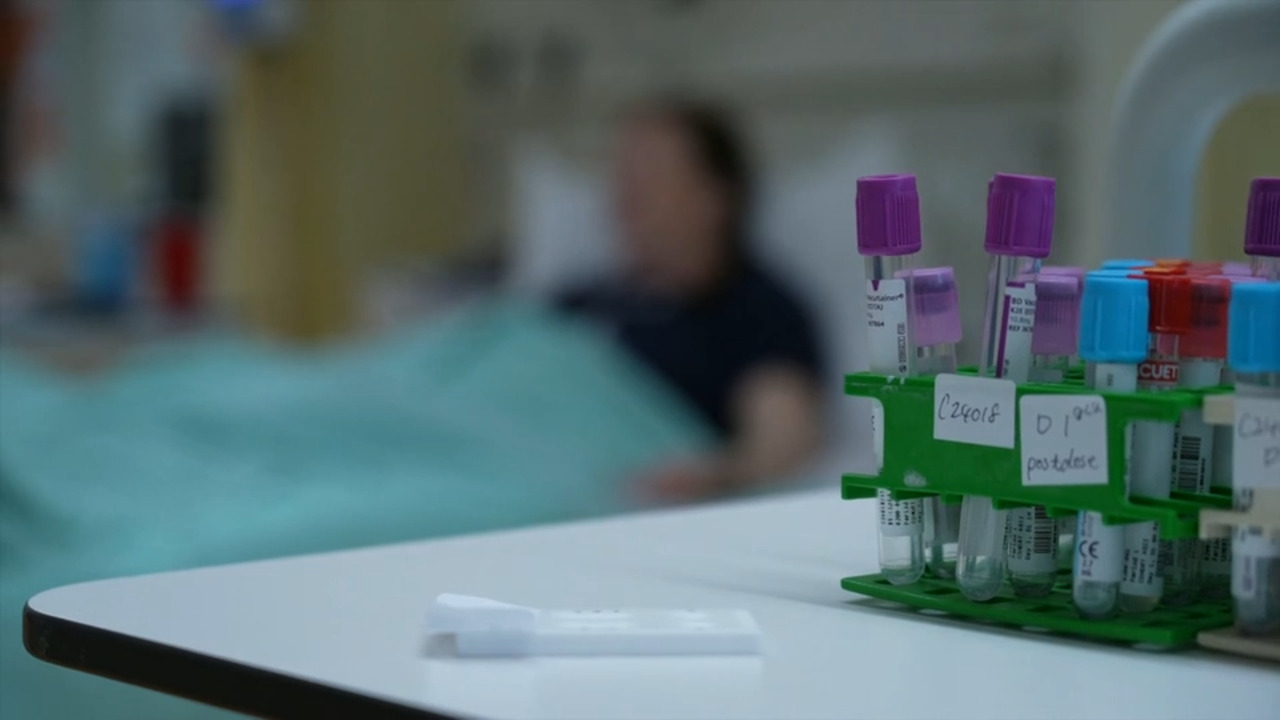
Cholesterol is tricky — your body needs the waxy substance to build cells and make hormones, but there’s a bad type of cholesterol called “LDL” (low-density lipoprotein). Too much LDL can put people at risk for heart attacks or stroke, so controlling cholesterol levels can be life-saving.
Luckily, a new gene editing therapy called VERVE-102 may be able to help with high cholesterol. There’s a trial running now that’s small but mighty, involving only 35 patients, all of whom have either inherited high cholesterol or have had a heart attack at a young age. They continued their regular medication but added this new gene editing therapy to their treatment.
Not only did results show levels of bad cholesterol reduced by up to 62%, but the level continued to remain low after a year, suggesting that patients may only need one treatment to feel the effects of this treatment for the rest of their lives. Is it magic? Close! It’s science!
The idea behind the gene editing plays off of the liver’s role. It’s supposed to clear bad cholesterol from the blood and stop it from clogging up vessels, unless a protein called PCSK9 gets in the way. PCSK9! It even kind of sounds like “pesky”! The new medicine edits PCSK9’s gene, so that it stays out of the way and the liver can do its job.
Meet the Alphablocks — 26 living letters who discover that when they hold hands to make a word, something magical happens. Celebrated for its innovative approach to teaching reading, Alphablocks makes learning joyful, active, and engaging for early learners. This free collection of Alphablocks worksheets brings that magic to life at home or in the classroom, with Alphablocks letter cards kids can use to build words, alphabet finger puppets, and playful worksheets that teach letter sounds.
Watch full episodes of the award-winning show for kids ages 3–6 on the official Alphablocks YouTube channel!
Meet the Numberblocks — little blocks with big ideas who make learning numbers fun and exciting for young children ages 3–7. Numberblocks helps kids build number sense as the characters come together, break apart, and explore how numbers really work. This free collection of printable games and colorful worksheets games give little learners hands-on practice with counting, odd and even numbers, and simple addition and subtraction. Perfect for use at home or in the classroom, these ready-to-use activities turn math practice into joyful play.
Plus, watch full episodes on the official Numberblocks YouTube channel!
Consider this your introduction to one of BBC's most beloved children's programs. Sarah & Duck is a kids' show about the adventures of 7-year-old Sarah and her quacky, flappy best friend, Duck. These short episodes are perfect for teaching your PreK–Grade 2 students seasonal content and social-emotional skills. Each of these 10 videos comes complete with a Lesson Express. Show a video and then pick and choose from: Questions, Vocabulary, Writing Prompt, and Student Activities. This makes a great activity for morning meeting or a Friday reward!
Get ready for hours of fun with Bluey and her friends! This collection of activity pages is packed with puzzles, coloring sheets, games, and creative challenges that bring the world of Bluey to life. Perfect for playtime or rainy days — let’s play!
Take a journey through our cosmic neighborhood in this Kahoot about the planets, moons, and fascinating features that make up the Solar System. From the rocky worlds closest to the Sun to the icy giants at its outer reaches, discover what makes each planet unique.
This Kahoot explores planetary traits, orbits, and the vast scale of the Solar System while uncovering the forces that keep an incredible collection of worlds moving through space.
Watch the Planets of Our Solar System playlist and the related videos linked below, then take the Kahoot and see how much you know about the planets, moons, and other wonders of our Solar System.
Explore the most powerful weather in the solar system in this Kahoot about planetary storms, extreme environments, and the forces that shape other worlds. From Jupiter's Great Red Spot to planet-wide dust storms on Mars, discover how weather behaves in places far different from Earth.
This Kahoot explores winds, clouds, atmospheres, and storms across the solar system while revealing some of the largest and longest-lasting weather events ever observed.
Watch the Planets of Our Solar System playlist and related videos linked below, then take the Kahoot and see how much you know about the extreme weather in our cosmic neighborhood.
What shark gets its name from the dark stripes along its body and has one of the most varied diets in the ocean? Meet one of the sea's most adaptable predators.
Powerful, curious, and built to thrive in a wide range of habitats, tiger sharks are among the ocean's most successful hunters. Discover how they use their keen senses and powerful jaws to find food, why they migrate across thousands of miles of ocean, and what role they play in keeping marine ecosystems in balance. You'll also learn about the challenges tiger sharks face and the efforts underway to protect them.
What animal laughs during play, uses tools to solve problems, and shares nearly 99% of its DNA with you? Meet the chimpanzee — one of the smartest and most fascinating animals on Earth.
This fact file takes learners on a journey into the world of chimpanzees, from the rainforests and savannas they call home to the remarkable ways they communicate, work together, and care for their families. Along the way, learners will discover how chimpanzees use tools, build friendships, raise their young, and face challenges in the wild.
When you join your school band, you probably expect to perform in your school auditorium for friends and family. No shade to Gramps, but imagine the excitement when a group of kids learned that they were going to be performing at the massive Anfield Stadium, home of Liverpool Football Club. Multiply that by 10,000,000, and that’s a fraction of what they may have felt when they learned they would be performing a Foo Fighters song there FOR the Foo Fighters!
The Bell Tower Beats is a band from Anfield Road Primary School, who had the pleasure (and pressure) of playing "Times Like These" by the Foo Fighters for the actual members of the Foo Fighters. The performance was organized by a year three teacher, and has gone viral on news and media sources. Not only was the performance fun, but it helped bring attention to the opportunity to join the school band.
Your parents or grandparents probably talk about growing up outside — riding bikes, climbing trees, scraping up knees. Turns out, they were onto something.
The Wildlife Trusts, a UK conservation group, just wrapped up "30 Days Wild," the UK's biggest nature challenge. Millions of people, including tens of thousands of schools, took part by doing one "wild" activity a day — noticing, appreciating, or exploring nature. The Lancashire Wildlife Trust runs a similar effort called The Greenhouse Project, where people learn to grow food and care for nature together.
The idea: the more connected people feel to nature, the more likely they are to protect it. But a recent poll found that while almost all adults have fond memories of playing outside as kids, nearly half now spend just three hours outside per week — less than 30 minutes a day.
The “global space economy” refers to pretty much everything having to do with human progress through space, including exploration, research, management, and use. It also generates hundreds of billions of dollars every year.
You may not have heard the term “global space economy,” but you’ve probably heard of at least two of the big players: Jeff Bezos and Elon Musk. As founders of Blue Origin and SpaceX, their companies are estimated to be worth $100 billion and $1.8 trillion, respectively. If you took 1.8 trillion standard dollar bills end-to-end, it would stretch 100 million miles — more than the distance from the Earth to the Sun! Imagine walking to the Sun on a bridge made of money! You couldn’t, because of all of the “zero gravity.” Your feet would also get very tired. There’s also no oxygen. But we know all of this because of how much we’ve studied space!
So why spend so much time and money on the space industry, which has expanded massively in the last few decades? Don’t only a few select astronauts go to space? Shouldn’t we be focusing on Earth? Well, what we learn in space has a big impact on what we do on the ground. Our findings from space show up as the GPS on our phones, in ships navigating the oceans, even as farmers using satellite photography to plan their crops.
There’s no sign of slowing down on the space front — the UK is focusing on small satellites, America is hoping to put astronauts back on the moon by 2028, and China is planning its own lunar landing by 2030. These explorations could provide valuable minerals, insight to getting past the Moon (like to Mars), and open up space tourism opportunities.
Cholesterol is tricky — your body needs the waxy substance to build cells and make hormones, but there’s a bad type of cholesterol called “LDL” (low-density lipoprotein). Too much LDL can put people at risk for heart attacks or stroke, so controlling cholesterol levels can be life-saving.
Luckily, a new gene editing therapy called VERVE-102 may be able to help with high cholesterol. There’s a trial running now that’s small but mighty, involving only 35 patients, all of whom have either inherited high cholesterol or have had a heart attack at a young age. They continued their regular medication but added this new gene editing therapy to their treatment.
Not only did results show levels of bad cholesterol reduced by up to 62%, but the level continued to remain low after a year, suggesting that patients may only need one treatment to feel the effects of this treatment for the rest of their lives. Is it magic? Close! It’s science!
The idea behind the gene editing plays off of the liver’s role. It’s supposed to clear bad cholesterol from the blood and stop it from clogging up vessels, unless a protein called PCSK9 gets in the way. PCSK9! It even kind of sounds like “pesky”! The new medicine edits PCSK9’s gene, so that it stays out of the way and the liver can do its job.