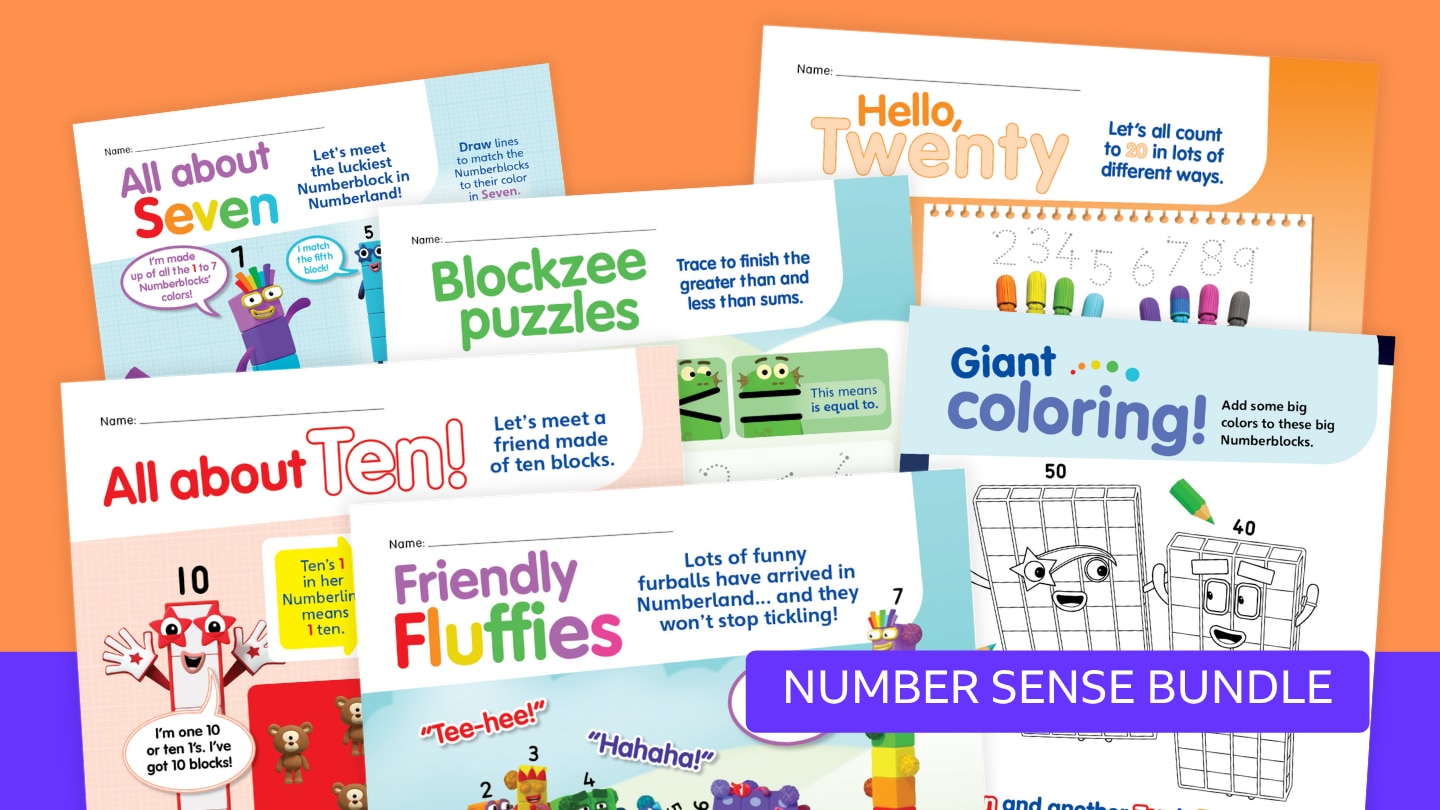
Bring the delightful Numberblocks characters into your math classroom with this engaging number sense printable bundle, perfect for PreK–Grade 2 learners! Packed with colorful worksheets, this bundle includes important number sense concepts like the number line, place value in tens, comparing numbers, simple addition and more! Here's some of what's included:
- Blockzee Puzzles: Trace to finish the greater than and less than sums.
- Friendly Fluffies: Add to make 7 and help the Numberblocks escape the tickles
- Hello, Twenty: Count to 20 in lots of different ways!
Want more? We have tons on the site. Just search "Numberblocks"!
Watch full episodes of Numberblocks on their official YouTube channel!
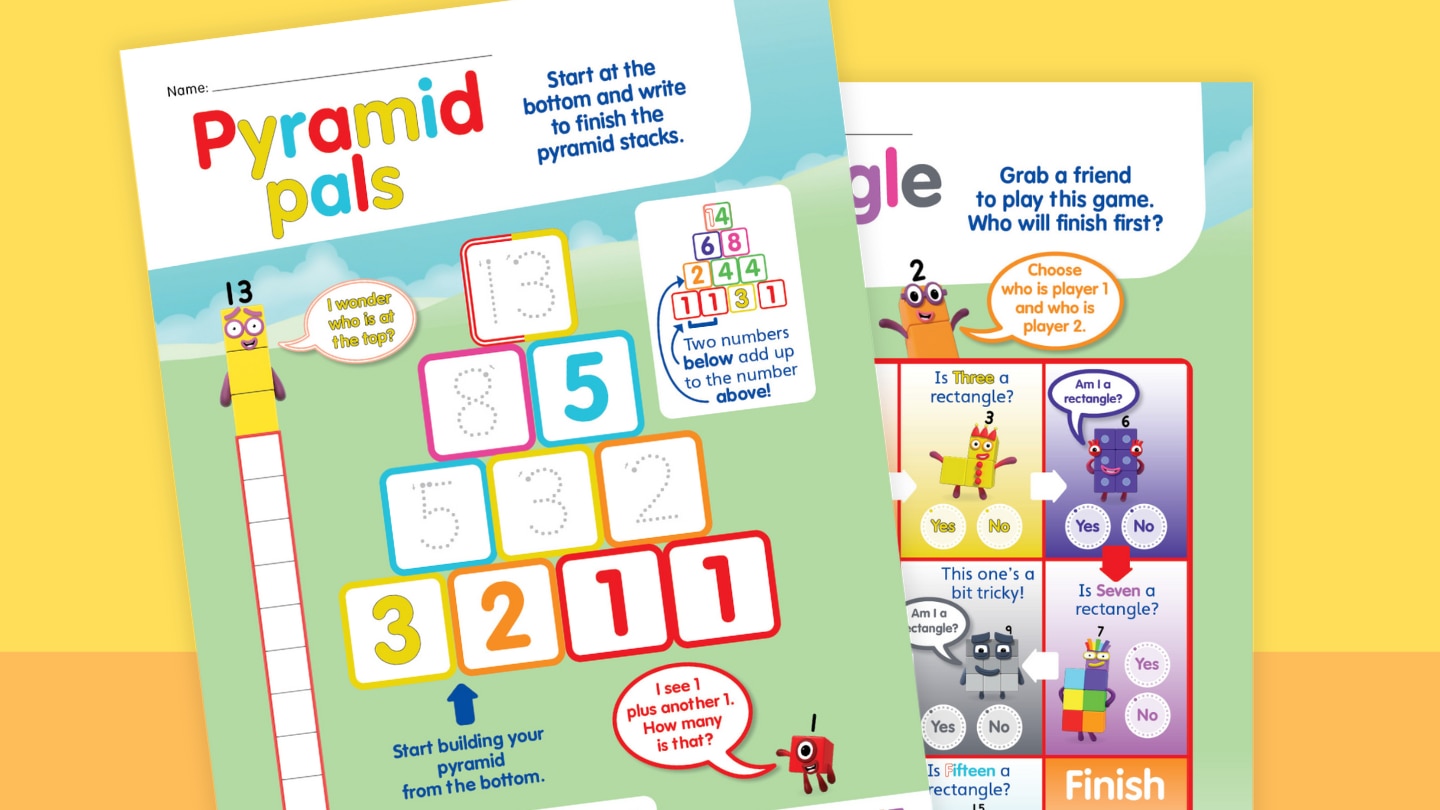
Start at the bottom and write to finish the pyramid stacks. Two numbers below add up to the number above. Use the number line to help you! Got it? Let's try some bigger numbers!
Watch full episodes of Numberblocks on their official YouTube channel!
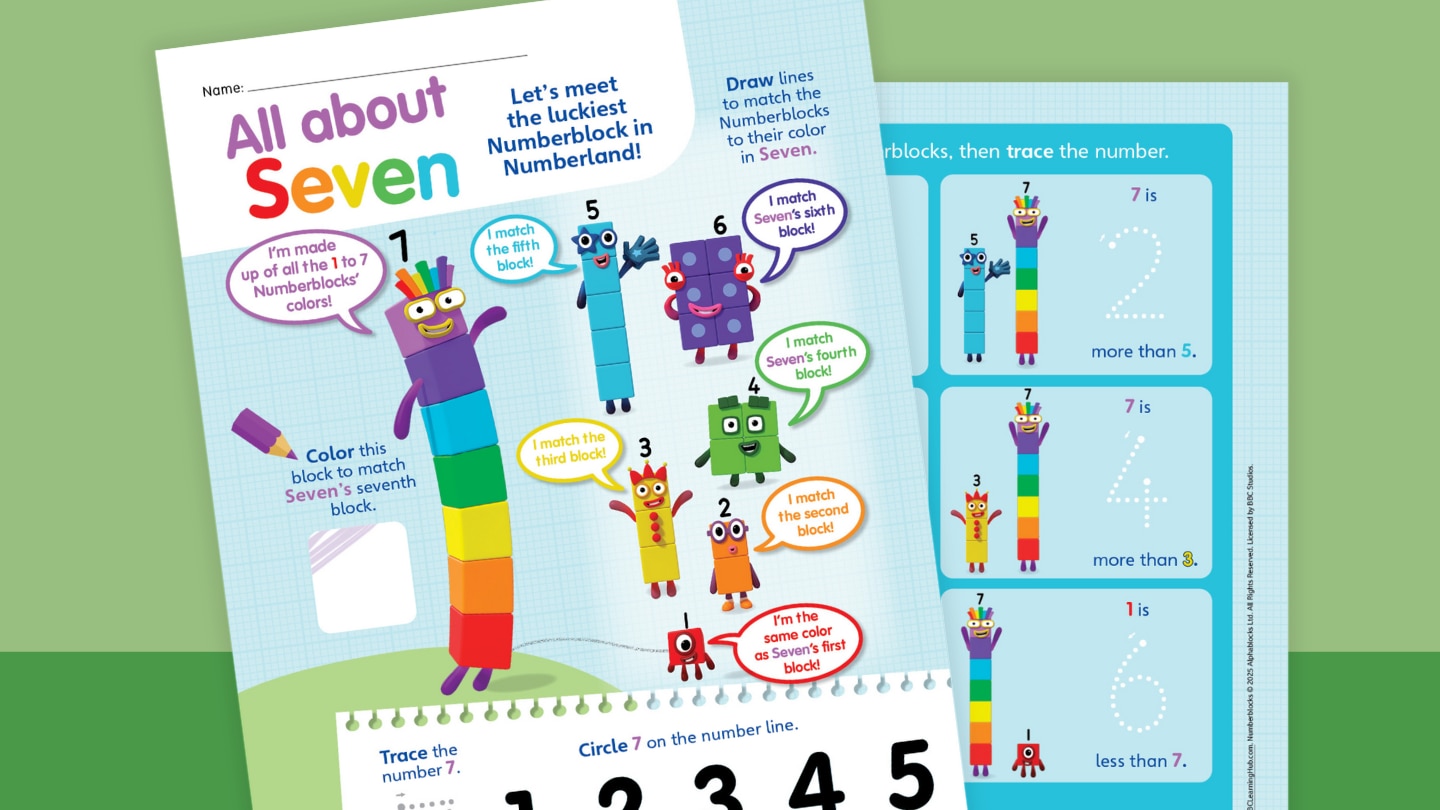
Let's meet the luckiest Numberblock in Numberland! Seven is made up of all the 1 to 7 Numberblocks' colors! Color the blank block to match Seven's seventh block, draw lines to match the Numberblocks to their color in Seven, trace the number 7, circle it on a number line, and more!
Watch full episodes of Numberblocks on their official YouTube channel!
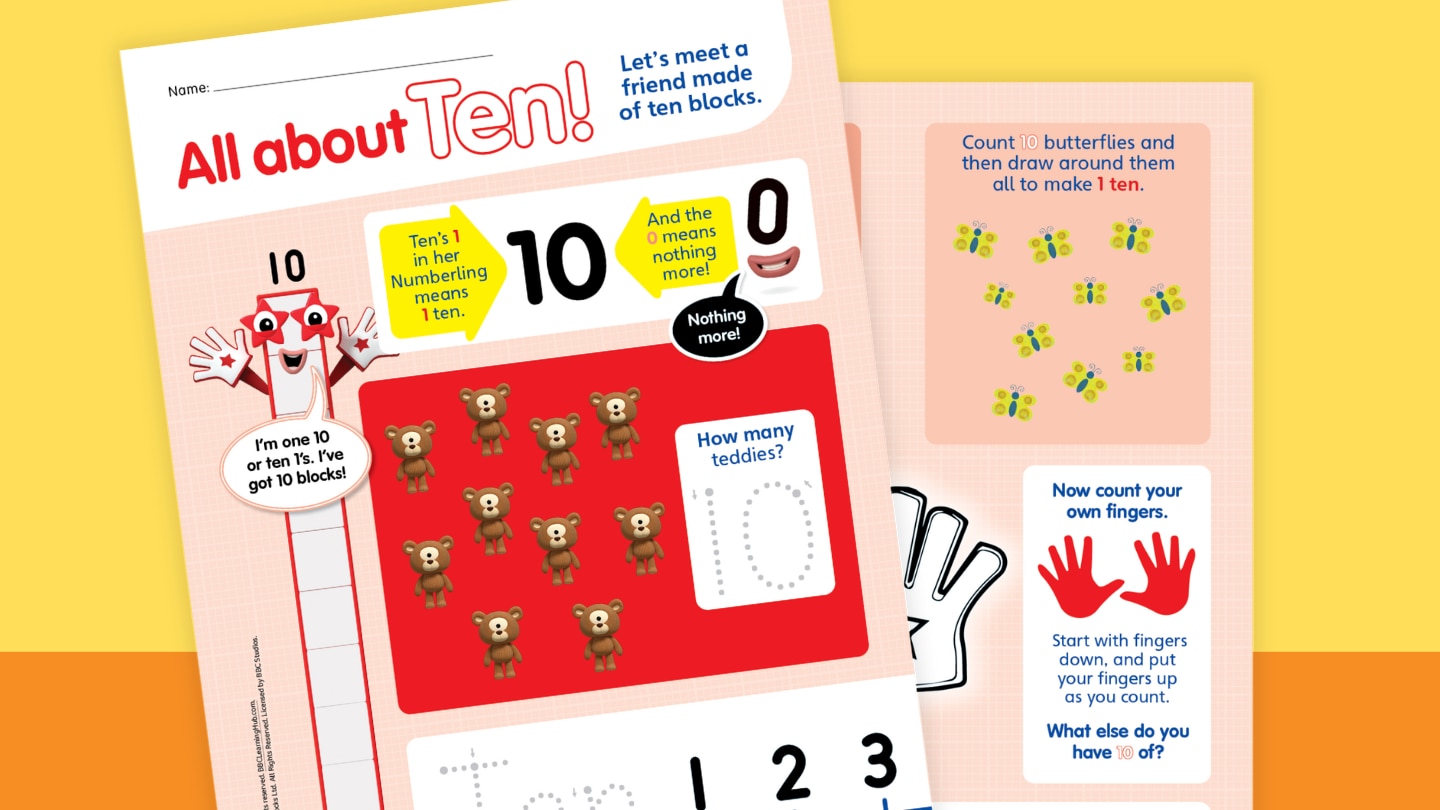
Let's meet a friend made of ten blocks. Ten's 1 in her Numberling means 1 ten. And the 0 means nothing more! Count 10 bees and then draw around them all to make 1 ten. Count 10 butterflies and then draw around them all to make 1 ten. Now count your own fingers. Start with fingers down and put your fingers up as you count. What else do you have 10 of?
Watch full episodes of Numberblocks on their official YouTube channel!
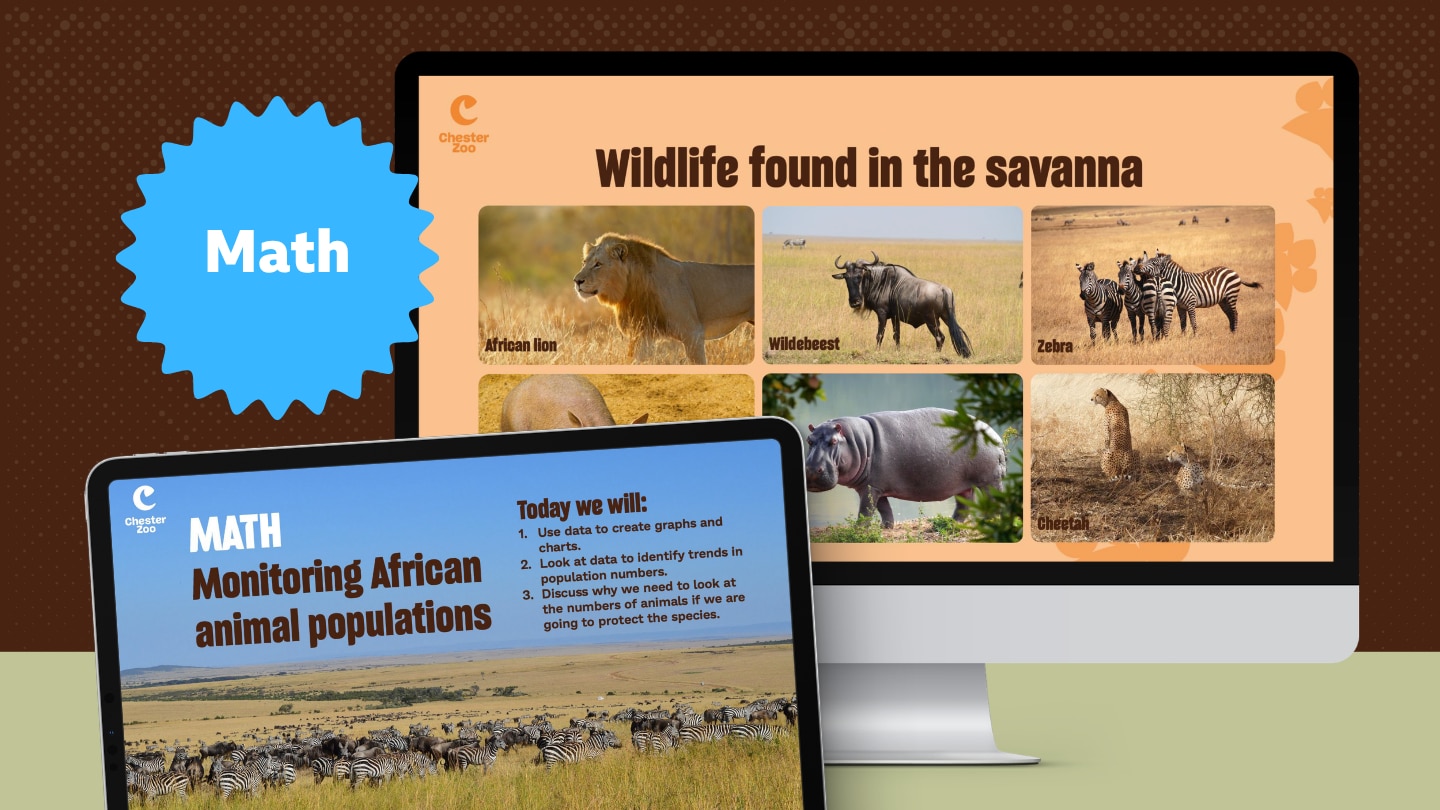
Math meets wildlife conservation! How do you know if a population of animals is growing or shrinking? And how can numbers help protect species in the wild? Join Chester Zoo to explore the African savanna and discover how conservationists use data to understand what is happening to wildlife populations.
Meet some of the animals that call the savanna home, then find out how Chester Zoo and its conservation partners monitor animals such as northern giraffes. You'll see how cameras, trackers, and other methods can help scientists gather information about animals in the wild — and why collecting accurate data matters.
Then become a conservation data detective! Work with real wildlife population data to spot trends and turn numbers into bar charts, line graphs, and pie charts. You'll investigate what different kinds of graphs can tell us and consider why scientists and conservation organizations need to communicate their findings clearly.
Finally, take what you've learned beyond the numbers. Use data to think about how people can make choices that help wildlife, collect information from your own class, and turn your findings into a message that could inspire others to take action.
Don't miss the graph worksheets that go with this lesson!

50,000 air miles. That's enough to circle the entire planet twice — and it's how far a private jet reportedly linked to FIFA President Gianni Infantino flew during the 2026 World Cup. In just over a month, Infantino attended 41 matches across North America, sometimes appearing at games in cities hundreds of miles apart on the same day. No, he didn't discover teleportation, and he definitely didn't outrun Messi or Mbappé. The real answer is a lot simpler — and a lot more expensive for the planet.
FIFA wouldn't confirm Infantino was on board, but BBC Verify tracked flight data from a private jet reportedly linked to him. The plane's movements lined up with Infantino's appearances in host cities. Over about a month, that jet flew 46 times — sometimes three flights in a single day.
All that flying comes at a real cost to the climate. Experts estimate the jet's emissions were roughly equal to one year's carbon footprint for 135 average people. That's a striking number, especially since FIFA had made environmental promises for the tournament, including grouping teams regionally — specifically to cut down on long-distance travel.
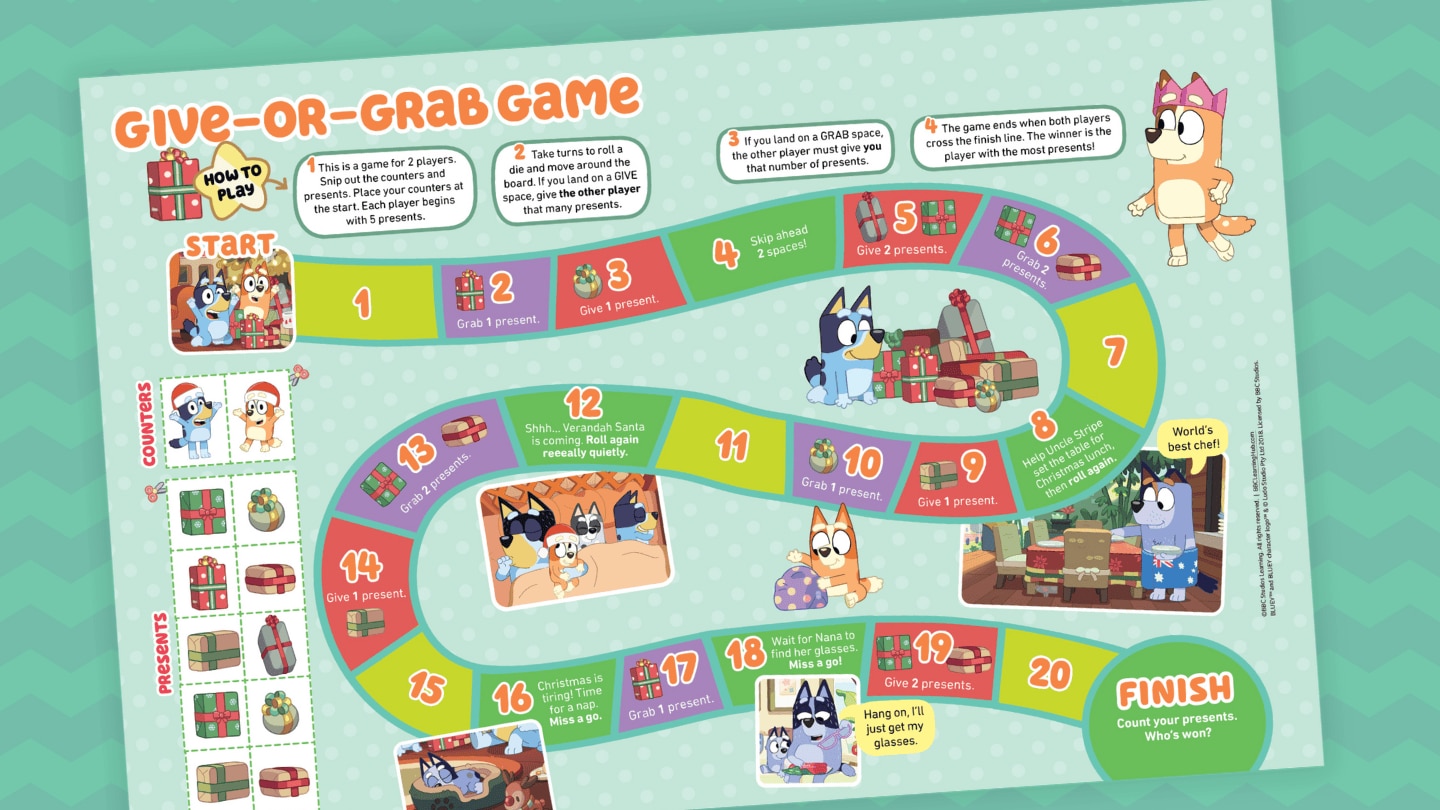
It's the holiday season! Grab a pal and play this fun game. Here's how:
- This is a game for two players. Snip out the counters and presents. Place your counters at the start. Each player begins with five presents.
- Take turns to roll a die and move around the board. If you land on a GIVE space, give the other player that many presents.
- If you land on a GRAB space, the other player must give you that number of presents.
- The game ends when both players cross the finish line. The winner is the player with the most presents!
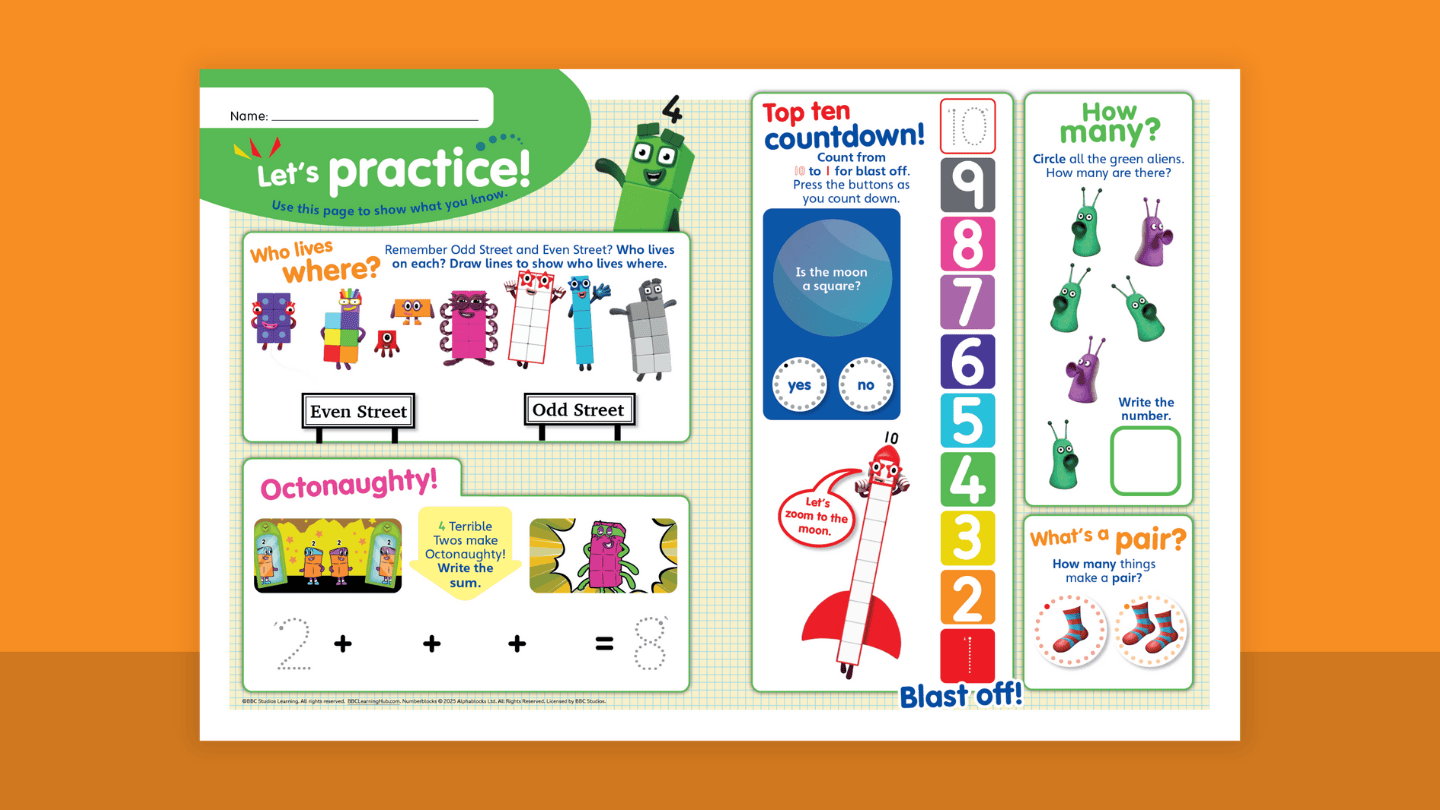
Use this page to show what you know. Who lives where? Remember Odd Street and Even Street? Who lives on each? Draw lines to show who lives where. Count down from 10 to one for blast off. Press the buttons as you count down. Circle all the green aliens. How many are there?
Watch full episodes of Numberblocks on their official YouTube channel!
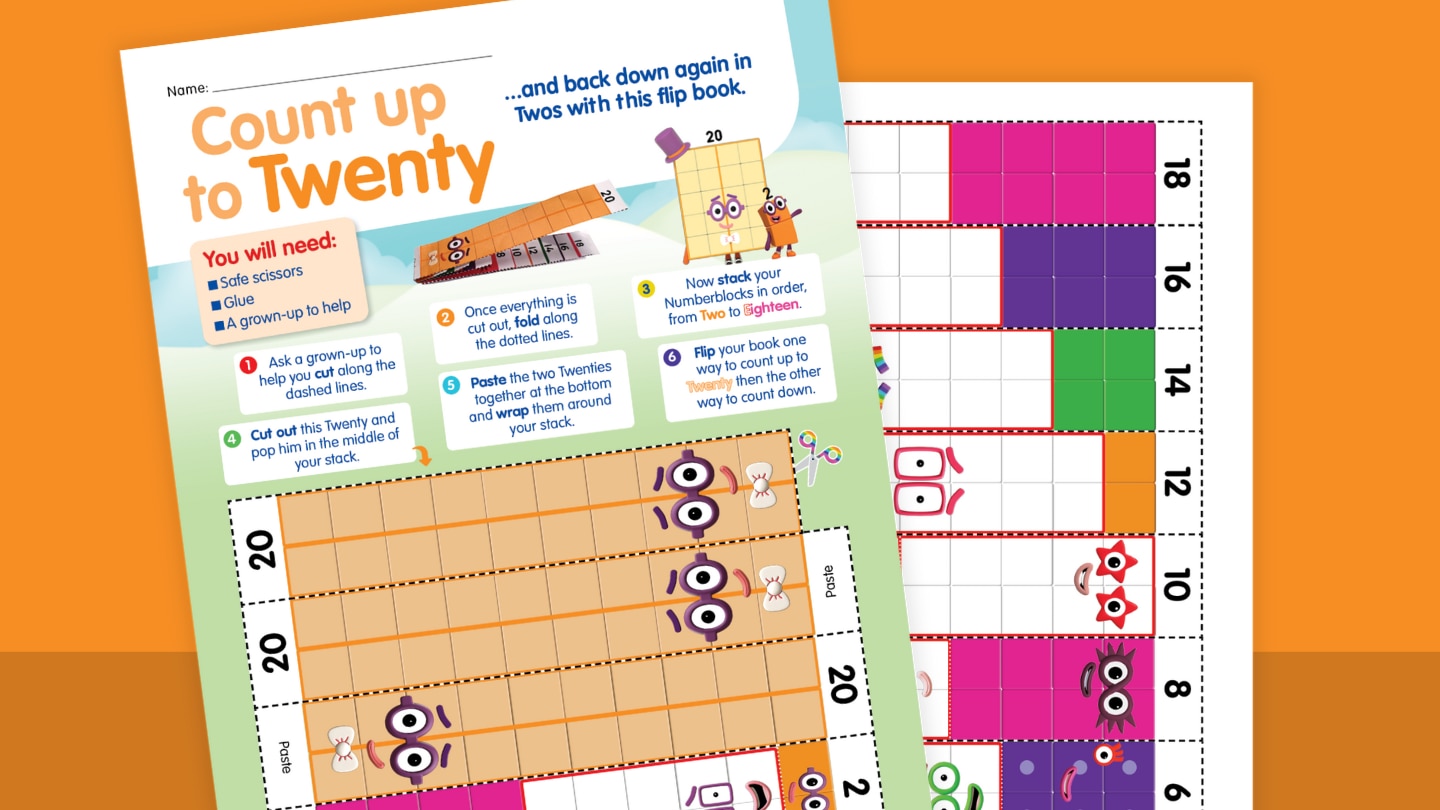
Count up to Twenty and back down again in Twos with this flip book. Here's how you'll make it:
- Ask a grown-up to help you cut along the dashed lines.
- Once everything is cut out, fold along the dotted lines.
- Now stack your Numberblocks in orders from Two to Eighteen.
- Cut out the Twenty and pop him in the middle of your stack.
- Paste the two Twenties together at the bottom and wrap them around your stack.
- Flip your book one way to count up to Twenty then the other way to count down.
Watch full episodes of Numberblocks on their official YouTube channel!
Bring the delightful Numberblocks characters into your math classroom with this engaging number sense printable bundle, perfect for PreK–Grade 2 learners! Packed with colorful worksheets, this bundle includes important number sense concepts like the number line, place value in tens, comparing numbers, simple addition and more! Here's some of what's included:
- Blockzee Puzzles: Trace to finish the greater than and less than sums.
- Friendly Fluffies: Add to make 7 and help the Numberblocks escape the tickles
- Hello, Twenty: Count to 20 in lots of different ways!
Want more? We have tons on the site. Just search "Numberblocks"!
Watch full episodes of Numberblocks on their official YouTube channel!
Start at the bottom and write to finish the pyramid stacks. Two numbers below add up to the number above. Use the number line to help you! Got it? Let's try some bigger numbers!
Watch full episodes of Numberblocks on their official YouTube channel!
Let's meet the luckiest Numberblock in Numberland! Seven is made up of all the 1 to 7 Numberblocks' colors! Color the blank block to match Seven's seventh block, draw lines to match the Numberblocks to their color in Seven, trace the number 7, circle it on a number line, and more!
Watch full episodes of Numberblocks on their official YouTube channel!
Let's meet a friend made of ten blocks. Ten's 1 in her Numberling means 1 ten. And the 0 means nothing more! Count 10 bees and then draw around them all to make 1 ten. Count 10 butterflies and then draw around them all to make 1 ten. Now count your own fingers. Start with fingers down and put your fingers up as you count. What else do you have 10 of?
Watch full episodes of Numberblocks on their official YouTube channel!
Math meets wildlife conservation! How do you know if a population of animals is growing or shrinking? And how can numbers help protect species in the wild? Join Chester Zoo to explore the African savanna and discover how conservationists use data to understand what is happening to wildlife populations.
Meet some of the animals that call the savanna home, then find out how Chester Zoo and its conservation partners monitor animals such as northern giraffes. You'll see how cameras, trackers, and other methods can help scientists gather information about animals in the wild — and why collecting accurate data matters.
Then become a conservation data detective! Work with real wildlife population data to spot trends and turn numbers into bar charts, line graphs, and pie charts. You'll investigate what different kinds of graphs can tell us and consider why scientists and conservation organizations need to communicate their findings clearly.
Finally, take what you've learned beyond the numbers. Use data to think about how people can make choices that help wildlife, collect information from your own class, and turn your findings into a message that could inspire others to take action.
Don't miss the graph worksheets that go with this lesson!
50,000 air miles. That's enough to circle the entire planet twice — and it's how far a private jet reportedly linked to FIFA President Gianni Infantino flew during the 2026 World Cup. In just over a month, Infantino attended 41 matches across North America, sometimes appearing at games in cities hundreds of miles apart on the same day. No, he didn't discover teleportation, and he definitely didn't outrun Messi or Mbappé. The real answer is a lot simpler — and a lot more expensive for the planet.
FIFA wouldn't confirm Infantino was on board, but BBC Verify tracked flight data from a private jet reportedly linked to him. The plane's movements lined up with Infantino's appearances in host cities. Over about a month, that jet flew 46 times — sometimes three flights in a single day.
All that flying comes at a real cost to the climate. Experts estimate the jet's emissions were roughly equal to one year's carbon footprint for 135 average people. That's a striking number, especially since FIFA had made environmental promises for the tournament, including grouping teams regionally — specifically to cut down on long-distance travel.
It's the holiday season! Grab a pal and play this fun game. Here's how:
- This is a game for two players. Snip out the counters and presents. Place your counters at the start. Each player begins with five presents.
- Take turns to roll a die and move around the board. If you land on a GIVE space, give the other player that many presents.
- If you land on a GRAB space, the other player must give you that number of presents.
- The game ends when both players cross the finish line. The winner is the player with the most presents!
Use this page to show what you know. Who lives where? Remember Odd Street and Even Street? Who lives on each? Draw lines to show who lives where. Count down from 10 to one for blast off. Press the buttons as you count down. Circle all the green aliens. How many are there?
Watch full episodes of Numberblocks on their official YouTube channel!
Count up to Twenty and back down again in Twos with this flip book. Here's how you'll make it:
- Ask a grown-up to help you cut along the dashed lines.
- Once everything is cut out, fold along the dotted lines.
- Now stack your Numberblocks in orders from Two to Eighteen.
- Cut out the Twenty and pop him in the middle of your stack.
- Paste the two Twenties together at the bottom and wrap them around your stack.
- Flip your book one way to count up to Twenty then the other way to count down.
Watch full episodes of Numberblocks on their official YouTube channel!