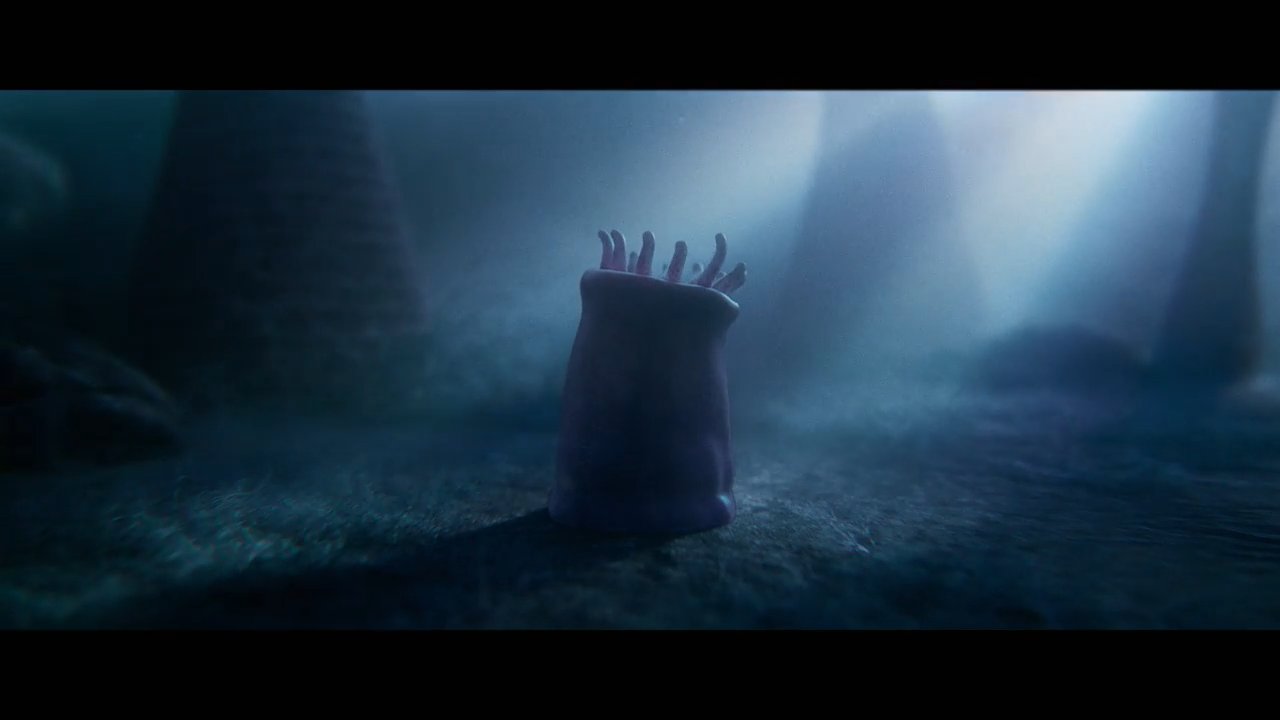
Before horses could gallop across open landscapes, the ability to move had to evolve. This clip from BBC’s Evolution episode "The Horse" travels back more than 500 million years to the Ediacaran Period, when most large animals were stationary and depended on ocean currents to bring them food. Rare fossils, including Auroralumina and an ancient trailway, provide clues to the emergence of muscle and some of the earliest evidence of animal movement.
The video also examines myosin, an ancient protein that powers muscle contraction, showing how this microscopic mechanism helped make coordinated movement possible — and ultimately laid the foundation for the powerful muscles that drive animals like the horse.
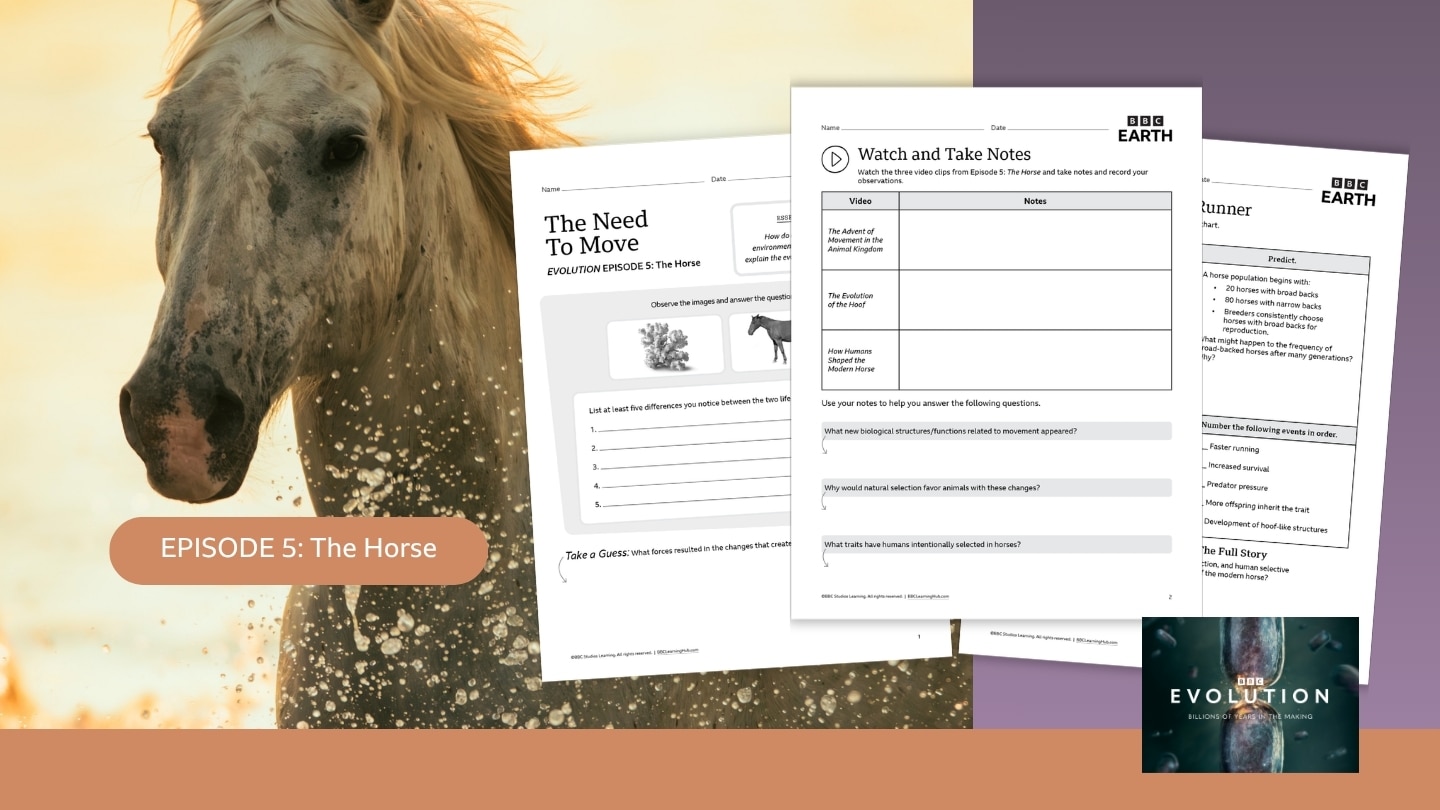
What evolutionary changes allowed the horse to become one of the animal kingdom’s great runners? This lesson for ages 11–18 explores the evolutionary changes that transformed movement, helping organisms become faster, more efficient, and better suited to their environments.
The BBC video clips from Evolution Episode 5: "The Horse" trace the development of movement in the animal kingdom, the evolution of the hoof, and the ways humans have shaped horses through selective breeding. Consider how structures such as muscles, tendons, leg bones, and hooves work together — and why certain traits can become more common when they provide an advantage.
Through observation, prediction, sequencing, and evidence-based activities, you'll examine the roles of environmental change, natural selection, and human intervention in shaping evolutionary outcomes. Then bring these forces together to explain how millions of years of change, followed by thousands of years of selective breeding, produced the modern horse.
Before horses could gallop across open landscapes, the ability to move had to evolve. This clip from BBC’s Evolution episode "The Horse" travels back more than 500 million years to the Ediacaran Period, when most large animals were stationary and depended on ocean currents to bring them food. Rare fossils, including Auroralumina and an ancient trailway, provide clues to the emergence of muscle and some of the earliest evidence of animal movement.
The video also examines myosin, an ancient protein that powers muscle contraction, showing how this microscopic mechanism helped make coordinated movement possible — and ultimately laid the foundation for the powerful muscles that drive animals like the horse.
What evolutionary changes allowed the horse to become one of the animal kingdom’s great runners? This lesson for ages 11–18 explores the evolutionary changes that transformed movement, helping organisms become faster, more efficient, and better suited to their environments.
The BBC video clips from Evolution Episode 5: "The Horse" trace the development of movement in the animal kingdom, the evolution of the hoof, and the ways humans have shaped horses through selective breeding. Consider how structures such as muscles, tendons, leg bones, and hooves work together — and why certain traits can become more common when they provide an advantage.
Through observation, prediction, sequencing, and evidence-based activities, you'll examine the roles of environmental change, natural selection, and human intervention in shaping evolutionary outcomes. Then bring these forces together to explain how millions of years of change, followed by thousands of years of selective breeding, produced the modern horse.