
The article "Exploring Costa Rica’s Rich Wildlife: Which Animals Can You See?" from BBC's Discover Wildlife explores the incredible range of animals that live in Costa Rica. From howler monkeys whose calls can be heard over long distances, to the rare jaguar, the country is home to some of the most unique species in the world. It also highlights vibrant creatures like the resplendent quetzal and endangered sea turtles.
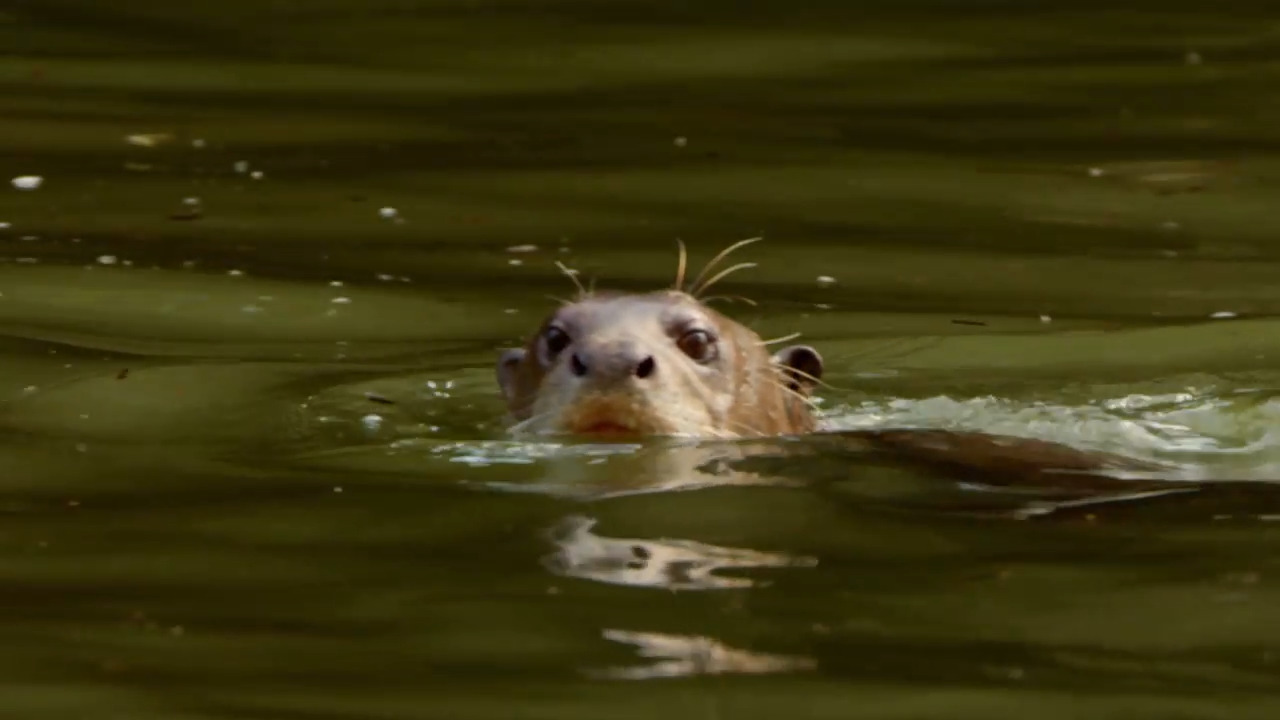
In Otter Pups Learn to Swim, narrator Gordon Buchanan describes how a baby otter learns to swim in the Pantanal, Brazil’s tropical wetland. While the mother transports the pup gently in her mouth, the large otter family helps support the pup when it gets tired and sounds an alarm when a jaguar is spotted. The mother returns the pup to the safety of the den. This video is excerpted from BBC's Animal Babies, a heartwarming show that follows the first breaths, first steps, and first feeds of some adorable baby animals, revealing the challenges they face to survive in some of the toughest but most beautiful places on the planet.

Geography gets more memorable when students can see the places they’re learning about. A map can show where the Amazon is. It can’t show a jaguar moving through it or a family cooking dinner on a riverboat. This term, BBC Learning Hub is giving two U.S. educators a way to bring those places closer: a LeapFrog Magic Adventures Globe for their school, loaded with BBC footage from every continent.
Teachers, librarians, specialists, aides, counselors: if you work with students, you’re welcome to enter. Set it up as a learning station, a reward for early finishers, a library or media center feature, or a way to open a new unit. Entries are open Nov. 2 through Dec. 31, and winners will be announced in time for the new year.
Prize: LeapFrog Magic Adventures Globe
Approximate retail value: $94.99 each
Number of winners: 2
Entry period: Nov. 2–Dec. 31, 2026
Eligibility: Open to K–12 school staff in the United States, including teachers, librarians, paraprofessionals, and other educators who work with students
Winners announced: Winners will be contacted by email before Jan. 5, 2027
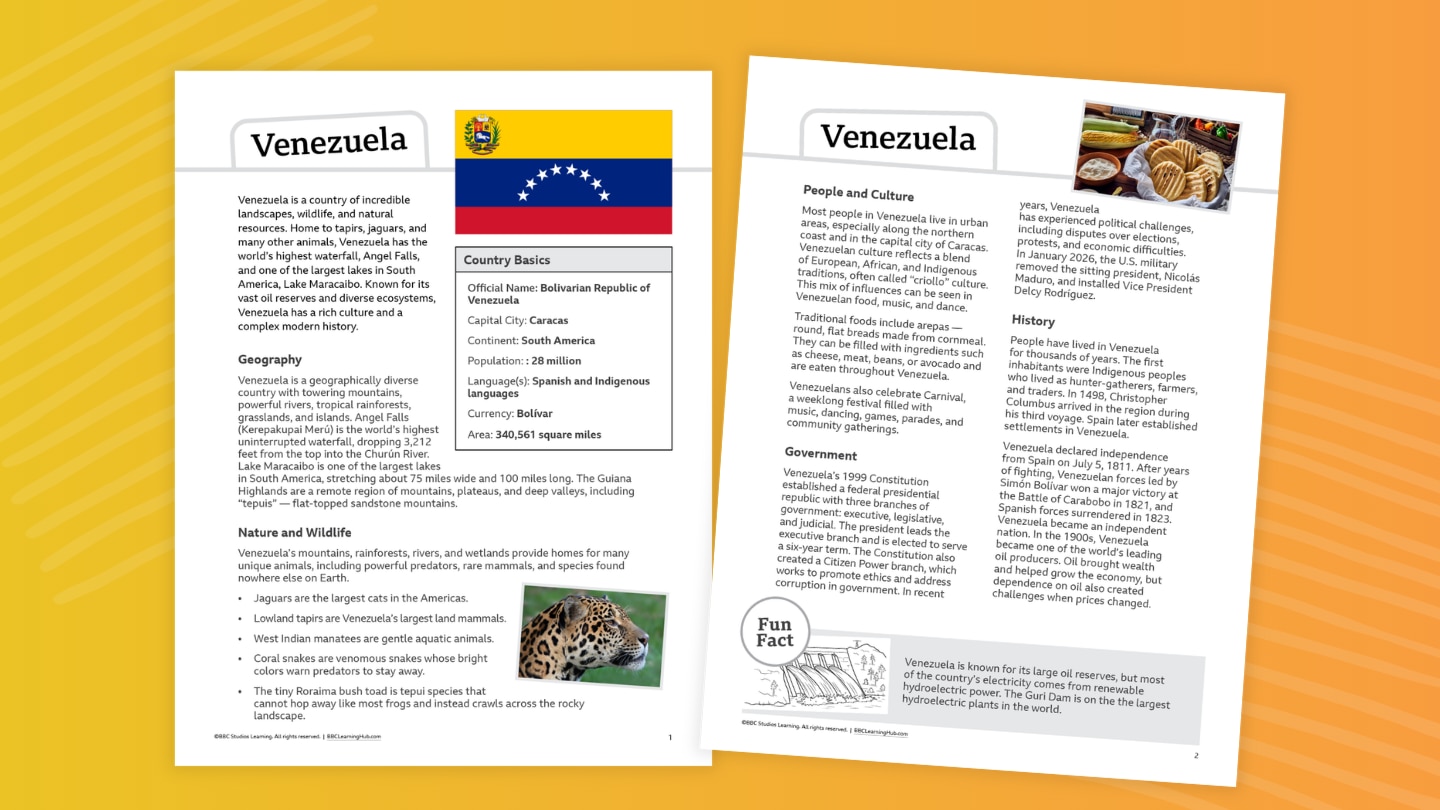
What country is home to the world’s highest waterfall, mysterious flat-topped mountains, and animals found nowhere else? Meet Venezuela, a country of spectacular landscapes and extraordinary biodiversity.
From Angel Falls and the tepuis to jaguars, tapirs, manatees, and the tiny Roraima bush toad, Venezuela is filled with natural wonders. Explore the Indigenous peoples and events that shaped the country’s history, learn about its government and oil-rich economy, and discover the foods, music, festivals, and traditions that make Venezuelan culture unique. You’ll also learn why Venezuela’s isolated tepuis are home to species that have adapted to life high above the surrounding landscape.
Teachers and parents, you can use this fact file to:
- Introduce a geography or social studies unit
- Support nonfiction reading practice
- Compare countries and cultures
- Complete map and research activities
- Prepare students for projects or presentations (use our country report template!)
- Pair with videos, articles, or other informational texts (see Related Resources below)

Watch ducklings take their first wobbly steps, baby elephants splash and explore, young wildebeests race to keep up with the herd, seal pups snooze on the shore, and playful otters discover the world around them. Behind all that cuteness is some fascinating science: every baby animal has its own way of growing, learning, staying safe, and preparing for life as an adult.
These clips offer a closer look at the earliest stages of animal life, from the care young animals receive from their parents to the instincts and behaviors that help them survive. Along the way, explore how different species are born, how quickly they develop, and the challenges they face as they grow.
Come for the tiny paws, fluffy feathers, wobbly legs, and oversized ears. Stay for the science — and plenty of reasons to say “aww.”
The article "Exploring Costa Rica’s Rich Wildlife: Which Animals Can You See?" from BBC's Discover Wildlife explores the incredible range of animals that live in Costa Rica. From howler monkeys whose calls can be heard over long distances, to the rare jaguar, the country is home to some of the most unique species in the world. It also highlights vibrant creatures like the resplendent quetzal and endangered sea turtles.
In Otter Pups Learn to Swim, narrator Gordon Buchanan describes how a baby otter learns to swim in the Pantanal, Brazil’s tropical wetland. While the mother transports the pup gently in her mouth, the large otter family helps support the pup when it gets tired and sounds an alarm when a jaguar is spotted. The mother returns the pup to the safety of the den. This video is excerpted from BBC's Animal Babies, a heartwarming show that follows the first breaths, first steps, and first feeds of some adorable baby animals, revealing the challenges they face to survive in some of the toughest but most beautiful places on the planet.
Geography gets more memorable when students can see the places they’re learning about. A map can show where the Amazon is. It can’t show a jaguar moving through it or a family cooking dinner on a riverboat. This term, BBC Learning Hub is giving two U.S. educators a way to bring those places closer: a LeapFrog Magic Adventures Globe for their school, loaded with BBC footage from every continent.
Teachers, librarians, specialists, aides, counselors: if you work with students, you’re welcome to enter. Set it up as a learning station, a reward for early finishers, a library or media center feature, or a way to open a new unit. Entries are open Nov. 2 through Dec. 31, and winners will be announced in time for the new year.
Prize: LeapFrog Magic Adventures Globe
Approximate retail value: $94.99 each
Number of winners: 2
Entry period: Nov. 2–Dec. 31, 2026
Eligibility: Open to K–12 school staff in the United States, including teachers, librarians, paraprofessionals, and other educators who work with students
Winners announced: Winners will be contacted by email before Jan. 5, 2027
What country is home to the world’s highest waterfall, mysterious flat-topped mountains, and animals found nowhere else? Meet Venezuela, a country of spectacular landscapes and extraordinary biodiversity.
From Angel Falls and the tepuis to jaguars, tapirs, manatees, and the tiny Roraima bush toad, Venezuela is filled with natural wonders. Explore the Indigenous peoples and events that shaped the country’s history, learn about its government and oil-rich economy, and discover the foods, music, festivals, and traditions that make Venezuelan culture unique. You’ll also learn why Venezuela’s isolated tepuis are home to species that have adapted to life high above the surrounding landscape.
Teachers and parents, you can use this fact file to:
- Introduce a geography or social studies unit
- Support nonfiction reading practice
- Compare countries and cultures
- Complete map and research activities
- Prepare students for projects or presentations (use our country report template!)
- Pair with videos, articles, or other informational texts (see Related Resources below)
Watch ducklings take their first wobbly steps, baby elephants splash and explore, young wildebeests race to keep up with the herd, seal pups snooze on the shore, and playful otters discover the world around them. Behind all that cuteness is some fascinating science: every baby animal has its own way of growing, learning, staying safe, and preparing for life as an adult.
These clips offer a closer look at the earliest stages of animal life, from the care young animals receive from their parents to the instincts and behaviors that help them survive. Along the way, explore how different species are born, how quickly they develop, and the challenges they face as they grow.
Come for the tiny paws, fluffy feathers, wobbly legs, and oversized ears. Stay for the science — and plenty of reasons to say “aww.”