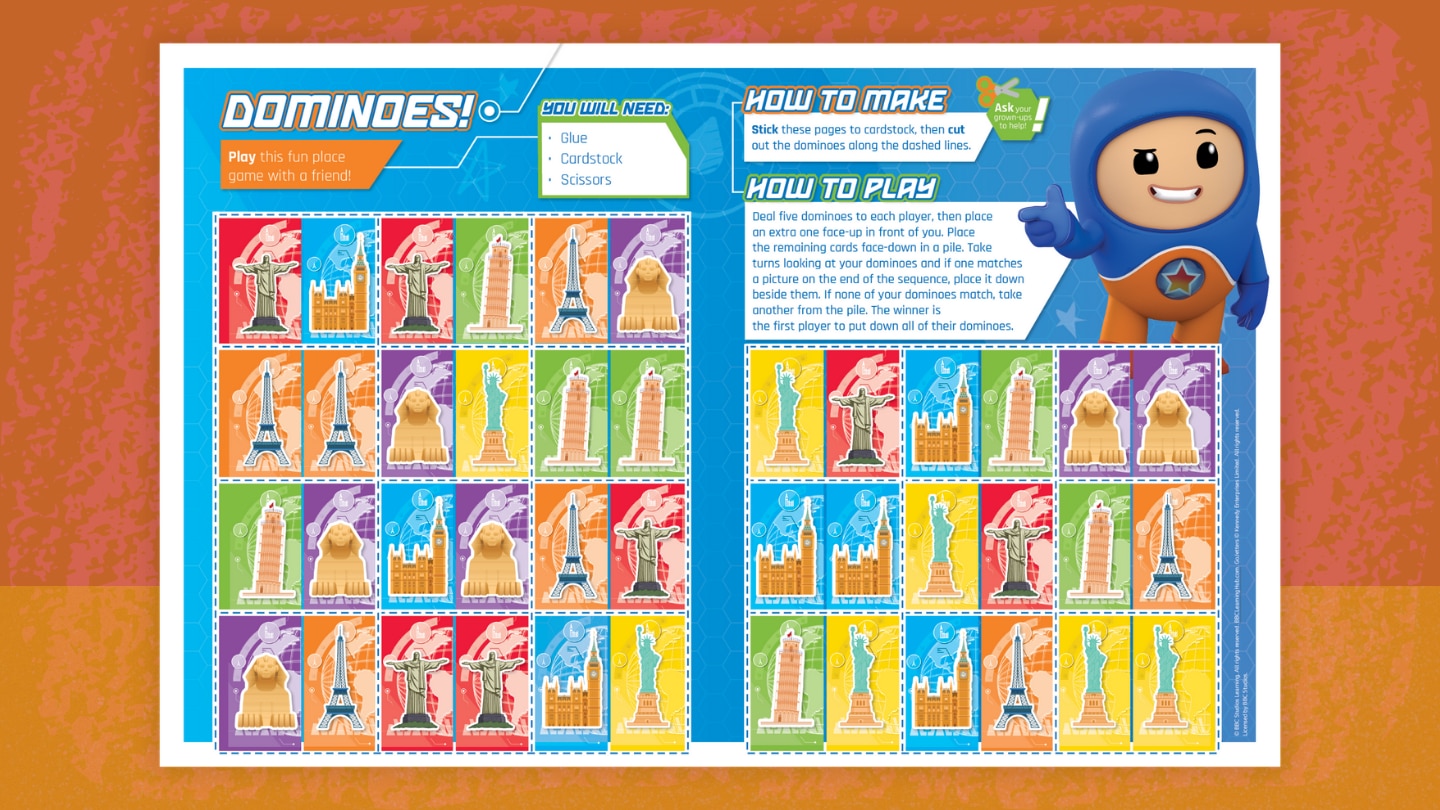
Play this fun Go Jetters dominoes game (featuring famous world landmarks) with a friend! Here's how to play:
- Deal five dominoes to each player, then place an extra one face-up in front of you.
- Place the remaining cards face-down in a pile.
- Take turns looking at your dominoes and if one matches a picture on the end of the sequence, place it down beside them. If none of your dominoes match, take another from the pile.
- The winner is the first player to put down all of their dominoes.

The article "Top 10 Biggest Statues in the World" from BBC's Science Focus explores the tallest statues globally, ranging from the Statue of Unity in India to the Dai Kannon of Kita no Miyako Park in Japan.
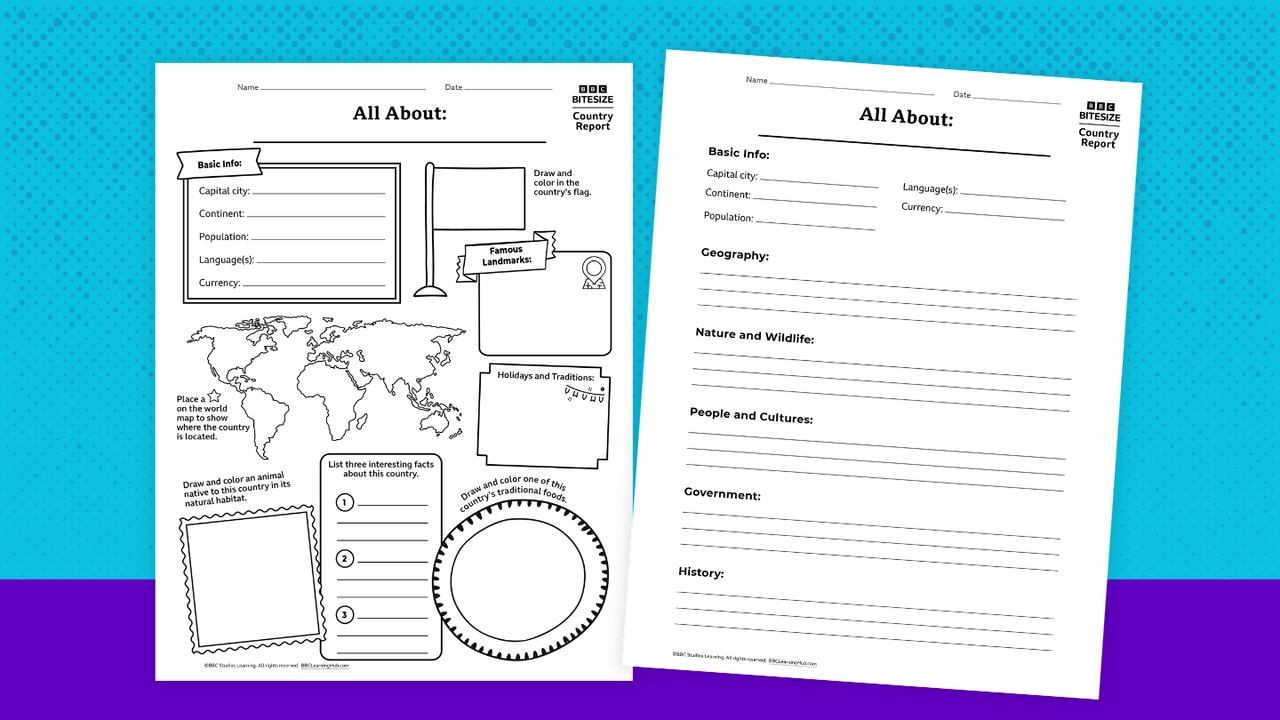
Turn your classroom into a global exploration hub! This country report template invites students in Grades 3–8 to become curious investigators — uncovering what makes each country unique and sharing their discoveries in creative ways.
Designed with flexibility in mind, the resource includes two approachable formats:
- Snapshot Style: A lively, visual option that’s perfect for quick learning or younger students. Learners can sketch, label, and highlight key features — like flags, landmarks, foods, and traditions — while building confidence with short responses.
- Explorer Style: A more in-depth format for students ready to dig deeper. It guides learners through topics such as geography, wildlife, culture, and history, helping them organize ideas and develop clear, informative writing.
Best of all, this template pairs seamlessly with BBC videos — bringing countries to life through real-world sights, sounds, and stories. Students can watch, wonder, and then weave what they’ve learned into their own reports.
Quick Teacher Tips: Use country studies as a springboard into wider learning across subjects:
- Geography: Map skills, climate zones, landforms, and ecosystems
- Language Arts: Informational writing, summarizing, note-taking, and presenting
- History: Key events, timelines, and how the past shapes the present
- Math: Population comparisons, distances, currency conversions
- Arts & Culture: Traditional patterns, music, celebrations, and food
- Current Events: Tie in informational reading and media literacy by exploring what’s happening in that country today in an age-appropriate way.
Play this fun Go Jetters dominoes game (featuring famous world landmarks) with a friend! Here's how to play:
- Deal five dominoes to each player, then place an extra one face-up in front of you.
- Place the remaining cards face-down in a pile.
- Take turns looking at your dominoes and if one matches a picture on the end of the sequence, place it down beside them. If none of your dominoes match, take another from the pile.
- The winner is the first player to put down all of their dominoes.
The article "Top 10 Biggest Statues in the World" from BBC's Science Focus explores the tallest statues globally, ranging from the Statue of Unity in India to the Dai Kannon of Kita no Miyako Park in Japan.
Turn your classroom into a global exploration hub! This country report template invites students in Grades 3–8 to become curious investigators — uncovering what makes each country unique and sharing their discoveries in creative ways.
Designed with flexibility in mind, the resource includes two approachable formats:
- Snapshot Style: A lively, visual option that’s perfect for quick learning or younger students. Learners can sketch, label, and highlight key features — like flags, landmarks, foods, and traditions — while building confidence with short responses.
- Explorer Style: A more in-depth format for students ready to dig deeper. It guides learners through topics such as geography, wildlife, culture, and history, helping them organize ideas and develop clear, informative writing.
Best of all, this template pairs seamlessly with BBC videos — bringing countries to life through real-world sights, sounds, and stories. Students can watch, wonder, and then weave what they’ve learned into their own reports.
Quick Teacher Tips: Use country studies as a springboard into wider learning across subjects:
- Geography: Map skills, climate zones, landforms, and ecosystems
- Language Arts: Informational writing, summarizing, note-taking, and presenting
- History: Key events, timelines, and how the past shapes the present
- Math: Population comparisons, distances, currency conversions
- Arts & Culture: Traditional patterns, music, celebrations, and food
- Current Events: Tie in informational reading and media literacy by exploring what’s happening in that country today in an age-appropriate way.