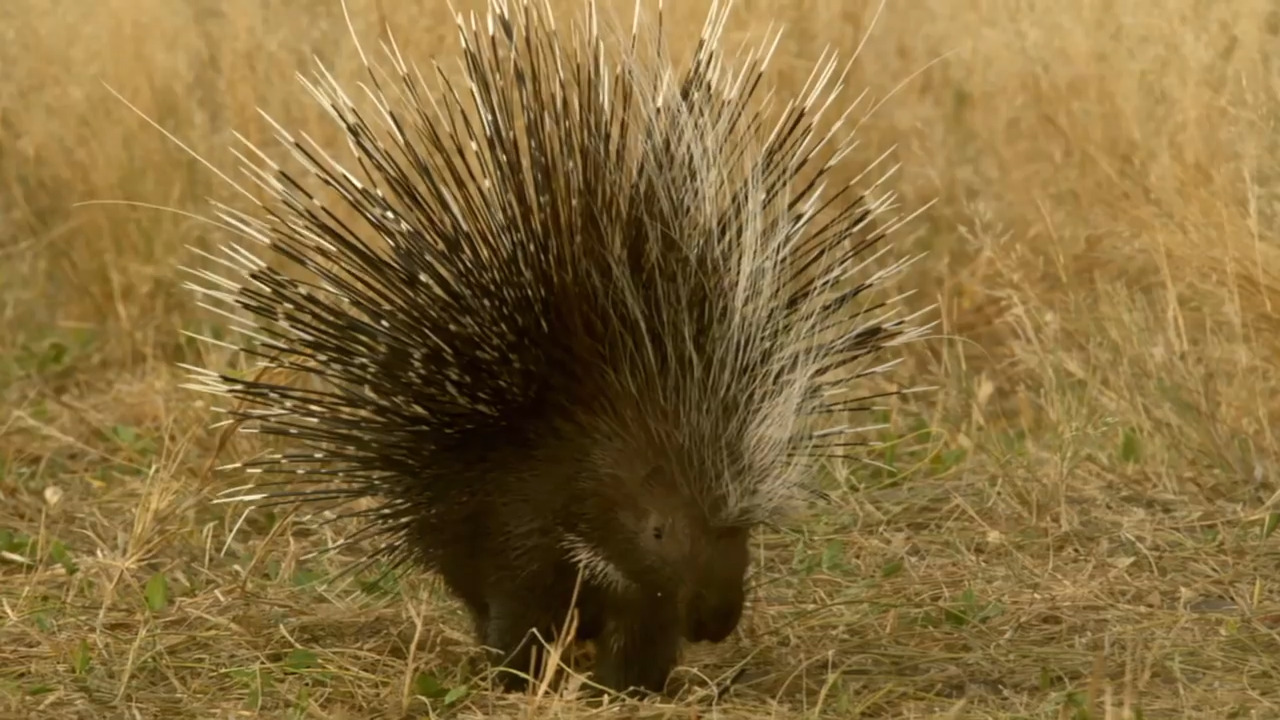
In Animals With Spines, evolutionary biologist Ben Garrod presents porcupines and how their quills have evolved as a defense mechanism. Learn how these animals, with their distinctive spines and quills, have adapted to survive in the wild as you discover how porcupines’ quills have evolved to detach and protect them from predators. This video is excerpted from Secrets of Skin, a documentary series exploring the natural history of the body’s largest organ.
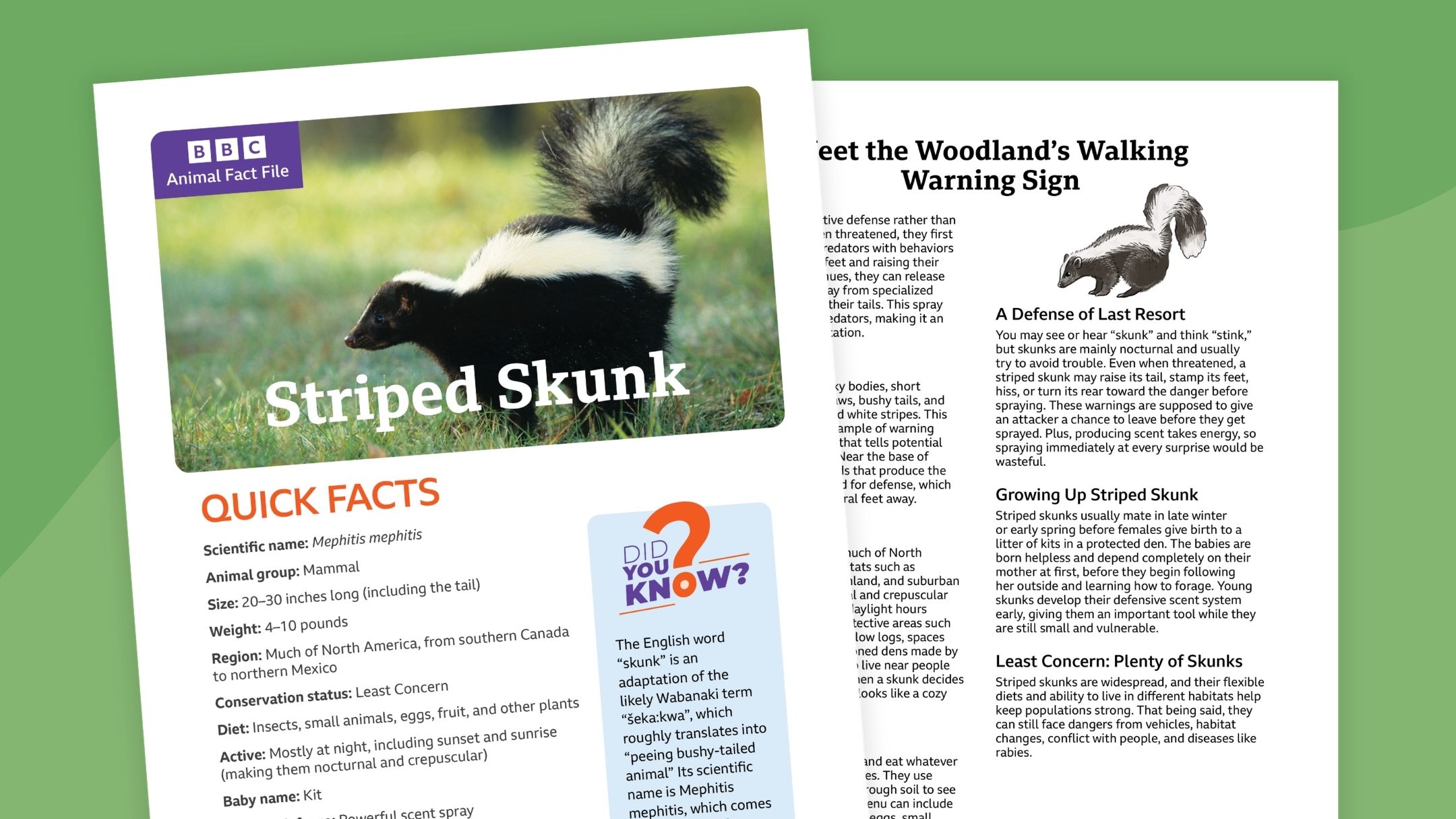
What animal can warn an attacker with stomps, raised fur, and a lifted tail before turning its rear end into a surprisingly powerful defense?
Meet the striped skunk, a small mammal with a big reputation. Find out how its bold black-and-white markings serve as a warning, why spraying is actually a last resort, and how its sharp claws help it dig up dinner. You'll also discover where skunks make their homes, what they eat, and how these mostly nighttime animals manage to live surprisingly close to people.
Teachers and parents, you can use this fact file to:
- Introduce an animal, wildlife, or life science unit
- Support nonfiction reading and vocabulary practice
- Explore animal adaptations, behaviors, and habitats
- Compare animals and the ecosystems they live in
- Practice finding and organizing information from nonfiction texts
- Prepare students for animal research projects or presentations (use our animal report templates!)
- Connect science learning to conservation and environmental issues
- Pair with videos, articles, or other informational texts (see Related Resources below)
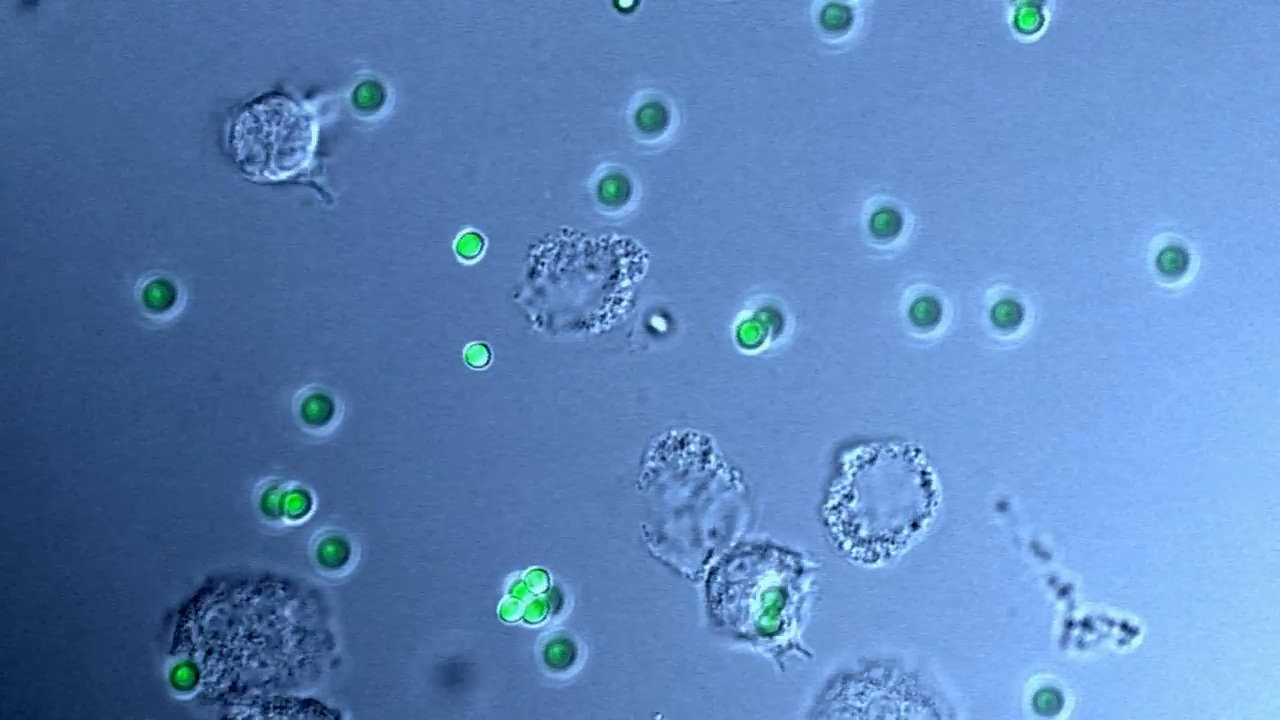
In How Blood Defends the Body, Dr. Michael Mosley explores how blood responds to injury and infection through inflammation and immune activity. From immediate skin reactions to increases in immune cells during stress, discover how the body both reacts to and anticipates danger. This video is excerpted from BBC’s The Wonderful World of Blood, in which Dr. Michael Mosley carries out six experiments on his own blood, from starving it of oxygen to injecting it with snake venom.
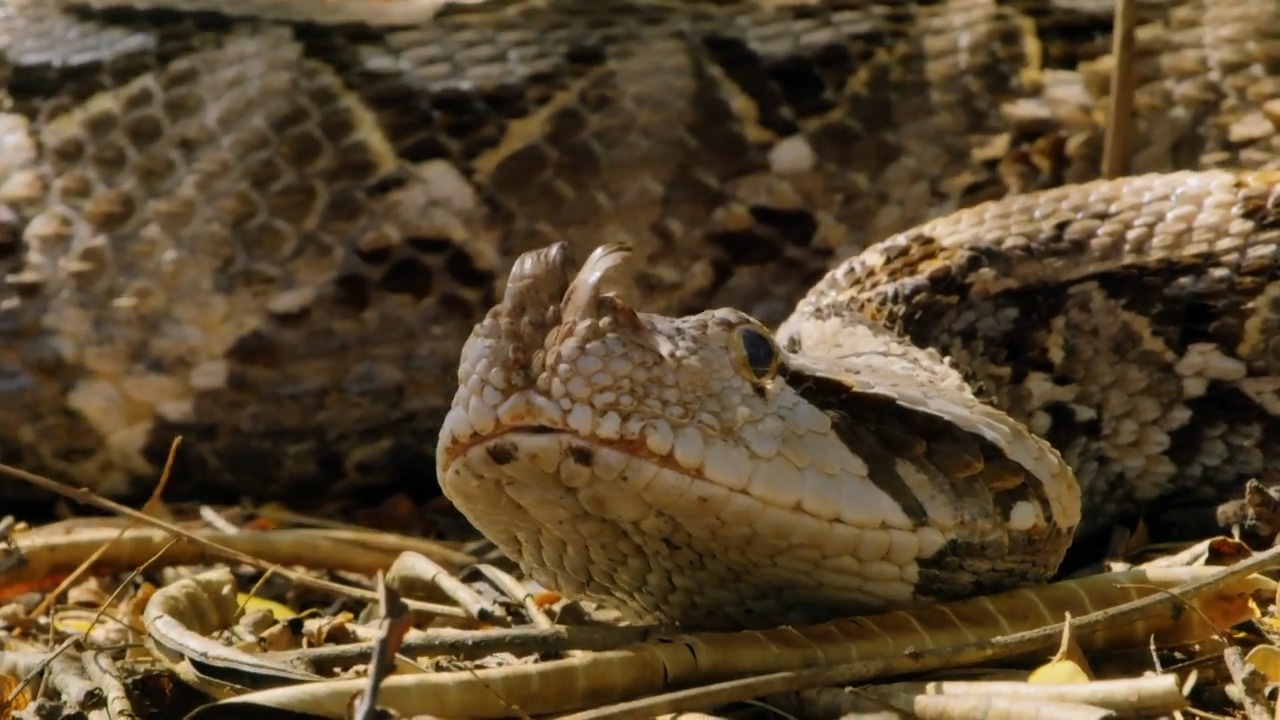
In The Deadly Gaboon Viper, naturalist Steve Backshall visits Reptile Rescue Center to meet Don, a snake expert. They examine the Gaboon viper’s jaws and long venomous fangs. This video is excerpted from BBC's Deadly 60, an award-winning nature and adventure show for kids in which narrator Steve Backshall has one mission: to travel the globe in search of 60 of the world's deadliest animals.

Get ready to meet the cold-blooded superstars of the animal kingdom! This BBC playlist slinks, scuttles, and snaps through the fascinating lives of cobras, turtles, lizards, and alligators. Whether it's the mesmerizing hood dance of a cobra or the alligator's toothy grin, these clips are perfect for sparking curiosity (and maybe a little squeamishness) in your classroom. Warning: May cause students to say "Whoa!" and "Ew!" in equal measure.
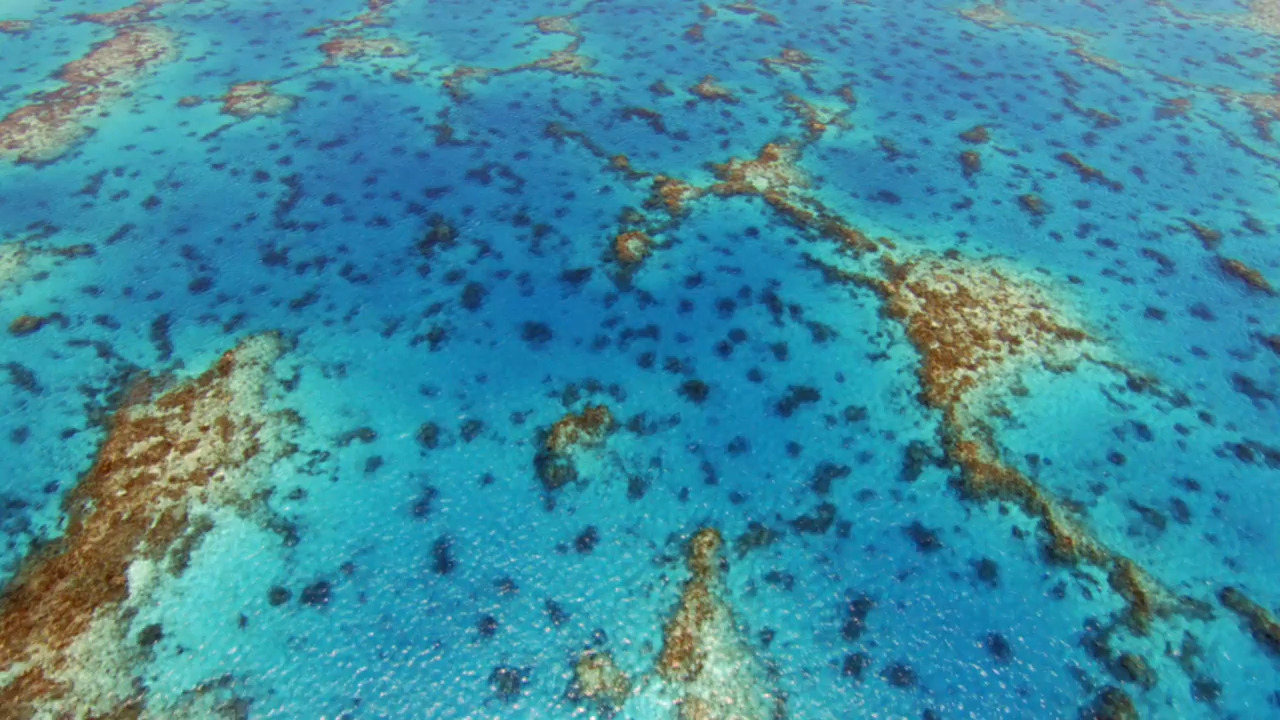
In The Home of the Dugong, narrator Sir David Attenborough explains that survival is not easy for animals that live outside the coral reef. Witness their defense mechanisms, and get to know the huge and gentle dugong. This video is excerpted from BBC's Planet Earth, a breathtaking documentary series that highlights the natural wonders of our planet.
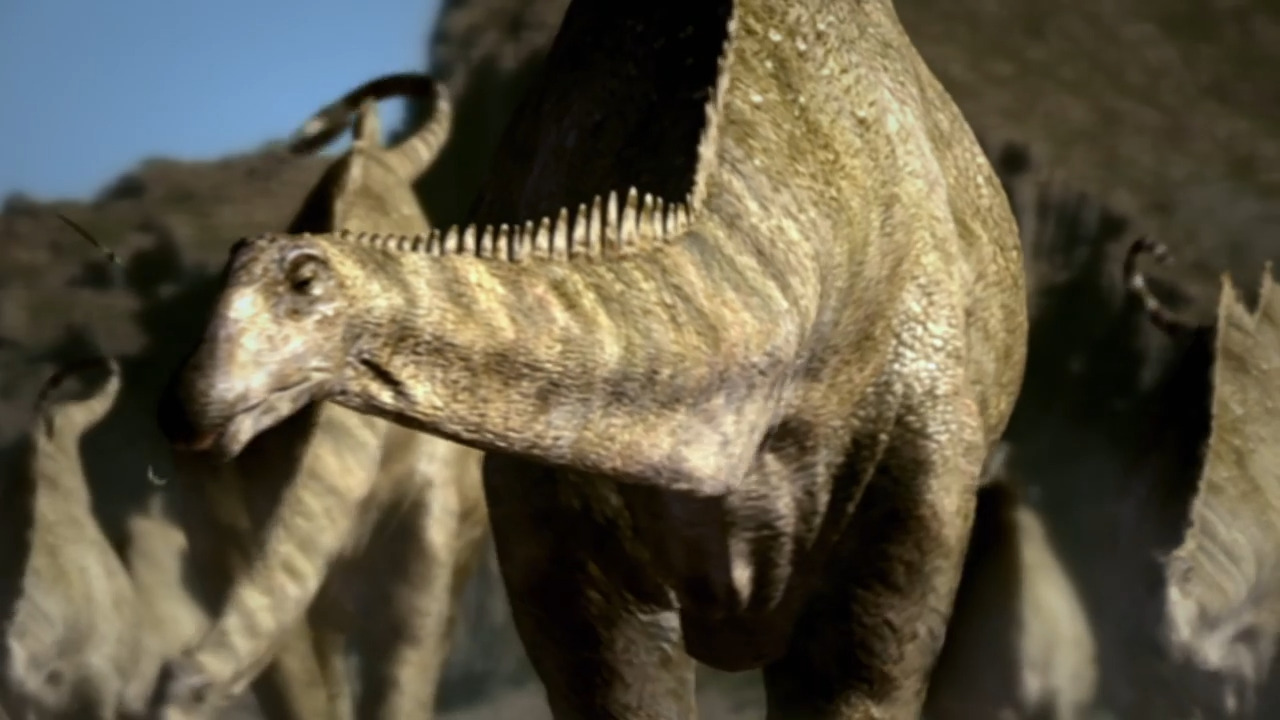
In The Deadly Tail of the Diplodocus, naturalist Steve Backshall explores how this massive creature used its tail as a powerful defense mechanism. Plus, watch a real-life test that demonstrates the incredible force of this tail whip! This video is excerpted from BBC’s Deadly Dinosaurs, a documentary series in which host Steve Backshall is on the hunt for the deadliest animals to have walked the Earth — dinosaurs — exploring features of several species and putting their abilities to the test to reveal the raw power of these creatures.
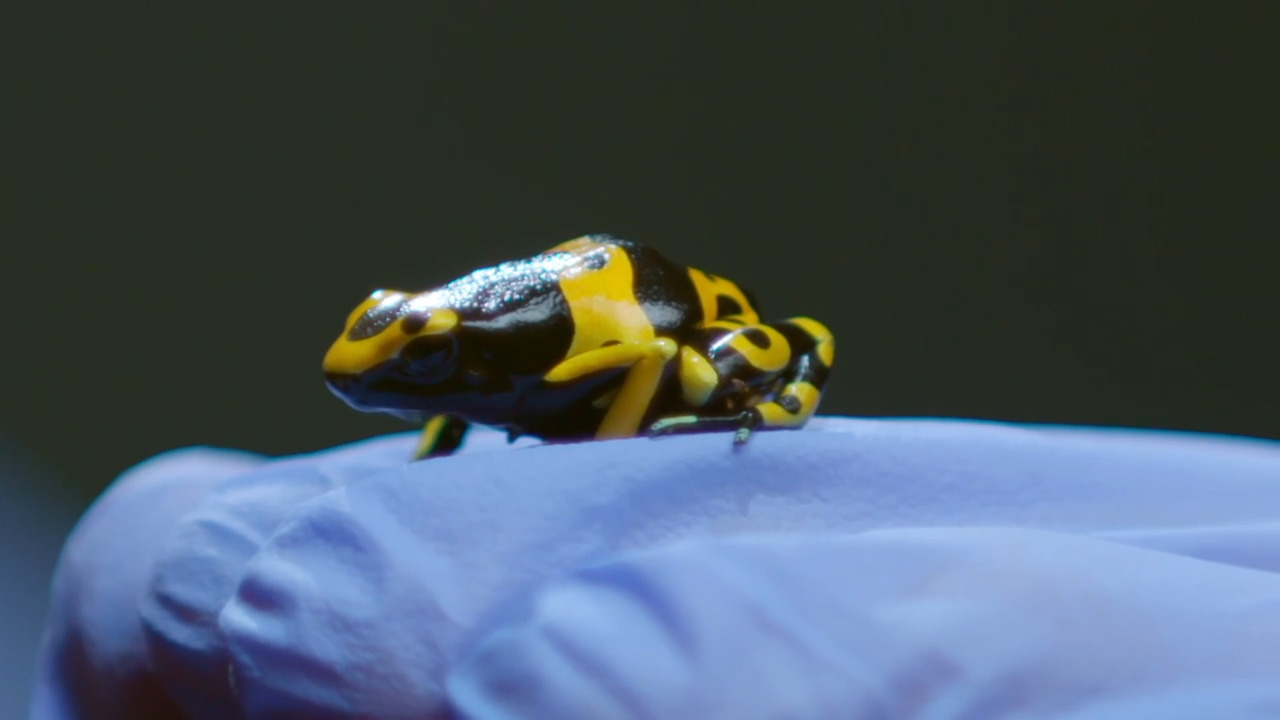
In What Makes Poison Dart Frogs Toxic?, evolutionary biologist Ben Garrod discusses how poison dart frogs produce their toxins. Learn how these frogs derive their toxicity from alkaloids found in their diet, how they use their poison for defense, and why scientists are studying these toxins for potential medical uses. This video is excerpted from Secrets of Skin, a documentary series exploring the natural history of the body’s largest organ.
In Animals With Spines, evolutionary biologist Ben Garrod presents porcupines and how their quills have evolved as a defense mechanism. Learn how these animals, with their distinctive spines and quills, have adapted to survive in the wild as you discover how porcupines’ quills have evolved to detach and protect them from predators. This video is excerpted from Secrets of Skin, a documentary series exploring the natural history of the body’s largest organ.
What animal can warn an attacker with stomps, raised fur, and a lifted tail before turning its rear end into a surprisingly powerful defense?
Meet the striped skunk, a small mammal with a big reputation. Find out how its bold black-and-white markings serve as a warning, why spraying is actually a last resort, and how its sharp claws help it dig up dinner. You'll also discover where skunks make their homes, what they eat, and how these mostly nighttime animals manage to live surprisingly close to people.
Teachers and parents, you can use this fact file to:
- Introduce an animal, wildlife, or life science unit
- Support nonfiction reading and vocabulary practice
- Explore animal adaptations, behaviors, and habitats
- Compare animals and the ecosystems they live in
- Practice finding and organizing information from nonfiction texts
- Prepare students for animal research projects or presentations (use our animal report templates!)
- Connect science learning to conservation and environmental issues
- Pair with videos, articles, or other informational texts (see Related Resources below)
In How Blood Defends the Body, Dr. Michael Mosley explores how blood responds to injury and infection through inflammation and immune activity. From immediate skin reactions to increases in immune cells during stress, discover how the body both reacts to and anticipates danger. This video is excerpted from BBC’s The Wonderful World of Blood, in which Dr. Michael Mosley carries out six experiments on his own blood, from starving it of oxygen to injecting it with snake venom.
In The Deadly Gaboon Viper, naturalist Steve Backshall visits Reptile Rescue Center to meet Don, a snake expert. They examine the Gaboon viper’s jaws and long venomous fangs. This video is excerpted from BBC's Deadly 60, an award-winning nature and adventure show for kids in which narrator Steve Backshall has one mission: to travel the globe in search of 60 of the world's deadliest animals.
Get ready to meet the cold-blooded superstars of the animal kingdom! This BBC playlist slinks, scuttles, and snaps through the fascinating lives of cobras, turtles, lizards, and alligators. Whether it's the mesmerizing hood dance of a cobra or the alligator's toothy grin, these clips are perfect for sparking curiosity (and maybe a little squeamishness) in your classroom. Warning: May cause students to say "Whoa!" and "Ew!" in equal measure.
In The Home of the Dugong, narrator Sir David Attenborough explains that survival is not easy for animals that live outside the coral reef. Witness their defense mechanisms, and get to know the huge and gentle dugong. This video is excerpted from BBC's Planet Earth, a breathtaking documentary series that highlights the natural wonders of our planet.
In The Deadly Tail of the Diplodocus, naturalist Steve Backshall explores how this massive creature used its tail as a powerful defense mechanism. Plus, watch a real-life test that demonstrates the incredible force of this tail whip! This video is excerpted from BBC’s Deadly Dinosaurs, a documentary series in which host Steve Backshall is on the hunt for the deadliest animals to have walked the Earth — dinosaurs — exploring features of several species and putting their abilities to the test to reveal the raw power of these creatures.
In What Makes Poison Dart Frogs Toxic?, evolutionary biologist Ben Garrod discusses how poison dart frogs produce their toxins. Learn how these frogs derive their toxicity from alkaloids found in their diet, how they use their poison for defense, and why scientists are studying these toxins for potential medical uses. This video is excerpted from Secrets of Skin, a documentary series exploring the natural history of the body’s largest organ.