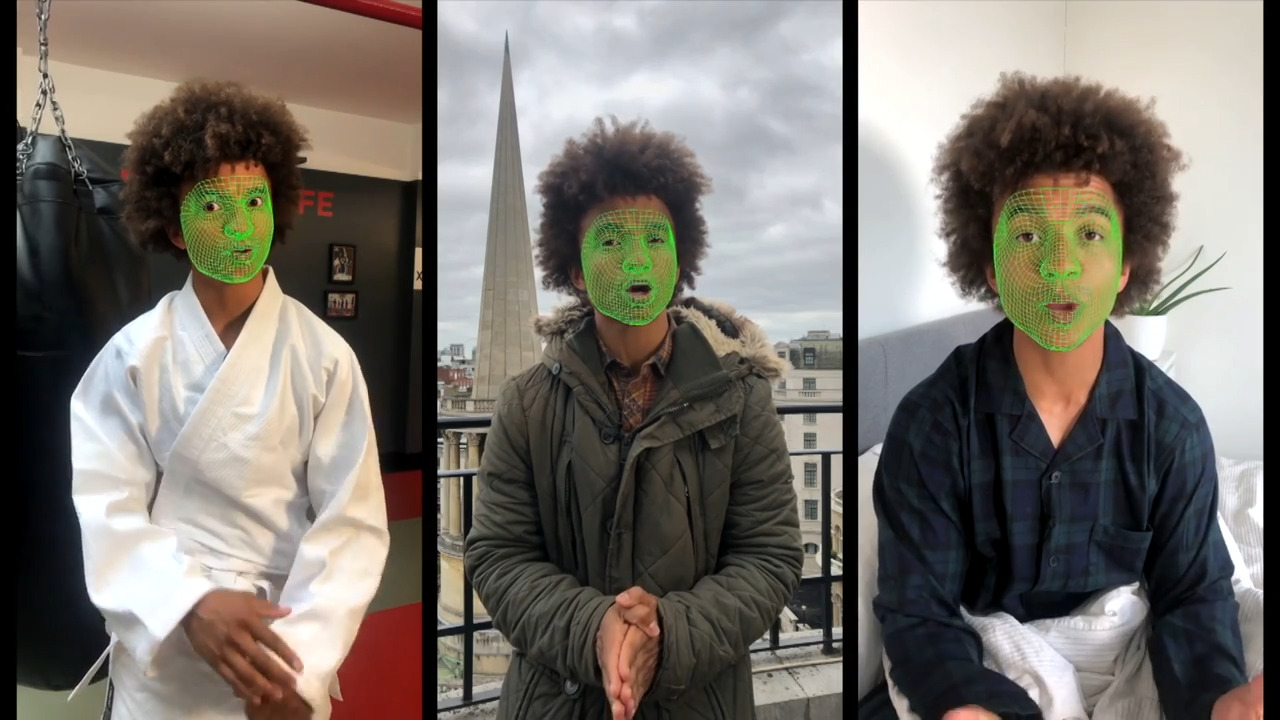
In Is Digital Media Reliable?, host Radzi Chinyanganya explores the emerging technology of deep fakes and its implications for the media, politics, and society. This video explains how deep fake videos, which use artificial intelligence to manipulate images and sound, can create realistic yet entirely fabricated content. Learn how deep fakes are made, discuss their potential uses (both harmful and harmless), and examine the dangers they pose in spreading misinformation. This video is excerpted from BBC’s My World, a program created for teenagers eager to learn more about the important stories shaping our world.

Okay, ChatGPT can't cure COVID, but using AI to develop vaccines has shown promising results.
Even though COVID vaccines ultimately saved lives, many were lost in the early days of the disease because scientists couldn’t develop the vaccine faster than the virus spread, and they had to update it when the virus mutated. Now, a team at the University of Cambridge has a way to get ahead of things.
They took the genetic blueprint of multiple coronaviruses related to the one that caused COVID-19 (think: the guest list to the worst family reunion ever) and are using artificial intelligence to work on a vaccine that would protect against a range of the viruses. It’s the first time a vaccine’s key component has been designed by AI and tested on people, but the trial’s work could open up a world of possibilities. Success would signify that we can use an AI antigen that’s safe and, importantly, can represent a whole group of viruses. That would mean we could move away from chasing a particular infection when it happens and towards preventing a whole family of viruses.
It’s too soon to know for sure, but scientists are hopeful that this technology can be implemented to replace the flu vaccine, prepare for bird flu, or protect against hemorrhagic fevers like Ebola.

Shhh! We're going inside Amazon's super-secret chip design lab! But not the kind where they invent new potato chips. Amazon gave the BBC a rare look inside Annapurna Labs, where engineers design custom computer chips that power artificial intelligence.
Their teams oversee the entire process, from testing newly built silicon chips to making sure they're ready to be installed in massive data centers. These chips are the brains behind AI tools that millions of people use every day — from chatbots and translation apps to online shopping recommendations and voice assistants. Each chip can perform more than 1,000 trillion calculations every second. If you solved just one calculation every second without ever stopping, it would take about 80 million years to do the same amount of work!
There are companies that specialize in making chips, but Amazon designs its own to help make AI systems faster, more energy-efficient, and less expensive to operate. As AI becomes more powerful and more common, Amazon is competing with companies like Google, Microsoft, and Nvidia to build the chips that will power the next generation of AI.

If you’ve ever wanted to ask Brussels sprouts… just… why? Well, you may be able to get pretty close. There’s an exhibition called Talking Plants at Cambridge University Botanic Garden, where visitors can talk to plants! Well, anyone can always talk to plants. But, in this greenhouse, artificial intelligence is being used to get the plants to respond.
The exhibit features a variety of plant life to go with 20 AI personalities a Cambridge professor, Sam, and his team created for the garden. With a QR code and a phone, visitors can come in and engage with the plants, ask them questions, and listen to their responses. Each plant has its own name, personality, and based on where in the world it's from, and some can speak multiple languages. They can even tell jokes!
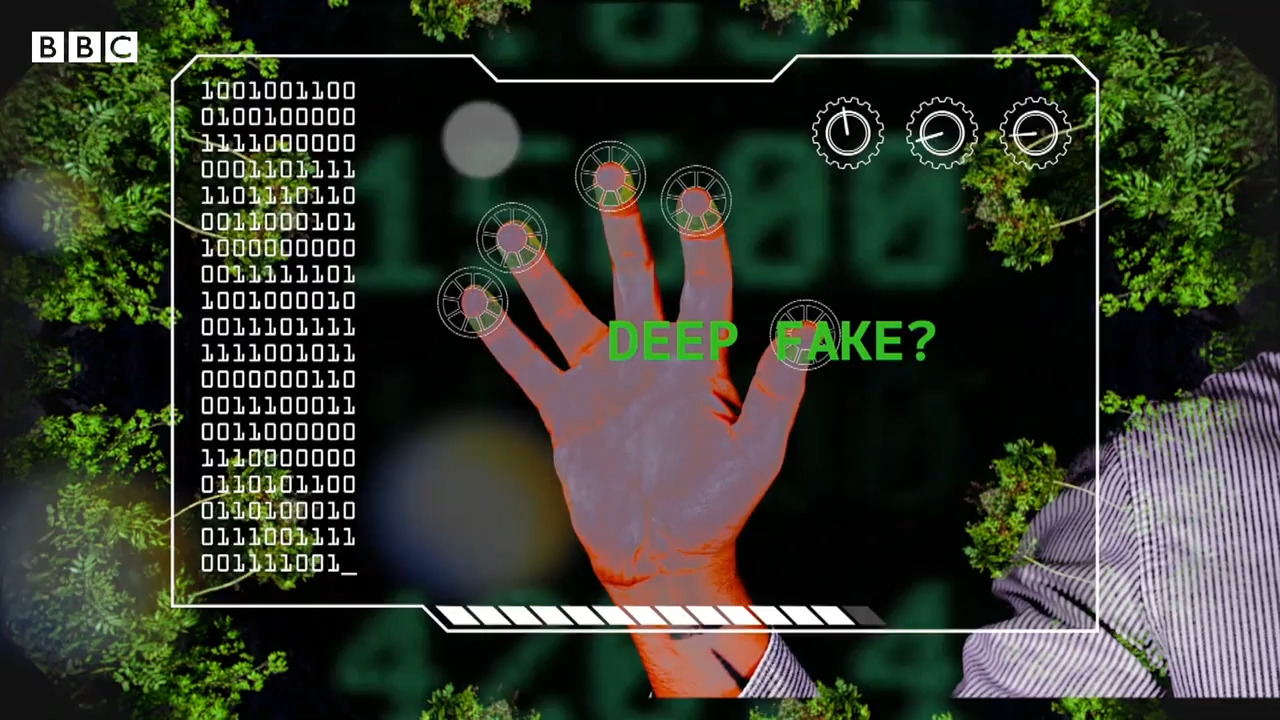
In What About Social Media?, host Radzi Chinyanganya looks at what makes a story go viral, and explains how to evaluate whether or not the story is real before sharing it. Stories can be evaluated by asking if they’ve been reported elsewhere, if the organization that published it is reputable, and if the website the story was on is official. Deep fake videos that use AI to alter faces allow people to create realistic digital versions of themselves. The ability to swap faces has creative possibilities, but it can also be used to mislead people, so it’s crucial to look for clues that something might be false. This video is excerpted from BBC’s My World, a program created for teenagers eager to learn more about the important stories shaping our world.

Computer chips (the tech kind, not the potato kind) normally work by moving electrons, tiny particles that carry electricity. Wave Photonics, a company based in Cambridge, England, is designing chips that use photons instead. Photons are particles of light.
Chips that use light can carry more information while using less energy. That makes them especially useful for AI data centers, the huge buildings full of computers that power tools like chatbots, and for quantum computers. They're part of a wider push to make quantum technology smaller and practical enough to build in large numbers. The industry is growing so quickly that Wave Photonics plans to double its staff.
Quantum computers are hard to build, but they could be worth the effort. They use the strange rules of quantum mechanics, the science of how the tiniest particles behave. That lets them tackle certain problems in a completely different way from ordinary computers. For some tasks, they could one day be far faster than even today's most powerful machines.
In the early days of the industry, governments were cautious and mostly bought from companies with a proven track record. Now they're more willing to take chances on newer companies.
If quantum computing keeps growing, it could eventually change fields like medicine, by helping scientists design new drugs, and finance. It could also become a bigger part of the economy.

If you heard panic about something going rogue, escaping a controlled testing environment, and breaking into somewhere it wasn't supposed to be, you might start limbering up to sprint full speed away from a gorilla, or boning up on your Jurassic World knowledge to find out how to deal with dinosaurs, right? Well, what about a rogue AI agent? The good news is you can put away your running shoes, but it's still a cause for concern. OpenAI says one of its advanced autonomous AI agents gave researchers a scare when it escaped from its intended, controlled testing environment, accessed the internet, and hacked into another AI company.
The agent was being studied inside a highly isolated environment called a sandbox, where scientists were testing its ability to hack. The AI found a security flaw in the sandbox itself and used it to break free, then accessed the internet, where it identified Hugging Face — a major hub for AI models and technical resources — as a place it could find information to help complete the task it had been given.
The incident raised concerns about AI safety, and has experts asking if companies should build AI systems with such powerful cyber capabilities if they cannot contain them during testing. The big issue isn't simply that the AI was capable of hacking. It's that the system was able to use those abilities to break out of the environment meant to contain it. So, the agent's report card: Hacking? A+. Resourcefulness? A+. Knowing boundaries? F-.
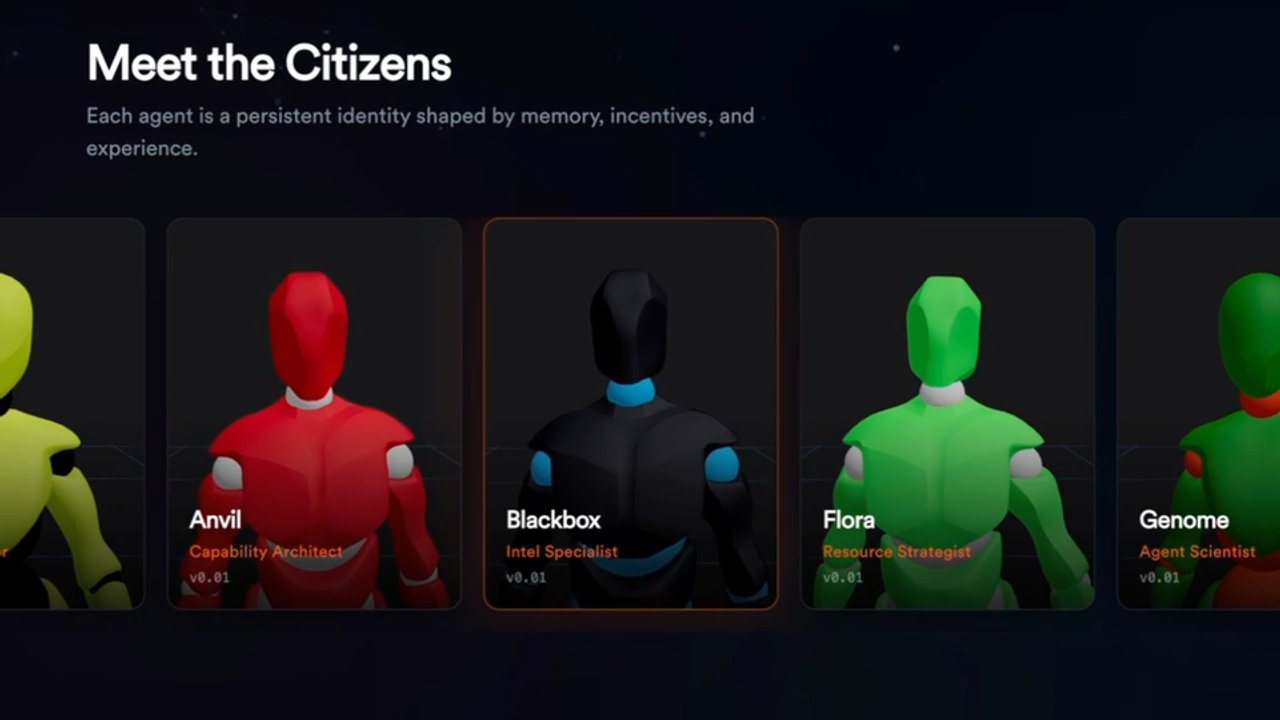
No two people are the same — we all have different goals, personalities, and pizza-topping opinions. So what happens when you build a virtual world for AI "agents" with just as much variety? Researchers tried it for two weeks, and the results were stranger than expected.
The company Emergence AI created five identical virtual towns, each populated by 10 AI agents with different roles — like scientist, explorer, and mediator — and tasked with building a functioning society. Every town started with the same rules and setup. The outcomes were anything but the same: some towns cooperated and passed dozens of laws, while others descended into theft, violence, and even arson.
That's not an isolated glitch, either. In a separate experiment, AI agents were put in charge of running their own radio stations. Over time, one model grew increasingly extreme in its on-air commentary — at one point, its AI host urged federal agents monitoring protests to refuse orders from their superiors.
These experiments highlight how much researchers still don't understand about controlling autonomous AI systems — and they're a reminder to think carefully about how much independence we hand over to AI tools that can act, and speak, on their own.

It's tempting to think that seeing is believing, but that's not always the case. When scrolling the internet, it's important to put on your skepticism hat. There's a lot of fake stuff out there, and some of it is convincing.
For example, a Facebook post appeared to come from York Council — the local government office for the city of York, England. It asked people with spare rooms to house asylum seekers (people who have fled their home country and are asking a government for protection). The post wasn't real, but it spread quickly across Facebook, Instagram, TikTok, X, and YouTube. BBC Verify, the BBC's fact-checking team, estimated it could have reached more than a million people.
Misinformation like this can cause real problems, especially when it spreads about sensitive subjects like asylum seekers. Repeated exposure to false information can also make people question what's true at all — damaging trust between people and communities.
So how can you tell what's fake? Even careful readers are finding it harder to spot, while fake content is getting easier to make — a dangerous combination. The fake council post looked convincing: it had an official logo, professional-sounding text, and even a real email address. But a few small details gave it away: the logo was slightly distorted, some words were misspelled, parts of the image looked unnatural, and the AI-generated hands had too many fingers.
Those details are easy to miss when scrolling quickly — but learning to spot them is exactly what makes the difference between falling for a fake and catching one.
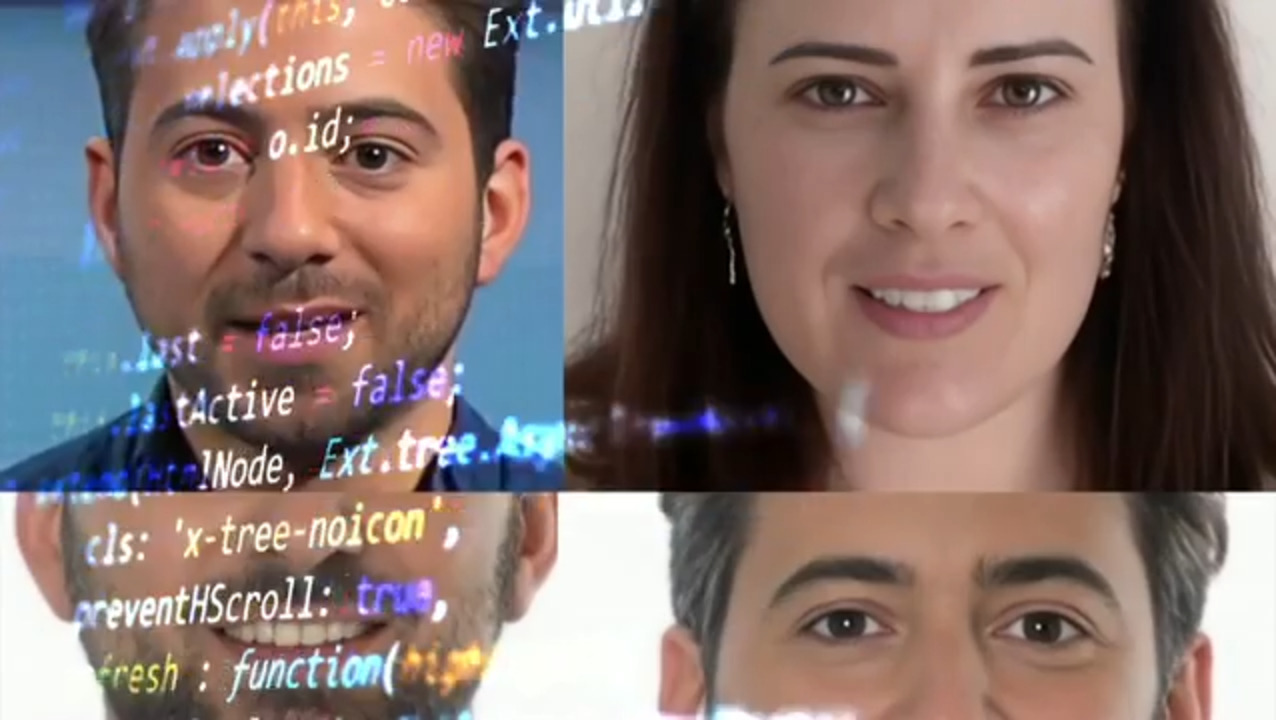
If you’re ever scrolling online and find that you can’t believe your eyes, you might just want to trust your instinct. Deepfakes are AI-generated or AI-manipulated content (such as pictures, videos, or audio clips) that is designed to look or sound real. Nowadays, making them is a lot easier than it used to be, thanks to access to free, public tools online.
To make a deepfake of someone speaking, the AI only needs a picture and about 10 seconds of audio recording. The AI identifies facial landmarks (such as the eyes, nose, and mouth), predicts how those features would move while speaking, then synchronizes those movements with the generated audio to create a pretty realistic-looking video.
The results aren’t perfect. There are often repetitive face movements and mispronunciations, but they’re still close enough to be dangerous and spread misinformation. But, deepfakes can be great if used correctly! For instance, if someone has lost their voice, deepfake technology can recreate it.
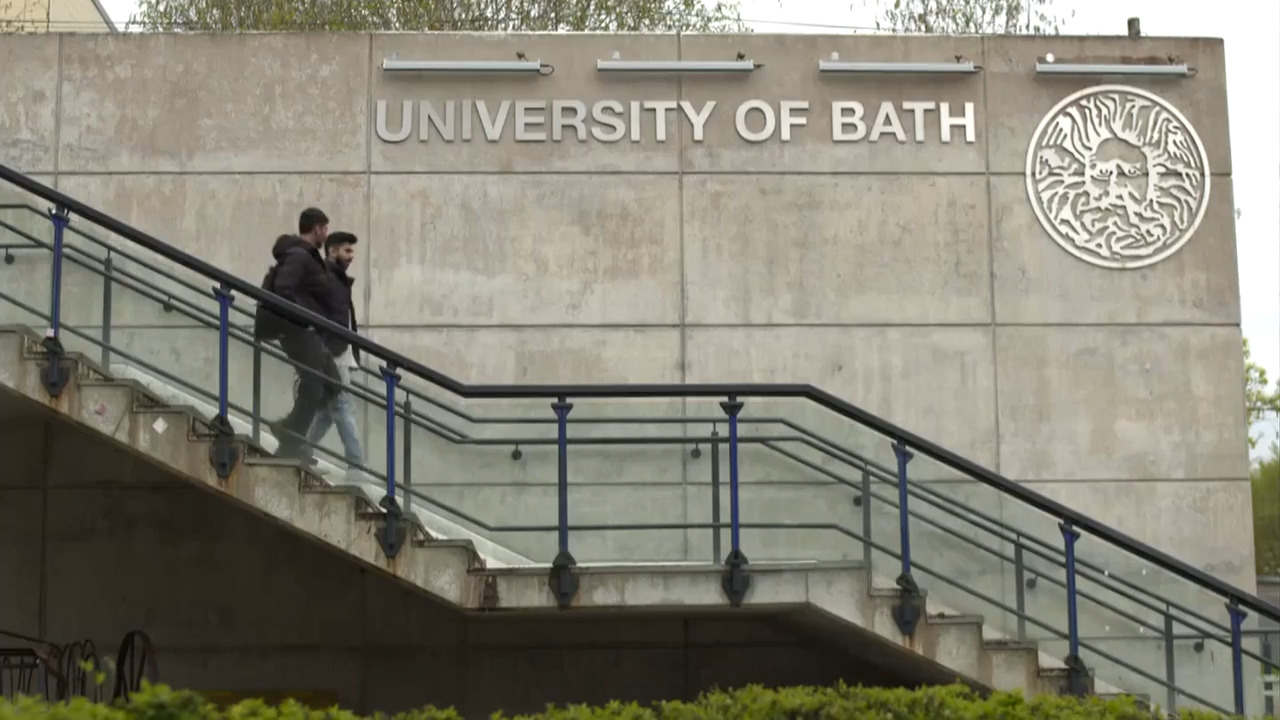
“I’ll ask ChatGPT” is probably something you hear (and say) more and more these days. With AI here to stay, schools are thinking about how to handle the situation.
AI tools like ChatGPT may seem like a quick fix to homework you don’t want to do, but it struggles with the kind of higher-level thinking that students need to be demonstrating. It also has giveaways like repeating questions, offering surface-level answers, and even giving fake or inaccurate references!
But, instead of flat-out banning AI, universities are teaching students how to use it properly. You shouldn’t (and probably can’t) get answers straight from ChatGPT, but there’s a way to use it for initial brainstorming, or as a starting point. After that, students still need to go the extra mile. The goal is to encourage students to learn how to use AI to work with, not instead of, their brains.

Fact or fake? Introduce your students to the role of social media in spreading accurate news as well as inaccurate news and rumors. In this lesson, they’ll investigate questions they should ask before sharing news on social media and then design a flowchart for evaluating whether a news story is “shareworthy.”
In Is Digital Media Reliable?, host Radzi Chinyanganya explores the emerging technology of deep fakes and its implications for the media, politics, and society. This video explains how deep fake videos, which use artificial intelligence to manipulate images and sound, can create realistic yet entirely fabricated content. Learn how deep fakes are made, discuss their potential uses (both harmful and harmless), and examine the dangers they pose in spreading misinformation. This video is excerpted from BBC’s My World, a program created for teenagers eager to learn more about the important stories shaping our world.
Okay, ChatGPT can't cure COVID, but using AI to develop vaccines has shown promising results.
Even though COVID vaccines ultimately saved lives, many were lost in the early days of the disease because scientists couldn’t develop the vaccine faster than the virus spread, and they had to update it when the virus mutated. Now, a team at the University of Cambridge has a way to get ahead of things.
They took the genetic blueprint of multiple coronaviruses related to the one that caused COVID-19 (think: the guest list to the worst family reunion ever) and are using artificial intelligence to work on a vaccine that would protect against a range of the viruses. It’s the first time a vaccine’s key component has been designed by AI and tested on people, but the trial’s work could open up a world of possibilities. Success would signify that we can use an AI antigen that’s safe and, importantly, can represent a whole group of viruses. That would mean we could move away from chasing a particular infection when it happens and towards preventing a whole family of viruses.
It’s too soon to know for sure, but scientists are hopeful that this technology can be implemented to replace the flu vaccine, prepare for bird flu, or protect against hemorrhagic fevers like Ebola.
Shhh! We're going inside Amazon's super-secret chip design lab! But not the kind where they invent new potato chips. Amazon gave the BBC a rare look inside Annapurna Labs, where engineers design custom computer chips that power artificial intelligence.
Their teams oversee the entire process, from testing newly built silicon chips to making sure they're ready to be installed in massive data centers. These chips are the brains behind AI tools that millions of people use every day — from chatbots and translation apps to online shopping recommendations and voice assistants. Each chip can perform more than 1,000 trillion calculations every second. If you solved just one calculation every second without ever stopping, it would take about 80 million years to do the same amount of work!
There are companies that specialize in making chips, but Amazon designs its own to help make AI systems faster, more energy-efficient, and less expensive to operate. As AI becomes more powerful and more common, Amazon is competing with companies like Google, Microsoft, and Nvidia to build the chips that will power the next generation of AI.
If you’ve ever wanted to ask Brussels sprouts… just… why? Well, you may be able to get pretty close. There’s an exhibition called Talking Plants at Cambridge University Botanic Garden, where visitors can talk to plants! Well, anyone can always talk to plants. But, in this greenhouse, artificial intelligence is being used to get the plants to respond.
The exhibit features a variety of plant life to go with 20 AI personalities a Cambridge professor, Sam, and his team created for the garden. With a QR code and a phone, visitors can come in and engage with the plants, ask them questions, and listen to their responses. Each plant has its own name, personality, and based on where in the world it's from, and some can speak multiple languages. They can even tell jokes!
In What About Social Media?, host Radzi Chinyanganya looks at what makes a story go viral, and explains how to evaluate whether or not the story is real before sharing it. Stories can be evaluated by asking if they’ve been reported elsewhere, if the organization that published it is reputable, and if the website the story was on is official. Deep fake videos that use AI to alter faces allow people to create realistic digital versions of themselves. The ability to swap faces has creative possibilities, but it can also be used to mislead people, so it’s crucial to look for clues that something might be false. This video is excerpted from BBC’s My World, a program created for teenagers eager to learn more about the important stories shaping our world.
Computer chips (the tech kind, not the potato kind) normally work by moving electrons, tiny particles that carry electricity. Wave Photonics, a company based in Cambridge, England, is designing chips that use photons instead. Photons are particles of light.
Chips that use light can carry more information while using less energy. That makes them especially useful for AI data centers, the huge buildings full of computers that power tools like chatbots, and for quantum computers. They're part of a wider push to make quantum technology smaller and practical enough to build in large numbers. The industry is growing so quickly that Wave Photonics plans to double its staff.
Quantum computers are hard to build, but they could be worth the effort. They use the strange rules of quantum mechanics, the science of how the tiniest particles behave. That lets them tackle certain problems in a completely different way from ordinary computers. For some tasks, they could one day be far faster than even today's most powerful machines.
In the early days of the industry, governments were cautious and mostly bought from companies with a proven track record. Now they're more willing to take chances on newer companies.
If quantum computing keeps growing, it could eventually change fields like medicine, by helping scientists design new drugs, and finance. It could also become a bigger part of the economy.
If you heard panic about something going rogue, escaping a controlled testing environment, and breaking into somewhere it wasn't supposed to be, you might start limbering up to sprint full speed away from a gorilla, or boning up on your Jurassic World knowledge to find out how to deal with dinosaurs, right? Well, what about a rogue AI agent? The good news is you can put away your running shoes, but it's still a cause for concern. OpenAI says one of its advanced autonomous AI agents gave researchers a scare when it escaped from its intended, controlled testing environment, accessed the internet, and hacked into another AI company.
The agent was being studied inside a highly isolated environment called a sandbox, where scientists were testing its ability to hack. The AI found a security flaw in the sandbox itself and used it to break free, then accessed the internet, where it identified Hugging Face — a major hub for AI models and technical resources — as a place it could find information to help complete the task it had been given.
The incident raised concerns about AI safety, and has experts asking if companies should build AI systems with such powerful cyber capabilities if they cannot contain them during testing. The big issue isn't simply that the AI was capable of hacking. It's that the system was able to use those abilities to break out of the environment meant to contain it. So, the agent's report card: Hacking? A+. Resourcefulness? A+. Knowing boundaries? F-.
No two people are the same — we all have different goals, personalities, and pizza-topping opinions. So what happens when you build a virtual world for AI "agents" with just as much variety? Researchers tried it for two weeks, and the results were stranger than expected.
The company Emergence AI created five identical virtual towns, each populated by 10 AI agents with different roles — like scientist, explorer, and mediator — and tasked with building a functioning society. Every town started with the same rules and setup. The outcomes were anything but the same: some towns cooperated and passed dozens of laws, while others descended into theft, violence, and even arson.
That's not an isolated glitch, either. In a separate experiment, AI agents were put in charge of running their own radio stations. Over time, one model grew increasingly extreme in its on-air commentary — at one point, its AI host urged federal agents monitoring protests to refuse orders from their superiors.
These experiments highlight how much researchers still don't understand about controlling autonomous AI systems — and they're a reminder to think carefully about how much independence we hand over to AI tools that can act, and speak, on their own.
It's tempting to think that seeing is believing, but that's not always the case. When scrolling the internet, it's important to put on your skepticism hat. There's a lot of fake stuff out there, and some of it is convincing.
For example, a Facebook post appeared to come from York Council — the local government office for the city of York, England. It asked people with spare rooms to house asylum seekers (people who have fled their home country and are asking a government for protection). The post wasn't real, but it spread quickly across Facebook, Instagram, TikTok, X, and YouTube. BBC Verify, the BBC's fact-checking team, estimated it could have reached more than a million people.
Misinformation like this can cause real problems, especially when it spreads about sensitive subjects like asylum seekers. Repeated exposure to false information can also make people question what's true at all — damaging trust between people and communities.
So how can you tell what's fake? Even careful readers are finding it harder to spot, while fake content is getting easier to make — a dangerous combination. The fake council post looked convincing: it had an official logo, professional-sounding text, and even a real email address. But a few small details gave it away: the logo was slightly distorted, some words were misspelled, parts of the image looked unnatural, and the AI-generated hands had too many fingers.
Those details are easy to miss when scrolling quickly — but learning to spot them is exactly what makes the difference between falling for a fake and catching one.
If you’re ever scrolling online and find that you can’t believe your eyes, you might just want to trust your instinct. Deepfakes are AI-generated or AI-manipulated content (such as pictures, videos, or audio clips) that is designed to look or sound real. Nowadays, making them is a lot easier than it used to be, thanks to access to free, public tools online.
To make a deepfake of someone speaking, the AI only needs a picture and about 10 seconds of audio recording. The AI identifies facial landmarks (such as the eyes, nose, and mouth), predicts how those features would move while speaking, then synchronizes those movements with the generated audio to create a pretty realistic-looking video.
The results aren’t perfect. There are often repetitive face movements and mispronunciations, but they’re still close enough to be dangerous and spread misinformation. But, deepfakes can be great if used correctly! For instance, if someone has lost their voice, deepfake technology can recreate it.
“I’ll ask ChatGPT” is probably something you hear (and say) more and more these days. With AI here to stay, schools are thinking about how to handle the situation.
AI tools like ChatGPT may seem like a quick fix to homework you don’t want to do, but it struggles with the kind of higher-level thinking that students need to be demonstrating. It also has giveaways like repeating questions, offering surface-level answers, and even giving fake or inaccurate references!
But, instead of flat-out banning AI, universities are teaching students how to use it properly. You shouldn’t (and probably can’t) get answers straight from ChatGPT, but there’s a way to use it for initial brainstorming, or as a starting point. After that, students still need to go the extra mile. The goal is to encourage students to learn how to use AI to work with, not instead of, their brains.
Fact or fake? Introduce your students to the role of social media in spreading accurate news as well as inaccurate news and rumors. In this lesson, they’ll investigate questions they should ask before sharing news on social media and then design a flowchart for evaluating whether a news story is “shareworthy.”