
In How Data Transformed Trading, discover how data became a powerful tool for understanding human behavior — and making big money! Meet David Harding, a science graduate who shook up the chaotic world of trading by using math and data to predict price patterns. While others trusted their gut, Harding believed data and the right computer algorithms could crack the code of the stock market. Today, his company invests billions, proving that smart data (and a little science) can change the game! This video is excerpted from BBC’s Horizon: The Age of Big Data, which explores how data has shaped industries, economies, and human behavior.

In The Magic of Math on the Soccer Field, host Marcus du Sautoy tries to convince one math reject that math is present everywhere in the soccer game he loves — from quadratic equations on the pitch to the probability of a team winning. Du Sautoy makes the case that the soccer players are intuitive mathematical geniuses. This video is excerpted from BBC’s Horizon: Why Maths Doesn’t Add Up, where Marcus du Sautoy introduces the elegance and wonder of math to a “math reject,” traveling from the classroom to a four-dimensional world.
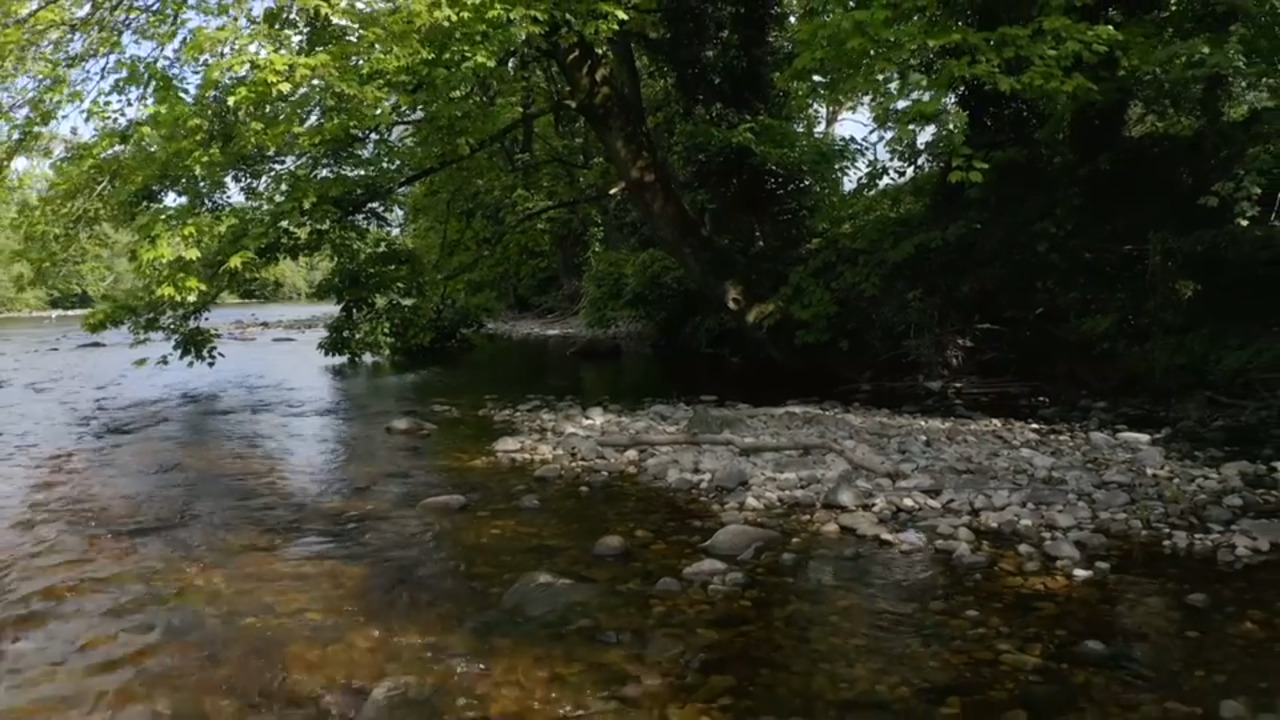
When it comes to gathering water data, the “employee of the month” may look a little on the “green and cubical” side. Alongside Yorkshire rivers, there are multiple green boxes working hard to gather data on river quality that should, in a couple years, be available for river users and potential swimmers to access through an app that tracks pollution.
Though there are currently apps that show pollution data, that information is old and outdated. This upcoming app is special, because it will use live data from an on-site sensor to provide real-time pollution levels in the water. It’s not meant to tell people “safe” or “not safe” or “swim” or “don’t swim,” but it can give people what they need to make an informed decision... mostly.
The green boxes have a big shortcoming: they’re unable to detect some really nasty bacteria like E.coli, which can only be measured in a lab. But don’t worry, old-school scientists are on the case, manually taking samples to send away for analysis. These findings will be used to build a data set that will be combined with green box data, and AI learning will infer when E.coli (and other bugs) are present in the river.
So, today, we celebrate a beautiful marriage — one of traditional testing, new technology, and AI. It may not be the pairing you’re rooting for on Love Island, but it shows great promise for water safety!
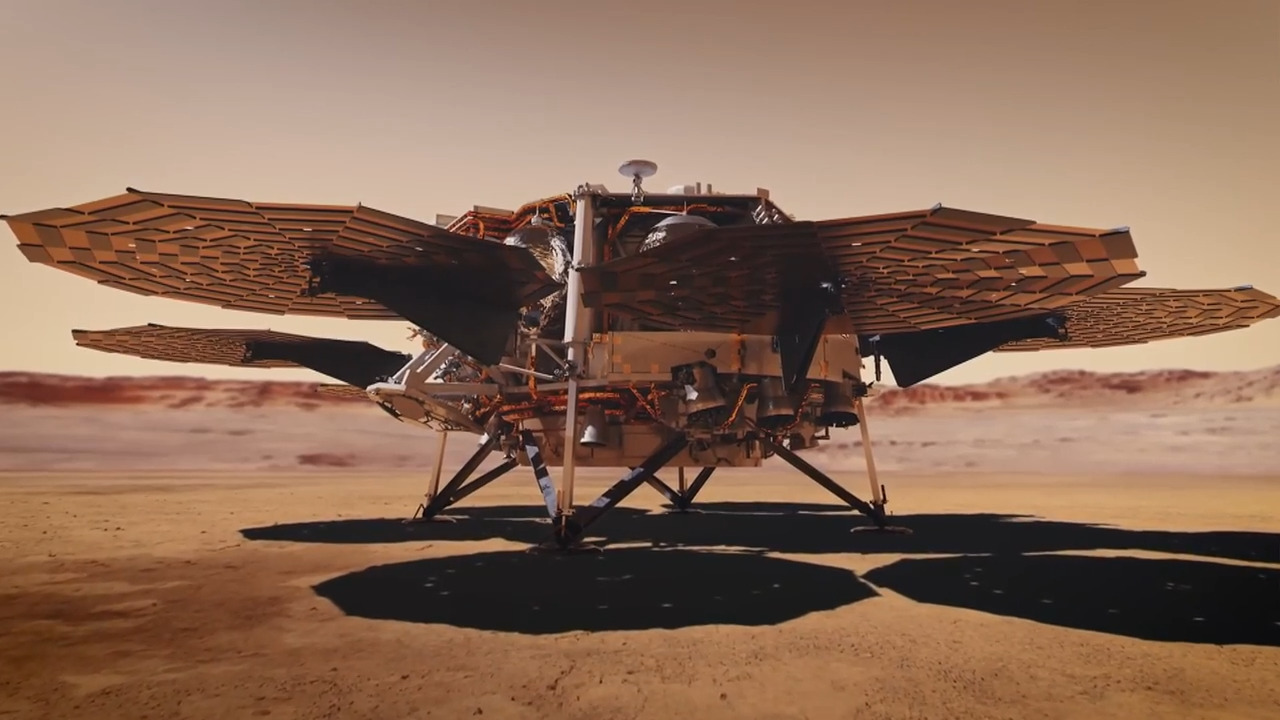
Mars may be cold and barren, but it might have supported life! At least, that’s what scientists think, after finding rocks with some very interesting spots. These markings, nicknamed “leopard spots” and “poppyseeds,” are minerals that could have been made by Martian microbes, early in the planet’s history. They were discovered by the Perseverance Rover, which has been exploring Mars since its 2021 landing.
The rover has been focused on Mars’s Jezero Crater, which used to be a huge lake with a river running into it before drying up billions of years ago. Now, Perseverance collects samples to analyze in its onboard lab! Car Bluetooth is cool but c’mon, it’s no analysis lab…
These rocks aren’t exactly the video diary of an alien’s day in the life on Mars, but they could be the clearest sign of life ever found on Mars, which is thought to be one of the most promising places in our Solar System to look for life outside of Earth. The only way to confirm if the minerals were made by microbes is to get them back to Earth, so NASA and the European Space Agency have proposed a mission to collect them. It’ll be expensive, but this could be the answer to if there was life on other planets!

To help your students dive deeper into the video content, we created this bundle of video response worksheets. We designed these worksheets to be used with any video and to keep students focused as they watch and enhance comprehension and retention. (Please note that some worksheet types are better fits for certain content and grade levels). Assign students the same one, mix them up, or let them choose!
In How Data Transformed Trading, discover how data became a powerful tool for understanding human behavior — and making big money! Meet David Harding, a science graduate who shook up the chaotic world of trading by using math and data to predict price patterns. While others trusted their gut, Harding believed data and the right computer algorithms could crack the code of the stock market. Today, his company invests billions, proving that smart data (and a little science) can change the game! This video is excerpted from BBC’s Horizon: The Age of Big Data, which explores how data has shaped industries, economies, and human behavior.
In The Magic of Math on the Soccer Field, host Marcus du Sautoy tries to convince one math reject that math is present everywhere in the soccer game he loves — from quadratic equations on the pitch to the probability of a team winning. Du Sautoy makes the case that the soccer players are intuitive mathematical geniuses. This video is excerpted from BBC’s Horizon: Why Maths Doesn’t Add Up, where Marcus du Sautoy introduces the elegance and wonder of math to a “math reject,” traveling from the classroom to a four-dimensional world.
When it comes to gathering water data, the “employee of the month” may look a little on the “green and cubical” side. Alongside Yorkshire rivers, there are multiple green boxes working hard to gather data on river quality that should, in a couple years, be available for river users and potential swimmers to access through an app that tracks pollution.
Though there are currently apps that show pollution data, that information is old and outdated. This upcoming app is special, because it will use live data from an on-site sensor to provide real-time pollution levels in the water. It’s not meant to tell people “safe” or “not safe” or “swim” or “don’t swim,” but it can give people what they need to make an informed decision... mostly.
The green boxes have a big shortcoming: they’re unable to detect some really nasty bacteria like E.coli, which can only be measured in a lab. But don’t worry, old-school scientists are on the case, manually taking samples to send away for analysis. These findings will be used to build a data set that will be combined with green box data, and AI learning will infer when E.coli (and other bugs) are present in the river.
So, today, we celebrate a beautiful marriage — one of traditional testing, new technology, and AI. It may not be the pairing you’re rooting for on Love Island, but it shows great promise for water safety!
Mars may be cold and barren, but it might have supported life! At least, that’s what scientists think, after finding rocks with some very interesting spots. These markings, nicknamed “leopard spots” and “poppyseeds,” are minerals that could have been made by Martian microbes, early in the planet’s history. They were discovered by the Perseverance Rover, which has been exploring Mars since its 2021 landing.
The rover has been focused on Mars’s Jezero Crater, which used to be a huge lake with a river running into it before drying up billions of years ago. Now, Perseverance collects samples to analyze in its onboard lab! Car Bluetooth is cool but c’mon, it’s no analysis lab…
These rocks aren’t exactly the video diary of an alien’s day in the life on Mars, but they could be the clearest sign of life ever found on Mars, which is thought to be one of the most promising places in our Solar System to look for life outside of Earth. The only way to confirm if the minerals were made by microbes is to get them back to Earth, so NASA and the European Space Agency have proposed a mission to collect them. It’ll be expensive, but this could be the answer to if there was life on other planets!
To help your students dive deeper into the video content, we created this bundle of video response worksheets. We designed these worksheets to be used with any video and to keep students focused as they watch and enhance comprehension and retention. (Please note that some worksheet types are better fits for certain content and grade levels). Assign students the same one, mix them up, or let them choose!