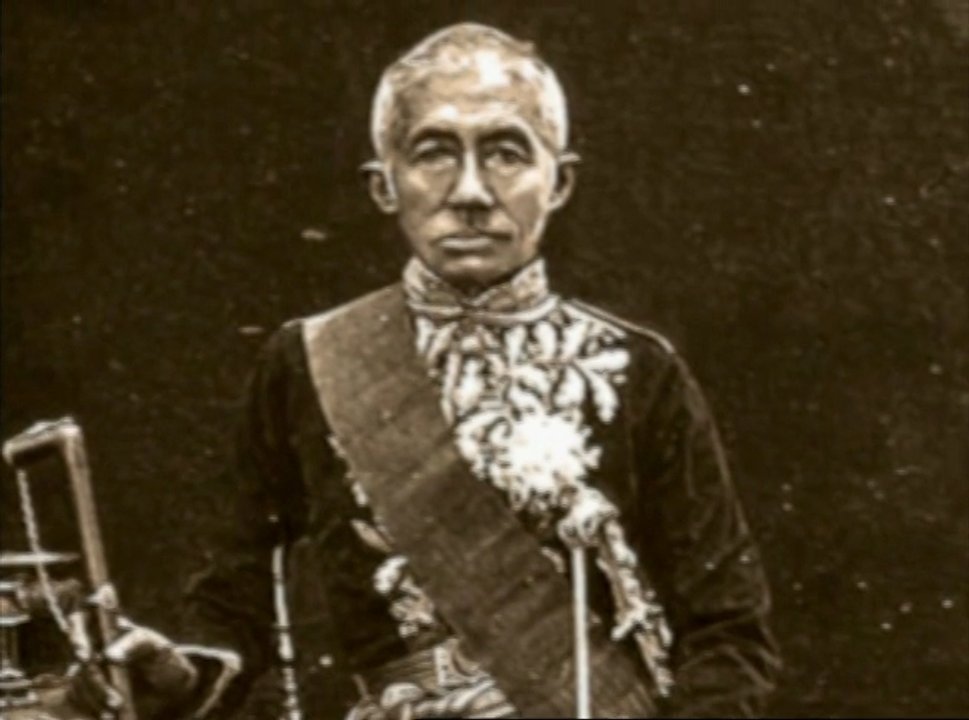
In the mid-19th Century, Siam, now known as Thailand, faced growing pressure from Western powers to open its economy to international trade. When King Mongkut took the throne in 1851, he drew on his years as a Buddhist monk and his studies of Western languages and science to guide the kingdom through a period of change. He established diplomatic relationships with foreign nations, including Great Britain through the 1855 Bowring Treaty, while working to protect Siam’s independence and manage the influence of foreign commerce.
Mongkut also promoted education, introduced new approaches to royal government, and encouraged the study of science. British governess Anna Leonowens arrived in 1862 to teach members of the royal household, and her experiences later inspired the highly fictionalized musical and film The King and I. Mongkut died of malaria in 1868 after traveling to observe a solar eclipse he had predicted. His son, King Chulalongkorn, continued modernizing the country and abolished slavery. Mongkut’s legacy remains closely associated with scientific learning, diplomacy, and Siam’s efforts to preserve its independence during an era of Western imperial expansion.

The article "Top 10 Biggest Statues in the World" from BBC's Science Focus explores the tallest statues globally, ranging from the Statue of Unity in India to the Dai Kannon of Kita no Miyako Park in Japan.
In the mid-19th Century, Siam, now known as Thailand, faced growing pressure from Western powers to open its economy to international trade. When King Mongkut took the throne in 1851, he drew on his years as a Buddhist monk and his studies of Western languages and science to guide the kingdom through a period of change. He established diplomatic relationships with foreign nations, including Great Britain through the 1855 Bowring Treaty, while working to protect Siam’s independence and manage the influence of foreign commerce.
Mongkut also promoted education, introduced new approaches to royal government, and encouraged the study of science. British governess Anna Leonowens arrived in 1862 to teach members of the royal household, and her experiences later inspired the highly fictionalized musical and film The King and I. Mongkut died of malaria in 1868 after traveling to observe a solar eclipse he had predicted. His son, King Chulalongkorn, continued modernizing the country and abolished slavery. Mongkut’s legacy remains closely associated with scientific learning, diplomacy, and Siam’s efforts to preserve its independence during an era of Western imperial expansion.
The article "Top 10 Biggest Statues in the World" from BBC's Science Focus explores the tallest statues globally, ranging from the Statue of Unity in India to the Dai Kannon of Kita no Miyako Park in Japan.