
The article "Miniature Human Heart 3D Printed Using Stem Cells" from BBC's Science Focus covers researchers at the University of Minnesota who successfully 3D printed a functioning human heart pump using stem cells, which could have significant implications for heart disease research and treatment.

The article "3D printing recreates a 3,000-year-old Egyptian mummy's voice!" from BBC 's Science Focus explains how researchers used 3D printing to recreate the voice of Nesyamun, an Egyptian priest who died 3,000 years ago.

The article "3D Scans Reveal Secrets of Ancient Mummified Animals" from BBC's Science Focus explains how scientists used 3D scanning technology to examine mummified animals from ancient Egypt. The scans provided detailed insights into the animals' conditions and possible causes of death, revealing new information about ancient Egyptian practices.

The article "3D-Printed Terracotta Reefs Offer New Hope for Saving Coral Ecosystems" from BBC's Science Focus reveals that Israeli researchers are creating detailed artificial coral reefs using 3D printing. These terracotta reefs mimic real coral shapes and offer homes for marine organisms, helping coral reefs recover. The goal is to use this technology in oceans around the world to support marine biodiversity.

The article "3D-Printed Liver Models Help Surgeons "Rehearse" Cancer Surgeries" from BBC's Science Focus explains how scientists have developed a method to 3D print realistic models of cancer patients' organs. These models include imitation tumors and blood, allowing surgeons to practice procedures before performing them on real patients.
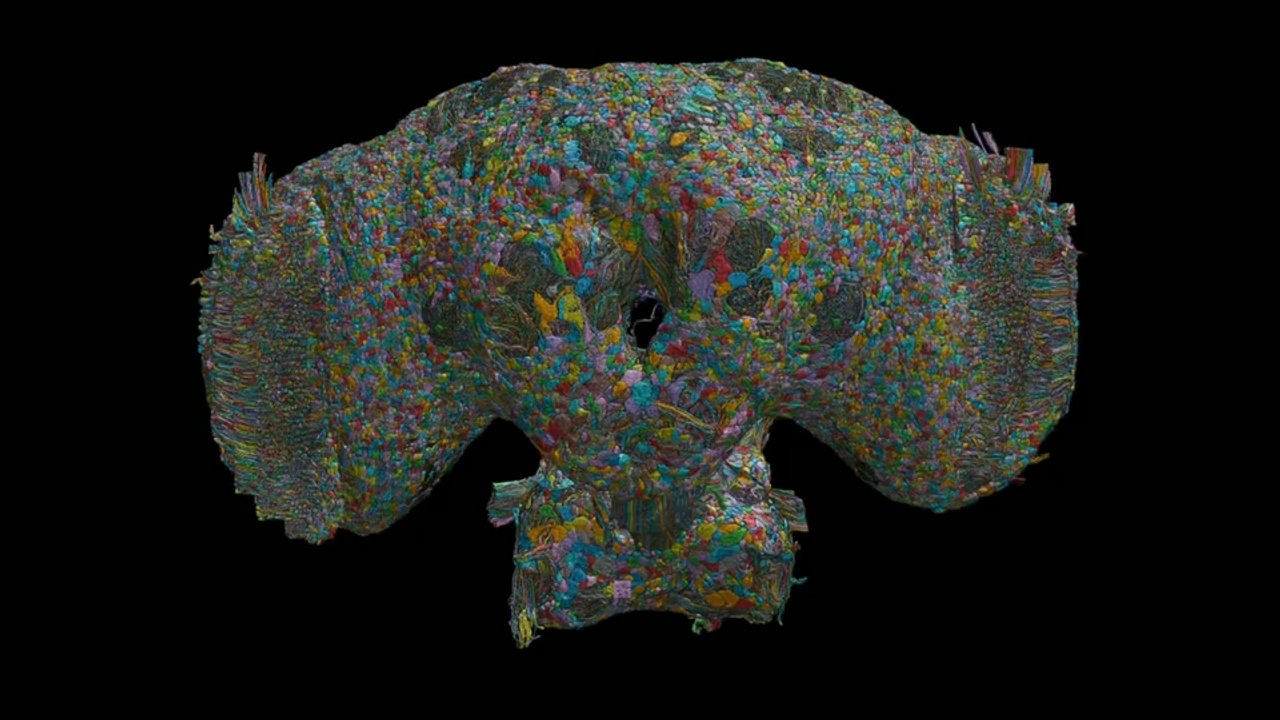
“Beautiful on the inside” may be weirdly appropriate for bugs, considering the 3D map of the male fruit fly brain and nervous system more closely resembles a museum-worthy mosaic or a bowl of fruity cereal than the tiny nuisance you’re used to seeing flying around your apples. Scientists recently created this colorful detailed map by slicing and analyzing every nerve cell with an electron microscope — that’s a microscope that uses accelerated electrons instead of visible light to produce images that can be both extremely magnified and incredibly clear at the same time.
The same team previously mapped a female fly brain a couple of years ago and compared the male and female brains to see that roughly 95% of their brain wiring was similar, while about 5% differed.
But those small differences make for some big differences in behavior, including courtship, aggression, detecting competitors, and producing a “love song” by beating the wings.
It's not news (to these scientists, at least) that just two genes were linked to these behaviors, but comparing these 3D maps helped them learn more about the connection between those genes and the specific brain circuits producing the behavior.
Researchers hope the same logic around connecting genes to brain wiring to behavior can eventually be applied to other animals and maybe even humans! This might help scientists investigate conditions with strong genetic influences, including schizophrenia and autism.
Forests store huge amounts of carbon, likely hundreds of billions of tons. One metric ton is about 2,200 pounds, so hundreds of billions of tons is... let's just say it's a lot. Because trees pull carbon dioxide out of the air and lock it away, forests play a major role in controlling Earth's climate.
To figure out how much carbon a forest holds, scientists can measure individual trees, like how wide the trunk is and how tall the tree grows. But nobody can take a tape measure to millions of square miles of forest, and "a whole bunch" isn't a scientific measurement.
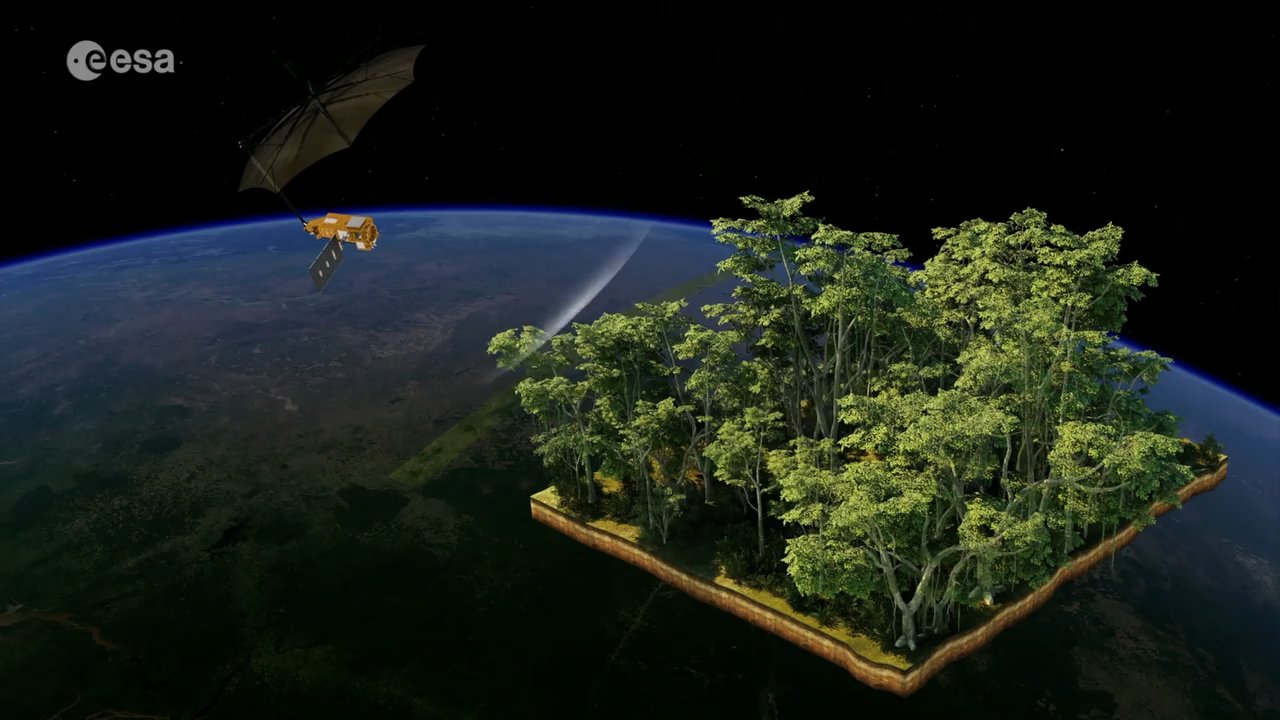
That's where new technology comes in. In 2025, the European Space Agency, which runs space missions for a group of European countries, launched a satellite called Biomass. It uses radar with extra-long wavelengths. The longer the wavelength, the more easily radar can pass through leaves and small branches and pick up bigger things, like trunks and large branches, which hold most of a tree's carbon.
Most earlier satellites, like many launched by NASA, the U.S. space agency, are optical. They work like cameras, capturing sunlight reflected off the treetops. That's useful for seeing where forests are, but it mostly shows the top layer. Radar can reveal what's underneath. It can help scientists estimate how much wood a forest holds, spot deforestation, and study flooded forests that are hard to reach. Scientists then check the satellite data against measurements taken from planes and on the ground.
Another tool is LiDAR, short for Light Detection and Ranging. It sends out pulses of laser light and measures how long they take to bounce back, building detailed 3D maps of forests. Some are precise enough to show individual twigs and leaves. LiDAR isn't new, but it produces enormous amounts of data. Artificial intelligence is now making that data much faster to process, turning LiDAR into a more practical tool for studying forests.
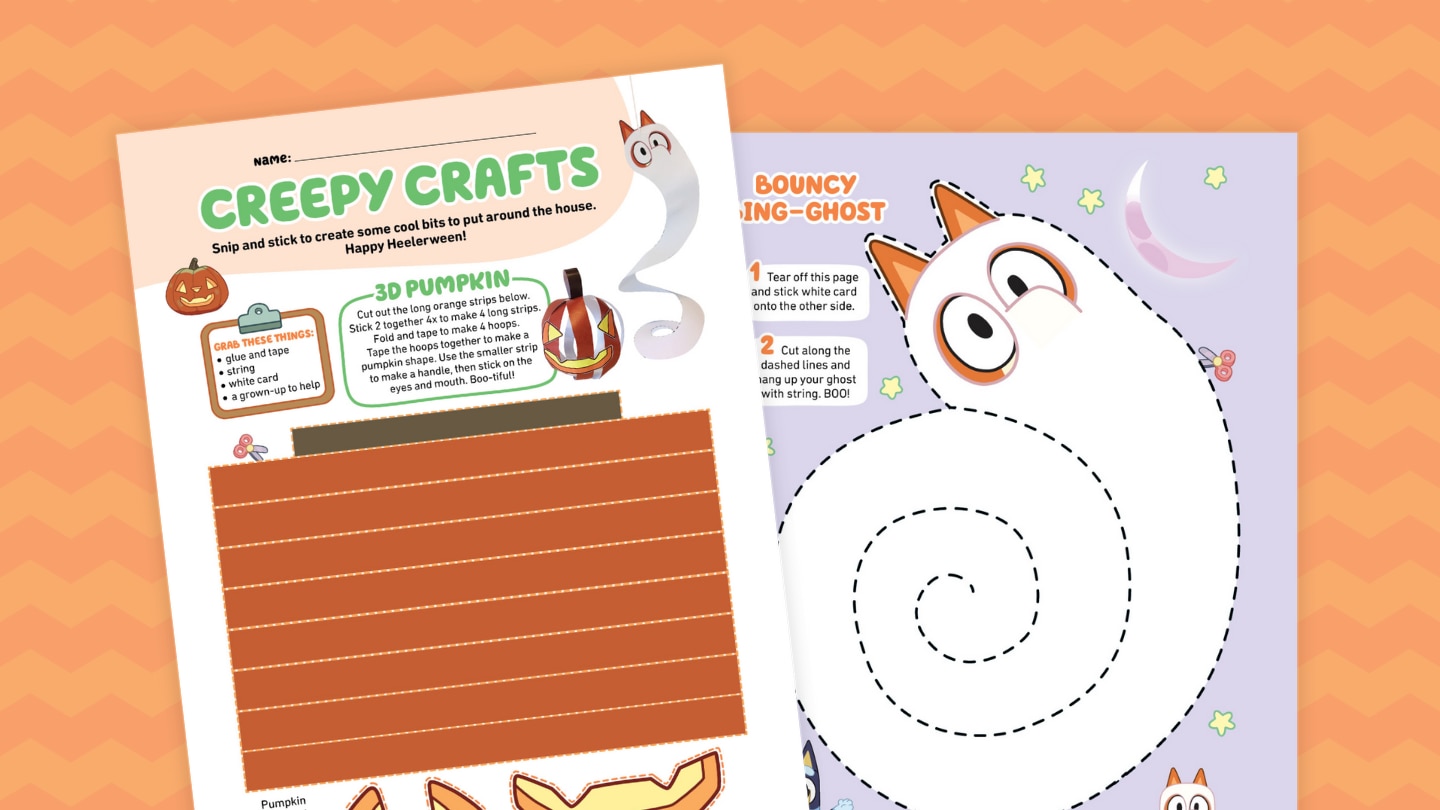
Snip and stick to create some cool bits to put around the classroom or house:
- Make a 3D pumpkin: Cut out the long orange stripes. Stick two together four times to make long stripes. Fold and tape to make four hoops. Tape the hoops together to make a pumpkin shape. Use the smaller strip to make a handle, then stick on the eyes and mouth. Boo-tiful!
- Create a bouncing Bing-ghost: cut along the dashed lines and hang up your ghost with string. BOO!
The article "Miniature Human Heart 3D Printed Using Stem Cells" from BBC's Science Focus covers researchers at the University of Minnesota who successfully 3D printed a functioning human heart pump using stem cells, which could have significant implications for heart disease research and treatment.
The article "3D printing recreates a 3,000-year-old Egyptian mummy's voice!" from BBC 's Science Focus explains how researchers used 3D printing to recreate the voice of Nesyamun, an Egyptian priest who died 3,000 years ago.
The article "3D Scans Reveal Secrets of Ancient Mummified Animals" from BBC's Science Focus explains how scientists used 3D scanning technology to examine mummified animals from ancient Egypt. The scans provided detailed insights into the animals' conditions and possible causes of death, revealing new information about ancient Egyptian practices.
The article "3D-Printed Terracotta Reefs Offer New Hope for Saving Coral Ecosystems" from BBC's Science Focus reveals that Israeli researchers are creating detailed artificial coral reefs using 3D printing. These terracotta reefs mimic real coral shapes and offer homes for marine organisms, helping coral reefs recover. The goal is to use this technology in oceans around the world to support marine biodiversity.
The article "3D-Printed Liver Models Help Surgeons "Rehearse" Cancer Surgeries" from BBC's Science Focus explains how scientists have developed a method to 3D print realistic models of cancer patients' organs. These models include imitation tumors and blood, allowing surgeons to practice procedures before performing them on real patients.
“Beautiful on the inside” may be weirdly appropriate for bugs, considering the 3D map of the male fruit fly brain and nervous system more closely resembles a museum-worthy mosaic or a bowl of fruity cereal than the tiny nuisance you’re used to seeing flying around your apples. Scientists recently created this colorful detailed map by slicing and analyzing every nerve cell with an electron microscope — that’s a microscope that uses accelerated electrons instead of visible light to produce images that can be both extremely magnified and incredibly clear at the same time.
The same team previously mapped a female fly brain a couple of years ago and compared the male and female brains to see that roughly 95% of their brain wiring was similar, while about 5% differed.
But those small differences make for some big differences in behavior, including courtship, aggression, detecting competitors, and producing a “love song” by beating the wings.
It's not news (to these scientists, at least) that just two genes were linked to these behaviors, but comparing these 3D maps helped them learn more about the connection between those genes and the specific brain circuits producing the behavior.
Researchers hope the same logic around connecting genes to brain wiring to behavior can eventually be applied to other animals and maybe even humans! This might help scientists investigate conditions with strong genetic influences, including schizophrenia and autism.
Forests store huge amounts of carbon, likely hundreds of billions of tons. One metric ton is about 2,200 pounds, so hundreds of billions of tons is... let's just say it's a lot. Because trees pull carbon dioxide out of the air and lock it away, forests play a major role in controlling Earth's climate.
To figure out how much carbon a forest holds, scientists can measure individual trees, like how wide the trunk is and how tall the tree grows. But nobody can take a tape measure to millions of square miles of forest, and "a whole bunch" isn't a scientific measurement.
That's where new technology comes in. In 2025, the European Space Agency, which runs space missions for a group of European countries, launched a satellite called Biomass. It uses radar with extra-long wavelengths. The longer the wavelength, the more easily radar can pass through leaves and small branches and pick up bigger things, like trunks and large branches, which hold most of a tree's carbon.
Most earlier satellites, like many launched by NASA, the U.S. space agency, are optical. They work like cameras, capturing sunlight reflected off the treetops. That's useful for seeing where forests are, but it mostly shows the top layer. Radar can reveal what's underneath. It can help scientists estimate how much wood a forest holds, spot deforestation, and study flooded forests that are hard to reach. Scientists then check the satellite data against measurements taken from planes and on the ground.
Another tool is LiDAR, short for Light Detection and Ranging. It sends out pulses of laser light and measures how long they take to bounce back, building detailed 3D maps of forests. Some are precise enough to show individual twigs and leaves. LiDAR isn't new, but it produces enormous amounts of data. Artificial intelligence is now making that data much faster to process, turning LiDAR into a more practical tool for studying forests.
Snip and stick to create some cool bits to put around the classroom or house:
- Make a 3D pumpkin: Cut out the long orange stripes. Stick two together four times to make long stripes. Fold and tape to make four hoops. Tape the hoops together to make a pumpkin shape. Use the smaller strip to make a handle, then stick on the eyes and mouth. Boo-tiful!
- Create a bouncing Bing-ghost: cut along the dashed lines and hang up your ghost with string. BOO!