Water Found Buried Under Mars's Equator
New observations of the Red Planet’s mysterious dust blobs may finally answer scientists’ questions about what’s inside.
The article "Water found buried under Mars equator" from BBC's Science Focus showcases the discovery of ice beneath Mars' equator using data from ESA's Mars Express spacecraft. This finding could be crucial for future human missions to Mars, as the ice deposits could provide a valuable water source.

BBC's Science Focus is packed with news, discoveries, ideas and innovations to keep you up-to-speed with the complexities of the fast-moving world around us. Learn more about subscriptions here.

BBC's Science Focus is packed with news, discoveries, ideas and innovations to keep you up-to-speed with the complexities of the fast-moving world around us. Learn more about subscriptions here.
Most passages are available in three different versions: Level 1 (Grade 3-5), Level 2 (Grade 6-8), and Level 3 (Grade 9-12). Some more complex texts are available only in Level 2 and Level 3. Use the versions that are most appropriate for the students in your class.
Note: The BBC Learning Hub Editorial Team made use of AI tools to create multiple versions of this article, each tailored to different student reading levels. Every version undergoes a thorough review by our BBC Learning editors to ensure accuracy, quality, and appropriateness.

You Might Also Like

The article "6 Out-of-This-World Experiments Recreating Space on Earth" from BBC's Science Focus explores how scientists simulate space missions in remote and harsh environments. From the HI-SEAS habitat in Hawaii to NASA’s underwater NEEMO program, these experiments allow astronauts to practice survival skills, test space equipment, and prepare for life on Mars and beyond.
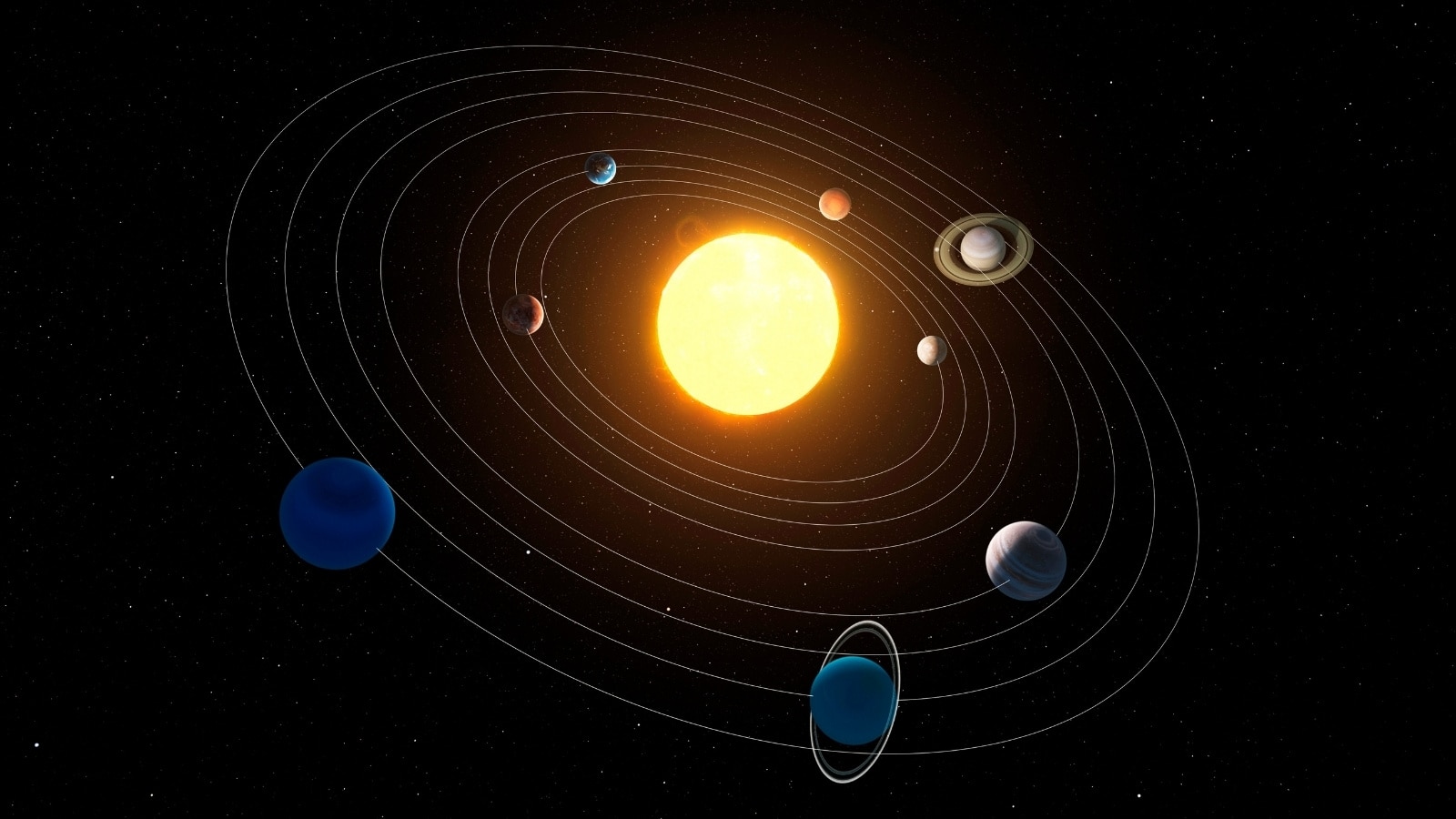
The article "Does Our Solar System Have a Protective Wall?" from BBC's Science Focus explains the concept of the "heliopause," the boundary where the solar wind from the Sun meets the interstellar medium. This boundary, sometimes described as a "wall," plays a crucial role in protecting Earth from harmful cosmic rays.
The article "Is Our Universe Stranger Than We Thought?" from BBC's Science Focus is a fascinating look at new research on the Universe that challenges what we thought we knew. Differences in how we measure the Universe's expansion and how galaxies are spread out suggest there may be missing pieces in our understanding of space.

The article "Exploring the Strangest Locations in the Universe, Where the Rules of Nature Don’t Always Apply" from BBC's Science Focus is about the strange and mysterious places in space and on Earth where the rules of nature seem to be different. These places include planets made of diamonds, stars that spin too fast, and black holes that stretch and squeeze time.
The article "6 Out-of-This-World Experiments Recreating Space on Earth" from BBC's Science Focus explores how scientists simulate space missions in remote and harsh environments. From the HI-SEAS habitat in Hawaii to NASA’s underwater NEEMO program, these experiments allow astronauts to practice survival skills, test space equipment, and prepare for life on Mars and beyond.
The article "Does Our Solar System Have a Protective Wall?" from BBC's Science Focus explains the concept of the "heliopause," the boundary where the solar wind from the Sun meets the interstellar medium. This boundary, sometimes described as a "wall," plays a crucial role in protecting Earth from harmful cosmic rays.
The article "Is Our Universe Stranger Than We Thought?" from BBC's Science Focus is a fascinating look at new research on the Universe that challenges what we thought we knew. Differences in how we measure the Universe's expansion and how galaxies are spread out suggest there may be missing pieces in our understanding of space.
The article "Exploring the Strangest Locations in the Universe, Where the Rules of Nature Don’t Always Apply" from BBC's Science Focus is about the strange and mysterious places in space and on Earth where the rules of nature seem to be different. These places include planets made of diamonds, stars that spin too fast, and black holes that stretch and squeeze time.