Does Our Solar System Have a Protective Wall?
Exploring the boundary between our Solar System and interstellar space, and how it protects Earth.
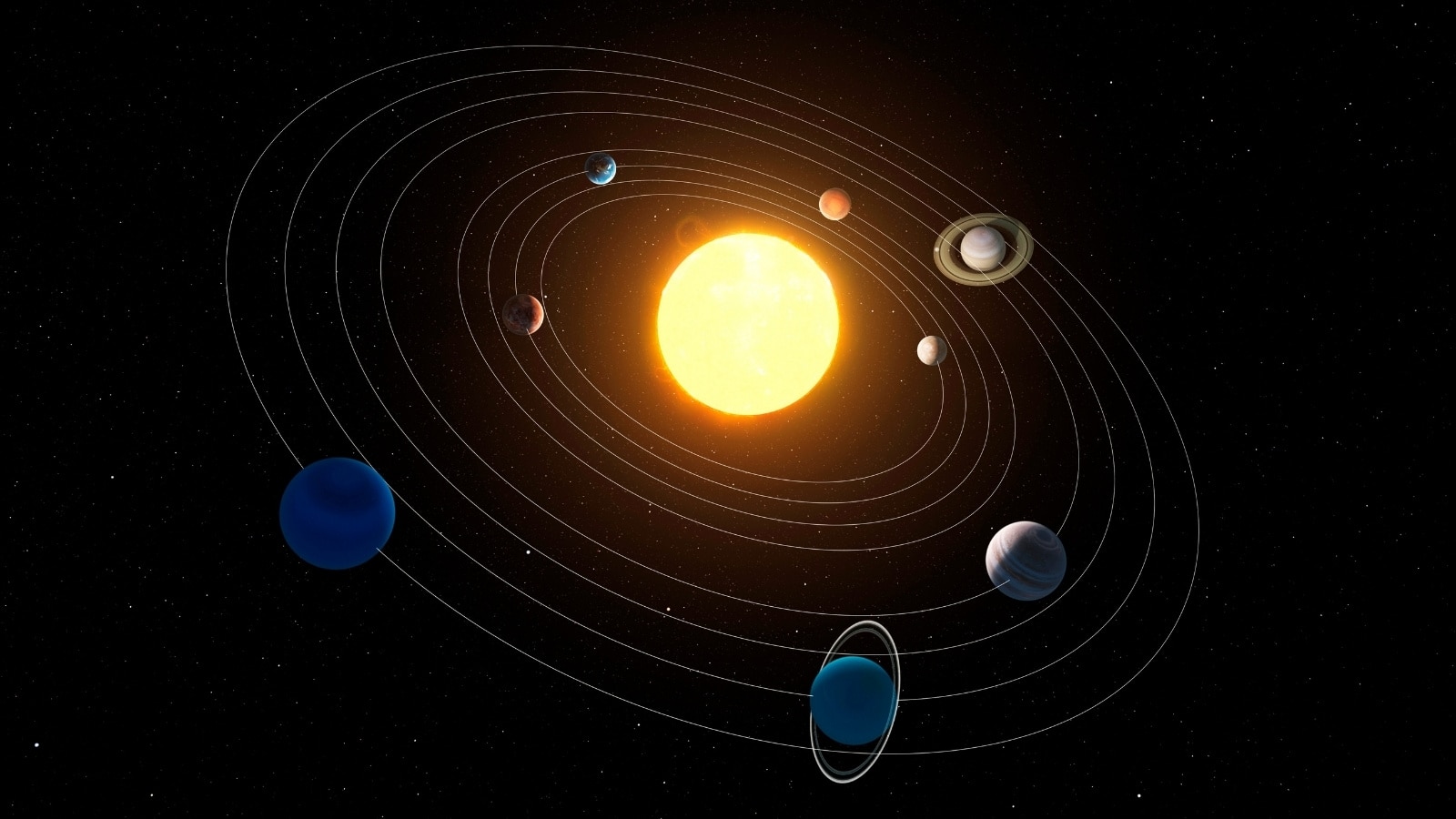
The article "Does Our Solar System Have a Protective Wall?" from BBC's Science Focus explains the concept of the "heliopause," the boundary where the solar wind from the Sun meets the interstellar medium. This boundary, sometimes described as a "wall," plays a crucial role in protecting Earth from harmful cosmic rays.

BBC's Science Focus is packed with news, discoveries, ideas and innovations to keep you up-to-speed with the complexities of the fast-moving world around us. Learn more about subscriptions here.
BBC's Science Focus is packed with news, discoveries, ideas and innovations to keep you up-to-speed with the complexities of the fast-moving world around us. Learn more about subscriptions here.
Most passages are available in three different versions: Level 1 (Grade 3-5), Level 2 (Grade 6-8), and Level 3 (Grade 9-12). Some more complex texts are available only in Level 2 and Level 3. Use the versions that are most appropriate for the students in your class.
Note: The BBC Learning Hub Editorial Team made use of AI tools to create multiple versions of this article, each tailored to different student reading levels. Every version undergoes a thorough review by our BBC Learning editors to ensure accuracy, quality, and appropriateness.

More Like This

The article "9 Stargazing Tips to Enjoy the Night Sky From Home" from BBC's Science Focus offers advice for stargazing without a telescope. It includes tips on dressing warmly, preparing your site, adjusting your eyes, spotting stars, planets, and meteors, and using apps to enhance your experience.

The article "6 Out-of-This-World Experiments Recreating Space on Earth" from BBC's Science Focus explores how scientists simulate space missions in remote and harsh environments. From the HI-SEAS habitat in Hawaii to NASA’s underwater NEEMO program, these experiments allow astronauts to practice survival skills, test space equipment, and prepare for life on Mars and beyond.

The article "Galileo Galilei: The Astronomer Who Challenged the Church and Changed Science" from BBC's HistoryExtra explores the groundbreaking work of Galileo Galilei, who supported the heliocentric theory, advanced telescope technology, and transformed astronomy and physics. Despite his scientific genius, Galileo clashed with the Catholic Church, leading to persecution and house arrest in his later years.

The article "Water found buried under Mars equator" from BBC's Science Focus showcases the discovery of ice beneath Mars' equator using data from ESA's Mars Express spacecraft. This finding could be crucial for future human missions to Mars, as the ice deposits could provide a valuable water source.
The article "9 Stargazing Tips to Enjoy the Night Sky From Home" from BBC's Science Focus offers advice for stargazing without a telescope. It includes tips on dressing warmly, preparing your site, adjusting your eyes, spotting stars, planets, and meteors, and using apps to enhance your experience.
The article "6 Out-of-This-World Experiments Recreating Space on Earth" from BBC's Science Focus explores how scientists simulate space missions in remote and harsh environments. From the HI-SEAS habitat in Hawaii to NASA’s underwater NEEMO program, these experiments allow astronauts to practice survival skills, test space equipment, and prepare for life on Mars and beyond.
The article "Galileo Galilei: The Astronomer Who Challenged the Church and Changed Science" from BBC's HistoryExtra explores the groundbreaking work of Galileo Galilei, who supported the heliocentric theory, advanced telescope technology, and transformed astronomy and physics. Despite his scientific genius, Galileo clashed with the Catholic Church, leading to persecution and house arrest in his later years.
The article "Water found buried under Mars equator" from BBC's Science Focus showcases the discovery of ice beneath Mars' equator using data from ESA's Mars Express spacecraft. This finding could be crucial for future human missions to Mars, as the ice deposits could provide a valuable water source.