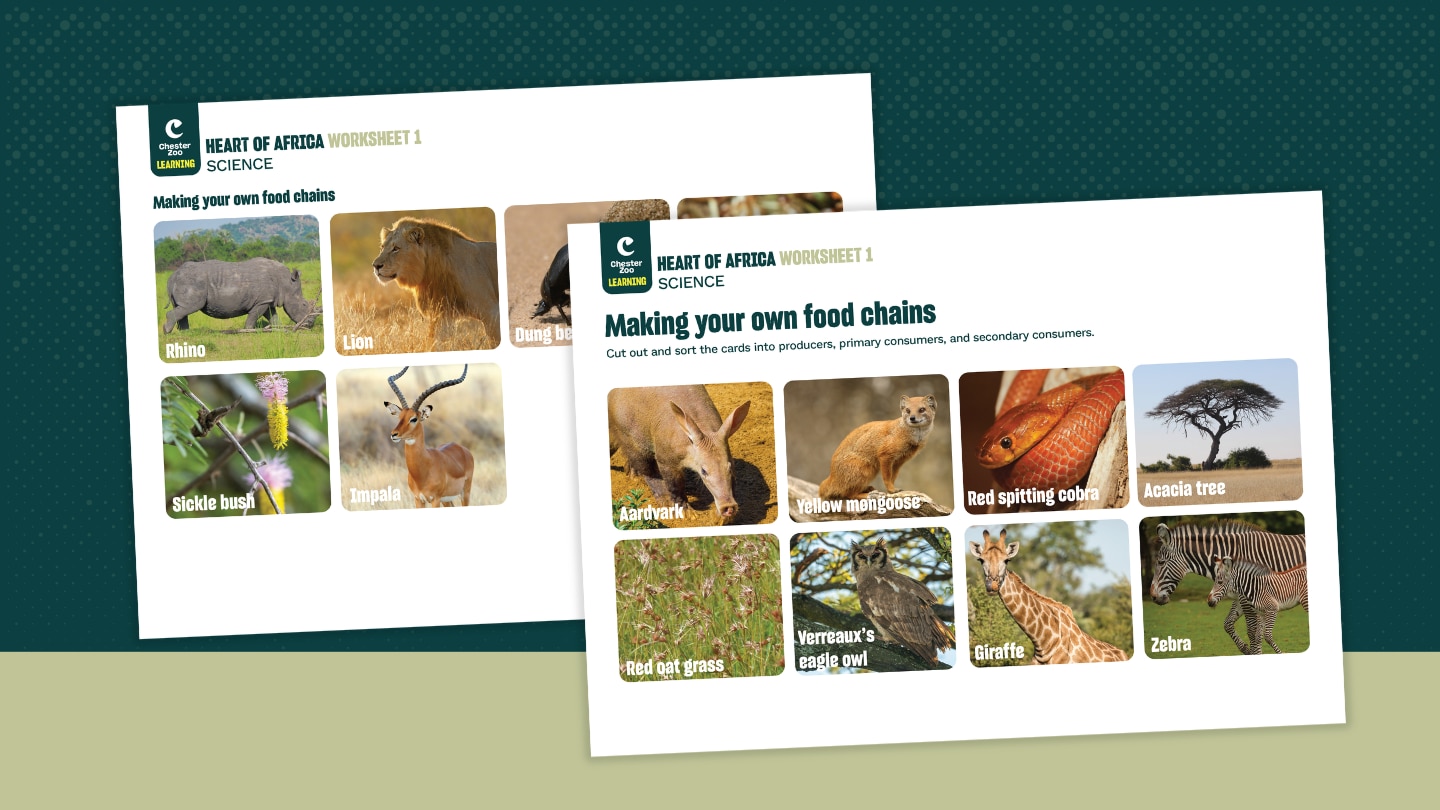
Predators and prey. Producers and consumers. They're all part of food chains! With this worksheets, you'll get the opportunity to sort African savanna species into groups (producers, primary consumer, and secondary consumers) and learn a lot about interdependence along the way. The cards include amazing savanna species like:
- Aardvark
- Yellow mongoose
- Red spitting cobra
- Acacia tree
- And more!
These worksheets accompany a Chester Zoo interactive lesson on food chains.
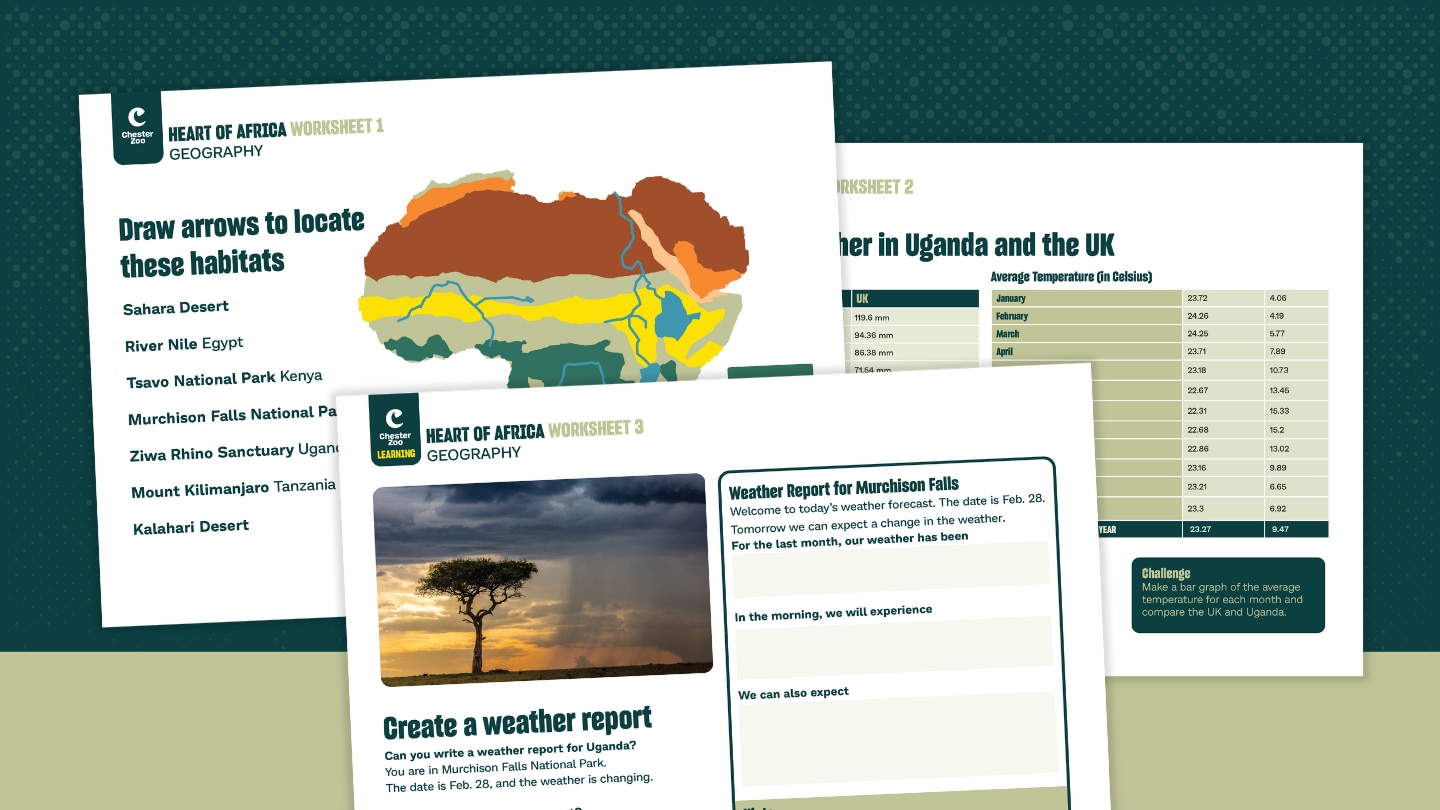
Did you know that Africa is the second largest continent in the world? Or that the equator runs right through the middle? Get an introduction to Africa through its amazing geography. With these worksheets, you'll:
- Identify different types of Afrrican habitats using map of the continent
- Compare the average rainfall and temperature in Uganda and the UK
- Write your own weather report for Murchison Falls in Uganda
These worksheets accompany a Chester Zoo interactive lesson on habitats and weather.
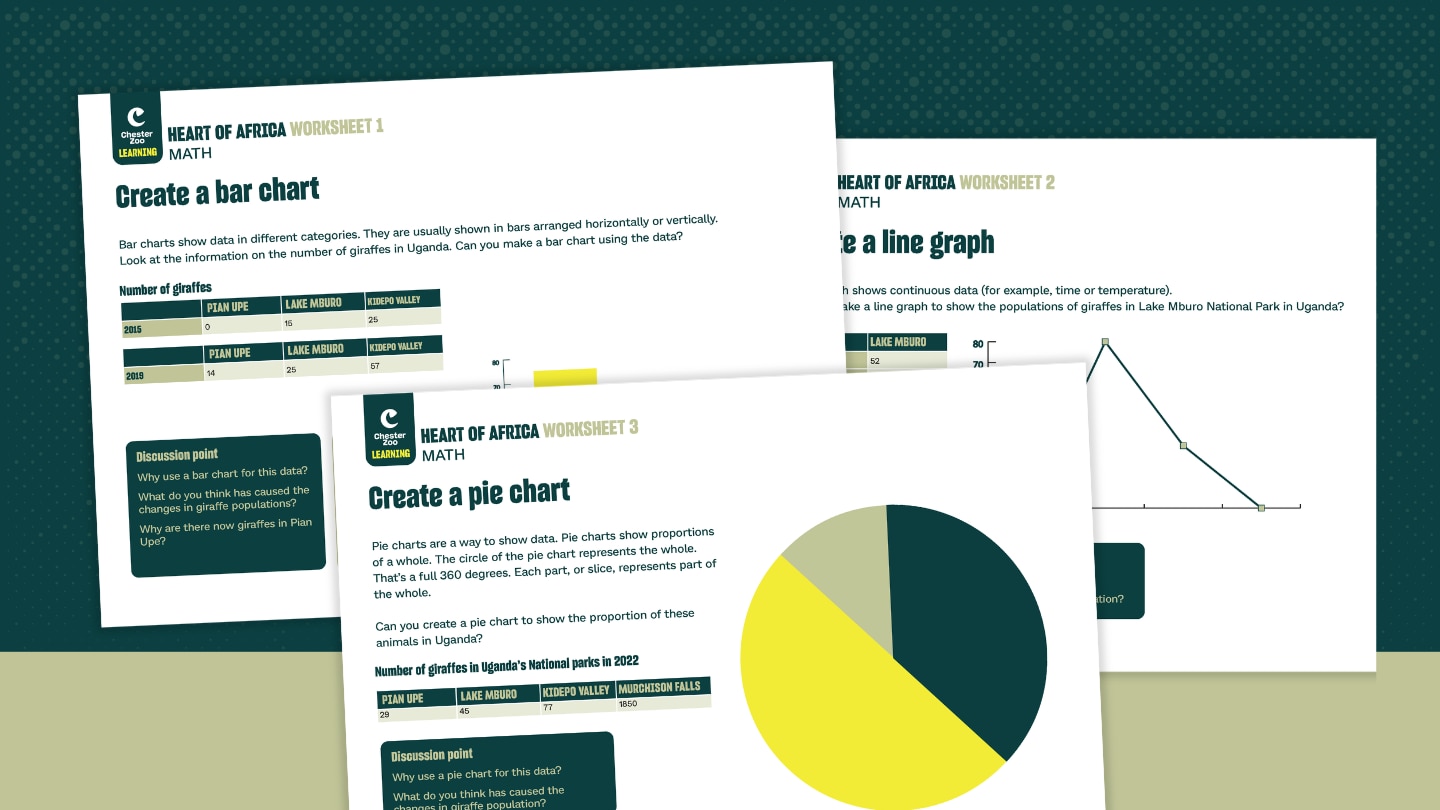
Monitoring animal populations is important to assess if the animal is endangered or threatened, to meausre biological diversity, and to examine the effects of human actions. And it's something our friends at the Chester Zoo do a lot! Try your hand at it with giraffe data and learn some important math skills on the way. Compare giraffe populations in different Ugandan national parks using:
- Bar charts
- Line graphs
- Pie charts
These worksheets accompany a Chester Zoo interactive lesson on graphs.
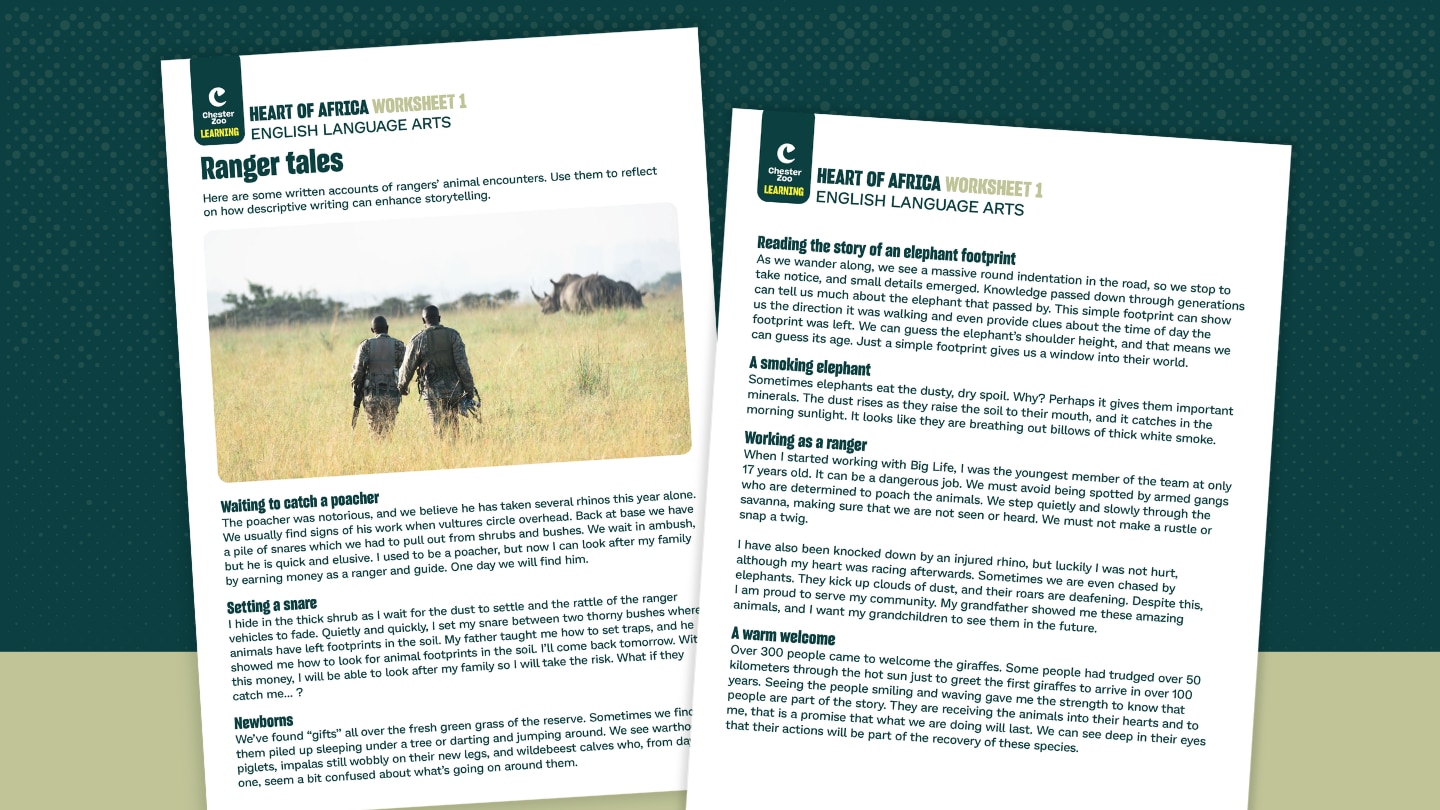
Ranger tales! Our friends at the Chester Zoo have put together some written accounts of real-life rangers' animal encounters. Read about:
- Waiting to catch a poacher
- Setting a snare
- Finding an elephant
- And more!
Then you'll use those to reflect on how descriptive writing can enhance storytelling and eventually write your own!
These worksheets accompany a Chester Zoo interactive lesson on descriptive writing.
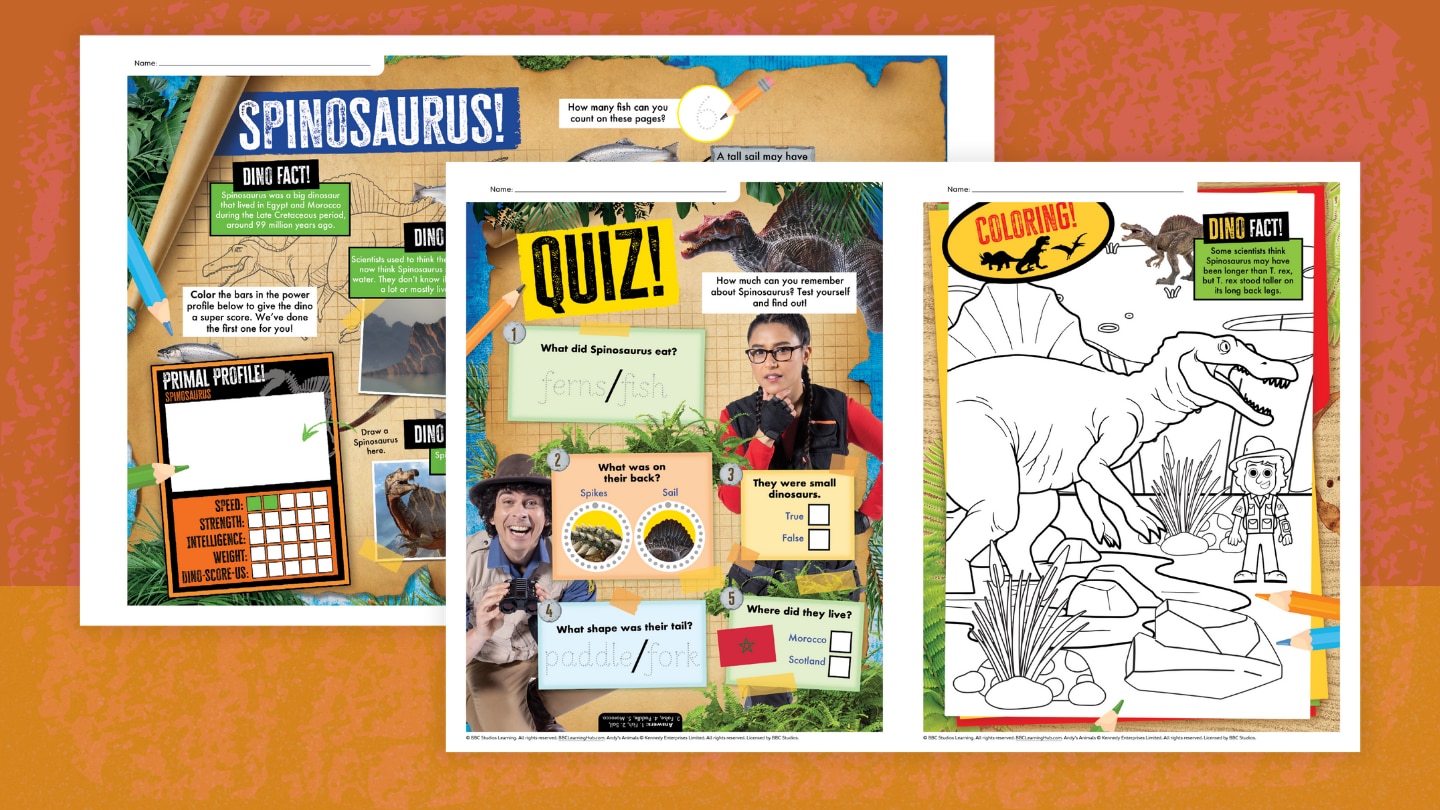
Dive into the world of Spinosaurus with Andy! In this set of fun Spinosaurus worksheets, you'll:
- Learn jaw-dropping facts about Spinosaurus, from its sail to its fish-catching snout.
- Practice counting with a hidden fish challenge.
- Test your memory with a fun dino quiz.
- Get creative by coloring your own Spinosaurus.
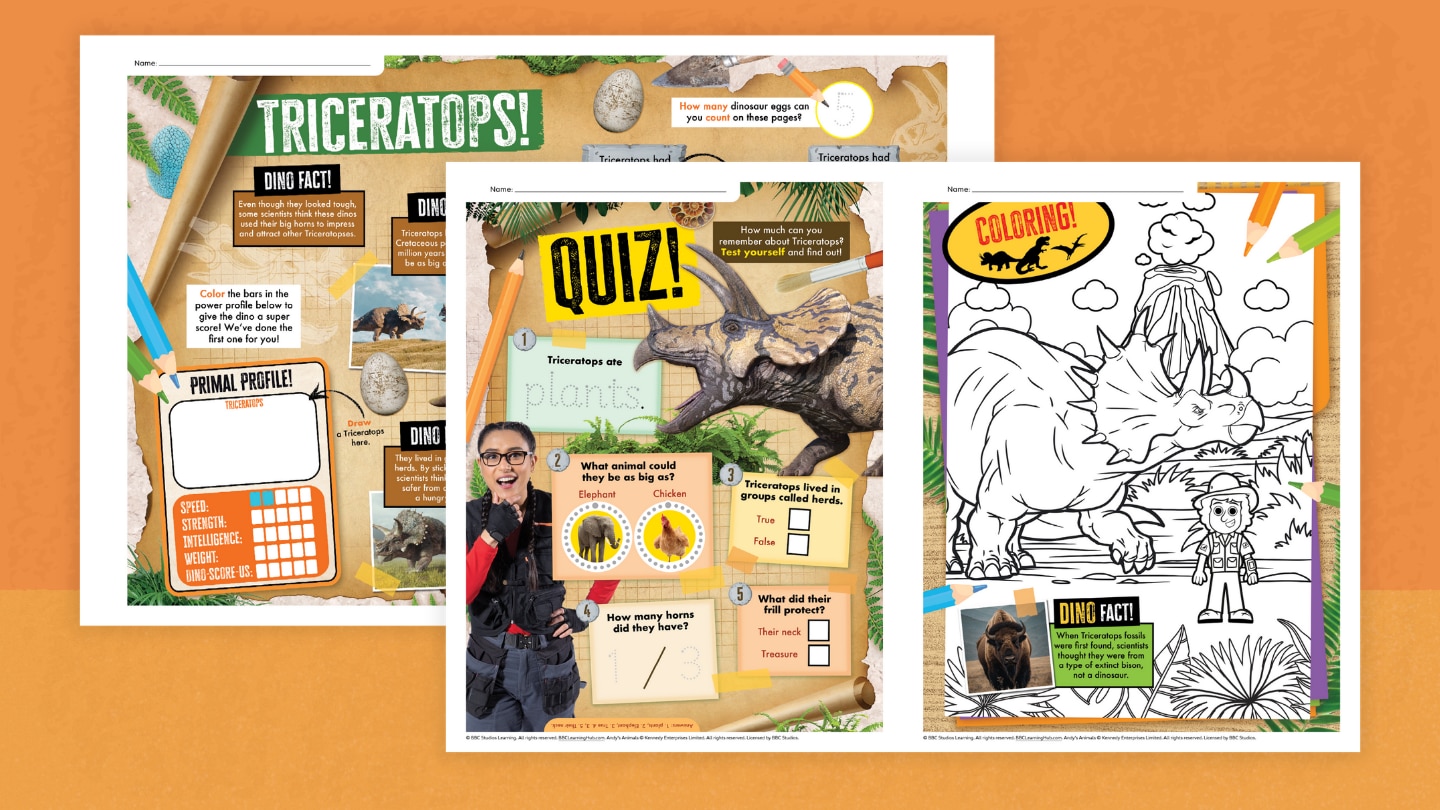
Go on a prehistoric quest with Andy! In this set of fun Triceratops worksheets, you'll:
- Discover incredible facts about their horns, frills, and herds.
- Practice counting with a hidden dinosaur egg challenge.
- Test your memory with a fun Triceratops quiz.
- Get creative by coloring your own Triceratops.
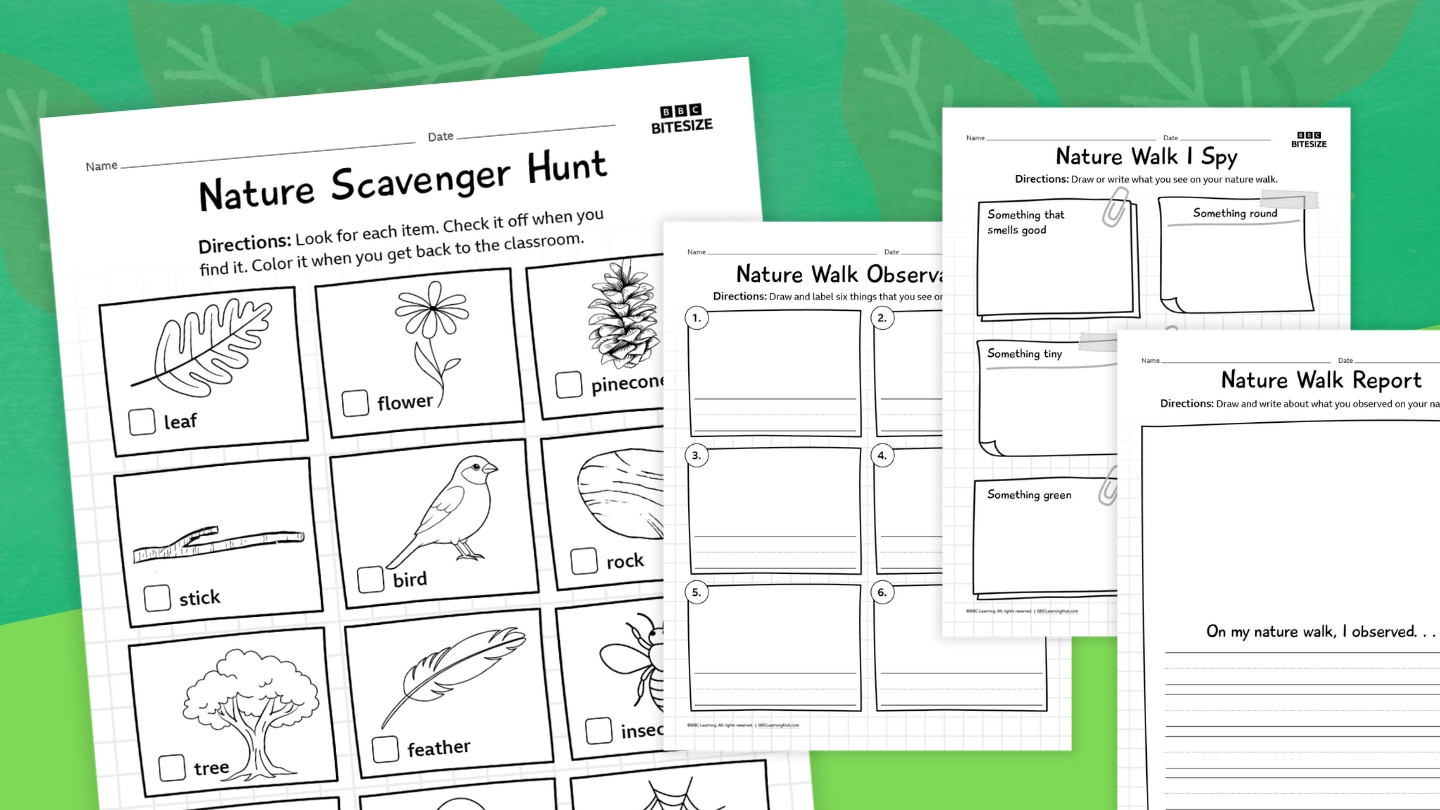
Everyone loves a nature walk! Take your PreK–Grade 2 students outside to observe the world around them. With these worksheets on a clipboard, you can make your nature walk more focused and a true learning experience (in addition to being loads of fun!).
- Nature Walk Scavenger Hunt: Students look for a leaf, flower, bird, and more. They can check off each item they find and then color them when they get back to the classroom.
- Nature Walk Observations: Encourage your kids to draw and write what they see on their nature walk.
- Nature Walk I Spy: Challenge your students to find something that smells good, something round, something tiny, something rough, something green, and something that flies.
- Nature Walk Report: When you get back to the room, have your kids draw and write about what they saw on their nature walk.

Embark on an Antarctic research expedition with your students! Write a journal entry from the perspective of a research scientist about their experience in Antarctica.

Take your students on a research journey to Antarctica! Explore what is known about the animal, identify gaps in scientific knowledge, and suggest future research areas.

Invite students to create their own penguin cartoon characters based on what they have learned about the characteristics and behavior of real penguins. Use these printables with the K-2 Antarctica lesson: Create Your Own Penguin.

Play Three Truths and a Lie about oceans and answer questions about human impact on whales, tusk fish, and the Great Barrier Reef. Plus, complete an infographic activity on how to reduce human impact on our oceans.

Help students get more out of educational videos with this collection of Video Response Worksheets. Designed to accompany any BBC Learning Hub video, these printable activities encourage active viewing while building comprehension, critical thinking, and communication skills.
The six worksheets offer a variety of ways for students to reflect on what they watch. Activities include identifying key ideas and interesting facts, creating a quiz for classmates, reviewing and rating a video, illustrating important details, and analyzing a video's message, tone, and visual elements.
Use these flexible worksheets with videos across a range of subjects and grade levels. Assign the same activity to the whole class, mix and match worksheets, or let students choose how they respond. They're a simple way to encourage thoughtful viewing, check for understanding, and extend learning beyond the screen.
Predators and prey. Producers and consumers. They're all part of food chains! With this worksheets, you'll get the opportunity to sort African savanna species into groups (producers, primary consumer, and secondary consumers) and learn a lot about interdependence along the way. The cards include amazing savanna species like:
- Aardvark
- Yellow mongoose
- Red spitting cobra
- Acacia tree
- And more!
These worksheets accompany a Chester Zoo interactive lesson on food chains.
Did you know that Africa is the second largest continent in the world? Or that the equator runs right through the middle? Get an introduction to Africa through its amazing geography. With these worksheets, you'll:
- Identify different types of Afrrican habitats using map of the continent
- Compare the average rainfall and temperature in Uganda and the UK
- Write your own weather report for Murchison Falls in Uganda
These worksheets accompany a Chester Zoo interactive lesson on habitats and weather.
Monitoring animal populations is important to assess if the animal is endangered or threatened, to meausre biological diversity, and to examine the effects of human actions. And it's something our friends at the Chester Zoo do a lot! Try your hand at it with giraffe data and learn some important math skills on the way. Compare giraffe populations in different Ugandan national parks using:
- Bar charts
- Line graphs
- Pie charts
These worksheets accompany a Chester Zoo interactive lesson on graphs.
Ranger tales! Our friends at the Chester Zoo have put together some written accounts of real-life rangers' animal encounters. Read about:
- Waiting to catch a poacher
- Setting a snare
- Finding an elephant
- And more!
Then you'll use those to reflect on how descriptive writing can enhance storytelling and eventually write your own!
These worksheets accompany a Chester Zoo interactive lesson on descriptive writing.
Dive into the world of Spinosaurus with Andy! In this set of fun Spinosaurus worksheets, you'll:
- Learn jaw-dropping facts about Spinosaurus, from its sail to its fish-catching snout.
- Practice counting with a hidden fish challenge.
- Test your memory with a fun dino quiz.
- Get creative by coloring your own Spinosaurus.
Go on a prehistoric quest with Andy! In this set of fun Triceratops worksheets, you'll:
- Discover incredible facts about their horns, frills, and herds.
- Practice counting with a hidden dinosaur egg challenge.
- Test your memory with a fun Triceratops quiz.
- Get creative by coloring your own Triceratops.
Everyone loves a nature walk! Take your PreK–Grade 2 students outside to observe the world around them. With these worksheets on a clipboard, you can make your nature walk more focused and a true learning experience (in addition to being loads of fun!).
- Nature Walk Scavenger Hunt: Students look for a leaf, flower, bird, and more. They can check off each item they find and then color them when they get back to the classroom.
- Nature Walk Observations: Encourage your kids to draw and write what they see on their nature walk.
- Nature Walk I Spy: Challenge your students to find something that smells good, something round, something tiny, something rough, something green, and something that flies.
- Nature Walk Report: When you get back to the room, have your kids draw and write about what they saw on their nature walk.
Embark on an Antarctic research expedition with your students! Write a journal entry from the perspective of a research scientist about their experience in Antarctica.
Take your students on a research journey to Antarctica! Explore what is known about the animal, identify gaps in scientific knowledge, and suggest future research areas.
Invite students to create their own penguin cartoon characters based on what they have learned about the characteristics and behavior of real penguins. Use these printables with the K-2 Antarctica lesson: Create Your Own Penguin.
Play Three Truths and a Lie about oceans and answer questions about human impact on whales, tusk fish, and the Great Barrier Reef. Plus, complete an infographic activity on how to reduce human impact on our oceans.
Help students get more out of educational videos with this collection of Video Response Worksheets. Designed to accompany any BBC Learning Hub video, these printable activities encourage active viewing while building comprehension, critical thinking, and communication skills.
The six worksheets offer a variety of ways for students to reflect on what they watch. Activities include identifying key ideas and interesting facts, creating a quiz for classmates, reviewing and rating a video, illustrating important details, and analyzing a video's message, tone, and visual elements.
Use these flexible worksheets with videos across a range of subjects and grade levels. Assign the same activity to the whole class, mix and match worksheets, or let students choose how they respond. They're a simple way to encourage thoughtful viewing, check for understanding, and extend learning beyond the screen.