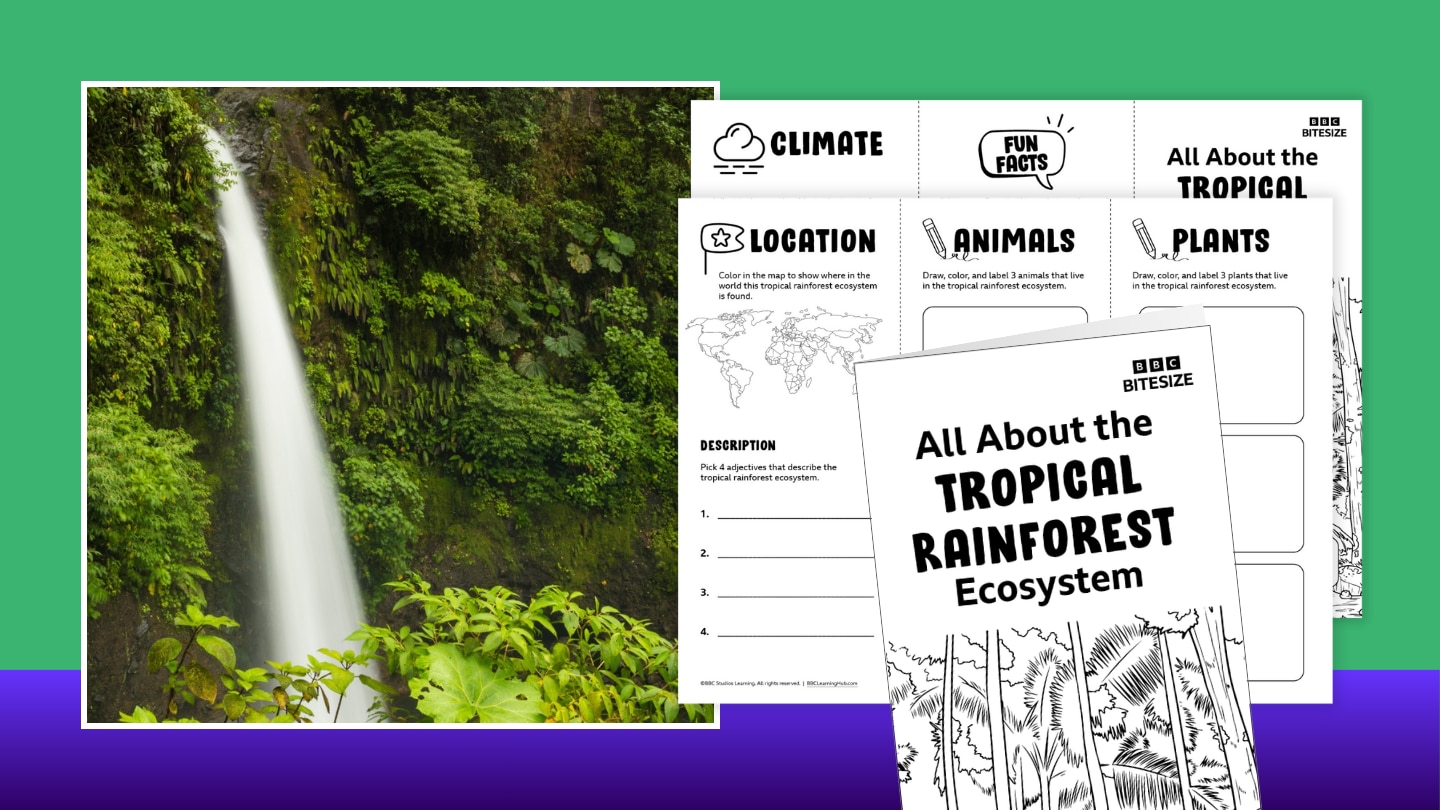
Guide your students on a hike through the tropical rainforest ecosystem! From the Amazon in South America to the jungles of Southeast Asia, rainforests are full of unique and amazing species.
✨ Perfect for grades 3–8, here’s what you need to bring ecosystems to life:
- Iconic BBC Videos: Share the clips on this page to introduce the location, plants, animals, and climate of the rainforest. (Don't miss the spider monkeys and waterfall toads!) Brought to you by world-class BBC programs like Planet Earth, Deadly 60, Seven Worlds, One Planet, and Life.
- Free Printable: Use the Tropical Rainforest Brochure Template to help students pull it all together in an ecosystem report with facts they’ve learned (and a little extra research).
It’s everything you need to make ecosystems easy to teach and truly memorable for your students.
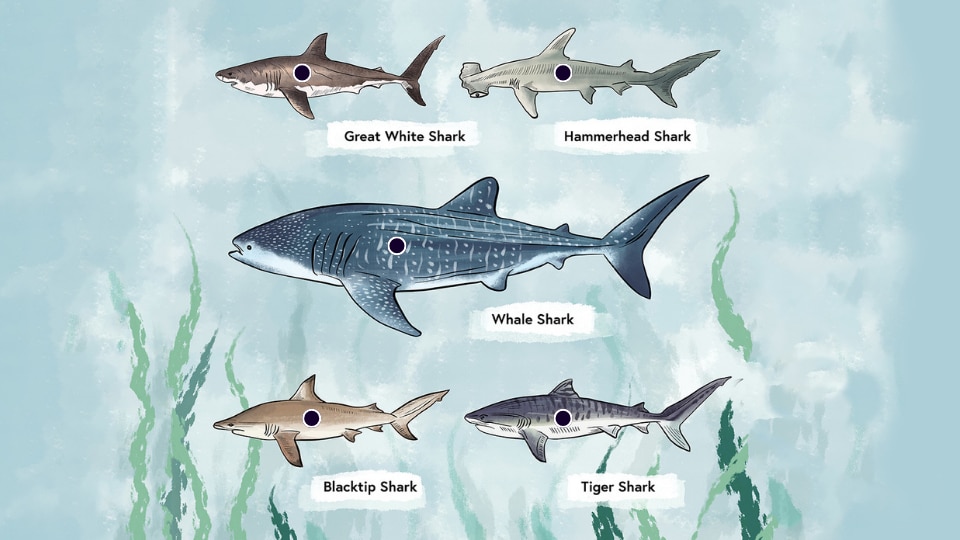
Meet the Sharks is an interactive adventure that lets you explore some of the ocean's most incredible shark species: the great white, hammerhead, whale, blacktip, and tiger shark.
Click on each illustrated shark to watch an exciting educational video from state-of-the-art BBC productions like Blue Planet and Deadly 60. Then click on each shark's name to uncover a fun fact about what makes that species unique — from extraordinary senses to surprising behaviors to mind-blowing adaptations.
Whether you're meeting these amazing fish (that's right — sharks are fish!) for the first time or already know a thing or two about sharks, this interactive experience is a fun way to discover how each species has adapted to life in the ocean. Dive in, explore, and see which shark becomes your favorite!

Move over, Superman. There are new heroes flying through the sky! The women of London’s Air Ambulance fly helicopters staffed with medical crews that take to the skies to save lives and inspire people everywhere. Not only do these teams provide critical care to people in need, but they also shape future generations by demonstrating what’s possible for women. But, it’s not specific to inspiring kids. A current pilot actually came from a full career as an accountant before moving from The Cloud to the clouds.
As impressive as it already is, the company is always striving to improve. They’ve recently gotten a team together to operate an ECMO, a life-support system for patients with severe, life-threatening heart or lung failure. Everyone works as a team to make sure patients get transported quickly and safely. The pilots not only fly the choppers but are instrumental in helping the medical team get set up for success and allowing them to focus on the patients.
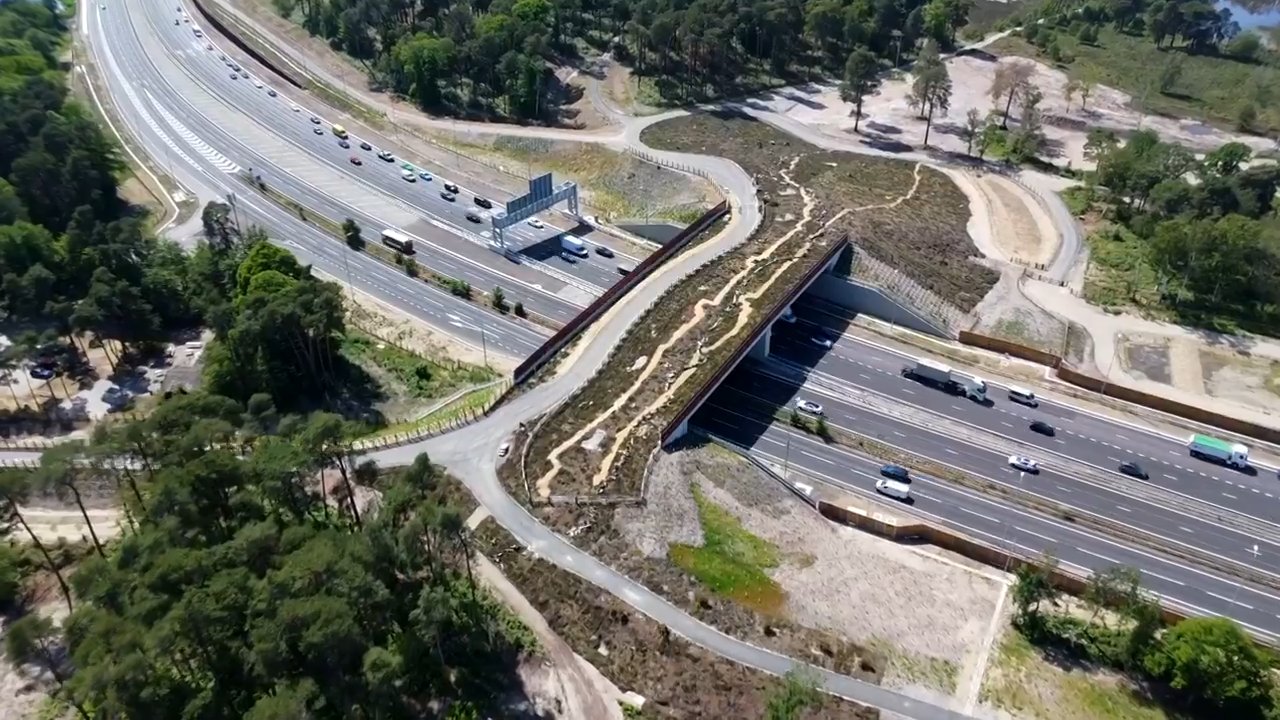
Why did the various wildlife species cross the road? To test the new heathland bridge!
It may look like a bridge that’s just unfinished, but the dirt and grass butting up against the pavement is very intentional.
This heathland bridge separating two commons is the first of its kind to include a network of natural routes that encourage species to reunite for the first time in over 40 years. Man, we would not remember ANYONE’S names! The bridge is home to mosses and vegetative grounds, as well as sand that could be a habitat to species like sand lizards, adders, foxes, deer, and bugs. Lots of bugs.
The bridge connects the heathland on either side, which the Wildlife Trusts are working to restore, so the aim of the bridge is to let wildlife move from side to side, building up the population and their resilience. But, it wasn’t as simple as leaving the bridge half-paved. Crews had to create the heathland by distributing acidic sand before adding areas of ground taken directly from larger heathland sites.

Meet the extreme survivors. Penguins, giraffes, golden snub-nosed monkeys, Namaqua chameleons — these animals have evolved remarkable ways to endure some of the harshest conditions on Earth. We've put together a collection of BBC video clips all about extreme survivors (see Related Resources below). Watch them, then take the Kahoot to see what stuck.
The adaptations are wide-ranging: penguins withstand sub-zero temperatures, giraffes manage naturally high blood pressure, snub-nosed monkeys huddle together to survive freezing nights, and Namaqua chameleons shift skin color to beat the heat of the day. Explore how these animals have adapted, body and behavior, to survive against the odds.
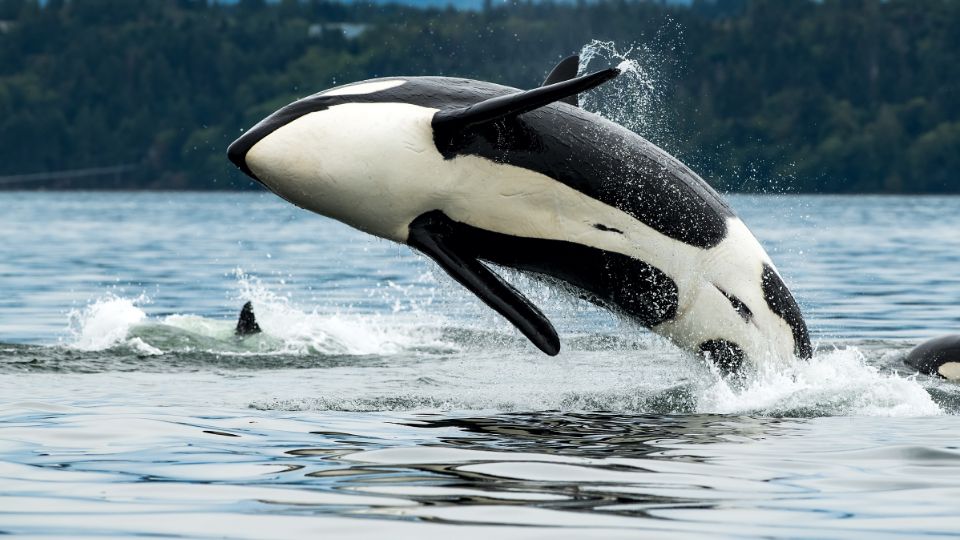
Meet the ocean's fiercest hunters. Orcas, tiger sharks, lionfish, piranhas — these predators have evolved sharp hunting tactics and sensory tricks that let them outmatch their prey in the wild. We've put together a collection of BBC video clips all about ocean predators (see Related Resources below). Watch them, then take the Kahoot to see what stuck.
The tactics are specific and surprising: orcas and tiger sharks use specialized hunting methods, lionfish disorient prey before striking, and piranhas' reputation turns out to be more myth than fact. Explore how these predators have come to dominate their corner of the ocean, and pick up some solid grounding in marine ecosystems along the way.
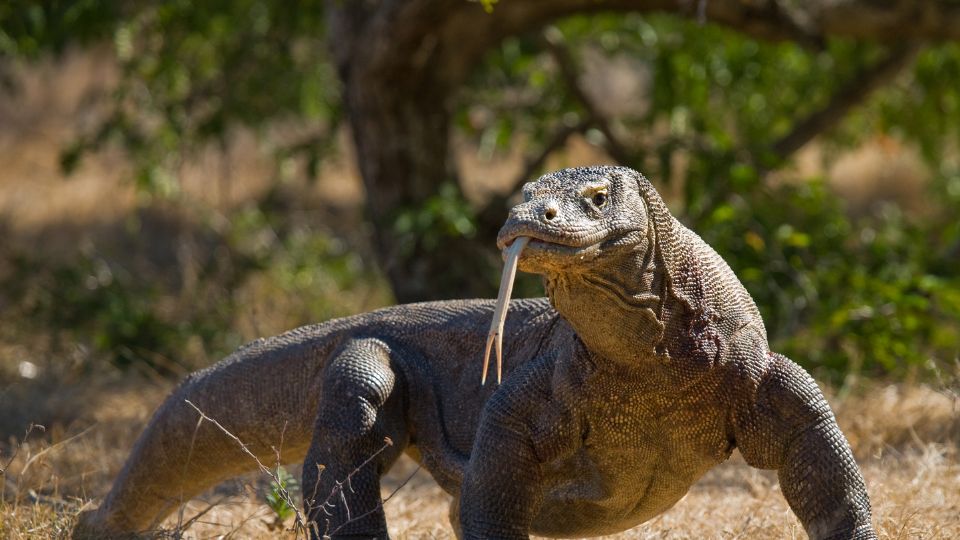
Meet the cold-blooded champions. Komodo dragons, caimans, bullfrogs, waterfall toads — these reptiles and amphibians have evolved extreme skills to survive as ectotherms, relying on their environment instead of their own body heat. We've put together a collection of BBC video clips all about cold-blooded animals (see Related Resources below). Watch them, then take the Kahoot to see what stuck.
The tricks are surprisingly specific: basilisks use a rapid leg motion to run across water without sinking, while waterfall toads — which can't leap like most frogs — have their own clever way of dodging predators. Explore how these cold-blooded creatures have adapted to thrive, and pick up some solid vocabulary along the way.

Shhh! We're going inside Amazon's super-secret chip design lab! But not the kind where they invent new potato chips. Amazon gave the BBC a rare look inside Annapurna Labs, where engineers design custom computer chips that power artificial intelligence.
Their teams oversee the entire process, from testing newly built silicon chips to making sure they're ready to be installed in massive data centers. These chips are the brains behind AI tools that millions of people use every day — from chatbots and translation apps to online shopping recommendations and voice assistants. Each chip can perform more than 1,000 trillion calculations every second. If you solved just one calculation every second without ever stopping, it would take about 80 million years to do the same amount of work!
There are companies that specialize in making chips, but Amazon designs its own to help make AI systems faster, more energy-efficient, and less expensive to operate. As AI becomes more powerful and more common, Amazon is competing with companies like Google, Microsoft, and Nvidia to build the chips that will power the next generation of AI.
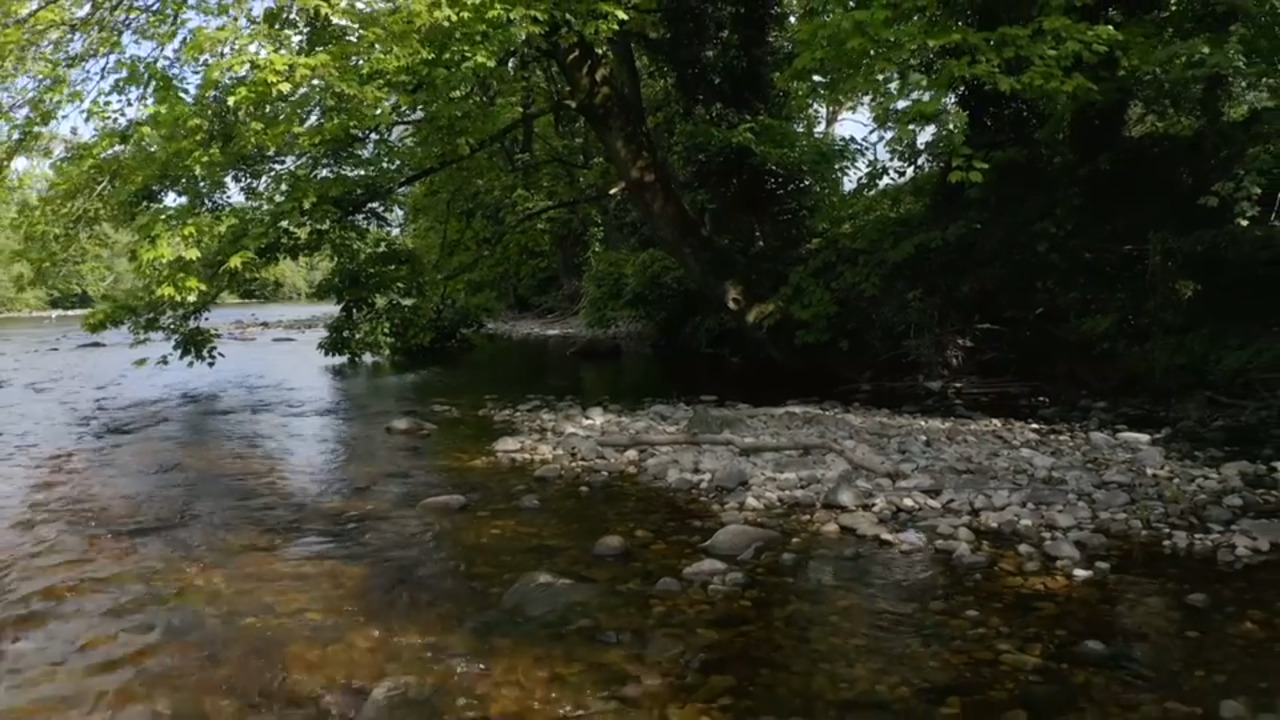
When it comes to gathering water data, the “employee of the month” may look a little on the “green and cubical” side. Alongside Yorkshire rivers, there are multiple green boxes working hard to gather data on river quality that should, in a couple years, be available for river users and potential swimmers to access through an app that tracks pollution.
Though there are currently apps that show pollution data, that information is old and outdated. This upcoming app is special, because it will use live data from an on-site sensor to provide real-time pollution levels in the water. It’s not meant to tell people “safe” or “not safe” or “swim” or “don’t swim,” but it can give people what they need to make an informed decision... mostly.
The green boxes have a big shortcoming: they’re unable to detect some really nasty bacteria like E.coli, which can only be measured in a lab. But don’t worry, old-school scientists are on the case, manually taking samples to send away for analysis. These findings will be used to build a data set that will be combined with green box data, and AI learning will infer when E.coli (and other bugs) are present in the river.
So, today, we celebrate a beautiful marriage — one of traditional testing, new technology, and AI. It may not be the pairing you’re rooting for on Love Island, but it shows great promise for water safety!
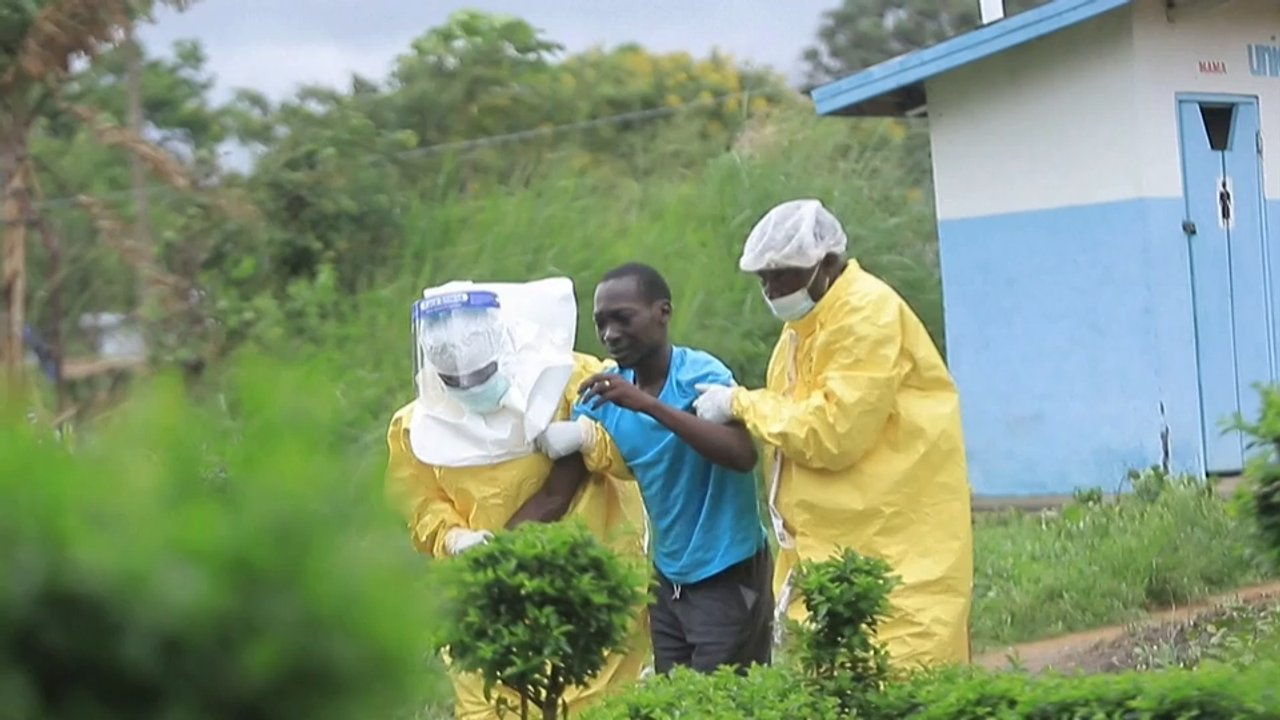
The Democratic Republic of the Congo (DRC) is months into a serious Ebola outbreak caused by the Bundibugyo species of the virus. Its rapid spread has prompted health officials to raise the risk assessment to "very high" nationally, "high" regionally, and "low" globally. The Bundibugyo species has a case fatality rate of about one in three people, and there's currently no approved vaccine for this type of Ebola. Scientists at the University of Oxford are racing to develop one, using a strategy that may sound familiar.
During the COVID-19 pandemic, scientists were able to develop vaccines quickly by using a harmless virus to deliver genetic material from the coronavirus. It may sound like the world’s worst Amazon delivery, but that material acts as instructions to teach the immune system what to recognize, so it can fight the real virus if a person is exposed later. It’s like showing your immune system a "wanted poster" of a criminal, and giving your body time to figure out how to respond if faced with the actual criminal.
Now, scientists are using the same strategy for Ebola: a harmless virus delivers genetic instructions from the Bundibugyo Ebola virus, helping the immune system prepare without causing the disease itself. Health officials hope the outbreak can be contained without a vaccine, but because Ebola can spread quickly and cause severe illness, having a vaccine ready would provide another powerful tool to help stop it — a definite case of "better safe than sorry."

It’s officially the “Beijing International Automotive Exhibition,” but its friends call it “Auto China,” and it’s now the largest car show in the world. Nearly 1000 companies flock to the exhibits taking up more than 380,000 square meters, or over 50 football fields! Or 1,246,719 feet and 50 soccer fields, if you’re from America! Or 9,329,989 beep-boop-zoinks and 50 astro-space-ball fields if you’re a Martian from outer space! Any way you spin it, this car show is a big deal, and there were two standout trends.
The first was electric vehicles. There’s always been an issue with charging, as makers have tried to maximize how far cars can travel on single charge while minimizing how long that charge takes. Now, a company called BYD claims to have an ultra-fast charging system that can provide 400 km of range with only 5 minutes of charging. What’s more, it’s designed to operate under extreme weather conditions. Since batteries are usually sensitive to high or low temperatures, addressing this is a major step in making electric vehicles as reliable as gas cars.
The other big topic was also fully autonomous, or self-driving cars. The company Geely developed a self-driving car built specifically for ride-hailing, so there’s no steering wheel or driver’s seat. That means you can pick your nose without fear of the driver judging you! Xpeng’s driverless car uses a combination of lasers, radar, and cameras to build a real time picture of the road, but we hope it works just as well in the clouds, because they may be extending this technology into flying cars as early as next year. It’s a bird! It’s a plane! No, it’s just my Uber! That’s one way to beat traffic.

Chemotherapy works. It also takes a serious toll — on energy, on the immune system, on everyday quality of life. For decades, that trade-off has been treated as unavoidable. A new drug being used to treat ovarian cancer suggests it might not have to be.
The treatment works by attaching a chemotherapy drug to an antibody — a protein the body uses naturally to identify and target specific cells. When the drug enters the body, the antibodies seek out cancer cells specifically, binding to them and leaving healthy tissue alone. Once inside the cancer cell, the antibody breaks down and releases the chemotherapy drug, destroying the cancer from within. The rest of the body barely notices.
For patients like Patricia Hill, the difference has been significant. After multiple rounds of conventional chemotherapy in the 3 years since her ovarian cancer diagnosis, she describes finally feeling well enough to socialize and enjoy daily life again. That shift — from surviving treatment to actually living alongside it — is what researchers have spent decades working toward.
The drug is still being studied, but early results point in two directions that matter: better quality of life during treatment, and the possibility of longer survival afterward. Those two things don't always come together in cancer research. When they do, it tends to mean something genuinely new is happening.
Guide your students on a hike through the tropical rainforest ecosystem! From the Amazon in South America to the jungles of Southeast Asia, rainforests are full of unique and amazing species.
✨ Perfect for grades 3–8, here’s what you need to bring ecosystems to life:
- Iconic BBC Videos: Share the clips on this page to introduce the location, plants, animals, and climate of the rainforest. (Don't miss the spider monkeys and waterfall toads!) Brought to you by world-class BBC programs like Planet Earth, Deadly 60, Seven Worlds, One Planet, and Life.
- Free Printable: Use the Tropical Rainforest Brochure Template to help students pull it all together in an ecosystem report with facts they’ve learned (and a little extra research).
It’s everything you need to make ecosystems easy to teach and truly memorable for your students.
Meet the Sharks is an interactive adventure that lets you explore some of the ocean's most incredible shark species: the great white, hammerhead, whale, blacktip, and tiger shark.
Click on each illustrated shark to watch an exciting educational video from state-of-the-art BBC productions like Blue Planet and Deadly 60. Then click on each shark's name to uncover a fun fact about what makes that species unique — from extraordinary senses to surprising behaviors to mind-blowing adaptations.
Whether you're meeting these amazing fish (that's right — sharks are fish!) for the first time or already know a thing or two about sharks, this interactive experience is a fun way to discover how each species has adapted to life in the ocean. Dive in, explore, and see which shark becomes your favorite!
Move over, Superman. There are new heroes flying through the sky! The women of London’s Air Ambulance fly helicopters staffed with medical crews that take to the skies to save lives and inspire people everywhere. Not only do these teams provide critical care to people in need, but they also shape future generations by demonstrating what’s possible for women. But, it’s not specific to inspiring kids. A current pilot actually came from a full career as an accountant before moving from The Cloud to the clouds.
As impressive as it already is, the company is always striving to improve. They’ve recently gotten a team together to operate an ECMO, a life-support system for patients with severe, life-threatening heart or lung failure. Everyone works as a team to make sure patients get transported quickly and safely. The pilots not only fly the choppers but are instrumental in helping the medical team get set up for success and allowing them to focus on the patients.
Why did the various wildlife species cross the road? To test the new heathland bridge!
It may look like a bridge that’s just unfinished, but the dirt and grass butting up against the pavement is very intentional.
This heathland bridge separating two commons is the first of its kind to include a network of natural routes that encourage species to reunite for the first time in over 40 years. Man, we would not remember ANYONE’S names! The bridge is home to mosses and vegetative grounds, as well as sand that could be a habitat to species like sand lizards, adders, foxes, deer, and bugs. Lots of bugs.
The bridge connects the heathland on either side, which the Wildlife Trusts are working to restore, so the aim of the bridge is to let wildlife move from side to side, building up the population and their resilience. But, it wasn’t as simple as leaving the bridge half-paved. Crews had to create the heathland by distributing acidic sand before adding areas of ground taken directly from larger heathland sites.
Meet the extreme survivors. Penguins, giraffes, golden snub-nosed monkeys, Namaqua chameleons — these animals have evolved remarkable ways to endure some of the harshest conditions on Earth. We've put together a collection of BBC video clips all about extreme survivors (see Related Resources below). Watch them, then take the Kahoot to see what stuck.
The adaptations are wide-ranging: penguins withstand sub-zero temperatures, giraffes manage naturally high blood pressure, snub-nosed monkeys huddle together to survive freezing nights, and Namaqua chameleons shift skin color to beat the heat of the day. Explore how these animals have adapted, body and behavior, to survive against the odds.
Meet the ocean's fiercest hunters. Orcas, tiger sharks, lionfish, piranhas — these predators have evolved sharp hunting tactics and sensory tricks that let them outmatch their prey in the wild. We've put together a collection of BBC video clips all about ocean predators (see Related Resources below). Watch them, then take the Kahoot to see what stuck.
The tactics are specific and surprising: orcas and tiger sharks use specialized hunting methods, lionfish disorient prey before striking, and piranhas' reputation turns out to be more myth than fact. Explore how these predators have come to dominate their corner of the ocean, and pick up some solid grounding in marine ecosystems along the way.
Meet the cold-blooded champions. Komodo dragons, caimans, bullfrogs, waterfall toads — these reptiles and amphibians have evolved extreme skills to survive as ectotherms, relying on their environment instead of their own body heat. We've put together a collection of BBC video clips all about cold-blooded animals (see Related Resources below). Watch them, then take the Kahoot to see what stuck.
The tricks are surprisingly specific: basilisks use a rapid leg motion to run across water without sinking, while waterfall toads — which can't leap like most frogs — have their own clever way of dodging predators. Explore how these cold-blooded creatures have adapted to thrive, and pick up some solid vocabulary along the way.
Shhh! We're going inside Amazon's super-secret chip design lab! But not the kind where they invent new potato chips. Amazon gave the BBC a rare look inside Annapurna Labs, where engineers design custom computer chips that power artificial intelligence.
Their teams oversee the entire process, from testing newly built silicon chips to making sure they're ready to be installed in massive data centers. These chips are the brains behind AI tools that millions of people use every day — from chatbots and translation apps to online shopping recommendations and voice assistants. Each chip can perform more than 1,000 trillion calculations every second. If you solved just one calculation every second without ever stopping, it would take about 80 million years to do the same amount of work!
There are companies that specialize in making chips, but Amazon designs its own to help make AI systems faster, more energy-efficient, and less expensive to operate. As AI becomes more powerful and more common, Amazon is competing with companies like Google, Microsoft, and Nvidia to build the chips that will power the next generation of AI.
When it comes to gathering water data, the “employee of the month” may look a little on the “green and cubical” side. Alongside Yorkshire rivers, there are multiple green boxes working hard to gather data on river quality that should, in a couple years, be available for river users and potential swimmers to access through an app that tracks pollution.
Though there are currently apps that show pollution data, that information is old and outdated. This upcoming app is special, because it will use live data from an on-site sensor to provide real-time pollution levels in the water. It’s not meant to tell people “safe” or “not safe” or “swim” or “don’t swim,” but it can give people what they need to make an informed decision... mostly.
The green boxes have a big shortcoming: they’re unable to detect some really nasty bacteria like E.coli, which can only be measured in a lab. But don’t worry, old-school scientists are on the case, manually taking samples to send away for analysis. These findings will be used to build a data set that will be combined with green box data, and AI learning will infer when E.coli (and other bugs) are present in the river.
So, today, we celebrate a beautiful marriage — one of traditional testing, new technology, and AI. It may not be the pairing you’re rooting for on Love Island, but it shows great promise for water safety!
The Democratic Republic of the Congo (DRC) is months into a serious Ebola outbreak caused by the Bundibugyo species of the virus. Its rapid spread has prompted health officials to raise the risk assessment to "very high" nationally, "high" regionally, and "low" globally. The Bundibugyo species has a case fatality rate of about one in three people, and there's currently no approved vaccine for this type of Ebola. Scientists at the University of Oxford are racing to develop one, using a strategy that may sound familiar.
During the COVID-19 pandemic, scientists were able to develop vaccines quickly by using a harmless virus to deliver genetic material from the coronavirus. It may sound like the world’s worst Amazon delivery, but that material acts as instructions to teach the immune system what to recognize, so it can fight the real virus if a person is exposed later. It’s like showing your immune system a "wanted poster" of a criminal, and giving your body time to figure out how to respond if faced with the actual criminal.
Now, scientists are using the same strategy for Ebola: a harmless virus delivers genetic instructions from the Bundibugyo Ebola virus, helping the immune system prepare without causing the disease itself. Health officials hope the outbreak can be contained without a vaccine, but because Ebola can spread quickly and cause severe illness, having a vaccine ready would provide another powerful tool to help stop it — a definite case of "better safe than sorry."
It’s officially the “Beijing International Automotive Exhibition,” but its friends call it “Auto China,” and it’s now the largest car show in the world. Nearly 1000 companies flock to the exhibits taking up more than 380,000 square meters, or over 50 football fields! Or 1,246,719 feet and 50 soccer fields, if you’re from America! Or 9,329,989 beep-boop-zoinks and 50 astro-space-ball fields if you’re a Martian from outer space! Any way you spin it, this car show is a big deal, and there were two standout trends.
The first was electric vehicles. There’s always been an issue with charging, as makers have tried to maximize how far cars can travel on single charge while minimizing how long that charge takes. Now, a company called BYD claims to have an ultra-fast charging system that can provide 400 km of range with only 5 minutes of charging. What’s more, it’s designed to operate under extreme weather conditions. Since batteries are usually sensitive to high or low temperatures, addressing this is a major step in making electric vehicles as reliable as gas cars.
The other big topic was also fully autonomous, or self-driving cars. The company Geely developed a self-driving car built specifically for ride-hailing, so there’s no steering wheel or driver’s seat. That means you can pick your nose without fear of the driver judging you! Xpeng’s driverless car uses a combination of lasers, radar, and cameras to build a real time picture of the road, but we hope it works just as well in the clouds, because they may be extending this technology into flying cars as early as next year. It’s a bird! It’s a plane! No, it’s just my Uber! That’s one way to beat traffic.
Chemotherapy works. It also takes a serious toll — on energy, on the immune system, on everyday quality of life. For decades, that trade-off has been treated as unavoidable. A new drug being used to treat ovarian cancer suggests it might not have to be.
The treatment works by attaching a chemotherapy drug to an antibody — a protein the body uses naturally to identify and target specific cells. When the drug enters the body, the antibodies seek out cancer cells specifically, binding to them and leaving healthy tissue alone. Once inside the cancer cell, the antibody breaks down and releases the chemotherapy drug, destroying the cancer from within. The rest of the body barely notices.
For patients like Patricia Hill, the difference has been significant. After multiple rounds of conventional chemotherapy in the 3 years since her ovarian cancer diagnosis, she describes finally feeling well enough to socialize and enjoy daily life again. That shift — from surviving treatment to actually living alongside it — is what researchers have spent decades working toward.
The drug is still being studied, but early results point in two directions that matter: better quality of life during treatment, and the possibility of longer survival afterward. Those two things don't always come together in cancer research. When they do, it tends to mean something genuinely new is happening.