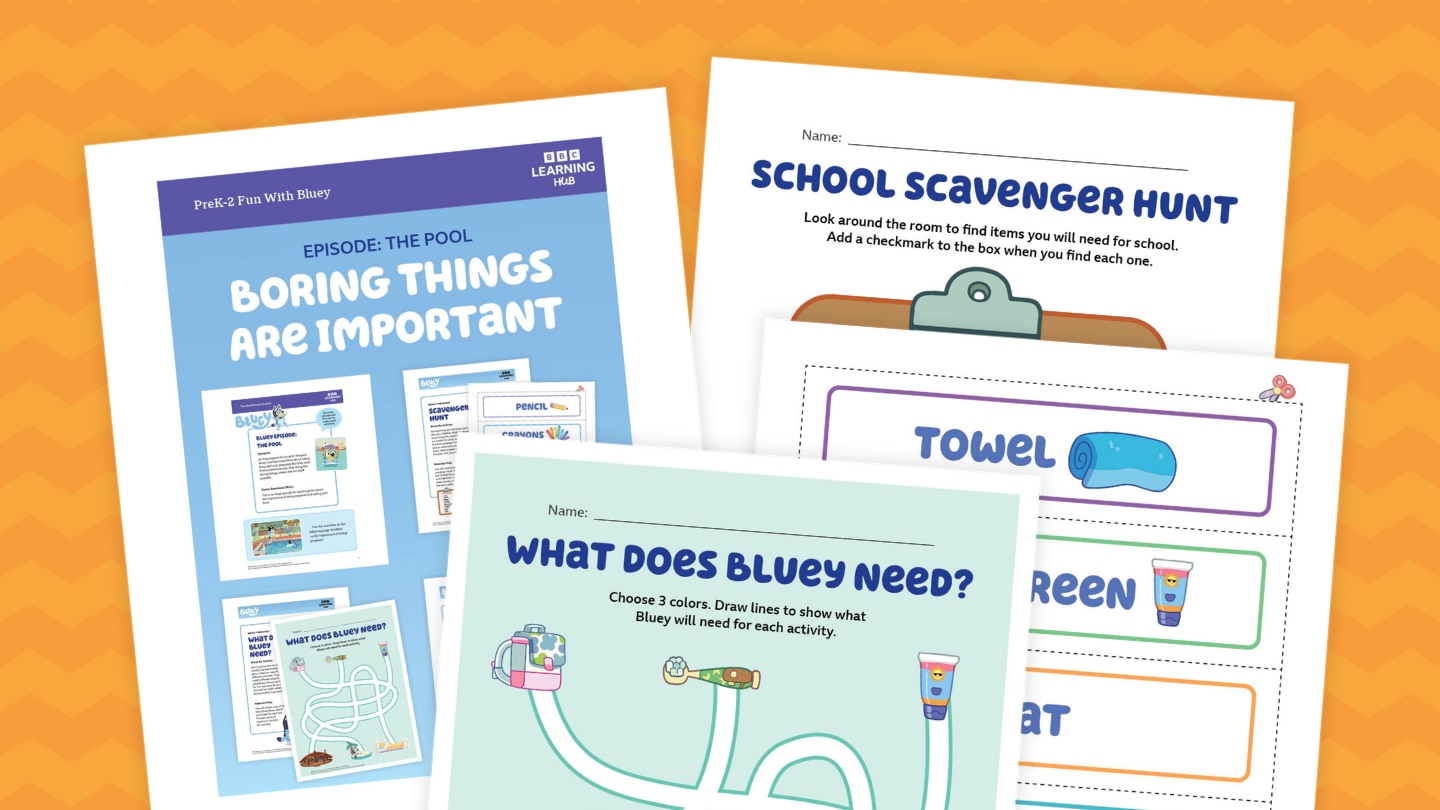
From brushing your teeth to packing the floaties, boring things are important! Try this lesson, which uses the Bluey episode "The Pool" as the kickoff to a classroom conversation about the importance of being prepared. The lesson includes printables for three activities in which kids go on a scavenger hunt to find everything they need to be successful for a day at school or the pool, complete a maze to match different objects to what Bluey should use them for, and figure out where Bluey and her family are going based on what they’ve packed.
The Pool Episode Summary: As they prepare for a trip to the pool, Bluey and Dad tease Mum about being fussy and over-prepared. But they soon find out the hard way that doing the boring things makes the fun stuff possible.
Watch the episode here! (Click here to watch in Australia.)
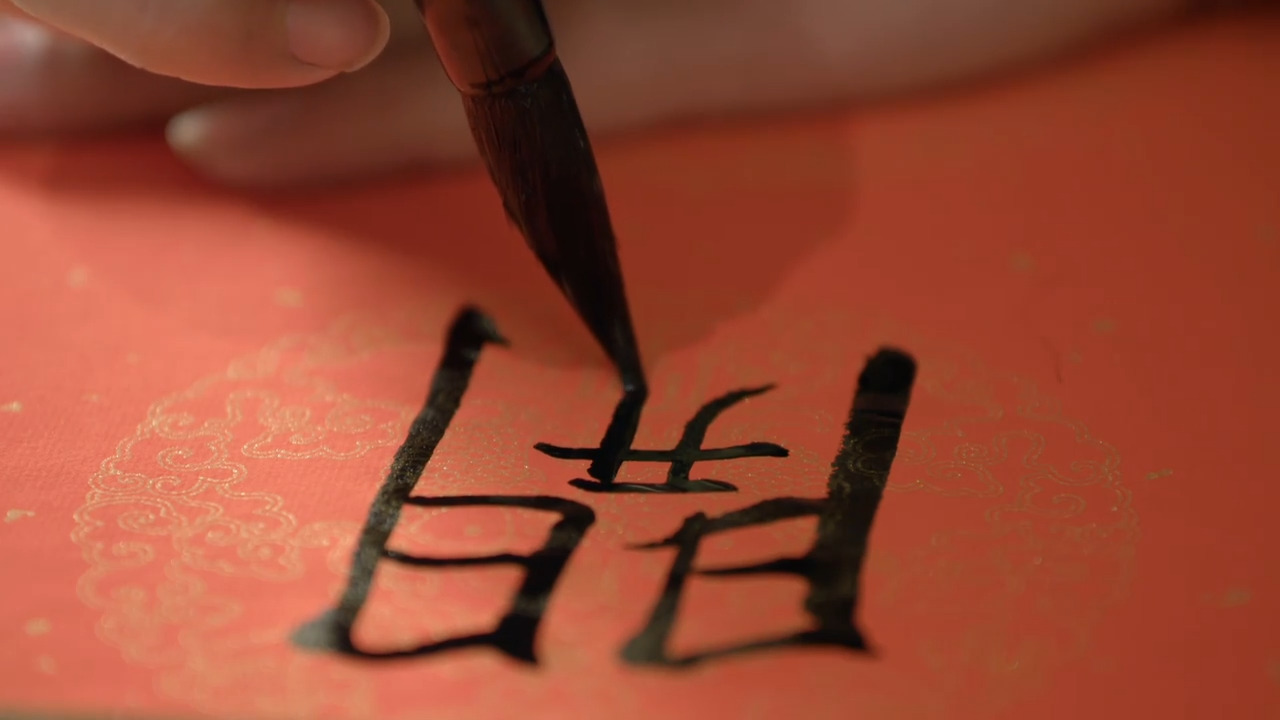
In Preparing for Chinese New Year, a family in Beijing prepares for Chinese New Year in 2016 by cleaning the house, getting haircuts, and preparing scrolls that they will hang outside their house. This video is excerpted from BBC’s Chinese New Year: The Biggest Celebration on Earth, a documentary series detailing the world's largest annual human migration (Chunyun), where over 1.5 billion people celebrate the Lunar New Year.
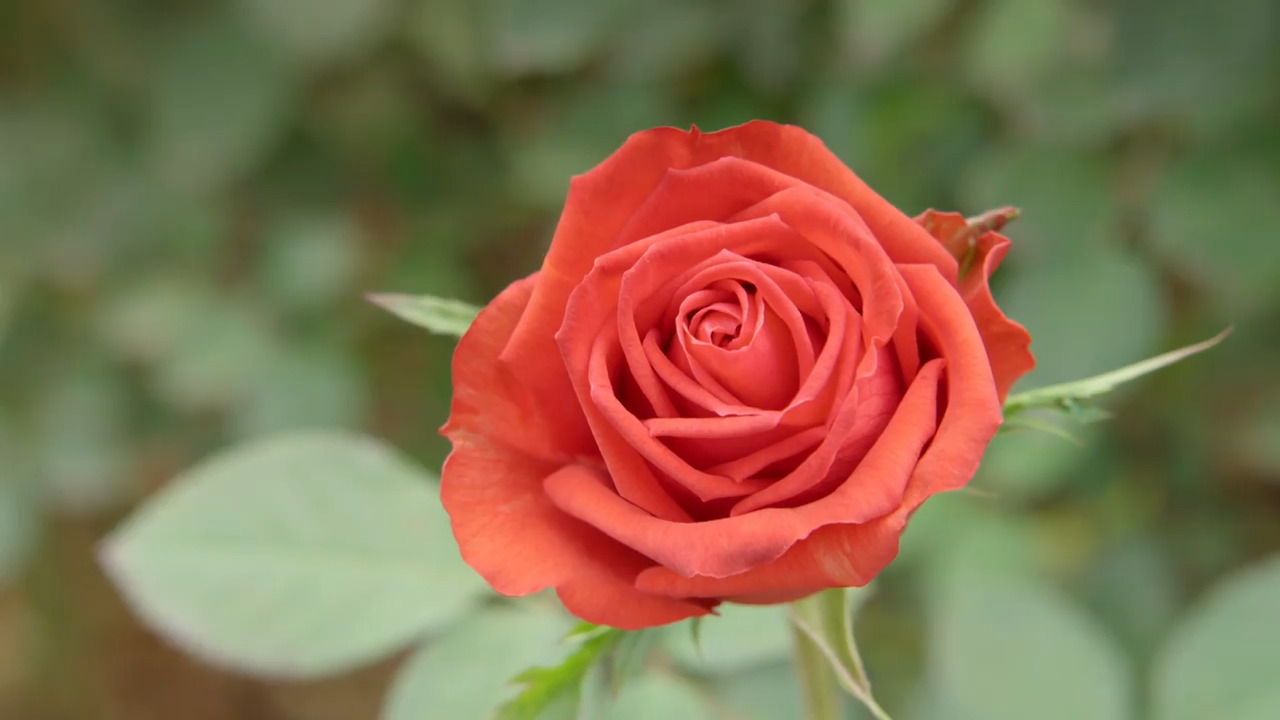
In Preparing Flowers for Chinese New Year, a farm in Kunming, China’s Spring City, prepares flowers for the busy Chinese New Year season. Flowers travel from farm to auction, where buyers purchase them for shops. This video is excerpted from BBC’s Chinese New Year: The Biggest Celebration on Earth, a documentary series detailing the world's largest annual human migration (Chunyun), where over 1.5 billion people celebrate the Lunar New Year.
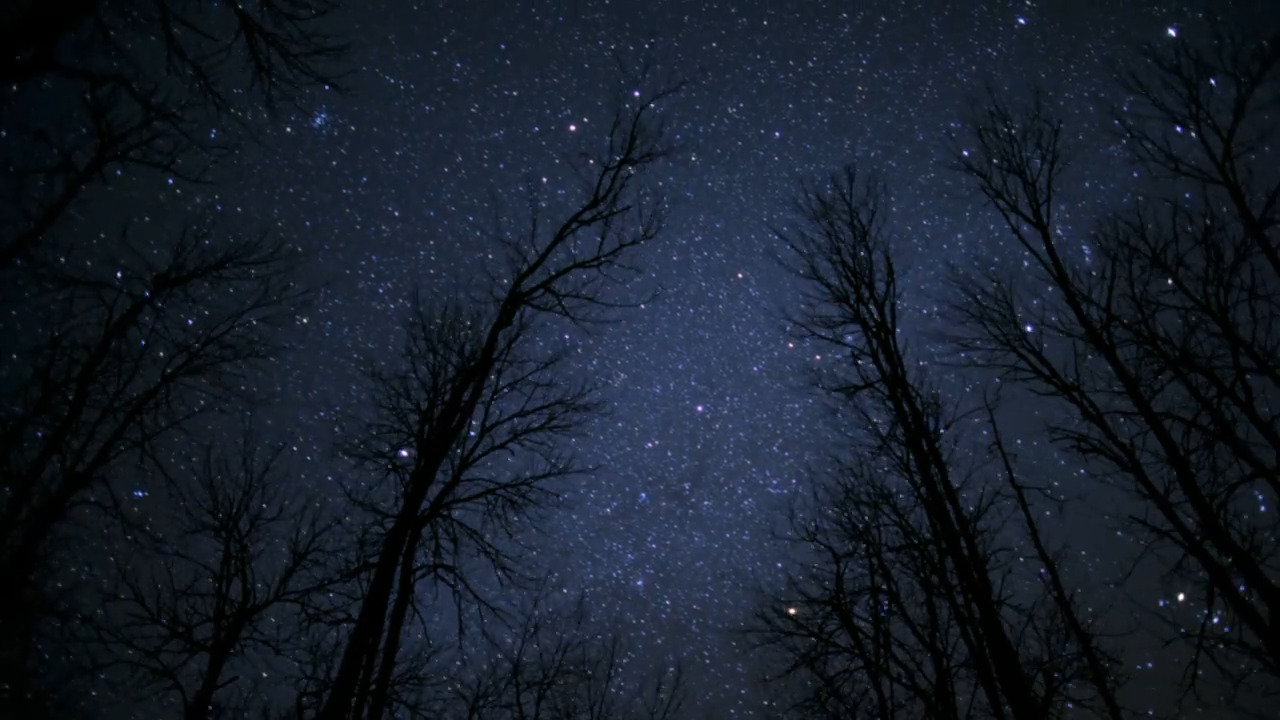
In How Trees Prepare for the Toughest Seasons, narrator Sir David Attenborough explains how trees survive harsh winter environments. In northern forests, trees prepare for the cold by pulling water into their trunks and creating a sugary antifreeze. But while most trees lose their leaves, pine trees can survive temperatures as low as -40°F and keep their needles all winter. One special type of pine, the bristlecone, can live for up to 5,000 years, with its cones growing for only six weeks each year. This video is excerpted from BBC's Life, a show that explores the remarkable strategies animals and plants use to ensure their survival.

Being an astronaut is no joke — for your brain and your body to be prepared, you need to train, not unlike sports or school. Want to train for a soccer match? You may need to go for runs or lift weights. Need to prepare for a math test? You may need to repeat your times tables. Going into space soon? You may need to put on a space suit and get strapped into a full-sized replica of the International Space Station, then submerged in a 12-meter (40-foot!) deep pool for six hours. At least, that’s what astronaut Rosemary Coogan did to make sure she was ready for her spacewalk.
Coogan was chosen from 22,000 applicants to become a European Space Agency astronaut and may be the first Englishwoman to set foot on the moon.
Space preparation is daunting, but she had teams of supporters like divers and control room workers to make sure she was safe. The spacewalk test is meant to make sure that Rosemary could survive the conditions off of earth, even when things don’t go according to plan.
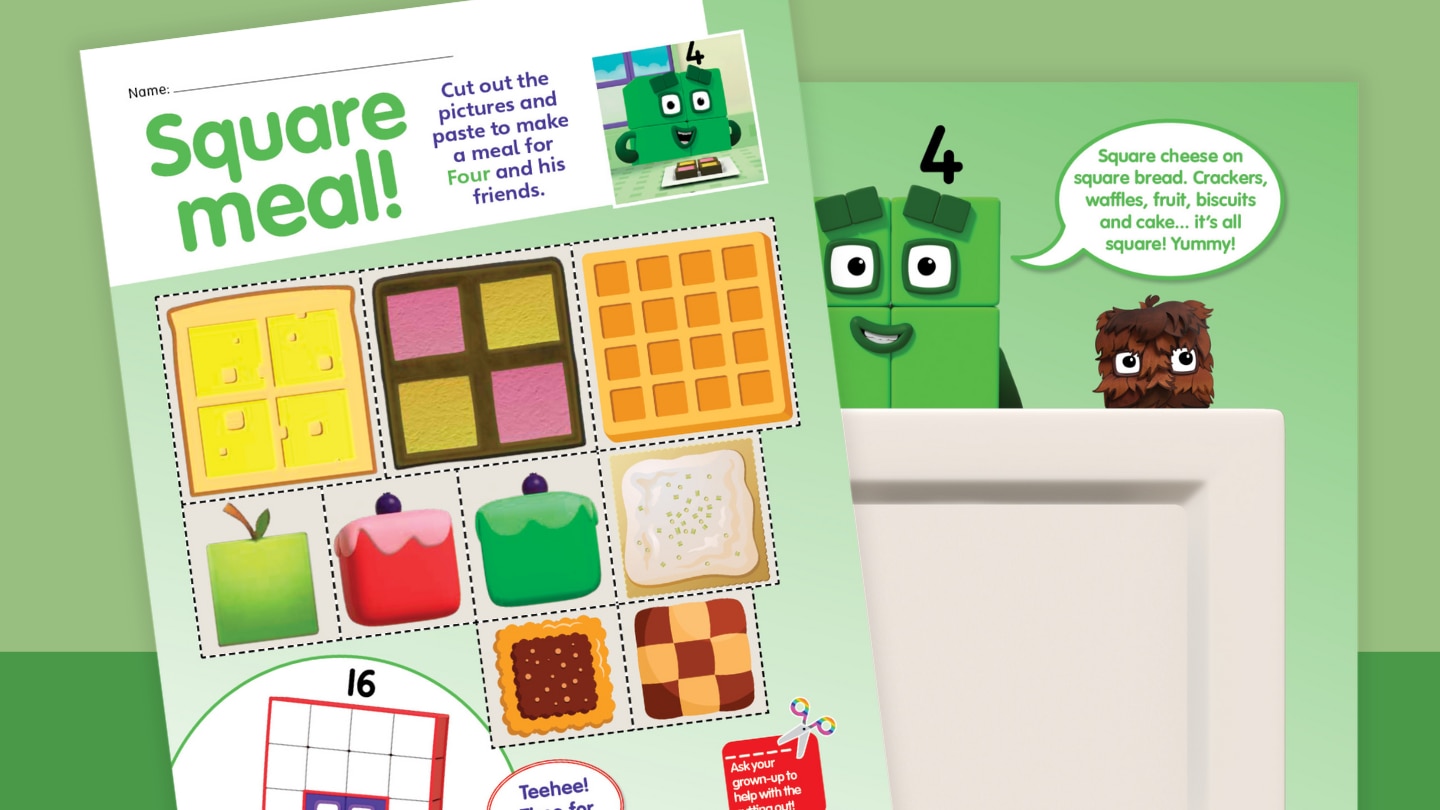
Cut out the pictures and paste to make a meal for Four and his friends. Square cheese on square bread. Crackers, waffles, fruit, biscuits and cake... it’s all square! Yummy!
Watch full episodes of Numberblocks on their official YouTube channel!
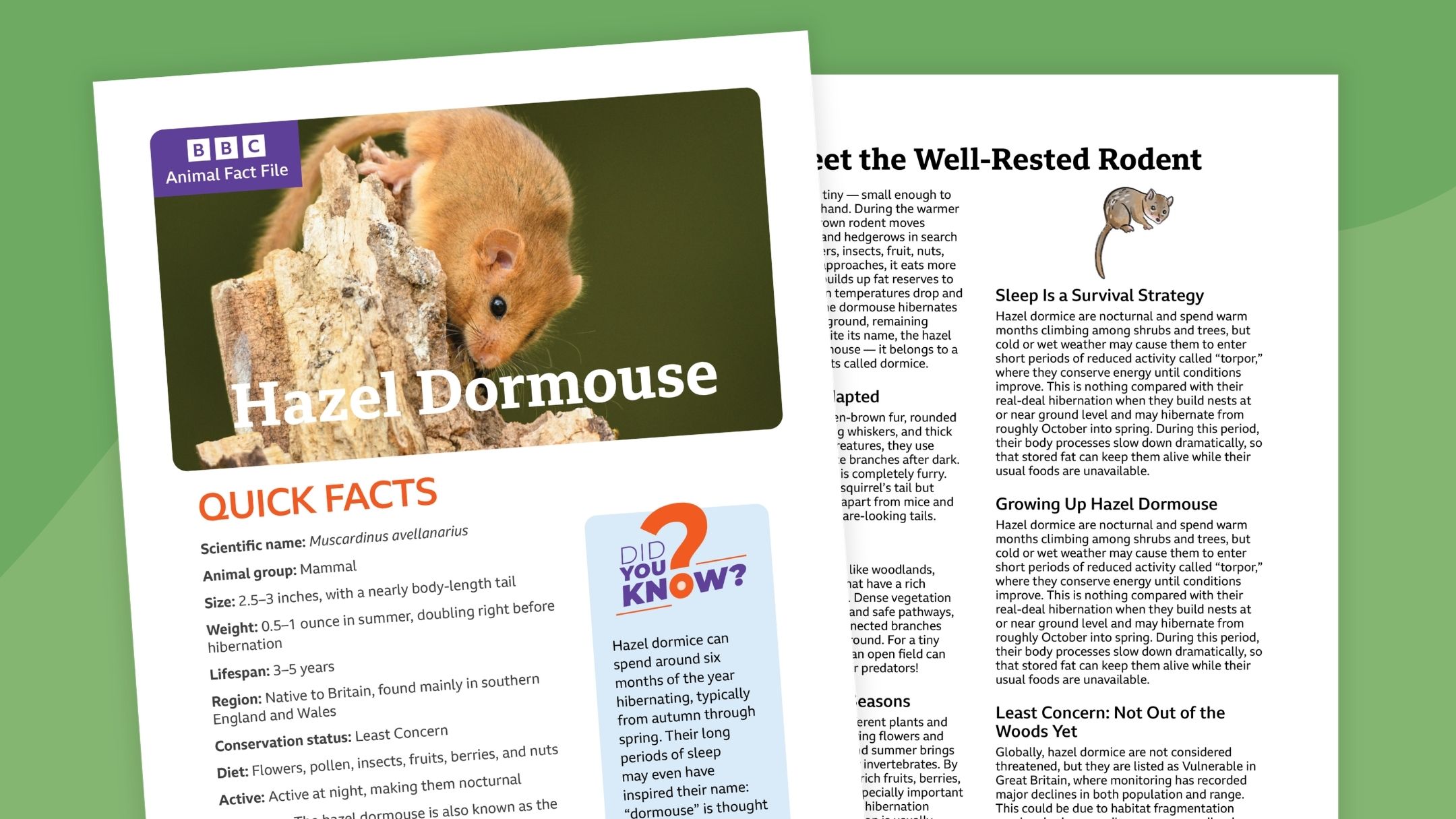
Could you sleep for six months and still have plenty of energy when you wake up? The hazel dormouse does just that, spending much of the colder part of the year in hibernation.
This tiny golden-brown rodent spends the warmer months climbing through trees and hedgerows, eating flowers, insects, berries, and nuts before preparing for winter. Discover how a dormouse’s furry tail and large eyes help it navigate after dark, why autumn is a race to build up energy reserves, and how its long winter sleep helps it survive when food is scarce. You'll also find out why these little climbers need connected woodlands and hedgerows to thrive.
Teachers and parents, you can use this fact file to:
- Introduce an animal, wildlife, or life science unit
- Support nonfiction reading and vocabulary practice
- Explore animal adaptations, behaviors, and habitats
- Compare animals and the ecosystems they live in
- Practice finding and organizing information from nonfiction texts
- Prepare students for animal research projects or presentations (use our animal report templates!)
- Connect science learning to conservation and environmental issues
- Pair with videos, articles, or other informational texts (see Related Resources below)
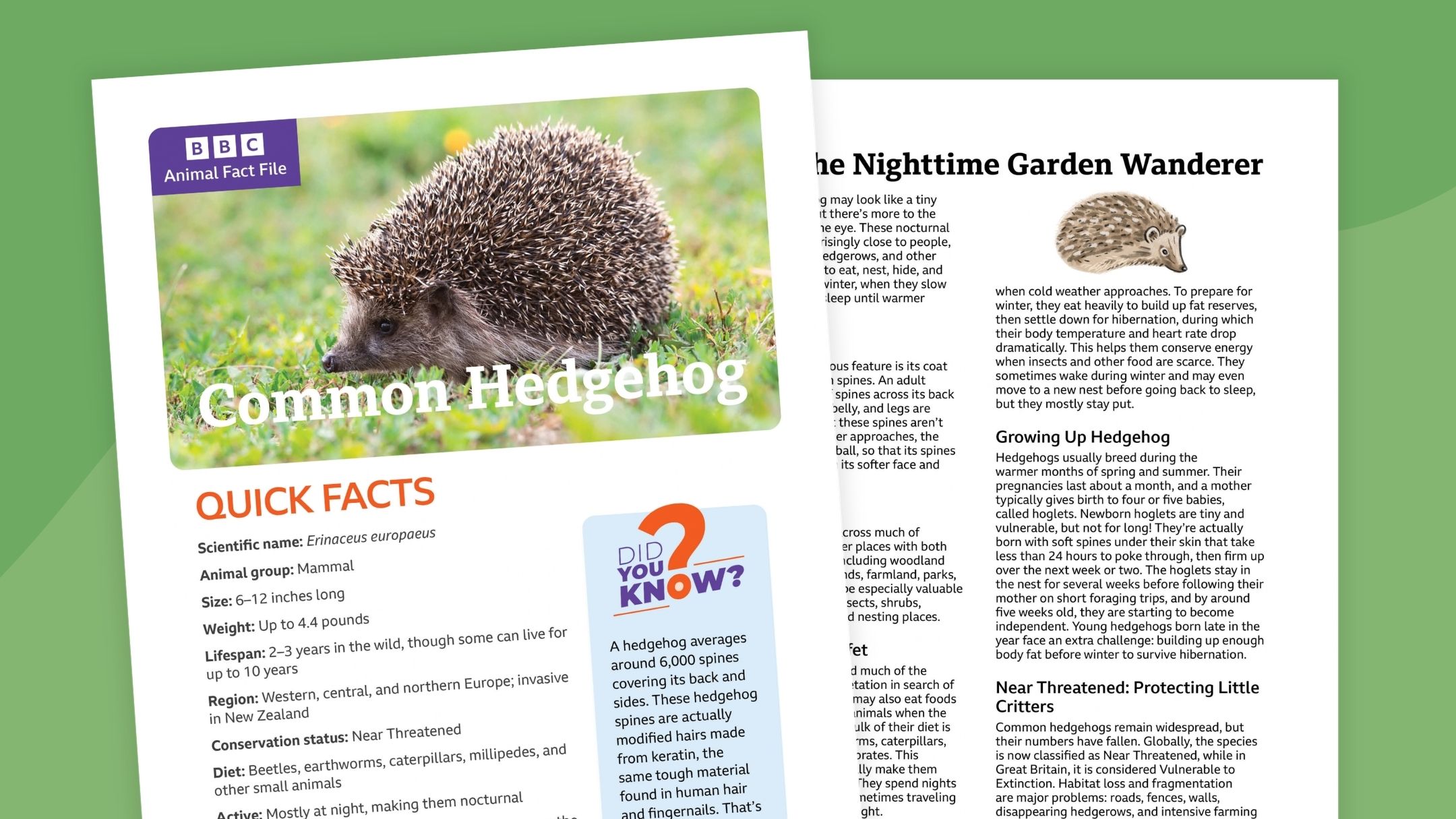
What animal looks like a tiny walking pincushion, sleeps through much of the day, and can roam more than a mile in a single night? Meet the common hedgehog!
From its prickly defenses to its nighttime adventures, the common hedgehog has plenty of tricks for making its way through the wild. Find out what life is like for a hedgehog after dark, what it eats, where it makes its home, and how it prepares for the cold months ahead. You'll also get a closer look at hoglets, hibernation, and the challenges these small mammals face as their habitats change.
Teachers and parents, you can use this fact file to:
- Introduce an animal, wildlife, or life science unit
- Support nonfiction reading and vocabulary practice
- Explore animal adaptations, behaviors, and habitats
- Compare animals and the ecosystems they live in
- Practice finding and organizing information from nonfiction texts
- Prepare students for animal research projects or presentations (use our animal report templates!)
- Connect science learning to conservation and environmental issues
- Pair with videos, articles, or other informational texts (see Related Resources below)
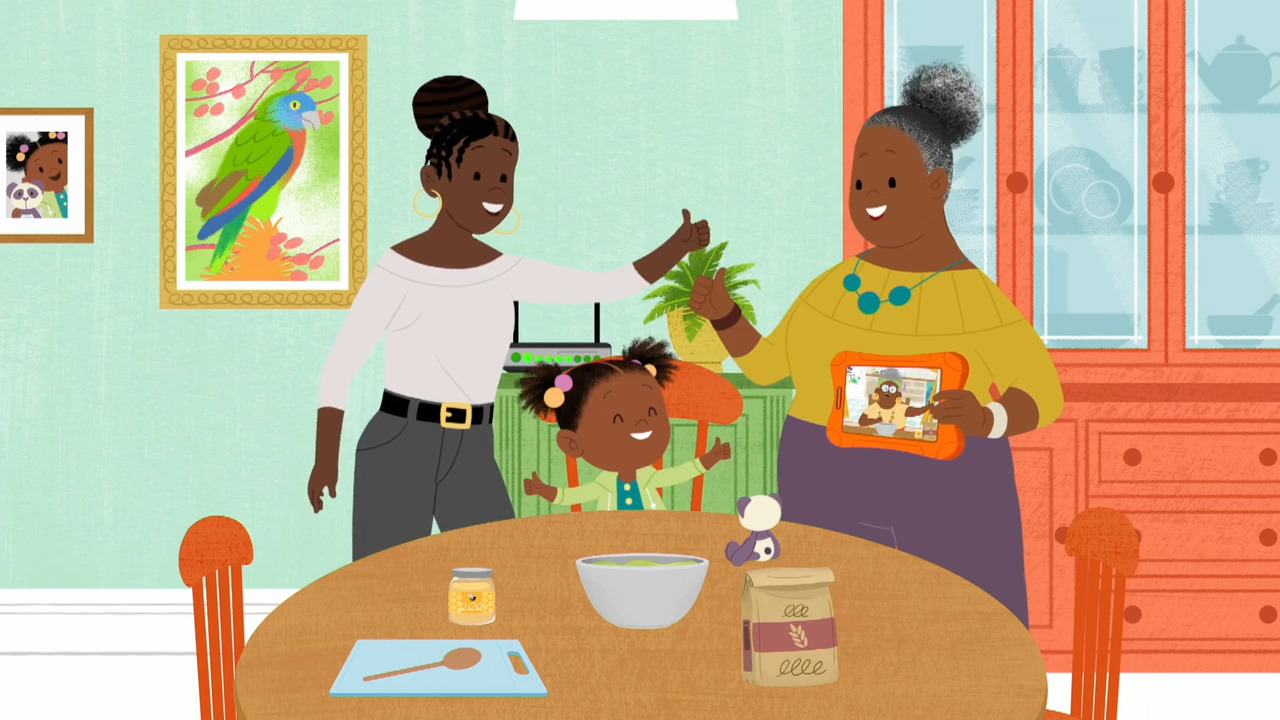
In JoJo and Gran Gran Celebrate Mother’s Day, four generations of JoJo’s family connect during a spa day. A real-life family prepares a celebration for their mom for Mother’s Day. This video is excerpted from BBC’s JoJo & Gran Gran, a children's animated television series following JoJo, an inquisitive and cheerful 4-and-a-half-year-old girl and her loving Gran Gran, who always has something new to teach her.

In Chunwan: The World’s Biggest Stage, performers have prepared for a year to participate in the largest televised event in China. The Chunwan, or Chinese Spring Festival Gala, is a collection of amazing acts. It is televised to the entire country and is watched by billions of people. This video is excerpted from BBC’s Chinese New Year: The Biggest Celebration on Earth, a documentary series detailing the world's largest annual human migration (Chunyun), where over 1.5 billion people celebrate the Lunar New Year.
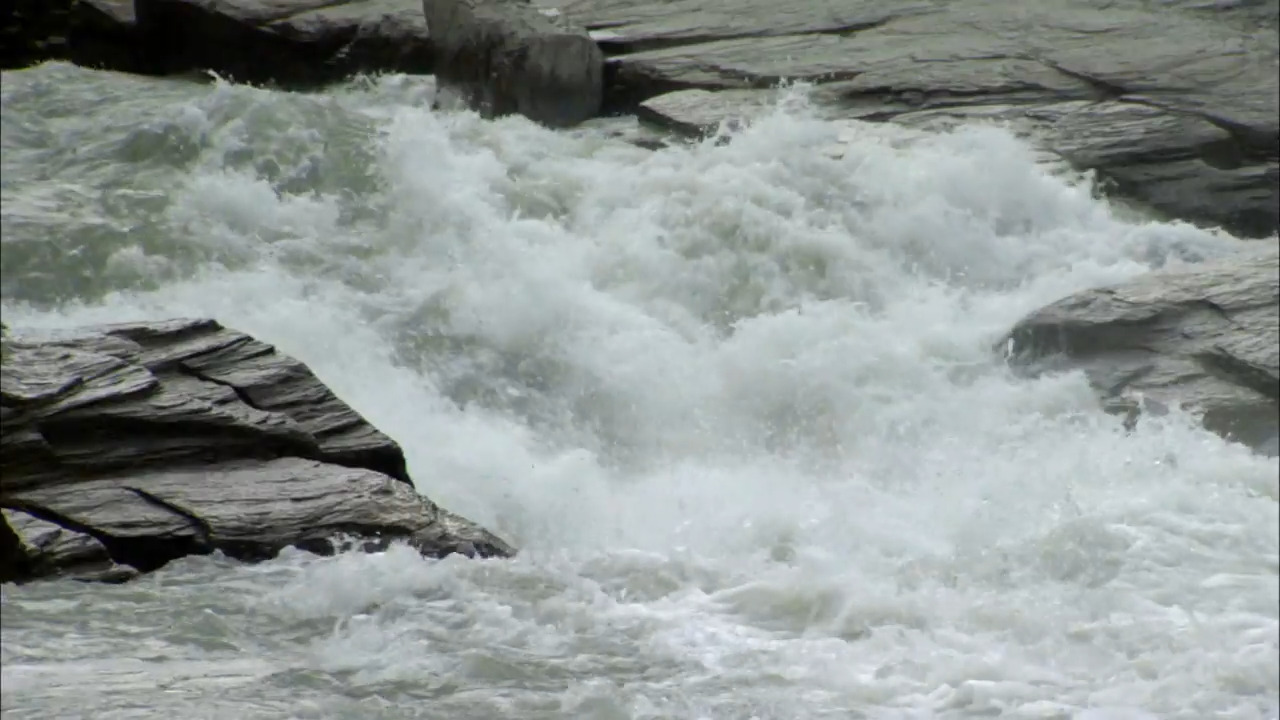
In Erosion and Evolution, geologist Iain Stewart explains that rivers and volcanoes have shaped the Earth in dramatic ways. Rivers sweep rock and debris with them as they head toward the ocean, preparing for new land to form downstream. Scientists have found the conditions that mimic those found when the Earth was young around volcanoes and hydrothermal vents. The changing amounts of ice on the planet also impact how modern man has adapted. This video is excerpted from BBC’s Earth: The Power of the Planet, a documentary series in which Dr. Iain Stewart discovers how Earth's forces can shape nature, species, and even the climate.
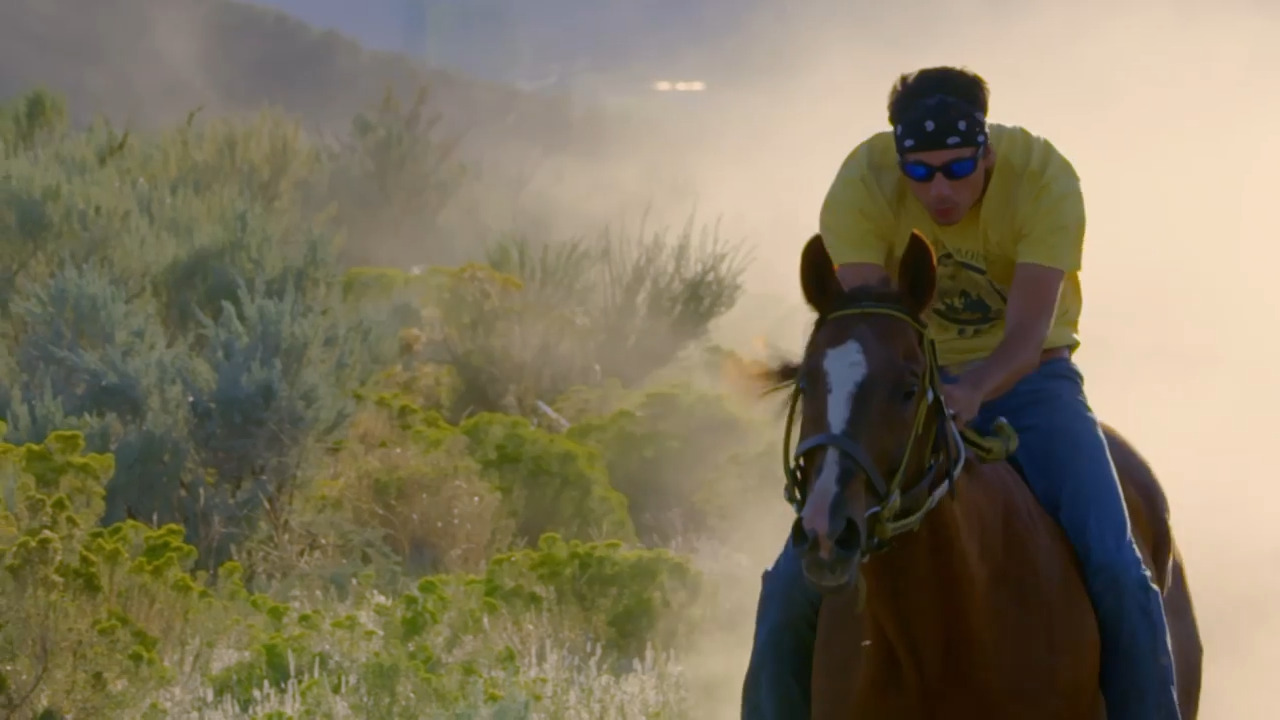
In Inside the Indian Relay Race, learn about the thrilling tradition of the Indian Relay, a horse race held in the Rockies. Oliver, a trainer, shares how he and his family prepare for the race, training for months to master the tricky skill of jumping from one horse to another — bareback! The relay is filled with excitement, as riders complete three laps while switching horses after each round. With skill, preparation, and a bit of tradition, Oliver and his family bring pride to their tribe as they race to victory! This video is excerpted from BBC’s Mountains: Life Above the Clouds, which showcases wildlife thriving in the world's highest mountains.
From brushing your teeth to packing the floaties, boring things are important! Try this lesson, which uses the Bluey episode "The Pool" as the kickoff to a classroom conversation about the importance of being prepared. The lesson includes printables for three activities in which kids go on a scavenger hunt to find everything they need to be successful for a day at school or the pool, complete a maze to match different objects to what Bluey should use them for, and figure out where Bluey and her family are going based on what they’ve packed.
The Pool Episode Summary: As they prepare for a trip to the pool, Bluey and Dad tease Mum about being fussy and over-prepared. But they soon find out the hard way that doing the boring things makes the fun stuff possible.
Watch the episode here! (Click here to watch in Australia.)
In Preparing for Chinese New Year, a family in Beijing prepares for Chinese New Year in 2016 by cleaning the house, getting haircuts, and preparing scrolls that they will hang outside their house. This video is excerpted from BBC’s Chinese New Year: The Biggest Celebration on Earth, a documentary series detailing the world's largest annual human migration (Chunyun), where over 1.5 billion people celebrate the Lunar New Year.
In Preparing Flowers for Chinese New Year, a farm in Kunming, China’s Spring City, prepares flowers for the busy Chinese New Year season. Flowers travel from farm to auction, where buyers purchase them for shops. This video is excerpted from BBC’s Chinese New Year: The Biggest Celebration on Earth, a documentary series detailing the world's largest annual human migration (Chunyun), where over 1.5 billion people celebrate the Lunar New Year.
In How Trees Prepare for the Toughest Seasons, narrator Sir David Attenborough explains how trees survive harsh winter environments. In northern forests, trees prepare for the cold by pulling water into their trunks and creating a sugary antifreeze. But while most trees lose their leaves, pine trees can survive temperatures as low as -40°F and keep their needles all winter. One special type of pine, the bristlecone, can live for up to 5,000 years, with its cones growing for only six weeks each year. This video is excerpted from BBC's Life, a show that explores the remarkable strategies animals and plants use to ensure their survival.
Being an astronaut is no joke — for your brain and your body to be prepared, you need to train, not unlike sports or school. Want to train for a soccer match? You may need to go for runs or lift weights. Need to prepare for a math test? You may need to repeat your times tables. Going into space soon? You may need to put on a space suit and get strapped into a full-sized replica of the International Space Station, then submerged in a 12-meter (40-foot!) deep pool for six hours. At least, that’s what astronaut Rosemary Coogan did to make sure she was ready for her spacewalk.
Coogan was chosen from 22,000 applicants to become a European Space Agency astronaut and may be the first Englishwoman to set foot on the moon.
Space preparation is daunting, but she had teams of supporters like divers and control room workers to make sure she was safe. The spacewalk test is meant to make sure that Rosemary could survive the conditions off of earth, even when things don’t go according to plan.
Cut out the pictures and paste to make a meal for Four and his friends. Square cheese on square bread. Crackers, waffles, fruit, biscuits and cake... it’s all square! Yummy!
Watch full episodes of Numberblocks on their official YouTube channel!
Could you sleep for six months and still have plenty of energy when you wake up? The hazel dormouse does just that, spending much of the colder part of the year in hibernation.
This tiny golden-brown rodent spends the warmer months climbing through trees and hedgerows, eating flowers, insects, berries, and nuts before preparing for winter. Discover how a dormouse’s furry tail and large eyes help it navigate after dark, why autumn is a race to build up energy reserves, and how its long winter sleep helps it survive when food is scarce. You'll also find out why these little climbers need connected woodlands and hedgerows to thrive.
Teachers and parents, you can use this fact file to:
- Introduce an animal, wildlife, or life science unit
- Support nonfiction reading and vocabulary practice
- Explore animal adaptations, behaviors, and habitats
- Compare animals and the ecosystems they live in
- Practice finding and organizing information from nonfiction texts
- Prepare students for animal research projects or presentations (use our animal report templates!)
- Connect science learning to conservation and environmental issues
- Pair with videos, articles, or other informational texts (see Related Resources below)
What animal looks like a tiny walking pincushion, sleeps through much of the day, and can roam more than a mile in a single night? Meet the common hedgehog!
From its prickly defenses to its nighttime adventures, the common hedgehog has plenty of tricks for making its way through the wild. Find out what life is like for a hedgehog after dark, what it eats, where it makes its home, and how it prepares for the cold months ahead. You'll also get a closer look at hoglets, hibernation, and the challenges these small mammals face as their habitats change.
Teachers and parents, you can use this fact file to:
- Introduce an animal, wildlife, or life science unit
- Support nonfiction reading and vocabulary practice
- Explore animal adaptations, behaviors, and habitats
- Compare animals and the ecosystems they live in
- Practice finding and organizing information from nonfiction texts
- Prepare students for animal research projects or presentations (use our animal report templates!)
- Connect science learning to conservation and environmental issues
- Pair with videos, articles, or other informational texts (see Related Resources below)
In JoJo and Gran Gran Celebrate Mother’s Day, four generations of JoJo’s family connect during a spa day. A real-life family prepares a celebration for their mom for Mother’s Day. This video is excerpted from BBC’s JoJo & Gran Gran, a children's animated television series following JoJo, an inquisitive and cheerful 4-and-a-half-year-old girl and her loving Gran Gran, who always has something new to teach her.
In Chunwan: The World’s Biggest Stage, performers have prepared for a year to participate in the largest televised event in China. The Chunwan, or Chinese Spring Festival Gala, is a collection of amazing acts. It is televised to the entire country and is watched by billions of people. This video is excerpted from BBC’s Chinese New Year: The Biggest Celebration on Earth, a documentary series detailing the world's largest annual human migration (Chunyun), where over 1.5 billion people celebrate the Lunar New Year.
In Erosion and Evolution, geologist Iain Stewart explains that rivers and volcanoes have shaped the Earth in dramatic ways. Rivers sweep rock and debris with them as they head toward the ocean, preparing for new land to form downstream. Scientists have found the conditions that mimic those found when the Earth was young around volcanoes and hydrothermal vents. The changing amounts of ice on the planet also impact how modern man has adapted. This video is excerpted from BBC’s Earth: The Power of the Planet, a documentary series in which Dr. Iain Stewart discovers how Earth's forces can shape nature, species, and even the climate.
In Inside the Indian Relay Race, learn about the thrilling tradition of the Indian Relay, a horse race held in the Rockies. Oliver, a trainer, shares how he and his family prepare for the race, training for months to master the tricky skill of jumping from one horse to another — bareback! The relay is filled with excitement, as riders complete three laps while switching horses after each round. With skill, preparation, and a bit of tradition, Oliver and his family bring pride to their tribe as they race to victory! This video is excerpted from BBC’s Mountains: Life Above the Clouds, which showcases wildlife thriving in the world's highest mountains.