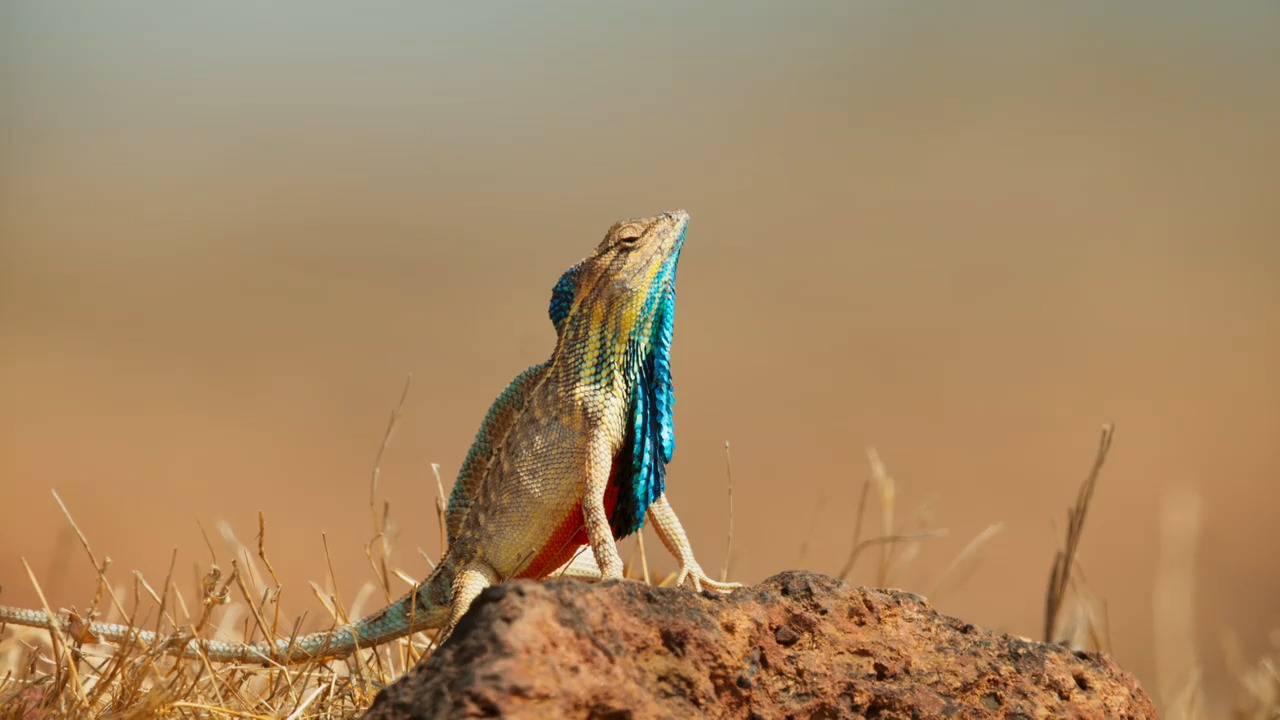
Guide your students on a journey through the desert ecosystem! From the sweeping sands of the Namib and Kalahari in southern Africa, to the dry heart of Australia’s Outback, and the rocky cold of the Gobi, deserts come in many forms.
✨ Perfect for grades 3–8, here’s what you need to bring ecosystems to life:
- Iconic BBC Videos: Share the clips on this page to introduce the location, plants, animals, and climate of the desert. (Don't miss the lions and lizards!) Brought to you by world-class BBC programs like Planet Earth, Wilderness With Simon Reeve, Africa, and Seven Worlds, One Planet.
- Free Printable: Use the Desert Brochure Template to help students pull it all together in an ecosystem report with facts they’ve learned (and a little extra research).
It’s everything you need to make ecosystems easy to teach and truly memorable for your students.
Why did the various wildlife species cross the road? To test the new heathland bridge!
It may look like a bridge that’s just unfinished, but the dirt and grass butting up against the pavement is very intentional.
This heathland bridge separating two commons is the first of its kind to include a network of natural routes that encourage species to reunite for the first time in over 40 years. Man, we would not remember ANYONE’S names! The bridge is home to mosses and vegetative grounds, as well as sand that could be a habitat to species like sand lizards, adders, foxes, deer, and bugs. Lots of bugs.
The bridge connects the heathland on either side, which the Wildlife Trusts are working to restore, so the aim of the bridge is to let wildlife move from side to side, building up the population and their resilience. But, it wasn’t as simple as leaving the bridge half-paved. Crews had to create the heathland by distributing acidic sand before adding areas of ground taken directly from larger heathland sites.
Deserts look empty. They are anything but.
From the sun-scorched dunes of the Sahara to the scrubby plains of Australia, desert animals have cracked one of nature's toughest puzzles: how to survive where water is scarce, temperatures are brutal, and food is hard to find. In this playlist, you'll meet the remarkable species that call these landscapes home — from the iconic camel and the lightning-fast hawk to the bounding kangaroo and the armored pangolin.
Each clip, drawn from landmark BBC series including Seven Worlds, One Planet and Planet Earth II, puts you face-to-face with real desert survival in action. Some animals store water and energy for enormous journeys across open terrain. Others hunt by night, move in short bursts, or use camouflage so good they practically disappear. Every strategy is different. Every one is extraordinary.
As you watch, think bigger: How do animals adapt to temperatures that would stop most creatures in their tracks? What physical traits make desert life not just possible, but thriving? And how do these species — predator and prey, reptile and mammal — depend on each other to keep desert ecosystems in balance?
This playlist won't just teach you about deserts. It will make you see them differently.
Meet one of the world's strangest reptiles — the seagoing iguana! First watch Marine Iguanas in the Galápagos Quiz, a short clip from the award-winning BBC series Planet Earth. Sir David Attenborough explains how these unique lizards have adapted to graze on underwater algae, a critical food source on this young, volcanic island in the Galápagos.
Once your students have watched the video, invite them to check for understanding with this quick, 8-question quiz!
Get ready to journey into some of the most extreme places on Earth — the deserts! From the towering dunes of the Namib and the sunbaked Kalahari to the rugged Australian Outback and the icy sands of the Gobi, these ecosystems are full of surprising life. After watching our videos, challenge your students to become ecosystem experts by creating their own colorful report filled with fascinating facts. (They’ll need to dig deeper with extra research, too!) Inside the brochure, students will uncover and share:
- Location of the ecosystem on a world map
- Adjectives that describe the ecosystem
- Three animals that live in the ecosystem
- Three plants that grow in the ecosystem
- The climate of the ecosystem
- What makes the ecosystem important
- Their favorite fun facts
Your students will summarize the most important details in their own words while keeping it clear and easy to understand. As they choose what to include, they’ll sharpen their ability to evaluate and combine information from different sources. Best of all, they’ll show off their creativity and communication skills by designing a brochure that’s as fun to read as it is informative!
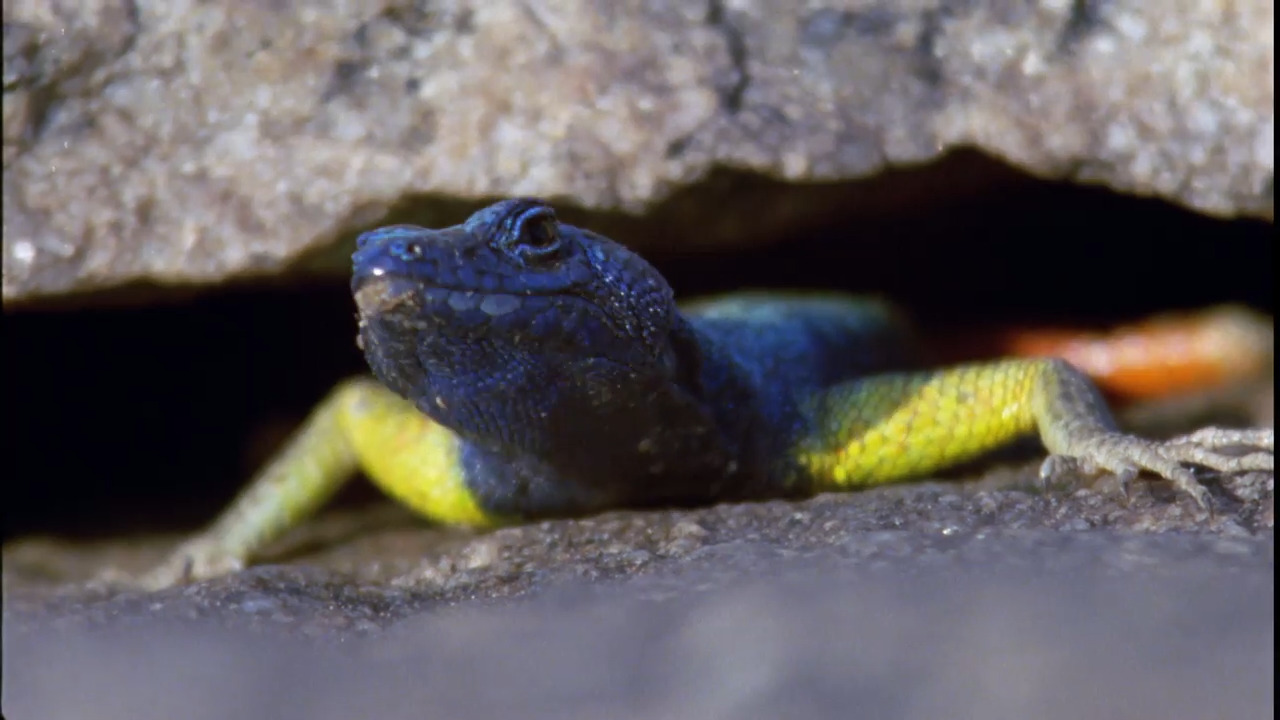
Introducing the incredibly acrobatic flat lizard! First watch Meet the Flat Lizard, a short clip from the award-winning BBC series Planet Earth. Sir David Attenborough takes you up close and personal with the multi-colored lizards who flaunt their bellies during territorial disputes. Watch as the lizards leap to eat a blackfly rising from the surface of water.
Once your students have watched the video, invite them to check for understanding with this quick, 8-question quiz!
Get ready to meet the cold-blooded superstars of the animal kingdom! This BBC playlist slinks, scuttles, and snaps through the fascinating lives of cobras, turtles, lizards, and alligators. Whether it's the mesmerizing hood dance of a cobra or the alligator's toothy grin, these clips are perfect for sparking curiosity (and maybe a little squeamishness) in your classroom. Warning: May cause students to say "Whoa!" and "Ew!" in equal measure.
Take your students on an unforgettable adventure to Australia with this video playlist! Explore the buzzing city of Sydney and its world-famous Opera House, marvel at breathtaking landscapes across the continent, and meet amazing native animals like kangaroos and koalas. Along the way, your class will discover what makes life “Down Under” so unique. These clips are perfect for sparking curiosity, inspiring questions, and bringing a little Aussie magic.
The article "Komodo Dragons: Nature’s Giant Venomous Predators" from BBC's Discover Wildlife delves into the biology and ecology of the world's largest lizard. It covers their impressive size, unique venomous bite, dietary habits, reproductive strategies, and the threats leading to their endangered status, including habitat loss and climate change.
The article "Masters of Regeneration: These Death-Defying Animals Can Regrow Body Parts Better Than Deadpool" from BBC's Discover Wildlife examines how some animals, including axolotls and starfish, have remarkable regenerative abilities. Scientists study these creatures to understand tissue regeneration, which could have implications for medical research.
The article "Iron-Coated Teeth: The Secret of Komodo Dragons" from BBC's Discover Wildlife reveals that Komodo dragons have iron-coated serrated teeth, allowing them to efficiently rip through prey. The discovery sheds light on the hunting techniques of these giant lizards and may even offer clues about the feeding habits of ancient predators like the T. rex.
In The Unique Plants and Animals of Cloud Forests, meet the rare Andean bear, climbing to the top of the canopy to reach food. While he struggles at first, because the only fruit is on the thinnest branches, a more experienced bear arrives to teach him how to reach it. This video is excerpted from BBC’s Seven Worlds, One Planet, a series featuring remarkable animal behavior from all seven continents.
Guide your students on a journey through the desert ecosystem! From the sweeping sands of the Namib and Kalahari in southern Africa, to the dry heart of Australia’s Outback, and the rocky cold of the Gobi, deserts come in many forms.
✨ Perfect for grades 3–8, here’s what you need to bring ecosystems to life:
- Iconic BBC Videos: Share the clips on this page to introduce the location, plants, animals, and climate of the desert. (Don't miss the lions and lizards!) Brought to you by world-class BBC programs like Planet Earth, Wilderness With Simon Reeve, Africa, and Seven Worlds, One Planet.
- Free Printable: Use the Desert Brochure Template to help students pull it all together in an ecosystem report with facts they’ve learned (and a little extra research).
It’s everything you need to make ecosystems easy to teach and truly memorable for your students.
Why did the various wildlife species cross the road? To test the new heathland bridge!
It may look like a bridge that’s just unfinished, but the dirt and grass butting up against the pavement is very intentional.
This heathland bridge separating two commons is the first of its kind to include a network of natural routes that encourage species to reunite for the first time in over 40 years. Man, we would not remember ANYONE’S names! The bridge is home to mosses and vegetative grounds, as well as sand that could be a habitat to species like sand lizards, adders, foxes, deer, and bugs. Lots of bugs.
The bridge connects the heathland on either side, which the Wildlife Trusts are working to restore, so the aim of the bridge is to let wildlife move from side to side, building up the population and their resilience. But, it wasn’t as simple as leaving the bridge half-paved. Crews had to create the heathland by distributing acidic sand before adding areas of ground taken directly from larger heathland sites.
Deserts look empty. They are anything but.
From the sun-scorched dunes of the Sahara to the scrubby plains of Australia, desert animals have cracked one of nature's toughest puzzles: how to survive where water is scarce, temperatures are brutal, and food is hard to find. In this playlist, you'll meet the remarkable species that call these landscapes home — from the iconic camel and the lightning-fast hawk to the bounding kangaroo and the armored pangolin.
Each clip, drawn from landmark BBC series including Seven Worlds, One Planet and Planet Earth II, puts you face-to-face with real desert survival in action. Some animals store water and energy for enormous journeys across open terrain. Others hunt by night, move in short bursts, or use camouflage so good they practically disappear. Every strategy is different. Every one is extraordinary.
As you watch, think bigger: How do animals adapt to temperatures that would stop most creatures in their tracks? What physical traits make desert life not just possible, but thriving? And how do these species — predator and prey, reptile and mammal — depend on each other to keep desert ecosystems in balance?
This playlist won't just teach you about deserts. It will make you see them differently.
Meet one of the world's strangest reptiles — the seagoing iguana! First watch Marine Iguanas in the Galápagos Quiz, a short clip from the award-winning BBC series Planet Earth. Sir David Attenborough explains how these unique lizards have adapted to graze on underwater algae, a critical food source on this young, volcanic island in the Galápagos.
Once your students have watched the video, invite them to check for understanding with this quick, 8-question quiz!
Get ready to journey into some of the most extreme places on Earth — the deserts! From the towering dunes of the Namib and the sunbaked Kalahari to the rugged Australian Outback and the icy sands of the Gobi, these ecosystems are full of surprising life. After watching our videos, challenge your students to become ecosystem experts by creating their own colorful report filled with fascinating facts. (They’ll need to dig deeper with extra research, too!) Inside the brochure, students will uncover and share:
- Location of the ecosystem on a world map
- Adjectives that describe the ecosystem
- Three animals that live in the ecosystem
- Three plants that grow in the ecosystem
- The climate of the ecosystem
- What makes the ecosystem important
- Their favorite fun facts
Your students will summarize the most important details in their own words while keeping it clear and easy to understand. As they choose what to include, they’ll sharpen their ability to evaluate and combine information from different sources. Best of all, they’ll show off their creativity and communication skills by designing a brochure that’s as fun to read as it is informative!
Introducing the incredibly acrobatic flat lizard! First watch Meet the Flat Lizard, a short clip from the award-winning BBC series Planet Earth. Sir David Attenborough takes you up close and personal with the multi-colored lizards who flaunt their bellies during territorial disputes. Watch as the lizards leap to eat a blackfly rising from the surface of water.
Once your students have watched the video, invite them to check for understanding with this quick, 8-question quiz!
Get ready to meet the cold-blooded superstars of the animal kingdom! This BBC playlist slinks, scuttles, and snaps through the fascinating lives of cobras, turtles, lizards, and alligators. Whether it's the mesmerizing hood dance of a cobra or the alligator's toothy grin, these clips are perfect for sparking curiosity (and maybe a little squeamishness) in your classroom. Warning: May cause students to say "Whoa!" and "Ew!" in equal measure.
Take your students on an unforgettable adventure to Australia with this video playlist! Explore the buzzing city of Sydney and its world-famous Opera House, marvel at breathtaking landscapes across the continent, and meet amazing native animals like kangaroos and koalas. Along the way, your class will discover what makes life “Down Under” so unique. These clips are perfect for sparking curiosity, inspiring questions, and bringing a little Aussie magic.
The article "Komodo Dragons: Nature’s Giant Venomous Predators" from BBC's Discover Wildlife delves into the biology and ecology of the world's largest lizard. It covers their impressive size, unique venomous bite, dietary habits, reproductive strategies, and the threats leading to their endangered status, including habitat loss and climate change.
The article "Masters of Regeneration: These Death-Defying Animals Can Regrow Body Parts Better Than Deadpool" from BBC's Discover Wildlife examines how some animals, including axolotls and starfish, have remarkable regenerative abilities. Scientists study these creatures to understand tissue regeneration, which could have implications for medical research.
The article "Iron-Coated Teeth: The Secret of Komodo Dragons" from BBC's Discover Wildlife reveals that Komodo dragons have iron-coated serrated teeth, allowing them to efficiently rip through prey. The discovery sheds light on the hunting techniques of these giant lizards and may even offer clues about the feeding habits of ancient predators like the T. rex.
In The Unique Plants and Animals of Cloud Forests, meet the rare Andean bear, climbing to the top of the canopy to reach food. While he struggles at first, because the only fruit is on the thinnest branches, a more experienced bear arrives to teach him how to reach it. This video is excerpted from BBC’s Seven Worlds, One Planet, a series featuring remarkable animal behavior from all seven continents.