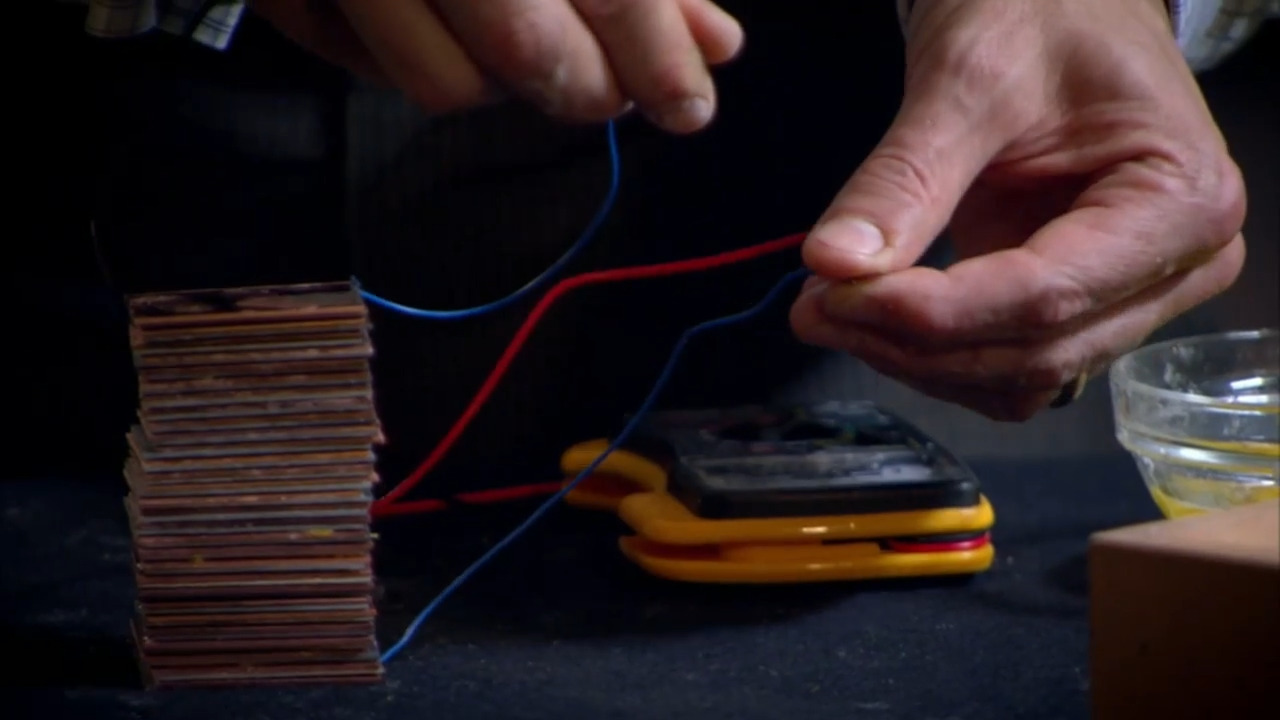
In The Role of One Rudimentary Battery in Transforming the World, narrator Michael Mosley uncovers the story of the first battery. It begins with a letter in 1800 with simple instructions from Italian scientist Alessandro Volta on how to make an artificial torpedo fish, and ends in a classroom where Hans Christian Oersted took it one step further, noticing how the battery current created magnetic fields. The electric telegraph and using steam power weren’t far behind, transforming the world as we knew it. This video is excerpted from BBC's The Story of Science, in which Michael Mosley takes an informative and ambitious journey exploring how the evolution of scientific understanding is intimately interwoven with society's historical path.

In The Go Jetters' Hydroelectric Adventure at Niagara Falls, the Go Jetters crew goes on an adventure to the incredible Niagara Falls. This huge waterfall isn’t just beautiful — it helps make electricity too! Watch how the fast-flowing water spins a giant wheel to turn water power into electric power, helping both the United States and Canada stay powered up! This video is excerpted from BBC’s Go Jetters, a series that follows the adventures of four plucky international heroes as they travel the globe visiting the world’s most famous landmarks with their friend and mentor, Ubercorn, a disco-dancing unicorn.

The article "Benjamin Franklin’s Bright Ideas: From Lightning Rods to Bifocals" from BBC's HistoryExtra highlights Franklin’s curious mind and lifelong passion for learning. It explains how he used science and creativity to develop useful inventions like the lightning rod, bifocal glasses, and even an unspillable soup bowl, while also uncovering the electric nature of lightning with his famous kite experiment.
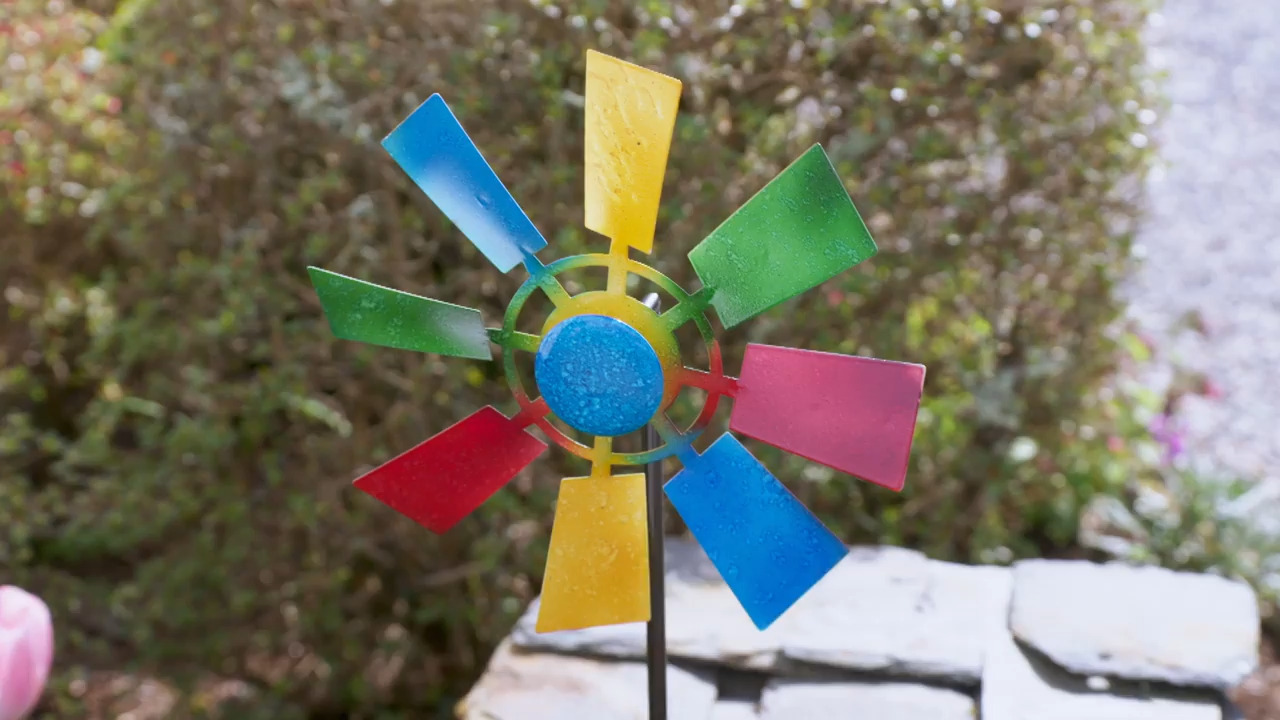
In Whoosh! Using the Wind, Ranger Hamza and the Ramblers explore a garden. Tag along as they see how the wind helps dry clothes and move a windmill and learn how the wind can help us use less electricity. This video is excerpted from BBC's Ranger Hamza’s Eco Quest, a nature exploration show in which Ranger Hamza and the Ramblers go on quests to discover nature’s wonders and the important role they play in our environment.
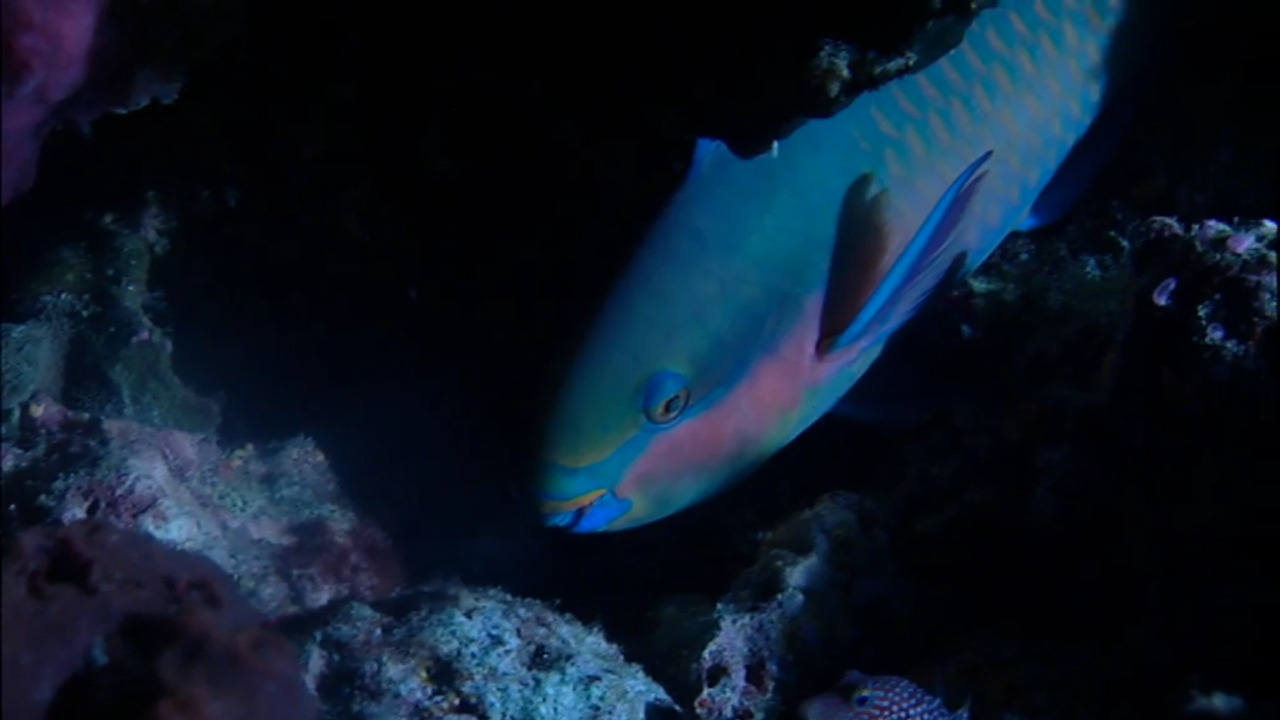
In Nightfall on the Coral Reef, narrator Sir David Attenborough explains how animals survive on the coral reef at night. Watch how manta rays hunt at night. This video is excerpted from BBC’s Blue Planet, a definitive documentary series diving into the mysterious depths of the sea to discover the natural history of the world’s oceans and the rarely seen marine life that reside there.
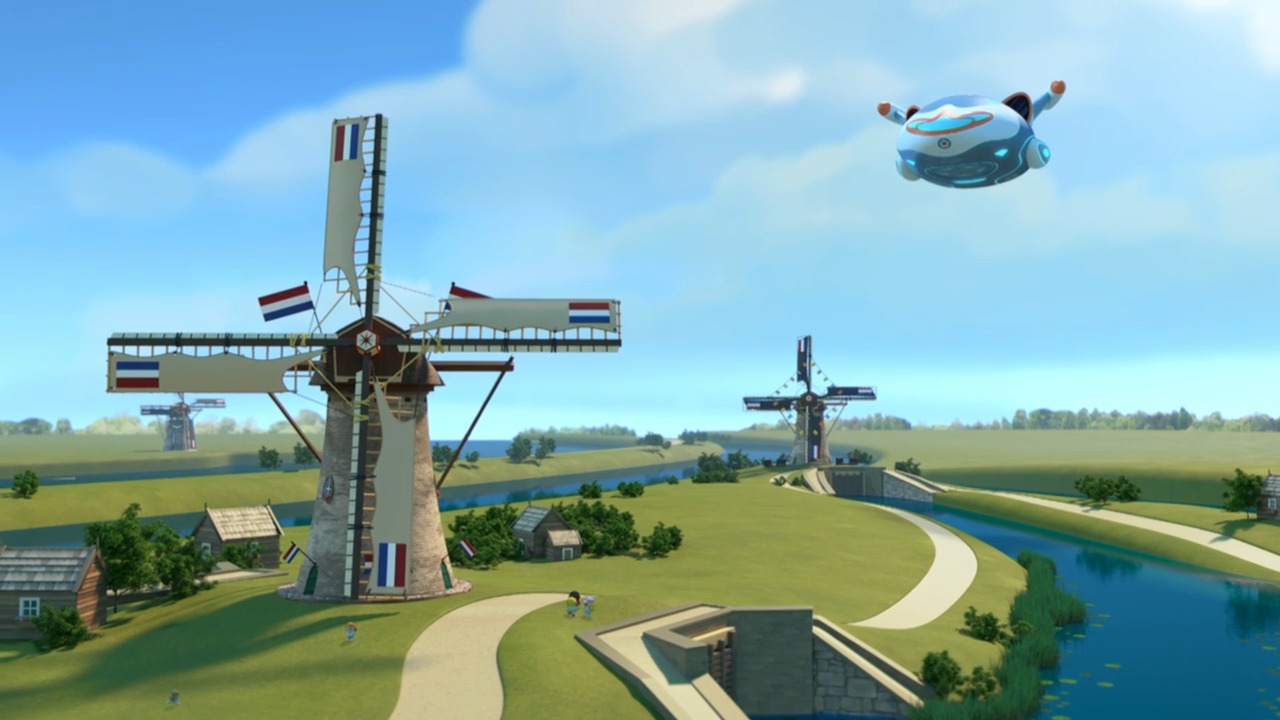
In The Go Jetters Witness Windmills and Water Wonders in the Netherlands, the Go Jetters crew explores a historic windmill during National Mill Day in the Netherlands. Ubercorn shares funky facts about how the Netherlands manages its low-lying landscape using pumps and drainage systems. This video is excerpted from BBC’s Go Jetters, a series that follows the adventures of four international heroes as they travel the globe visiting landmarks and solving environmental problems with Ubercorn, a disco-dancing unicorn.

Discover the beauty of Canada! Take your class on a thrilling journey through Canada’s waterfalls, forests, and frozen wilds with this BBC playlist. From beluga whales to meteor strikes and snowy adventures, these clips bring science and geography to life — no parka required!
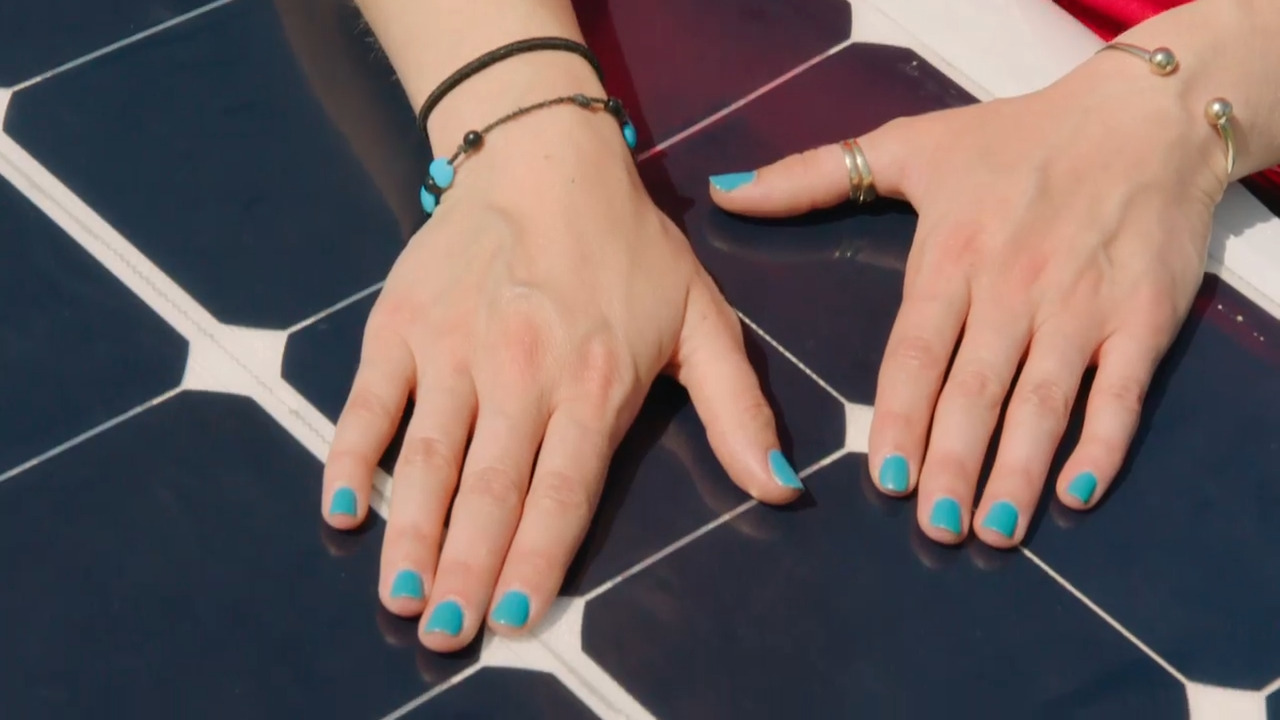
In The Power of Electric Machines, presenter and motorbike racer Grace Webb examines three machines powered by electricity. From a very quiet motocross bike to a solar-powered car (and even an electric hackney carriage taxi!), discover the power of electric vehicles. This video is excerpted from BBC’s Grace’s Amazing Machines, a children’s show that introduces kids to some of the biggest, fastest, and most amazing machines in the world.
You’ve probably heard your parents (and everybody else) complain about insurance. And that’s fair, it’s expensive! Especially when it comes to electric cars, whose owners often pay higher more for insurance than drivers of more conventional cars. But why is that? Why are people being punished for trying to use less gas? Why does the cruel world continue to forsake us?!
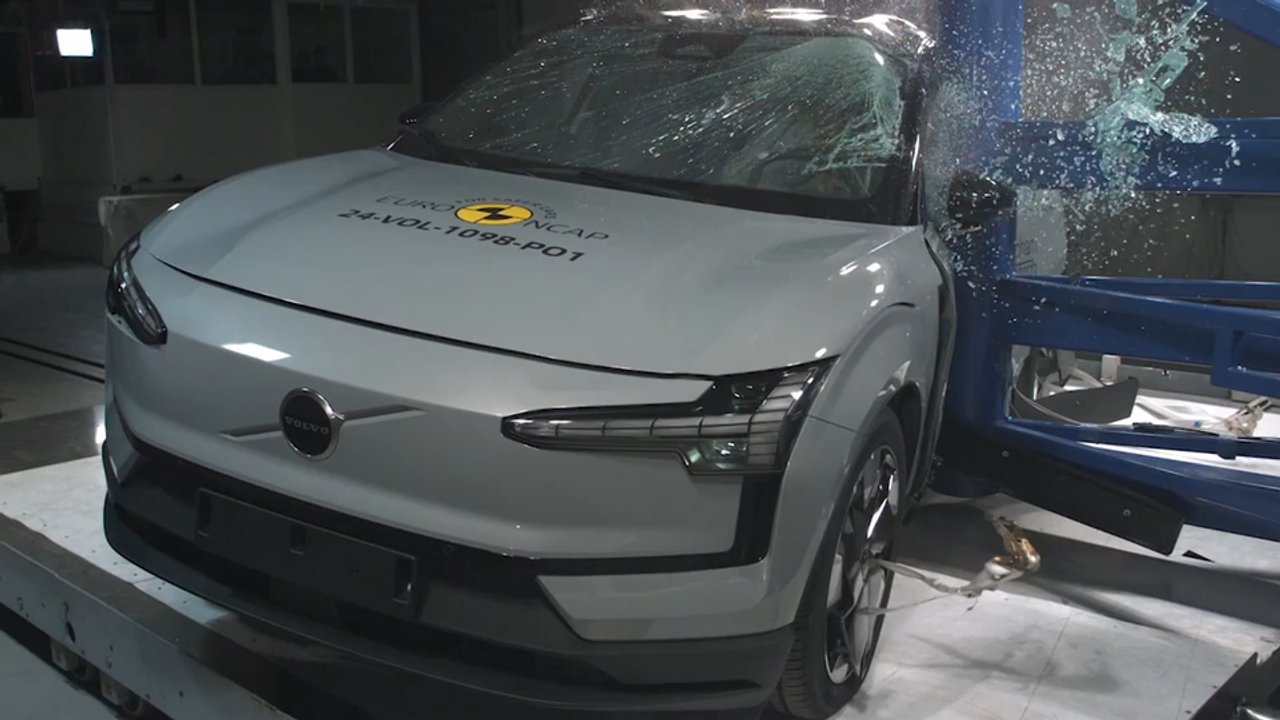
Well, researchers investigated exactly that… the insurance thing, not the greater, overarching “cruel world” question. The team at a testing lab staged a crash at just 10 kilometers (or about 5 miles) per hour. Not exactly the crash that’d have you gripping your seat in a nail-biter of an action movie, but important for research. From the outside, the damage looked minor, but underneath, the high-voltage charging port had moved and some of its components had broken.
The problem was that the damaged charging components formed part of a much larger unit. So, instead of replacing one small broken piece, technicians would need to replace the charger and some of its cabling. One component alone was priced in the thousands, and leaving it out would render the car pretty useless.
It’s great that modern electric vehicles already have to meet high safety standards, but the concern is how expensive and difficult they can be to repair after relatively minor accidents. Experts say manufacturers need to design future EVs with repair in mind, protecting expensive components and making individual parts easier to replace. Seems easy enough… right?
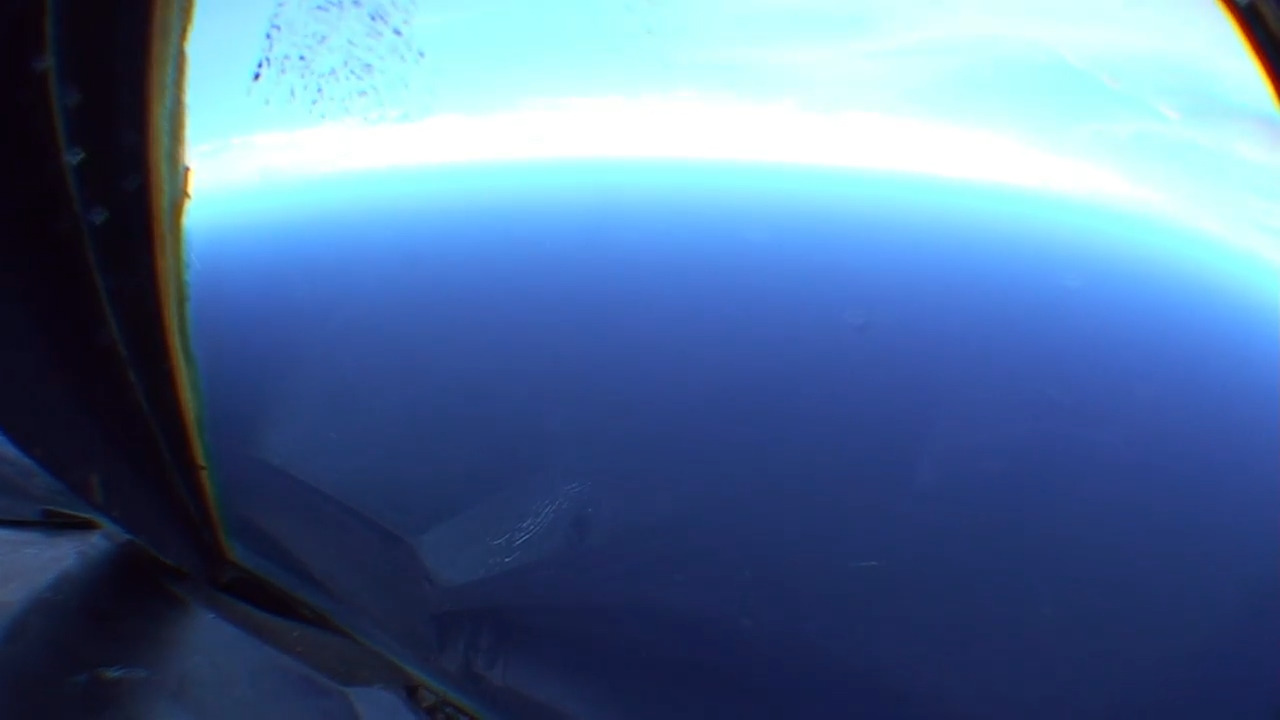
In Witness the Thin Blue Line, Professor Brian Cox experiences a vertical take-off on the English Electric Lightning, which travels 11 miles into the upper edge of Earth’s atmosphere, where the atmosphere appears as a delicate "thin blue line" separating Earth from space. As the aircraft soars to the edge of space, gain a new perspective on the vital role of Earth’s atmosphere in sustaining life and protecting against the harshness of space. This video is excerpted from BBC’s Wonders of the Solar System, a spellbinding documentary series that explores the most extreme locations on Earth to explain how the laws of physics carved natural wonders across the Solar System.
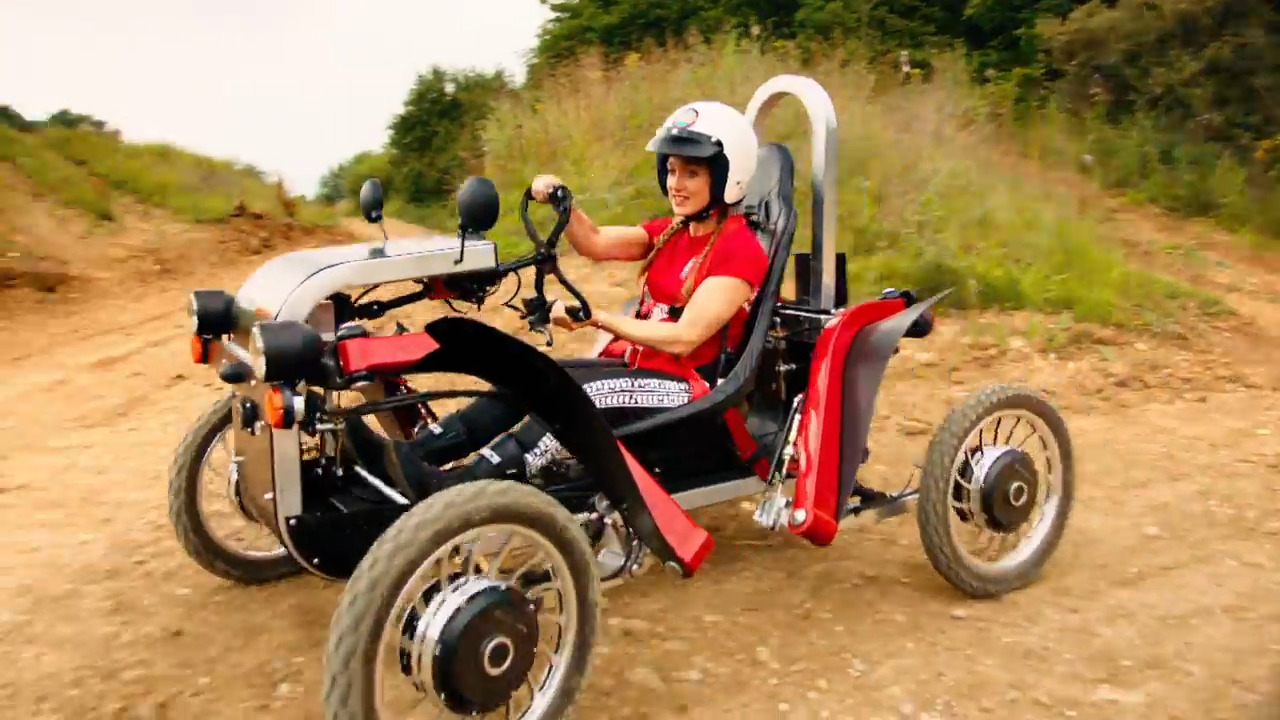
In Off-Roading on the E-Spider, presenter and motorbike racer Grace Webb explains the unique features of this electric vehicle. With its unique design, the E-Spider can cover all sorts of terrain without flipping over. This video is excerpted from BBC’s Grace’s Amazing Machines, a children’s show that introduces kids to some of the biggest, fastest, and most amazing machines in the world.

It’s officially the “Beijing International Automotive Exhibition,” but its friends call it “Auto China,” and it’s now the largest car show in the world. Nearly 1000 companies flock to the exhibits taking up more than 380,000 square meters, or over 50 football fields! Or 1,246,719 feet and 50 soccer fields, if you’re from America! Or 9,329,989 beep-boop-zoinks and 50 astro-space-ball fields if you’re a Martian from outer space! Any way you spin it, this car show is a big deal, and there were two standout trends.
The first was electric vehicles. There’s always been an issue with charging, as makers have tried to maximize how far cars can travel on single charge while minimizing how long that charge takes. Now, a company called BYD claims to have an ultra-fast charging system that can provide 400 km of range with only 5 minutes of charging. What’s more, it’s designed to operate under extreme weather conditions. Since batteries are usually sensitive to high or low temperatures, addressing this is a major step in making electric vehicles as reliable as gas cars.
The other big topic was also fully autonomous, or self-driving cars. The company Geely developed a self-driving car built specifically for ride-hailing, so there’s no steering wheel or driver’s seat. That means you can pick your nose without fear of the driver judging you! Xpeng’s driverless car uses a combination of lasers, radar, and cameras to build a real time picture of the road, but we hope it works just as well in the clouds, because they may be extending this technology into flying cars as early as next year. It’s a bird! It’s a plane! No, it’s just my Uber! That’s one way to beat traffic.
In The Role of One Rudimentary Battery in Transforming the World, narrator Michael Mosley uncovers the story of the first battery. It begins with a letter in 1800 with simple instructions from Italian scientist Alessandro Volta on how to make an artificial torpedo fish, and ends in a classroom where Hans Christian Oersted took it one step further, noticing how the battery current created magnetic fields. The electric telegraph and using steam power weren’t far behind, transforming the world as we knew it. This video is excerpted from BBC's The Story of Science, in which Michael Mosley takes an informative and ambitious journey exploring how the evolution of scientific understanding is intimately interwoven with society's historical path.
In The Go Jetters' Hydroelectric Adventure at Niagara Falls, the Go Jetters crew goes on an adventure to the incredible Niagara Falls. This huge waterfall isn’t just beautiful — it helps make electricity too! Watch how the fast-flowing water spins a giant wheel to turn water power into electric power, helping both the United States and Canada stay powered up! This video is excerpted from BBC’s Go Jetters, a series that follows the adventures of four plucky international heroes as they travel the globe visiting the world’s most famous landmarks with their friend and mentor, Ubercorn, a disco-dancing unicorn.
The article "Benjamin Franklin’s Bright Ideas: From Lightning Rods to Bifocals" from BBC's HistoryExtra highlights Franklin’s curious mind and lifelong passion for learning. It explains how he used science and creativity to develop useful inventions like the lightning rod, bifocal glasses, and even an unspillable soup bowl, while also uncovering the electric nature of lightning with his famous kite experiment.
In Whoosh! Using the Wind, Ranger Hamza and the Ramblers explore a garden. Tag along as they see how the wind helps dry clothes and move a windmill and learn how the wind can help us use less electricity. This video is excerpted from BBC's Ranger Hamza’s Eco Quest, a nature exploration show in which Ranger Hamza and the Ramblers go on quests to discover nature’s wonders and the important role they play in our environment.
In Nightfall on the Coral Reef, narrator Sir David Attenborough explains how animals survive on the coral reef at night. Watch how manta rays hunt at night. This video is excerpted from BBC’s Blue Planet, a definitive documentary series diving into the mysterious depths of the sea to discover the natural history of the world’s oceans and the rarely seen marine life that reside there.
In The Go Jetters Witness Windmills and Water Wonders in the Netherlands, the Go Jetters crew explores a historic windmill during National Mill Day in the Netherlands. Ubercorn shares funky facts about how the Netherlands manages its low-lying landscape using pumps and drainage systems. This video is excerpted from BBC’s Go Jetters, a series that follows the adventures of four international heroes as they travel the globe visiting landmarks and solving environmental problems with Ubercorn, a disco-dancing unicorn.
Discover the beauty of Canada! Take your class on a thrilling journey through Canada’s waterfalls, forests, and frozen wilds with this BBC playlist. From beluga whales to meteor strikes and snowy adventures, these clips bring science and geography to life — no parka required!
In The Power of Electric Machines, presenter and motorbike racer Grace Webb examines three machines powered by electricity. From a very quiet motocross bike to a solar-powered car (and even an electric hackney carriage taxi!), discover the power of electric vehicles. This video is excerpted from BBC’s Grace’s Amazing Machines, a children’s show that introduces kids to some of the biggest, fastest, and most amazing machines in the world.
You’ve probably heard your parents (and everybody else) complain about insurance. And that’s fair, it’s expensive! Especially when it comes to electric cars, whose owners often pay higher more for insurance than drivers of more conventional cars. But why is that? Why are people being punished for trying to use less gas? Why does the cruel world continue to forsake us?!
Well, researchers investigated exactly that… the insurance thing, not the greater, overarching “cruel world” question. The team at a testing lab staged a crash at just 10 kilometers (or about 5 miles) per hour. Not exactly the crash that’d have you gripping your seat in a nail-biter of an action movie, but important for research. From the outside, the damage looked minor, but underneath, the high-voltage charging port had moved and some of its components had broken.
The problem was that the damaged charging components formed part of a much larger unit. So, instead of replacing one small broken piece, technicians would need to replace the charger and some of its cabling. One component alone was priced in the thousands, and leaving it out would render the car pretty useless.
It’s great that modern electric vehicles already have to meet high safety standards, but the concern is how expensive and difficult they can be to repair after relatively minor accidents. Experts say manufacturers need to design future EVs with repair in mind, protecting expensive components and making individual parts easier to replace. Seems easy enough… right?
In Witness the Thin Blue Line, Professor Brian Cox experiences a vertical take-off on the English Electric Lightning, which travels 11 miles into the upper edge of Earth’s atmosphere, where the atmosphere appears as a delicate "thin blue line" separating Earth from space. As the aircraft soars to the edge of space, gain a new perspective on the vital role of Earth’s atmosphere in sustaining life and protecting against the harshness of space. This video is excerpted from BBC’s Wonders of the Solar System, a spellbinding documentary series that explores the most extreme locations on Earth to explain how the laws of physics carved natural wonders across the Solar System.
In Off-Roading on the E-Spider, presenter and motorbike racer Grace Webb explains the unique features of this electric vehicle. With its unique design, the E-Spider can cover all sorts of terrain without flipping over. This video is excerpted from BBC’s Grace’s Amazing Machines, a children’s show that introduces kids to some of the biggest, fastest, and most amazing machines in the world.
It’s officially the “Beijing International Automotive Exhibition,” but its friends call it “Auto China,” and it’s now the largest car show in the world. Nearly 1000 companies flock to the exhibits taking up more than 380,000 square meters, or over 50 football fields! Or 1,246,719 feet and 50 soccer fields, if you’re from America! Or 9,329,989 beep-boop-zoinks and 50 astro-space-ball fields if you’re a Martian from outer space! Any way you spin it, this car show is a big deal, and there were two standout trends.
The first was electric vehicles. There’s always been an issue with charging, as makers have tried to maximize how far cars can travel on single charge while minimizing how long that charge takes. Now, a company called BYD claims to have an ultra-fast charging system that can provide 400 km of range with only 5 minutes of charging. What’s more, it’s designed to operate under extreme weather conditions. Since batteries are usually sensitive to high or low temperatures, addressing this is a major step in making electric vehicles as reliable as gas cars.
The other big topic was also fully autonomous, or self-driving cars. The company Geely developed a self-driving car built specifically for ride-hailing, so there’s no steering wheel or driver’s seat. That means you can pick your nose without fear of the driver judging you! Xpeng’s driverless car uses a combination of lasers, radar, and cameras to build a real time picture of the road, but we hope it works just as well in the clouds, because they may be extending this technology into flying cars as early as next year. It’s a bird! It’s a plane! No, it’s just my Uber! That’s one way to beat traffic.