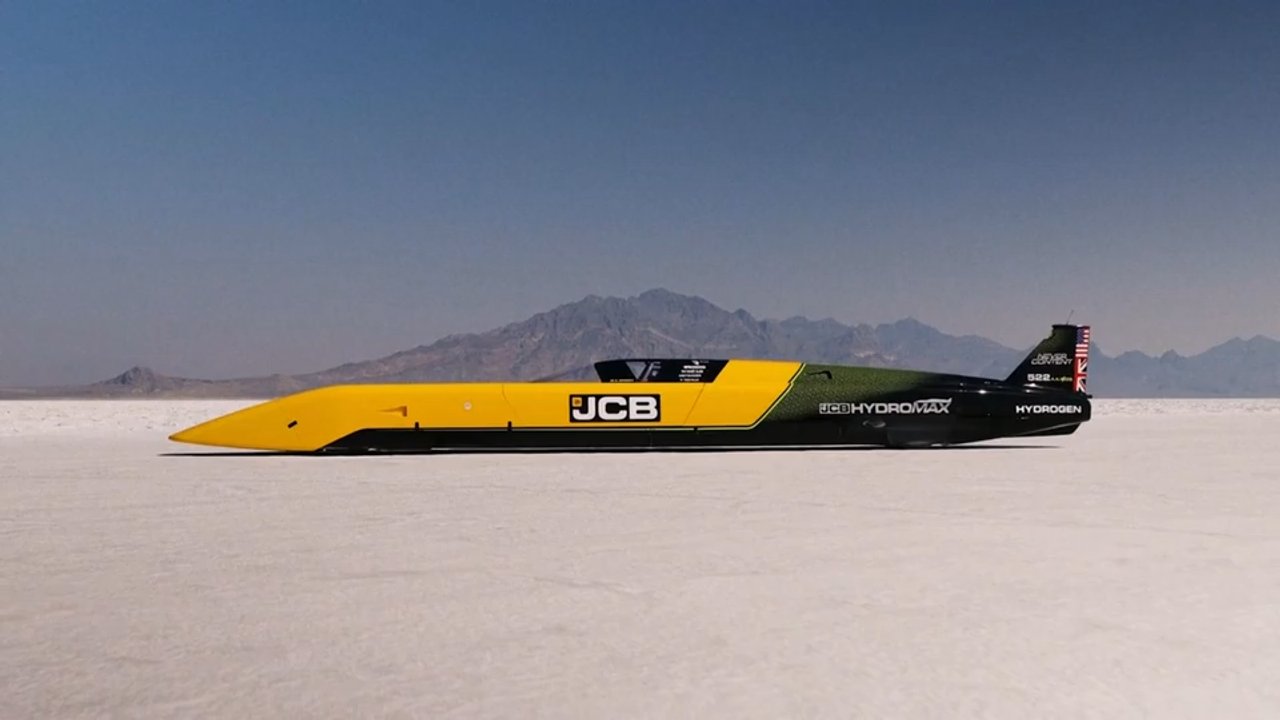
A car called the Hydromax just set a new speed record for hydrogen-powered vehicles, and it didn’t just beat the old mark. It more than doubled it.
The run took place in August at Utah’s Bonneville Salt Flats, a dried-up lake bed whose hard, flat surface has hosted land-speed attempts for more than a century. Behind the wheel was Andy Green, a retired British Royal Air Force pilot and the only person ever to drive a car faster than the speed of sound.
The old record for a car with a hydrogen-burning engine was 185.5 miles per hour, set in 2004. The Hydromax averaged 406.320 mph. Official records are based on the average of two runs, and Green’s two runs clocked in at about 401 and 412 mph.
Will you ever need to drive 406 mph? Probably not, even if Chipotle closes in five minutes and you’re ten minutes away.
The point was to show what hydrogen can do. The Hydromax runs on two hydrogen engines adapted from ones its maker, the British company JCB, uses in construction diggers. Gasoline and diesel engines release carbon dioxide. A hydrogen engine’s main byproduct is water.
There’s a catch, though. Hydrogen is only as clean as the way it’s made, and most of the world’s hydrogen today is still produced using fossil fuels.

Join Numberblock Fourteen at the skate park! Help Fourteen finish the doubles by tracing the numbers and filling in the gaps. Cut out Fourteen and his lucky Double Sevens and have fun whizzing them about the halfpipe ramps below.
Sing Fourteen's song:
I'm 14, I'm 10 and 4, I'm also double 7!
I'm riding on an elevator straight to skater heaven!
And whenever I get into a fix,
in the middle of one of my brand-new tricks,
I've got my lucky double to get me out of trouble...
Lucky double Seven!
Watch full episodes of Numberblocks on their official YouTube channel!
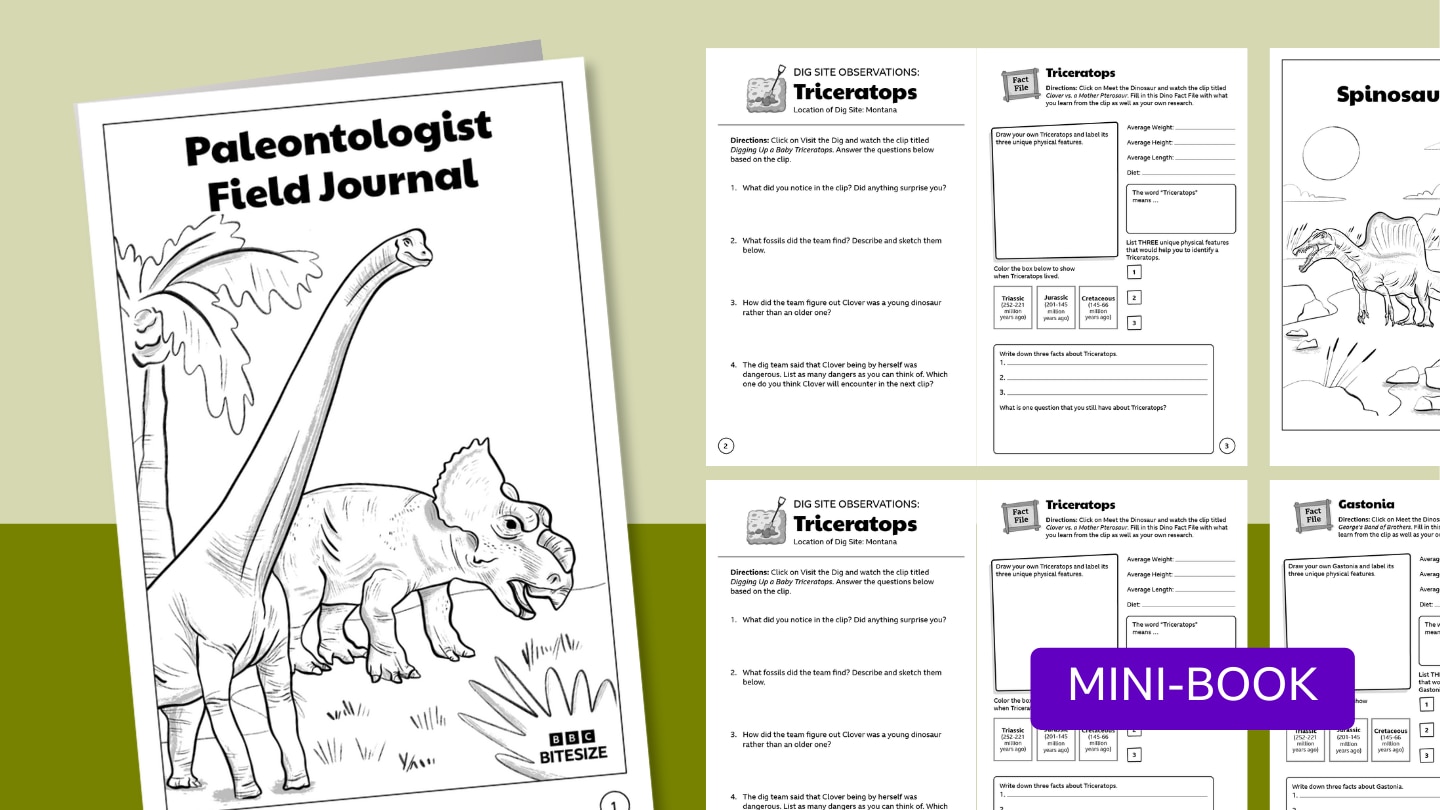
As students explore each dinosaur and dig site combo, they can record their findings in this Paleontologist Field Journal. For each site, students will fill in:
- Dig Site Observations: Answer questions about the Visit the Dig video.
- Fact File: Using information from the Meet the Dinosaur video and your own research, fill in all the boxes.
- Coloring page: Color the detailed scientific drawing of the dinosaur.
It's all part of our Walking With Dinosaurs Virtual Field Trip!
You'll need to print this double-sided. Select the option to flip on the long edge. To assemble the journals, students will stack the double-sided pages together, fold in half, and staple along the short edge.
A car called the Hydromax just set a new speed record for hydrogen-powered vehicles, and it didn’t just beat the old mark. It more than doubled it.
The run took place in August at Utah’s Bonneville Salt Flats, a dried-up lake bed whose hard, flat surface has hosted land-speed attempts for more than a century. Behind the wheel was Andy Green, a retired British Royal Air Force pilot and the only person ever to drive a car faster than the speed of sound.
The old record for a car with a hydrogen-burning engine was 185.5 miles per hour, set in 2004. The Hydromax averaged 406.320 mph. Official records are based on the average of two runs, and Green’s two runs clocked in at about 401 and 412 mph.
Will you ever need to drive 406 mph? Probably not, even if Chipotle closes in five minutes and you’re ten minutes away.
The point was to show what hydrogen can do. The Hydromax runs on two hydrogen engines adapted from ones its maker, the British company JCB, uses in construction diggers. Gasoline and diesel engines release carbon dioxide. A hydrogen engine’s main byproduct is water.
There’s a catch, though. Hydrogen is only as clean as the way it’s made, and most of the world’s hydrogen today is still produced using fossil fuels.
Join Numberblock Fourteen at the skate park! Help Fourteen finish the doubles by tracing the numbers and filling in the gaps. Cut out Fourteen and his lucky Double Sevens and have fun whizzing them about the halfpipe ramps below.
Sing Fourteen's song:
I'm 14, I'm 10 and 4, I'm also double 7!
I'm riding on an elevator straight to skater heaven!
And whenever I get into a fix,
in the middle of one of my brand-new tricks,
I've got my lucky double to get me out of trouble...
Lucky double Seven!
Watch full episodes of Numberblocks on their official YouTube channel!
As students explore each dinosaur and dig site combo, they can record their findings in this Paleontologist Field Journal. For each site, students will fill in:
- Dig Site Observations: Answer questions about the Visit the Dig video.
- Fact File: Using information from the Meet the Dinosaur video and your own research, fill in all the boxes.
- Coloring page: Color the detailed scientific drawing of the dinosaur.
It's all part of our Walking With Dinosaurs Virtual Field Trip!
You'll need to print this double-sided. Select the option to flip on the long edge. To assemble the journals, students will stack the double-sided pages together, fold in half, and staple along the short edge.