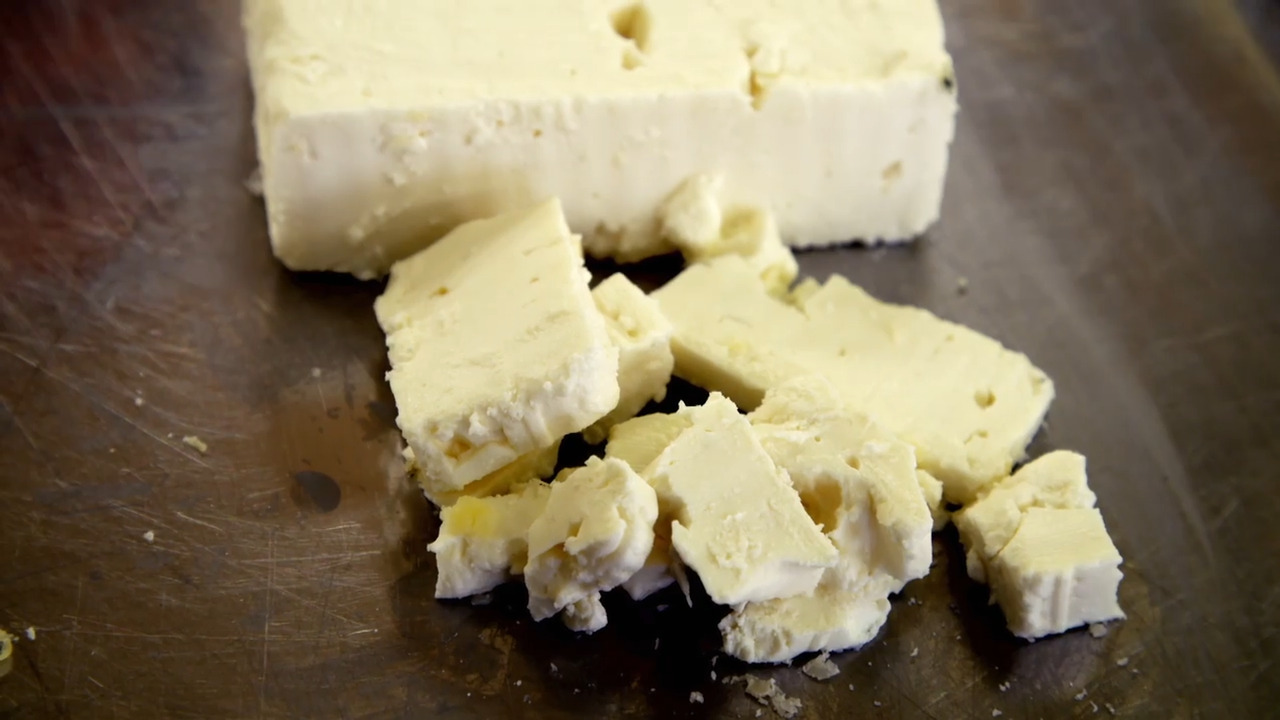
The article "Why Cheese Tastes So Good ... and Smells So Strange!" from BBC's Science Focus explores why cheese is so delicious and sometimes smelly. It explains how bacteria and fungi change milk into cheese and create its unique flavors. The article also looks at why our brains crave cheesy foods and why we enjoy strange smells in cheese.
In Cheetah Cubs and Camouflage, narrator Gordon Buchanan describes intense rivalry among predators competing for food in the Serengeti. Cheetah cubs are at risk of being killed by lions and hyenas. They rely on their camouflage to protect them until they can develop speed to outrun danger. The cheetah cub and serval kittens play fight to learn self-defense skills. This video is excerpted from BBC's Animal Babies, a heartwarming show that follows the first breaths, first steps, and first feeds of some adorable baby animals, revealing the challenges they face to survive in some of the toughest but most beautiful places on the planet.
In Pizza and the pH of Cheese presenter Cherry Healey visits a lab at the University of Reading to learn why mozzarella cheese is the most popular cheese when it comes to pizza. Could any other cheese have the right properties to be pizza-worthy? Learn how it all depends on pH, water concentration, and stretchability. This video is excerpted from BBC’s Inside the Factory, a series that takes viewers behind the scenes in the factories that make our favorite products.
In Cheetah Brothers Work Together to Hunt, narrator Sir David Attenborough follows three cheetah brothers living in Mount Kenya as they try to hunt zebras. At first, their plan falls apart when one cheetah is blocked by a big zebra, and the others miss their targets. Realizing they need to work together, the brothers switch their focus to a lone ostrich, which is faster and heavier than any of them. But by teaming up, the cheetahs finally succeed in catching their prey. This video is excerpted from BBC's Life, a show that explores the remarkable strategies animals and plants use to ensure their survival.
In Cheetahs, Ultimate Speed Demons, naturalist Steve Backshall runs a footrace with a cheetah. Then he reviews slow motion video footage of a cheetah running to explain how the cheetah is able to accelerate so quickly. This video is excerpted from BBC's Deadly 60, an award-winning nature and adventure show for kids in which narrator Steve Backshall has one mission: to travel the globe in search of 60 of the world's deadliest animals.
In What Does the Cheetah See?, naturalist Steve Backshall attaches a camera to a cheetah’s head to experience what it sees when it is chasing prey. This video is excerpted from BBC's Deadly 60, an award-winning nature and adventure show for kids in which narrator Steve Backshall has one mission: to travel the globe in search of 60 of the world's deadliest animals.
In Young Animals in the Desert, narrator Gordon Buchanan explores the different ways baby animals get food and water. Many different animals in the Kalahari Desert, both mammals and birds, are shown and discussed including baby ostriches and cheetahs. In many situations, young animals have to be resourceful in order to seek out enough food and water to survive. This video is excerpted from BBC's Animal Babies, a heartwarming show that follows the first breaths, first steps and first feeds of some adorable baby animals, revealing the challenges they face to survive in some of the toughest but most beautiful places on the planet.
In Endangered Big Cat Conservation Around the World, host Simon Reeve visits two conservationists in Russia and Namibia who are tirelessly working to protect Amur tigers and cheetahs. This video is excerpted from BBC's Incredible Journeys With Simon Reeve, a series that highlights one journalist’s travels across the globe and the diverse cultures and peoples he meets along the way.
In From Cyprus With Love, explore the island of Cyprus, known for its beaches, history, and delicious food like olives and figs. Emilio is making his friends a tasty dish with halloumi, a special cheese made from milk from a cow, goat, or sheep. Before they eat, he shows them a wishing tree, a fun tradition in Cyprus! This video is excerpted from BBC's My World Kitchen, where young chefs create special recipes that honor their heritage and celebrate their roots.
In JoJo and Gran Gran Grow Flowers, Jared gives JoJo a daffodil plant to grow. When they get home, JoJo gives the plant what it needs to grow and then gets impatient when it’s not growing fast enough. Real-life friends plant seeds in pots. This video is excerpted from BBC’s JoJo & Gran Gran, a children's animated television series following JoJo, an inquisitive and cheerful 4-and-a-half-year-old girl and her loving Gran Gran, who always has something new to teach her.
Introducing your new favorite duo! JoJo & Gran Gran is a BBC children's animated television series that follows an inquisitive and cheerful 4-and-a-half-year-old girl and her loving grandmother, who always has something new to teach her. Young learners will love learning alongside the diverse cast of characters as they get to know their community and explore the natural world around them.
This is quick and easy seasonal content — perfect for an intro to a life science (plants, trees, flowers) or social studies (holidays!) lesson. Or watch the video and then try what JoJo and Gran Gran did, whether it's making a fruit crumble or writing a poem.
It's important not to compare ourselves with others, and we also need to learn how to cheer on our friends. Based on the Bluey episode "Baby Race," this lesson beings with a classroom conversation about what it means to run your own race. The lesson includes printables for three activities in which kids complete a maze to help Bingo, Bluey, and Mum on their own paths to learn different skills, cheer for each other as they complete different tasks, and make cards for someone who's been working hard.
Baby Race Episode Summary: Mum reminisces about Bluey and Judo as babies. Bluey learned to roll over first, but Judo was the first to crawl, so then it became a race to see who was going to walk first!
Watch the episode here! (Click here to watch in Australia.)
The article "Why Cheese Tastes So Good ... and Smells So Strange!" from BBC's Science Focus explores why cheese is so delicious and sometimes smelly. It explains how bacteria and fungi change milk into cheese and create its unique flavors. The article also looks at why our brains crave cheesy foods and why we enjoy strange smells in cheese.
In Cheetah Cubs and Camouflage, narrator Gordon Buchanan describes intense rivalry among predators competing for food in the Serengeti. Cheetah cubs are at risk of being killed by lions and hyenas. They rely on their camouflage to protect them until they can develop speed to outrun danger. The cheetah cub and serval kittens play fight to learn self-defense skills. This video is excerpted from BBC's Animal Babies, a heartwarming show that follows the first breaths, first steps, and first feeds of some adorable baby animals, revealing the challenges they face to survive in some of the toughest but most beautiful places on the planet.
In Pizza and the pH of Cheese presenter Cherry Healey visits a lab at the University of Reading to learn why mozzarella cheese is the most popular cheese when it comes to pizza. Could any other cheese have the right properties to be pizza-worthy? Learn how it all depends on pH, water concentration, and stretchability. This video is excerpted from BBC’s Inside the Factory, a series that takes viewers behind the scenes in the factories that make our favorite products.
In Cheetah Brothers Work Together to Hunt, narrator Sir David Attenborough follows three cheetah brothers living in Mount Kenya as they try to hunt zebras. At first, their plan falls apart when one cheetah is blocked by a big zebra, and the others miss their targets. Realizing they need to work together, the brothers switch their focus to a lone ostrich, which is faster and heavier than any of them. But by teaming up, the cheetahs finally succeed in catching their prey. This video is excerpted from BBC's Life, a show that explores the remarkable strategies animals and plants use to ensure their survival.
In Cheetahs, Ultimate Speed Demons, naturalist Steve Backshall runs a footrace with a cheetah. Then he reviews slow motion video footage of a cheetah running to explain how the cheetah is able to accelerate so quickly. This video is excerpted from BBC's Deadly 60, an award-winning nature and adventure show for kids in which narrator Steve Backshall has one mission: to travel the globe in search of 60 of the world's deadliest animals.
In What Does the Cheetah See?, naturalist Steve Backshall attaches a camera to a cheetah’s head to experience what it sees when it is chasing prey. This video is excerpted from BBC's Deadly 60, an award-winning nature and adventure show for kids in which narrator Steve Backshall has one mission: to travel the globe in search of 60 of the world's deadliest animals.
In Young Animals in the Desert, narrator Gordon Buchanan explores the different ways baby animals get food and water. Many different animals in the Kalahari Desert, both mammals and birds, are shown and discussed including baby ostriches and cheetahs. In many situations, young animals have to be resourceful in order to seek out enough food and water to survive. This video is excerpted from BBC's Animal Babies, a heartwarming show that follows the first breaths, first steps and first feeds of some adorable baby animals, revealing the challenges they face to survive in some of the toughest but most beautiful places on the planet.
In Endangered Big Cat Conservation Around the World, host Simon Reeve visits two conservationists in Russia and Namibia who are tirelessly working to protect Amur tigers and cheetahs. This video is excerpted from BBC's Incredible Journeys With Simon Reeve, a series that highlights one journalist’s travels across the globe and the diverse cultures and peoples he meets along the way.
In From Cyprus With Love, explore the island of Cyprus, known for its beaches, history, and delicious food like olives and figs. Emilio is making his friends a tasty dish with halloumi, a special cheese made from milk from a cow, goat, or sheep. Before they eat, he shows them a wishing tree, a fun tradition in Cyprus! This video is excerpted from BBC's My World Kitchen, where young chefs create special recipes that honor their heritage and celebrate their roots.
In JoJo and Gran Gran Grow Flowers, Jared gives JoJo a daffodil plant to grow. When they get home, JoJo gives the plant what it needs to grow and then gets impatient when it’s not growing fast enough. Real-life friends plant seeds in pots. This video is excerpted from BBC’s JoJo & Gran Gran, a children's animated television series following JoJo, an inquisitive and cheerful 4-and-a-half-year-old girl and her loving Gran Gran, who always has something new to teach her.
Introducing your new favorite duo! JoJo & Gran Gran is a BBC children's animated television series that follows an inquisitive and cheerful 4-and-a-half-year-old girl and her loving grandmother, who always has something new to teach her. Young learners will love learning alongside the diverse cast of characters as they get to know their community and explore the natural world around them.
This is quick and easy seasonal content — perfect for an intro to a life science (plants, trees, flowers) or social studies (holidays!) lesson. Or watch the video and then try what JoJo and Gran Gran did, whether it's making a fruit crumble or writing a poem.
It's important not to compare ourselves with others, and we also need to learn how to cheer on our friends. Based on the Bluey episode "Baby Race," this lesson beings with a classroom conversation about what it means to run your own race. The lesson includes printables for three activities in which kids complete a maze to help Bingo, Bluey, and Mum on their own paths to learn different skills, cheer for each other as they complete different tasks, and make cards for someone who's been working hard.
Baby Race Episode Summary: Mum reminisces about Bluey and Judo as babies. Bluey learned to roll over first, but Judo was the first to crawl, so then it became a race to see who was going to walk first!