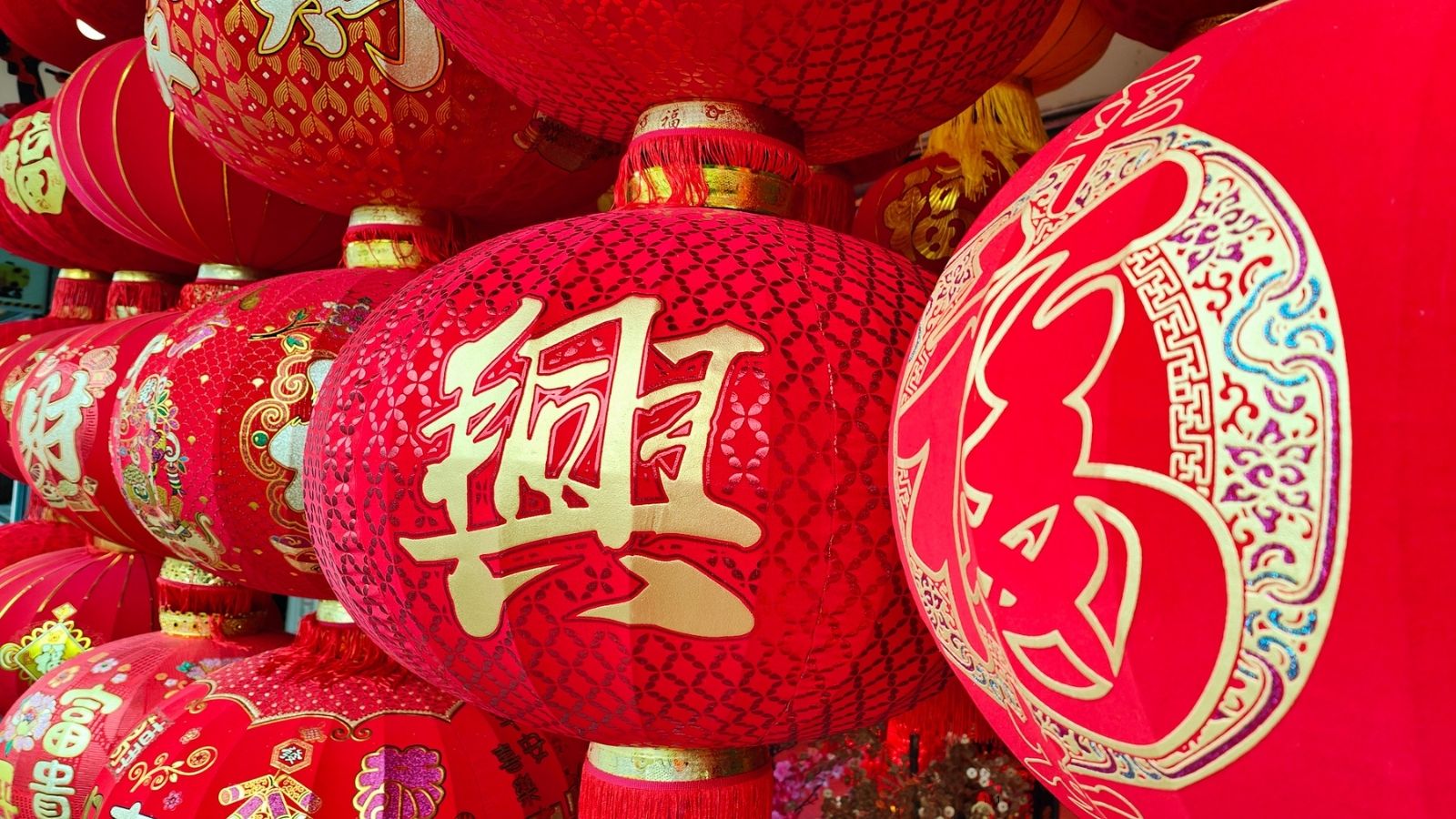
Gung Hei Fat Choy!
Celebrate Lunar New Year with the BBC Learning Hub’s curated resources for students ages 4–14. Through videos, articles, and printables, students can explore the traditions, symbols, and stories that mark this important holiday. From family gatherings and festive foods to lanterns, lion dances, and the Chinese Zodiac, these resources help students understand how Lunar New Year is celebrated across cultures and communities around the world.
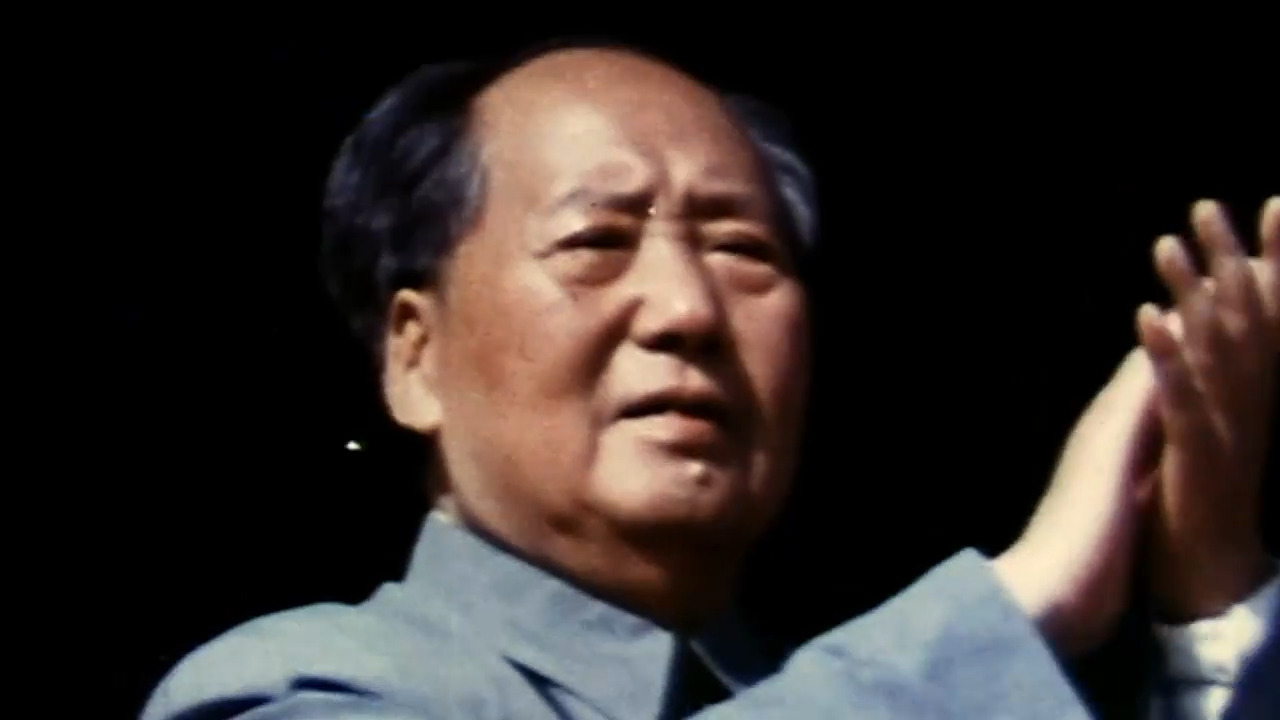
In Mao Zedong’s Policies Devastated China During the Cultural Revolution, host Andrew Marr explains reveals that millions of people were targeted, killed, or “re-educated” during this time. One resistor, Deng Xiaoping, was exiled and his son tortured and disabled under Mao. They returned to China later to rise to power and merge capitalism and communism to reshape China’s future. This video is excerpted from BBC’s Andrew Marr's History of the World, a story of human history that uses reenactments, modern footage, and storytelling to explain history’s greatest achievements.

In The Go Jetters Save a Terracotta Army in China, the Go Jetters crew travels to China to save the Terracotta Army from Grandmaster Glitch’s noisy concert. Ubercorn shares funky facts about the Terracotta Army, a collection of clay statues that were buried with the first Chinese emperor. Can the Go Jetters stop Grandmaster Glitch’s concert from shaking and shattering the statues? This video is excerpted from BBC’s Go Jetters, a series that follows the adventures of four international heroes as they travel the globe visiting landmarks and solving environmental problems with Ubercorn, a disco-dancing unicorn.
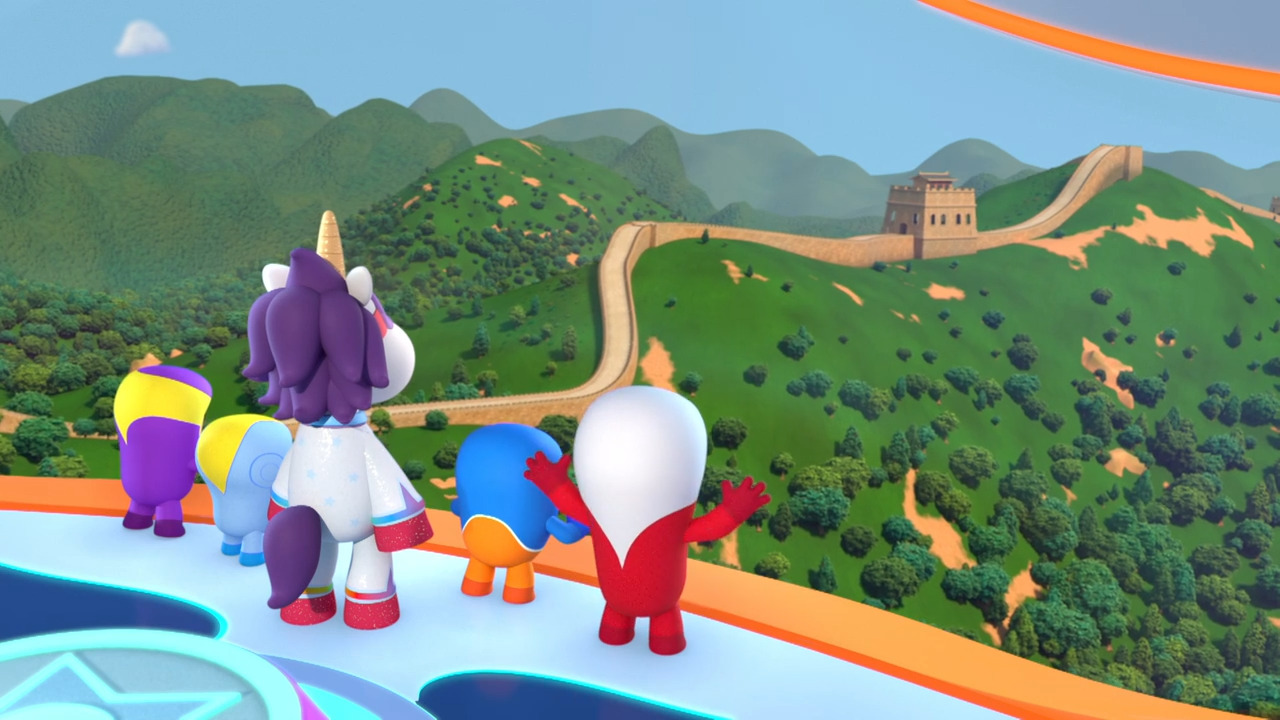
In The Go Jetters Visit the Great Wall of China, the Go Jetters crew visits The Great Wall of China. Learn about how the Chinese in the south of China built the wall to keep out the Chinese in the north. Today, the wall is a popular tourist destination. This video is excerpted from BBC's Go Jetters, a series that follows the adventures of four plucky international heroes as they travel the globe visiting the world’s most famous landmarks with their friend and mentor, Ubercorn, a disco-dancing unicorn.
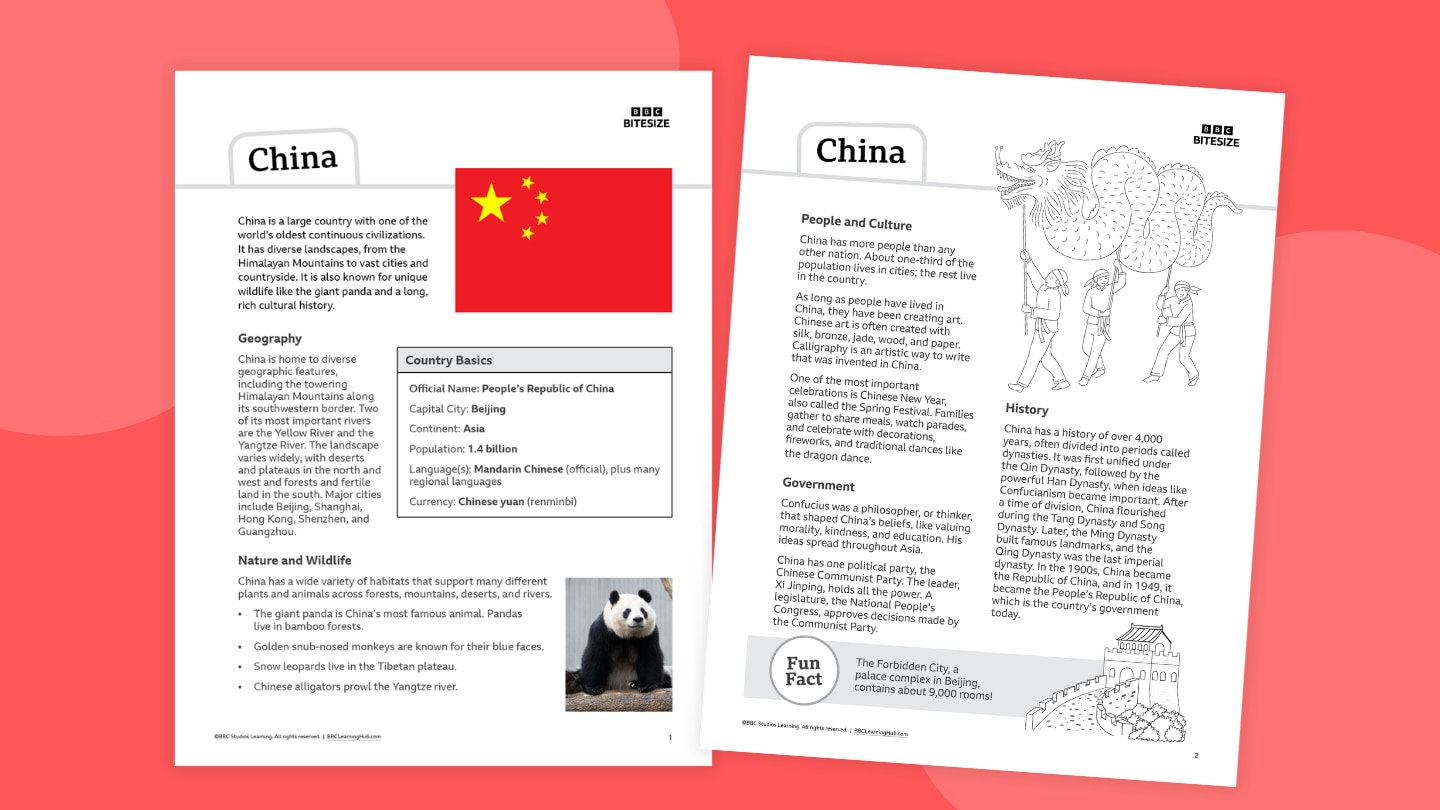
What country has the world’s largest population, some of the oldest traditions on Earth, and landscapes ranging from towering mountains to vast deserts? Meet China, a country where ancient history and modern life exist side by side.
From the Forbidden City to giant pandas to the peaks of the Himalayas, China is filled with remarkable places, people, and wildlife. Explore how geography has shaped life across the country, discover important moments in China’s long history, and learn about its languages, government, food, traditions, and growing cities. You’ll also meet some of China’s unique animals!
Teachers and parents, you can use this fact file to:
- Introduce a geography or social studies unit
- Support nonfiction reading practice
- Compare countries and cultures
- Complete map and research activities
- Prepare students for projects or presentations (use our country report template!)
- Pair with videos, articles, or other informational texts (see Related Resources below)
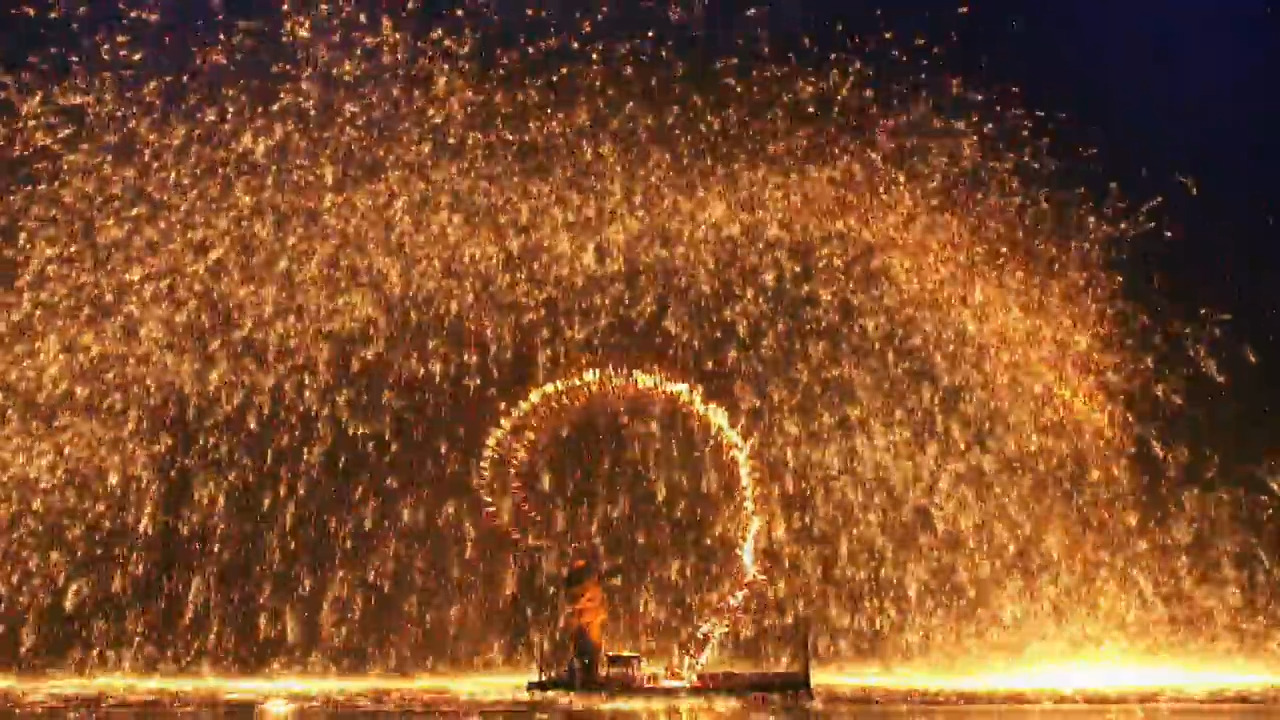
In Throwing Fire for Chinese New Year, iron metal workers in Nanquan, China, create amazing, glowing art with molten metal. Today, they perform nightly, but the tradition goes back hundreds of years. This video is excerpted from BBC’s Chinese New Year: The Biggest Celebration on Earth, a documentary series detailing the world's largest annual human migration (Chunyun), where over 1.5 billion people celebrate the Lunar New Year.
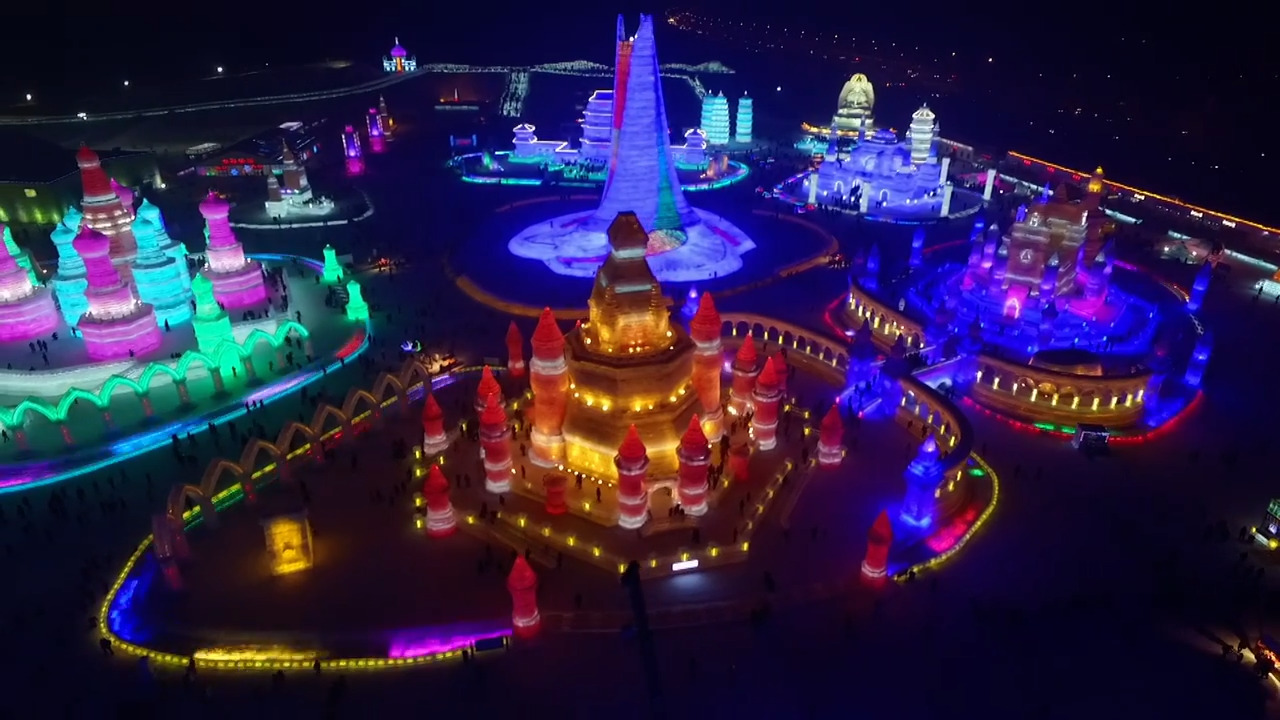
In Inside the Harbin Ice Festival, the Harbin Ice Festival lights up the night sky in Harbin, China for a few weeks each winter. Huge ice buildings are created and lit for tourists to visit before they melt in the spring. This video is excerpted from BBC’s Chinese New Year: The Biggest Celebration on Earth, a documentary series detailing the world's largest annual human migration (Chunyun), where over 1.5 billion people celebrate the Lunar New Year.

In Chunwan: The World’s Biggest Stage, performers have prepared for a year to participate in the largest televised event in China. The Chunwan, or Chinese Spring Festival Gala, is a collection of amazing acts. It is televised to the entire country and is watched by billions of people. This video is excerpted from BBC’s Chinese New Year: The Biggest Celebration on Earth, a documentary series detailing the world's largest annual human migration (Chunyun), where over 1.5 billion people celebrate the Lunar New Year.
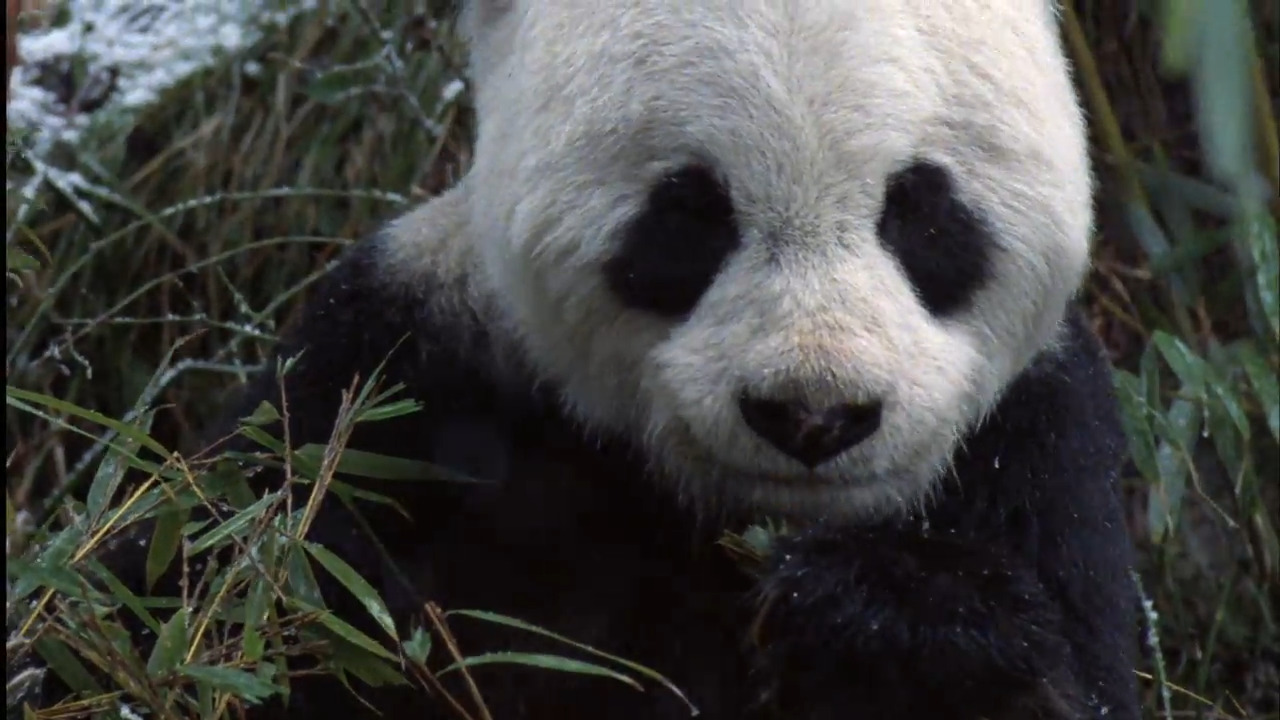
In High Altitude Living in China, narrator Sir David Attenborough describes how only a few animals are adapted to survive winter on the high mountain slopes. Watch a giant panda munch on bamboo and a group of golden snub-nosed monkeys huddle for warmth. This video is excerpted from BBC's Planet Earth, a breathtaking documentary series that highlights the natural wonders of our planet.
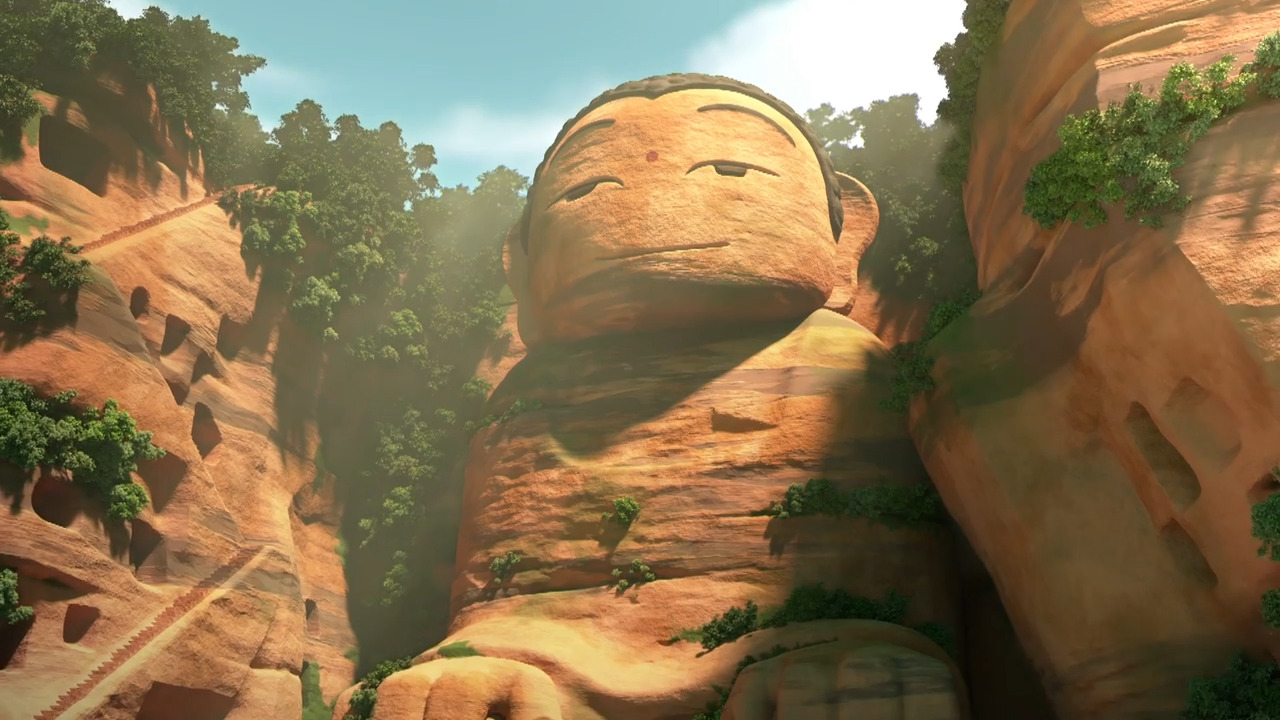
In The Go Jetters Have a Mindful Moment With a Giant Buddha, the Go Jetters crew explores mindfulness and visit the Giant Buddha, an ancient monument in China. Ubercorn shares some funky facts about the statue, including how it’s more than 1,000 years old and how its foot is so large it can hold 100 people. This video is excerpted from BBC’s Go Jetters, a series that follows the adventures of four international heroes as they travel the globe visiting landmarks and solving environmental problems with Ubercorn, a disco-dancing unicorn.
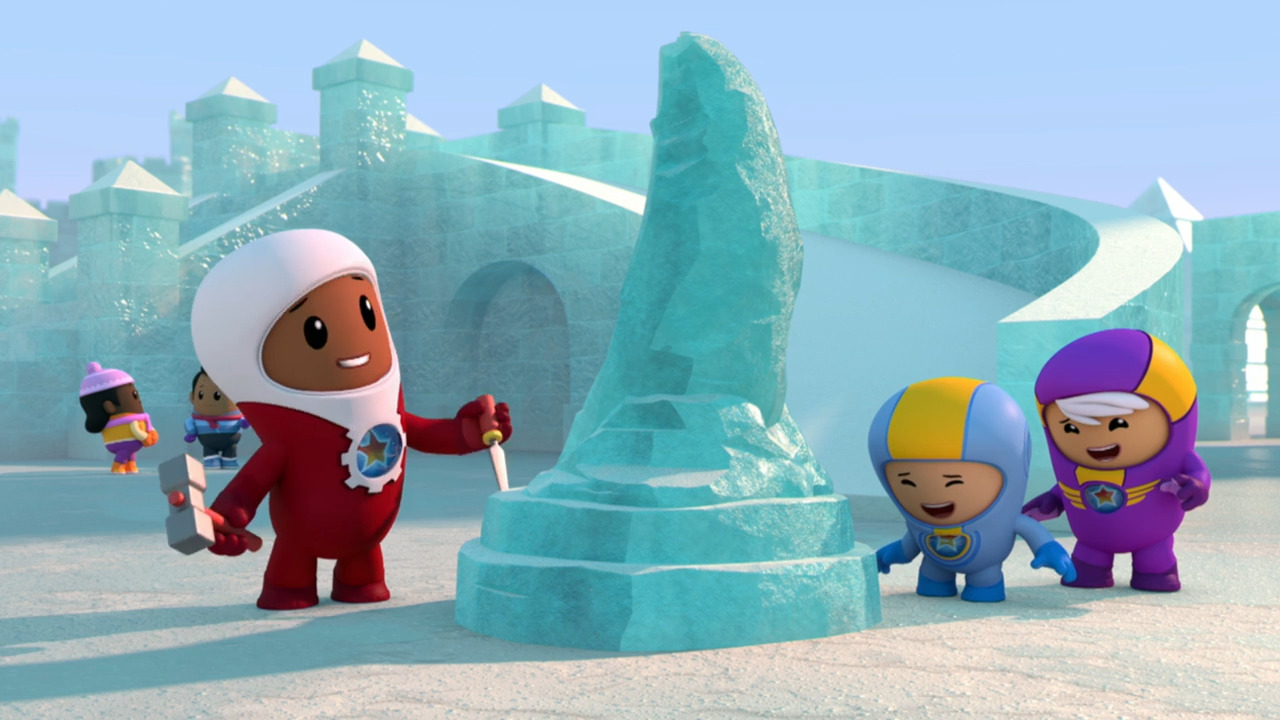
In The Go Jetters Get Chilly at the Harbin Ice Festival, the Go Jetters crew visits Harbin Ice Festival in China and learn how massive ice sculptures are carved from blocks from a frozen river. Ubercorn shares funky facts about this amazing ice and snow festival. This video is excerpted from BBC’s Go Jetters, a series that follows the adventures of four international heroes as they travel the globe visiting landmarks and solving environmental problems with Ubercorn, a disco-dancing unicorn.
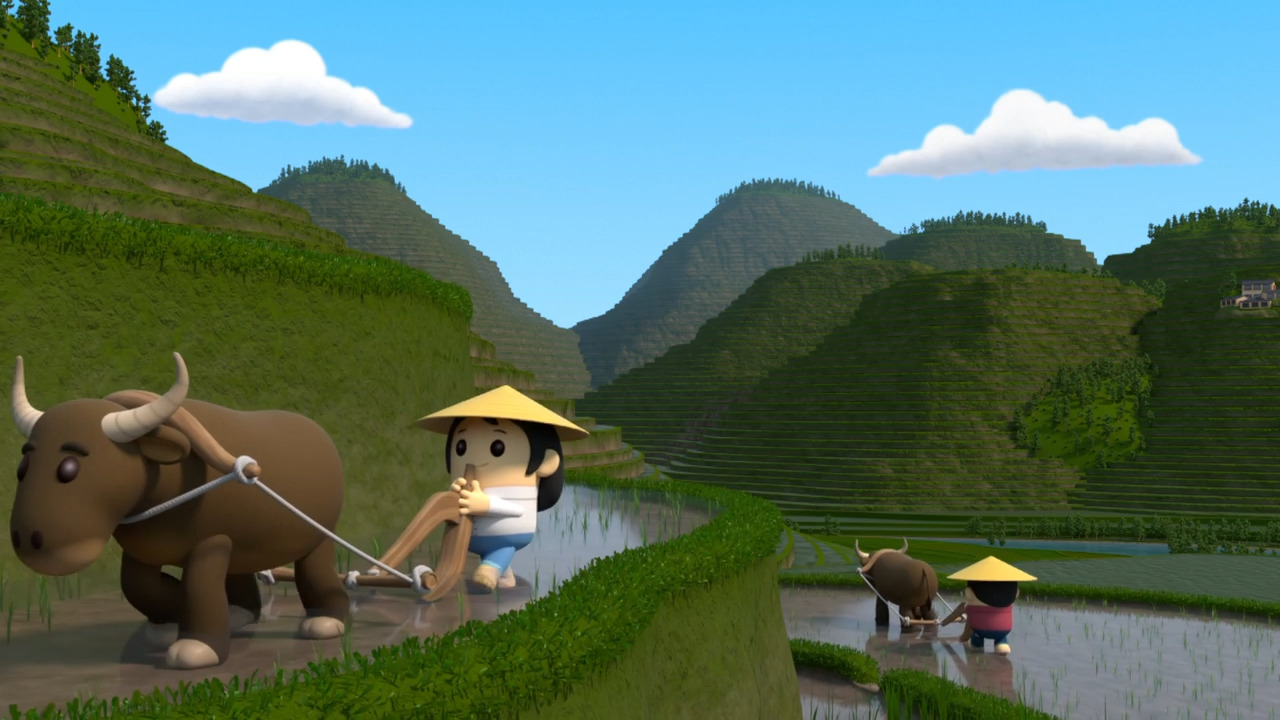
In How Rice Grows in China’s Paddy Fields, the Go Jetters crew explores the beautiful hills of Yuan Yang, China, where rice is grown in special paddy fields. Farmers have been planting rice in these fields for thousands of years, carving steps into the hillsides so the water can flow down. The rice needs plenty of water to grow. One quarter of the world’s rice comes from these fields, where hard-working farmers make sure the crops have everything they need! This video is excerpted from BBC’s Go Jetters, a series that follows the adventures of four plucky international heroes as they travel the globe visiting the world’s most famous landmarks with their friend and mentor, Ubercorn, a disco-dancing unicorn.
Gung Hei Fat Choy!
Celebrate Lunar New Year with the BBC Learning Hub’s curated resources for students ages 4–14. Through videos, articles, and printables, students can explore the traditions, symbols, and stories that mark this important holiday. From family gatherings and festive foods to lanterns, lion dances, and the Chinese Zodiac, these resources help students understand how Lunar New Year is celebrated across cultures and communities around the world.
In Mao Zedong’s Policies Devastated China During the Cultural Revolution, host Andrew Marr explains reveals that millions of people were targeted, killed, or “re-educated” during this time. One resistor, Deng Xiaoping, was exiled and his son tortured and disabled under Mao. They returned to China later to rise to power and merge capitalism and communism to reshape China’s future. This video is excerpted from BBC’s Andrew Marr's History of the World, a story of human history that uses reenactments, modern footage, and storytelling to explain history’s greatest achievements.
In The Go Jetters Save a Terracotta Army in China, the Go Jetters crew travels to China to save the Terracotta Army from Grandmaster Glitch’s noisy concert. Ubercorn shares funky facts about the Terracotta Army, a collection of clay statues that were buried with the first Chinese emperor. Can the Go Jetters stop Grandmaster Glitch’s concert from shaking and shattering the statues? This video is excerpted from BBC’s Go Jetters, a series that follows the adventures of four international heroes as they travel the globe visiting landmarks and solving environmental problems with Ubercorn, a disco-dancing unicorn.
In The Go Jetters Visit the Great Wall of China, the Go Jetters crew visits The Great Wall of China. Learn about how the Chinese in the south of China built the wall to keep out the Chinese in the north. Today, the wall is a popular tourist destination. This video is excerpted from BBC's Go Jetters, a series that follows the adventures of four plucky international heroes as they travel the globe visiting the world’s most famous landmarks with their friend and mentor, Ubercorn, a disco-dancing unicorn.
What country has the world’s largest population, some of the oldest traditions on Earth, and landscapes ranging from towering mountains to vast deserts? Meet China, a country where ancient history and modern life exist side by side.
From the Forbidden City to giant pandas to the peaks of the Himalayas, China is filled with remarkable places, people, and wildlife. Explore how geography has shaped life across the country, discover important moments in China’s long history, and learn about its languages, government, food, traditions, and growing cities. You’ll also meet some of China’s unique animals!
Teachers and parents, you can use this fact file to:
- Introduce a geography or social studies unit
- Support nonfiction reading practice
- Compare countries and cultures
- Complete map and research activities
- Prepare students for projects or presentations (use our country report template!)
- Pair with videos, articles, or other informational texts (see Related Resources below)
In Throwing Fire for Chinese New Year, iron metal workers in Nanquan, China, create amazing, glowing art with molten metal. Today, they perform nightly, but the tradition goes back hundreds of years. This video is excerpted from BBC’s Chinese New Year: The Biggest Celebration on Earth, a documentary series detailing the world's largest annual human migration (Chunyun), where over 1.5 billion people celebrate the Lunar New Year.
In Inside the Harbin Ice Festival, the Harbin Ice Festival lights up the night sky in Harbin, China for a few weeks each winter. Huge ice buildings are created and lit for tourists to visit before they melt in the spring. This video is excerpted from BBC’s Chinese New Year: The Biggest Celebration on Earth, a documentary series detailing the world's largest annual human migration (Chunyun), where over 1.5 billion people celebrate the Lunar New Year.
In Chunwan: The World’s Biggest Stage, performers have prepared for a year to participate in the largest televised event in China. The Chunwan, or Chinese Spring Festival Gala, is a collection of amazing acts. It is televised to the entire country and is watched by billions of people. This video is excerpted from BBC’s Chinese New Year: The Biggest Celebration on Earth, a documentary series detailing the world's largest annual human migration (Chunyun), where over 1.5 billion people celebrate the Lunar New Year.
In High Altitude Living in China, narrator Sir David Attenborough describes how only a few animals are adapted to survive winter on the high mountain slopes. Watch a giant panda munch on bamboo and a group of golden snub-nosed monkeys huddle for warmth. This video is excerpted from BBC's Planet Earth, a breathtaking documentary series that highlights the natural wonders of our planet.
In The Go Jetters Have a Mindful Moment With a Giant Buddha, the Go Jetters crew explores mindfulness and visit the Giant Buddha, an ancient monument in China. Ubercorn shares some funky facts about the statue, including how it’s more than 1,000 years old and how its foot is so large it can hold 100 people. This video is excerpted from BBC’s Go Jetters, a series that follows the adventures of four international heroes as they travel the globe visiting landmarks and solving environmental problems with Ubercorn, a disco-dancing unicorn.
In The Go Jetters Get Chilly at the Harbin Ice Festival, the Go Jetters crew visits Harbin Ice Festival in China and learn how massive ice sculptures are carved from blocks from a frozen river. Ubercorn shares funky facts about this amazing ice and snow festival. This video is excerpted from BBC’s Go Jetters, a series that follows the adventures of four international heroes as they travel the globe visiting landmarks and solving environmental problems with Ubercorn, a disco-dancing unicorn.
In How Rice Grows in China’s Paddy Fields, the Go Jetters crew explores the beautiful hills of Yuan Yang, China, where rice is grown in special paddy fields. Farmers have been planting rice in these fields for thousands of years, carving steps into the hillsides so the water can flow down. The rice needs plenty of water to grow. One quarter of the world’s rice comes from these fields, where hard-working farmers make sure the crops have everything they need! This video is excerpted from BBC’s Go Jetters, a series that follows the adventures of four plucky international heroes as they travel the globe visiting the world’s most famous landmarks with their friend and mentor, Ubercorn, a disco-dancing unicorn.